En bref
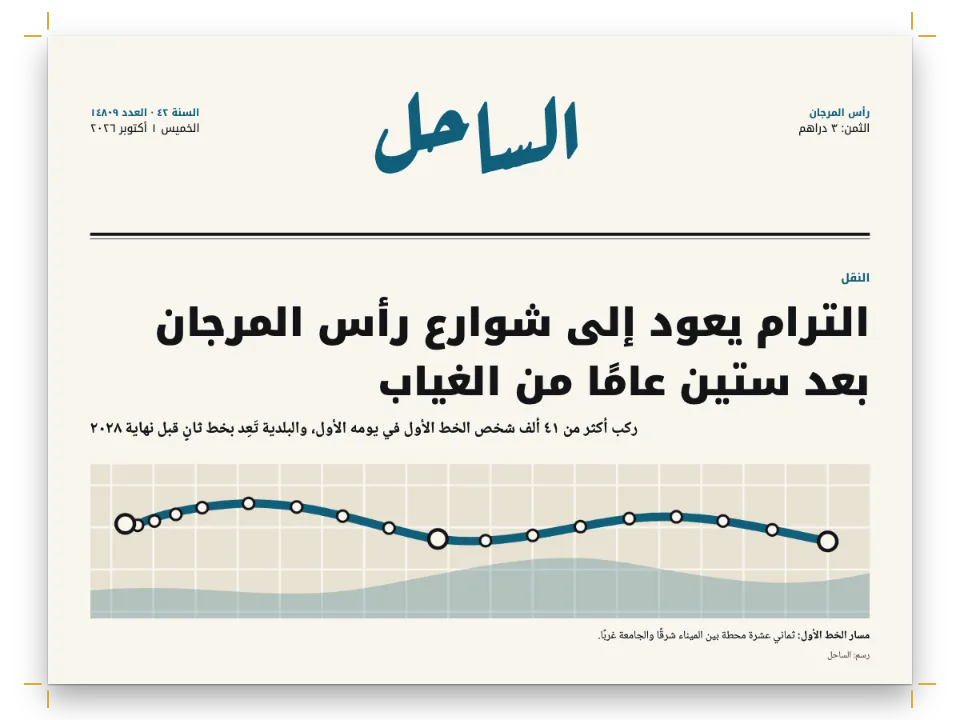
Le rapport annuel d’une fondation rédigé en arabe, chaque paragraphe suivi de sa version anglaise. La page mêle les deux sens d’écriture sans que les mots, les nombres ou les tableaux se retrouvent dans le désordre.
Ce que vous allez composer
Le rapport annuel 2025 d’une fondation de traduction imaginaire, Dar al-Dad, sur une page de 210 × 280 mm à la largeur de l’A4, en IBM Plex Sans Arabic et IBM Plex Sans, les deux moitiés d’une même famille de caractères. Le rapport est en arabe : il se lit de droite à gauche et numérote ses pages ٢, ٣. Chaque paragraphe arabe est suivi de sa version anglaise, plus petite et en gris ardoise, composée de gauche à droite et en drapeau à droite ; chaque titre arabe porte un intitulé anglais dans la marge opposée. Les noms latins insérés dans des phrases arabes gardent leur propre ordre, et les chiffres de l’année paraissent deux fois, dans un tableau arabe qui se lit depuis la droite et dans un tableau anglais qui se lit depuis la gauche. Dans l’édition espagnole, la seconde langue est l’espagnol.
Cette recette répond à
- Comment mêler paragraphes, nombres et tableaux en arabe et en anglais sur une même page ?
La réponse courte
// The document is Arabic (locale 'ar'): right to left, Arabic-Indic digits. A block in the
// other language says so in the Markdown, and its style gives it its own voice:
//   :::paragraphs{style="second" dir=ltr}      a paragraph or several, set left to right
//   ### Director's note {style="second-head" dir=ltr}
// Inside an Arabic sentence, a Latin name is an isolate, :ltr[Penguin Classics]{lang=en}, so
// the words around it keep their order. 'start' and 'end' follow each block's own direction.
const second = { id: 'second', fontFamily: LATIN, fontSize: pt(9.5), lineHeight: pt(14),
  color: col('slate'), textAlign: 'start', firstLineIndent: pt(0) };
const bodyText = { fontFamily: ARABIC, fontSize: pt(11), lineHeight: pt(LEAD),
  color: col('ink'), boldColor: col('ink'), italicColor: col('ink'), referenceColor: col('ink'),
  textAlign: 'start', // ragged: the right edge for Arabic, the left for an English block
  firstLineIndent: pt(0), paragraphSpacing: true,
  // The Arabic is never slanted; italics stay for the titles in the Latin blocks.
  emphasis: 'italic' };
Ingrédients
- Fonctionnalités
- Paragraphes dans l’autre sensPassages dans l’autre sensTexte de droite à gauchePolices arabesL’arabe comme langue du documentChiffres des nombres générésTableaux à partir de donnéesStyle de tableauStyles de tableau nommésStyle des légendesTypes de ressource personnalisésOuvertures composéesStyles de titreStyles de paragraphePalette de couleurs sémantiqueExport PDF
- Utilise aussi
- Attributs de titreDes figures exactement iciFigure et Tableau dans votre langueTitres courants selon le rôle de la pagePolices intégrées au PDFLivres reliés à droite
- Typographie
- IBM Plex Sans Arabic, IBM Plex Sans (SIL OFL 1.1)
- Ressources
- Aucune : chaque image est dessinée en code
Préparation
#1 · La seconde langue en blocs marqués
Le code est dans la réponse courte plus haut. Le document est en arabe : chaque bloc va donc de droite à gauche tant que le Markdown ne dit pas le contraire. {dir=ltr} sur une clôture :::paragraphs ou sur un titre inverse ce bloc, et textAlign: 'start' envoie chaque bloc du côté où il commence, à droite pour l’arabe et à gauche pour l’anglais (Sens du document, des blocs et du texte en ligne). Un nom latin dans une ligne arabe, :ltr[Harbour Modern Classics], est un isolat : l’algorithme bidi le traite comme un seul élément neutre, et les mots arabes et la virgule qui l’entourent gardent leur place (Isolats). emphasis: 'italic' garde Middlemarch en italique dans le texte anglais ; le moteur n’incline jamais une lettre arabe, quel que soit le réglage.
#2 · Un tableau pour chaque sens
const cell = (content, extra = {}) => ({ content, ...extra });
const tableOf = (head, rows) => ({ headerRowCount: 1, columnWidths: [46, 18, 18, 18],
  rows: [head.map((h, i) => cell(h, { isHeader: true, align: i ? 'end' : 'start' })),
    ...rows.map((r) => r.map((c, i) => cell(c, { align: i ? 'end' : 'start' })))] });
const FIGURES = [ // programme, 2024, 2025, change: the Foundation's own counts
  ['كتب مترجمة إلى العربية', 'Books translated into Arabic', 28, 34],
  ['كتب مترجمة من العربية', 'Books translated from Arabic', 9, 14],
  ['منح للمترجمين', 'Translator grants', 41, 52],
  ['ورشات تدريب', 'Training workshops', 12, 18],
  ['مشاركون في الورشات', 'Workshop participants', 310, 466]];
const SPANISH = { 'Books translated into Arabic': 'Libros traducidos al árabe',
  'Books translated from Arabic': 'Libros traducidos del árabe',
  'Translator grants': 'Becas para traductores', 'Training workshops': 'Talleres de formación',
  'Workshop participants': 'Participantes en los talleres' };
const change = (a, b) => `${b > a ? '+' : ''}${Math.round((100 * (b - a)) / a)}%`;
const AR = (n) => String(n).replace(/\d/g, (d) => '٠١٢٣٤٥٦٧٨٩'[d]); // the author's ٠–٩
const tableAr = tableOf(['البرنامج', '٢٠٢٤', '٢٠٢٥', 'التغيّر'], FIGURES.map(([ar, , a, b]) =>
  [ar, AR(a), AR(b), AR(change(a, b)).replace('%', '٪')]));
const tableEn = tableOf(t({ en: ['Programme', '2024', '2025', 'Change'],
  es: ['Programa', '2024', '2025', 'Cambio'] }), FIGURES.map(([, en, a, b]) =>
  [t({ en, es: SPANISH[en] }), String(a), String(b), change(a, b)]));
// The English table has a heading of its own and no number: a generated number would print in
// the document's digits, ٢, inside the English block.
const resourceTypes = [...defaultResourceTypes('ar'), { id: 'data', name: 'Data',
  shortLabel: 'Data', captionPrefix: '', numberingTemplate: '', resetOn: 'never',
  counterFormat: 'decimal' }];
const resources = [
  { id: 'figures-ar', typeId: 'table', kind: 'table', createdAt: 0, updatedAt: 0,
    table: { model: tableAr }, placement: { position: 'here' },
    caption: 'أرقام البرامج في عامي ٢٠٢٤ و٢٠٢٥' },
  { id: 'figures-en', typeId: 'data', kind: 'table', createdAt: 0, updatedAt: 0,
    table: { model: tableEn, direction: 'ltr', styleId: 'second' },
    placement: { position: 'here' } },
];
Le tableau arabe suit le sens du document : sa première colonne, le programme, est à droite, et align: 'end' place les nombres contre le bord gauche de leurs cellules. Le tableau anglais règle direction: 'ltr' : sa première colonne est donc à gauche, et 'end' désigne le bord droit (Ce que signifient gauche, droite, début et fin). Les chiffres arabes sont saisis en ٠–٩, les anglais en 0–9 : les chiffres du document ne s’appliquent qu’aux nombres que le moteur écrit lui-même, comme le numéro du tableau dans sa légende, جدول ١-١. C’est aussi pour cela que le tableau anglais a un type à lui, sans compteur, puisqu’un numéro s’y imprimerait ٢.
#3 · Deux titres sur un bandeau
const band = { enabled: true, minHeight: mm(70), slot: { elements: [
  { kind: 'box', id: 'band', style: { backgroundColor: col('teal') },
    placement: { anchor: { to: 'bleed', edge: 'top-left' },
      size: { width: mm(216), height: mm(86) } } },
  // A heading's design is set in the flow and mirrored with the page: 'left' is the side the
  // text starts on, the sheet's right in this book, and 'right' its left. Design text takes
  // the document's direction; the English title says 'ltr' and starts from the sheet's left.
  { kind: 'text', id: 'org', content: '{attr.org}', fontFamily: ARABIC, fontSize: pt(13),
    fontWeight: 600, color: col('tint'), align: 'start',
    placement: { anchor: { to: 'page', edge: 'top-left' }, offset: { x: mm(SIDE), y: mm(18) } } },
  { kind: 'text', id: 'title', content: '{titleText}', fontFamily: ARABIC, fontSize: pt(50),
    fontWeight: 700, lineHeight: 1.15, color: col('paper'), align: 'start',
    placement: { anchor: { to: 'page', edge: 'top-left' }, offset: { x: mm(SIDE), y: mm(30) } } },
  { kind: 'text', id: 'title-2', content: '{attr.second}', direction: 'ltr', fontFamily: LATIN,
    fontSize: pt(18), fontWeight: 300, color: col('tint'), align: 'start',
    placement: { anchor: { to: 'page', edge: 'top-right' }, offset: { x: mm(-SIDE), y: mm(66) } } },
] } };
La couverture est la maquette du titre de niveau 1. La maquette d’un titre se place dans le flux et se reflète avec la page : ses ancres nomment donc les côtés du texte. top-left est la droite de la feuille, où commencent le nom et le titre arabes, et top-right sa gauche, où commence le titre anglais. Le texte de maquette prend le sens du document : les lignes arabes n’ont besoin de rien d’autre, et le titre anglais règle direction: 'ltr'. Le bandeau est un bloc ancré au fond perdu, haut de 86 mm, et le minHeight de l’ouverture amène le mot du directeur dessous.
La recette complète
// ═══ Postext Cookbook · Nº 106 · A bilingual Arabic–English report ═══════════════════ // https://postext.dev/en/cookbook/bilingual-arabic-english-report // Code: MIT · Text: original Arabic, English and Spanish prose (CC BY 4.0) · Pictures: none // Fonts: IBM Plex Sans Arabic, IBM Plex Sans (SIL OFL 1.1) · Needs postext ≥ 1.25.0 import { buildDocument, withLoadedFonts, renderPageToCanvas, defaultResourceTypes, } from 'https://esm.sh/postext'; import { renderToPdf, decompressWoff2 } from 'https://esm.sh/postext-pdf'; const LANG = 'en'; // @lang: the second language of the report: English, or Spanish in 'es' const RECIPE = 'bilingual-arabic-english-report'; // ─── 1 · Design ───────────────────────────────────────────────────────────── // #region palette: a deep teal for the Arabic, a slate for the second language const palette = { ink: '#1b1f22', // the Arabic text teal: '#0e5a5c', // the accent: the cover band, headings, table heads slate: '#45535c', // the English (or Spanish) text: a voice of its own, a step lighter tint: '#e4eeec', // the second language's panels rule: '#b9c4c2', // hairlines paper: '#ffffff', }; const col = (id) => ({ hex: palette[id], model: 'hex', paletteId: id }); const colorPalette = Object.entries({ ...palette, 'main-color': palette.teal }) .map(([id, hex]) => ({ id, name: id, value: { hex, model: 'hex' } })); // #endregion const [ARABIC, LATIN] = ['IBM Plex Sans Arabic', 'IBM Plex Sans']; // one superfamily const LEAD = 18; // pt: the Arabic leading const SIDE = 20; // mm: the side margins // #region answer: one Arabic document, its English blocks marked {dir=ltr} // The document is Arabic (locale 'ar'): right to left, Arabic-Indic digits. A block in the // other language says so in the Markdown, and its style gives it its own voice: // :::paragraphs{style="second" dir=ltr} a paragraph or several, set left to right // ### Director's note {style="second-head" dir=ltr} // Inside an Arabic sentence, a Latin name is an isolate, :ltr[Penguin Classics]{lang=en}, so // the words around it keep their order. 'start' and 'end' follow each block's own direction. const second = { id: 'second', fontFamily: LATIN, fontSize: pt(9.5), lineHeight: pt(14), color: col('slate'), textAlign: 'start', firstLineIndent: pt(0) }; const bodyText = { fontFamily: ARABIC, fontSize: pt(11), lineHeight: pt(LEAD), color: col('ink'), boldColor: col('ink'), italicColor: col('ink'), referenceColor: col('ink'), textAlign: 'start', // ragged: the right edge for Arabic, the left for an English block firstLineIndent: pt(0), paragraphSpacing: true, // The Arabic is never slanted; italics stay for the titles in the Latin blocks. emphasis: 'italic' }; // #endregion // #region tables: the Arabic table runs with the page; the English one runs left to right const cell = (content, extra = {}) => ({ content, ...extra }); const tableOf = (head, rows) => ({ headerRowCount: 1, columnWidths: [46, 18, 18, 18], rows: [head.map((h, i) => cell(h, { isHeader: true, align: i ? 'end' : 'start' })), ...rows.map((r) => r.map((c, i) => cell(c, { align: i ? 'end' : 'start' })))] }); const FIGURES = [ // programme, 2024, 2025, change: the Foundation's own counts ['كتب مترجمة إلى العربية', 'Books translated into Arabic', 28, 34], ['كتب مترجمة من العربية', 'Books translated from Arabic', 9, 14], ['منح للمترجمين', 'Translator grants', 41, 52], ['ورشات تدريب', 'Training workshops', 12, 18], ['مشاركون في الورشات', 'Workshop participants', 310, 466]]; const SPANISH = { 'Books translated into Arabic': 'Libros traducidos al árabe', 'Books translated from Arabic': 'Libros traducidos del árabe', 'Translator grants': 'Becas para traductores', 'Training workshops': 'Talleres de formación', 'Workshop participants': 'Participantes en los talleres' }; const change = (a, b) => `${b > a ? '+' : ''}${Math.round((100 * (b - a)) / a)}%`; const AR = (n) => String(n).replace(/\d/g, (d) => '٠١٢٣٤٥٦٧٨٩'[d]); // the author's ٠–٩ const tableAr = tableOf(['البرنامج', '٢٠٢٤', '٢٠٢٥', 'التغيّر'], FIGURES.map(([ar, , a, b]) => [ar, AR(a), AR(b), AR(change(a, b)).replace('%', '٪')])); const tableEn = tableOf(t({ en: ['Programme', '2024', '2025', 'Change'], es: ['Programa', '2024', '2025', 'Cambio'] }), FIGURES.map(([, en, a, b]) => [t({ en, es: SPANISH[en] }), String(a), String(b), change(a, b)])); // The English table has a heading of its own and no number: a generated number would print in // the document's digits, ٢, inside the English block. const resourceTypes = [...defaultResourceTypes('ar'), { id: 'data', name: 'Data', shortLabel: 'Data', captionPrefix: '', numberingTemplate: '', resetOn: 'never', counterFormat: 'decimal' }]; const resources = [ { id: 'figures-ar', typeId: 'table', kind: 'table', createdAt: 0, updatedAt: 0, table: { model: tableAr }, placement: { position: 'here' }, caption: 'أرقام البرامج في عامي ٢٠٢٤ و٢٠٢٥' }, { id: 'figures-en', typeId: 'data', kind: 'table', createdAt: 0, updatedAt: 0, table: { model: tableEn, direction: 'ltr', styleId: 'second' }, placement: { position: 'here' } }, ]; // #endregion // #region cover: the report's two titles on a teal band, each in its own direction const band = { enabled: true, minHeight: mm(70), slot: { elements: [ { kind: 'box', id: 'band', style: { backgroundColor: col('teal') }, placement: { anchor: { to: 'bleed', edge: 'top-left' }, size: { width: mm(216), height: mm(86) } } }, // A heading's design is set in the flow and mirrored with the page: 'left' is the side the // text starts on, the sheet's right in this book, and 'right' its left. Design text takes // the document's direction; the English title says 'ltr' and starts from the sheet's left. { kind: 'text', id: 'org', content: '{attr.org}', fontFamily: ARABIC, fontSize: pt(13), fontWeight: 600, color: col('tint'), align: 'start', placement: { anchor: { to: 'page', edge: 'top-left' }, offset: { x: mm(SIDE), y: mm(18) } } }, { kind: 'text', id: 'title', content: '{titleText}', fontFamily: ARABIC, fontSize: pt(50), fontWeight: 700, lineHeight: 1.15, color: col('paper'), align: 'start', placement: { anchor: { to: 'page', edge: 'top-left' }, offset: { x: mm(SIDE), y: mm(30) } } }, { kind: 'text', id: 'title-2', content: '{attr.second}', direction: 'ltr', fontFamily: LATIN, fontSize: pt(18), fontWeight: 300, color: col('tint'), align: 'start', placement: { anchor: { to: 'page', edge: 'top-right' }, offset: { x: mm(-SIDE), y: mm(66) } } }, ] } }; // #endregion const config = () => ({ locale: 'ar', // written out, never LANG (gotcha: arabic-locale-tag) colorPalette, bodyText, resourceTypes, page: { width: mm(210), height: mm(280), dpi: 150, margins: { top: mm(22), bottom: mm(22), left: mm(SIDE), right: mm(SIDE), mirror: true } }, layout: { layoutType: 'single' }, headings: { fontFamily: ARABIC, fontWeight: 700, color: col('teal'), levels: [ // The report starts on the page it reaches, left or right, with no blank page before it. { level: 1, breakBefore: { enabled: true, parity: 'any' }, marginTop: pt(0), marginBottom: pt(0), advancedDesign: band }, { level: 2, fontSize: pt(17), lineHeight: pt(26), marginTop: pt(LEAD), marginBottom: pt(0) }, ] }, headingStyles: [{ id: 'second-head', fontFamily: LATIN, fontSize: pt(10), fontWeight: 600, lineHeight: pt(14), color: col('slate'), marginTop: pt(0), marginBottom: pt(4) }], paragraphStyles: [second, { id: 'colophon', fontFamily: LATIN, fontSize: pt(7.5), lineHeight: pt(10), color: col('slate'), textAlign: 'start', firstLineIndent: pt(0), marginTop: pt(LEAD) }], tableStyle: { rules: 'horizontal', borderColor: col('rule'), borderWidth: pt(0.5), headerBackground: col('teal'), headerColor: col('paper'), headerFontFamily: ARABIC, headerFontSize: pt(9.5), bodyFontFamily: ARABIC, bodyFontSize: pt(10), bodyColor: col('ink'), cellPadding: mm(1.6) }, tableStyles: [{ id: 'second', headerBackground: col('slate'), headerFontFamily: LATIN, bodyFontFamily: LATIN, bodyFontSize: pt(9), bodyColor: col('slate') }], captionStyle: { fontFamily: ARABIC, fontSize: pt(9.5), color: col('ink'), position: 'above', labelBold: true, labelColor: col('teal'), labelSeparator: ': ' }, header: { elements: [] }, footer: { elements: [{ kind: 'text', id: 'folio', content: '{pageNumber}', pages: 'body', fontFamily: ARABIC, fontSize: pt(9), fontWeight: 600, color: col('teal'), align: 'center', placement: { anchor: { to: 'page', edge: 'bottom' }, offset: { y: mm(-12) } } }] }, }); // ─── 2 · Content ──────────────────────────────────────────────────────────── const markdown = String.raw`---Exemple Markdown · 60 lignes · content.en.md
title: "التقرير السنوي ٢٠٢٥" --- # التقرير السنوي ٢٠٢٥ {org="مؤسسة دار الضاد للترجمة" second="Dar al-Dad Translation Foundation · Annual Report 2025"} ## كلمة المديرة ### Director’s note {style="second-head" dir=ltr} كان عام ٢٠٢٥ أكثر أعوام المؤسسة نشاطًا منذ تأسيسها. فقد صدر في هذا العام ٣٤ كتابًا مترجمًا إلى العربية و١٤ كتابًا مترجمًا منها، ومنحنا ٥٢ منحة لمترجمين من تسعة بلدان، وأقمنا ١٨ ورشة تدريب حضرها ٤٦٦ مشاركًا ومشاركة. :::paragraphs{style="second" dir=ltr} 2025 was the busiest year in the Foundation’s history. We published 34 books translated into Arabic and 14 translated from it, awarded 52 grants to translators from nine countries, and ran 18 training workshops attended by 466 people. ::: وأكثر ما يسعدنا في هذه الأرقام أن الترجمة من العربية بدأت تلحق بالترجمة إليها. فقد كان الكتاب المترجم من العربية قبل خمس سنوات يقابله أكثر من ستة كتب مترجمة إليها، وصار اليوم يقابله كتابان ونصف. وقد صدرت روايتان من الكتب التي دعمناها في سلسلة :ltr[Harbour Modern Classics]{lang=en}، وهي المرة الأولى التي تدخل فيها روايات عربية معاصرة هذه السلسلة بدعم منا. :::paragraphs{style="second" dir=ltr} What pleases us most in these figures is that translation from Arabic has begun to catch up with translation into it. Five years ago, every book we supported out of Arabic was matched by more than six into it; today the ratio is two and a half to one. Two of the novels we supported appeared in Harbour Modern Classics. ::: ## أرقام العام ### The year in figures {style="second-head" dir=ltr} يعرض الجدول التالي برامج المؤسسة الخمسة في العامين الأخيرين، والنسبة التي تغيّر بها كل برنامج. وتُحسب المنح في السنة التي صُرفت فيها، لا في السنة التي قُدّم فيها الطلب. ::resource{id="figures-ar"} :::paragraphs{style="second" dir=ltr} The table below gives the same figures in English. Grants are counted in the year they were paid, not the year they were applied for. ::: ::resource{id="figures-en"} ## البرامج ### Programmes {style="second-head" dir=ltr} **الترجمة إلى العربية.** نختار الكتب بالتشاور مع لجنة من الناشرين والمترجمين تجتمع مرتين في السنة. ومن أبرز ما صدر هذا العام ترجمة جديدة لرواية :ltr[Middlemarch]{lang=en} لجورج إليوت، ومختارات من مقالات :ltr[Michel de Montaigne]{lang=fr} في الصداقة والسفر والقراءة. :::paragraphs{style="second" dir=ltr} **Translation into Arabic.** Titles are chosen with a committee of publishers and translators that meets twice a year. This year’s list includes a new translation of George Eliot’s *Middlemarch* and a selection of Montaigne’s essays on friendship, travel and reading. ::: **الترجمة من العربية.** نموّل نصف تكاليف الترجمة للناشر الأجنبي الذي يشتري حقوق كتاب عربي، ونرافق المترجم بمحرر يقرأ ترجمته مع النص الأصلي. وصدرت هذا العام كتب مترجمة إلى الإنجليزية والإسبانية والتركية والإندونيسية. :::paragraphs{style="second" dir=ltr} **Translation from Arabic.** We pay half the translation costs of a foreign publisher who buys the rights to an Arabic book, and pair the translator with an editor who reads the translation against the original. This year’s books appeared in English, Spanish, Turkish and Indonesian. ::: **التدريب.** تستمر الورشة الواحدة خمسة أيام، ويعمل فيها المشاركون على نص واحد بإشراف مترجمَين اثنين، أحدهما ينقل إلى العربية والآخر ينقل منها. وقد أضفنا هذا العام ورشة للترجمة الأدبية للأطفال، وأخرى لترجمة الشعر. :::paragraphs{style="second" dir=ltr} **Training.** Each workshop runs for five days, and its participants work on a single text with two tutors, one translating into Arabic and one out of it. This year we added a workshop on children’s literature and another on poetry. ::: :::paragraphs{style="colophon" dir=ltr} A specimen report written for the Postext Cookbook; the Foundation, its figures and its people are invented. Set in IBM Plex Sans Arabic and IBM Plex Sans (SIL OFL) · Text: CC BY 4.0. :::`; // content.<lang>.md: the Arabic, with English or Spanish // ─── 3 · Fonts ────────────────────────────────────────────────────────────── const FONTS = { // every face the pages use, loaded before the build 'IBM Plex Sans Arabic': ['400', '600', '700'], // ARABIC: text, headings, tables, folios 'IBM Plex Sans': ['300', '400', '400i', '600', '700'], // LATIN: the second language, its table }; // ─── 4 · Build & show ─────────────────────────────────────────────────────── await loadFonts(FONTS, markdown); // Each Arabic face's letters live in a file of their own (gotcha: arabic-fonts-subset). await loadArabicFonts(FONTS, markdown + JSON.stringify(resources)); const doc = await withLoadedFonts(() => buildDocument({ markdown, resources }, config()), { ...kitFonts(FONTS), text: markdown }); showBook(doc, { title: t({ en: 'A bilingual Arabic–English report', es: 'Un informe bilingüe árabe-español' }) }); offerPdf(() => renderToPdf(doc, { fontProvider: arabicPdfProvider }), `${RECIPE}.pdf`);Kit · core, fonts, viewer, pdf, arabic, book : identique dans toutes les recettes · 409 lignes
// ─── Kit ── helpers shared by every Cookbook recipe · postext.dev/cookbook ───── // ─── Kit · core v1 ── the same in every recipe · postext.dev/cookbook function mm(value) { return { value, unit: 'mm' }; } function pt(value) { return { value, unit: 'pt' }; } function em(value) { return { value, unit: 'em' }; } /** The sample language's string: t({ en: 'Figure', es: 'Figura' }). */ function t(strings) { return strings[LANG] ?? Object.values(strings)[0]; } /** A file in this recipe's assets folder, served from the Postext repo by jsDelivr. */ function asset(file) { return `https://cdn.jsdelivr.net/gh/drnachio/postext@main/cookbook/${RECIPE}/assets/${file}`; } // ─── Kit · fonts v3 ── the same in every recipe · postext.dev/cookbook // Postext loads the faces a config asks for before layout (prepareFonts, // buildDocumentWithFonts) and asks the kit for the files: Fontsource's, the // files the PDF embeds too. /** The options of buildDocumentWithFonts / prepareFonts / withLoadedFonts: * the Fontsource resolver, and the faces of FONTS loaded with the ones the * config names. FONTS = { 'Family Name': ['400', '400i', '700'] }. */ function kitFonts(FONTS = {}) { const faces = Object.entries(FONTS).flatMap(([family, specs]) => specs.map((spec) => ({ family, weight: parseInt(spec, 10), style: spec.endsWith('i') ? 'italic' : 'normal' }))); return { resolve: fontsourceResolver, faces }; } /** A face's Fontsource files, in a fixed order: latin, then latin-ext and greek * when `text` needs them and the family ships them (kitSubsetsFor), each with * its unicode-range. Null for a weight or slant Fontsource does not ship. */ async function fontsourceResolver(family, weight, style, { text = '' } = {}) { const id = fontsourceId(family); const meta = await fontsourceMeta(family); if (meta && !(meta.weights.includes(weight) && meta.styles.includes(style))) return null; kitStatus('Loading fonts…'); const at = await fontsourceAt(id); return ['latin', ...kitSubsetsFor(text, meta)].map((subset) => ({ source: `${at}files/${id}-${subset}-${weight}-${style}.woff2`, unicodeRange: kitRanges()[subset], })); } /** The unicode-range of each Fontsource file the kit loads (a function: the * kit is inlined after the pen's code, which runs before a const would be set). */ function kitRanges() { return { latin: 'U+0000-00FF,U+0131,U+0152-0153,U+02BB-02BC,U+02C6,U+02DA,U+02DC,U+0304,U+0308,U+0329,' + 'U+2000-206F,U+20AC,U+2122,U+2191,U+2193,U+2212,U+2215,U+FEFF,U+FFFD', 'latin-ext': 'U+0100-02BA,U+02BD-02C5,U+02C7-02CC,U+02CE-02D7,U+02DD-02FF,U+0304,U+0308,U+0329,' + 'U+1D00-1DBF,U+1E00-1E9F,U+1EF2-1EFF,U+2020,U+20A0-20AB,U+20AD-20C0,U+2113,U+2C60-2C7F,U+A720-A7FF', greek: 'U+0370-03FF', }; } /** For the cjk, arabic and comics blocks, which add their own files: the * faces of `faces` = { 'Family Name': ['400', '400i', '700'] }. `text` is the sample: * č ł † α χ also load latin-ext and greek files (kitSubsetsFor). With * `optional`, a face Fontsource does not ship is skipped instead of failing. * The files are added once all have loaded, in the order asked (latin, then * latin-ext, then greek), whatever order they arrive in: the last one added * wins a character two files hold. Resolves to the number of faces added. */ async function loadFonts(faces, text = '', { optional = false } = {}) { kitStatus('Loading fonts…'); const ranges = kitRanges(); const jobs = []; for (const [family, specs] of Object.entries(faces)) { const id = fontsourceId(family); const todo = [...new Set(specs)].map((spec) => [parseInt(spec, 10), spec.endsWith('i') ? 'italic' : 'normal']) .filter(([weight, style]) => !hasFace(family, weight, style)); // before any await const at = fontsourceAt(id); const meta = optional || /[^\0-ÿ]/u.test(text) ? await fontsourceMeta(family) : null; const subsets = ['latin', ...kitSubsetsFor(text, meta)]; for (const [weight, style] of todo) { if (optional && !(meta?.weights.includes(weight) && meta.styles.includes(style))) continue; for (const subset of subsets) { const url = `${await at}files/${id}-${subset}-${weight}-${style}.woff2`; const face = new FontFace(family, `url(${url}) format('woff2')`, { weight: String(weight), style, unicodeRange: ranges[subset] }); jobs.push(face.load().catch(() => { if (subset === 'latin' && !optional) throw new Error(`Fontsource has no ${family} ${weight} ${style}`); })); } } } const ready = await Promise.all(jobs).catch((error) => { kitFail(error); throw error; }); return ready.filter((face) => face && document.fonts.add(face)).length; } /** A loaded FontFace covers this family, weight and style (fonts.check() would * also say yes for families nobody declared). */ function hasFace(family, weight, style) { for (const face of document.fonts) { if (face.status !== 'loaded' || face.style !== style) continue; if (face.family.replace(/^["']|["']$/g, '') !== family) continue; const [low, high = low] = face.weight.split(' ').map(Number); if (weight >= low && weight <= high) return true; } return false; } /** The files beyond latin `text` needs that `meta`'s family ships. */ function kitSubsetsFor(text, meta) { return [[/[Ā-˿ᴀ-ᶿḀ-ỿ†ℓⱠ-Ɀ꜠-ꟿ]/u, 'latin-ext'], [/[Ͱ-Ͽ]/u, 'greek']] .filter(([re, x]) => re.test(text) && meta?.subsets?.includes(x)).map(([, x]) => x); } /** Fontsource's id for a family: 'Source Serif 4' → 'source-serif-4'. */ function fontsourceId(family) { return family.toLowerCase().replace(/\s+/g, '-'); } /** A package's folder at the one version @5 names now (#766). */ function fontsourceAt(id, u = `https://cdn.jsdelivr.net/npm/@fontsource/${id}@`) { return (fontsourceAt.c ??= {})[id] ??= fetch(u + '5/package.json').then((r) => r.json()) .then((p) => p.version || 5, () => 5).then((v) => `${u}${v}/`); } /** The family's Fontsource metadata (weights, styles, subsets), or null. */ function fontsourceMeta(family) { fontsourceMeta.cache ??= new Map(); const id = fontsourceId(family); if (!fontsourceMeta.cache.has(id)) { fontsourceMeta.cache.set(id, fetch(`https://api.fontsource.org/v1/fonts/${id}`) .then((res) => (res.ok ? res.json() : null), () => null)); } return fontsourceMeta.cache.get(id); } // ─── Kit · viewer v2 ── the same in every recipe · postext.dev/cookbook /** The pages as spreads on a dark desk, page 1 alone, then verso | recto, * each painted when it scrolls near. Other options go to renderPageToCanvas. */ function showPages(docs, { title, width = 460, ...render } = {}) { const root = viewer(title); const pages = [docs].flat().flatMap((doc) => doc.pages.map((page) => ({ doc, page, n: (doc.pageIndexOffset ?? 0) + page.index }))); const spreads = []; let verso = null; for (const p of pages) { if (p.n % 2 === 1) { if (verso) spreads.push([verso, null]); verso = p; } else { spreads.push([verso, p]); verso = null; } } if (verso) spreads.push([verso, null]); const density = Math.min(window.devicePixelRatio || 1, 2); showPages.painter?.disconnect(); const painter = new IntersectionObserver((entries) => { for (const { isIntersecting, target } of entries) { if (!isIntersecting) continue; painter.unobserve(target); const { doc, page } = target.postext; renderPageToCanvas(page, doc, target, { ...render, scale: (width * density) / page.width }); } }, { rootMargin: '800px' }); showPages.painter = painter; root.replaceChildren(...spreads.map((pair) => { const spread = document.createElement('div'); spread.className = 'pt-spread'; for (const p of pair) { const figure = document.createElement('figure'); if (p) { const label = p.page.pageLabel || String(p.n + 1); const canvas = document.createElement('canvas'); canvas.postext = p; canvas.style.aspectRatio = `${p.page.width} / ${p.page.height}`; canvas.setAttribute('role', 'img'); canvas.setAttribute('aria-label', `Page ${label}`); const folio = document.createElement('figcaption'); folio.textContent = label; figure.append(canvas, folio); painter.observe(canvas); } else figure.className = 'pt-blank'; spread.append(figure); } return spread; })); kitStatus(`${pages.length} ${pages.length === 1 ? 'page' : 'pages'}`); document.documentElement.dataset.postext = 'ready'; return pages.length; } /** The desk, the bar and the error reporting, created once. */ function viewer(title) { if (!document.getElementById('pt-kit')) { document.head.insertAdjacentHTML('beforeend', `<style id="pt-kit"> :root { color-scheme: dark; } body { margin: 0; background: #0e1014; color: #b9bcc4; font: 13px/1.45 system-ui, sans-serif; } #pt-bar { position: sticky; top: 0; z-index: 1; display: flex; flex-wrap: wrap; align-items: center; gap: 6px 16px; padding: 10px 16px; background: rgb(14 16 20 / .92); backdrop-filter: blur(6px); border-bottom: 1px solid #23262d; } #pt-bar strong { color: #f4f1ea; font-weight: 600; } #pt-actions { display: flex; gap: 12px; margin-left: auto; } #pt-actions a, #pt-actions button { color: #d8a21a; font: inherit; background: none; border: 0; padding: 0; cursor: pointer; } #pages { display: grid; justify-items: center; gap: 48px; padding: 32px 16px 72px; } .pt-spread { display: flex; } .pt-spread figure { margin: 0; width: min(460px, 44vw); } .pt-spread canvas { display: block; width: 100%; background: #fff; box-shadow: 0 1px 2px rgb(0 0 0 / .5), 0 22px 44px -16px rgb(0 0 0 / .8); } .pt-spread figure:first-child canvas { box-shadow: inset -14px 0 14px -14px rgb(0 0 0 / .18), 0 1px 2px rgb(0 0 0 / .5), 0 22px 44px -16px rgb(0 0 0 / .8); } .pt-spread figcaption { margin-top: 10px; text-align: center; font: 600 10px/1 system-ui, sans-serif; letter-spacing: .18em; text-transform: uppercase; color: #6c7079; } .pt-blank { visibility: hidden; } @media (max-width: 760px) { .pt-spread { flex-direction: column; gap: 32px; } .pt-spread figure { width: min(460px, 92vw); } .pt-blank { display: none; } } </style>`); document.body.insertAdjacentHTML('afterbegin', '<header id="pt-bar"><strong id="pt-title"></strong><span id="pt-status" role="status"></span><span id="pt-actions"></span></header>'); document.getElementById('pt-title').textContent = document.title || 'Postext'; addEventListener('error', (event) => kitFail(event.error ?? event.message)); addEventListener('unhandledrejection', (event) => kitFail(event.reason)); } if (title) document.getElementById('pt-title').textContent = title; return document.getElementById('pages') ?? document.body.appendChild(Object.assign(document.createElement('main'), { id: 'pages' })); } function kitStatus(text) { viewer(); document.getElementById('pt-status').textContent = text; } function kitFail(error) { document.documentElement.dataset.postext = 'error'; kitStatus(`Error: ${error?.message ?? error}`); } // ─── Kit · pdf v3 ── the same in every recipe that exports a PDF /** The Fontsource files the screen used, as TrueType, with their range and * place: the nearest weight the family ships, upright with no italic; * latin, then what its letters need (kitSubsetsFor). */ async function fontsourceProvider(family, weight, style, request) { const id = fontsourceId(family); const meta = await fontsourceMeta(family); const weights = meta?.weights?.length ? meta.weights : [400, 700]; const w = weights.reduce((a, b) => (Math.abs(b - weight) < Math.abs(a - weight) ? b : a)); const s = style === 'italic' && meta && !meta.styles.includes('italic') ? 'normal' : style; const text = String.fromCodePoint(...(request?.codePoints ?? [])); const files = await Promise.all(['latin', ...kitSubsetsFor(text, meta)].map(async (subset, order) => { const res = await fetch(`${await fontsourceAt(id)}files/${id}-${subset}-${w}-${s}.woff2`); if (!res.ok) throw new Error(`Fontsource has no ${family} ${w} ${s} ${subset}`); return Object.assign(await decompressWoff2(new Uint8Array(await res.arrayBuffer())), { unicodeRange: kitRanges()[subset], order }); })); return files.length === 1 ? files[0] : files; } /** A "Build the PDF" button; then "Open the PDF" (a new tab: CodePen's frame * shows no PDFs) and a download link. */ function offerPdf(makePdf, filename) { viewer(); const button = Object.assign(document.createElement('button'), { type: 'button', textContent: 'Build the PDF' }); button.dataset.postextPdf = filename; button.addEventListener('click', async () => { button.disabled = true; button.textContent = 'Building the PDF…'; try { const bytes = await makePdf(); const url = URL.createObjectURL(new Blob([bytes], { type: 'application/pdf' })); const size = `${Math.max(1, Math.round(bytes.length / 1024))} KB`; button.replaceWith( Object.assign(document.createElement('a'), { href: url, target: '_blank', rel: 'noopener', textContent: 'Open the PDF ↗' }), Object.assign(document.createElement('a'), { href: url, download: filename, textContent: `Download ${filename} · ${size}` })); } catch (error) { button.disabled = false; button.textContent = 'Build the PDF'; kitFail(error); } }); document.getElementById('pt-actions').append(button); } // ─── Kit · arabic v2 ── Arabic-script faces · postext.dev/cookbook // Fontsource ships an Arabic family as one file per subset and weight: the // `arabic` file holds the letters, the harakat, the Arabic-Indic digits, the // Arabic punctuation and the presentation forms; `latin` and `latin-ext` // hold the rest. loadFonts loads the latin files; this block adds the arabic // file of every Arabic family, for the canvas and for the PDF, which shapes // the letters with HarfBuzz from the same bytes. /** The code points of Fontsource's `arabic` subset, as its stylesheets * declare them (the same unicode-range the browser picks the file by). A * function, not a const: the kit is inlined after the recipe's top-level * awaits, and a const read before its line throws, where a function * declaration is hoisted. */ function arabicRange() { return 'U+0600-06FF,U+0750-077F,U+0870-088E,U+0890-0891,U+0897-08E1,U+08E3-08FF,' + 'U+200C-200E,U+2010-2011,U+204F,U+2E41,U+FB50-FDFF,U+FE70-FE74,U+FE76-FEFC,U+102E0-102FB,' + 'U+10E60-10E7E,U+10EC2-10EC4,U+10EFC-10EFF,U+1EE00-1EEFF'; } /** Whether code point `cp` is in the arabic file. */ function inArabicRange(cp) { inArabicRange.ranges ??= arabicRange().split(',').map((part) => { const [lo, hi = lo] = part.slice(2).split('-'); return [parseInt(lo, 16), parseInt(hi, 16)]; }); return inArabicRange.ranges.some(([lo, hi]) => cp >= lo && cp <= hi); } /** Whether Fontsource serves `family` with an `arabic` subset. Fails when * the API does not answer: an Arabic face taken for a Latin one would set * its letters in a system face. */ async function isArabicFamily(family) { const meta = await fontsourceMeta(family); if (!meta) throw new Error(`api.fontsource.org did not describe ${family}: reload to try again`); return !!meta.subsets?.includes('arabic'); } /** The arabic file of a face. */ async function arabicFileUrl(family, weight, style) { const id = fontsourceId(family); return `${await fontsourceAt(id)}files/${id}-arabic-${weight}-${style}.woff2`; } /** faces = { Amiri: ['400', '700'] }, as for loadFonts, after it: the whole * FONTS object may be passed, its families without an arabic subset are * left alone. Adds the arabic file of every listed weight of each Arabic * family (the latin files come from loadFonts) and loads it. `text` is * the sample: fails when it holds an Arabic-script character the arabic * file does not cover. List every weight the pages set in Arabic: a weight * left to the engine's later round gets the latin file only, and its Arabic letters * fall back to a system face. Resolves to the number of files loaded. */ async function loadArabicFonts(faces, text = '') { kitStatus('Loading fonts…'); let loaded = 0; try { const outside = [...new Set(text)].filter((ch) => /\p{Script=Arabic}/u.test(ch) && !inArabicRange(ch.codePointAt(0))); if (outside.length) throw new Error(`Fontsource's arabic files have no ${outside.slice(0, 12).join(' ')}`); for (const [family, specs] of Object.entries(faces)) { if (!(await isArabicFamily(family))) continue; for (const spec of new Set(specs)) { const weight = parseInt(spec, 10); const style = spec.endsWith('i') ? 'italic' : 'normal'; const face = new FontFace(family, `url(${await arabicFileUrl(family, weight, style)}) format('woff2')`, { weight: String(weight), style, unicodeRange: arabicRange() }); document.fonts.add(await face.load().catch(() => { throw new Error(`Fontsource has no arabic file for ${family} ${weight} ${style}`); })); loaded++; } } } catch (error) { kitFail(error); throw error; } return loaded; } /** The PDF font provider for recipes with Arabic faces: a family with an * arabic subset gets its arabic file when its pages set Arabic letters * (`request.codePoints`), then its latin file, and its latin-ext file for * the letters beyond latin (transliteration: ā ḥ ʿ), each marked with its * unicode-range and its place in the order the screen added them (latin * and latin-ext by loadFonts, then arabic): the arabic file also has a * space and brackets, which the browser takes from latin, the file whose * range holds them, and postext-pdf follows it. Any other family goes to * fontsourceProvider (the "pdf" block). */ async function arabicPdfProvider(family, weight, style, request) { if (!(await isArabicFamily(family))) return fontsourceProvider(family, weight, style, request); const meta = await fontsourceMeta(family); const weights = meta.weights?.length ? meta.weights : [400, 700]; const w = weights.reduce((a, b) => (Math.abs(b - weight) < Math.abs(a - weight) ? b : a)); const s = style === 'italic' && !meta.styles.includes('italic') ? 'normal' : style; const wanted = [...(request?.codePoints ?? [])]; const id = fontsourceId(family); const subsets = !wanted.length || wanted.some(inArabicRange) ? ['arabic', 'latin'] : ['latin']; if (meta.subsets.includes('latin-ext') && wanted.some((cp) => /[Ā-˿Ḁ-ỿ]/u.test(String.fromCodePoint(cp)))) { subsets.push('latin-ext'); } const at = await fontsourceAt(id); return Promise.all(subsets.map(async (subset) => { const url = `${at}files/${id}-${subset}-${w}-${s}.woff2`; const res = await fetch(url); if (!res.ok) throw new Error(`Fontsource file ${url} (${res.status})`); const bytes = await decompressWoff2(new Uint8Array(await res.arrayBuffer())); return Object.assign(bytes, { unicodeRange: subset === 'arabic' ? arabicRange() : kitRanges()[subset], order: ['latin', 'latin-ext', 'greek', 'arabic'].indexOf(subset) }); })); } // ─── Kit · book v1 ── books bound on either edge · postext.dev/cookbook // A book bound on the right (Arabic, Hebrew or Persian text, vertical // Chinese, or page.binding 'right') opens from what a Latin reader calls // the back: page 1 lies alone on the left of the spine, then [3 | 2]. /** showPages for a book bound on either edge. A right-bound book (the * document says so: doc.binding is 'right' for page.binding 'right', for * text that runs right to left and for vertical text, when the binding is * left to 'auto') lies on the desk as it opens: page 1 alone on the left * of the spine, then [3 | 2], the spine shade on each page's inner edge. * `binding` ('left' | 'right') overrides the document's. */ function showBook(docs, { binding, ...options } = {}) { const count = showPages(docs, options); const right = (binding ?? [docs].flat()[0]?.binding) === 'right'; if (!document.getElementById('pt-kit-book')) { // The pages keep direction ltr, as in a left-bound book: a canvas takes // the direction its element inherits, and under the spread's rtl a run // painted for an ltr canvas would end where the engine starts it. document.head.insertAdjacentHTML('beforeend', `<style id="pt-kit-book"> .pt-spread[dir="rtl"] canvas { direction: ltr; } .pt-spread[dir="rtl"] figure:first-child canvas { box-shadow: inset 14px 0 14px -14px rgb(0 0 0 / .18), 0 1px 2px rgb(0 0 0 / .5), 0 22px 44px -16px rgb(0 0 0 / .8); } </style>`); } // Each pair stays [verso, recto] in the page; right to left, the verso // sits on the right. Phones stack the pages in reading order either way. for (const spread of document.querySelectorAll('#pages > .pt-spread')) spread.dir = right ? 'rtl' : 'ltr'; document.getElementById('pages').dataset.binding = right ? 'right' : 'left'; return count; } // ─── /Kit ───────────────────────────────────────────────────────────────────────
Le script.js composé s’exécute tel quel : collez-le dans le script de module de n’importe quelle page, ou ouvrez la recette sur CodePen. Dossier de la recette sur GitHub ↗ (s’ouvre dans un nouvel onglet)
Variantes
#Mettre l’anglais en premier
Un rapport destiné à un conseil qui ne lit pas l’arabe inverse les rôles : un document anglais, aux blocs non marqués, et les blocs arabes marqués {dir=rtl}.
-  locale: 'ar', // written out, never LANG (gotcha: arabic-locale-tag)
+ locale: 'en-us', // Arabic blocks then carry {dir=rtl}Erreurs fréquentes
Erreur fréquente
Balisez un livre arabe 'ar', pas avec LANG
Les éditions d’une recette sont en et es, mais un exemple arabe est en arabe dans les deux : `locale: LANG` le composerait de gauche à droite, le relierait à gauche, numéroterait ses pages 1 2 3 et légenderait ses figures Figure ou Figura. Depuis postext 1.30, la balise est aussi la langue dans laquelle le texte est mis en forme (mesuré, peint et incorporé) : sous une balise anglaise ou espagnole, une police comme Markazi Text ne dessine pas les formes arabes de ses guillemets et de ses points, et les lignes se coupent ailleurs. Écrivez la balise vous-même : 'ar' (chiffres arabes orientaux, convention du Machrek), une région comme 'ar-EG' ou 'ar-SA', ou 'ar-MA', 'ar-DZ' ou 'ar-TN' pour une édition maghrébine avec chiffres européens. Une page latine qui ne fait que citer de l’arabe garde sa propre langue. Texte de droite à gauche →
Erreur fréquente
Les polices arabes ont besoin de leur fichier arabic, avec le bloc arabic
Fontsource sert Amiri, Noto Naskh Arabic ou Scheherazade New sous la forme d’un fichier par sous-ensemble, et les lettres arabes se trouvent dans le fichier arabic. loadFonts ne récupère que latin (et latin-ext) : à l’écran, l’arabe vient d’une police système et est mal mesuré, et fontsourceProvider remet ce fichier latin au PDF, qui imprime des cases vides. Listez le bloc arabic du kit, appelez loadArabicFonts(FONTS, markdown) après loadFonts, avec dans FONTS chaque graisse que les pages composent en arabe, et donnez à renderToPdf fontProvider: arabicPdfProvider. Polices arabes →
- Un nombre que le moteur écrit dans un bloc anglais, numéro de liste ou étiquette de légende, prend quand même les chiffres du document (٢ dans un rapport arabe). Donnez à ces tableaux un type de ressource sans compteur, ou écrivez les numéros vous-même.
Crédits
- Recette
- Ignacio Ferro
- Texte
- The annual report of an invented translation foundation, written in Arabic, English and Spanish for the recipe · Postext Cookbook · original
- Polices
- IBM Plex Sans Arabic (SIL OFL 1.1) · IBM Plex Sans (SIL OFL 1.1)
Modifier ce texte ↗ (s’ouvre dans un nouvel onglet)Dossier de la recette sur GitHub ↗ (s’ouvre dans un nouvel onglet)