En bref
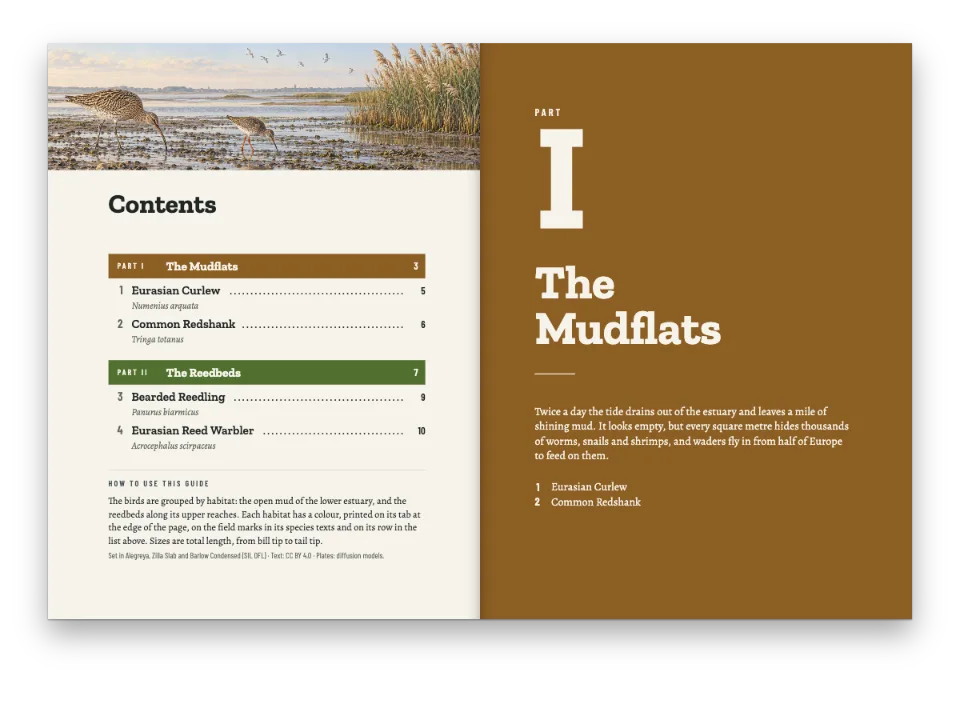
Les premières pages d’une édition de poche de Frankenstein. La recette montre comment numéroter les pages avant l’histoire i, ii, iii, puis repartir à la page 1 là où l’histoire commence.
Ce que vous allez composer
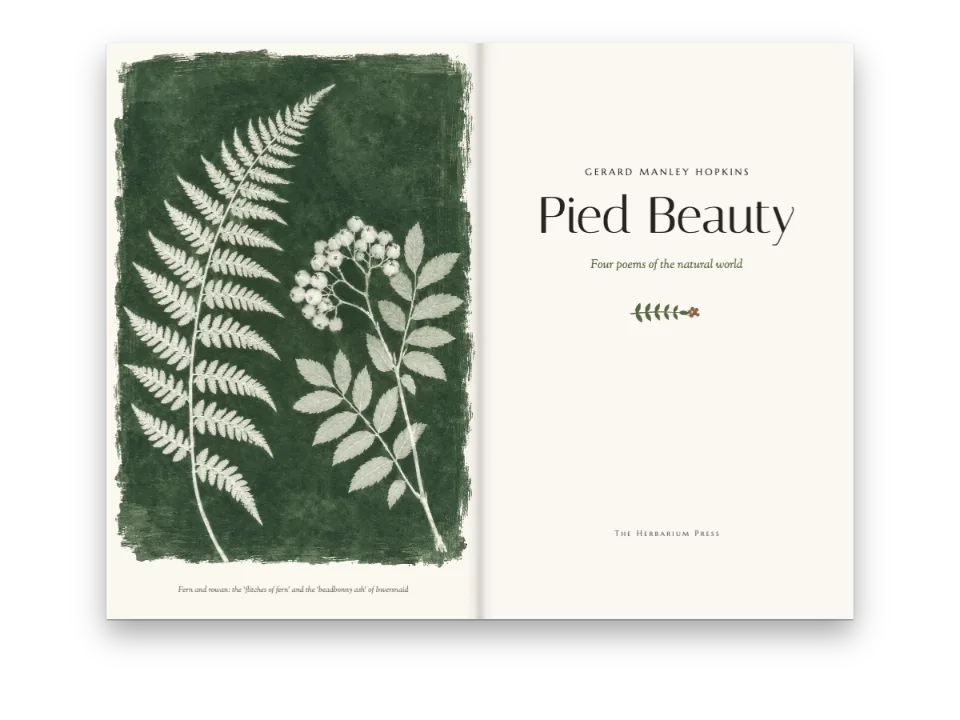
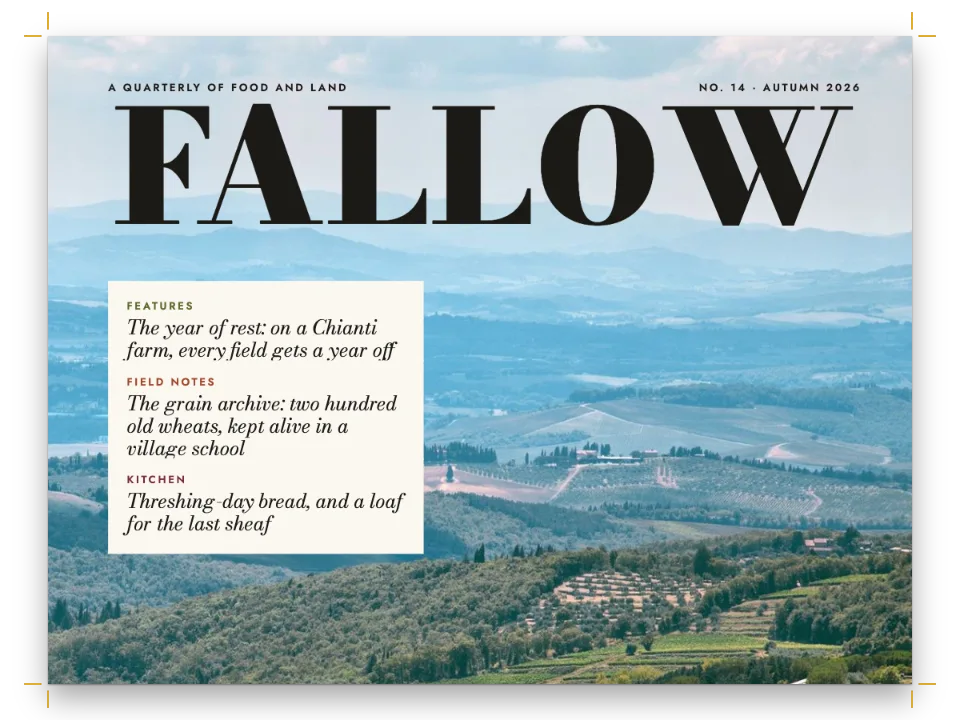
Les premiers feuillets de Frankenstein en classique de poche, au format 129 × 198 mm : une couverture avec la foudre sur le mont Blanc, son dos laissé blanc, un faux-titre, un frontispice du navire de Walton pris dans les glaces en regard de la page de titre, les mentions légales en bas de son verso, la dédicace à Godwin au-dessus de l’épigraphe de Milton, une page de table des matières et la préface de 1818. Ces dix pages sont numérotées de i à x, mais seules la table et la préface impriment leur numéro. La lettre I ouvre le roman sur une page de droite, sous les aurores boréales, et son folio indique 1 au même endroit que le x de la page en regard. La lettre se poursuit jusqu’à la signature de Walton. Le ix à côté de la préface dans la table et le 1 à côté de la lettre viennent des pages finies, et une visionneuse PDF étiquette les pages de la même façon. La couverture, le frontispice et les aurores boréales sont des peintures générées par des modèles de diffusion, chargées en bitmaps JPEG ; la marque de l’éditeur et le cristal de glace sont dessinés en code.
Cette recette répond à
- Comment numéroter les pages liminaires en chiffres romains et repartir de 1 au chapitre 1 ?
- Comment faire une couverture, un faux-titre, une page de titre et un colophon ?
- Comment ajouter une table des matières qui se met à jour seule (points de conduite, numéros de page, auteurs, lignes de partie) ?
- Comment insérer des pages blanches voulues, ou commencer une section sur une nouvelle double page ?
- Comment composer une épigraphe, une dédicace, une signature ou une citation en exergue avec un grand guillemet ?
La réponse courte
// The page counter starts in lower-case roman: the cover is page i. After the Preface, two
// directives in the Markdown count again from 1 on the next recto:
//   :::pagebreak{parity="odd"}
//   :::numbering{format="decimal" startAt=1}
// :::numbering takes effect on the next page that starts (gotcha: numbering-next-page). Level 1
// breaks to 'odd', so here the pagebreak changes nothing; it finds the recto when a level breaks
// with parity 'any' or not at all. Never with 'always-odd': the blank pages would stack up.
const pageNumbering = { format: 'lower-roman', startAt: 1 }; // startAt spelled out: cover = i
// One folio design, centred under the text block. {pageNumber} prints the page's own label,
// so the same design sets "x" in the front matter and "1" on the first page of the novel.
const folio = (pages) => text(`folio-${pages}`, '{pageNumber}', 'Playfair Display SC', 8.5,
  at('top', 0, 9), { letterSpacing: pt(0.8), pages }); // lower case sets as small capitals
// The front matter is a heading style, unnumbered and left out of the contents (a heading
// can opt back in with {toc="true"}). It prints no running heads and puts a folio on every
// page of the section. Parity 'any', because the contents fall on a verso.
const front = {
  id: 'front', numbered: false, toc: false, breakBefore: { enabled: true, parity: 'any' },
  header: { elements: [] }, footer: { elements: [folio('all')] }, ...frontLook,
};
// The novel keeps the document's furniture: heads on its body pages, the folio on openers.
const footer = { elements: [folio('opener')] };
// Hook-up in config(): page: { pageNumbering }, headingStyles: [front] and footer at the top
// level. frontLook, set above, is the look of the prelims' openers.
Ingrédients
- Fonctionnalités
- Pages liminaires en chiffres romainsTable des matièresTitres courants par sectionCouvertures, pages de titre et colophonsSauts de page et de colonneStyles de titreChapitres non numérotésGéométrie de sectionImages dans les maquettes de pageChapitres qui commencent en belle pageStyles de paragrapheOuvertures composéesAttributs de titreMétadonnées du documentTitres courants et foliosTitres courants selon le rôle de la pageMarges en miroirExport PDFSignets PDFFigures et tableaux comme ressources
- Typographie
- Fanwood Text, Playfair Display SC, Cinzel (SIL OFL 1.1)
- Ressources
band-1400.jpgcover-1000.jpgplate-1000.jpg- The cover: lightning over Mont Blanc and the lake of Geneva (Generated With Diffusion Models, original)
- The frontispiece: a brig beset in pack ice, a dog sledge far off (Generated With Diffusion Models, original)
- Letter I’s opener: northern lights over the frozen Neva (Generated With Diffusion Models, original)
Préparation
#1 · Chaque feuillet est un titre doté d’une maquette
// Each leaf is a heading, so it opens its page, gets a PDF bookmark and takes a design. The
// leaves are unnumbered, left out of the contents and print no heads or folio (blind folios).
// Parity 'any', or each would inherit level 1's odd break (gotcha: style-inherits-break).
const blind = { numbered: false, toc: false, breakBefore: { enabled: true, parity: 'any' },
  header: { elements: [] }, footer: { elements: [] } };
const PLATE_H = 126; // mm: the frontispiece, as wide as the text block; its caption hangs below
// mm from the trim: the imprint's eleven lines end on the text block's last baseline.
const IMPRINT_TOP = 126.4; // re-tune it whenever the imprint changes
const leaves = [
  // i: bled to the trim. The painting is as tall as the page, so the cover takes it whole.
  { id: 'cover', ...blind, advancedDesign: design([
    image('cover', at('top-left', 0, 0, { width: 'fill', to: 'bleed' })),
    label('author', '{author}', 9, onPage(22), 'bone', 2.6),
    text('title', '{title}', 'Fanwood Text', 56, onPage(31), { color: col('bone'), lineHeight: 1 }),
    text('subtitle', '{subtitle}', 'Fanwood Text', 13, onPage(53), { ...on('ice'), italic: true }),
    label('series', '{attr.publisher}', 7, onPage(168), 'ice', 2),
  ]) },
  // iii: the half title waits for a recto, so the back of the cover, ii, is left blank.
  { id: 'half', ...blind, breakBefore: { enabled: true, parity: 'odd' }, advancedDesign: design([
    text('title', '{title}', 'Playfair Display SC', 17, at('top', 0, 34), { letterSpacing: pt(3) }),
    image('crystal', at('top', 0, 45, { width: 6 })),
  ]) },
  { id: 'plate', ...blind, advancedDesign: design([ // iv: faces the title page
    image('plate', at('top-left', 0, 0, { width: 'fill' })),
    text('caption', '{attr.caption}', 'Fanwood Text', 8.8,
      at('top', 0, PLATE_H + 5, { width: 80 }), { italic: true, lineHeight: 1.3 }),
    label('source', '{attr.source}', 7.5, at('top', 0, PLATE_H + 16), 'muted', 1.3),
  ]) },
  { id: 'title', ...blind, advancedDesign: design([ // v: four frontmatter fields, one attribute
    label('edition', 'The text of {publishDate}', 7.5, at('top', 0, 22), 'accent', 1.8),
    text('title', '{title}', 'Playfair Display SC', 33, at('top', 0, 30),
      { fontWeight: 700, letterSpacing: pt(0.4), lineHeight: 1 }),
    text('subtitle', '{subtitle}', 'Fanwood Text', 14, at('top', 0, 44), { italic: true }),
    { kind: 'rule', id: 'rule', direction: 'horizontal', thickness: pt(0.8), color: col('accent'),
      placement: at('top', 0, 60, { width: 14 }) },
    label('author', '{author}', 10, at('top', 0, 66), 'ink', 2.4),
    image('mark', at('top', 0, 126, { width: 11 })),
    label('publisher', '{attr.publisher}', 7.5, at('top', 0, 140), 'muted', 1.5),
  ]) },
  // vi: the section's margins set the small print low, in a 70 mm measure against the outer
  // margin. hidden: the heading opens the page and names its bookmark, and prints nothing.
  { id: 'imprint', ...blind, hidden: true,
    margins: { top: mm(IMPRINT_TOP), left: mm(TRIM_W - OUTER - 70) } },
  // vii: dedication and epigraph, under a heading whose design is an ornament and no title.
  { id: 'quiet', ...blind,
    advancedDesign: design([image('crystal', at('top', 0, 24, { width: 6 }))], 34) },
];
// :::paragraphs blocks set the small print, the dedication, the epigraph and Walton's close;
// the dedication and the verse take one paragraph per line, so no line of them can reflow.
const VERSE_IN = 22; // mm: the indent that centres the verse as a block
const SOURCE_IN = 55; // mm: 'Paradise Lost' ends under the end of the longest line of verse
const prelimStyles = [
  { id: 'small-print', fontSize: pt(7.6), lineHeight: pt(10.4), textAlign: 'left',
    firstLineIndent: pt(0), spaceBetween: pt(5.2) },
  // Small capitals, with the italic lines of the 1818 page, leaded as one inscription.
  { id: 'dedication', fontFamily: 'Playfair Display SC', fontSize: pt(10), lineHeight: pt(15),
    textAlign: 'center', firstLineIndent: pt(0) },
  { id: 'verse', fontSize: pt(10), textAlign: 'left', firstLineIndent: mm(VERSE_IN),
    marginTop: pt(LEAD * 4) }, // on the body's 14 pt leading, which a style inherits
  { id: 'source', fontFamily: 'Cinzel', fontSize: pt(7.5), textAlign: 'left',
    firstLineIndent: mm(SOURCE_IN), marginTop: pt(4), color: col('muted') },
  { id: 'signature', textAlign: 'right', firstLineIndent: pt(0) }, // the letter's close
];
Un titre ouvre sa propre page et devient un signet du PDF ; la maquette de son style place le texte et les images du feuillet. Avec numbered: false et toc: false, les feuillets restent hors du compte des chapitres et de la table. Un en-tête et un pied de page vides leur donnent ce que les imprimeurs appellent des folios muets : la page de titre n’imprime aucun numéro mais reste la page v, et c’est pourquoi la préface peut être ix. Seul le faux-titre garde un saut vers une page impaire, et c’est ce qui laisse blanc le dos de la couverture. Les mentions légales, la dédicace, l’épigraphe et la formule finale de Walton sont des blocs :::paragraphs composés dans les styles de la fin de l’extrait.
#2 · La table prend ses numéros dans la mise en page
// Entries take the body's face and ink, and start on the Preface's first baseline, facing it.
const contents = {
  levels: [{ level: 1, fontSize: pt(12), lineHeight: pt(PREFACE.lead) }],
  // The folio's face: "ix" in small capitals, then a plain 1. The leader takes it too.
  pageNumber: { fontFamily: 'Playfair Display SC', fontSize: pt(10), color: col('accent'),
    width: mm(8) },
  leader: { char: '. ', gap: mm(2.5) },
  // A second line from the heading's to="…" attribute: whom each letter is written to.
  subtitle: { enabled: true, attr: 'to', fontSize: pt(9.5), color: col('muted') },
};
:::toc liste chaque titre que son style admet, avec l’étiquette de la page où il tombe (table des matières). La table et la préface partagent le style front, qui définit toc: false, et la préface le remplace par {toc="true"}. Ni la préface ni la lettre I ne sont numérotées : leurs entrées n’impriment aucun numéro de chapitre. La deuxième ligne de l’entrée de la lettre est son attribut to="…". Les numéros de page sont composés dans le caractère des folios. Les entrées commencent sur la même ligne de base que la première ligne de la préface, pour que les deux pages en regard s’alignent.
#3 · Le roman s’ouvre sur un recto, sous les aurores boréales
const BAND = 104; // mm from the trim to the foot of the drawing, which fades into the paper
// minHeight ends AIR mm below it and the first line takes the next grid line. to: 'bleed' is the
// trim until page.cutLines adds a bleed; 3 mm drop the foot 1.8 mm, still above that line.
const AIR = 2;
const opener = design([
  image('band', at('top-left', 0, 0, { width: 'fill', to: 'bleed' })),
  label('to', '{attr.to}', 7.5, onPage(19), 'ice', 2),
  text('title', '{titleText}', 'Playfair Display SC', 46, onPage(25),
    { color: col('bone'), lineHeight: 1 }),
  text('dateline', '{attr.dateline}', 'Fanwood Text', 10.5, onPage(44),
    { italic: true, color: col('bone') }),
  // The drawing reserves down to its foot. minHeight, counted from the text block (TOP below
  // the trim), is a floor AIR mm lower, which sends the first line one grid line further down.
], BAND - TOP + AIR);
// Walton's letters come before Chapter I: they take the novel's opener but no number.
const letter = { id: 'letter', numbered: false };
La peinture sort à fond perdu par le haut de la page et se fond dans le papier à son pied, là où commence la lettre. L’ouverture réserve la page jusqu’au pied de la peinture, à 104 mm du haut de la page, et minHeight fixe un plancher 2 mm plus bas, qui fait commencer la lettre une ligne de grille plus bas, à l’écart du fondu (étendue et maquette avancée). Le surtitre et la ligne de date viennent des attributs to et dateline du titre. La lettre I porte aussi {style="letter"}, un style dont le seul réglage est numbered: false, parce que les lettres de Walton précèdent le chapitre I et n’ont pas de numéro de chapitre.
#4 · Les titres courants reviennent avec le roman
const HEAD_Y = 12.5; // mm from the trim to the heads' line
const HEAD_GAP = 8; // mm from the outer margin, where the folio hangs, to the words beside it
const head = (id, content, parity, edge, x, extra = {}) => ({ ...label(id, content, 7.5,
  at(edge, x, HEAD_Y, { to: 'page' }), 'muted', 1.4), align: 'left', parity, pages: 'body',
  ...extra }); // pages: 'body' keeps them off the opener
const numeral = { fontFamily: 'Playfair Display SC', fontSize: pt(8.5), fontWeight: 400,
  letterSpacing: pt(0.6), color: col('ink') }; // folios in the folio face, as on the openers
const header = { elements: [
  head('verso-folio', '{pageNumber}', 'even', 'top-left', OUTER, numeral),
  head('verso-title', '{title}', 'even', 'top-left', OUTER + HEAD_GAP),
  head('recto-title', '{chapterTitle}', 'odd', 'top-right', -(OUTER + HEAD_GAP)),
  head('recto-folio', '{pageNumber}', 'odd', 'top-right', -OUTER, numeral),
] };
Une section garde l’en-tête et le pied de page du document, sauf si son style les remplace. Les pages liminaires remplacent les deux et le style de la lettre non : à partir de la page 1, le roman imprime ces titres courants sur ses pages courantes et, sur son ouverture, le folio en pied défini dans la réponse courte. {pageNumber} imprime l’étiquette de la page où il se trouve : l’assistant folio() compose ainsi x d’un côté du dos et 1 de l’autre avec la même maquette.
#5 · Le PDF porte les mêmes numéros de page
// :::toc lists each heading with the label of the page it lands on; buildDocument lays the
// document out again until those labels stop moving (ix for the Preface, 1 for Letter I).
const doc = await buildDocumentWithFonts({ markdown, resources }, config(), kitFonts(FONTS));
showPages(doc, { title: 'Frankenstein · the opening leaves' });
// The PDF gets /PageLabels from the same labels: a viewer numbers its pages i–x, then 1, 2.
offerPdf(() => renderToPdf(doc, { fontProvider: fontsourceProvider, resourceBytes: imageBytes }),
  `${RECIPE}.pdf`);
buildDocument répète la mise en page jusqu’à ce que les étiquettes de page de la table ne changent plus : un seul appel suffit. renderToPdf écrit ces étiquettes dans le PDF : dans une visionneuse qui lit les étiquettes de page, le champ du numéro de page va de i à x puis repart de 1, et « aller à la page 1 » ouvre la lettre I. Chaque titre devient un signet nommé d’après son texte, et c’est pourquoi les feuillets ont des titres simples : « Cover », « Half title », « Frontispiece », « Title page », « Imprint », « Dedication ».
La recette complète
// ═══ Postext Cookbook · Nº 006 · Front matter: roman folios, then page 1 ═══════════ // https://postext.dev/en/cookbook/front-matter-roman-to-arabic // Code: MIT · Text: M. & P. B. Shelley, 1818 (PD) · Pictures: diffusion models; marks drawn in code // Fonts: Fanwood Text, Playfair Display SC, Cinzel (SIL OFL 1.1) · Needs postext ≥ 1.25.0 import { buildDocumentWithFonts, renderPageToCanvas, registerResourceImage, } from 'https://esm.sh/postext'; import { renderToPdf, decompressWoff2 } from 'https://esm.sh/postext-pdf'; const LANG = 'en'; // @lang: the language of the sample document ('en' | 'es') const RECIPE = 'front-matter-roman-to-arabic'; // ─── 1 · Design ───────────────────────────────────────────────────────────── const palette = { // every colour in the config links to one of these ink: '#1c1d21', // text: a cold near-black accent: '#3d5a70', // steel blue, the one accent on paper: contents folios, the rule, the marks muted: '#6a665f', // running heads, sources, the second lines of the contents paper: '#fbf8f2', // the page night: '#131a24', ice: '#a9c6d6', bone: '#efe9dc', // the drawings' inks, and the type on them }; const col = (id) => ({ hex: palette[id], model: 'hex', paletteId: id }); const colorPalette = [ ...Object.entries(palette).map(([id, hex]) => ({ id, name: id, value: { hex, model: 'hex' } })), // The engine's defaults link to 'main-color': point it at the accent, so nothing prints blue. { id: 'main-color', name: 'accent (defaults)', value: { hex: palette.accent, model: 'hex' } }, ]; const TRIM_W = 129, TRIM_H = 198; // mm: a pocket classic const TOP = 21, BOTTOM = 23, INNER = 17, OUTER = 15; // margins, mm; heads align to OUTER const MEASURE = TRIM_W - INNER - OUTER; // 97 mm: the text block, and the frontispiece's width const LEAD = 14; // body leading in pt: 31 lines fill the text block const PREFACE = { size: 9.8, lead: 13.3 }; // pt: the preface, a size under the novel's 10.5/14 // Design-slot shorthands. at(): a placement from an anchor's edge; edge 'top' centres it. const wide = (width) => (width === 'fill' ? 'fill' : mm(width)); const at = (edge, x, y, { width, to = 'container' } = {}) => ({ anchor: { to, edge }, offset: { x: mm(x), y: mm(y) }, ...(width !== undefined && { size: { width: wide(width) } }) }); const onPage = (y) => at('top', 0, y, { to: 'page' }); // centred on the page, y mm from the trim const on = (id) => ({ color: col(id) }); // a design text's ink // overflow 'wrap' for the running heads too, where a text too wide would end in '…'. const text = (id, content, font, size, placement, extra = {}) => ({ kind: 'text', id, content, fontFamily: font, fontSize: pt(size), color: col('ink'), align: 'center', overflow: 'wrap', placement, ...extra }); const label = (id, content, size, placement, ink, tracking) => text(id, content, 'Cinzel', size, placement, { fontWeight: 600, letterSpacing: pt(tracking), textTransform: 'uppercase', ...on(ink) }); // the label voice: Cinzel capitals, tracked const image = (id, placement) => ({ kind: 'image', id, resourceId: id, placement }); // A heading's design. minHeight (mm) where the text must start lower than the elements reach. const design = (elements, minHeight) => ({ enabled: true, slot: { elements }, ...(minHeight !== undefined && { minHeight: mm(minHeight) }) }); // The prelims' openers: a centred title in small capitals on white space, and the preface's // text a size smaller than the novel's, on its own leading. const FRONT_DROP = 46; // mm from the text block's top to the first line of text const frontLook = { advancedDesign: design([text('title', '{titleText}', 'Playfair Display SC', 19, at('top', 0, 14), { letterSpacing: pt(1.6) })], FRONT_DROP), bodyStyle: { fontSize: pt(PREFACE.size), lineHeight: pt(PREFACE.lead) }, }; // #region answer: roman folios for the front matter and arabic from Letter I, in one design // The page counter starts in lower-case roman: the cover is page i. After the Preface, two // directives in the Markdown count again from 1 on the next recto: // :::pagebreak{parity="odd"} // :::numbering{format="decimal" startAt=1} // :::numbering takes effect on the next page that starts (gotcha: numbering-next-page). Level 1 // breaks to 'odd', so here the pagebreak changes nothing; it finds the recto when a level breaks // with parity 'any' or not at all. Never with 'always-odd': the blank pages would stack up. const pageNumbering = { format: 'lower-roman', startAt: 1 }; // startAt spelled out: cover = i // One folio design, centred under the text block. {pageNumber} prints the page's own label, // so the same design sets "x" in the front matter and "1" on the first page of the novel. const folio = (pages) => text(`folio-${pages}`, '{pageNumber}', 'Playfair Display SC', 8.5, at('top', 0, 9), { letterSpacing: pt(0.8), pages }); // lower case sets as small capitals // The front matter is a heading style, unnumbered and left out of the contents (a heading // can opt back in with {toc="true"}). It prints no running heads and puts a folio on every // page of the section. Parity 'any', because the contents fall on a verso. const front = { id: 'front', numbered: false, toc: false, breakBefore: { enabled: true, parity: 'any' }, header: { elements: [] }, footer: { elements: [folio('all')] }, ...frontLook, }; // The novel keeps the document's furniture: heads on its body pages, the folio on openers. const footer = { elements: [folio('opener')] }; // Hook-up in config(): page: { pageNumbering }, headingStyles: [front] and footer at the top // level. frontLook, set above, is the look of the prelims' openers. // #endregion // #region leaves: the cover and the preliminary leaves, headings that print a design only // Each leaf is a heading, so it opens its page, gets a PDF bookmark and takes a design. The // leaves are unnumbered, left out of the contents and print no heads or folio (blind folios). // Parity 'any', or each would inherit level 1's odd break (gotcha: style-inherits-break). const blind = { numbered: false, toc: false, breakBefore: { enabled: true, parity: 'any' }, header: { elements: [] }, footer: { elements: [] } }; const PLATE_H = 126; // mm: the frontispiece, as wide as the text block; its caption hangs below // mm from the trim: the imprint's eleven lines end on the text block's last baseline. const IMPRINT_TOP = 126.4; // re-tune it whenever the imprint changes const leaves = [ // i: bled to the trim. The painting is as tall as the page, so the cover takes it whole. { id: 'cover', ...blind, advancedDesign: design([ image('cover', at('top-left', 0, 0, { width: 'fill', to: 'bleed' })), label('author', '{author}', 9, onPage(22), 'bone', 2.6), text('title', '{title}', 'Fanwood Text', 56, onPage(31), { color: col('bone'), lineHeight: 1 }), text('subtitle', '{subtitle}', 'Fanwood Text', 13, onPage(53), { ...on('ice'), italic: true }), label('series', '{attr.publisher}', 7, onPage(168), 'ice', 2), ]) }, // iii: the half title waits for a recto, so the back of the cover, ii, is left blank. { id: 'half', ...blind, breakBefore: { enabled: true, parity: 'odd' }, advancedDesign: design([ text('title', '{title}', 'Playfair Display SC', 17, at('top', 0, 34), { letterSpacing: pt(3) }), image('crystal', at('top', 0, 45, { width: 6 })), ]) }, { id: 'plate', ...blind, advancedDesign: design([ // iv: faces the title page image('plate', at('top-left', 0, 0, { width: 'fill' })), text('caption', '{attr.caption}', 'Fanwood Text', 8.8, at('top', 0, PLATE_H + 5, { width: 80 }), { italic: true, lineHeight: 1.3 }), label('source', '{attr.source}', 7.5, at('top', 0, PLATE_H + 16), 'muted', 1.3), ]) }, { id: 'title', ...blind, advancedDesign: design([ // v: four frontmatter fields, one attribute label('edition', 'The text of {publishDate}', 7.5, at('top', 0, 22), 'accent', 1.8), text('title', '{title}', 'Playfair Display SC', 33, at('top', 0, 30), { fontWeight: 700, letterSpacing: pt(0.4), lineHeight: 1 }), text('subtitle', '{subtitle}', 'Fanwood Text', 14, at('top', 0, 44), { italic: true }), { kind: 'rule', id: 'rule', direction: 'horizontal', thickness: pt(0.8), color: col('accent'), placement: at('top', 0, 60, { width: 14 }) }, label('author', '{author}', 10, at('top', 0, 66), 'ink', 2.4), image('mark', at('top', 0, 126, { width: 11 })), label('publisher', '{attr.publisher}', 7.5, at('top', 0, 140), 'muted', 1.5), ]) }, // vi: the section's margins set the small print low, in a 70 mm measure against the outer // margin. hidden: the heading opens the page and names its bookmark, and prints nothing. { id: 'imprint', ...blind, hidden: true, margins: { top: mm(IMPRINT_TOP), left: mm(TRIM_W - OUTER - 70) } }, // vii: dedication and epigraph, under a heading whose design is an ornament and no title. { id: 'quiet', ...blind, advancedDesign: design([image('crystal', at('top', 0, 24, { width: 6 }))], 34) }, ]; // :::paragraphs blocks set the small print, the dedication, the epigraph and Walton's close; // the dedication and the verse take one paragraph per line, so no line of them can reflow. const VERSE_IN = 22; // mm: the indent that centres the verse as a block const SOURCE_IN = 55; // mm: 'Paradise Lost' ends under the end of the longest line of verse const prelimStyles = [ { id: 'small-print', fontSize: pt(7.6), lineHeight: pt(10.4), textAlign: 'left', firstLineIndent: pt(0), spaceBetween: pt(5.2) }, // Small capitals, with the italic lines of the 1818 page, leaded as one inscription. { id: 'dedication', fontFamily: 'Playfair Display SC', fontSize: pt(10), lineHeight: pt(15), textAlign: 'center', firstLineIndent: pt(0) }, { id: 'verse', fontSize: pt(10), textAlign: 'left', firstLineIndent: mm(VERSE_IN), marginTop: pt(LEAD * 4) }, // on the body's 14 pt leading, which a style inherits { id: 'source', fontFamily: 'Cinzel', fontSize: pt(7.5), textAlign: 'left', firstLineIndent: mm(SOURCE_IN), marginTop: pt(4), color: col('muted') }, { id: 'signature', textAlign: 'right', firstLineIndent: pt(0) }, // the letter's close ]; // #endregion // #region contents: what :::toc prints: titles, dotted leaders, the labels each page prints // Entries take the body's face and ink, and start on the Preface's first baseline, facing it. const contents = { levels: [{ level: 1, fontSize: pt(12), lineHeight: pt(PREFACE.lead) }], // The folio's face: "ix" in small capitals, then a plain 1. The leader takes it too. pageNumber: { fontFamily: 'Playfair Display SC', fontSize: pt(10), color: col('accent'), width: mm(8) }, leader: { char: '. ', gap: mm(2.5) }, // A second line from the heading's to="…" attribute: whom each letter is written to. subtitle: { enabled: true, attr: 'to', fontSize: pt(9.5), color: col('muted') }, }; // #endregion // #region letter: the novel's opener: the northern lights, bled off the head of the recto const BAND = 104; // mm from the trim to the foot of the drawing, which fades into the paper // minHeight ends AIR mm below it and the first line takes the next grid line. to: 'bleed' is the // trim until page.cutLines adds a bleed; 3 mm drop the foot 1.8 mm, still above that line. const AIR = 2; const opener = design([ image('band', at('top-left', 0, 0, { width: 'fill', to: 'bleed' })), label('to', '{attr.to}', 7.5, onPage(19), 'ice', 2), text('title', '{titleText}', 'Playfair Display SC', 46, onPage(25), { color: col('bone'), lineHeight: 1 }), text('dateline', '{attr.dateline}', 'Fanwood Text', 10.5, onPage(44), { italic: true, color: col('bone') }), // The drawing reserves down to its foot. minHeight, counted from the text block (TOP below // the trim), is a floor AIR mm lower, which sends the first line one grid line further down. ], BAND - TOP + AIR); // Walton's letters come before Chapter I: they take the novel's opener but no number. const letter = { id: 'letter', numbered: false }; // #endregion // #region heads: running heads on the novel's body pages; the book on versos, letter on rectos const HEAD_Y = 12.5; // mm from the trim to the heads' line const HEAD_GAP = 8; // mm from the outer margin, where the folio hangs, to the words beside it const head = (id, content, parity, edge, x, extra = {}) => ({ ...label(id, content, 7.5, at(edge, x, HEAD_Y, { to: 'page' }), 'muted', 1.4), align: 'left', parity, pages: 'body', ...extra }); // pages: 'body' keeps them off the opener const numeral = { fontFamily: 'Playfair Display SC', fontSize: pt(8.5), fontWeight: 400, letterSpacing: pt(0.6), color: col('ink') }; // folios in the folio face, as on the openers const header = { elements: [ head('verso-folio', '{pageNumber}', 'even', 'top-left', OUTER, numeral), head('verso-title', '{title}', 'even', 'top-left', OUTER + HEAD_GAP), head('recto-title', '{chapterTitle}', 'odd', 'top-right', -(OUTER + HEAD_GAP)), head('recto-folio', '{pageNumber}', 'odd', 'top-right', -OUTER, numeral), ] }; // #endregion const config = () => ({ locale: 'en-us', // the hyphenation patterns colorPalette, layout: { layoutType: 'single' }, page: { // mirror: left is the inner margin; 150 dpi is for the screen sizePreset: 'custom', width: mm(TRIM_W), height: mm(TRIM_H), dpi: 150, backgroundColor: col('paper'), pageNumbering, margins: { top: mm(TOP), bottom: mm(BOTTOM), left: mm(INNER), right: mm(OUTER), mirror: true }, }, bodyText: { // justified, hyphenated, optimal line breaking, widow control: the defaults fontFamily: 'Fanwood Text', fontSize: pt(10.5), lineHeight: pt(LEAD), color: col('ink'), boldColor: col('ink'), italicColor: col('ink'), referenceColor: col('ink'), firstLineIndent: mm(4), indentAfterHeading: false, // An even grey: spaces 0.75–1.75 of their width; a last line under 36 spaces' width (about // 18 letters: a lone 'occurrence.') is a runt, and costs three times the default. minWordSpacing: 0.75, maxWordSpacing: 1.75, runtMinCharacters: 36, runtPenalty: 3000, }, headings: { fontFamily: 'Playfair Display SC', fontWeight: 400, color: col('ink'), // 'odd': the novel opens on a recto. span 'page': a design kept in the column is cut at // the foot of the text block, and the cover's painting, a style of this level, runs on. levels: [{ level: 1, span: 'page', breakBefore: { enabled: true, parity: 'odd' }, marginTop: pt(0), marginBottom: pt(0), advancedDesign: opener }], }, headingStyles: [...leaves, front, letter], toc: contents, paragraphStyles: prelimStyles, header, footer, }); // ─── 2 · Content ──────────────────────────────────────────────────────────── const markdown = String.raw`---Exemple Markdown · 105 lignes · content.en.md
title: "Frankenstein" subtitle: "or, The Modern Prometheus" author: "Mary Shelley" publishDate: "1818" --- # Cover {style="cover" publisher="Postext Classics"} # Half title {style="half"} # Frontispiece {style="plate" caption="We perceived a low carriage, fixed on a sledge and drawn by dogs, pass on towards the north, at the distance of half a mile." source="Letter IV"} # Title page {style="title" publisher="Postext Classics · MMXXVI"} # Imprint {style="imprint"} :::paragraphs{style="small-print"} *Frankenstein; or, The Modern Prometheus* was first published anonymously, in three volumes, by Lackington, Hughes, Harding, Mavor & Jones of Finsbury Square, London, on 1 January 1818. This edition follows that first text, transcribed by Project Gutenberg from a photographic reprint (eBook 41445), and keeps its spelling: phænomena, their’s, St. Petersburgh. Set in Fanwood Text, Playfair Display SC and Cinzel (SIL Open Font License). Cover and paintings generated with diffusion models; publisher’s mark drawn in code; pages laid out by Postext. Text: public domain. Design and editorial matter: CC BY 4.0. Postext Cookbook · No. 6 ::: # Dedication {style="quiet"} :::paragraphs{style="dedication"} *To* William Godwin, *Author of Political Justice,* *Caleb Williams, &c.* These volumes *Are respectfully inscribed* By The Author. ::: :::paragraphs{style="verse"} *Did I request thee, Maker, from my clay* *To mould me man? Did I solicit thee* *From darkness to promote me?——* ::: :::paragraphs{style="source"} Paradise Lost ::: # Contents {style="front"} :::toc # Preface {style="front" toc="true"} The event on which this fiction is founded has been supposed, by Dr. Darwin, and some of the physiological writers of Germany, as not of impossible occurrence. I shall not be supposed as according the remotest degree of serious faith to such an imagination; yet, in assuming it as the basis of a work of fancy, I have not considered myself as merely weaving a series of supernatural terrors. The event on which the interest of the story depends is exempt from the disadvantages of a mere tale of spectres or enchantment. It was recommended by the novelty of the situations which it developes; and, however impossible as a physical fact, affords a point of view to the imagination for the delineating of human passions more comprehensive and commanding than any which the ordinary relations of existing events can yield. I have thus endeavoured to preserve the truth of the elementary principles of human nature, while I have not scrupled to innovate upon their combinations. The *Iliad*, the tragic poetry of Greece,—Shakespeare, in the *Tempest* and *Midsummer Night’s Dream*,—and most especially Milton, in *Paradise Lost*, conform to this rule; and the most humble novelist, who seeks to confer or receive amusement from his labours, may, without presumption, apply to prose fiction a licence, or rather a rule, from the adoption of which so many exquisite combinations of human feeling have resulted in the highest specimens of poetry. The circumstance on which my story rests was suggested in casual conversation. It was commenced, partly as a source of amusement, and partly as an expedient for exercising any untried resources of mind. Other motives were mingled with these, as the work proceeded. I am by no means indifferent to the manner in which whatever moral tendencies exist in the sentiments or characters it contains shall affect the reader; yet my chief concern in this respect has been limited to the avoiding of the enervating effects of the novels of the present day, and to the exhibitions of the amiableness of domestic affection, and the excellence of universal virtue. The opinions which naturally spring from the character and situation of the hero are by no means to be conceived as existing always in my own conviction; nor is any inference justly to be drawn from the following pages as prejudicing any philosophical doctrine of whatever kind. It is a subject also of additional interest to the author, that this story was begun in the majestic region where the scene is principally laid, and in society which cannot cease to be regretted. I passed the summer of 1816 in the environs of Geneva. The season was cold and rainy, and in the evenings we crowded around a blazing wood fire, and occasionally amused ourselves with some German stories of ghosts, which happened to fall into our hands. These tales excited in us a playful desire of imitation. Two other friends (a tale from the pen of one of whom would be far more acceptable to the public than any thing I can ever hope to produce) and myself agreed to write each a story, founded on some supernatural occurrence. The weather, however, suddenly became serene; and my two friends left me on a journey among the Alps, and lost, in the magnificent scenes which they present, all memory of their ghostly visions. The following tale is the only one which has been completed. :::pagebreak{parity="odd"} :::numbering{format="decimal" startAt=1} # Letter I {style="letter" to="To Mrs. Saville, England" dateline="St. Petersburgh, Dec. 11th, 17—"} You will rejoice to hear that no disaster has accompanied the commencement of an enterprise which you have regarded with such evil forebodings. I arrived here yesterday; and my first task is to assure my dear sister of my welfare, and increasing confidence in the success of my undertaking. I am already far north of London; and as I walk in the streets of Petersburgh, I feel a cold northern breeze play upon my cheeks, which braces my nerves, and fills me with delight. Do you understand this feeling? This breeze, which has travelled from the regions towards which I am advancing, gives me a foretaste of those icy climes. Inspirited by this wind of promise, my day dreams become more fervent and vivid. I try in vain to be persuaded that the pole is the seat of frost and desolation; it ever presents itself to my imagination as the region of beauty and delight. There, Margaret, the sun is for ever visible; its broad disk just skirting the horizon, and diffusing a perpetual splendour. There—for with your leave, my sister, I will put some trust in preceding navigators—there snow and frost are banished; and, sailing over a calm sea, we may be wafted to a land surpassing in wonders and in beauty every region hitherto discovered on the habitable globe. Its productions and features may be without example, as the phænomena of the heavenly bodies undoubtedly are in those undiscovered solitudes. What may not be expected in a country of eternal light? I may there discover the wondrous power which attracts the needle; and may regulate a thousand celestial observations, that require only this voyage to render their seeming eccentricities consistent for ever. I shall satiate my ardent curiosity with the sight of a part of the world never before visited, and may tread a land never before imprinted by the foot of man. These are my enticements, and they are sufficient to conquer all fear of danger or death, and to induce me to commence this laborious voyage with the joy a child feels when he embarks in a little boat, with his holiday mates, on an expedition of discovery up his native river. But, supposing all these conjectures to be false, you cannot contest the inestimable benefit which I shall confer on all mankind to the last generation, by discovering a passage near the pole to those countries, to reach which at present so many months are requisite; or by ascertaining the secret of the magnet, which, if at all possible, can only be effected by an undertaking such as mine. These reflections have dispelled the agitation with which I began my letter, and I feel my heart glow with an enthusiasm which elevates me to heaven; for nothing contributes so much to tranquillize the mind as a steady purpose,—a point on which the soul may fix its intellectual eye. This expedition has been the favourite dream of my early years. I have read with ardour the accounts of the various voyages which have been made in the prospect of arriving at the North Pacific Ocean through the seas which surround the pole. You may remember, that a history of all the voyages made for purposes of discovery composed the whole of our good uncle Thomas’s library. My education was neglected, yet I was passionately fond of reading. These volumes were my study day and night, and my familiarity with them increased that regret which I had felt, as a child, on learning that my father’s dying injunction had forbidden my uncle to allow me to embark in a sea-faring life. These visions faded when I perused, for the first time, those poets whose effusions entranced my soul, and lifted it to heaven. I also became a poet, and for one year lived in a Paradise of my own creation; I imagined that I also might obtain a niche in the temple where the names of Homer and Shakespeare are consecrated. You are well acquainted with my failure, and how heavily I bore the disappointment. But just at that time I inherited the fortune of my cousin, and my thoughts were turned into the channel of their earlier bent. Six years have passed since I resolved on my present undertaking. I can, even now, remember the hour from which I dedicated myself to this great enterprise. I commenced by inuring my body to hardship. I accompanied the whale-fishers on several expeditions to the North Sea; I voluntarily endured cold, famine, thirst, and want of sleep; I often worked harder than the common sailors during the day, and devoted my nights to the study of mathematics, the theory of medicine, and those branches of physical science from which a naval adventurer might derive the greatest practical advantage. Twice I actually hired myself as an under-mate in a Greenland whaler, and acquitted myself to admiration. I must own I felt a little proud, when my captain offered me the second dignity in the vessel, and entreated me to remain with the greatest earnestness; so valuable did he consider my services. And now, dear Margaret, do I not deserve to accomplish some great purpose. My life might have been passed in ease and luxury; but I preferred glory to every enticement that wealth placed in my path. Oh, that some encouraging voice would answer in the affirmative! My courage and my resolution is firm; but my hopes fluctuate, and my spirits are often depressed. I am about to proceed on a long and difficult voyage; the emergencies of which will demand all my fortitude: I am required not only to raise the spirits of others, but sometimes to sustain my own, when their’s are failing. This is the most favourable period for travelling in Russia. They fly quickly over the snow in their sledges; the motion is pleasant, and, in my opinion, far more agreeable than that of an English stage-coach. The cold is not excessive, if you are wrapt in furs, a dress which I have already adopted; for there is a great difference between walking the deck and remaining seated motionless for hours, when no exercise prevents the blood from actually freezing in your veins. I have no ambition to lose my life on the post-road between St. Petersburgh and Archangel. I shall depart for the latter town in a fortnight or three weeks; and my intention is to hire a ship there, which can easily be done by paying the insurance for the owner, and to engage as many sailors as I think necessary among those who are accustomed to the whale-fishing. I do not intend to sail until the month of June: and when shall I return? Ah, dear sister, how can I answer this question? If I succeed, many, many months, perhaps years, will pass before you and I may meet. If I fail, you will see me again soon, or never. Farewell, my dear, excellent, Margaret. Heaven shower down blessings on you, and save me, that I may again and again testify my gratitude for all your love and kindness. :::paragraphs{style="signature"} *Your affectionate brother,* R. Walton. :::`; // content.<lang>.md, inlined by the Cookbook // #region art: the publisher's mark and an ice crystal, drawn in the palette const f = (n) => n.toFixed(2); const poly = (pts, fill, a = 1) => `<path d="M${pts.map(([x, y]) => `${f(x)} ${f(y)}`).join('L')}Z"` + ` fill="${fill}" fill-opacity="${a}"/>`; const disk = (x, y, r, fill, a = 1) => `<circle cx="${f(x)}" cy="${f(y)}" r="${f(r)}" ` + `fill="${fill}" fill-opacity="${a}"/>`; const PX = 10; // each drawing is w × h mm in its viewBox and declares w·PX × h·PX pixels const svgOf = (w, h, body) => `<svg xmlns="http://www.w3.org/2000/svg" width="${w * PX}" ` + `height="${h * PX}" viewBox="0 0 ${w} ${h}">${body}</svg>`; // The publisher's mark: a polar star in a double ring. The ornament: an ice crystal. const EMBLEM = 40; // mm: both are drawn on a 40 × 40 viewBox function mark() { const star = []; for (let i = 0; i < 16; i++) { const a = (i * Math.PI) / 8; const rr = i % 4 === 0 ? 13 : i % 2 === 0 ? 7 : 2.6; star.push([20 + rr * Math.sin(a), 20 - rr * Math.cos(a)]); } const rings = [[19, 'accent'], [18, 'paper'], [16.2, 'accent'], [15.6, 'paper']]; return svgOf(EMBLEM, EMBLEM, rings.map(([rr, c]) => disk(20, 20, rr, palette[c])).join('') + poly(star, palette.ink)); } function crystal() { const arm = poly([[19.5, 20], [19.5, 3], [20, 1.5], [20.5, 3], [20.5, 20]], palette.accent) + poly([[20, 9], [15, 5], [15.5, 4.4], [20, 7.8], [24.5, 4.4], [25, 5]], palette.accent); return svgOf(EMBLEM, EMBLEM, [0, 60, 120, 180, 240, 300].map((a) => `<g transform="rotate(${a} 20 20)">${arm}</g>`).join('') + disk(20, 20, 2.4, palette.accent)); } for (const [id, svg] of Object.entries({ mark: mark(), crystal: crystal() })) { await loadSvg(`${id}.svg`, svg); } // Each declares svgOf's pixel size. const svgResource = (id, w, h, altText) => ({ id, typeId: 'figure', kind: 'svg', altText, createdAt: 0, updatedAt: 0, svg: { fileId: `${id}.svg`, width: w * PX, height: h * PX } }); const emblems = [ svgResource('mark', EMBLEM, EMBLEM, 'Publisher’s mark: a polar star in a double ring.'), svgResource('crystal', EMBLEM, EMBLEM, 'Ornament: an ice crystal.'), ]; // #endregion const painting = (id, w, h, altText) => ({ id, typeId: 'figure', kind: 'bitmap', altText, createdAt: 0, updatedAt: 0, bitmap: { fileId: `${id}-${w}.jpg`, format: 'jpeg', width: w, height: h } }); const paintings = [ // JPEGs in assets/; only the designs use them, nothing cites them painting('cover', 1000, 1535, 'Lightning strikes Mont Blanc over the lake of Geneva.'), painting('plate', 1000, 1299, 'A brig beset in pack ice, a sledge drawn by dogs far off.'), painting('band', 1400, 1129, 'Northern lights over the frozen Neva and St Petersburgh.'), ]; await Promise.all(paintings.map(({ bitmap: b }) => loadImage(b.fileId, asset(b.fileId)))); const resources = [...paintings, ...emblems]; // ─── 3 · Fonts ────────────────────────────────────────────────────────────── // Every face the pages set, loaded before the first build. const FONTS = { 'Fanwood Text': ['400', '400i'], Cinzel: ['400', '600'], 'Playfair Display SC': ['400', '400i', '700'] }; // ─── 4 · Build & show ─────────────────────────────────────────────────────── // #region build: lay out once (buildDocument settles the contents), show, offer a PDF // :::toc lists each heading with the label of the page it lands on; buildDocument lays the // document out again until those labels stop moving (ix for the Preface, 1 for Letter I). const doc = await buildDocumentWithFonts({ markdown, resources }, config(), kitFonts(FONTS)); showPages(doc, { title: 'Frankenstein · the opening leaves' }); // The PDF gets /PageLabels from the same labels: a viewer numbers its pages i–x, then 1, 2. offerPdf(() => renderToPdf(doc, { fontProvider: fontsourceProvider, resourceBytes: imageBytes }), `${RECIPE}.pdf`); // #endregionKit · core, fonts, viewer, pdf, images : identique dans toutes les recettes · 315 lignes
// ─── Kit ── helpers shared by every Cookbook recipe · postext.dev/cookbook ───── // ─── Kit · core v1 ── the same in every recipe · postext.dev/cookbook function mm(value) { return { value, unit: 'mm' }; } function pt(value) { return { value, unit: 'pt' }; } function em(value) { return { value, unit: 'em' }; } /** The sample language's string: t({ en: 'Figure', es: 'Figura' }). */ function t(strings) { return strings[LANG] ?? Object.values(strings)[0]; } /** A file in this recipe's assets folder, served from the Postext repo by jsDelivr. */ function asset(file) { return `https://cdn.jsdelivr.net/gh/drnachio/postext@main/cookbook/${RECIPE}/assets/${file}`; } // ─── Kit · fonts v3 ── the same in every recipe · postext.dev/cookbook // Postext loads the faces a config asks for before layout (prepareFonts, // buildDocumentWithFonts) and asks the kit for the files: Fontsource's, the // files the PDF embeds too. /** The options of buildDocumentWithFonts / prepareFonts / withLoadedFonts: * the Fontsource resolver, and the faces of FONTS loaded with the ones the * config names. FONTS = { 'Family Name': ['400', '400i', '700'] }. */ function kitFonts(FONTS = {}) { const faces = Object.entries(FONTS).flatMap(([family, specs]) => specs.map((spec) => ({ family, weight: parseInt(spec, 10), style: spec.endsWith('i') ? 'italic' : 'normal' }))); return { resolve: fontsourceResolver, faces }; } /** A face's Fontsource files, in a fixed order: latin, then latin-ext and greek * when `text` needs them and the family ships them (kitSubsetsFor), each with * its unicode-range. Null for a weight or slant Fontsource does not ship. */ async function fontsourceResolver(family, weight, style, { text = '' } = {}) { const id = fontsourceId(family); const meta = await fontsourceMeta(family); if (meta && !(meta.weights.includes(weight) && meta.styles.includes(style))) return null; kitStatus('Loading fonts…'); const at = await fontsourceAt(id); return ['latin', ...kitSubsetsFor(text, meta)].map((subset) => ({ source: `${at}files/${id}-${subset}-${weight}-${style}.woff2`, unicodeRange: kitRanges()[subset], })); } /** The unicode-range of each Fontsource file the kit loads (a function: the * kit is inlined after the pen's code, which runs before a const would be set). */ function kitRanges() { return { latin: 'U+0000-00FF,U+0131,U+0152-0153,U+02BB-02BC,U+02C6,U+02DA,U+02DC,U+0304,U+0308,U+0329,' + 'U+2000-206F,U+20AC,U+2122,U+2191,U+2193,U+2212,U+2215,U+FEFF,U+FFFD', 'latin-ext': 'U+0100-02BA,U+02BD-02C5,U+02C7-02CC,U+02CE-02D7,U+02DD-02FF,U+0304,U+0308,U+0329,' + 'U+1D00-1DBF,U+1E00-1E9F,U+1EF2-1EFF,U+2020,U+20A0-20AB,U+20AD-20C0,U+2113,U+2C60-2C7F,U+A720-A7FF', greek: 'U+0370-03FF', }; } /** For the cjk, arabic and comics blocks, which add their own files: the * faces of `faces` = { 'Family Name': ['400', '400i', '700'] }. `text` is the sample: * č ł † α χ also load latin-ext and greek files (kitSubsetsFor). With * `optional`, a face Fontsource does not ship is skipped instead of failing. * The files are added once all have loaded, in the order asked (latin, then * latin-ext, then greek), whatever order they arrive in: the last one added * wins a character two files hold. Resolves to the number of faces added. */ async function loadFonts(faces, text = '', { optional = false } = {}) { kitStatus('Loading fonts…'); const ranges = kitRanges(); const jobs = []; for (const [family, specs] of Object.entries(faces)) { const id = fontsourceId(family); const todo = [...new Set(specs)].map((spec) => [parseInt(spec, 10), spec.endsWith('i') ? 'italic' : 'normal']) .filter(([weight, style]) => !hasFace(family, weight, style)); // before any await const at = fontsourceAt(id); const meta = optional || /[^\0-ÿ]/u.test(text) ? await fontsourceMeta(family) : null; const subsets = ['latin', ...kitSubsetsFor(text, meta)]; for (const [weight, style] of todo) { if (optional && !(meta?.weights.includes(weight) && meta.styles.includes(style))) continue; for (const subset of subsets) { const url = `${await at}files/${id}-${subset}-${weight}-${style}.woff2`; const face = new FontFace(family, `url(${url}) format('woff2')`, { weight: String(weight), style, unicodeRange: ranges[subset] }); jobs.push(face.load().catch(() => { if (subset === 'latin' && !optional) throw new Error(`Fontsource has no ${family} ${weight} ${style}`); })); } } } const ready = await Promise.all(jobs).catch((error) => { kitFail(error); throw error; }); return ready.filter((face) => face && document.fonts.add(face)).length; } /** A loaded FontFace covers this family, weight and style (fonts.check() would * also say yes for families nobody declared). */ function hasFace(family, weight, style) { for (const face of document.fonts) { if (face.status !== 'loaded' || face.style !== style) continue; if (face.family.replace(/^["']|["']$/g, '') !== family) continue; const [low, high = low] = face.weight.split(' ').map(Number); if (weight >= low && weight <= high) return true; } return false; } /** The files beyond latin `text` needs that `meta`'s family ships. */ function kitSubsetsFor(text, meta) { return [[/[Ā-˿ᴀ-ᶿḀ-ỿ†ℓⱠ-Ɀ꜠-ꟿ]/u, 'latin-ext'], [/[Ͱ-Ͽ]/u, 'greek']] .filter(([re, x]) => re.test(text) && meta?.subsets?.includes(x)).map(([, x]) => x); } /** Fontsource's id for a family: 'Source Serif 4' → 'source-serif-4'. */ function fontsourceId(family) { return family.toLowerCase().replace(/\s+/g, '-'); } /** A package's folder at the one version @5 names now (#766). */ function fontsourceAt(id, u = `https://cdn.jsdelivr.net/npm/@fontsource/${id}@`) { return (fontsourceAt.c ??= {})[id] ??= fetch(u + '5/package.json').then((r) => r.json()) .then((p) => p.version || 5, () => 5).then((v) => `${u}${v}/`); } /** The family's Fontsource metadata (weights, styles, subsets), or null. */ function fontsourceMeta(family) { fontsourceMeta.cache ??= new Map(); const id = fontsourceId(family); if (!fontsourceMeta.cache.has(id)) { fontsourceMeta.cache.set(id, fetch(`https://api.fontsource.org/v1/fonts/${id}`) .then((res) => (res.ok ? res.json() : null), () => null)); } return fontsourceMeta.cache.get(id); } // ─── Kit · viewer v2 ── the same in every recipe · postext.dev/cookbook /** The pages as spreads on a dark desk, page 1 alone, then verso | recto, * each painted when it scrolls near. Other options go to renderPageToCanvas. */ function showPages(docs, { title, width = 460, ...render } = {}) { const root = viewer(title); const pages = [docs].flat().flatMap((doc) => doc.pages.map((page) => ({ doc, page, n: (doc.pageIndexOffset ?? 0) + page.index }))); const spreads = []; let verso = null; for (const p of pages) { if (p.n % 2 === 1) { if (verso) spreads.push([verso, null]); verso = p; } else { spreads.push([verso, p]); verso = null; } } if (verso) spreads.push([verso, null]); const density = Math.min(window.devicePixelRatio || 1, 2); showPages.painter?.disconnect(); const painter = new IntersectionObserver((entries) => { for (const { isIntersecting, target } of entries) { if (!isIntersecting) continue; painter.unobserve(target); const { doc, page } = target.postext; renderPageToCanvas(page, doc, target, { ...render, scale: (width * density) / page.width }); } }, { rootMargin: '800px' }); showPages.painter = painter; root.replaceChildren(...spreads.map((pair) => { const spread = document.createElement('div'); spread.className = 'pt-spread'; for (const p of pair) { const figure = document.createElement('figure'); if (p) { const label = p.page.pageLabel || String(p.n + 1); const canvas = document.createElement('canvas'); canvas.postext = p; canvas.style.aspectRatio = `${p.page.width} / ${p.page.height}`; canvas.setAttribute('role', 'img'); canvas.setAttribute('aria-label', `Page ${label}`); const folio = document.createElement('figcaption'); folio.textContent = label; figure.append(canvas, folio); painter.observe(canvas); } else figure.className = 'pt-blank'; spread.append(figure); } return spread; })); kitStatus(`${pages.length} ${pages.length === 1 ? 'page' : 'pages'}`); document.documentElement.dataset.postext = 'ready'; return pages.length; } /** The desk, the bar and the error reporting, created once. */ function viewer(title) { if (!document.getElementById('pt-kit')) { document.head.insertAdjacentHTML('beforeend', `<style id="pt-kit"> :root { color-scheme: dark; } body { margin: 0; background: #0e1014; color: #b9bcc4; font: 13px/1.45 system-ui, sans-serif; } #pt-bar { position: sticky; top: 0; z-index: 1; display: flex; flex-wrap: wrap; align-items: center; gap: 6px 16px; padding: 10px 16px; background: rgb(14 16 20 / .92); backdrop-filter: blur(6px); border-bottom: 1px solid #23262d; } #pt-bar strong { color: #f4f1ea; font-weight: 600; } #pt-actions { display: flex; gap: 12px; margin-left: auto; } #pt-actions a, #pt-actions button { color: #d8a21a; font: inherit; background: none; border: 0; padding: 0; cursor: pointer; } #pages { display: grid; justify-items: center; gap: 48px; padding: 32px 16px 72px; } .pt-spread { display: flex; } .pt-spread figure { margin: 0; width: min(460px, 44vw); } .pt-spread canvas { display: block; width: 100%; background: #fff; box-shadow: 0 1px 2px rgb(0 0 0 / .5), 0 22px 44px -16px rgb(0 0 0 / .8); } .pt-spread figure:first-child canvas { box-shadow: inset -14px 0 14px -14px rgb(0 0 0 / .18), 0 1px 2px rgb(0 0 0 / .5), 0 22px 44px -16px rgb(0 0 0 / .8); } .pt-spread figcaption { margin-top: 10px; text-align: center; font: 600 10px/1 system-ui, sans-serif; letter-spacing: .18em; text-transform: uppercase; color: #6c7079; } .pt-blank { visibility: hidden; } @media (max-width: 760px) { .pt-spread { flex-direction: column; gap: 32px; } .pt-spread figure { width: min(460px, 92vw); } .pt-blank { display: none; } } </style>`); document.body.insertAdjacentHTML('afterbegin', '<header id="pt-bar"><strong id="pt-title"></strong><span id="pt-status" role="status"></span><span id="pt-actions"></span></header>'); document.getElementById('pt-title').textContent = document.title || 'Postext'; addEventListener('error', (event) => kitFail(event.error ?? event.message)); addEventListener('unhandledrejection', (event) => kitFail(event.reason)); } if (title) document.getElementById('pt-title').textContent = title; return document.getElementById('pages') ?? document.body.appendChild(Object.assign(document.createElement('main'), { id: 'pages' })); } function kitStatus(text) { viewer(); document.getElementById('pt-status').textContent = text; } function kitFail(error) { document.documentElement.dataset.postext = 'error'; kitStatus(`Error: ${error?.message ?? error}`); } // ─── Kit · pdf v3 ── the same in every recipe that exports a PDF /** The Fontsource files the screen used, as TrueType, with their range and * place: the nearest weight the family ships, upright with no italic; * latin, then what its letters need (kitSubsetsFor). */ async function fontsourceProvider(family, weight, style, request) { const id = fontsourceId(family); const meta = await fontsourceMeta(family); const weights = meta?.weights?.length ? meta.weights : [400, 700]; const w = weights.reduce((a, b) => (Math.abs(b - weight) < Math.abs(a - weight) ? b : a)); const s = style === 'italic' && meta && !meta.styles.includes('italic') ? 'normal' : style; const text = String.fromCodePoint(...(request?.codePoints ?? [])); const files = await Promise.all(['latin', ...kitSubsetsFor(text, meta)].map(async (subset, order) => { const res = await fetch(`${await fontsourceAt(id)}files/${id}-${subset}-${w}-${s}.woff2`); if (!res.ok) throw new Error(`Fontsource has no ${family} ${w} ${s} ${subset}`); return Object.assign(await decompressWoff2(new Uint8Array(await res.arrayBuffer())), { unicodeRange: kitRanges()[subset], order }); })); return files.length === 1 ? files[0] : files; } /** A "Build the PDF" button; then "Open the PDF" (a new tab: CodePen's frame * shows no PDFs) and a download link. */ function offerPdf(makePdf, filename) { viewer(); const button = Object.assign(document.createElement('button'), { type: 'button', textContent: 'Build the PDF' }); button.dataset.postextPdf = filename; button.addEventListener('click', async () => { button.disabled = true; button.textContent = 'Building the PDF…'; try { const bytes = await makePdf(); const url = URL.createObjectURL(new Blob([bytes], { type: 'application/pdf' })); const size = `${Math.max(1, Math.round(bytes.length / 1024))} KB`; button.replaceWith( Object.assign(document.createElement('a'), { href: url, target: '_blank', rel: 'noopener', textContent: 'Open the PDF ↗' }), Object.assign(document.createElement('a'), { href: url, download: filename, textContent: `Download ${filename} · ${size}` })); } catch (error) { button.disabled = false; button.textContent = 'Build the PDF'; kitFail(error); } }); document.getElementById('pt-actions').append(button); } // ─── Kit · images v3 ── recipes with pictures · postext.dev/cookbook /** Registers a photo or PNG for the canvas and keeps its bytes for the PDF. * fetch → ImageBitmap never taints the canvas (a plain cross-origin <img> would). */ async function loadImage(fileId, url) { const res = await fetch(url); if (!res.ok) throw new Error(`Image not found (${res.status}): ${url}`); const bytes = new Uint8Array(await res.arrayBuffer()); registerResourceImage(fileId, await createImageBitmap(new Blob([bytes]))); (loadImage.bytes ??= new Map()).set(fileId, bytes); } /** Registers SVG markup as a vector image, its fonts inside (inlineSvgFonts, ≥ 1.25). * `options` go to registerResourceImage: { singleInk: true } tints it on the canvas. */ async function loadSvg(fileId, svg, options) { if (typeof inlineSvgFonts === 'function') svg = await inlineSvgFonts(svg, svgFaces); const img = new Image(); img.src = `data:image/svg+xml;charset=utf-8,${encodeURIComponent(svg)}`; await img.decode(); registerResourceImage(fileId, img, options); (loadImage.bytes ??= new Map()).set(fileId, new TextEncoder().encode(svg)); } /** A face's Fontsource files: nearest weight; latin + what the SVG sets. */ async function svgFaces(family, weight, style, { codePoints = [] } = {}) { const [id, m] = [fontsourceId(family), await fontsourceMeta(family)]; const w = m?.weights.reduce((a, b) => (Math.abs(b - weight) < Math.abs(a - weight) ? b : a)) ?? weight; const s = m?.styles.includes(style) === false ? 'normal' : style; return Promise.all(['latin', ...kitSubsetsFor(String.fromCodePoint(...codePoints), m)].map(async (x) => new Uint8Array( await (await fetch(`${await fontsourceAt(id)}files/${id}-${x}-${w}-${s}.woff2`)).arrayBuffer()))); } /** renderToPdf({ resourceBytes: imageBytes }) */ function imageBytes(fileId) { return loadImage.bytes?.get(fileId); } /** renderToHtml({ resourceImageUrl: imageUrl }) */ function imageUrl(fileId) { const bytes = imageBytes(fileId); if (!bytes) return undefined; imageUrl.urls ??= new Map(); if (!imageUrl.urls.has(fileId)) { const type = /\.svg$/i.test(fileId) ? 'image/svg+xml' : /\.png$/i.test(fileId) ? 'image/png' : 'image/jpeg'; imageUrl.urls.set(fileId, URL.createObjectURL(new Blob([bytes], { type }))); } return imageUrl.urls.get(fileId); } // ─── /Kit ───────────────────────────────────────────────────────────────────────
Le script.js composé s’exécute tel quel : collez-le dans le script de module de n’importe quelle page, ou ouvrez la recette sur CodePen. Dossier de la recette sur GitHub ↗ (s’ouvre dans un nouvel onglet)
Variantes
#Compter les pages liminaires en capitales
Les chiffres en haut de casse s’impriment en capitales pleines dans le caractère des folios, plus hautes que les petites capitales que donnent les chiffres en bas de casse.
-const pageNumbering = { format: 'lower-roman', startAt: 1 }; // startAt spelled out: cover = i
+const pageNumbering = { format: 'upper-roman', startAt: 1 }; // startAt spelled out: cover = I#Numéroter le livre d’un bout à l’autre
Omettez startAt et le compte se poursuit en chiffres arabes : la lettre I devient la page 11, comme dans les livres qui comptent leurs pages liminaires avec le texte.
-:::numbering{format="decimal" startAt=1}
+:::numbering{format="decimal"}#Retirer le frontispice
Supprimez le titre # Frontispiece et envoyez la page de titre sur un recto : la page iv reste blanche, la préface est toujours ix et la lettre I toujours 1.
-  { id: 'title', ...blind, advancedDesign: design([ // v: four frontmatter fields, one attribute
+  { id: 'title', ...blind, breakBefore: { enabled: true, parity: 'odd' },
+ advancedDesign: design([ // v: four frontmatter fields, one attribute#Ajouter un fond perdu et des traits de coupe pour l’imprimeur
Avec cutLines, la couverture et l’ouverture, toutes deux ancrées au fond perdu, débordent de 3 mm au-delà de la coupe ; les folios et le nombre de pages ne changent pas (traits de coupe).
     backgroundColor: col('paper'), pageNumbering,
+ cutLines: { enabled: true }, // a 3 mm bleed and crop marksErreurs fréquentes
Erreur fréquente
:::numbering prend effet à la page suivante
:::numbering modifie le compte à partir de la page suivante qui commence, pas de la page en cours. Placez-le juste après un :::pagebreak (parité odd avant le chapitre un) pour que la nouvelle numérotation commence là où vous le voulez. Pages liminaires en chiffres romains →
Erreur fréquente
Un style de titre hérite du saut de page de son niveau
Une entrée headingStyles reprend de son niveau de titre chaque champ qu’elle omet, breakBefore compris. Une page de table des matières ou un colophon mis en forme sur un H1 après un :::pagebreak hérite de la parité 'odd' et atterrit derrière une page blanche. Donnez à un tel style breakBefore: { enabled: false }. Styles de titre →
Erreur fréquente
La page 1 est un recto : planifiez les pages avec les numéros physiques
La page 1 est une page de droite et la page 2 le premier verso : planifiez donc les doubles pages avec les numéros de page physiques. Une ouverture sur une page paire fait face à la page impaire qui la suit. Sauts de page et de colonne →
Erreur fréquente
Une page prend l’en-tête de la dernière section qui y commence
Quand deux styles de titre commencent sur une même page, la page prend l’en-tête, le pied de page et la palette du dernier. Une page blanche de séparation appartient au chapitre qui la précède, une page de parité au chapitre qui la suit. Titres courants par section →
Vérification du Sandbox · parityCascade
Cascade de parité
Pourquoi. Des sauts de parité s’accumulent et produisent plus de deux pages blanches d’affilée.
Correction. Revoyez les sauts always-odd et les parités de breakBefore ; pour des chapitres courts, la parité any évite en général les pages blanches. Docs →
Vérification du Sandbox · numberingInvalidFormat
Format de numérotation non valide
Pourquoi. Un format de :::numbering n’est ni decimal, ni lower-roman, ni upper-roman, ni lower-alpha, ni upper-alpha.
Correction. Utilisez l’un des cinq formats de numéro de page ; les listes et les ressources écrivent les leurs autrement. Docs →
- Les feuillets héritent du saut
'odd'du niveau 1. Laissé tel quel, chacun attend une page de droite. Les pages liminaires passent alors à quatorze pages au lieu de dix, avec quatre versos blancs de plus, et le frontispice fait face à une page blanche au lieu de la page de titre. Redéfinissez le saut avecparity: 'any', comme le fait cette recette, ou désactivez-le avecbreakBefore: { enabled: false }; un titre sur toute la largeur de la page ouvre sa propre page de toute façon. - Retirez le
:::pagebreakavant:::numberingquand le niveau 1 saute avec'always-odd', la valeur par défaut du moteur pour H1. Si le texte qui précède se termine sur une page de droite, le saut de page complète jusqu’au recto suivant, puis le titre ajoute sa page de séparation et complète de nouveau : on obtient trois pages blanches de suite au lieu d’une. Après un saut'odd', comme ici, le saut de page ne change rien ; après'any', c’est lui qui place la page 1 sur un recto. - Une préface qui s’allonge d’une page repousse la lettre I de deux pages, parce que le saut vers une page impaire ajoute un verso blanc avant elle. Vérifiez le nombre de pages chaque fois que vous modifiez les pages liminaires.
- Les points de conduite de la table sont composés dans le caractère et la couleur des numéros de page, et
toc.leadern’a pas de couleur propre : ici, ils s’impriment en bleu acier.
Crédits
- Recette
- Ignacio Ferro
- Texte
- Frankenstein; or, The Modern Prometheus (1818): the dedication, Letter I, a line of Letter IV (the frontispiece caption) and one of volume I, chapter VI (quoted in a code comment) · Mary Shelley · domaine public
- The unsigned Preface of the 1818 edition (by common attribution) · Percy Bysshe Shelley · domaine public
- Paradise Lost (1667), book X, lines 743–745: the epigraph of the 1818 title leaves · John Milton · domaine public
- Images
- The cover: lightning over Mont Blanc and the lake of Geneva · Generated With Diffusion Models · original
- The frontispiece: a brig beset in pack ice, a dog sledge far off · Generated With Diffusion Models · original
- Letter I’s opener: northern lights over the frozen Neva · Generated With Diffusion Models · original
- Polices
- Fanwood Text (SIL OFL 1.1) · Playfair Display SC (SIL OFL 1.1) · Cinzel (SIL OFL 1.1)
Modifier ce texte ↗ (s’ouvre dans un nouvel onglet)Dossier de la recette sur GitHub ↗ (s’ouvre dans un nouvel onglet)