In short
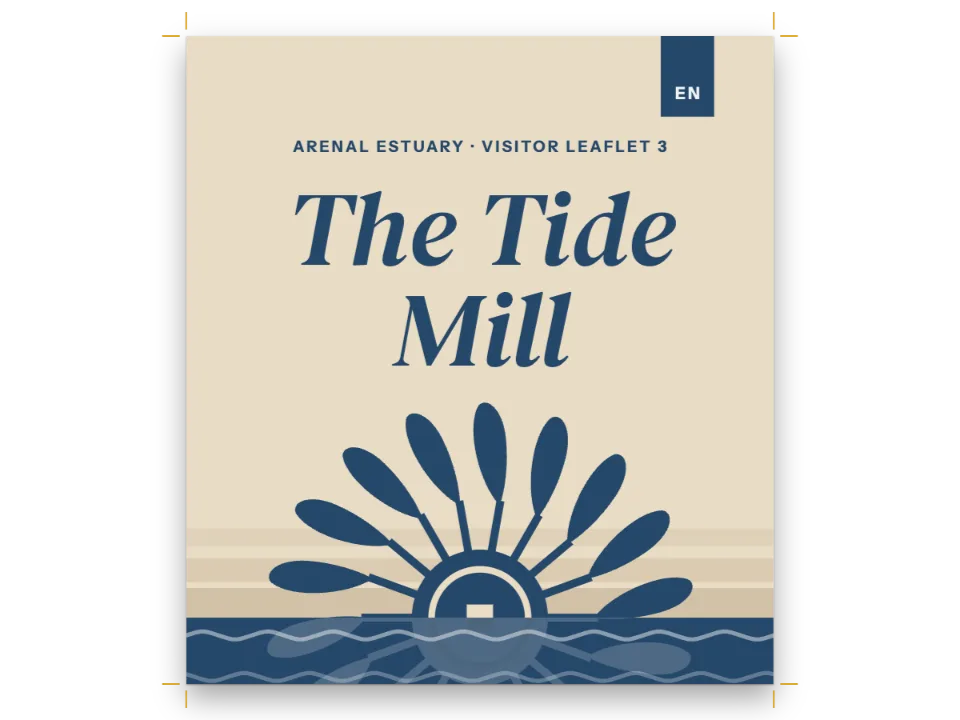
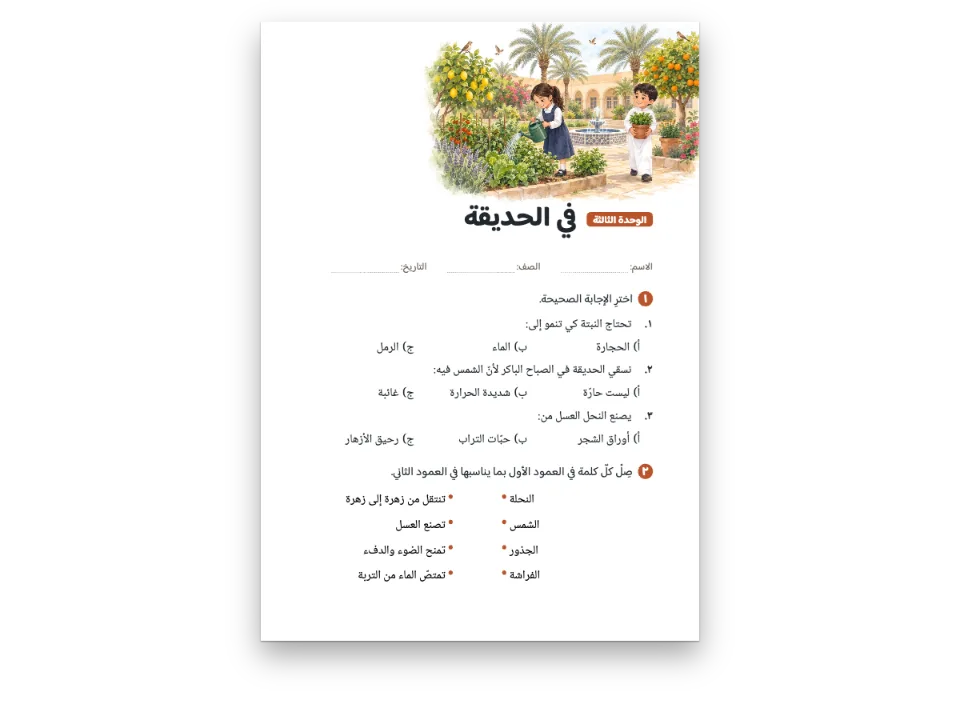
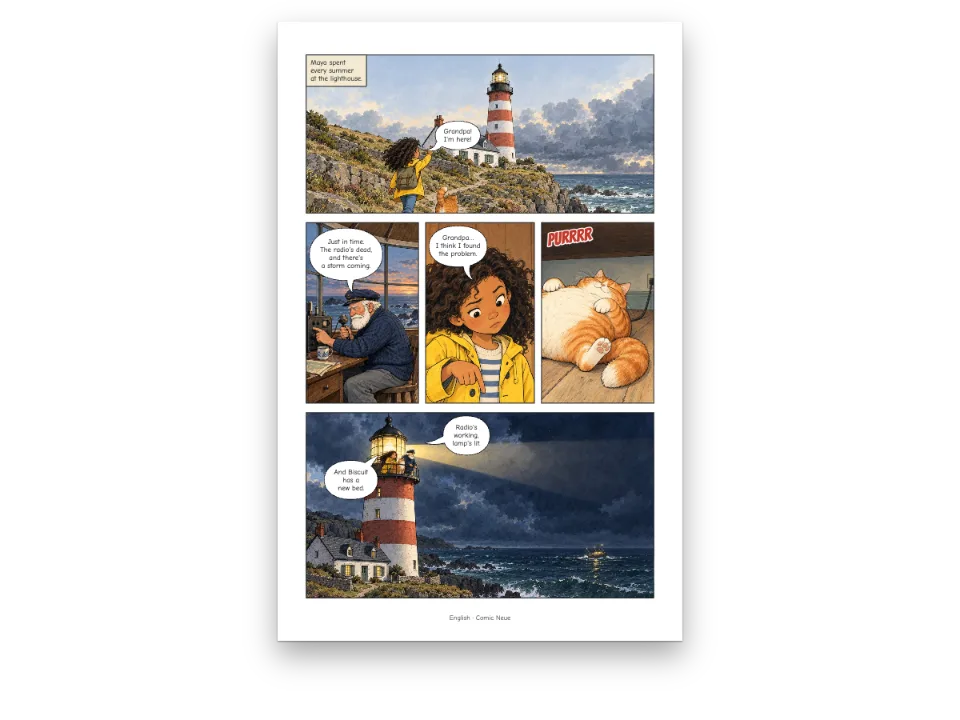
A small booklet about three old astrolabes, printed in English, Spanish and Arabic. All three share one design; only the Arabic edition changes its fonts and sizes.
What you'll build
A booklet of four A5 pages on three astrolabes in the Metropolitan Museum of Art: one made in Yemen in 1291, one in Iran in 1654 and one in Europe in 1462. The publisher prints it in English, Spanish and Arabic, and the three editions are one design. The cover photograph, the brass headings, the box with its stripe, the figures with the text beside them and the dark table header come from a single set of settings. The Arabic edition changes what belongs to its script: Amiri and IBM Plex Sans Arabic for Source Serif and Source Sans, a larger size, and labels without capitals or tracking. It reads from the right and binds on the right without one coordinate of its own.
This recipe answers
- How do I share one design between the editions of a book in several languages and change only each language's fonts, hyphenation, quotes and labels?
- How do I publish the same book in two languages from one project?
The short answer
const ARABIC_LABEL = { fontFamily: 'IBM Plex Sans Arabic', letterSpacing: pt(0),
  textTransform: 'none' }; // Arabic letters join: never tracked, and they have no capitals
// English and Spanish need nothing more than their locale: it picks the hyphenation patterns
// and the words of the figure and table labels. Arabic sets the faces of its script.
const overrides = {
  ar: {
    bodyText: { fontFamily: 'Amiri', fontSize: pt(12), lineHeight: pt(19),
      firstLineIndent: em(1.5) },
    headings: { fontFamily: 'Amiri', fontWeight: 700,
      levels: [{ level: 2, fontSize: pt(15), lineHeight: pt(24) }] },
    // Lists keyed by id merge entry by entry: only these fields of these elements change.
    headingStyles: [{ id: 'cover', advancedDesign: { slot: { elements: [
      { id: 'kicker', ...ARABIC_LABEL, fontSize: pt(10) },
      { id: 'title', fontFamily: 'Amiri', fontWeight: 700, fontSize: pt(50), lineHeight: 1.25 },
      { id: 'facts', ...ARABIC_LABEL, fontSize: pt(9.5) },
    ] } } }],
    header: { elements: ['verso-folio', 'verso-title', 'recto-title', 'recto-folio']
      .map((id) => ({ id, ...ARABIC_LABEL, fontSize: pt(9) })) },
    calloutStyles: [{ id: 'note', titleStyle: { ...ARABIC_LABEL, fontSize: pt(10) },
      body: { fontSize: pt(11.5), lineHeight: pt(19) } }],
    tableStyle: { headerFontFamily: 'IBM Plex Sans Arabic', headerFontSize: pt(9),
      bodyFontFamily: 'IBM Plex Sans Arabic', bodyFontSize: pt(9.4) },
    captionStyle: { fontFamily: 'IBM Plex Sans Arabic', fontSize: pt(9) },
    paragraphStyles: [{ id: 'colophon', fontFamily: 'IBM Plex Sans Arabic', fontSize: pt(8.4),
      lineHeight: pt(13) }],
  },
};
const edition = mergeConfigLayers(config, overrides[LANG]); // config itself for en and es
What each language sets otherwise; the rest comes from the general settings
Ingredients
- Features
- Per-language overridesRight-to-left textArabic fontsBooks bound on the rightDigits of the generated numbersHyphenation and document languageFigure and Table in your languageCovers, title pages and colophonsHeading stylesHeading attributesPictures in page designsRunning heads and foliosText wrap round pictures and boxesCallout boxesTable styleCaption styleSemantic colour palettePDF export
- Also uses
- Figures exactly hereFull-width chapter bandDesigned openersHeads by page roleParagraph stylesFonts embedded in the PDFFigures and tables as resourcesLine breaks in titles
- Type
- Source Serif 4, Source Sans 3, Amiri, IBM Plex Sans Arabic (SIL OFL 1.1)
- Assets
mashhad-800.jpgrasulid-cover-1400.jpgregiomontanus-800.jpg- Astrolabe of ʿUmar ibn Yusuf, Yemen, 1291 (the cover; background extended at the top and darkened) (The Metropolitan Museum of Art, CC0 1.0)
- Muhammad Zaman, planispheric astrolabe, Iran, 1654–55 (cropped) (The Metropolitan Museum of Art, CC0 1.0)
- Astrolabe attributed to Regiomontanus, 1462 (cropped) (The Metropolitan Museum of Art, CC0 1.0)
Method
#1 · General settings and three small overrides
The code is the short answer above. config holds the general settings; mergeConfigLayers lays an edition's override over them field by field. English and Spanish have no override: their locale picks the hyphenation patterns and the words Figure and Table, Figura and Tabla. The Arabic override names only fields: bodyText.fontFamily changes the face and keeps the colour, the alignment and the hyphenation setting, and the cover's kicker element changes its face and tracking and keeps its anchor, colour and size of box. A change to the palette or the margins in config reaches all three editions.
#2 · Sides named by the direction of the text
// An even page's outer edge is its start side in either direction (the left of an English
// verso, the right of an Arabic one), an odd page's its end side.
const head = (id, content, parity, edge, x, extra = {}) => ({ kind: 'text', id, content,
  parity, pages: 'body', fontFamily: LABEL, fontSize: pt(7.5), fontWeight: 600,
  letterSpacing: pt(1.1), textTransform: 'uppercase', color: col('muted'),
  align: edge.endsWith('start') ? 'start' : 'end',
  placement: { anchor: { to: 'page', edge }, offset: { x: mm(x), y: mm(12) } }, ...extra });
const folio = { fontWeight: 700, color: col('brass') };
const header = { elements: [
  head('verso-folio', '{pageNumber}', 'even', 'top-start', 16, folio),
  head('verso-title', '{title}', 'even', 'top-start', 24),
  head('recto-title', '{subtitle}', 'odd', 'top-end', -24),
  head('recto-folio', '{pageNumber}', 'odd', 'top-end', -16, folio),
] };
An even page's outer edge is the start of its lines in both directions, and an odd page's is the end, so top-start and top-end put the folios outside on an English verso and on an Arabic one. The box stripe is side: 'start' and the cover's text is anchored to top-start: none of them needs an override.
#3 · Figures wrapped at the end of the line
const photo = (id, file, w, h, extra = {}) => ({ id, typeId: 'figure', kind: 'bitmap',
  createdAt: 0, updatedAt: 0, ...extra,
  bitmap: { fileId: file, format: 'jpeg', width: w, height: h } });
// 'end' is the right of an English column and the left of an Arabic one.
const wrapped = { position: 'here', wrap: 'end', width: 0.38 };
const note = (n) => `The Met, ${n}, CC0`;
const resources = [
  photo('rasulid', 'rasulid-cover-1400.jpg', 1400, 1985),
  photo('mashhad', 'mashhad-800.jpg', 800, 1187, { placement: wrapped, note: note('63.166a–j'),
    caption: t({ en: 'Planispheric astrolabe, Iran, 1654–55. Brass and steel.',
      es: 'Astrolabio planisférico, Irán, 1654-1655. Latón y acero.',
      ar: 'أسطرلاب مسطّح، إيران، ١٠٦٥\u00a0هـ / ١٦٥٤–١٦٥٥\u00a0م. نحاس أصفر وفولاذ.' }),
    altText: t({ en: 'A brass astrolabe whose rete is a lattice of leaves and scrolls',
      es: 'Un astrolabio de latón cuya red es un enrejado de hojas y volutas',
      ar: 'أسطرلاب من النحاس الأصفر عنكبوته شبكة من الأوراق والأغصان الملتفّة' }) }),
  photo('regiomontanus', 'regiomontanus-800.jpg', 800, 1083,
    { placement: wrapped,
    note: note('2025.347a–j'),
    caption: t({ en: 'Astrolabe attributed to Regiomontanus, 1462. Copper alloy.',
      es: 'Astrolabio atribuido a Regiomontano, 1462. Aleación de cobre.',
      ar: 'أسطرلاب يُنسب إلى ريجيومونتانوس، ١٤٦٢\u00a0م. سبيكة نحاسية.' }),
    altText: t({ en: 'A round brass astrolabe with Latin star names on its rete',
      es: 'Un astrolabio redondo de latón con nombres latinos de estrellas en la red',
      ar: 'أسطرلاب مستدير من النحاس عليه أسماء نجوم لاتينية' }) }),
];
wrap: 'end' puts each photograph on the right of an English column and on the left of an Arabic one, and the text runs beside it. The captions and alt texts come in each edition's language; the Arabic captions give the Hijri date first.
#4 · The table in each edition's words and digits
const row = (...cells) => cells.map((content) => ({ content }));
const head2 = (...cells) => cells.map((content) => ({ content, isHeader: true }));
resources.push({ id: 'three', typeId: 'table', kind: 'table', createdAt: 0, updatedAt: 0,
  placement: { position: 'here' },
  caption: t({ en: 'The three instruments.', es: 'Los tres instrumentos.',
    ar: 'الأدوات الثلاث.' }),
  table: { model: { headerRowCount: 1, columnWidths: [1.15, 1.1, 1.2, 1.1], rows: t({
    en: [head2('Made', 'Where', 'Maker', 'Size'),
      row('1291', 'Yemen', 'ʿUmar ibn Yūsuf', '15.6 cm wide'),
      row('1654–55', 'Iran, Mashhad?', 'Muhammad Zaman', '21.6 cm high'),
      row('1462', 'Germany or Italy', 'Regiomontanus', '13.5 cm high')],
    es: [head2('Fecha', 'Lugar', 'Autor', 'Tamaño'),
      row('1291', 'Yemen', 'ʿUmar ibn Yūsuf', '15,6 cm de ancho'),
      row('1654-1655', 'Irán, ¿Mashhad?', 'Muhammad Zaman', '21,6 cm de alto'),
      row('1462', 'Alemania o Italia', 'Regiomontano', '13,5 cm de alto')],
    ar: [head2('التاريخ', 'المكان', 'الصانع', 'المقاس'),
      row('٦٩٠\u00a0هـ / ١٢٩١\u00a0م', 'اليمن', 'عمر بن يوسف', 'عرضه ١٥٫٦\u00a0سم'),
      row('١٠٦٥\u00a0هـ / ١٦٥٤\u00a0م', 'إيران، مشهد؟', 'محمد زمان', 'ارتفاعه ٢١٫٦\u00a0سم'),
      row('١٤٦٢\u00a0م', 'ألمانيا أو إيطاليا', 'ريجيومونتانوس', 'ارتفاعه ١٣٫٥\u00a0سم')] }) } } });
The table's data is content, so it changes with the edition: Arabic-Indic digits and the Arabic decimal separator in the Arabic edition, a decimal comma in the Spanish one. Its style is general: the override only sets the Arabic face and size.
The whole recipe
// ═══ Postext Cookbook · Nº 178 · One design for three language editions ═══════════
// https://postext.dev/en/cookbook/shared-design-per-language
// Code: MIT · Text: original (CC BY 4.0) · Photographs: The Met, Open Access (CC0)
// Fonts: Source Serif 4, Source Sans 3, Amiri, IBM Plex Sans Arabic (OFL) · Needs postext ≥ 1.65.0
import {
  buildDocument, withLoadedFonts, renderPageToCanvas, registerResourceImage, mergeConfigLayers,
} from 'https://esm.sh/postext';
import { renderToPdf, decompressWoff2 } from 'https://esm.sh/postext-pdf';

const LANG = 'en'; // @lang: the edition: 'en' | 'es' | 'ar'
const RECIPE = 'shared-design-per-language';

// ─── 1 · Design ─────────────────────────────────────────────────────────────
// #region palette: night ink, the brass of the instruments, a parchment tint
const palette = {
  ink: '#1f2230', // text: a blue near-black
  brass: '#80561c', // the one accent: kickers, rules, the box stripe (6.2:1 on paper)
  tint: '#f4eee2', // the box ground
  rule: '#cfc5b2', // hairlines
  muted: '#6a655c', // running heads, credits
  paper: '#ffffff',
};
const col = (id) => ({ hex: palette[id], model: 'hex', paletteId: id });
const colorPalette = [
  ...Object.entries(palette).map(([id, hex]) => ({ id, name: id, value: { hex, model: 'hex' } })),
  { id: 'main-color', name: 'brass (defaults)', value: { hex: palette.brass, model: 'hex' } },
];
// #endregion
const [TEXT, LABEL] = ['Source Serif 4', 'Source Sans 3'];
const PAGE = { w: 148, h: 210 }; // mm: an A5 booklet
const LEAD = 14; // pt

// #region cover: the photograph to the trim, the title on its dark head
const at = (edge, x, y, width) => ({ anchor: { to: 'page', edge },
  offset: { x: mm(x), y: mm(y) }, ...(width ? { size: { width: mm(width) } } : {}) });
const caps = { fontFamily: LABEL, fontWeight: 700, textTransform: 'uppercase',
  letterSpacing: pt(1.6) };
// Every side is named by the direction of the text: 'top-start' is the left of an English
// page and the right of an Arabic one, so the cover needs no override to turn round.
const cover = { id: 'cover',
  advancedDesign: { enabled: true, slot: { elements: [
    { kind: 'image', id: 'photo', resourceId: 'rasulid', decorative: true, fit: 'cover',
      placement: { anchor: { to: 'page', edge: 'top-left' },
        size: { width: mm(PAGE.w), height: mm(PAGE.h) } } },
    { kind: 'text', id: 'kicker', content: '{attr.kicker}', fontSize: pt(8.5), align: 'start',
      color: col('paper'), ...caps, placement: at('top-start', 17, 18) },
    { kind: 'rule', id: 'rule', direction: 'horizontal', thickness: pt(1.5), color: col('tint'),
      placement: { anchor: { to: '#kicker', edge: 'below' }, offset: { x: mm(0), y: mm(3) },
The composed script.js runs as it is: paste it into any page’s module script, or open the recipe on CodePen. Recipe folder on GitHub ↗ (opens in a new tab)
Variations
#Write the overrides into a bundle
The .postext round trip writes a book in two languages to one file. Since postext 1.58 createBundle stores the general settings once and each language's override beside its chapters, as mergeConfigLayers reads them here. The Sandbox book of this recipe opens that way: switch the Design panel between All languages and the Arabic edition to see which fields the Arabic edition sets.
#Print the Arabic edition for the Maghreb
ar-MA keeps the direction and the binding and writes the generated numbers, the folios and the figure numbers, in European digits. Retype the table's digits too.
-  locale: t({ en: 'en-gb', es: 'es', ar: 'ar' }), // ar: right to left, bound on the right
+ locale: t({ en: 'en-gb', es: 'es', ar: 'ar-MA' }), // ar-MA: European digitsPitfalls
Pitfall
Arabic faces need their arabic file, through the arabic block
Fontsource serves Amiri, Noto Naskh Arabic or Scheherazade New as one file per subset, and the Arabic letters are in the arabic file. loadFonts fetches only latin (and latin-ext), so on screen the Arabic comes from a system face and measures wrong, and fontsourceProvider hands the PDF that latin file, which prints empty boxes. List the arabic kit block, call loadArabicFonts(FONTS, markdown) after loadFonts, with every weight the pages set in Arabic listed in FONTS, and give renderToPdf fontProvider: arabicPdfProvider. Arabic fonts →
- Arabic letters join, so a label tracked in the general settings must lose its
letterSpacingin the Arabic override, or the engine raises ajoiningScriptLetterSpacingwarning.textTransform: 'none'goes with it: Arabic has no capitals. - The lines of an Arabic edition are deeper, so its pages break in other places. Each edition here was fitted on its own: the Arabic box floats to the foot of its page (
placement="bottom") and its closing sentences run beside the last photograph.
Credits
- Recipe
- Ignacio Ferro
- Text
- Original prose, CC BY 4.0
- Images
- Astrolabe of ʿUmar ibn Yusuf, Yemen, 1291 (the cover; background extended at the top and darkened) · The Metropolitan Museum of Art · CC0 1.0
- Muhammad Zaman, planispheric astrolabe, Iran, 1654–55 (cropped) · The Metropolitan Museum of Art · CC0 1.0
- Astrolabe attributed to Regiomontanus, 1462 (cropped) · The Metropolitan Museum of Art · CC0 1.0
- Fonts
- Source Serif 4 (SIL OFL 1.1) · Source Sans 3 (SIL OFL 1.1) · Amiri (SIL OFL 1.1) · IBM Plex Sans Arabic (SIL OFL 1.1)
Edit this write-up ↗ (opens in a new tab)Recipe folder on GitHub ↗ (opens in a new tab)