简单来说
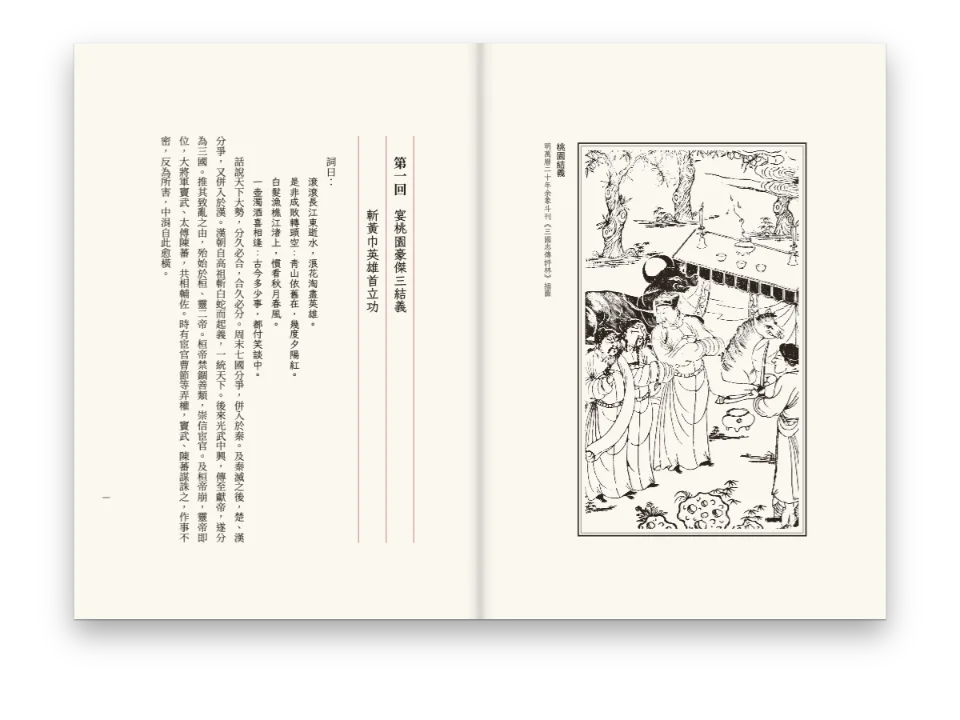
一本日本经典小说的开头,排成口袋大小的平装书:文字从上往下排成一列一列,从右往左读,较难的汉字旁边印着小号假名。
成品一览
一本日文口袋平装书(文庫,bunko)的九页:夏目漱石《夢十夜》的第一夜和第二夜,排在105 × 148 mm、右侧装订的A6页面上。书名页独自位于书脊左侧;从第2页起,正文从上到下排成各行,从右向左读,每行38字、共15行,用9 pt的Shippori Mincho B1,行距1.75 em。青空文库为难字标出的读音以半号假名排在字旁,每一夜的标题占网格的三行,左页沿切口竖排书名,下面是汉字数字页码。结构相同的欧洲口袋书见Nº 104,中文竖排小说见Nº 075。
这道食谱解答
- 怎样像文库本那样,把日文小说竖排并在右侧装订?
- 怎样在汉字上加振假名,是一字一音还是整个词一个读音?
- 怎样把青空文库的文本做成Postext的书?
- 怎样让日文标题占三个正文行(3行取り),使正文仍在网格上?
简短回答
// 'vertical-rl' sets each line top to bottom and the lines from right to left; with the
// binding left to 'auto' the book opens from the right, so page 1 is a left-hand page and
// the spreads read [3 | 2]. locale 'ja' gives the cjk settings Japan's values: they are
// written out below so you can see them, and leaving them out sets the same page.
const page = {
  sizePreset: 'custom', width: mm(105), height: mm(148), dpi: 200, // 文庫判 A6
  backgroundColor: col('paper'),
  // 天 above 地; left is the spine side (the right edge of a left-hand page). The grid
  // grows the margins of each pair alike, so the head stays deeper than the foot.
  margins: { top: mm(15), bottom: mm(11), left: mm(9), right: mm(12), mirror: true },
  pageNumbering: { format: 'japanese-informal' }, // folios 一, 二 … 十, 十一
};
const layout = { layoutType: 'single', writingMode: 'vertical-rl' };
const cjk = {
  grid: { enabled: true, charsPerLine: CHARS, linesPerPage: LINES },
  lineBreak: 'ja-very-strict', // 行頭禁則: no 、。」ー or small kana at the head of a line
  hangingPunctuation: 'allow', // ぶら下げ: a 、。 that would open a line hangs below the last
  paragraphStartBracket: 'half', // ③: a 「 that opens a paragraph fills the indent cell
  ruby: { align: 'jis', overhang: 'kana' }, // JIS 1:2:1, a reading may run onto kana only
};
用料
做法
#1 · 转动页面,以字计数,标为ja
代码见上文的简短回答。layout.writingMode: 'vertical-rl'把每一页当作顺时针转了四分之一圈的横排页面来排;page.binding保持'auto',竖排书就在右侧装订:第1页仍是奇数页,但它位于书脊左侧,mirror: true把它的内页边距放到右边(竖排、装订)。字符网格把版心设为竖向38个9 pt的字(120.7 mm)、横向15行、行距15.75 pt(83.3 mm);page里的页边距是最小值,网格把每一对页边距放大同样的量,所以天头始终比地脚深4 mm。要的行数超出页边距所能容纳时,网格会不声不响地少排一行(doc.configWarnings里的cjkGridClamped):正是9 mm的订口和12 mm的切口让15行排得下。
locale: 'ja'按日文书籍的做法设定其余各项,所以这里写出的四行cjk设置不改变任何结果,只是展示这个语言标记选了什么。ja-very-strict是JIS X 4051的行首禁则(行頭禁則):行首不出现、。」、ー或っ这样的小写假名。hangingPunctuation: 'allow'让本该落在行首的、或。悬挂在最后一个字之下(ぶら下げ),文库本这样做,而不去挤压这一行。paragraphStartBracket: 'half'是JLReq的方式③:以「开头的段落把括号放在一字缩进的后半格,于是对白的第一个字与其他段落的第一个字对齐(东亚排版)。中文书在这两点上都不同:默认不悬挂标点,段首缩进两字,有没有括号都一样。
#2 · 每一夜的标题占网格的三行
// lineSpan sets the heading in a band of three body lines, its characters centred in it, so
// the text after it stands on the grid's lines. Aozora marks the titles 5字下げ (中見出し);
// indent counts body characters, whatever the heading's own size.
const night = {
  level: 1, fontFamily: MINCHO, fontWeight: 600, fontSize: pt(12.5),
  lineSpan: 3, indent: em(5), // JLReq §4.1.3
  breakBefore: { enabled: false }, // the nights run on (gotcha: headings-drop-h1-break)
};
日文标题占整数个正文行,称为行取り(gyōdori),这样标题后面的行与前面的行在同一套网格上。lineSpan: 3把第一夜排在三个15.75 pt行宽的带里,字居于其中;标题的12.5 pt不移动网格,第6页上第二夜落在页面中部,它后面的正文与前面的正文在同一组行上。indent: em(5)以正文字计(五字下げ),青空文库的文本就是这样标中見出し的,JLReq也这样计算标题的缩进(按级别覆盖)。
#3 · 从青空文库取来正文和读音
这两夜取自青空文库的第799号作品卡,用postext-port技能里的aozora.py转换。转换脚本以CP932读取文件,把写成仰向《あおむき》的读音变成整组读音{仰向|あおむき},即一串假名覆盖整个词,并把[#5字下げ]…[#「第一夜」は中見出し]变成标题。在ja文档中,读音遵循JIS X 4051:比基字短的读音按1:2:1沿基字分布,比基字长的读音可以伸到相邻的假名旁,但不会伸到汉字旁(着重号、注音与夹注)。1.75 em的行距在行与行之间留出6.75 pt,容得下4.5 pt的读音。
#4 · 柱排在切口,页码用汉字
// anchor 'outer' is the fore-edge: the left margin of an odd page, the right of an even one
// in a book bound on the right. The 柱 starts two characters below the head of the text.
const foreEdge = (id, content, parity, edge, y, pages) => ({
  kind: 'text', id, content, parity, pages, writingMode: 'vertical-rl',
  fontFamily: GOTHIC, fontSize: pt(7), letterSpacing: pt(1), color: col('muted'),
  overflow: 'clip', placement: { anchor: { to: 'outer', edge }, offset: { y: em(y) } },
});
const header = { elements: [
  foreEdge('hashira', '{title}', 'odd', 'top', 2, 'body'), // never on the opening page
  foreEdge('folio', '{pageNumber}', 'all', 'bottom', -2, 'all'),
] };
const none = { elements: [] };
竖排文库本的书眉(柱,hashira)字小,放在外页边距里。anchor.to: 'outer'把元素放在那里,在右侧装订的书中,奇数页是左页边距,偶数页是右页边距;writingMode: 'vertical-rl'让它从上到下排(竖排文本元素)。书名夢十夜只出现在左页(parity: 'odd'),pages: 'body'会让它避开任何开始一章的页面。pageNumbering.format: 'japanese-informal'把页码印成二、三……九(页码编号)。
#5 · 书名页在成品页面上居中
// A design on a vertical page is laid out in the flow frame: x runs down the page and y
// across it, leftwards from the right edge. Anchored to the page (the trim), the frame and
// the title stand on the page's axis, 52.5 mm in, whichever side the spine is on.
const at = (down, across) => ({ anchor: { to: 'page', edge: 'top-left' },
  offset: { x: mm(down), y: mm(across) } });
const AXIS = 105 / 2; // mm
const TITLE = 28 * PT; // mm: 夢十夜 in 28 pt, three characters and two 8 pt gaps down
const frame = { kind: 'box', id: 'frame', placement: { ...at(30, AXIS - 23),
  size: { width: mm(88), height: mm(46) } }, // 88 mm down, 46 mm across
  style: { borderColor: col('vermilion'), borderWidth: pt(0.75) } };
const titlePage = {
  id: 'title', numbered: false, toc: false, span: 'page', header: none, footer: { elements: [
    // The colophon across the foot, in the edition's language: each \n in the attribute
    // starts a line; the box hangs from the foot of the page, centred.
    // Noto Sans JP: Shippori Mincho B1 has no ō or ū for the rōmaji.
    { kind: 'text', id: 'colophon', content: '{attr.colophon}', fontFamily: GOTHIC,
      fontSize: pt(5.25), lineHeight: 1.45, color: col('muted'), overflow: 'wrap',
      align: 'center', placement: { anchor: { to: 'page', edge: 'bottom' },
        offset: { y: mm(-4) }, size: { width: mm(84) } } }] },
  breakBefore: { enabled: true, parity: 'any' },
  advancedDesign: { enabled: true, minHeight: lines(LINES), slot: { elements: [
    frame,
    { kind: 'text', id: 'book', content: '{titleText}', fontFamily: MINCHO, fontWeight: 800,
      fontSize: pt(28), lineHeight: 1, letterSpacing: pt(8), color: col('ink'),
      placement: at(44, AXIS - TITLE / 2) },
    { kind: 'text', id: 'author', content: '{author}', fontFamily: MINCHO, fontSize: pt(11),
      letterSpacing: pt(4), color: col('ink'), placement: at(92, AXIS + TITLE / 2 + 4) },
  ] } },
};
书名页是一个一级标题,有自己的样式# 夢十夜 {style="title" …},它的设计占满整页。设计中的元素锚定在页面本身而不是版心上,因为镜像页面的版心偏离中心1.5 mm:x沿页面向下,y从右边缘横向延伸,所以无论在书脊哪一侧,AXIS都是页宽的一半。页脚的版权说明用Noto Sans JP排:Shippori Mincho B1没有ō和ū,PDF会把Sōseki里的这两个字母画成空框。
#6 · 每个字重只加载它要排的字
// Fontsource cuts a Japanese face into about 120 files; loadCjkFonts fetches the ones the
// text touches (gotcha: cjk-fonts-slices). vertical: true loads the face's vertical forms
// for the canvas: 、。「」ー and small kana such as っ stand differently down a line.
const title = markdown.match(/^title: "(.*)"$/m)[1];
const author = markdown.match(/^author: "(.*)"$/m)[1];
const heads = markdown.match(/^# [^{\n]*/gm).join('');
await loadFonts(FONTS, markdown); // the Latin files: the colophon, with ō and ū
await loadCjkFonts({ [MINCHO]: ['400'] }, markdown, { vertical: true });
await loadCjkFonts({ [MINCHO]: ['600', '800'] }, `${heads}${title}${author}`);
await loadCjkFonts({ [GOTHIC]: ['400'] }, `${title}一二三四五六七八九十`, { vertical: true });
Fontsource把日文字体的每个字重拆成大约120个文件提供,每个文件覆盖一段字符范围,loadCjkFonts只取所给文本用到的那些文件。正文字重拿到整个样稿,并设vertical: true,这样还会为Canvas加载字体的竖排字形:、。「」和ー,以及在竖排中位于字格右上方的小写假名。renderToPdf接收cjkPdfProvider,它把同样的文件以子集形式嵌入。
完整食谱
// ═══ Postext Cookbook · Nº 117 · A bunko novel set vertically, with furigana ════════ // https://postext.dev/en/cookbook/bunko-novel-furigana // Code: MIT · Text: 夏目漱石『夢十夜』, Aozora Bunko 799 (public domain) · Pictures: none // Fonts: Shippori Mincho B1, Noto Sans JP (SIL OFL 1.1) · Needs postext ≥ 1.16.1 import { buildDocument, renderPageToCanvas, clearMeasurementCache, loadVerticalAlternates, } from 'https://esm.sh/postext'; import { renderToPdf, decompressWoff2 } from 'https://esm.sh/postext-pdf'; const LANG = 'en'; // @lang: the language of the colophon; the novel is Japanese in both const RECIPE = 'bunko-novel-furigana'; // ─── 1 · Design ───────────────────────────────────────────────────────────── // #region palette: sumi ink on a cream bunko stock, one vermilion const palette = { ink: '#1f1b18', // the text: a warm sumi black vermilion: '#a8392b', // 朱: the frame of the title page muted: '#6b635b', // the hashira and the folios paper: '#fbf7ee', // bunko paper is cream, not white }; const col = (id) => ({ hex: palette[id], model: 'hex', paletteId: id }); const colorPalette = [ ...Object.entries(palette).map(([id, hex]) => ({ id, name: id, value: { hex, model: 'hex' } })), { id: 'main-color', name: 'defaults', value: { hex: palette.vermilion, model: 'hex' } }, ]; // #endregion const [MINCHO, GOTHIC] = ['Shippori Mincho B1', 'Noto Sans JP']; const [BODY, LEAD, CHARS, LINES] = [9, 15.75, 38, 15]; // pt, pt: 38字 × 15行 at 1.75 em const lines = (n) => pt(n * LEAD); // n lines across the page const PT = 25.4 / 72; // mm in a point // #region answer: a bunko page, 38 characters down 15 lines, bound on the right // 'vertical-rl' sets each line top to bottom and the lines from right to left; with the // binding left to 'auto' the book opens from the right, so page 1 is a left-hand page and // the spreads read [3 | 2]. locale 'ja' gives the cjk settings Japan's values: they are // written out below so you can see them, and leaving them out sets the same page. const page = { sizePreset: 'custom', width: mm(105), height: mm(148), dpi: 200, // 文庫判 A6 backgroundColor: col('paper'), // 天 above 地; left is the spine side (the right edge of a left-hand page). The grid // grows the margins of each pair alike, so the head stays deeper than the foot. margins: { top: mm(15), bottom: mm(11), left: mm(9), right: mm(12), mirror: true }, pageNumbering: { format: 'japanese-informal' }, // folios 一, 二 … 十, 十一 }; const layout = { layoutType: 'single', writingMode: 'vertical-rl' }; const cjk = { grid: { enabled: true, charsPerLine: CHARS, linesPerPage: LINES }, lineBreak: 'ja-very-strict', // 行頭禁則: no 、。」ー or small kana at the head of a line hangingPunctuation: 'allow', // ぶら下げ: a 、。 that would open a line hangs below the last paragraphStartBracket: 'half', // ③: a 「 that opens a paragraph fills the indent cell ruby: { align: 'jis', overhang: 'kana' }, // JIS 1:2:1, a reading may run onto kana only }; // #endregion // #region nights: each night's title takes three body lines (3行取り), five characters down // lineSpan sets the heading in a band of three body lines, its characters centred in it, so // the text after it stands on the grid's lines. Aozora marks the titles 5字下げ (中見出し); // indent counts body characters, whatever the heading's own size. const night = { level: 1, fontFamily: MINCHO, fontWeight: 600, fontSize: pt(12.5), lineSpan: 3, indent: em(5), // JLReq §4.1.3 breakBefore: { enabled: false }, // the nights run on (gotcha: headings-drop-h1-break) }; // #endregion // #region hashira: the title down the fore-edge of left-hand pages, kanji folios below // anchor 'outer' is the fore-edge: the left margin of an odd page, the right of an even one // in a book bound on the right. The 柱 starts two characters below the head of the text. const foreEdge = (id, content, parity, edge, y, pages) => ({ kind: 'text', id, content, parity, pages, writingMode: 'vertical-rl', fontFamily: GOTHIC, fontSize: pt(7), letterSpacing: pt(1), color: col('muted'), overflow: 'clip', placement: { anchor: { to: 'outer', edge }, offset: { y: em(y) } }, }); const header = { elements: [ foreEdge('hashira', '{title}', 'odd', 'top', 2, 'body'), // never on the opening page foreEdge('folio', '{pageNumber}', 'all', 'bottom', -2, 'all'), ] }; const none = { elements: [] }; // #endregion // #region title-page: the 扉, a vermilion frame round the title and the author // A design on a vertical page is laid out in the flow frame: x runs down the page and y // across it, leftwards from the right edge. Anchored to the page (the trim), the frame and // the title stand on the page's axis, 52.5 mm in, whichever side the spine is on. const at = (down, across) => ({ anchor: { to: 'page', edge: 'top-left' }, offset: { x: mm(down), y: mm(across) } }); const AXIS = 105 / 2; // mm const TITLE = 28 * PT; // mm: 夢十夜 in 28 pt, three characters and two 8 pt gaps down const frame = { kind: 'box', id: 'frame', placement: { ...at(30, AXIS - 23), size: { width: mm(88), height: mm(46) } }, // 88 mm down, 46 mm across style: { borderColor: col('vermilion'), borderWidth: pt(0.75) } }; const titlePage = { id: 'title', numbered: false, toc: false, span: 'page', header: none, footer: { elements: [ // The colophon across the foot, in the edition's language: each \n in the attribute // starts a line; the box hangs from the foot of the page, centred. // Noto Sans JP: Shippori Mincho B1 has no ō or ū for the rōmaji. { kind: 'text', id: 'colophon', content: '{attr.colophon}', fontFamily: GOTHIC, fontSize: pt(5.25), lineHeight: 1.45, color: col('muted'), overflow: 'wrap', align: 'center', placement: { anchor: { to: 'page', edge: 'bottom' }, offset: { y: mm(-4) }, size: { width: mm(84) } } }] }, breakBefore: { enabled: true, parity: 'any' }, advancedDesign: { enabled: true, minHeight: lines(LINES), slot: { elements: [ frame, { kind: 'text', id: 'book', content: '{titleText}', fontFamily: MINCHO, fontWeight: 800, fontSize: pt(28), lineHeight: 1, letterSpacing: pt(8), color: col('ink'), placement: at(44, AXIS - TITLE / 2) }, { kind: 'text', id: 'author', content: '{author}', fontFamily: MINCHO, fontSize: pt(11), letterSpacing: pt(4), color: col('ink'), placement: at(92, AXIS + TITLE / 2 + 4) }, ] } }, }; // #endregion const config = () => ({ // a factory: the engine caches resolved configs per object locale: 'ja', // written out, never LANG (gotcha: ja-locale-tag) colorPalette, page, layout, cjk, bodyText: { fontFamily: MINCHO, fontSize: pt(BODY), lineHeight: pt(LEAD), color: col('ink'), boldColor: col('ink'), italicColor: col('ink'), referenceColor: col('ink'), textAlign: 'justify', firstLineIndent: em(1), indentAfterHeading: true, // 一字下げ }, headings: { fontFamily: MINCHO, color: col('ink'), levels: [night] }, headingStyles: [titlePage], header, footer: none, }); // ─── 2 · Content ──────────────────────────────────────────────────────────── const markdown = String.raw`---Markdown样例 · 77行 · content.en.md
title: "夢十夜" author: "夏目漱石" --- # 夢十夜 {style="title" colophon="Natsume Sōseki, 夢十夜 (Ten Nights of Dreams, 1908), nights one and two.\nText: Aozora Bunko 799, public domain.\nSet in Shippori Mincho B1 and Noto Sans JP (SIL OFL)."} # 第一夜 こんな夢を見た。 腕組をして枕元に{坐|すわ}っていると、{仰向|あおむき}に寝た女が、静かな声でもう死にますと云う。女は長い髪を枕に敷いて、{輪郭|りんかく}の{柔|やわ}らかな{瓜実|うりざね}{顔|がお}をその中に横たえている。真白な頬の底に温かい血の色がほどよく差して、{唇|くちびる}の色は無論赤い。とうてい死にそうには見えない。しかし女は静かな声で、もう死にますと{判然|はっきり}云った。自分も{確|たしか}にこれは死ぬなと思った。そこで、そうかね、もう死ぬのかね、と上から{覗|のぞ}き込むようにして聞いて見た。死にますとも、と云いながら、女はぱっちりと眼を{開|あ}けた。大きな{潤|うるおい}のある眼で、長い{睫|まつげ}に包まれた中は、ただ一面に真黒であった。その真黒な{眸|ひとみ}の奥に、自分の姿が{鮮|あざやか}に浮かんでいる。 自分は{透|す}き{徹|とお}るほど深く見えるこの黒眼の{色沢|つや}を眺めて、これでも死ぬのかと思った。それで、ねんごろに枕の{傍|そば}へ口を付けて、死ぬんじゃなかろうね、大丈夫だろうね、とまた聞き返した。すると女は黒い眼を眠そうに{睜|みはっ}たまま、やっぱり静かな声で、でも、死ぬんですもの、仕方がないわと云った。 じゃ、{私|わたし}の顔が見えるかいと{一心|いっしん}に聞くと、見えるかいって、そら、そこに、写ってるじゃありませんかと、にこりと笑って見せた。自分は黙って、顔を枕から離した。腕組をしながら、どうしても死ぬのかなと思った。 しばらくして、女がまたこう云った。 「死んだら、{埋|う}めて下さい。大きな真珠貝で穴を掘って。そうして天から落ちて来る星の{破片|かけ}を{墓標|はかじるし}に置いて下さい。そうして墓の傍に待っていて下さい。また{逢|あ}いに来ますから」 自分は、いつ逢いに来るかねと聞いた。 「日が出るでしょう。それから日が沈むでしょう。それからまた出るでしょう、そうしてまた沈むでしょう。――赤い日が東から西へ、東から西へと落ちて行くうちに、――あなた、待っていられますか」 自分は黙って{首肯|うなず}いた。女は静かな調子を一段張り上げて、 「百年待っていて下さい」と思い切った声で云った。 「百年、私の墓の{傍|そば}に坐って待っていて下さい。きっと逢いに来ますから」 自分はただ待っていると答えた。すると、黒い{眸|ひとみ}のなかに{鮮|あざやか}に見えた自分の姿が、ぼうっと{崩|くず}れて来た。静かな水が動いて写る影を乱したように、流れ出したと思ったら、女の眼がぱちりと閉じた。長い{睫|まつげ}の間から涙が頬へ垂れた。――もう死んでいた。 自分はそれから庭へ下りて、真珠貝で穴を掘った。真珠貝は大きな{滑|なめら}かな{縁|ふち}の{鋭|する}どい貝であった。土をすくうたびに、貝の裏に月の光が差してきらきらした。{湿|しめ}った土の{匂|におい}もした。穴はしばらくして掘れた。女をその中に入れた。そうして柔らかい土を、上からそっと掛けた。掛けるたびに真珠貝の裏に月の光が差した。 それから星の{破片|かけ}の落ちたのを拾って来て、かろく土の上へ乗せた。星の破片は丸かった。長い間大空を落ちている{間|ま}に、{角|かど}が取れて{滑|なめら}かになったんだろうと思った。{抱|だ}き{上|あ}げて土の上へ置くうちに、自分の胸と手が少し暖くなった。 自分は{苔|こけ}の上に坐った。これから百年の間こうして待っているんだなと考えながら、腕組をして、丸い{墓石|はかいし}を眺めていた。そのうちに、女の云った通り日が東から出た。大きな赤い日であった。それがまた女の云った通り、やがて西へ落ちた。赤いまんまでのっと落ちて行った。一つと自分は{勘定|かんじょう}した。 しばらくするとまた{唐紅|からくれない}の{天道|てんとう}がのそりと{上|のぼ}って来た。そうして黙って沈んでしまった。二つとまた勘定した。 自分はこう云う風に一つ二つと勘定して行くうちに、赤い日をいくつ見たか分らない。勘定しても、勘定しても、しつくせないほど赤い日が頭の上を通り越して行った。それでも百年がまだ来ない。しまいには、{苔|こけ}の{生|は}えた丸い石を眺めて、自分は女に{欺|だま}されたのではなかろうかと思い出した。 すると石の下から{斜|はす}に自分の方へ向いて青い{茎|くき}が伸びて来た。見る間に長くなってちょうど自分の胸のあたりまで来て留まった。と思うと、すらりと{揺|ゆら}ぐ{茎|くき}の{頂|いただき}に、心持首を{傾|かたぶ}けていた細長い一輪の{蕾|つぼみ}が、ふっくらと{弁|はなびら}を開いた。真白な{百合|ゆり}が鼻の先で骨に{徹|こた}えるほど匂った。そこへ{遥|はるか}の上から、ぽたりと{露|つゆ}が落ちたので、花は自分の重みでふらふらと動いた。自分は首を前へ出して冷たい露の{滴|したた}る、白い{花弁|はなびら}に{接吻|せっぷん}した。自分が百合から顔を離す{拍子|ひょうし}に思わず、遠い空を見たら、{暁|あかつき}の星がたった一つ{瞬|またた}いていた。 「百年はもう来ていたんだな」とこの時始めて気がついた。 # 第二夜 こんな夢を見た。 {和尚|おしょう}の室を{退|さ}がって、{廊下|ろうか}{伝|づた}いに自分の部屋へ帰ると{行灯|あんどう}がぼんやり{点|とも}っている。{片膝|かたひざ}を{座蒲団|ざぶとん}の上に突いて、灯心を{掻|か}き立てたとき、花のような{丁子|ちょうじ}がぱたりと朱塗の台に落ちた。同時に部屋がぱっと明かるくなった。 {襖|ふすま}の{画|え}は{蕪村|ぶそん}の筆である。黒い柳を濃く薄く、{遠近|おちこち}とかいて、{寒|さ}むそうな漁夫が{笠|かさ}を{傾|かたぶ}けて土手の上を通る。{床|とこ}には{海中文殊|かいちゅうもんじゅ}の{軸|じく}が{懸|かか}っている。{焚|た}き残した線香が暗い方でいまだに{臭|にお}っている。広い寺だから{森閑|しんかん}として、{人気|ひとけ}がない。黒い{天井|てんじょう}に差す{丸行灯|まるあんどう}の丸い影が、{仰向|あおむ}く{途端|とたん}に生きてるように見えた。 {立膝|たてひざ}をしたまま、左の手で{座蒲団|ざぶとん}を{捲|めく}って、右を差し込んで見ると、思った所に、ちゃんとあった。あれば安心だから、蒲団をもとのごとく{直|なお}して、その上にどっかり{坐|すわ}った。 お前は{侍|さむらい}である。侍なら悟れぬはずはなかろうと{和尚|おしょう}が云った。そういつまでも悟れぬところをもって見ると、御前は侍ではあるまいと言った。人間の{屑|くず}じゃと言った。ははあ怒ったなと云って笑った。{口惜|くや}しければ悟った証拠を持って来いと云ってぷいと{向|むこう}をむいた。{怪|け}しからん。 隣の広間の床に{据|す}えてある置時計が次の{刻|とき}を打つまでには、きっと悟って見せる。悟った上で、今夜また{入室|にゅうしつ}する。そうして和尚の首と悟りと{引替|ひきかえ}にしてやる。悟らなければ、和尚の命が取れない。どうしても悟らなければならない。自分は侍である。 もし悟れなければ{自刃|じじん}する。侍が{辱|はずか}しめられて、生きている訳には行かない。{綺麗|きれい}に死んでしまう。 こう考えた時、自分の手はまた思わず{布団|ふとん}の下へ{這入|はい}った。そうして{朱鞘|しゅざや}の短刀を{引|ひ}き{摺|ず}り出した。ぐっと{束|つか}を握って、赤い鞘を向へ払ったら、冷たい{刃|は}が一度に暗い部屋で光った。{凄|すご}いものが手元から、すうすうと逃げて行くように思われる。そうして、ことごとく{切先|きっさき}へ集まって、{殺気|さっき}を一点に{籠|こ}めている。自分はこの鋭い刃が、無念にも針の頭のように{縮|ちぢ}められて、{九寸|くすん}{五分|ごぶ}の先へ来てやむをえず{尖|とが}ってるのを見て、たちまちぐさりとやりたくなった。{身体|からだ}の血が右の手首の方へ流れて来て、握っている束がにちゃにちゃする。{唇|くちびる}が{顫|ふる}えた。 短刀を鞘へ収めて右脇へ引きつけておいて、それから{全伽|ぜんが}を組んだ。――{趙州|じょうしゅう}曰く{無|む}と。無とは何だ。{糞坊主|くそぼうず}めとはがみをした。 奥歯を強く{咬|か}み{締|し}めたので、鼻から熱い息が荒く出る。こめかみが釣って痛い。眼は普通の倍も大きく開けてやった。 {懸物|かけもの}が見える。行灯が見える。{畳|たたみ}が見える。和尚の{薬缶頭|やかんあたま}がありありと見える。{鰐口|わにぐち}を{開|あ}いて{嘲笑|あざわら}った声まで聞える。{怪|け}しからん坊主だ。どうしてもあの薬缶を首にしなくてはならん。悟ってやる。無だ、無だと舌の根で念じた。無だと云うのにやっぱり線香の{香|におい}がした。何だ線香のくせに。 自分はいきなり{拳骨|げんこつ}を固めて自分の頭をいやと云うほど{擲|なぐ}った。そうして奥歯をぎりぎりと{噛|か}んだ。{両腋|りょうわき}から汗が出る。背中が棒のようになった。{膝|ひざ}の{接目|つぎめ}が急に痛くなった。膝が折れたってどうあるものかと思った。けれども痛い。苦しい。{無|む}はなかなか出て来ない。出て来ると思うとすぐ痛くなる。腹が立つ。無念になる。非常に{口惜|くや}しくなる。涙がほろほろ出る。ひと{思|おもい}に身を{巨巌|おおいわ}の上にぶつけて、骨も肉もめちゃめちゃに{砕|くだ}いてしまいたくなる。 それでも我慢してじっと坐っていた。{堪|た}えがたいほど切ないものを胸に{盛|い}れて忍んでいた。その切ないものが{身体|からだ}中の筋肉を下から持上げて、毛穴から外へ吹き出よう吹き出ようと{焦|あせ}るけれども、どこも一面に{塞|ふさ}がって、まるで出口がないような残刻極まる状態であった。 そのうちに頭が変になった。{行灯|あんどう}も{蕪村|ぶそん}の{画|え}も、畳も、{違棚|ちがいだな}も有って無いような、無くって有るように見えた。と云って{無|む}はちっとも{現前|げんぜん}しない。ただ{好加減|いいかげん}に坐っていたようである。ところへ{忽然|こつぜん}隣座敷の時計がチーンと鳴り始めた。 はっと思った。右の手をすぐ短刀にかけた。時計が二つ目をチーンと打った。`; // content.<lang>.md: the same Japanese text in both // ─── 3 · Fonts ────────────────────────────────────────────────────────────── const FONTS = { 'Shippori Mincho B1': ['400', '600', '800'], // the text and furigana; 一; the title 'Noto Sans JP': ['400'], // the hashira, the folios and the colophon }; // ─── 4 · Build & show ─────────────────────────────────────────────────────── // #region voices: each face loads the files that hold the characters it sets // Fontsource cuts a Japanese face into about 120 files; loadCjkFonts fetches the ones the // text touches (gotcha: cjk-fonts-slices). vertical: true loads the face's vertical forms // for the canvas: 、。「」ー and small kana such as っ stand differently down a line. const title = markdown.match(/^title: "(.*)"$/m)[1]; const author = markdown.match(/^author: "(.*)"$/m)[1]; const heads = markdown.match(/^# [^{\n]*/gm).join(''); await loadFonts(FONTS, markdown); // the Latin files: the colophon, with ō and ū await loadCjkFonts({ [MINCHO]: ['400'] }, markdown, { vertical: true }); await loadCjkFonts({ [MINCHO]: ['600', '800'] }, `${heads}${title}${author}`); await loadCjkFonts({ [GOTHIC]: ['400'] }, `${title}一二三四五六七八九十`, { vertical: true }); // #endregion const doc = await buildWithFonts(() => buildDocument({ markdown }, config()), markdown); showBook(doc, { title: t({ en: 'A bunko novel set vertically, with furigana', es: 'Una novela en formato bunko, en vertical y con furigana' }) }); offerPdf(() => renderToPdf(doc, { fontProvider: cjkPdfProvider }), `${RECIPE}.pdf`);工具包 · core, fonts, viewer, pdf, cjk:每道食谱都相同 · 453行
// ─── Kit ── helpers shared by every Cookbook recipe · postext.dev/cookbook ───── // ─── Kit · core v1 ── the same in every recipe · postext.dev/cookbook ───────── function mm(value) { return { value, unit: 'mm' }; } function pt(value) { return { value, unit: 'pt' }; } function em(value) { return { value, unit: 'em' }; } /** The sample language's string: t({ en: 'Figure', es: 'Figura' }). */ function t(strings) { return strings[LANG] ?? Object.values(strings)[0]; } /** A file in this recipe's assets folder, served from the Postext repo by jsDelivr. */ function asset(file) { return `https://cdn.jsdelivr.net/gh/drnachio/postext@main/cookbook/${RECIPE}/assets/${file}`; } // ─── Kit · fonts v1 ── the same in every recipe · postext.dev/cookbook ──────── // Postext measures text with the faces the browser has loaded, and caches the // widths, so every face must be ready before the first build. Faces come from // Fontsource: the same static files the PDF embeds, so screen and PDF agree. /** faces = { 'Family Name': ['400', '400i', '700'] }. `text` is the sample: * letters beyond Latin-1 (č, ł, ő…) also load the latin-ext files. With * `optional`, a face Fontsource does not ship is skipped instead of failing. * Resolves to the number of faces added. */ async function loadFonts(faces, text = '', { optional = false } = {}) { kitStatus('Loading fonts…'); const ranges = { latin: 'U+0000-00FF,U+0131,U+0152-0153,U+02BB-02BC,U+02C6,U+02DA,U+02DC,U+0304,U+0308,U+0329,' + 'U+2000-206F,U+20AC,U+2122,U+2191,U+2193,U+2212,U+2215,U+FEFF,U+FFFD', 'latin-ext': 'U+0100-02BA,U+02BD-02C5,U+02C7-02CC,U+02CE-02D7,U+02DD-02FF,U+0304,U+0308,U+0329,' + 'U+1D00-1DBF,U+1E00-1E9F,U+1EF2-1EFF,U+2020,U+20A0-20AB,U+20AD-20C0,U+2113,U+2C60-2C7F,U+A720-A7FF', }; const subsets = /[Ā-˿Ḁ-ỿ]/.test(text) ? ['latin', 'latin-ext'] : ['latin']; const jobs = []; let added = 0; for (const [family, specs] of Object.entries(faces)) { const id = fontsourceId(family); const meta = optional ? await fontsourceMeta(family) : null; for (const spec of new Set(specs)) { const weight = parseInt(spec, 10); const style = spec.endsWith('i') ? 'italic' : 'normal'; if (hasFace(family, weight, style)) continue; if (optional && !(meta?.weights.includes(weight) && meta.styles.includes(style))) continue; for (const subset of subsets) { const url = `https://cdn.jsdelivr.net/npm/@fontsource/${id}@5/files/${id}-${subset}-${weight}-${style}.woff2`; const face = new FontFace(family, `url(${url}) format('woff2')`, { weight: String(weight), style, unicodeRange: ranges[subset] }); jobs.push(face.load().then((ready) => { document.fonts.add(ready); added++; }, () => { if (subset === 'latin' && !optional) throw new Error(`Fontsource has no ${family} ${weight} ${style}`); })); } } } await Promise.all(jobs).catch((error) => { kitFail(error); throw error; }); return added; } /** Runs `build` (a buildDocument or buildBundle call) and checks the faces * the pages use. A regular face missing from FONTS is loaded with a warning; * bold and italic variants are loaded when the family ships them. Then the * measurement caches are cleared and the build runs again. */ async function buildWithFonts(build, text = '') { const tried = new Set(); for (let round = 0; round < 3; round++) { kitStatus('Laying out…'); await new Promise(requestAnimationFrame); // let the status paint first const result = await Promise.resolve().then(build).catch((error) => { kitFail(error); throw error; }); const wanted = { base: {}, variants: {} }; for (const { font, base } of [result].flat().flatMap(fontStringsOf)) { const { family, weight, style } = parseFont(font); const key = `${family}|${weight}|${style}`; if (tried.has(key) || hasFace(family, weight, style)) continue; tried.add(key); (wanted[base ? 'base' : 'variants'][family] ??= []).push(`${weight}${style === 'italic' ? 'i' : ''}`); } if (Object.keys(wanted.base).length) { console.warn(`[cookbook] FONTS does not list ${JSON.stringify(wanted.base)}: loading them.`); } const added = await loadFonts(wanted.base, text) + await loadFonts(wanted.variants, text, { optional: true }); if (added === 0) return result; clearMeasurementCache(); } throw new Error('The fonts did not settle after three builds.'); } /** Every font string of the layout. `base` marks a block's own face; its * bold, italic and bold-italic variants are listed whether or not used. */ function fontStringsOf(doc) { const found = new Map(); const walk = (node) => { if (!node || typeof node !== 'object') return; if (Array.isArray(node)) { node.forEach(walk); return; } for (const [key, value] of Object.entries(node)) { if (typeof value === 'string' && /fontString$/i.test(key)) { found.set(value, found.get(value) || key === 'fontString'); } else if (value && typeof value === 'object') walk(value); } }; walk(doc.pages); walk(doc.blocks); return [...found].map(([font, base]) => ({ font, base })); } /** '700 37.5px Open Sans' / 'italic 400 13px "Source Serif 4"' → { family, weight, style }. * A string with no weight ('95.8px Young Serif', from a design text) is 400. */ function parseFont(font) { const m = /^(?:(italic|oblique)\s+)?(?:small-caps\s+)?(?:(\d+|bold|normal)\s+)?[\d.]+px\s+(.+)$/.exec(font.trim()); if (!m) throw new Error(`Unexpected font string: ${font}`); const weight = m[2] === 'bold' ? 700 : !m[2] || m[2] === 'normal' ? 400 : Number(m[2]); return { family: m[3].replace(/^["']|["']$/g, ''), weight, style: m[1] ? 'italic' : 'normal' }; } /** True when a loaded FontFace covers exactly this family, weight and style * (document.fonts.check() is also true for families nobody declared). */ function hasFace(family, weight, style) { for (const face of document.fonts) { if (face.status !== 'loaded' || face.style !== style) continue; if (face.family.replace(/^["']|["']$/g, '') !== family) continue; const [low, high = low] = face.weight.split(' ').map(Number); if (weight >= low && weight <= high) return true; } return false; } /** Fontsource's id for a family: 'Source Serif 4' → 'source-serif-4'. */ function fontsourceId(family) { return family.toLowerCase().replace(/\s+/g, '-'); } /** The weights and styles a family ships ({ weights: [400, 700], styles: ['normal', 'italic'] }), or null. */ function fontsourceMeta(family) { fontsourceMeta.cache ??= new Map(); const id = fontsourceId(family); if (!fontsourceMeta.cache.has(id)) { fontsourceMeta.cache.set(id, fetch(`https://api.fontsource.org/v1/fonts/${id}`) .then((res) => (res.ok ? res.json() : null), () => null)); } return fontsourceMeta.cache.get(id); } // ─── Kit · viewer v1 ── the same in every recipe · postext.dev/cookbook ─────── /** Shows the pages as facing spreads on a dark desk: the first page is a * recto on its own, then verso | recto pairs, as in a bound book. Pages * are painted when they scroll near the screen. */ function showPages(docs, { title, width = 460 } = {}) { const root = viewer(title); const pages = [docs].flat().flatMap((doc) => doc.pages.map((page) => ({ doc, page, n: (doc.pageIndexOffset ?? 0) + page.index }))); const spreads = []; let verso = null; for (const p of pages) { if (p.n % 2 === 1) { if (verso) spreads.push([verso, null]); verso = p; } else { spreads.push([verso, p]); verso = null; } } if (verso) spreads.push([verso, null]); const density = Math.min(window.devicePixelRatio || 1, 2); showPages.painter?.disconnect(); const painter = new IntersectionObserver((entries) => { for (const { isIntersecting, target } of entries) { if (!isIntersecting) continue; painter.unobserve(target); const { doc, page } = target.postext; renderPageToCanvas(page, doc, target, { scale: (width * density) / page.width }); } }, { rootMargin: '800px' }); showPages.painter = painter; root.replaceChildren(...spreads.map((pair) => { const spread = document.createElement('div'); spread.className = 'pt-spread'; for (const p of pair) { const figure = document.createElement('figure'); if (p) { const label = p.page.pageLabel || String(p.n + 1); const canvas = document.createElement('canvas'); canvas.postext = p; canvas.style.aspectRatio = `${p.page.width} / ${p.page.height}`; canvas.setAttribute('role', 'img'); canvas.setAttribute('aria-label', `Page ${label}`); const folio = document.createElement('figcaption'); folio.textContent = label; figure.append(canvas, folio); painter.observe(canvas); } else figure.className = 'pt-blank'; spread.append(figure); } return spread; })); kitStatus(`${pages.length} ${pages.length === 1 ? 'page' : 'pages'}`); document.documentElement.dataset.postext = 'ready'; return pages.length; } /** The desk, the bar and the error reporting, created once. */ function viewer(title) { if (!document.getElementById('pt-kit')) { document.head.insertAdjacentHTML('beforeend', `<style id="pt-kit"> :root { color-scheme: dark; } body { margin: 0; background: #0e1014; color: #b9bcc4; font: 13px/1.45 system-ui, sans-serif; } #pt-bar { position: sticky; top: 0; z-index: 1; display: flex; flex-wrap: wrap; align-items: center; gap: 6px 16px; padding: 10px 16px; background: rgb(14 16 20 / .92); backdrop-filter: blur(6px); border-bottom: 1px solid #23262d; } #pt-bar strong { color: #f4f1ea; font-weight: 600; } #pt-actions { display: flex; gap: 12px; margin-left: auto; } #pt-actions a, #pt-actions button { color: #d8a21a; font: inherit; background: none; border: 0; padding: 0; cursor: pointer; } #pages { display: grid; justify-items: center; gap: 48px; padding: 32px 16px 72px; } .pt-spread { display: flex; } .pt-spread figure { margin: 0; width: min(460px, 44vw); } .pt-spread canvas { display: block; width: 100%; background: #fff; box-shadow: 0 1px 2px rgb(0 0 0 / .5), 0 22px 44px -16px rgb(0 0 0 / .8); } .pt-spread figure:first-child canvas { box-shadow: inset -14px 0 14px -14px rgb(0 0 0 / .18), 0 1px 2px rgb(0 0 0 / .5), 0 22px 44px -16px rgb(0 0 0 / .8); } .pt-spread figcaption { margin-top: 10px; text-align: center; font: 600 10px/1 system-ui, sans-serif; letter-spacing: .18em; text-transform: uppercase; color: #6c7079; } .pt-blank { visibility: hidden; } @media (max-width: 760px) { .pt-spread { flex-direction: column; gap: 32px; } .pt-spread figure { width: min(460px, 92vw); } .pt-blank { display: none; } } </style>`); document.body.insertAdjacentHTML('afterbegin', '<header id="pt-bar"><strong id="pt-title"></strong><span id="pt-status" role="status"></span><span id="pt-actions"></span></header>'); document.getElementById('pt-title').textContent = document.title || 'Postext'; addEventListener('error', (event) => kitFail(event.error ?? event.message)); addEventListener('unhandledrejection', (event) => kitFail(event.reason)); } if (title) document.getElementById('pt-title').textContent = title; return document.getElementById('pages') ?? document.body.appendChild(Object.assign(document.createElement('main'), { id: 'pages' })); } function kitStatus(text) { viewer(); document.getElementById('pt-status').textContent = text; } function kitFail(error) { document.documentElement.dataset.postext = 'error'; kitStatus(`Error: ${error?.message ?? error}`); } // ─── Kit · pdf v1 ── the same in every recipe that exports a PDF ────────────── /** postext-pdf embeds TrueType bytes. Fetch the Fontsource file the screen * used, snapping to a weight the family ships and falling back to upright * when it has no italic: the PDF asks for every face a block could use. */ async function fontsourceProvider(family, weight, style) { const id = fontsourceId(family); const meta = await fontsourceMeta(family); const weights = meta?.weights?.length ? meta.weights : [400, 700]; const w = weights.reduce((a, b) => (Math.abs(b - weight) < Math.abs(a - weight) ? b : a)); const s = style === 'italic' && meta && !meta.styles.includes('italic') ? 'normal' : style; const res = await fetch(`https://cdn.jsdelivr.net/npm/@fontsource/${id}@5/files/${id}-latin-${w}-${s}.woff2`); if (!res.ok) throw new Error(`Fontsource has no ${family} ${w} ${s} (${res.status})`); return decompressWoff2(new Uint8Array(await res.arrayBuffer())); } /** A "Build the PDF" button in the bar. Once built: "Open the PDF" (a new * tab, since CodePen's preview frame cannot show PDFs) and a download link. */ function offerPdf(makePdf, filename) { viewer(); const button = Object.assign(document.createElement('button'), { type: 'button', textContent: 'Build the PDF' }); button.dataset.postextPdf = filename; button.addEventListener('click', async () => { button.disabled = true; button.textContent = 'Building the PDF…'; try { const bytes = await makePdf(); const url = URL.createObjectURL(new Blob([bytes], { type: 'application/pdf' })); const size = `${Math.max(1, Math.round(bytes.length / 1024))} KB`; button.replaceWith( Object.assign(document.createElement('a'), { href: url, target: '_blank', rel: 'noopener', textContent: 'Open the PDF ↗' }), Object.assign(document.createElement('a'), { href: url, download: filename, textContent: `Download ${filename} · ${size}` })); } catch (error) { button.disabled = false; button.textContent = 'Build the PDF'; kitFail(error); } }); document.getElementById('pt-actions').append(button); } // ─── Kit · cjk v1 ── Chinese, Japanese and Korean books · postext.dev/cookbook ─ // Fontsource ships a CJK family as about a hundred files per weight, each // declared in its stylesheet with the unicode-range it covers. The screen // loads the files the sample touches; the PDF gets the same files for the // characters its pages set in each face, and embeds each as a subset. // A book bound on the right (vertical text) is shown with its spreads // mirrored: page 1 alone on the left of the spine, then [3 | 2]. /** The files of a Fontsource face, read from its stylesheet: { url, range, * ranges }, the last declared first (the order the browser tries them in). */ function cjkSlices(family, weight, style) { cjkSlices.cache ??= new Map(); const id = fontsourceId(family); const css = `https://cdn.jsdelivr.net/npm/@fontsource/${id}@5/${weight}${style === 'italic' ? '-italic' : ''}.css`; if (!cjkSlices.cache.has(css)) { cjkSlices.cache.set(css, fetch(css) .then((res) => { if (!res.ok) throw new Error(`Fontsource has no ${family} ${weight} ${style} (${res.status})`); return res.text(); }) .then((text) => [...text.matchAll(/@font-face\s*{([^}]*)}/g)].map(([, rule]) => { const range = /unicode-range:\s*([^;]+);/.exec(rule)?.[1].trim() ?? 'U+0-10FFFF'; const ranges = range.split(',').map((part) => { const [lo, hi = lo] = part.trim().slice(2).split('-'); return [parseInt(lo, 16), parseInt(hi, 16)]; }); return { url: new URL(/url\(([^)]+?\.woff2)\)/.exec(rule)[1], css).href, range, ranges }; }).reverse())); } return cjkSlices.cache.get(css); } /** The file of `slices` that holds code point `cp`, if any. */ function cjkSliceFor(slices, cp) { return slices.find((slice) => slice.ranges.some(([lo, hi]) => cp >= lo && cp <= hi)); } /** Whether Fontsource serves `family` as a Chinese, Japanese or Korean * family (its subsets name the script). Fails when the API does not * answer: a CJK face taken for a Latin one would paint in a system face. */ async function isCjkFamily(family) { const meta = await fontsourceMeta(family); if (!meta) throw new Error(`api.fontsource.org did not describe ${family}: reload to try again`); return !!meta.subsets?.some((subset) => /^(chinese|japanese|korean)/.test(subset)); } /** faces = { 'Noto Serif TC': ['400', '700'] }, as for loadFonts: the * whole FONTS object may be passed, its other families are left to * loadFonts. Adds one FontFace per file of each CJK face with its * unicodeRange, then loads the files `text` touches. `text` is what the * faces set: the sample for the text face; a book in several voices calls * it once per voice (loadCjkFonts({ 'LXGW WenKai TC': ['400'] }, quotes)), * so the heading and quotation faces fetch and check only their own * characters. Fails when a character of `text` is in no file of a face. * List every weight the pages use: a weight left to buildWithFonts gets * the latin file only. With { vertical: true } it also loads each * family's vertical forms (brackets, quotes, pause marks) for the canvas, * which needs loadVerticalAlternates imported from postext. Resolves to * the number of files loaded. */ async function loadCjkFonts(faces, text, { vertical = false } = {}) { kitStatus('Loading fonts…'); let loaded = 0; try { if (vertical && typeof loadVerticalAlternates !== 'function') { throw new Error('loadCjkFonts(…, { vertical: true }) needs loadVerticalAlternates imported from postext'); } for (const [family, specs] of Object.entries(faces)) { if (!(await isCjkFamily(family))) continue; const twin = []; for (const spec of new Set(specs)) { const weight = parseInt(spec, 10); const style = spec.endsWith('i') ? 'italic' : 'normal'; const slices = await cjkSlices(family, weight, style); const missing = [...new Set(text)].filter((ch) => /\S/.test(ch) && !cjkSliceFor(slices, ch.codePointAt(0))); if (missing.length) { throw new Error(`${family} ${spec} has no file for ${missing.slice(0, 12).join(' ')}: ` + `give each face the text it sets (loadCjkFonts({ '${family}': ['${spec}'] }, text))`); } for (const slice of slices) { document.fonts.add(new FontFace(family, `url(${slice.url}) format('woff2')`, { weight: String(weight), style, unicodeRange: slice.range })); twin.push({ source: slice.url, weight: String(weight), style, unicodeRange: slice.range }); } const font = `${style === 'italic' ? 'italic ' : ''}${weight} 16px "${family}"`; loaded += (await document.fonts.load(font, text)).length; if (!document.fonts.check(font, text)) throw new Error(`${family} ${spec} did not load for the sample`); } // The same files under a twin name with the `vert` feature on: the // canvas paints the punctuation of vertical lines with it. if (vertical && twin.length) await loadVerticalAlternates(family, twin); } } catch (error) { kitFail(error); throw error; } return loaded; } /** The PDF font provider for recipes with CJK faces: a family whose * Fontsource subsets are Chinese, Japanese or Korean gets the files that * hold the characters its pages set (`request.codePoints`); any other * family gets the latin file fontsourceProvider fetches (the "pdf" block) * and, when the face sets letters only latin-ext has, that file too. */ async function cjkPdfProvider(family, weight, style, request) { if (!(await isCjkFamily(family))) return cjkLatinPdfFiles(family, weight, style, request); const meta = await fontsourceMeta(family); const weights = meta.weights?.length ? meta.weights : [400, 700]; const w = weights.reduce((a, b) => (Math.abs(b - weight) < Math.abs(a - weight) ? b : a)); const s = style === 'italic' && !meta.styles.includes('italic') ? 'normal' : style; const slices = await cjkSlices(family, w, s); const picked = new Set(); for (const cp of request?.codePoints ?? []) { const slice = cjkSliceFor(slices, cp); if (slice) picked.add(slice); } if (!picked.size) picked.add(slices[0]); return Promise.all(slices.filter((slice) => picked.has(slice)).map(async (slice) => { const res = await fetch(slice.url); if (!res.ok) throw new Error(`Fontsource file ${slice.url} (${res.status})`); return decompressWoff2(new Uint8Array(await res.arrayBuffer())); })); } /** A Latin family set next to the CJK faces: its latin file, then its * latin-ext file when the face sets letters only latin-ext has (ō ū in * Hepburn rōmaji, ǎ in pinyin), the file loadFonts adds on screen for * them. Latin comes first: postext-pdf draws a character from the first * file that has it, as the browser takes a character both files hold from * latin. A face Fontsource ships without latin-ext, or whose file does * not come, gets latin alone, and the PDF names the letters it lacks. */ async function cjkLatinPdfFiles(family, weight, style, request) { const meta = await fontsourceMeta(family); const beyond = [...(request?.codePoints ?? [])].some(cjkLatinExtOnly); if (!beyond || !meta?.subsets?.includes('latin-ext')) return fontsourceProvider(family, weight, style); const weights = meta.weights?.length ? meta.weights : [400, 700]; const w = weights.reduce((a, b) => (Math.abs(b - weight) < Math.abs(a - weight) ? b : a)); const s = style === 'italic' && !meta.styles.includes('italic') ? 'normal' : style; const id = fontsourceId(family); const url = `https://cdn.jsdelivr.net/npm/@fontsource/${id}@5/files/${id}-latin-ext-${w}-${s}.woff2`; const [latin, ext] = await Promise.all([fontsourceProvider(family, weight, style), fetch(url) .then(async (res) => (res.ok ? decompressWoff2(new Uint8Array(await res.arrayBuffer())) : null), () => null)]); return ext ? [latin, ext] : latin; } /** Whether code point `cp` is in Fontsource's latin-ext file and not in * its latin file: Latin Extended-A and -B, IPA, the spacing modifiers and * Latin Extended Additional (loadFonts's test for latin-ext), less the * few latin holds too (ı Œ œ ʻ ʼ ˆ ˚ ˜). */ function cjkLatinExtOnly(cp) { if (!((cp >= 0x100 && cp <= 0x2ff) || (cp >= 0x1e00 && cp <= 0x1eff))) return false; return ![0x131, 0x152, 0x153, 0x2bb, 0x2bc, 0x2c6, 0x2da, 0x2dc].includes(cp); } /** showPages for a book bound on either edge. A right-bound book (the * document says so: doc.binding is 'right' for page.binding 'right' and * for vertical text) lies on the desk as it opens: page 1 alone on the * left of the spine, then [3 | 2], the spine shade on each page's inner * edge. `binding` ('left' | 'right') overrides the document's. */ function showBook(docs, { binding, ...options } = {}) { const count = showPages(docs, options); const right = (binding ?? [docs].flat()[0]?.binding) === 'right'; if (!document.getElementById('pt-kit-cjk')) { // The pages keep direction ltr: a canvas draws text in the direction its // element inherits, and under rtl each run would end where the engine // starts it, its brackets mirrored. document.head.insertAdjacentHTML('beforeend', `<style id="pt-kit-cjk"> .pt-spread[dir="rtl"] canvas { direction: ltr; } .pt-spread[dir="rtl"] figure:first-child canvas { box-shadow: inset 14px 0 14px -14px rgb(0 0 0 / .18), 0 1px 2px rgb(0 0 0 / .5), 0 22px 44px -16px rgb(0 0 0 / .8); } </style>`); } // Each pair stays [verso, recto] in the page; right to left, the verso // sits on the right. Phones stack the pages in reading order either way. for (const spread of document.querySelectorAll('#pages > .pt-spread')) spread.dir = right ? 'rtl' : 'ltr'; document.getElementById('pages').dataset.binding = right ? 'right' : 'left'; return count; } // ─── /Kit ───────────────────────────────────────────────────────────────────────
组合好的script.js可以直接运行:把它粘贴到任何页面的模块脚本中,或在CodePen上打开这道食谱。 GitHub上的食谱文件夹 ↗ (在新标签页中打开)
变化
#标出原文强调的词
漱石的头两夜没有傍点,但青空文库里很多作品有,转换脚本把它写成:dots[…]{style=sesame}。在ja文档中,*…*在字行旁印出同样的芝麻点,不会变成斜体。
-こんな夢を見た。
+こんな*夢*を見た。#把括号整个放在一字缩进之后
方式①保留一字缩进,把括号排在缩进之后,很多面向少年读者的小说这样做。
-  paragraphStartBracket: 'half', // ③: a 「 that opens a paragraph fills the indent cell
+ paragraphStartBracket: 'indent', // ①: the bracket after the one-character indent#用挤压代替悬挂
设hangingPunctuation: 'none'后,本该落在行首的、或。会靠挤压本行的括号和逗号收进上一行(追い込み),或者让这一行的最后一个字随它一起移到下一行(追い出し),行下不再悬挂任何标点。
-  hangingPunctuation: 'allow', // ぶら下げ: a 、。 that would open a line hangs below the last
+ hangingPunctuation: 'none',常见问题
易错点
日文文本标记为'ja',不要用zh-Hans或LANG
食谱的版本是en和es,但日文示例在两个版本里都是日文:`locale: LANG`会把它标记为英文或西班牙文,中文标记则会按中文规则排它(开明式标点、小假名可以出现在行首、图代替図、PDF中用中文字形)。写'ja':它选用日本地区(JLReq断行和标点、芝麻着重号、振假名的分布、図和表标签),并关闭断词。lint会让带假名却标记为zh或ko的文本失败。 日文禁则处理 →
易错点
传入任何headings对象都会关掉H1换页
默认情况下,H1换页到右页(always-odd),但只要传入headings对象,这个默认值就会被重置,于是各章接排,span: 'page'也不起作用。在每份配置中重新写明headings.levels[0].breakBefore: { enabled: true, parity }。 从右页开始的章 →
易错点
中文字体通过cjk块分片加载
Fontsource把一个中文、日文或韩文字体家族按每个字重约一百个文件提供,每个文件覆盖一段字符范围。loadFonts只获取latin文件,所以屏幕上的汉字来自系统字体,测量不准;fontsourceProvider交给PDF的也是这个latin文件,汉字印出来是空框。列出kit中的cjk块,在loadFonts之后调用loadCjkFonts(FONTS, markdown)(书中用到几种CJK字体时,每种字体调用一次,并传入它所排的文字),并给renderToPdf传fontProvider: cjkPdfProvider:两者都会取用包含文中字符的那些文件。 中日韩字体 →
易错点
右装订的书用showBook显示跨页
在右装订的书中(阿拉伯文、希伯来文或波斯文,竖排中文,或page.binding 'right'),第1页仍是奇数页(recto),但它位于书脊左侧,跨页读作[3 | 2]。showPages把所有书都按左装订排列;book块中的showBook(cjk块中也有同一个函数)读取doc.binding,把跨页左右镜像。capture.hero仍按阅读顺序[偶数页, 奇数页]指定跨页:[2, 3]。 右翻书 →
易错点
按CP932而不是Shift_JIS读取青空文库文件
青空文库的文本文件是Windows-31J(CP932)编码。如果按普通Shift_JIS解码,――会变成U+2014的破折号,~会变成波浪号〜,一些NEC和IBM扩展字符会出错。要按cp932读取,再转换标记:《》中的注音、[#…]注记和※[#…]外字都不是Markdown,留着就会原样印出来。技能中的aozora.py两件事都做。 导入青空文库文本 →
易错点
frontmatter的每个值都加引号
YAML会把title: 1984读成数字,把日期读成Date对象;非字符串的值在占位符中打印为空,PDF也会没有标题。每个值都加引号:title: "1984"。 文档元数据 →
易错点
Fontsource的字符范围可能包含文件里没有的字
Fontsource给每个文件标出unicode-range,loadCjkFonts按示例文字加载范围覆盖它们的文件,但范围可能比文件实际收录的字多。Zen Old Mincho负责U+3028–303F的切片没有〻,也没有长重复符号〳〴〵,这款字体也没有带长音符号的ō、ū、ā;Shippori Mincho B1的latin-ext文件只有寥寥几个字符,ō、ū、ā都不在其中。pen运行时不会报错:屏幕上这些字符来自系统字体并按它测量,PDF印出该字体的.notdef方框,只有事后的C25检查才会报告。选定字体之前,先在字体里查一查生僻符号或罗马字词(用fontTools检查Fontsource的文件),再用收有这些字的字体来排:Shippori Mincho B1和Noto Serif JP有〻和〳〴〵,Noto Serif JP和Noto Sans JP有带长音符号的元音。 中日韩字体 →
易错点
竖排页面有两套坐标:转过来的正文和纸面
vertical-rl文档把正文当作一张顺时针转了九十度的横排页面来排,标题的设计(advancedDesign.slot中的元素)也放在这个转过的坐标系里:x沿页面向下,y从右边缘向左横跨页面,元素的宽度沿页面向下量。页眉和页脚的元素仍在纸面上:x从左边缘向右,y从顶端向下。所以页眉里画的框和标题设计里放的书名,偏移量是在不同的轴上量的。竖排扉页上的元素要锚定到`page`,从页面边缘量起:锚定到`container`时,页脚的元素会偏离版心中线几毫米(约5 mm)。 竖排 →
致谢
- 文本
- 夏目漱石『坊っちゃん』 (Botchan, 1906), the opening of chapter one; Aozora Bunko card 752, from 「ちくま日本文学全集 夏目漱石」 (Chikuma Shobō, 1992), input 真先芳秋, proofreading 柳沢成雄, converted with aozora.py · Natsume Sōseki; Aozora Bunko volunteers · 公有领域
- 字体
- Shippori Mincho B1 (SIL OFL 1.1) · Noto Sans JP (SIL OFL 1.1)