Lo que vas a componer
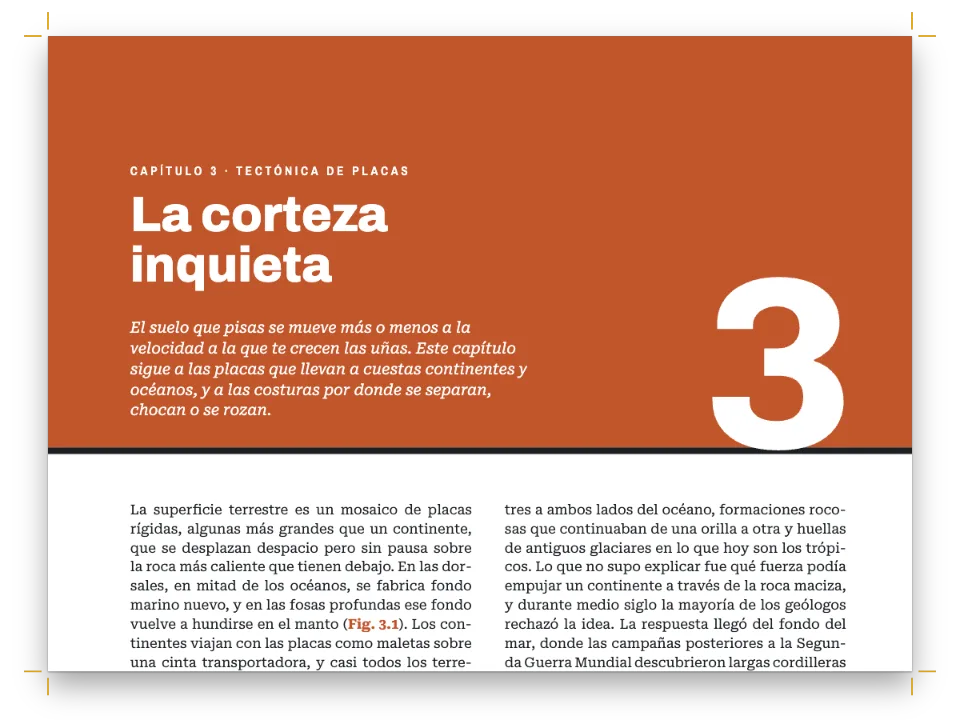
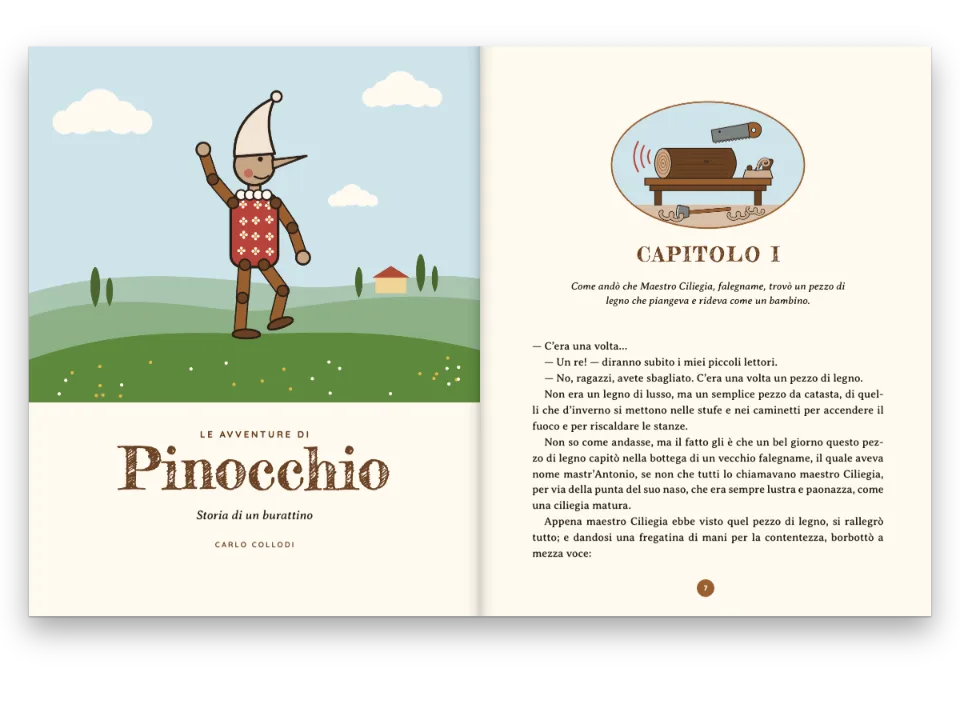
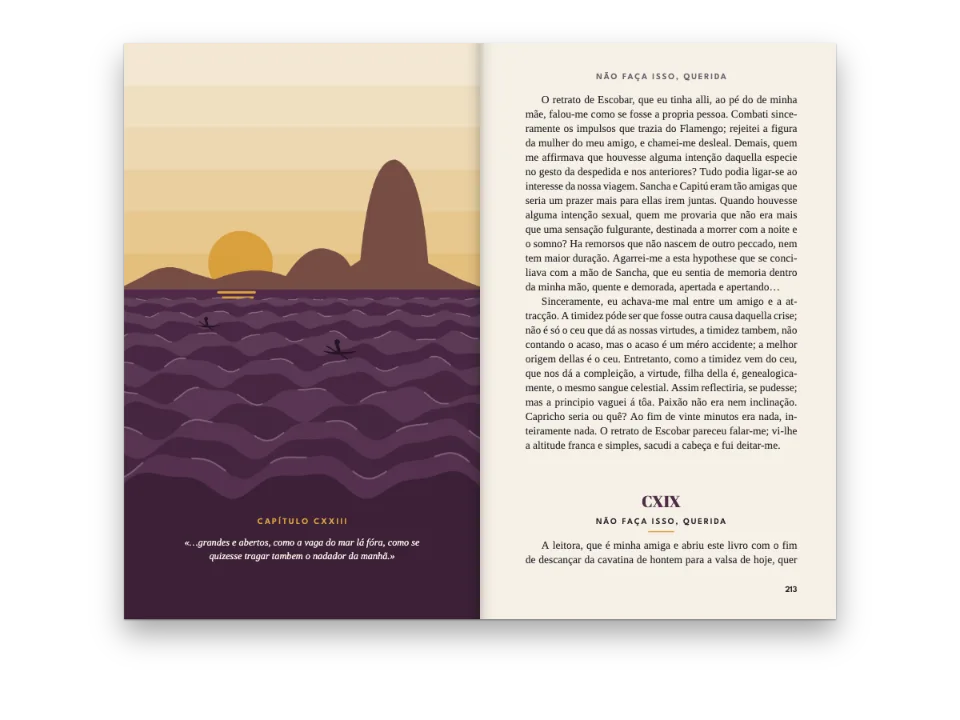
Cinco maneras de empezar es un libro de siete páginas sobre aperturas de capítulo, de 180 × 240 mm, y cada capítulo va compuesto con la apertura que describe. El primero es de novela: antetítulo espaciado, título en cursiva fina y capitular roja de cinco líneas, con cabeceras en las páginas siguientes. El segundo encierra el título y un florón en una cartela crema de dos filetes azules. El tercero apila el título en Fraunces Black blanca sobre un campo magenta a sangre, encima de una inicial monoespaciada calada en una caja. El cuarto, el del manual, lleva cabeceras en monoespaciada, una insignia naranja con el número junto al título y dos columnas de Geist. La coda baja el título a media página, sobre una inicial elevada. El capítulo uno usa la apertura propia del nivel 1; los otros cuatro nombran un estilo en la línea de su título.
Esta receta responde a
- ¿Cómo doy a cada capítulo su propia foto, su color o una variante de apertura?
- ¿Cómo añado a una apertura una línea de autor, una entradilla o un primer párrafo con capitular?
- ¿Cómo pongo el título de capítulo a todo el ancho mientras el texto sigue a dos columnas debajo?
- ¿Cómo hago una insignia con el número junto al título que se ensanche cuando el número crece (9 → 10)?
La respuesta corta
// A heading line picks a style by id, and its attributes feed the opener's {attr.…} texts:
//   # The Frame {style="framed" kicker="Chapter the Second" lead="Long before there…"}
// A style overrides the level fields it names (here the opener) and, until the next level-1
// heading, the section fields it names; what it leaves out comes from the level and document.
const level1 = () => ({ level: 1,
  // span 'page' opens each chapter at the head of a new page and runs its opener across
  // every column (chapter four has two). Any headings object drops the default break to a
  // recto (gotcha: headings-drop-h1-break): restate the side, 'any' for short chapters.
  span: 'page',
  breakBefore: { enabled: true, parity: 'any' },
  marginBottom: pt(LEAD), // one line of air between the opener and the text
  advancedDesign: literary }); // chapter one, unstyled: the book's own opener
const headingStyles = () => [ // factories, called by config() once every design exists
  // Each style brings its opener and swaps 'accent' for a colour of its own, on its pages.
  { id: 'framed', advancedDesign: framed, palette: { accent: palette.lapis },
    margins: { left: mm(EVEN), right: mm(EVEN) } }, // a centred text block
  { id: 'stacked', advancedDesign: stacked, palette: { accent: palette.magenta } },
  { id: 'spec', advancedDesign: spec, palette: { accent: palette.signal },
    marginBottom: pt(0), // the hairline under the title is the separator
    margins: { left: mm(SPEC), right: mm(SPEC) }, // a 144 mm text block
    layout: { layoutType: 'double', gutterWidth: mm(7) },
    bodyStyle: { fontFamily: 'Geist', fontSize: pt(9.8), textAlign: 'left' }, // on the grid
    header: { elements: [...specHead('even'), ...specHead('odd')] },
    footer: { elements: [] } }, // no folio at the foot: the head gives the page
  { id: 'quiet', numbered: false, // a coda: it advances no chapter counter
    advancedDesign: quiet, palette: { accent: palette.graphite }, footer: tinyFolio,
    margins: { left: mm(QUIET.inner), right: mm(QUIET.outer) }, // a 106 mm measure
    bodyStyle: { fontSize: pt(QUIET.size), lineHeight: pt(QUIET.lead), textAlign: 'left' } },
]; // hook-up in config(): headings: { levels: [level1(), …] }, headingStyles()
Ingredientes
- Funciones
- Estilos de títuloGeometría por secciónCapitulares en las aperturasCabeceras por secciónAperturas diseñadasColores por parteCapítulos sin númeroBanda de capítulo a todo el anchoTextos, filetes y cajas en los diseños de páginaImágenes en los diseños de páginaAtributos de títuloBandas a sangre y pestañasSaltos de línea en los títulosAnclaje de elementos de diseñoCabeceras y foliosCabeceras según el tipo de páginaPaleta de color semánticaTítulos numeradosEstilos de párrafoFiguras y tablas como recursos
- Tipografía
- Lora, Fraunces, Geist, Geist Mono (SIL OFL 1.1)
- Recursos
- Ninguno: todas las imágenes se dibujan en código
Elaboración
#1 · Pon en el nivel la apertura propia del libro
// The opening paragraph comes from lead="…" on the heading line: drop caps exist only in
// design text, so the lead is part of the opener (gap: body-drop-cap).
const lead = (placement, dropCap, extra = {}) => text('lead', '{attr.lead}', 'Lora',
  LEADIN.size, placement, { lineHeight: LEADIN.lead / LEADIN.size, dropCap, ...extra });
const CAPS = 0.7; // the height of a capital in Lora and in Fraunces, em
// A drop cap's foot stands on the last baseline it spans. Its default size makes the capital
// as tall as all those line boxes, so it rises above the first line (2.2 mm for five lines
// here); this size puts its top on the first line's capitals instead.
const dropSize = (lines) => pt(((lines - 1) * LEADIN.lead + CAPS * LEADIN.size) / CAPS);
const literary = design([
  text('kicker', '{attr.kicker}', 'Geist', 8, centred(22), { ...caps(1.7), align: 'center' }),
  text('title', '{titleText}', 'Fraunces', 32, at('#kicker', 'below', 0, 4, 'fill'),
    { fontWeight: 300, italic: true, lineHeight: 1.05, align: 'center' }),
  { kind: 'rule', id: 'rule', direction: 'horizontal', thickness: pt(0.8), color: col('accent'),
    placement: at('#title', 'below', (MEASURE - 18) / 2, 6, 18) }, // an 18 mm rule, centred
  lead(at('#title', 'below', 0, 17, 'fill'), {
    lines: 5, fontSize: dropSize(5), fontFamily: 'Fraunces', fontWeight: 400,
    color: col('accent'), gap: mm(2.5) }),
]);
El capítulo uno no lleva estilo, así que toma el diseño del nivel 1, del que parte cada estilo (la respuesta corta muestra el nivel y los estilos). Las capitulares solo existen en el texto de diseño, de modo que el primer párrafo del capítulo sale de lead="…" en la línea del título y lead() lo compone en la apertura; el cuerpo del texto sigue debajo. El motor apoya la letra en la quinta línea de base, pero con el cuerpo por defecto la mayúscula mide lo mismo que las cinco cajas de línea juntas y sobresale 2,2 mm por encima de las mayúsculas de la primera línea. dropSize() calcula el cuerpo a partir de la altura de las mayúsculas de Lora y Fraunces (0,7 em), y así la M queda enrasada por arriba con ellas.
#2 · Enmarca el título con dos cajas
const FRAME = 62; // mm: the outer box's height
const INSET = 3; // mm: the hairline box runs this far inside it
const FLEURON = 44; // mm: the ornament's width, centred under the title
const framed = design([ // array order is paint order: the boxes first, the type on top
  { kind: 'box', id: 'frame', placement: { ...at('container', 'top-left', 0, 0),
    size: { width: 'fill', height: mm(FRAME) } },
  style: { backgroundColor: col('tint'), borderColor: col('accent'), borderWidth: pt(1.6) } },
  { kind: 'box', id: 'hairline', placement: { ...at('#frame', 'align-top', INSET, INSET),
    size: { width: mm(MEASURE - 2 * INSET), height: mm(FRAME - 2 * INSET) } },
  style: { borderColor: col('accent'), borderWidth: pt(0.5) } },
  text('kicker', '{attr.kicker}', 'Geist', 7.5, centred(14), { ...caps(1.6), align: 'center' }),
  text('title', '{titleText}', 'Fraunces', 34, at('#kicker', 'below', 0, 3.5, 'fill'),
    { fontWeight: 600, lineHeight: 1.05, align: 'center' }),
  // An image element draws a registered resource, never numbered or captioned. Its resourceId
  // is a fixed id: a style that names a photo here gives its chapters that photo.
  { kind: 'image', id: 'fleuron', resourceId: 'fleuron',
    placement: at('#title', 'below', (MEASURE - FLEURON) / 2, 4.5, FLEURON) },
  // The section's palette does not reach dropCap.color: name the blue (gotcha: drop-cap-palette).
  lead(at('container', 'top-left', 0, FRAME + 9, 'fill'), { lines: 3, fontSize: dropSize(3),
    fontFamily: 'Fraunces', fontWeight: 600, color: col('lapis'), gap: mm(2) }),
]);
El orden del array es el orden de pintado: primero las cajas y encima el texto; el florón es un elemento de imagen, que dibuja un recurso SVG registrado que nunca se numera ni se cita. Un elemento de imagen sirve también para dar a un capítulo su propia foto, pero su resourceId es un identificador fijo y no una plantilla {attr.…}: cada capítulo necesita un estilo cuyo elemento de imagen nombre su foto, como en el reportaje de revista. El estilo framed de la respuesta corta usa palette para volver azul accent en las páginas de este capítulo, así que los filetes, el antetítulo y el folio salen en azul, y sus margins centran la caja de texto bajo el marco. En la 1.4.1, el color de una capitular no sigue la paleta de la sección; por eso la inicial lleva el azul escrito con col('lapis').
#3 · Apila el título y mete la inicial en una caja
const FIELD = 130; // mm from the trim: the foot of the colour field
const S_BEARING = 1.2; // mm: the white left of the title's S (0.0365 em at 94 pt)
// The boxed initial: the engine sets the letter, a drop cap on the third baseline; the box
// behind it is fitted by hand, in pt from the top of the lead's first line box.
const BASE = 0.8; // 1.4.1 sets a design text's baseline 0.8 down its line box; no option
// Geist Mono, em: cap height, the advance every capital shares, the white either side of an M
const MONO = { caps: 0.71, advance: 0.6, side: 0.044 };
const BOXED = 3; // lines the initial spans
const capsTop = BASE * LEADIN.lead - CAPS * LEADIN.size; // the first line's capitals: box top
const foot = (BOXED - 1 + BASE) * LEADIN.lead; // the third baseline: the letter's foot
// The M's top sits as far under the box's top as its sides sit in, and the box runs as far
// under its foot, so the colour is as wide on all four sides.
const letter = (foot - capsTop) / (MONO.caps + MONO.side), pad = MONO.side * letter;
const stacked = design([
  { kind: 'box', id: 'field', style: { backgroundColor: col('accent') },
    placement: { anchor: { to: 'bleed', edge: 'top-left' }, size: { height: mm(FIELD) } } },
  text('kicker', '{attr.kicker}', 'Geist', 8, at('container', 'top-left', 0, 4),
    { ...caps(1.8), color: col('paper') }),
  // {titleText} keeps the \\ breaks from the Markdown, so each line ends at the writer's \\.
  // Moved left by the S's side bearing, so its curve meets the text edge.
  text('title', '{titleText}', 'Fraunces', 94,
    at('container', 'top-left', -S_BEARING, 15, 'fill'),
    { fontWeight: 900, lineHeight: 0.84, color: col('paper') }),
  { kind: 'box', id: 'initial', style: { backgroundColor: col('accent') }, // behind the lead
    placement: { anchor: { to: '#lead', edge: 'align-top' }, offset: { y: pt(capsTop) },
      size: { width: pt(MONO.advance * letter), height: pt(foot + pad - capsTop) } } },
  // The lead: 8 mm under the field (FIELD is from the trim). Its drop cap's line box
  // counts in the opener's height, 3.5 mm under the lead: FIELD is set so it costs no line.
  lead(at('container', 'top-left', 0, FIELD - TOP + 8, 'fill'), { lines: BOXED,
    fontSize: pt(letter), fontFamily: 'Geist Mono', fontWeight: 700, color: col('paper'),
    gap: mm(2.2) }),
]);
Los cortes del título se escriben en el Markdown: # Salta \\ a la \\ vista. parte {titleText} en cada \\, mientras que las cabeceras y los marcadores del PDF leen el título en una sola línea (saltos de línea en los títulos). El campo cuelga del borde superior del sangrado, a todo lo ancho y con 130 mm de alto, y la entradilla empieza 8 mm por debajo. La inicial en caja se hace con dos elementos. La capitular de la entradilla compone la M en tres líneas, y la caja magenta que se pinta antes se calcula a partir de la caja de línea de la entradilla y de las medidas de Geist Mono, de modo que el color que queda encima y debajo de la M mide lo mismo que su blanco lateral.
#4 · Dale al manual su insignia, dos columnas y sus cabeceras
const SPEC = 18; // mm: both side margins, for a 144 mm text block in two columns
const PAD = 1.6; // mm of colour over the badge's figures
const spec = design([
  { kind: 'rule', id: 'top-rule', direction: 'horizontal', thickness: pt(2.4), color: col('ink'),
    placement: at('container', 'top-left', 0, 0, 'fill') },
  text('kicker', '{attr.kicker}', 'Geist Mono', 7.5, at('container', 'top-left', 0, 3.2),
    { ...caps(1.2, 500), color: col('graphite') }),
  // The badge's width follows its text, with padding on both sides, so 9 → 10 widens it. Its
  // line box holds 1 mm more under the figures than over them, so the foot pads 1 mm less.
  text('badge', '{chapterNumber}', 'Geist Mono', 26, at('container', 'top-left', 0, 12),
    { fontWeight: 700, lineHeight: 1, box: { backgroundColor: col('accent'), padding: {
      top: mm(PAD), right: mm(2.4), bottom: mm(PAD - 1), left: mm(2.4) } } }),
  // Same size and line height as the badge, dropped by its top padding, so the baselines meet.
  text('title', '{titleText}', 'Geist', 26, at('#badge', 'right-of', 4, PAD),
    { fontWeight: 700, lineHeight: 1 }),
  { kind: 'rule', id: 'hairline', direction: 'horizontal', thickness: pt(0.5), color: col('ink'),
    placement: at('container', 'top-left', 0, 31, 'fill') }, // room for a one-line title
]);
const specHead = (parity) => { // mono labels over the opener's rule, on every page of the section
  const [edge, s] = parity === 'even' ? ['top-left', 1] : ['top-right', -1];
  const mono = { ...caps(1.1, 500), color: col('graphite'), parity, pages: 'all' };
  return [
    text(`sp-page-${parity}`, '{pageNumber} / {totalPages}', 'Geist Mono', 7,
      at('container', edge, 0, HEAD_Y), mono),
    text(`sp-chap-${parity}`, '§ {chapterNumber} · {chapterTitle}', 'Geist Mono', 7,
      at('container', edge, s * 16, HEAD_Y), mono),
  ];
};
La insignia es un elemento de texto con fondo y relleno interior pero sin anchura, así que su ancho sigue al de {chapterNumber}, y el título se coloca a su derecha con right-of: en el capítulo 10 la insignia crece una cifra, 5,5 mm, y el título se desplaza con ella. Su relleno inferior es 1 mm menor que el superior porque la caja de línea deja ese milímetro de más bajo las cifras, y así el 4 queda centrado. En el estilo spec, layout pasa la sección a dos columnas y el span: 'page' del nivel extiende la apertura sobre las dos. Sus margins ensanchan la caja de texto a 144 mm, bodyStyle compone Geist en bandera sobre la rejilla base de 14,5 puntos del libro, header sustituye las cabeceras del libro y un footer vacío quita el folio.
#5 · Deja aire a la coda
const quiet = design([ // the kicker is in the accent, which this style turns graphite
  text('kicker', '{attr.kicker}', 'Geist', 7.5, at('container', 'top-left', 0, 92),
    caps(1.6, 500)),
  text('title', '{titleText}', 'Fraunces', 26, at('#kicker', 'below', 0, 3),
    { fontWeight: 300, lineHeight: 1.1 }),
  // One line: the letter stands on the first baseline and rises into the white above it.
  lead(at('#title', 'below', 0, 16, 'fill'), { lines: 1, fontFamily: 'Fraunces',
    fontWeight: 300, fontSize: pt(46), color: col('graphite'), gap: mm(1.2) },
  { fontSize: pt(QUIET.size), lineHeight: QUIET.lead / QUIET.size }),
]);
const tiny = (parity, edge) => text(`tiny-${parity}`, '{pageNumber}', 'Geist', 6.5,
  at('container', edge, 0, -12), { fontWeight: 500, color: col('muted'), parity });
const tinyFolio = { elements: [tiny('even', 'bottom-left'), tiny('odd', 'bottom-right')] };
El antetítulo cuelga 92 mm por debajo del comienzo de la caja de texto, y la inicial elevada es una capitular de una sola línea: su pie se apoya en la primera línea de base y, con 46 puntos, sobresale hacia el blanco de arriba en lugar de hundirse en el párrafo. En el estilo quiet, margins estrechan la medida a 106 mm, bodyStyle compone el texto en bandera a 12,5/17,5 puntos, footer cambia el folio de la apertura por uno pequeño en la esquina exterior del pie y palette vuelve gris el antetítulo. En esta página no se imprime ningún número de capítulo, así que numbered: false solo se notaría en un capítulo añadido después de la coda, que seguiría siendo el quinto.
La receta completa
// ═══ Postext Cookbook · Nº 017 · Five chapter openers in one book ═════════════════ // https://postext.dev/en/cookbook/five-chapter-openers // Code: MIT · Text: original (CC BY 4.0) · Ornament: generated in code (CC BY 4.0) // Fonts: Lora, Fraunces, Geist, Geist Mono (SIL OFL 1.1) · Needs postext ≥ 1.4.1 // A small book about openers, each chapter set in the one it describes. Every heading style // brings its opener and palette; three move the margins, two bring their own type and folios. import { buildDocument, renderPageToCanvas, clearMeasurementCache, registerResourceImage, } from 'https://esm.sh/postext'; const LANG = 'es'; // @lang: the language of the sample document ('en' | 'es') const RECIPE = 'five-chapter-openers'; // ─── 1 · Design ───────────────────────────────────────────────────────────── // #region answer: one opener per chapter: the level's own, then heading styles by name // A heading line picks a style by id, and its attributes feed the opener's {attr.…} texts: // # The Frame {style="framed" kicker="Chapter the Second" lead="Long before there…"} // A style overrides the level fields it names (here the opener) and, until the next level-1 // heading, the section fields it names; what it leaves out comes from the level and document. const level1 = () => ({ level: 1, // span 'page' opens each chapter at the head of a new page and runs its opener across // every column (chapter four has two). Any headings object drops the default break to a // recto (gotcha: headings-drop-h1-break): restate the side, 'any' for short chapters. span: 'page', breakBefore: { enabled: true, parity: 'any' }, marginBottom: pt(LEAD), // one line of air between the opener and the text advancedDesign: literary }); // chapter one, unstyled: the book's own opener const headingStyles = () => [ // factories, called by config() once every design exists // Each style brings its opener and swaps 'accent' for a colour of its own, on its pages. { id: 'framed', advancedDesign: framed, palette: { accent: palette.lapis }, margins: { left: mm(EVEN), right: mm(EVEN) } }, // a centred text block { id: 'stacked', advancedDesign: stacked, palette: { accent: palette.magenta } }, { id: 'spec', advancedDesign: spec, palette: { accent: palette.signal }, marginBottom: pt(0), // the hairline under the title is the separator margins: { left: mm(SPEC), right: mm(SPEC) }, // a 144 mm text block layout: { layoutType: 'double', gutterWidth: mm(7) }, bodyStyle: { fontFamily: 'Geist', fontSize: pt(9.8), textAlign: 'left' }, // on the grid header: { elements: [...specHead('even'), ...specHead('odd')] }, footer: { elements: [] } }, // no folio at the foot: the head gives the page { id: 'quiet', numbered: false, // a coda: it advances no chapter counter advancedDesign: quiet, palette: { accent: palette.graphite }, footer: tinyFolio, margins: { left: mm(QUIET.inner), right: mm(QUIET.outer) }, // a 106 mm measure bodyStyle: { fontSize: pt(QUIET.size), lineHeight: pt(QUIET.lead), textAlign: 'left' } }, ]; // hook-up in config(): headings: { levels: [level1(), …] }, headingStyles() // #endregion const palette = { // every colour in the config links to one of these by id ink: '#16181c', // text: a cool near-black accent: '#8c1c13', // the one accent of a section; the book's own is a rubric red tint: '#f6f0e3', // the frame's cream muted: '#6b6760', // running heads and the colophon paper: '#ffffff', // type on colour lapis: '#24427a', magenta: '#a3155e', signal: '#ff5a1f', graphite: '#4a4f57', }; // col(id): a palette-linked colour. It carries the hex too, because 1.4.1 paints design // elements from the hex (gotcha: palette-skips-designs). const col = (id) => ({ hex: palette[id], model: 'hex', paletteId: id }); const colorPalette = [ ...Object.entries(palette).map(([id, hex]) => ({ id, name: id, value: { hex, model: 'hex' } })), // The engine's defaults link to 'main-color': point it at the accent, so nothing prints blue. { id: 'main-color', name: 'accent (defaults)', value: { hex: palette.accent, model: 'hex' } }, ]; const TRIM = { w: 180, h: 240 }; // mm const TOP = 22, INNER = 20, OUTER = 36; // margins, mm: a wide outer margin keeps 124 mm lines const MEASURE = TRIM.w - INNER - OUTER; // mm const EVEN = (TRIM.w - MEASURE) / 2; // mm: equal side margins, for the framed chapter const LEAD = 14.5; // body leading, pt: the baseline grid const LEADIN = { size: 12, lead: 17 }; // pt: the opening paragraph each opener sets itself const QUIET = { size: 12.5, lead: 17.5, inner: 30, outer: 44 }; // the coda: pt, and mm margins // Design-slot shorthands. at(): a placement from an anchor's edge, x and y in mm. const at = (to, edge, x, y, width) => ({ anchor: { to, edge }, offset: { x: mm(x), y: mm(y) }, ...(width !== undefined && { size: { width: width === 'fill' ? 'fill' : mm(width) } }) }); // Design text wraps; left alone it ends in '…' (gotcha: overflow-ellipsis-default). A number // lineHeight multiplies the size, never pt() (gotcha: design-lineheight-multiple). const text = (id, content, fontFamily, size, placement, extra = {}) => ({ kind: 'text', id, content, fontFamily, fontSize: pt(size), color: col('ink'), align: 'left', overflow: 'wrap', placement, ...extra }); const caps = (tracking, weight = 600) => ({ fontWeight: weight, letterSpacing: pt(tracking), textTransform: 'uppercase', color: col('accent') }); const centred = (y) => at('container', 'top', 0, y, 'fill'); // a full-width line, centred // No minHeight: the text starts under the lowest element of each opener. const design = (elements) => ({ enabled: true, slot: { elements } }); // #region literary: chapter one, the level's own opener: a five-line drop in rubric red // The opening paragraph comes from lead="…" on the heading line: drop caps exist only in // design text, so the lead is part of the opener (gap: body-drop-cap). const lead = (placement, dropCap, extra = {}) => text('lead', '{attr.lead}', 'Lora', LEADIN.size, placement, { lineHeight: LEADIN.lead / LEADIN.size, dropCap, ...extra }); const CAPS = 0.7; // the height of a capital in Lora and in Fraunces, em // A drop cap's foot stands on the last baseline it spans. Its default size makes the capital // as tall as all those line boxes, so it rises above the first line (2.2 mm for five lines // here); this size puts its top on the first line's capitals instead. const dropSize = (lines) => pt(((lines - 1) * LEADIN.lead + CAPS * LEADIN.size) / CAPS); const literary = design([ text('kicker', '{attr.kicker}', 'Geist', 8, centred(22), { ...caps(1.7), align: 'center' }), text('title', '{titleText}', 'Fraunces', 32, at('#kicker', 'below', 0, 4, 'fill'), { fontWeight: 300, italic: true, lineHeight: 1.05, align: 'center' }), { kind: 'rule', id: 'rule', direction: 'horizontal', thickness: pt(0.8), color: col('accent'), placement: at('#title', 'below', (MEASURE - 18) / 2, 6, 18) }, // an 18 mm rule, centred lead(at('#title', 'below', 0, 17, 'fill'), { lines: 5, fontSize: dropSize(5), fontFamily: 'Fraunces', fontWeight: 400, color: col('accent'), gap: mm(2.5) }), ]); // #endregion // #region framed: a cartouche of two boxes around the title, an ornament, a three-line initial const FRAME = 62; // mm: the outer box's height const INSET = 3; // mm: the hairline box runs this far inside it const FLEURON = 44; // mm: the ornament's width, centred under the title const framed = design([ // array order is paint order: the boxes first, the type on top { kind: 'box', id: 'frame', placement: { ...at('container', 'top-left', 0, 0), size: { width: 'fill', height: mm(FRAME) } }, style: { backgroundColor: col('tint'), borderColor: col('accent'), borderWidth: pt(1.6) } }, { kind: 'box', id: 'hairline', placement: { ...at('#frame', 'align-top', INSET, INSET), size: { width: mm(MEASURE - 2 * INSET), height: mm(FRAME - 2 * INSET) } }, style: { borderColor: col('accent'), borderWidth: pt(0.5) } }, text('kicker', '{attr.kicker}', 'Geist', 7.5, centred(14), { ...caps(1.6), align: 'center' }), text('title', '{titleText}', 'Fraunces', 34, at('#kicker', 'below', 0, 3.5, 'fill'), { fontWeight: 600, lineHeight: 1.05, align: 'center' }), // An image element draws a registered resource, never numbered or captioned. Its resourceId // is a fixed id: a style that names a photo here gives its chapters that photo. { kind: 'image', id: 'fleuron', resourceId: 'fleuron', placement: at('#title', 'below', (MEASURE - FLEURON) / 2, 4.5, FLEURON) }, // The section's palette does not reach dropCap.color: name the blue (gotcha: drop-cap-palette). lead(at('container', 'top-left', 0, FRAME + 9, 'fill'), { lines: 3, fontSize: dropSize(3), fontFamily: 'Fraunces', fontWeight: 600, color: col('lapis'), gap: mm(2) }), ]); // #endregion // #region stacked: a colour field, the title's words stacked, a boxed initial const FIELD = 130; // mm from the trim: the foot of the colour field const S_BEARING = 1.2; // mm: the white left of the title's S (0.0365 em at 94 pt) // The boxed initial: the engine sets the letter, a drop cap on the third baseline; the box // behind it is fitted by hand, in pt from the top of the lead's first line box. const BASE = 0.8; // 1.4.1 sets a design text's baseline 0.8 down its line box; no option // Geist Mono, em: cap height, the advance every capital shares, the white either side of an M const MONO = { caps: 0.71, advance: 0.6, side: 0.044 }; const BOXED = 3; // lines the initial spans const capsTop = BASE * LEADIN.lead - CAPS * LEADIN.size; // the first line's capitals: box top const foot = (BOXED - 1 + BASE) * LEADIN.lead; // the third baseline: the letter's foot // The M's top sits as far under the box's top as its sides sit in, and the box runs as far // under its foot, so the colour is as wide on all four sides. const letter = (foot - capsTop) / (MONO.caps + MONO.side), pad = MONO.side * letter; const stacked = design([ { kind: 'box', id: 'field', style: { backgroundColor: col('accent') }, placement: { anchor: { to: 'bleed', edge: 'top-left' }, size: { height: mm(FIELD) } } }, text('kicker', '{attr.kicker}', 'Geist', 8, at('container', 'top-left', 0, 4), { ...caps(1.8), color: col('paper') }), // {titleText} keeps the \\ breaks from the Markdown, so each line ends at the writer's \\. // Moved left by the S's side bearing, so its curve meets the text edge. text('title', '{titleText}', 'Fraunces', 94, at('container', 'top-left', -S_BEARING, 15, 'fill'), { fontWeight: 900, lineHeight: 0.84, color: col('paper') }), { kind: 'box', id: 'initial', style: { backgroundColor: col('accent') }, // behind the lead placement: { anchor: { to: '#lead', edge: 'align-top' }, offset: { y: pt(capsTop) }, size: { width: pt(MONO.advance * letter), height: pt(foot + pad - capsTop) } } }, // The lead: 8 mm under the field (FIELD is from the trim). Its drop cap's line box // counts in the opener's height, 3.5 mm under the lead: FIELD is set so it costs no line. lead(at('container', 'top-left', 0, FIELD - TOP + 8, 'fill'), { lines: BOXED, fontSize: pt(letter), fontFamily: 'Geist Mono', fontWeight: 700, color: col('paper'), gap: mm(2.2) }), ]); // #endregion // The book's running heads and folios, anchored to the text block, whatever its margins. const HEAD_Y = 14; // mm from the trim to the running heads const label = (id, content, parity, edge, x, extra = {}) => text(id, content, 'Geist', 7.5, at('container', edge, x, HEAD_Y), { ...caps(1.4, 500), color: col('muted'), parity, pages: 'body', ...extra }); const folio = { fontWeight: 700, color: col('ink'), letterSpacing: pt(0.4) }; // Title on the verso, chapter on the recto, folios at the outer corners. const header = { elements: [ label('verso-folio', '{pageNumber}', 'even', 'top-left', 0, folio), label('verso-title', '{title}', 'even', 'top-left', 9), label('recto-title', '{chapterTitle}', 'odd', 'top-right', -9), label('recto-folio', '{pageNumber}', 'odd', 'top-right', 0, folio), ] }; // Openers carry a drop folio instead, centred under the text block, in the section's accent. const footer = { elements: [text('drop-folio', '{pageNumber}', 'Geist', 7.5, at('container', 'top', 0, 9), { ...folio, color: col('accent'), pages: 'opener' })] }; // #region spec: a ruled title, a number badge that widens with the number, two columns const SPEC = 18; // mm: both side margins, for a 144 mm text block in two columns const PAD = 1.6; // mm of colour over the badge's figures const spec = design([ { kind: 'rule', id: 'top-rule', direction: 'horizontal', thickness: pt(2.4), color: col('ink'), placement: at('container', 'top-left', 0, 0, 'fill') }, text('kicker', '{attr.kicker}', 'Geist Mono', 7.5, at('container', 'top-left', 0, 3.2), { ...caps(1.2, 500), color: col('graphite') }), // The badge's width follows its text, with padding on both sides, so 9 → 10 widens it. Its // line box holds 1 mm more under the figures than over them, so the foot pads 1 mm less. text('badge', '{chapterNumber}', 'Geist Mono', 26, at('container', 'top-left', 0, 12), { fontWeight: 700, lineHeight: 1, box: { backgroundColor: col('accent'), padding: { top: mm(PAD), right: mm(2.4), bottom: mm(PAD - 1), left: mm(2.4) } } }), // Same size and line height as the badge, dropped by its top padding, so the baselines meet. text('title', '{titleText}', 'Geist', 26, at('#badge', 'right-of', 4, PAD), { fontWeight: 700, lineHeight: 1 }), { kind: 'rule', id: 'hairline', direction: 'horizontal', thickness: pt(0.5), color: col('ink'), placement: at('container', 'top-left', 0, 31, 'fill') }, // room for a one-line title ]); const specHead = (parity) => { // mono labels over the opener's rule, on every page of the section const [edge, s] = parity === 'even' ? ['top-left', 1] : ['top-right', -1]; const mono = { ...caps(1.1, 500), color: col('graphite'), parity, pages: 'all' }; return [ text(`sp-page-${parity}`, '{pageNumber} / {totalPages}', 'Geist Mono', 7, at('container', edge, 0, HEAD_Y), mono), text(`sp-chap-${parity}`, '§ {chapterNumber} · {chapterTitle}', 'Geist Mono', 7, at('container', edge, s * 16, HEAD_Y), mono), ]; }; // #endregion // #region quiet: the coda: a title far down the page, a raised initial, a folio at the side const quiet = design([ // the kicker is in the accent, which this style turns graphite text('kicker', '{attr.kicker}', 'Geist', 7.5, at('container', 'top-left', 0, 92), caps(1.6, 500)), text('title', '{titleText}', 'Fraunces', 26, at('#kicker', 'below', 0, 3), { fontWeight: 300, lineHeight: 1.1 }), // One line: the letter stands on the first baseline and rises into the white above it. lead(at('#title', 'below', 0, 16, 'fill'), { lines: 1, fontFamily: 'Fraunces', fontWeight: 300, fontSize: pt(46), color: col('graphite'), gap: mm(1.2) }, { fontSize: pt(QUIET.size), lineHeight: QUIET.lead / QUIET.size }), ]); const tiny = (parity, edge) => text(`tiny-${parity}`, '{pageNumber}', 'Geist', 6.5, at('container', edge, 0, -12), { fontWeight: 500, color: col('muted'), parity }); const tinyFolio = { elements: [tiny('even', 'bottom-left'), tiny('odd', 'bottom-right')] }; // #endregion const config = () => ({ // a factory: configs are cached by identity (gotcha: config-cache-identity) colorPalette, locale: t({ en: 'en-us', es: 'es' }), // hyphenation, by exact code (gotcha: hyphenation-locales) page: { width: mm(TRIM.w), height: mm(TRIM.h), dpi: 150, // 150 dpi: a screen edition margins: { top: mm(TOP), bottom: mm(22), left: mm(INNER), right: mm(OUTER), mirror: true } }, layout: { layoutType: 'single' }, bodyText: { fontFamily: 'Lora', fontSize: pt(10.8), lineHeight: pt(LEAD), color: col('ink'), boldColor: col('ink'), italicColor: col('ink'), referenceColor: col('ink'), textAlign: 'justify', firstLineIndent: mm(4.5), indentAfterHeading: false, minWordSpacing: 0.8, maxWordSpacing: 1.6 }, // an even texture on 124 mm lines headings: { fontFamily: 'Geist', color: col('ink'), levels: [level1(), { level: 2, fontSize: pt(11.5), lineHeight: pt(LEAD), fontWeight: 700, // the manual's numberingTemplate: '{1}.{2}', marginTop: pt(LEAD), marginBottom: pt(0) }] }, headingStyles: headingStyles(), paragraphStyles: [{ id: 'colophon', fontFamily: 'Geist', fontSize: pt(7), lineHeight: pt(10), color: col('muted'), textAlign: 'left', firstLineIndent: pt(0), marginTop: pt(2 * LEAD) }], header, footer, }); // ─── 2 · Content ──────────────────────────────────────────────────────────── const markdown = String.raw`---Muestra en Markdown · 69 líneas · content.es.md
title: "Cinco maneras de empezar" subtitle: "Notas sobre la apertura de capítulo" --- # La voz {kicker="Capítulo uno" lead="Muchos libros empiezan en voz baja. Una novela abre cada capítulo con un número, a veces un título, un espacio en blanco y la primera frase, compuesta en la misma letra que el resto del texto. Esa disposición está pensada para pasar inadvertida. Avisa a quien acaba un capítulo de que empieza otro y le deja seguir leyendo sin detenerse a mirar la página."} El único adorno que conserva la novela es la inicial. Viene del rubricador, el copista que repasaba el manuscrito terminado para añadir en tinta roja los títulos y las mayúsculas; *rúbrica* procede del latín *rubrica*, el almagre u ocre rojo. La costumbre pasó a la imprenta. Muchos de los primeros libros impresos tienen un cuadro en blanco al comienzo de cada capítulo, a veces con una diminuta letra de guía, para que un rubricador pintara después la inicial a mano. Algunos ejemplares de una misma edición se iluminaron con oro y colores y otros nunca se terminaron; en estos, el cuadro sigue en blanco y la letra de guía, a la vista. La capitular se coloca a partir de las líneas que tiene al lado. Su parte superior se alinea con las mayúsculas de la primera línea, y su pie descansa sobre la línea de base del último renglón que abarca, de modo que la letra queda dentro de la caja de texto. Todas las líneas que desplaza empiezan a la misma distancia de su borde derecho. Si sube por encima de las mayúsculas, parece un recorte pegado; si baja, parece que se hunde en el párrafo. Una capitular de cinco líneas es grande y suele reservarse para el primer capítulo de un libro largo. Lo habitual son dos o tres, y muchas novelas prescinden de la inicial y marcan el comienzo del capítulo solo con el blanco que dejan sobre la primera línea. Una apertura sencilla también se rige por medidas fijas. El blanco que queda sobre el título mide lo mismo en todos los capítulos, de modo que los títulos quedan a la misma altura al pasar las páginas, tenga el título una palabra u ocho. El primer renglón del texto cae en la misma línea de la rejilla base que en el resto del libro, y así los renglones de las páginas enfrentadas coinciden cuando el libro está abierto. Si ese blanco varía unos milímetros de un capítulo a otro, se nota en cuanto se hojea el libro. El número de capítulo puede ir en letra, como aquí, en cifras o, si se busca un aire antiguo, en números romanos; el libro elige una forma y la usa en todos los capítulos. Algunas novelas suprimen la palabra *capítulo* y dejan el número solo sobre el texto, cosa que conviene a los libros de capítulos cortos y numerosos. Otras dan a cada capítulo un título y ningún número. Entonces el título es el único elemento de la apertura, y se compone en un cuerpo mayor y con más blanco encima. Tras la inicial, muchos libros componen en versalitas el resto de la primera línea o las primeras palabras, lo que suaviza el paso de la letra grande al cuerpo del texto; otros siguen en redonda. El primer párrafo no lleva sangría. La sangría separa un párrafo del anterior, y el primero de un capítulo no tiene ninguno delante. Los capítulos de una novela suelen empezar en página nueva y, en un libro largo, a menudo en página impar, aunque la par anterior quede en blanco. En una novela de veinte capítulos eso puede sumar unas diez páginas en blanco. Los editores las aceptan porque así todas las aperturas caen del mismo lado, y quien busca un capítulo lo encuentra pasando las hojas con el pulgar. La apertura no lleva cabecera. El título del capítulo ya está en la página y una cabecera encima lo repetiría, así que el número de página baja al pie, centrado bajo el texto. Es el llamado folio caído. En muchos libros ni siquiera aparece: la página cuenta en la numeración, pero no lleva número impreso. En la segunda página del capítulo vuelven las cabeceras, el título del libro en la página par y el del capítulo en la impar, y los folios regresan a las esquinas exteriores. Desde ahí hasta el final del capítulo, el texto se mantiene en la misma rejilla. Un capítulo que termina en su primera página no llega a mostrar las cabeceras. Este librito compone cada capítulo con la apertura que describe, y hasta aquí ha seguido las convenciones de la novela. Los cuatro capítulos siguientes se apartan de ellas: un título enmarcado para una edición de regalo, un título apilado sobre un campo de color para una revista, una apertura numerada y con filetes para un manual y, para una coda, un título bajo en una página casi vacía. # El marco {style="framed" kicker="Capítulo segundo" lead="Siglos antes de que los libros tuvieran portada, el comienzo de un texto se marcaba en el propio manuscrito con una orla pintada en la primera hoja y una gran inicial de color."} Los primeros impresores heredaron esa costumbre de los manuscritos que imitaban y la volvieron mecánica. Con florones, adornos fundidos en forma de flores, hojas y nudos, armaban orlas de cualquier tamaño pieza a pieza, como un albañil levanta un muro. Las iniciales eran grabados en madera, cada letra tallada en un taco de follaje. Algunos tacos tenían el centro vacío para encajar en él cualquier mayúscula de la caja; los impresores los llamaban factótum, del latín *fac totum*, «hazlo todo». Hoy el marco aparece sobre todo en clásicos reeditados y ediciones de aniversario, libros que se compran para regalar. Aquí un filete grueso por fuera y otro fino 3 mm por dentro rodean el título como el paspartú rodea un grabado. La letra va centrada, sobre un solo adorno, y el color se reserva para el marco, el antetítulo y la inicial. Bajo el marco, el texto lleva la letra, el cuerpo y la medida del resto del libro; solo cambian los márgenes, que centran la caja bajo el marco. # Salta \\ a la \\ vista. {style="stacked" kicker="Capítulo tres · Manifiestos, revistas, carteles" lead="Manifiestos, revistas y carteles dedican la primera página al título, compuesto tan grande como permite el formato y a menudo sin ninguna imagen."} Un título apilado tiene pocas palabras, una frase por línea, y los cortes los decide quien escribe. Si se deja que el título se parta donde se acaba la medida, puede separar un artículo de su sustantivo y dejar un «la» colgando al final de la línea; cortado donde haría una pausa quien lo dijera en voz alta, se lee como un titular. Pide una letra muy negra y blanco alrededor. Aquí el campo de color le sirve de fondo y sale a sangre por arriba y por los lados. Bajo el campo, el texto vuelve al cuerpo de lectura, y solo su primera letra, calada en blanco sobre un cuadro magenta, repite el color. # Numéralo todo {style="spec" kicker="Manuales · Normas · Hojas de datos"} Casi nadie lee un manual de la primera página a la última. Se abre por la sección que hace falta, muchas veces con el aparato en la otra mano, y se cierra en cuanto se resuelve la duda. El número de capítulo es lo que el lector anota en un margen o cita en un correo, así que la apertura lo compone grande, en cifras de ancho fijo, arriba a la izquierda, donde se empieza a leer. ## Números antes que nombres Los lectores citan las secciones por su número. Una referencia a la sección 4.2 sigue valiendo aunque se cambie el título de la sección, cosa que no garantiza una referencia a «la sección sobre las columnas». Los títulos se numeran hasta el segundo nivel, y el número de una sección retirada no se da nunca a otra nueva, para que una referencia antigua no lleve a un texto distinto. La insignia que lleva el número de capítulo se ensancha con él. Los números de una y de dos cifras reciben el mismo relleno a cada lado, y el título se desplaza para dejar sitio, de modo que entre la insignia y el título hay la misma distancia en el capítulo 10 que en el 9. A este cuerpo, cada cifra más añade 5,5 mm a la insignia. ## Dos columnas, líneas cortas El texto técnico suele ir en dos columnas porque una línea corta se recorre mejor con la vista. Aquí cada columna mide 68,5 mm, unos cuarenta caracteres de este texto. Quien busca un valor baja por una columna estrecha, y al final de cada línea el ojo encuentra el comienzo de la siguiente sin perderse. El texto va en bandera, así que cada espacio conserva su ancho natural y una cadena larga, como una referencia de pieza, nunca estira los espacios de la línea que la precede. El título abarca las dos columnas. Es lo primero que hay que leer en la página, y metido solo en la primera columna parecería un párrafo más. ## Filetes y color Los filetes dividen la página. Uno grueso sobre la caja de texto marca el comienzo del capítulo y otro fino separa el título del texto. La cabecera que hay encima da el capítulo y el número de página sobre el total, para que el lector sepa por dónde va. El único color es el naranja de la insignia. Todo lo demás que hay que leer va en negro o en gris oscuro, de modo que una fotocopia en blanco y negro de la página no pierde información. # Deja aire {style="quiet" kicker="Coda" lead="Hay libros que no necesitan ninguna señal. Un poemario o unas memorias pueden usar la apertura para que el lector baje el ritmo."} Esta coda lo consigue con blanco: el título empieza a más de 90 mm del borde superior de la caja de texto, y la inicial sube por encima de la primera línea, hacia la página vacía. :::paragraphs{style="colophon"} *Cinco maneras de empezar* está compuesto en Lora, Fraunces, Geist y Geist Mono (SIL Open Font License). Texto y florón: CC BY 4.0. :::`; // content.<lang>.md, inlined by the Cookbook // #region art: the fleuron, a printer's flower drawn in paths in the frame's blue function fleuron(ink) { // two scrolls with a leaf above and below, a rosette between them const scroll = 'M51 14.2C42 9.5 31 8.6 22 11.4C16 13.2 11.6 13 9.6 10.2C8.2 7.8 10.2 5.3 13 5.8' + 'C11 6.8 10.6 8.8 12 9.9C14.6 11.4 18 10.2 21.6 9.1C30.6 6.4 42 7.6 51 12.4Z' + 'M36 11.4C33.4 15.6 28.6 18.4 23.4 18.8C26.4 15 31 12.4 36 11.4Z' // the leaf below + 'M31 8.3C29.6 5.2 26.4 3.4 23 3.5C25.2 5.8 27.8 7.6 31 8.3Z'; // the leaf above const petal = 'M60 13.4C58.2 10.6 58.2 7.2 60 4.4C61.8 7.2 61.8 10.6 60 13.4Z'; const turn = (a) => `transform="rotate(${a} 60 13.4)"`; const rosette = [0, 90, 180, 270].map((a) => `<path d="${petal}" ${turn(a)}/>`).join('') + [45, 135, 225, 315].map((a) => `<circle cx="60" cy="9.6" r="1.1" ${turn(a)}/>`).join(''); return '<svg xmlns="http://www.w3.org/2000/svg" width="720" height="162" viewBox="0 0 120 27">' + `<g fill="${ink}"><path d="${scroll}"/>` // the right half is the left one mirrored + `<path d="${scroll}" transform="translate(120 0) scale(-1 1)"/>${rosette}` + '<circle cx="4.5" cy="10.5" r="1.5"/><circle cx="115.5" cy="10.5" r="1.5"/></g></svg>'; } // #endregion const resources = [{ id: 'fleuron', typeId: 'figure', kind: 'svg', createdAt: 0, updatedAt: 0, svg: { fileId: 'fleuron.svg', width: 720, height: 162 }, altText: t({ en: 'A printer’s flower: a four-petalled rosette between two leafy scrolls.', es: 'Un florón de imprenta: una roseta de cuatro pétalos entre dos volutas con hojas.' }) }]; // ─── 3 · Fonts ────────────────────────────────────────────────────────────── const FONTS = { // text, display, label and figure faces (gotcha: fonts-first) Lora: ['400', '400i'], Fraunces: ['300', '300i', '400', '600', '900'], Geist: ['400', '400i', '500', '600', '700'], 'Geist Mono': ['500', '700'] }; // ─── 4 · Build & show ─────────────────────────────────────────────────────── await loadFonts(FONTS, markdown); await loadSvg('fleuron.svg', fleuron(palette.lapis)); // a picture's colours are fixed when drawn const doc = await buildWithFonts(() => buildDocument({ markdown, resources }, config()), markdown); showPages(doc, { title: t({ en: 'Five chapter openers', es: 'Cinco aperturas de capítulo' }) });Kit · core, fonts, viewer, images: igual en todas las recetas · 270 líneas
// ─── Kit ── helpers shared by every Cookbook recipe · postext.dev/cookbook ───── // ─── Kit · core v1 ── the same in every recipe · postext.dev/cookbook ───────── function mm(value) { return { value, unit: 'mm' }; } function pt(value) { return { value, unit: 'pt' }; } function em(value) { return { value, unit: 'em' }; } /** The sample language's string: t({ en: 'Figure', es: 'Figura' }). */ function t(strings) { return strings[LANG] ?? Object.values(strings)[0]; } /** A file in this recipe's assets folder, served from the Postext repo by jsDelivr. */ function asset(file) { return `https://cdn.jsdelivr.net/gh/drnachio/postext@main/cookbook/${RECIPE}/assets/${file}`; } // ─── Kit · fonts v1 ── the same in every recipe · postext.dev/cookbook ──────── // Postext measures text with the faces the browser has loaded, and caches the // widths, so every face must be ready before the first build. Faces come from // Fontsource: the same static files the PDF embeds, so screen and PDF agree. /** faces = { 'Family Name': ['400', '400i', '700'] }. `text` is the sample: * letters beyond Latin-1 (č, ł, ő…) also load the latin-ext files. With * `optional`, a face Fontsource does not ship is skipped instead of failing. * Resolves to the number of faces added. */ async function loadFonts(faces, text = '', { optional = false } = {}) { kitStatus('Loading fonts…'); const ranges = { latin: 'U+0000-00FF,U+0131,U+0152-0153,U+02BB-02BC,U+02C6,U+02DA,U+02DC,U+0304,U+0308,U+0329,' + 'U+2000-206F,U+20AC,U+2122,U+2191,U+2193,U+2212,U+2215,U+FEFF,U+FFFD', 'latin-ext': 'U+0100-02BA,U+02BD-02C5,U+02C7-02CC,U+02CE-02D7,U+02DD-02FF,U+0304,U+0308,U+0329,' + 'U+1D00-1DBF,U+1E00-1E9F,U+1EF2-1EFF,U+2020,U+20A0-20AB,U+20AD-20C0,U+2113,U+2C60-2C7F,U+A720-A7FF', }; const subsets = /[Ā-˿Ḁ-ỿ]/.test(text) ? ['latin', 'latin-ext'] : ['latin']; const jobs = []; let added = 0; for (const [family, specs] of Object.entries(faces)) { const id = fontsourceId(family); const meta = optional ? await fontsourceMeta(family) : null; for (const spec of new Set(specs)) { const weight = parseInt(spec, 10); const style = spec.endsWith('i') ? 'italic' : 'normal'; if (hasFace(family, weight, style)) continue; if (optional && !(meta?.weights.includes(weight) && meta.styles.includes(style))) continue; for (const subset of subsets) { const url = `https://cdn.jsdelivr.net/npm/@fontsource/${id}@5/files/${id}-${subset}-${weight}-${style}.woff2`; const face = new FontFace(family, `url(${url}) format('woff2')`, { weight: String(weight), style, unicodeRange: ranges[subset] }); jobs.push(face.load().then((ready) => { document.fonts.add(ready); added++; }, () => { if (subset === 'latin' && !optional) throw new Error(`Fontsource has no ${family} ${weight} ${style}`); })); } } } await Promise.all(jobs).catch((error) => { kitFail(error); throw error; }); return added; } /** Runs `build` (a buildDocument or buildBundle call) and checks the faces * the pages use. A regular face missing from FONTS is loaded with a warning; * bold and italic variants are loaded when the family ships them. Then the * measurement caches are cleared and the build runs again. */ async function buildWithFonts(build, text = '') { const tried = new Set(); for (let round = 0; round < 3; round++) { kitStatus('Laying out…'); await new Promise(requestAnimationFrame); // let the status paint first const result = await Promise.resolve().then(build).catch((error) => { kitFail(error); throw error; }); const wanted = { base: {}, variants: {} }; for (const { font, base } of [result].flat().flatMap(fontStringsOf)) { const { family, weight, style } = parseFont(font); const key = `${family}|${weight}|${style}`; if (tried.has(key) || hasFace(family, weight, style)) continue; tried.add(key); (wanted[base ? 'base' : 'variants'][family] ??= []).push(`${weight}${style === 'italic' ? 'i' : ''}`); } if (Object.keys(wanted.base).length) { console.warn(`[cookbook] FONTS does not list ${JSON.stringify(wanted.base)}: loading them.`); } const added = await loadFonts(wanted.base, text) + await loadFonts(wanted.variants, text, { optional: true }); if (added === 0) return result; clearMeasurementCache(); } throw new Error('The fonts did not settle after three builds.'); } /** Every font string of the layout. `base` marks a block's own face; its * bold, italic and bold-italic variants are listed whether or not used. */ function fontStringsOf(doc) { const found = new Map(); const walk = (node) => { if (!node || typeof node !== 'object') return; if (Array.isArray(node)) { node.forEach(walk); return; } for (const [key, value] of Object.entries(node)) { if (typeof value === 'string' && /fontString$/i.test(key)) { found.set(value, found.get(value) || key === 'fontString'); } else if (value && typeof value === 'object') walk(value); } }; walk(doc.pages); walk(doc.blocks); return [...found].map(([font, base]) => ({ font, base })); } /** '700 37.5px Open Sans' / 'italic 400 13px "Source Serif 4"' → { family, weight, style }. * A string with no weight ('95.8px Young Serif', from a design text) is 400. */ function parseFont(font) { const m = /^(?:(italic|oblique)\s+)?(?:small-caps\s+)?(?:(\d+|bold|normal)\s+)?[\d.]+px\s+(.+)$/.exec(font.trim()); if (!m) throw new Error(`Unexpected font string: ${font}`); const weight = m[2] === 'bold' ? 700 : !m[2] || m[2] === 'normal' ? 400 : Number(m[2]); return { family: m[3].replace(/^["']|["']$/g, ''), weight, style: m[1] ? 'italic' : 'normal' }; } /** True when a loaded FontFace covers exactly this family, weight and style * (document.fonts.check() is also true for families nobody declared). */ function hasFace(family, weight, style) { for (const face of document.fonts) { if (face.status !== 'loaded' || face.style !== style) continue; if (face.family.replace(/^["']|["']$/g, '') !== family) continue; const [low, high = low] = face.weight.split(' ').map(Number); if (weight >= low && weight <= high) return true; } return false; } /** Fontsource's id for a family: 'Source Serif 4' → 'source-serif-4'. */ function fontsourceId(family) { return family.toLowerCase().replace(/\s+/g, '-'); } /** The weights and styles a family ships ({ weights: [400, 700], styles: ['normal', 'italic'] }), or null. */ function fontsourceMeta(family) { fontsourceMeta.cache ??= new Map(); const id = fontsourceId(family); if (!fontsourceMeta.cache.has(id)) { fontsourceMeta.cache.set(id, fetch(`https://api.fontsource.org/v1/fonts/${id}`) .then((res) => (res.ok ? res.json() : null), () => null)); } return fontsourceMeta.cache.get(id); } // ─── Kit · viewer v1 ── the same in every recipe · postext.dev/cookbook ─────── /** Shows the pages as facing spreads on a dark desk: the first page is a * recto on its own, then verso | recto pairs, as in a bound book. Pages * are painted when they scroll near the screen. */ function showPages(docs, { title, width = 460 } = {}) { const root = viewer(title); const pages = [docs].flat().flatMap((doc) => doc.pages.map((page) => ({ doc, page, n: (doc.pageIndexOffset ?? 0) + page.index }))); const spreads = []; let verso = null; for (const p of pages) { if (p.n % 2 === 1) { if (verso) spreads.push([verso, null]); verso = p; } else { spreads.push([verso, p]); verso = null; } } if (verso) spreads.push([verso, null]); const density = Math.min(window.devicePixelRatio || 1, 2); showPages.painter?.disconnect(); const painter = new IntersectionObserver((entries) => { for (const { isIntersecting, target } of entries) { if (!isIntersecting) continue; painter.unobserve(target); const { doc, page } = target.postext; renderPageToCanvas(page, doc, target, { scale: (width * density) / page.width }); } }, { rootMargin: '800px' }); showPages.painter = painter; root.replaceChildren(...spreads.map((pair) => { const spread = document.createElement('div'); spread.className = 'pt-spread'; for (const p of pair) { const figure = document.createElement('figure'); if (p) { const label = p.page.pageLabel || String(p.n + 1); const canvas = document.createElement('canvas'); canvas.postext = p; canvas.style.aspectRatio = `${p.page.width} / ${p.page.height}`; canvas.setAttribute('role', 'img'); canvas.setAttribute('aria-label', `Page ${label}`); const folio = document.createElement('figcaption'); folio.textContent = label; figure.append(canvas, folio); painter.observe(canvas); } else figure.className = 'pt-blank'; spread.append(figure); } return spread; })); kitStatus(`${pages.length} ${pages.length === 1 ? 'page' : 'pages'}`); document.documentElement.dataset.postext = 'ready'; return pages.length; } /** The desk, the bar and the error reporting, created once. */ function viewer(title) { if (!document.getElementById('pt-kit')) { document.head.insertAdjacentHTML('beforeend', `<style id="pt-kit"> :root { color-scheme: dark; } body { margin: 0; background: #0e1014; color: #b9bcc4; font: 13px/1.45 system-ui, sans-serif; } #pt-bar { position: sticky; top: 0; z-index: 1; display: flex; flex-wrap: wrap; align-items: center; gap: 6px 16px; padding: 10px 16px; background: rgb(14 16 20 / .92); backdrop-filter: blur(6px); border-bottom: 1px solid #23262d; } #pt-bar strong { color: #f4f1ea; font-weight: 600; } #pt-actions { display: flex; gap: 12px; margin-left: auto; } #pt-actions a, #pt-actions button { color: #d8a21a; font: inherit; background: none; border: 0; padding: 0; cursor: pointer; } #pages { display: grid; justify-items: center; gap: 48px; padding: 32px 16px 72px; } .pt-spread { display: flex; } .pt-spread figure { margin: 0; width: min(460px, 44vw); } .pt-spread canvas { display: block; width: 100%; background: #fff; box-shadow: 0 1px 2px rgb(0 0 0 / .5), 0 22px 44px -16px rgb(0 0 0 / .8); } .pt-spread figure:first-child canvas { box-shadow: inset -14px 0 14px -14px rgb(0 0 0 / .18), 0 1px 2px rgb(0 0 0 / .5), 0 22px 44px -16px rgb(0 0 0 / .8); } .pt-spread figcaption { margin-top: 10px; text-align: center; font: 600 10px/1 system-ui, sans-serif; letter-spacing: .18em; text-transform: uppercase; color: #6c7079; } .pt-blank { visibility: hidden; } @media (max-width: 760px) { .pt-spread { flex-direction: column; gap: 32px; } .pt-spread figure { width: min(460px, 92vw); } .pt-blank { display: none; } } </style>`); document.body.insertAdjacentHTML('afterbegin', '<header id="pt-bar"><strong id="pt-title"></strong><span id="pt-status" role="status"></span><span id="pt-actions"></span></header>'); document.getElementById('pt-title').textContent = document.title || 'Postext'; addEventListener('error', (event) => kitFail(event.error ?? event.message)); addEventListener('unhandledrejection', (event) => kitFail(event.reason)); } if (title) document.getElementById('pt-title').textContent = title; return document.getElementById('pages') ?? document.body.appendChild(Object.assign(document.createElement('main'), { id: 'pages' })); } function kitStatus(text) { viewer(); document.getElementById('pt-status').textContent = text; } function kitFail(error) { document.documentElement.dataset.postext = 'error'; kitStatus(`Error: ${error?.message ?? error}`); } // ─── Kit · images v1 ── recipes with pictures · postext.dev/cookbook ────────── /** Registers a photo or PNG for the canvas and keeps its bytes for the PDF. * fetch → ImageBitmap never taints the canvas (a plain cross-origin <img> would). */ async function loadImage(fileId, url) { const res = await fetch(url); if (!res.ok) throw new Error(`Image not found (${res.status}): ${url}`); const bytes = new Uint8Array(await res.arrayBuffer()); registerResourceImage(fileId, await createImageBitmap(new Blob([bytes]))); (loadImage.bytes ??= new Map()).set(fileId, bytes); } /** Registers SVG markup (drawn in code, or fetched) as a vector image. */ async function loadSvg(fileId, svg) { const img = new Image(); img.src = `data:image/svg+xml;charset=utf-8,${encodeURIComponent(svg)}`; await img.decode(); registerResourceImage(fileId, img); (loadImage.bytes ??= new Map()).set(fileId, new TextEncoder().encode(svg)); } /** renderToPdf({ resourceBytes: imageBytes }) */ function imageBytes(fileId) { return loadImage.bytes?.get(fileId); } /** renderToHtml({ resourceImageUrl: imageUrl }) */ function imageUrl(fileId) { const bytes = imageBytes(fileId); if (!bytes) return undefined; imageUrl.urls ??= new Map(); if (!imageUrl.urls.has(fileId)) { const type = /\.svg$/i.test(fileId) ? 'image/svg+xml' : /\.png$/i.test(fileId) ? 'image/png' : 'image/jpeg'; imageUrl.urls.set(fileId, URL.createObjectURL(new Blob([bytes], { type }))); } return imageUrl.urls.get(fileId); } // ─── /Kit ───────────────────────────────────────────────────────────────────────
El script.js compuesto funciona tal cual: pégalo como script de módulo en cualquier página o abre la receta en CodePen. Carpeta de la receta en GitHub ↗
Variantes
#Abre cada capítulo en página impar
Con 'odd', todos los capítulos empiezan en página impar y del segundo al quinto llevan delante una par en blanco, así que el libro pasa de 7 a 11 páginas.
-  breakBefore: { enabled: true, parity: 'any' },
+ breakBefore: { enabled: true, parity: 'odd' },#Deja la capitular en tres líneas
dropSize() recibe el número de líneas, así que una capitular de tres líneas también queda enrasada con las mayúsculas de la primera.
-    lines: 5, fontSize: dropSize(5), fontFamily: 'Fraunces', fontWeight: 400,
+ lines: 3, fontSize: dropSize(3), fontFamily: 'Fraunces', fontWeight: 400,Errores frecuentes
Error frecuente
Valores de atributo: sin { ni }; comillas simples si llevan "
Un valor de atributo termina en la llave de cierre, así que no puede contener { ni }. Un valor que lleve comillas dobles va entre comillas simples; el signo de dólar no da problemas. Atributos de título →
Error frecuente
La paleta de una sección o de una parte no recolorea la capitular
En postext 1.4.1, la paleta de un estilo de título, igual que la de una parte, recolorea en sus páginas los colores enlazados de los elementos de diseño (textos, filetes, cajas, fondos y bordes de caja), pero no dropCap.color: la capitular conserva el hex escrito en la configuración. Pon en la capitular el color propio de la sección, o deja dropCap.color sin fijar para que tome el color de su elemento de texto. Capitulares en las aperturas →
Error frecuente
Una paleta cambiada no llega a los elementos de diseño ni al color de las remisiones
postext 1.4.1 aplica colorPalette a los estilos de texto (cuerpo, títulos, listas, pies, tablas, recuadros), pero no a los elementos de cabeceras, pies de página, aperturas y portadillas, ni a bodyText.referenceColor: conservan el hex escrito junto a su paletteId. Si cambias la paleta, para una edición de pantalla oscura o para recolorear, reescribe cada color enlazado a partir de colorPalette antes de componer. Paleta de color semántica →
Error frecuente
Cualquier objeto headings desactiva el salto de página del H1
Por defecto un H1 salta a una página impar (always-odd), pero cualquier objeto headings anula ese valor, así que los capítulos van seguidos y span: 'page' no hace nada. Vuelve a declarar headings.levels[0].breakBefore: { enabled: true, parity } en cada configuración. Capítulos que abren en página impar →
Error frecuente
El desbordamiento del texto de diseño es 'ellipsis-end' por defecto
Un elemento de texto de diseño que no cabe en su ancho termina en puntos suspensivos por defecto. Pon overflow: 'wrap' en los títulos que deban pasar a más líneas. Textos, filetes y cajas en los diseños de página →
Error frecuente
El lineHeight de un texto de diseño es un múltiplo, nunca una medida
En una ranura de diseño, el lineHeight de un elemento de texto multiplica su cuerpo (lineHeight: 1.05). En postext 1.4.1 una medida como pt(15) no da error: la altura de la apertura sale NaN, el espacio que reserva, minHeight incluido, se pierde sin aviso y el texto se superpone al título. Textos, filetes y cajas en los diseños de página →
Error frecuente
Una configuración se cachea por identidad: crea un objeto nuevo
El motor guarda en caché las configuraciones resueltas según la identidad del objeto, así que modificar el mismo objeto y volver a componer reutiliza el resultado anterior. Crea un objeto nuevo en cada composición: por eso la configuración de una receta es una función, config(). Páginas en un canvas →
Error frecuente
Carga todas las fuentes antes de componer
La composición mide el texto con las fuentes que el navegador ha cargado y guarda los anchos, así que una fuente que llega después de la primera composición deja cortes de línea erróneos y un PDF que ya no coincide con la pantalla. Carga antes todos los pesos y estilos, y llama a clearMeasurementCache() antes de recomponer si alguna llega tarde. Fuentes antes de componer →
Error frecuente
Solo 8 idiomas tienen separación silábica, con el código exacto
La separación silábica existe para en-us, es, fr, de, it, pt, ca y nl, con el código exacto: 'es-ES' o cualquier otro idioma pasa sin aviso al inglés americano. Separación silábica e idioma del documento →
- El texto de diseño nunca se justifica, así que el primer párrafo de una apertura sale en bandera aunque el libro vaya justificado. Dale un cuerpo propio (aquí 12/17 puntos frente a los 10,8/14,5 del texto) para que la bandera parezca buscada.
- La inicial en caja está ajustada a mano a Lora 12/17, a la M de Geist Mono y a la línea de base del texto de diseño, que la 1.4.1 sitúa a 0,8 de la caja de línea (
BASE) sin ninguna opción para leerla. Si cambias la fuente, el cuerpo o el interlineado de la entradilla, la letra inicial, el número de líneas o la versión del motor, vuelve a comprobar la caja contra las mayúsculas de la primera línea. - Una capitular que ocupa todas las líneas de su párrafo reserva igualmente su caja de línea completa: en la versión 1.4.1, la altura de la apertura se alarga 3,5 mm por debajo de la entradilla del capítulo tres, y eso puede bajar el texto una línea de la rejilla base. Con el campo a 130 mm de alto, ese sobrante no añade ninguna línea de la rejilla; si cambias la altura, revisa el blanco bajo la entradilla.
- Los títulos nunca se giran ni van en vertical: el texto de diseño es siempre horizontal. Apila las palabras con
\\, como hace el capítulo tres.
Créditos
- Receta
- Ignacio Ferro
- Texto
- Texto original, CC BY 4.0
- Fuentes
- Lora (SIL OFL 1.1) · Fraunces (SIL OFL 1.1) · Geist (SIL OFL 1.1) · Geist Mono (SIL OFL 1.1)
- Código
- MIT, como Postext