かんたんな説明
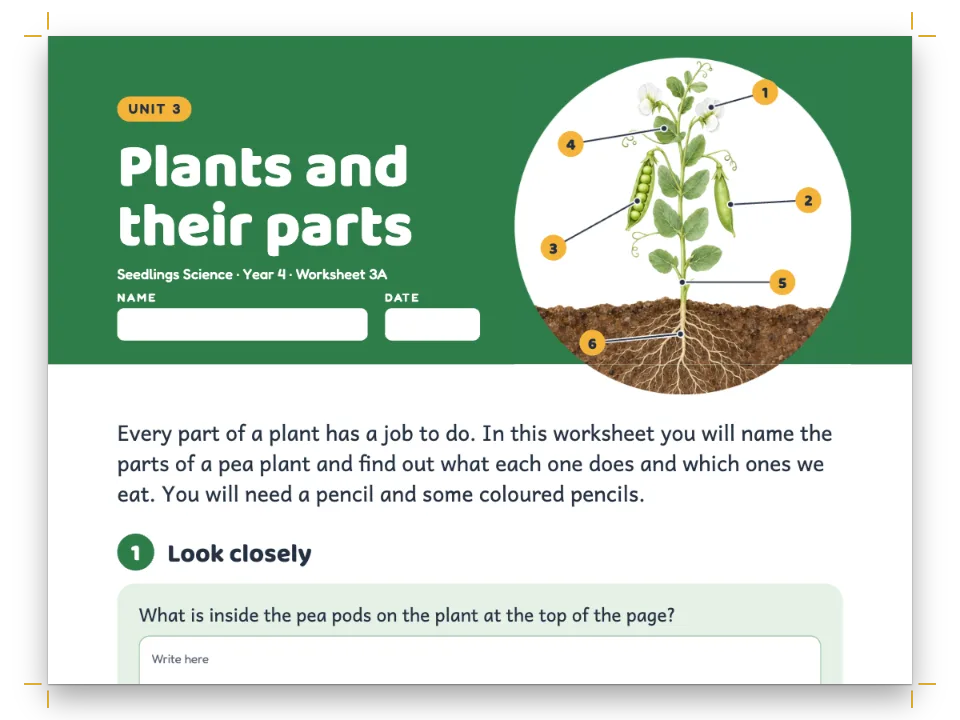
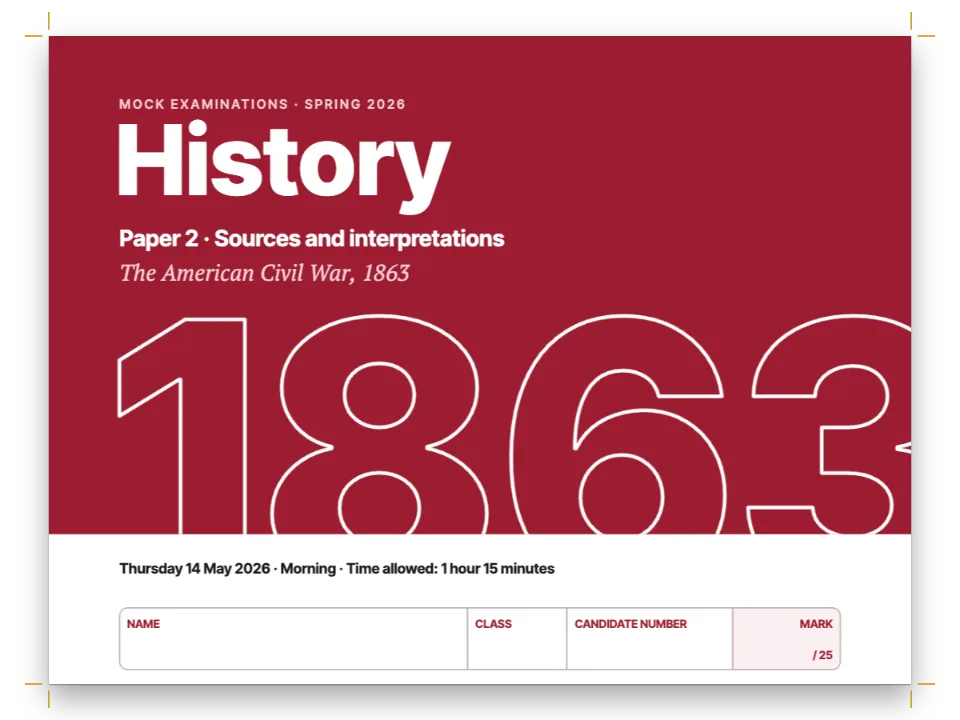
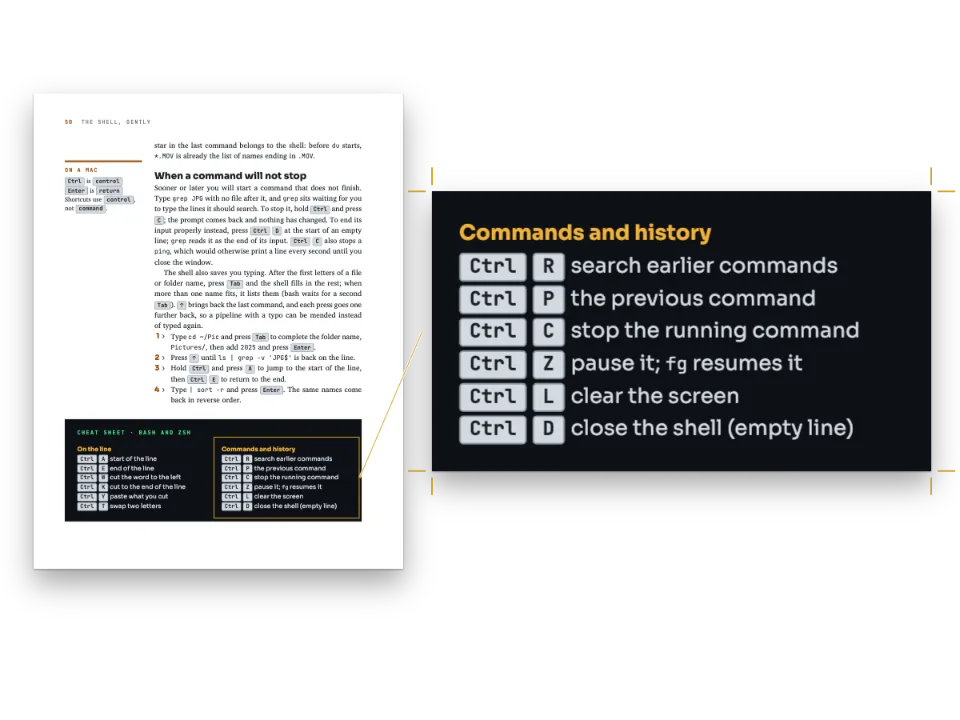
小さな子ども向けのスペイン語の読み方の本から、文字Mを学ぶ3ページです。音節はひとつずつ色のついた小さなラベルに入り、マス目に並ぶ単語にはそれぞれ絵がついています。
できあがり
架空のスペイン語の読み方教本『Letra a letra』の第7単元、文字Mを学ぶ3ページです。スペイン語の教本は音節ごとに読み方を教えるので、見本はスペイン語だけで組んでいます。単元の扉では、クリーム色の帯に190ptのDynaPuffでMmを組み、その横に、スペイン語の名前がmで始まる2つのもの、チョウ(「mariposa」)とリンゴ(「manzana」)を置きます。この単元の音節は、母音の色のチップに入ります。aは赤、eはオレンジ、iはティール、oは青、uは紫です。mを含む音節は塗りつぶし、それ以外は輪郭だけにするので、子どもは「mesa」のどちらの半分がこの単元のものかを見分けられます。38ページでは、絵のついた6つの単語を角の丸いマス目に並べ、各マスに水彩画を1枚入れ、その下になぞり書きの文字を3行置きます。水彩画は拡散モデルで生成したもので、帯とアイコンとなぞり書きの行はコードで描いています。39ページには、24ptの4つの文、色を塗る音節の囲み、家族へのメモがあります。
このレシピが答える質問
- キーボードのキー、タグ、練習問題の語群などのインラインのチップを作るには?
- 表のセルに画像やアイコンを入れるには?
- 空行を入れても効かないとき、2つのブロックの間に縦のスペースを追加するには?
- 記入線、解答欄、語群、チェックリストのあるワークシートのページを作るには?
手短な答え
// A word's syllables are chips with nothing between them, so their boxes touch and the white
// border draws the seam. Across a word space a chip keeps at least `gap`: 0.5 em sets the
// words of a 24 pt row 4.2 mm apart, where the space alone leaves 2.3 mm. Inside a sentence
// the '-frase' twins keep no gap, so the word space alone parts a chip from the word before.
// A 24 pt chip, padding and border included, is 10.4 mm tall (gotcha: chip-overlap).
const syllable = { fontFamily: TEXT, bold: true, borderWidth: pt(1), borderColor: col('paper'),
  paddingX: em(0.26), paddingY: em(0.05), gap: em(0.5) };
const chipStyles = [
  ...'aeiou'.split('').flatMap((v) => [ // one pair per vowel
    { ...syllable, id: v, background: col(v), color: col('paper') }, // a syllable with m
    { ...syllable, id: `${v}-borde`, background: col('paper'), color: col(v), borderColor: col(v) },
  ]).flatMap((style) => [style, { ...style, id: `${style.id}-frase`, gap: em(0) }]),
  { ...syllable, id: 'pinta', bold: false, background: col('paper'), color: col('ink'),
    borderColor: col('ink'), borderWidth: pt(0.8) }, // an outline for the child to colour in
];
const vowel = (s) => s.normalize('NFD').toLowerCase().match(/[aeiou]/)[0]; // 'mú' → 'u'
const chipOf = (s, end) => `:chip[${s}]{style="${vowel(s)}${/m/i.test(s) ? '' : '-borde'}${end}"}`;
// {mi·mo·sa} → :chip[mi]{style="i"}:chip[mo]{style="o"}:chip[sa]{style="a-borde"}, and a word
// written after another word, as in 'me {mi·ma}.', takes the '-frase' twins.
const syllables = (text) => text.replace(/(\p{L} )?\{([\p{L}·]+)\}/gu, (_, before = '', word) =>
  before + word.split('·').map((s) => chipOf(s, before ? '-frase' : '')).join(''));
材料
- 機能
- インラインのチップ表のセル内の画像デザインした章扉見出しの属性見出しスタイルページデザインの画像ページデザインのテキスト・罫・ボックスデザイン要素の基準位置柱とノンブル名前付きの表スタイル段落スタイル明示的な縦のアキ囲みセマンティックカラーパレットリソースとしての図と表独自のリソースの種類その場に置く図キャンバス上のページ
- 種類
- Andika, DynaPuff, Playpen Sans (SIL OFL 1.1)
- 素材
mano-640.jpgmanzana-480.jpgmapa-640.jpgmariposa-660.jpgmesa-640.jpgmimosa-640.jpgmono-640.jpgmuneca-640.jpg- A watercolour of the butterfly on the opener (Generated With Diffusion Models, オリジナル)
- A watercolour of the apple on the opener (Generated With Diffusion Models, オリジナル)
- A watercolour of the hand in the picture grid (Generated With Diffusion Models, オリジナル)
- A watercolour of the map in the picture grid (Generated With Diffusion Models, オリジナル)
- A watercolour of the table in the picture grid (Generated With Diffusion Models, オリジナル)
- A watercolour of the mimosa sprig in the picture grid (Generated With Diffusion Models, オリジナル)
- A watercolour of the monkey in the picture grid (Generated With Diffusion Models, オリジナル)
- A watercolour of the doll in the picture grid (Generated With Diffusion Models, オリジナル)
- The cream band, the activity icons and the tracing rows, drawn in code in the page’s palette (Ignacio Ferro, MIT)
作り方
#1 · 母音ごとのチップスタイルと、チップを書く関数
手短な答えでは、1つのsyllableオブジェクトを展開して21のチップスタイルを作ります。mを含む音節には母音ごとの塗りつぶしのスタイル、それ以外の音節には母音ごとの輪郭のスタイルがあり、その10個それぞれに-fraseの対があります。さらに、子どもが色を塗る墨の輪郭pintaがあります。syllables()は{mi·mo·sa}を、あいだに何もはさまない3つの:chip[…]に変えます。そのため単語の音節は互いに接し、白い縁が継ぎ目を描きます。語間をはさむと、チップは少なくとも自分のgapの分だけ離れます。0.5emにすると、24ptの列の単語は4.2mm離れます。スペースだけなら2.3mmです。文の中ではこのgapが新しい単語の前の空きをほぼ2倍にしてしまうので、別の単語に続く単語には-fraseの対を使います。そのgapは0なので、2.3mmのスペースはそのまま残ります。
#2 · チップがぶつからない行送り
  // A 24 pt chip is 10.4 mm tall: at 30 pt (10.6 mm) leading the chips of two sentences would
  // stand 0.1 mm apart, so every line the child reads has 45 pt, and the syllables 60 pt.
  paragraphStyles: [
    { id: 'consigna', fontFamily: LABEL, fontSize: pt(10), lineHeight: pt(GRID),
      color: col('muted') }, // the instruction under each activity
    { id: 'fila', fontSize: pt(34), lineHeight: pt(4 * GRID), textAlign: 'center' },
    { id: 'palabras', fontSize: pt(24), lineHeight: pt(3 * GRID), textAlign: 'center' },
    { id: 'lectura', fontSize: pt(24), lineHeight: pt(3 * GRID) },
    { id: 'colofon', fontSize: pt(7.5), lineHeight: pt(10), // Andika: Playpen has no italic
      color: col('muted'), marginTop: pt(GRID) },
  ],
チップの上下のパディングと縁は行の外側に描かれ、行送りを増やしません。そのため行送りより背の高いチップは、下の行のチップにぶつかります。24ptの音節チップは高さが10.4mmあり、30ptの行送り(10.6mm)では、2つの文のチップの間隔は0.1mmしかありません。子どもが読む行には45pt、音節の列には60ptを与えています。指示文の15ptのグリッドの3行分と4行分です。
#3 · すべてのマスに絵を
const PICTURE_WORDS = ['ma·no', 'ma·pa', 'me·sa', 'mi·mo·sa', 'mo·no', 'mu·ñe·ca'];
const tableStyles = [{ id: 'dibujos', borderRadius: mm(5), // the frame and its fills, rounded
  headerBackgroundEnabled: false, // a header row added later would print grey (#f0f0f0)
  bodyBackgroundEnabled: true, bodyBackground: col('cream'), // cream tiles…
  rules: 'grid', borderColor: col('paper'), borderWidth: pt(4), // …parted by white rules
  bodyFontSize: pt(20), cellPadding: mm(3) }]; // the words' chips are 20 pt
const cells = (row) => PICTURE_WORDS.slice(row * 3, row * 3 + 3)
  .map((word) => ({ content: syllables(`{${word}}`), align: 'center' }));
let grid = { columnWidths: [1, 1, 1], rows: [cells(0), cells(1)] };
PICTURE_WORDS.forEach((word, k) => { // the picture above the word, 0.72 of the cell's width
  const resourceId = word.replaceAll('·', '').replace('ñ', 'n');
  grid = setCellImage(grid, { row: Math.floor(k / 3), col: k % 3 }, { resourceId, width: 0.72 });
});
setCellImageはセルの文字の上に絵を置き、その幅をセルの内側の幅に対する比で決めます。ここでは0.72(36.5mm)で、行は絵が収まる高さまで伸びます。どの絵も白地に描いたJPEGで、タイルのクリーム色と乗算するので、枠なしでタイルになじみます。絵の下には、音節チップで組んだ単語があります。表のセルは、ふつうの段落と同じようにチップの記法を受け付けます。表スタイルdibujosは枠とその塗りの角を5mmで丸め、クリーム色のタイルを4ptの白い罫で仕切ります。
#4 · 囲みの前に1行の空き
  calloutStyles: [
    { id: 'colorea', background: col('cream'), borderRadius: mm(4),
      marginTop: pt(0), // the :::space before the box is the whole gap above it
      padding: { top: mm(4), right: mm(5), bottom: mm(5), left: mm(5) },
      titleStyle: { fontFamily: LABEL, fontSize: pt(15), fontWeight: 700, color: col('ink') },
      body: { fontFamily: LABEL, fontSize: pt(10), lineHeight: pt(GRID), color: col('muted') } },
    { id: 'familia', backgroundEnabled: false,
      stripe: { enabled: true, side: 'top', width: pt(2.5), color: col('rule') },
      padding: { top: mm(3), right: mm(0), bottom: mm(0), left: mm(0) },
      titleStyle: { fontFamily: LABEL, fontSize: pt(8.5), fontWeight: 700, color: col('ink'),
        ...tag },
      body: { fontSize: pt(10.5), lineHeight: pt(GRID) } },
  ],
Markdownでは、最後の文と色塗りの囲みのあいだに:::space{lines=1}を置いています。15ptの1行分(5.3mm)です。囲みのmarginTopは0なので、この1行が空きのすべてです。これがないと、囲みは最後の文の行が終わる位置から始まります。囲みの冒頭にある:::spaceは捨てられるので、囲みは指示の行と色見本のチップで始まり、囲み自身の:::spaceはそのあと、色見本と色塗りの課題のあいだに置きます。
#5 · 文字の扉
const BAND = 104; // mm: the depth of the band's drawing; its wave dips to 101.9 mm
// Images reserve no height in an opener (gotcha: opener-image-no-reserve): by itself the
// opener ends at the foot of the word manzana, 88.7 mm down, and the first title starts on
// the wave's edge. 16 grid lines of minHeight start it on the grid, 11.4 mm below the wave.
const opener = { enabled: true, minHeight: pt(16 * GRID),
  slot: { elements: [
    picture('band', 'banda', at(0, 0, { width: mm(210), height: mm(BAND) })),
    words('unit', '{attr.unit}', LABEL, 9, 700, 'paper', at(SIDE, 12.5), { ...tag,
      box: { backgroundColor: col('ink'), borderRadius: mm(3),
        padding: { top: mm(1.2), right: mm(2.8), bottom: mm(1.2), left: mm(2.8) } } }),
    words('kicker', '{attr.kicker}', LABEL, 8.5, 600, 'muted', // level with the pill's text
      { anchor: { to: '#unit', edge: 'right-of' }, offset: { x: mm(4), y: mm(1.4) } }, tag),
    words('letter', '{titleText}', DISPLAY, 190, 700, 'ink', at(SIDE - 3, 19), { lineHeight: 1 }),
    words('name', '{attr.name}', LABEL, 20, 600, 'ink', at(SIDE + 1, 76)),
    picture('butterfly', 'mariposa', at(146, 12, { width: mm(40) })),
    picture('apple', 'manzana', at(151, 53, { width: mm(30) })),
    ...[['mariposa', 45.5], ['manzana', 84.5]].map(([name, y]) => words(name, name, LABEL, 10,
      600, 'muted', at(146, y, { width: mm(40) }), { align: 'center' })), // under each picture
  ] } };
Mmは見出しのテキスト({titleText})で、単元番号、シリーズ名、文字の名前は同じ見出し行の属性です。帯、チョウ、リンゴは画像で、扉は画像のために高さを確保しません。minHeightがないと、扉は「manzana」の語の下端、ページの上端から88.7mmの位置で終わり、最初の活動の題は99.3mmから始まります。波のいちばん低い点(101.9mm)より2.6mm上です。minHeightをグリッド16行分にすると扉は102.7mmで終わり、題のmarginTopのグリッド2行分で、題は113.3mmから始まります。グリッドに乗り、波より11.4mm下です。
#6 · 活動の題の横のアイコン
const ICON = 9; // mm
const H2 = { level: 2, marginBottom: pt(0), // two grid lines per title, and two above it
  lineHeight: pt(2 * GRID), marginTop: pt(2 * GRID) };
const activity = (id, icon) => ({ id, advancedDesign: { enabled: true, slot: { elements: [
  picture('icon', icon, { anchor: { to: 'container', edge: 'top-left' },
    size: { width: mm(ICON), height: mm(ICON) } }),
  words('title', '{titleText}', LABEL, 15, 700, 'ink', { anchor: { to: '#icon',
    edge: 'right-of' }, offset: { x: mm(3) }, size: { width: mm(140), height: mm(ICON) } },
  { verticalAlign: 'middle' }), // centred on the icon
] } } });
各活動の題は## Lee las frases {style="lee"}のように見出しスタイルを指定し、そのスタイルがアイコンを描いて、題をその横の中央に置きます。題はレベル2の見出しのままなので、間隔はH2のレベルが決めます。題そのものにlineHeightでグリッド2行分、その上にmarginTopでさらに2行分です。
レシピの全体
// ═══ Postext Cookbook · Nº 060 · Early reader with syllable chips ════════════════ // https://postext.dev/en/cookbook/reading-primer-syllables // Code: MIT · Text: original (CC BY 4.0) · Pictures: diffusion models · Icons: drawn in code // Fonts: Andika, DynaPuff, Playpen Sans (SIL OFL 1.1) · Needs postext ≥ 1.4.1 import { buildDocument, renderPageToCanvas, clearMeasurementCache, registerResourceImage, setCellImage, } from 'https://esm.sh/postext'; const LANG = 'es'; // @lang: the language of the sample document ('en' | 'es') const RECIPE = 'reading-primer-syllables'; // ─── 1 · Design ───────────────────────────────────────────────────────────── const palette = { ink: '#242832', paper: '#ffffff', muted: '#5f6470', // text; instructions cream: '#f6f0e3', rule: '#d3c9b6', // the band, the tiles and the pictures' ground; guides // The vowel code: a syllable takes its vowel's colour. White on these fills measures // 3.2–4.9:1, above WCAG's 3:1 for large text: the vowel chips are bold, 20 pt or more. a: '#d9482b', e: '#dd740c', i: '#1f9a8f', o: '#3f6fd8', u: '#9152cf' }; // Design elements read the hex and ignore the palette (gotcha: palette-skips-designs). const col = (id) => ({ hex: palette[id], model: 'hex', paletteId: id }); // The engine's defaults are linked to 'main-color': point it at the ink. const colorPalette = Object.entries({ ...palette, 'main-color': palette.ink }) .map(([id, hex]) => ({ id, name: id, value: { hex, model: 'hex' } })); const [TEXT, DISPLAY, LABEL] = ['Andika', 'DynaPuff', 'Playpen Sans']; // Andika: one-storey a const [TOP, SIDE, GRID] = [18, 20, 15]; // mm, mm, pt: every activity starts on the 15 pt grid // #region answer: one chip style per vowel, and {ma·má} in the text written out as chips // A word's syllables are chips with nothing between them, so their boxes touch and the white // border draws the seam. Across a word space a chip keeps at least `gap`: 0.5 em sets the // words of a 24 pt row 4.2 mm apart, where the space alone leaves 2.3 mm. Inside a sentence // the '-frase' twins keep no gap, so the word space alone parts a chip from the word before. // A 24 pt chip, padding and border included, is 10.4 mm tall (gotcha: chip-overlap). const syllable = { fontFamily: TEXT, bold: true, borderWidth: pt(1), borderColor: col('paper'), paddingX: em(0.26), paddingY: em(0.05), gap: em(0.5) }; const chipStyles = [ ...'aeiou'.split('').flatMap((v) => [ // one pair per vowel { ...syllable, id: v, background: col(v), color: col('paper') }, // a syllable with m { ...syllable, id: `${v}-borde`, background: col('paper'), color: col(v), borderColor: col(v) }, ]).flatMap((style) => [style, { ...style, id: `${style.id}-frase`, gap: em(0) }]), { ...syllable, id: 'pinta', bold: false, background: col('paper'), color: col('ink'), borderColor: col('ink'), borderWidth: pt(0.8) }, // an outline for the child to colour in ]; const vowel = (s) => s.normalize('NFD').toLowerCase().match(/[aeiou]/)[0]; // 'mú' → 'u' const chipOf = (s, end) => `:chip[${s}]{style="${vowel(s)}${/m/i.test(s) ? '' : '-borde'}${end}"}`; // {mi·mo·sa} → :chip[mi]{style="i"}:chip[mo]{style="o"}:chip[sa]{style="a-borde"}, and a word // written after another word, as in 'me {mi·ma}.', takes the '-frase' twins. const syllables = (text) => text.replace(/(\p{L} )?\{([\p{L}·]+)\}/gu, (_, before = '', word) => before + word.split('·').map((s) => chipOf(s, before ? '-frase' : '')).join('')); // #endregion const at = (x, y, size, edge = 'top-left') => ({ anchor: { to: 'page', edge }, offset: { x: mm(x), y: mm(y) }, ...(size && { size }) }); const words = (id, content, family, size, weight, color, placement, extra) => ({ kind: 'text', id, content, fontFamily: family, fontSize: pt(size), fontWeight: weight, color: col(color), align: 'left', overflow: 'wrap', placement, ...extra }); const picture = (id, resourceId, placement) => ({ kind: 'image', id, resourceId, placement }); const tag = { textTransform: 'uppercase', letterSpacing: pt(1.5) }; // #region opener: the letter's page: a cream band, a giant Mm and two things that start with m const BAND = 104; // mm: the depth of the band's drawing; its wave dips to 101.9 mm // Images reserve no height in an opener (gotcha: opener-image-no-reserve): by itself the // opener ends at the foot of the word manzana, 88.7 mm down, and the first title starts on // the wave's edge. 16 grid lines of minHeight start it on the grid, 11.4 mm below the wave. const opener = { enabled: true, minHeight: pt(16 * GRID), slot: { elements: [ picture('band', 'banda', at(0, 0, { width: mm(210), height: mm(BAND) })), words('unit', '{attr.unit}', LABEL, 9, 700, 'paper', at(SIDE, 12.5), { ...tag, box: { backgroundColor: col('ink'), borderRadius: mm(3), padding: { top: mm(1.2), right: mm(2.8), bottom: mm(1.2), left: mm(2.8) } } }), words('kicker', '{attr.kicker}', LABEL, 8.5, 600, 'muted', // level with the pill's text { anchor: { to: '#unit', edge: 'right-of' }, offset: { x: mm(4), y: mm(1.4) } }, tag), words('letter', '{titleText}', DISPLAY, 190, 700, 'ink', at(SIDE - 3, 19), { lineHeight: 1 }), words('name', '{attr.name}', LABEL, 20, 600, 'ink', at(SIDE + 1, 76)), picture('butterfly', 'mariposa', at(146, 12, { width: mm(40) })), picture('apple', 'manzana', at(151, 53, { width: mm(30) })), ...[['mariposa', 45.5], ['manzana', 84.5]].map(([name, y]) => words(name, name, LABEL, 10, 600, 'muted', at(146, y, { width: mm(40) }), { align: 'center' })), // under each picture ] } }; // #endregion // #region activities: each activity heading draws its icon beside the title const ICON = 9; // mm const H2 = { level: 2, marginBottom: pt(0), // two grid lines per title, and two above it lineHeight: pt(2 * GRID), marginTop: pt(2 * GRID) }; const activity = (id, icon) => ({ id, advancedDesign: { enabled: true, slot: { elements: [ picture('icon', icon, { anchor: { to: 'container', edge: 'top-left' }, size: { width: mm(ICON), height: mm(ICON) } }), words('title', '{titleText}', LABEL, 15, 700, 'ink', { anchor: { to: '#icon', edge: 'right-of' }, offset: { x: mm(3) }, size: { width: mm(140), height: mm(ICON) } }, { verticalAlign: 'middle' }), // centred on the icon ] } } }); // #endregion // #region pictures: six picture words in a rounded grid, each picture inside its cell const PICTURE_WORDS = ['ma·no', 'ma·pa', 'me·sa', 'mi·mo·sa', 'mo·no', 'mu·ñe·ca']; const tableStyles = [{ id: 'dibujos', borderRadius: mm(5), // the frame and its fills, rounded headerBackgroundEnabled: false, // a header row added later would print grey (#f0f0f0) bodyBackgroundEnabled: true, bodyBackground: col('cream'), // cream tiles… rules: 'grid', borderColor: col('paper'), borderWidth: pt(4), // …parted by white rules bodyFontSize: pt(20), cellPadding: mm(3) }]; // the words' chips are 20 pt const cells = (row) => PICTURE_WORDS.slice(row * 3, row * 3 + 3) .map((word) => ({ content: syllables(`{${word}}`), align: 'center' })); let grid = { columnWidths: [1, 1, 1], rows: [cells(0), cells(1)] }; PICTURE_WORDS.forEach((word, k) => { // the picture above the word, 0.72 of the cell's width const resourceId = word.replaceAll('·', '').replace('ñ', 'n'); grid = setCellImage(grid, { row: Math.floor(k / 3), col: k % 3 }, { resourceId, width: 0.72 }); }); // #endregion // The type of every picture and the table: its empty captionPrefix prints no caption line. const sheet = { id: 'lamina', name: 'Lámina', shortLabel: '', captionPrefix: '', numberingTemplate: '{n}', resetOn: 'never', counterFormat: 'decimal' }; const here = (id, rest) => ({ id, typeId: 'lamina', createdAt: 0, updatedAt: 0, placement: { position: 'here' }, ...rest }); const FOLIO = 9; // mm: the folio's disc const folio = (parity, edge, x, textEdge, textX) => [ words(`n-${parity}`, '{pageNumber}', DISPLAY, 12, 700, 'paper', at(x, -10, { width: mm(FOLIO), height: mm(FOLIO) }, edge), { align: 'center', verticalAlign: 'middle', parity, box: { backgroundColor: col('ink'), borderRadius: mm(FOLIO / 2) } }), words(`s-${parity}`, '{title} · {attr.unit}: {attr.name}', LABEL, 8, 600, 'muted', at(textX, -10, { width: mm(100), height: mm(FOLIO) }, textEdge), { parity, verticalAlign: 'middle', align: textEdge.endsWith('left') ? 'left' : 'right' }), ]; const config = () => ({ // a factory, never a shared object (gotcha: config-cache-identity) colorPalette, chipStyles, tableStyles, resourceTypes: [sheet], page: { width: mm(210), height: mm(260), dpi: 150, margins: { top: mm(TOP), bottom: mm(20), left: mm(SIDE), right: mm(SIDE) } }, // equal sides: nothing to mirror layout: { layoutType: 'single' }, bodyText: { fontFamily: TEXT, fontSize: pt(11), lineHeight: pt(GRID), color: col('ink'), referenceColor: col('ink'), // the palette never reaches it (gotcha: palette-skips-designs) textAlign: 'left', firstLineIndent: pt(0) }, // ragged: 1.4.1 hyphenates no ragged text headings: { fontFamily: LABEL, // the titles print through designs, but are measured in it balancing: { enabled: false }, // or page 37's spare grid line goes above its first title levels: [ // Restated: any headings object drops the H1 break (gotcha: headings-drop-h1-break). // A unit opens on a recto. span 'page' paints the band into the top margin, where a // design kept in the column is cut off at the column's top edge. { level: 1, span: 'page', breakBefore: { enabled: true, parity: 'odd' }, advancedDesign: opener }, H2] }, headingStyles: [activity('oye', 'oreja'), activity('lee', 'libro'), activity('mira', 'ojo'), activity('repasa', 'lapiz')], // #region reading: the child's lines on multiples of the 15 pt grid, the instructions at 10 pt // A 24 pt chip is 10.4 mm tall: at 30 pt (10.6 mm) leading the chips of two sentences would // stand 0.1 mm apart, so every line the child reads has 45 pt, and the syllables 60 pt. paragraphStyles: [ { id: 'consigna', fontFamily: LABEL, fontSize: pt(10), lineHeight: pt(GRID), color: col('muted') }, // the instruction under each activity { id: 'fila', fontSize: pt(34), lineHeight: pt(4 * GRID), textAlign: 'center' }, { id: 'palabras', fontSize: pt(24), lineHeight: pt(3 * GRID), textAlign: 'center' }, { id: 'lectura', fontSize: pt(24), lineHeight: pt(3 * GRID) }, { id: 'colofon', fontSize: pt(7.5), lineHeight: pt(10), // Andika: Playpen has no italic color: col('muted'), marginTop: pt(GRID) }, ], // #endregion // #region boxes: an activity on cream, the note for the family under a rule calloutStyles: [ { id: 'colorea', background: col('cream'), borderRadius: mm(4), marginTop: pt(0), // the :::space before the box is the whole gap above it padding: { top: mm(4), right: mm(5), bottom: mm(5), left: mm(5) }, titleStyle: { fontFamily: LABEL, fontSize: pt(15), fontWeight: 700, color: col('ink') }, body: { fontFamily: LABEL, fontSize: pt(10), lineHeight: pt(GRID), color: col('muted') } }, { id: 'familia', backgroundEnabled: false, stripe: { enabled: true, side: 'top', width: pt(2.5), color: col('rule') }, padding: { top: mm(3), right: mm(0), bottom: mm(0), left: mm(0) }, titleStyle: { fontFamily: LABEL, fontSize: pt(8.5), fontWeight: 700, color: col('ink'), ...tag }, body: { fontSize: pt(10.5), lineHeight: pt(GRID) } }, ], // #endregion header: { elements: [] }, footer: { elements: [ // the folio on the outer edge, the series beside it ...folio('odd', 'bottom-right', -SIDE, 'bottom-right', -(SIDE + FOLIO + 3)), ...folio('even', 'bottom-left', SIDE, 'bottom-left', SIDE + FOLIO + 3)] }, }); // ─── 2 · Content ──────────────────────────────────────────────────────────── const markdown = String.raw`---Markdownの見本 · 90行 · content.es.md
title: "Letra a letra" --- # Mm {kicker="Letra a letra · Cartilla de lectura 1" unit="Unidad 7" name="la eme"} ## Escucha y repite {style="oye"} :::paragraphs{style="consigna"} Lee las sílabas en voz alta, en orden y después salteadas. Abajo, la eme va al final. ::: :::paragraphs{style="fila"} {ma} {me} {mi} {mo} {mu} {am} {em} {im} {om} {um} ::: ## Lee las palabras {style="lee"} :::paragraphs{style="consigna"} Cada sílaba lleva el color de su vocal. Las que tienen eme van rellenas. ::: :::paragraphs{style="palabras"} {ma·má} {a·mo} {Me·mo} {e·me} {mí·o} {mi·mo} {ma·mi} {mí·a} ::: ## Mira y lee {style="mira"} :::paragraphs{style="consigna"} Di el nombre de cada dibujo y léelo por sílabas. ::: ::resource{id="dibujos"} ## Repasa {style="repasa"} :::paragraphs{style="consigna"} Empieza en el punto y sigue la flecha. Luego repasa las sílabas. ::: ::resource{id="trazos"} ## Lee las frases {style="lee"} :::paragraphs{style="consigna"} Lee despacio. La primera vez que sale una palabra nueva, va partida en sílabas. ::: :::paragraphs{style="lectura"} Mi mamá me {mi·ma}. Mamá me {a·ma}. Yo amo a mi mamá. Memo mima a {Mi·mí}. ::: :::space{lines=1} :::callout{type="colorea" title="Lee y colorea"} Estos son los colores de las vocales: :::paragraphs{style="palabras"} :chip[a]{style="a"} :chip[e]{style="e"} :chip[i]{style="i"} :chip[o]{style="o"} :chip[u]{style="u"} ::: :::space{lines=1} Colorea cada sílaba con el color de su vocal. :::paragraphs{style="palabras"} :chip[mo]{style="pinta"} :chip[ma]{style="pinta"} :chip[mu]{style="pinta"} :chip[me]{style="pinta"} :chip[mi]{style="pinta"} :chip[ma]{style="pinta"} :chip[mi]{style="pinta"} :chip[me]{style="pinta"} :chip[mo]{style="pinta"} :chip[mu]{style="pinta"} :chip[ma]{style="pinta"} :chip[mo]{style="pinta"} ::: ::: :::callout{type="familia" title="Para la familia"} Lean juntos las sílabas de la página 37: primero en orden y después salteadas. Si su hijo o su hija duda entre *ma* y *me*, no le dé la respuesta: señale la vocal y pregúntele de qué color es. Diez minutos al día bastan; es mejor parar cuando todavía tiene ganas de seguir. ::: :::paragraphs{style="colofon"} *Letra a letra* es una cartilla inventada para el Recetario de Postext. Texto: CC BY 4.0. Acuarelas: modelos de difusión. Compuesta en Andika, DynaPuff y Playpen Sans (SIL Open Font License). :::`; // content.<lang>.md, inlined by the Cookbook // #region art: the band, the icons and the tracing rows, drawn in the palette's colours // The picture words are watercolours, JPEGs in assets/ painted on white and multiplied by the // cream, so they sit on the band and the tiles without a box. The rest is drawn here, with no // words in it: an SVG drawn as an image cannot use web fonts (gotcha: svg-no-webfonts), so the // tracing letters are strokes and every label is set by the page. const P = palette; const n = (v) => +v.toFixed(2); const svgDoc = (w, h, body) => `<svg xmlns="http://www.w3.org/2000/svg" width="${w * 10}" ` + `height="${h * 10}" viewBox="0 0 ${w} ${h}">${body}</svg>`; const shape = (d, fill) => `<path d="${d}" fill="${fill}"/>`; const line = (d, color, w, extra = '') => `<path d="${d}" fill="none" stroke="${color}" ` + `stroke-width="${w}" stroke-linecap="round" stroke-linejoin="round"${extra}/>`; const dot = (x, y, r, fill) => `<circle cx="${n(x)}" cy="${n(y)}" r="${n(r)}" fill="${fill}"/>`; const drawings = { banda: () => svgDoc(210, BAND, shape(`M0 0H210V${BAND - 6}C190 ${BAND - 1} 172 ${BAND - 9} 150 ` + `${BAND - 6}S102 ${BAND + 1} 76 ${BAND - 5} 28 ${BAND - 12} 0 ${BAND - 6}Z`, P.cream)), }; // The activity icons: a white glyph on an ink disc. const icon = (glyph) => svgDoc(20, 20, dot(10, 10, 10, P.ink) + glyph); Object.assign(drawings, { oreja: () => icon(line('M7.5 8.5C7.5 5 10 3.5 12.5 3.5C15.5 3.5 16.5 6 16.5 8C16.5 11 13.5 ' + '11.5 13 14C12.5 16.5 10 17 8.5 15.5M10 8.5C10 7 11 6 12.5 6C13.8 6 14.3 7.2 14 8.3', P.paper, 1.5)), ojo: () => icon(line('M3.5 10Q10 3.5 16.5 10Q10 16.5 3.5 10Z', P.paper, 1.5) + dot(10, 10, 2.4, P.paper)), libro: () => icon(line('M10 6.5C7.5 5 5.5 5 4 5.8V14.8C5.5 14 7.5 14 10 15.5C12.5 14 14.5 14 ' + '16 14.8V5.8C14.5 5 12.5 5 10 6.5ZM10 6.5V15.5', P.paper, 1.3)), lapiz: () => icon(line('M5.5 14.5L6.5 11L13.5 4L16 6.5L9 13.5ZM12 5.5L14.5 8', P.paper, 1.3)), }); // Tracing: rows on writing guides, a model letter in ink, then dashed ones to go over. const TRACE = { w: 170, first: 26, pitch: 20.5 }; // mm const guides = (b) => line(`M0 ${b - 16}H${TRACE.w}M0 ${b}H${TRACE.w}`, P.rule, 0.4) + line(`M0 ${b - 8}H${TRACE.w}`, P.rule, 0.35, ' stroke-dasharray="1 1"'); // Letters as strokes: x-height 8, capitals 16, from the baseline b; [path, width]. const glyphs = { m: (x, b) => [`M${x} ${b - 8}V${b}M${x} ${b - 5.4}C${x} ${b - 7.4} ${x + 1.4} ${b - 8} ` + `${x + 2.7} ${b - 8}S${x + 5.3} ${b - 7.2} ${x + 5.3} ${b - 5.4}V${b}M${x + 5.3} ${b - 5.4}` + `C${x + 5.3} ${b - 7.4} ${x + 6.7} ${b - 8} ${x + 8} ${b - 8}S${x + 10.6} ${b - 7.2} ` + `${x + 10.6} ${b - 5.4}V${b}`, 10.6], M: (x, b) => [`M${x} ${b}V${b - 16}L${x + 6} ${b - 6}L${x + 12} ${b - 16}V${b}`, 12], a: (x, b) => [`M${x + 6.4} ${b - 4}A3.2 4 0 0 0 ${x} ${b - 4}A3.2 4 0 0 0 ${x + 6.4} ${b - 4}` + `M${x + 6.4} ${b - 8}V${b}`, 6.4], e: (x, b) => [`M${x + 0.2} ${b - 4}H${x + 6.8}C${x + 6.8} ${b - 6.4} ${x + 5.2} ${b - 8} ` + `${x + 3.5} ${b - 8}S${x + 0.2} ${b - 6.2} ${x + 0.2} ${b - 4}S${x + 1.8} ${b} ${x + 3.7} ` + `${b}C${x + 5} ${b} ${x + 6} ${b - 0.5} ${x + 6.7} ${b - 1.3}`, 6.8], i: (x, b) => [`M${x + 0.6} ${b - 8}V${b}M${x + 0.6} ${b - 11.4}V${b - 11}`, 1.2], o: (x, b) => [`M${x + 6.8} ${b - 4}A3.4 4 0 0 0 ${x} ${b - 4}A3.4 4 0 0 0 ${x + 6.8} ${b - 4}`, 6.8], u: (x, b) => [`M${x} ${b - 8}V${b - 2.8}C${x} ${b - 1} ${x + 1.3} ${b} ${x + 3} ${b}S${x + 6.2} ` + `${b - 1} ${x + 6.2} ${b - 2.8}M${x + 6.2} ${b - 8}V${b}`, 6.2], }; const KERN = 1.8; // mm between letters const write = (word, x, b) => word.split('').reduce(([d, at], ch) => { const [path, w] = glyphs[ch](at, b); return [d + path, at + w + KERN]; }, ['', x]); // [path, x after the last letter + KERN] const dashed = ([d]) => line(d, P.muted, 1, ' stroke-dasharray="1.1 1"'); // The model: ink strokes, a teal dot where the pencil starts and an arrow beside the stem // pointing the way the first stroke goes (dir 1 down, −1 up). const model = (letter, b, [x, y], dir) => line(write(letter, 4, b)[0], P.ink, 1.3) + dot(x, y, 1.2, P.i) + line(`M${x - 2.4} ${y + dir * 1.5}V${y + dir * 6}`, P.i, 0.6) + shape(`M${x - 3.5} ${y + dir * 5.2}H${x - 1.3}L${x - 2.4} ${y + dir * 7.2}Z`, P.i); const repeat = (letter, b) => Array.from({ length: 7 }, (_, k) => dashed(write(letter, TRACE.first + k * TRACE.pitch, b))).join(''); // The five syllables, each centred in a fifth of the row. const syllableRow = (b) => ['ma', 'me', 'mi', 'mo', 'mu'].map((syll, k) => { const w = write(syll, 0, b)[1] - KERN; return dashed(write(syll, (k + 0.5) * (TRACE.w / 5) - w / 2, b)); }).join(''); drawings.trazos = () => svgDoc(TRACE.w, 67, guides(17) + model('m', 17, [4, 9], 1) + repeat('m', 17) + guides(41) + model('M', 41, [4, 41], -1) + repeat('M', 41) + guides(65) + syllableRow(65)); // The watercolours, by resource id: [file, width, height] in px. const PAINTINGS = { mariposa: ['mariposa-660.jpg', 660, 540], manzana: ['manzana-480.jpg', 480, 480], ...Object.fromEntries(['mano', 'mapa', 'mesa', 'mimosa', 'mono', 'muneca'] .map((id) => [id, [`${id}-640.jpg`, 640, 480]])) }; const ALT = { banda: 'Franja de color crema con el borde ondulado', manzana: 'Una manzana roja con una hoja', mariposa: 'Una mariposa morada con manchas amarillas', mano: 'Una mano abierta', mapa: 'Un mapa del tesoro con un río y un camino hasta una cruz', mesa: 'Una mesa con una manzana y una taza', mono: 'Un mono sentado', mimosa: 'Una rama de mimosa con flores amarillas y hojas plumosas', muneca: 'Una muñeca de trapo con coletas y vestido morado', oreja: 'Una oreja', ojo: 'Un ojo', libro: 'Un libro abierto', lapiz: 'Un lápiz', trazos: 'Tres pautas: la eme minúscula y la mayúscula, cada una con un modelo y siete de puntos ' + 'para repasar, y las sílabas ma, me, mi, mo y mu de puntos' }; // Each picture is a resource that the opener, a heading style, a table cell or the text names // by id. Drawings in px, 10 to the millimetre (the viewBox's own). const size = (svg) => svg.match(/width="(\d+)" height="(\d+)"/).slice(1).map(Number); const common = (id) => ({ id, typeId: 'lamina', altText: ALT[id], createdAt: 0, updatedAt: 0 }); const artwork = [...Object.entries(drawings).map(([id, draw]) => { const [width, height] = size(draw()); return { ...common(id), kind: 'svg', svg: { fileId: `${id}.svg`, width, height }, ...(id === 'trazos' && here(id)) }; }), ...Object.entries(PAINTINGS).map(([id, [fileId, w, h]]) => ({ ...common(id), kind: 'bitmap', bitmap: { fileId, format: 'jpeg', width: w, height: h } }))]; // #endregion const resources = [...artwork, here('dibujos', { kind: 'table', table: { styleId: 'dibujos', model: grid } })]; // ─── 3 · Fonts ────────────────────────────────────────────────────────────── const FONTS = { Andika: ['400', '700'], DynaPuff: ['700'], 'Playpen Sans': ['400', '600', '700'] }; // ─── 4 · Build & show ─────────────────────────────────────────────────────── const text = syllables(markdown); await Promise.all([loadFonts(FONTS, text), // every face before the build (gotcha: fonts-first) ...Object.entries(drawings).map(([id, draw]) => loadSvg(`${id}.svg`, draw())), ...Object.values(PAINTINGS).map(([file]) => loadImage(file, asset(file)))]); const continuation = { pageIndexOffset: 36, pageNumbering: { startAt: 37 } }; // 37: a recto const doc = await buildWithFonts(() => buildDocument({ markdown: text, resources, continuation }, config()), text); showPages(doc, { title: 'Letra a letra · La eme' });キット · core, fonts, viewer, images:全レシピ共通 · 270行
// ─── Kit ── helpers shared by every Cookbook recipe · postext.dev/cookbook ───── // ─── Kit · core v1 ── the same in every recipe · postext.dev/cookbook ───────── function mm(value) { return { value, unit: 'mm' }; } function pt(value) { return { value, unit: 'pt' }; } function em(value) { return { value, unit: 'em' }; } /** The sample language's string: t({ en: 'Figure', es: 'Figura' }). */ function t(strings) { return strings[LANG] ?? Object.values(strings)[0]; } /** A file in this recipe's assets folder, served from the Postext repo by jsDelivr. */ function asset(file) { return `https://cdn.jsdelivr.net/gh/drnachio/postext@main/cookbook/${RECIPE}/assets/${file}`; } // ─── Kit · fonts v1 ── the same in every recipe · postext.dev/cookbook ──────── // Postext measures text with the faces the browser has loaded, and caches the // widths, so every face must be ready before the first build. Faces come from // Fontsource: the same static files the PDF embeds, so screen and PDF agree. /** faces = { 'Family Name': ['400', '400i', '700'] }. `text` is the sample: * letters beyond Latin-1 (č, ł, ő…) also load the latin-ext files. With * `optional`, a face Fontsource does not ship is skipped instead of failing. * Resolves to the number of faces added. */ async function loadFonts(faces, text = '', { optional = false } = {}) { kitStatus('Loading fonts…'); const ranges = { latin: 'U+0000-00FF,U+0131,U+0152-0153,U+02BB-02BC,U+02C6,U+02DA,U+02DC,U+0304,U+0308,U+0329,' + 'U+2000-206F,U+20AC,U+2122,U+2191,U+2193,U+2212,U+2215,U+FEFF,U+FFFD', 'latin-ext': 'U+0100-02BA,U+02BD-02C5,U+02C7-02CC,U+02CE-02D7,U+02DD-02FF,U+0304,U+0308,U+0329,' + 'U+1D00-1DBF,U+1E00-1E9F,U+1EF2-1EFF,U+2020,U+20A0-20AB,U+20AD-20C0,U+2113,U+2C60-2C7F,U+A720-A7FF', }; const subsets = /[Ā-˿Ḁ-ỿ]/.test(text) ? ['latin', 'latin-ext'] : ['latin']; const jobs = []; let added = 0; for (const [family, specs] of Object.entries(faces)) { const id = fontsourceId(family); const meta = optional ? await fontsourceMeta(family) : null; for (const spec of new Set(specs)) { const weight = parseInt(spec, 10); const style = spec.endsWith('i') ? 'italic' : 'normal'; if (hasFace(family, weight, style)) continue; if (optional && !(meta?.weights.includes(weight) && meta.styles.includes(style))) continue; for (const subset of subsets) { const url = `https://cdn.jsdelivr.net/npm/@fontsource/${id}@5/files/${id}-${subset}-${weight}-${style}.woff2`; const face = new FontFace(family, `url(${url}) format('woff2')`, { weight: String(weight), style, unicodeRange: ranges[subset] }); jobs.push(face.load().then((ready) => { document.fonts.add(ready); added++; }, () => { if (subset === 'latin' && !optional) throw new Error(`Fontsource has no ${family} ${weight} ${style}`); })); } } } await Promise.all(jobs).catch((error) => { kitFail(error); throw error; }); return added; } /** Runs `build` (a buildDocument or buildBundle call) and checks the faces * the pages use. A regular face missing from FONTS is loaded with a warning; * bold and italic variants are loaded when the family ships them. Then the * measurement caches are cleared and the build runs again. */ async function buildWithFonts(build, text = '') { const tried = new Set(); for (let round = 0; round < 3; round++) { kitStatus('Laying out…'); await new Promise(requestAnimationFrame); // let the status paint first const result = await Promise.resolve().then(build).catch((error) => { kitFail(error); throw error; }); const wanted = { base: {}, variants: {} }; for (const { font, base } of [result].flat().flatMap(fontStringsOf)) { const { family, weight, style } = parseFont(font); const key = `${family}|${weight}|${style}`; if (tried.has(key) || hasFace(family, weight, style)) continue; tried.add(key); (wanted[base ? 'base' : 'variants'][family] ??= []).push(`${weight}${style === 'italic' ? 'i' : ''}`); } if (Object.keys(wanted.base).length) { console.warn(`[cookbook] FONTS does not list ${JSON.stringify(wanted.base)}: loading them.`); } const added = await loadFonts(wanted.base, text) + await loadFonts(wanted.variants, text, { optional: true }); if (added === 0) return result; clearMeasurementCache(); } throw new Error('The fonts did not settle after three builds.'); } /** Every font string of the layout. `base` marks a block's own face; its * bold, italic and bold-italic variants are listed whether or not used. */ function fontStringsOf(doc) { const found = new Map(); const walk = (node) => { if (!node || typeof node !== 'object') return; if (Array.isArray(node)) { node.forEach(walk); return; } for (const [key, value] of Object.entries(node)) { if (typeof value === 'string' && /fontString$/i.test(key)) { found.set(value, found.get(value) || key === 'fontString'); } else if (value && typeof value === 'object') walk(value); } }; walk(doc.pages); walk(doc.blocks); return [...found].map(([font, base]) => ({ font, base })); } /** '700 37.5px Open Sans' / 'italic 400 13px "Source Serif 4"' → { family, weight, style }. * A string with no weight ('95.8px Young Serif', from a design text) is 400. */ function parseFont(font) { const m = /^(?:(italic|oblique)\s+)?(?:small-caps\s+)?(?:(\d+|bold|normal)\s+)?[\d.]+px\s+(.+)$/.exec(font.trim()); if (!m) throw new Error(`Unexpected font string: ${font}`); const weight = m[2] === 'bold' ? 700 : !m[2] || m[2] === 'normal' ? 400 : Number(m[2]); return { family: m[3].replace(/^["']|["']$/g, ''), weight, style: m[1] ? 'italic' : 'normal' }; } /** True when a loaded FontFace covers exactly this family, weight and style * (document.fonts.check() is also true for families nobody declared). */ function hasFace(family, weight, style) { for (const face of document.fonts) { if (face.status !== 'loaded' || face.style !== style) continue; if (face.family.replace(/^["']|["']$/g, '') !== family) continue; const [low, high = low] = face.weight.split(' ').map(Number); if (weight >= low && weight <= high) return true; } return false; } /** Fontsource's id for a family: 'Source Serif 4' → 'source-serif-4'. */ function fontsourceId(family) { return family.toLowerCase().replace(/\s+/g, '-'); } /** The weights and styles a family ships ({ weights: [400, 700], styles: ['normal', 'italic'] }), or null. */ function fontsourceMeta(family) { fontsourceMeta.cache ??= new Map(); const id = fontsourceId(family); if (!fontsourceMeta.cache.has(id)) { fontsourceMeta.cache.set(id, fetch(`https://api.fontsource.org/v1/fonts/${id}`) .then((res) => (res.ok ? res.json() : null), () => null)); } return fontsourceMeta.cache.get(id); } // ─── Kit · viewer v1 ── the same in every recipe · postext.dev/cookbook ─────── /** Shows the pages as facing spreads on a dark desk: the first page is a * recto on its own, then verso | recto pairs, as in a bound book. Pages * are painted when they scroll near the screen. */ function showPages(docs, { title, width = 460 } = {}) { const root = viewer(title); const pages = [docs].flat().flatMap((doc) => doc.pages.map((page) => ({ doc, page, n: (doc.pageIndexOffset ?? 0) + page.index }))); const spreads = []; let verso = null; for (const p of pages) { if (p.n % 2 === 1) { if (verso) spreads.push([verso, null]); verso = p; } else { spreads.push([verso, p]); verso = null; } } if (verso) spreads.push([verso, null]); const density = Math.min(window.devicePixelRatio || 1, 2); showPages.painter?.disconnect(); const painter = new IntersectionObserver((entries) => { for (const { isIntersecting, target } of entries) { if (!isIntersecting) continue; painter.unobserve(target); const { doc, page } = target.postext; renderPageToCanvas(page, doc, target, { scale: (width * density) / page.width }); } }, { rootMargin: '800px' }); showPages.painter = painter; root.replaceChildren(...spreads.map((pair) => { const spread = document.createElement('div'); spread.className = 'pt-spread'; for (const p of pair) { const figure = document.createElement('figure'); if (p) { const label = p.page.pageLabel || String(p.n + 1); const canvas = document.createElement('canvas'); canvas.postext = p; canvas.style.aspectRatio = `${p.page.width} / ${p.page.height}`; canvas.setAttribute('role', 'img'); canvas.setAttribute('aria-label', `Page ${label}`); const folio = document.createElement('figcaption'); folio.textContent = label; figure.append(canvas, folio); painter.observe(canvas); } else figure.className = 'pt-blank'; spread.append(figure); } return spread; })); kitStatus(`${pages.length} ${pages.length === 1 ? 'page' : 'pages'}`); document.documentElement.dataset.postext = 'ready'; return pages.length; } /** The desk, the bar and the error reporting, created once. */ function viewer(title) { if (!document.getElementById('pt-kit')) { document.head.insertAdjacentHTML('beforeend', `<style id="pt-kit"> :root { color-scheme: dark; } body { margin: 0; background: #0e1014; color: #b9bcc4; font: 13px/1.45 system-ui, sans-serif; } #pt-bar { position: sticky; top: 0; z-index: 1; display: flex; flex-wrap: wrap; align-items: center; gap: 6px 16px; padding: 10px 16px; background: rgb(14 16 20 / .92); backdrop-filter: blur(6px); border-bottom: 1px solid #23262d; } #pt-bar strong { color: #f4f1ea; font-weight: 600; } #pt-actions { display: flex; gap: 12px; margin-left: auto; } #pt-actions a, #pt-actions button { color: #d8a21a; font: inherit; background: none; border: 0; padding: 0; cursor: pointer; } #pages { display: grid; justify-items: center; gap: 48px; padding: 32px 16px 72px; } .pt-spread { display: flex; } .pt-spread figure { margin: 0; width: min(460px, 44vw); } .pt-spread canvas { display: block; width: 100%; background: #fff; box-shadow: 0 1px 2px rgb(0 0 0 / .5), 0 22px 44px -16px rgb(0 0 0 / .8); } .pt-spread figure:first-child canvas { box-shadow: inset -14px 0 14px -14px rgb(0 0 0 / .18), 0 1px 2px rgb(0 0 0 / .5), 0 22px 44px -16px rgb(0 0 0 / .8); } .pt-spread figcaption { margin-top: 10px; text-align: center; font: 600 10px/1 system-ui, sans-serif; letter-spacing: .18em; text-transform: uppercase; color: #6c7079; } .pt-blank { visibility: hidden; } @media (max-width: 760px) { .pt-spread { flex-direction: column; gap: 32px; } .pt-spread figure { width: min(460px, 92vw); } .pt-blank { display: none; } } </style>`); document.body.insertAdjacentHTML('afterbegin', '<header id="pt-bar"><strong id="pt-title"></strong><span id="pt-status" role="status"></span><span id="pt-actions"></span></header>'); document.getElementById('pt-title').textContent = document.title || 'Postext'; addEventListener('error', (event) => kitFail(event.error ?? event.message)); addEventListener('unhandledrejection', (event) => kitFail(event.reason)); } if (title) document.getElementById('pt-title').textContent = title; return document.getElementById('pages') ?? document.body.appendChild(Object.assign(document.createElement('main'), { id: 'pages' })); } function kitStatus(text) { viewer(); document.getElementById('pt-status').textContent = text; } function kitFail(error) { document.documentElement.dataset.postext = 'error'; kitStatus(`Error: ${error?.message ?? error}`); } // ─── Kit · images v1 ── recipes with pictures · postext.dev/cookbook ────────── /** Registers a photo or PNG for the canvas and keeps its bytes for the PDF. * fetch → ImageBitmap never taints the canvas (a plain cross-origin <img> would). */ async function loadImage(fileId, url) { const res = await fetch(url); if (!res.ok) throw new Error(`Image not found (${res.status}): ${url}`); const bytes = new Uint8Array(await res.arrayBuffer()); registerResourceImage(fileId, await createImageBitmap(new Blob([bytes]))); (loadImage.bytes ??= new Map()).set(fileId, bytes); } /** Registers SVG markup (drawn in code, or fetched) as a vector image. */ async function loadSvg(fileId, svg) { const img = new Image(); img.src = `data:image/svg+xml;charset=utf-8,${encodeURIComponent(svg)}`; await img.decode(); registerResourceImage(fileId, img); (loadImage.bytes ??= new Map()).set(fileId, new TextEncoder().encode(svg)); } /** renderToPdf({ resourceBytes: imageBytes }) */ function imageBytes(fileId) { return loadImage.bytes?.get(fileId); } /** renderToHtml({ resourceImageUrl: imageUrl }) */ function imageUrl(fileId) { const bytes = imageBytes(fileId); if (!bytes) return undefined; imageUrl.urls ??= new Map(); if (!imageUrl.urls.has(fileId)) { const type = /\.svg$/i.test(fileId) ? 'image/svg+xml' : /\.png$/i.test(fileId) ? 'image/png' : 'image/jpeg'; imageUrl.urls.set(fileId, URL.createObjectURL(new Blob([bytes], { type }))); } return imageUrl.urls.get(fileId); } // ─── /Kit ───────────────────────────────────────────────────────────────────────
組み立てたscript.jsはそのまま動きます。任意のページのモジュールスクリプトに貼り付けるか、レシピをCodePenで開いてください。 GitHub上のレシピのフォルダー ↗ (新しいタブで開きます)
アレンジ
#音節を丸いピル形にする
チップの高さの半分を超える角丸の半径は、その半分に切り詰められます。そのため大きな値を与えると両端が丸くなります。1文字の音節はほぼ円になり、単語の中の継ぎ目は切れ込みになります。
-  paddingX: em(0.26), paddingY: em(0.05), gap: em(0.5) };
+ paddingX: em(0.26), paddingY: em(0.05), gap: em(0.5), borderRadius: em(1) };よくあるつまずき
つまずき
行送りより高いチップは次の行に触れる
箱が行送りより高いチップは、次の行のチップに触れます(chipOverlap警告)。上下のパディング、枠線、サイズを小さくするか、行送りを広げてください。 インラインのチップ →
つまずき
SVGの<img>内のテキストはWebフォントを使えない
SVGは画像として描かれ、画像はページのWebフォントにアクセスできないため、ラベルはシステムの書体にフォールバックします。テキストをアウトライン化するか、SVGに@font-faceのサブセットを埋め込むか、ラベルをキャプションに移してください。 リソースとしての図と表 →
つまずき
:::spaceは囲みや段の頭では捨てられる
:::spaceは段、囲み、:::columnsグループの頭では、それが囲みの唯一の中身であっても捨てられます。そのため、空きだけで作った解答欄の囲みはつぶれてしまいます。囲みはタイトルか設問の行で始め、そのあとに空きを入れてください。 明示的な縦のアキ →
つまずき
章扉の画像は確保する高さに数えられない
postext 1.4.1では、詳細デザインの見出しは、確保する高さを画像抜きで計測します。テキスト、罫、箱はページに固定していても数えられますが、ページの頭に裁ち落としで置いた写真のような画像は何も確保しないため、本文がその上から始まることがあります。minHeightを本文が始まるべき位置に設定してください。 デザインした章扉 →
つまずき
headingsオブジェクトを渡すとH1の改ページが消える
既定ではH1は奇数ページへ改ページします(always-odd)。ところがheadingsオブジェクトを渡すと中身にかかわらずこの既定がリセットされ、章は改ページせずに続けて組まれ、span: 'page'も効かなくなります。どの設定でもheadings.levels[0].breakBefore: { enabled: true, parity }を書き直してください。 奇数ページから始まる章 →
つまずき
パレットを差し替えても、デザイン要素と参照色は変わらない
postext 1.4.1はcolorPaletteをテキストのスタイル(本文、見出し、リスト、キャプション、表、囲み)には反映しますが、ヘッダー、フッター、章扉、部扉の要素と、bodyText.referenceColorには反映しません。これらはpaletteIdの横に書いた16進の色のままです。画面用のダーク版や色替えのためにパレットを差し替えるときは、ビルドの前に、リンクしたすべての色をcolorPaletteから書き直してください。 セマンティックカラーパレット →
つまずき
レイアウトの前にすべてのフォントを読み込む
レイアウトはブラウザーが読み込んだフォントで文字を計測し、その幅をキャッシュします。最初のビルドのあとに届いたフォントがあると改行位置が狂い、PDFも画面と一致しなくなります。すべてのウェイトとスタイルを先に読み込み、遅れて届いたときは再ビルドの前にclearMeasurementCache()を呼んでください。 レイアウト前のフォント読み込み →
つまずき
設定はオブジェクトの同一性でキャッシュされる。毎回新しいオブジェクトを作る
エンジンは解決済みの設定をオブジェクトの同一性でキャッシュします。そのため、設定をその場で書き換えて再ビルドすると前の結果が再利用されます。ビルドのたびに新しいオブジェクトを作ってください。レシピの設定がファクトリー関数config()になっているのはこのためです。 キャンバス上のページ →
Sandboxの検査 · chipOverlap
チップが隣の行に接触
原因. チップスタイルのボックスが行送りより高いため、連続する行のチップどうしが接します。
対処. チップの上下のパディング、輪郭線、サイズを小さくするか、行送りを大きくしてください。 ドキュメント →
minHeightにはグリッドの整数行を与えます。85mm、つまり16行目を0.33mm過ぎた値では、最初の題がグリッドから0.33mmずれて始まりました。すると見出しのブロックは次のグリッド行まで伸びて、高さが10.6mmではなく15.5mmになり、37ページでその下にあるものはすべて5.3mm下がりました。
段末そろえをオンにすると、minHeightを16行にしても、37ページの活動は17行にしたときと同じ位置に残りました。ページにはグリッド1行分の余りがあり、段末そろえがそれを最初の活動の題の上に置いたからです。設定では段末そろえをオフにしている(headings.balancing)ので、余った行はページの地に残ります。
クレジット
- 本文
- 書き下ろしの文章, CC BY 4.0
- 画像
- A watercolour of the butterfly on the opener · Generated With Diffusion Models · オリジナル
- A watercolour of the apple on the opener · Generated With Diffusion Models · オリジナル
- A watercolour of the hand in the picture grid · Generated With Diffusion Models · オリジナル
- A watercolour of the map in the picture grid · Generated With Diffusion Models · オリジナル
- A watercolour of the table in the picture grid · Generated With Diffusion Models · オリジナル
- A watercolour of the mimosa sprig in the picture grid · Generated With Diffusion Models · オリジナル
- A watercolour of the monkey in the picture grid · Generated With Diffusion Models · オリジナル
- A watercolour of the doll in the picture grid · Generated With Diffusion Models · オリジナル
- The cream band, the activity icons and the tracing rows, drawn in code in the page’s palette · Ignacio Ferro · MIT
- フォント
- Andika (SIL OFL 1.1) · DynaPuff (SIL OFL 1.1) · Playpen Sans (SIL OFL 1.1)