In breve
Un capitolo di una tesi di dottorato. L’autore scrive un codice breve per ogni fonte; Postext stampa le citazioni e la bibliografia finale nello stile APA.
Che cosa comporrai
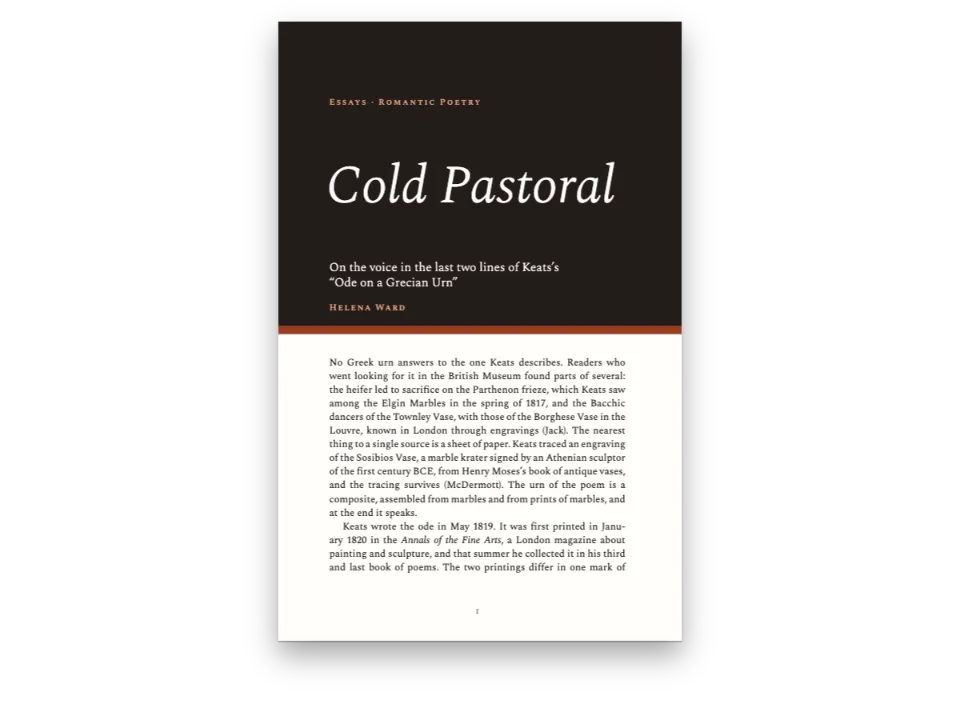
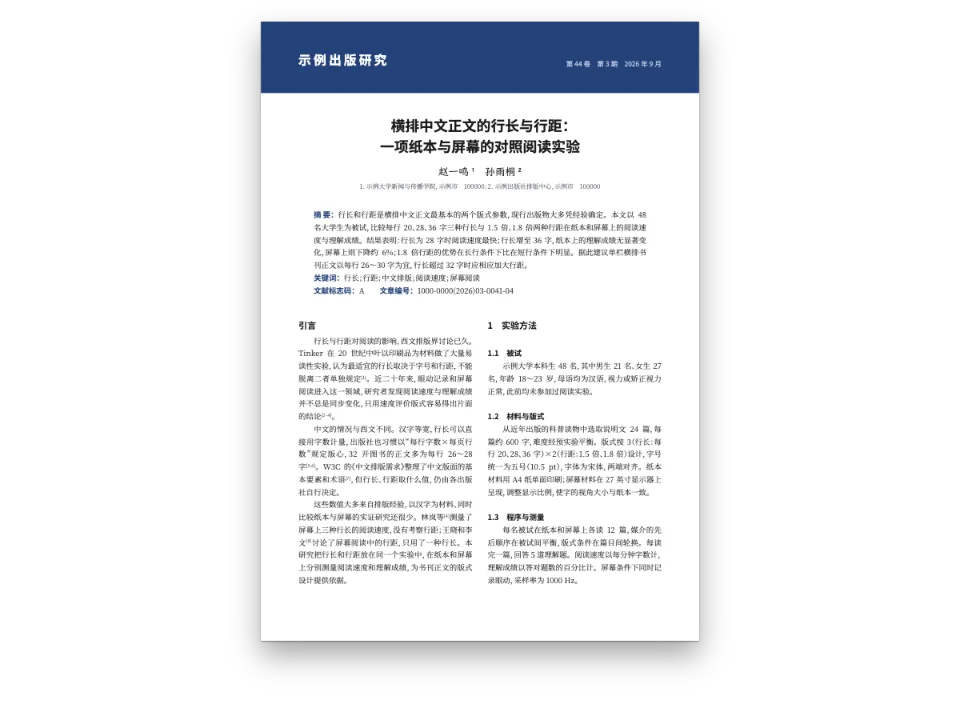
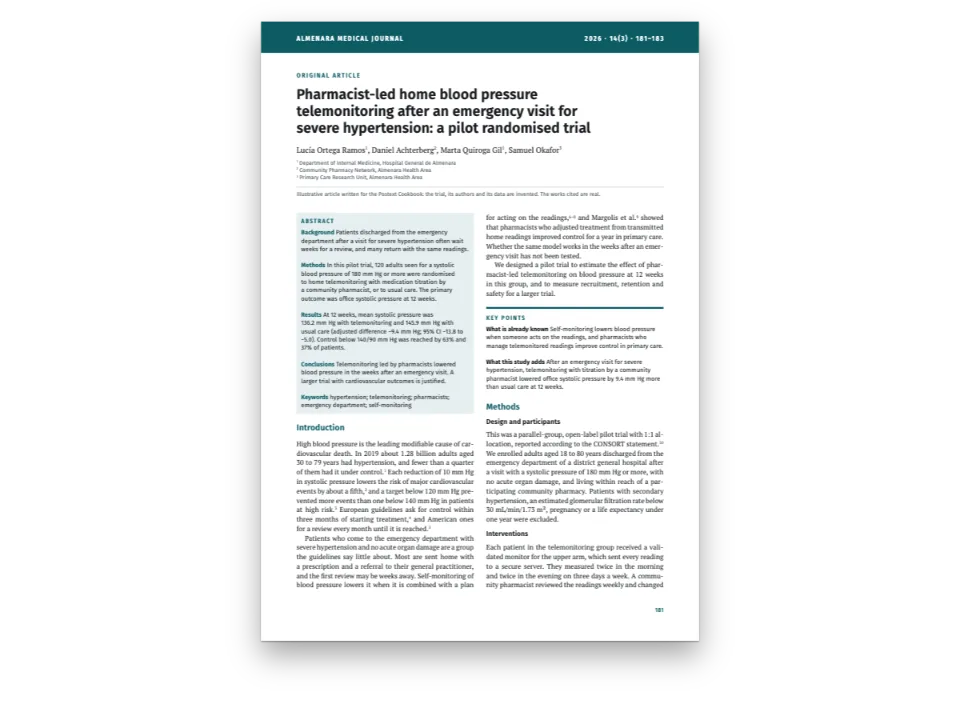
Il secondo capitolo di una tesi di dottorato in scienze dell’educazione, la rassegna della letteratura: che cosa dicono vent’anni di studi sulla lettura su carta e su schermo. Il capitolo è composto su una pagina A4 rilegata a sinistra, in Literata con interlinea di 16 pt, sotto una fascia chiara nel blu dell’università. L’autore tiene le fonti in Zotero e incolla l’esportazione in BibTeX; nel testo ogni fonte è una chiave. Postext formatta ogni citazione in APA 7, con l’autore, l’anno e la pagina quando è indicata, scrive “Delgado et al. (2018)” quando il nome fa parte della frase e costruisce la bibliografia nell’ordine e nella forma che lo stile richiede. Quando il relatore chiede Chicago, lo stile è l’unica riga che cambia.
Questa ricetta risponde a
- Come cito le opere e costruisco la bibliografia in APA, IEEE o un altro stile citazionale?
La risposta breve
// Citations are written [@key, p. 33] and formatted by citeproc-js in the chosen CSL
// style; the references come from the BibTeX block at the end of the chapter. Register
// the engine once, before the first build, then the style is one setting.
registerCitationEngine(createCiteprocEngine({ styles: STYLES, locales: LOCALES }));
const citations = {
  style: 'apa', // 'chicago-author-date', 'ieee', 'vancouver'… change nothing else
  link: true, // each citation jumps to its entry in the PDF and on screen
  bibliography: {
    // APA asks for a half-inch hanging indent and keeps the list in the text size.
    fontSize: em(1), hangingIndent: mm(12.7), entrySpacing: pt(4),
    doi: 'link', // printed whole, as APA wants, and clickable
  },
};
Ingredienti
- Funzionalità
- Citazioni in uno stile citazionaleBibliografia dai riferimentiRimandiTitoli numeratiStili di titoloCapitoli non numeratiAperture progettateTestatine e folioTavolozza di colori semanticaEsportazione in PDF
- Usa anche
- Citazioni che collocano le figureAttributi dei titoliTestatine secondo il ruolo della paginaFont incorporati nel PDF
- Tipo
- Literata, Public Sans (SIL OFL 1.1)
- Risorse
- Nessuna: ogni immagine è disegnata nel codice
Preparazione
#1 · Un motore, uno stile
Il codice è la risposta breve qui sopra. Postext legge le citazioni e lascia la loro forma a un motore di citazione, registrato una volta prima della prima composizione; postext-citeproc incapsula citeproc-js, il motore che usano Zotero e Mendeley, con sedici stili CSL e i loro file di localizzazione. [@mangen2013] dà “(Mangen et al., 2013)”, @delgado2018 senza parentesi quadre mette gli autori nella frase e [@ibanez2023, pp. 12–15] porta l’intervallo di pagine dentro le parentesi. Con il documento in spagnolo, le stesse chiavi prendono congiunzioni e abbreviazioni dal file di localizzazione spagnolo, perché il motore segue la lingua del documento.
#2 · La bibliografia viene da un blocco BibTeX
L’ultimo blocco del capitolo è :::references{format=bibtex} con dentro l’esportazione di Zotero incollata, con gli accenti scritti come {\'a}. :::bibliography, più sopra, colloca l’elenco sotto il titolo References; senza, Postext aggiunge l’elenco alla fine. Compaiono solo le opere citate, ordinate come le ordina APA, e ogni citazione nel testo rimanda alla sua voce.
#3 · Un titolo senza numero, rimandi in parole
  headingStyles: [{ id: 'references', numbered: false }],
  crossRefs: { section: t({ en: 'Section {n}', es: 'Sección {n}' }) },
Il titolo della bibliografia prende lo stile references, che lo tiene nell’indice ma fuori dalla numerazione, così l’elenco non diventa la sezione 2.4. :ref{id="sec-speed"} stampa “Section 2.2” dall’etichetta di crossRefs e rimanda al titolo; i numeri vengono da startAt=2 sul titolo del capitolo, lo stesso contatore che usano i titoli.
#4 · L’apertura sta in una fascia
const BAND = 92; // mm from the trim's top
const opener = {
  enabled: true,
  minHeight: mm(BAND - 28 + 10), // the body starts 10 mm under the band
  slot: { elements: [
    { kind: 'box', id: 'band', style: { backgroundColor: col('tint') },
      placement: { anchor: { to: 'page', edge: 'top-left' },
        size: { width: 'fill', height: mm(BAND) } } },
    { kind: 'text', id: 'label', content: t({ en: 'Chapter', es: 'Capítulo' }),
      fontFamily: LABEL, fontSize: pt(9), fontWeight: 600, letterSpacing: pt(1.8),
      textTransform: 'uppercase',
      color: col('accent'), align: 'left',
      placement: { anchor: { to: 'container', edge: 'top-left' },
        offset: { x: mm(0), y: mm(2) } } },
    { kind: 'text', id: 'number', content: '{number}', fontFamily: TEXT, fontSize: pt(96),
      fontWeight: 300, lineHeight: 0.9, color: col('accent'), align: 'right',
      placement: { anchor: { to: 'container', edge: 'top-right' },
        offset: { x: mm(0), y: mm(-6) },
        size: { width: mm(40), height: 'auto' } } },
    { kind: 'text', id: 'title', content: '{titleText}', fontFamily: TEXT, fontSize: pt(24),
      lineHeight: 1.12, fontWeight: 600, color: col('ink'), align: 'left', overflow: 'wrap',
      placement: { anchor: { to: 'container', edge: 'top-left' },
        offset: { x: mm(0), y: mm(14) },
        size: { width: mm(108), height: 'auto' } } },
  ] },
};
La fascia è un riquadro ancorato al formato rifilato e il testo comincia 10 mm sotto. Il numero è composto in Literata Light a 96 pt sulla destra, dove si legge come una forma e lascia al titolo tutta la giustezza.
const palette = {
  ink: '#1b1b1f', accent: '#22406a', tint: '#e6ecf4', rule: '#b9bec8', muted: '#5d6370',
};
const col = (id) => ({ hex: palette[id], model: 'hex', paletteId: id });
const colorPalette = Object.entries({ ...palette, 'main-color': palette.accent })
  .map(([id, hex]) => ({ id, name: id, value: { hex, model: 'hex' } }));
La ricetta completa
// ═══ Postext Cookbook · Nº 087 · A thesis chapter cited in APA 7 ═══════════════════ // https://postext.dev/en/cookbook/apa-thesis-with-bibtex // Code: MIT · Text: original (CC BY 4.0) · Pictures: none // Fonts: Literata, Public Sans (SIL OFL 1.1) · Needs postext ≥ 1.25.0 import { buildDocumentWithFonts, renderPageToCanvas, registerCitationEngine, } from 'https://esm.sh/postext'; import { renderToPdf, decompressWoff2 } from 'https://esm.sh/postext-pdf'; import { createCiteprocEngine, STYLES, LOCALES } from 'https://esm.sh/postext-citeproc'; const LANG = 'en'; // @lang: the language of the sample document ('en' | 'es') const RECIPE = 'apa-thesis-with-bibtex'; // ─── 1 · Design ───────────────────────────────────────────────────────────── // #region palette: a thesis prints in black; the one colour is the university's const palette = { ink: '#1b1b1f', accent: '#22406a', tint: '#e6ecf4', rule: '#b9bec8', muted: '#5d6370', }; const col = (id) => ({ hex: palette[id], model: 'hex', paletteId: id }); const colorPalette = Object.entries({ ...palette, 'main-color': palette.accent }) .map(([id, hex]) => ({ id, name: id, value: { hex, model: 'hex' } })); // #endregion const TEXT = 'Literata', LABEL = 'Public Sans'; const LEAD = 16; // pt: double spacing is a typewriter habit; 1.45 reads as well and fits more // #region answer: the citation engine, APA 7 and how its references look // Citations are written [@key, p. 33] and formatted by citeproc-js in the chosen CSL // style; the references come from the BibTeX block at the end of the chapter. Register // the engine once, before the first build, then the style is one setting. registerCitationEngine(createCiteprocEngine({ styles: STYLES, locales: LOCALES })); const citations = { style: 'apa', // 'chicago-author-date', 'ieee', 'vancouver'… change nothing else link: true, // each citation jumps to its entry in the PDF and on screen bibliography: { // APA asks for a half-inch hanging indent and keeps the list in the text size. fontSize: em(1), hangingIndent: mm(12.7), entrySpacing: pt(4), doi: 'link', // printed whole, as APA wants, and clickable }, }; // #endregion // #region opener: a pale band at the head of the page, the number large and light in it const BAND = 92; // mm from the trim's top const opener = { enabled: true, minHeight: mm(BAND - 28 + 10), // the body starts 10 mm under the band slot: { elements: [ { kind: 'box', id: 'band', style: { backgroundColor: col('tint') }, placement: { anchor: { to: 'page', edge: 'top-left' }, size: { width: 'fill', height: mm(BAND) } } }, { kind: 'text', id: 'label', content: t({ en: 'Chapter', es: 'Capítulo' }), fontFamily: LABEL, fontSize: pt(9), fontWeight: 600, letterSpacing: pt(1.8), textTransform: 'uppercase', color: col('accent'), align: 'left', placement: { anchor: { to: 'container', edge: 'top-left' }, offset: { x: mm(0), y: mm(2) } } }, { kind: 'text', id: 'number', content: '{number}', fontFamily: TEXT, fontSize: pt(96), fontWeight: 300, lineHeight: 0.9, color: col('accent'), align: 'right', placement: { anchor: { to: 'container', edge: 'top-right' }, offset: { x: mm(0), y: mm(-6) }, size: { width: mm(40), height: 'auto' } } }, { kind: 'text', id: 'title', content: '{titleText}', fontFamily: TEXT, fontSize: pt(24), lineHeight: 1.12, fontWeight: 600, color: col('ink'), align: 'left', overflow: 'wrap', placement: { anchor: { to: 'container', edge: 'top-left' }, offset: { x: mm(0), y: mm(14) }, size: { width: mm(108), height: 'auto' } } }, ] }, }; // #endregion const head = (id, content, edge, x) => ({ kind: 'text', id, content, pages: 'body', fontFamily: LABEL, fontSize: pt(7.5), letterSpacing: pt(0.8), color: col('muted'), placement: { anchor: { to: 'page', edge }, offset: { x: mm(x), y: mm(14) } }, }); const config = () => ({ locale: t({ en: 'en-us', es: 'es' }), colorPalette, citations, page: { sizePreset: 'custom', width: mm(210), height: mm(297), dpi: 150, // one-sided, bound at the left margins: { top: mm(28), bottom: mm(28), left: mm(35), right: mm(25) }, }, layout: { layoutType: 'single' }, bodyText: { fontFamily: TEXT, fontSize: pt(11), lineHeight: pt(LEAD), color: col('ink'), boldColor: col('ink'), italicColor: col('ink'), referenceColor: col('accent'), textAlign: 'justify', firstLineIndent: mm(6), indentAfterHeading: false, hyphenation: { enabled: true }, optimalLineBreaking: true, minWordSpacing: 0.8, // no word space closes to less than four fifths avoidWidows: true, avoidOrphans: true, avoidRunts: true, }, headings: { fontFamily: TEXT, color: col('ink'), fontWeight: 600, levels: [ // A chapter opens on the next page, recto or verso. { level: 1, numberingTemplate: '{1}', fontSize: pt(22), breakBefore: { enabled: true, parity: 'any' }, advancedDesign: opener }, { level: 2, numberingTemplate: '{1}.{2}', numberSeparator: ' ', fontSize: pt(13), lineHeight: pt(LEAD), marginTop: pt(LEAD), marginBottom: pt(LEAD / 2) }, ], }, // #region refs: the references heading goes unnumbered; section references read in words headingStyles: [{ id: 'references', numbered: false }], crossRefs: { section: t({ en: 'Section {n}', es: 'Sección {n}' }) }, // #endregion header: { elements: [ head('title', '{title}', 'top-left', 35), head('folio', '{pageNumber}', 'top-right', -25), ] }, footer: { elements: [] }, }); // ─── 2 · Content ──────────────────────────────────────────────────────────── const markdown = String.raw`---Esempio Markdown · 69 righe · content.en.md
title: "Reading on Paper and on Screens" author: "Marta Ibáñez Roca" --- # Reading on Paper and on Screens: The State of the Evidence {#ch-review startAt=2} The question this thesis takes up is older than the screens it is usually asked about. Long before the first e-reader, typographers measured how the size of a letter, the length of a line and the space between lines changed the speed and the comfort of reading [@tinker1963]. What changed with screens was the scale of the experiment: by the 2010s a large share of what students read for their courses reached them through a display, and the question of whether that mattered left the laboratory for the lecture hall [@baron2015]. This chapter reviews what is known. :ref{id="sec-comprehension"} gathers the studies of comprehension, :ref{id="sec-speed"} those of speed and line length, and :ref{id="sec-attention"} the arguments about attention that frame the rest of the thesis. The method of the study itself follows in Chapter 3. ## Comprehension {#sec-comprehension} The most cited early comparison asked Norwegian upper-secondary students to read two texts, one narrative and one expository, either on paper or as PDF files on a computer screen [@mangen2013]. Those who read on paper scored better on the comprehension test that followed. The difference was modest, but it pointed in the same direction as a growing number of studies, and it raised a question the authors could not settle: whether the advantage came from the medium, from the way readers navigated it, or from what they expected to do with it. Two meta-analyses later pooled the evidence. @delgado2018 combined 54 studies with more than 170,000 participants and found an advantage for paper in the comprehension of informational texts, larger when reading was done under time pressure and, unexpectedly, larger in the more recent studies than in the older ones. @clinton2019 reached a similar conclusion from a narrower set of experiments: reading from paper led to better comprehension, while the time spent reading did not differ between the media. Neither review found a reliable difference for narrative texts. A pilot study run for this thesis with forty first-year students found the same pattern [@ibanez2023, pp. 12–15], although its sample was too small to settle it. ## Speed and line length {#sec-speed} Speed is the measure readers notice first and researchers trust least. A reader can go faster by understanding less, and a gain in words per minute says nothing of what was retained [@rayner2016]. Studies that control for comprehension tell a more modest story than the claims of speed-reading courses: the eyes move in short jumps, take in a few letters on either side of the fixation, and cannot be trained to take in a whole line at once [@rayner2016]. Line length is the variable typographers have argued about longest. On screen, @dyson2001 measured speed and comprehension at several line lengths and found that the two do not always improve together, which warns against judging a layout by speed alone. Older work on print had already shown that the best length depends on the size of the type and the leading, not on a fixed count of characters [@tinker1963; see also @ibanez2023, sec. 2]. ## Attention and the reading brain {#sec-attention} The empirical studies leave room for a wider argument. @wolf2018 holds that the habits formed by reading on screens, quick and skimming, carry over to the reading of long texts and weaken the slower processes that comprehension of a demanding argument needs. @baron2015 reaches a similar view from surveys of students, many of whom reported that they concentrated better on paper even when they preferred screens for convenience. These are arguments rather than measurements, and this thesis treats them as hypotheses: Chapter 3 tests whether the advantage for paper reported in :ref{id="sec-comprehension"} holds when the screen layout is set with the care a printed page receives. ## References {style="references"} :::bibliography{title=""} :::references{format=bibtex} @book{tinker1963, author = {Tinker, Miles A.}, title = {Legibility of print}, publisher = {Iowa State University Press}, address = {Ames, IA}, year = 1963} @book{baron2015, author = {Baron, Naomi S.}, title = {Words onscreen: The fate of reading in a digital world}, publisher = {Oxford University Press}, address = {New York}, year = 2015} @article{mangen2013, author = {Mangen, Anne and Walgermo, Bente R. and Br{\o}nnick, Kolbj{\o}rn}, title = {Reading linear texts on paper versus computer screen: Effects on reading comprehension}, journal = {International Journal of Educational Research}, volume = 58, pages = {61--68}, year = 2013, doi = {10.1016/j.ijer.2012.12.002}} @article{delgado2018, author = {Delgado, Pablo and Vargas, Crist{\'o}bal and Ackerman, Rakefet and Salmer{\'o}n, Ladislao}, title = {Don't throw away your printed books: A meta-analysis on the effects of reading media on reading comprehension}, journal = {Educational Research Review}, volume = 25, pages = {23--38}, year = 2018, doi = {10.1016/j.edurev.2018.09.003}} @article{clinton2019, author = {Clinton, Virginia}, title = {Reading from paper compared to screens: A systematic review and meta-analysis}, journal = {Journal of Research in Reading}, volume = 42, number = 2, pages = {288--325}, year = 2019, doi = {10.1111/1467-9817.12269}} @article{dyson2001, author = {Dyson, Mary C. and Haselgrove, Mark}, title = {The influence of reading speed and line length on the effectiveness of reading from screen}, journal = {International Journal of Human-Computer Studies}, volume = 54, number = 4, pages = {585--612}, year = 2001, doi = {10.1006/ijhc.2001.0458}} @article{rayner2016, author = {Rayner, Keith and Schotter, Elizabeth R. and Masson, Michael E. J. and Potter, Mary C. and Treiman, Rebecca}, title = {So much to read, so little time: How do we read, and can speed reading help?}, journal = {Psychological Science in the Public Interest}, volume = 17, number = 1, pages = {4--34}, year = 2016, doi = {10.1177/1529100615623267}} @techreport{ibanez2023, author = {Ib{\'a}{\~n}ez Roca, Marta}, title = {Screen layouts and comprehension: A pilot study}, institution = {Reading Lab}, type = {Working paper}, number = 3, year = 2023} @book{wolf2018, author = {Wolf, Maryanne}, title = {Reader, come home: The reading brain in a digital world}, publisher = {Harper}, address = {New York}, year = 2018} :::`; // ─── 3 · Fonts ────────────────────────────────────────────────────────────── const FONTS = { Literata: ['300', '400', '400i', '600', '600i'], 'Public Sans': ['400', '600'], }; // ─── 4 · Build & show ─────────────────────────────────────────────────────── const doc = await buildDocumentWithFonts({ markdown }, config(), kitFonts(FONTS)); const title = t({ en: 'A thesis chapter in APA 7', es: 'Un capítulo de tesis en APA 7' }); showPages(doc, { title }); offerPdf(() => renderToPdf(doc, { fontProvider: fontsourceProvider }), `${RECIPE}.pdf`);Kit · core, fonts, viewer, pdf: uguale in ogni ricetta · 269 righe
// ─── Kit ── helpers shared by every Cookbook recipe · postext.dev/cookbook ───── // ─── Kit · core v1 ── the same in every recipe · postext.dev/cookbook function mm(value) { return { value, unit: 'mm' }; } function pt(value) { return { value, unit: 'pt' }; } function em(value) { return { value, unit: 'em' }; } /** The sample language's string: t({ en: 'Figure', es: 'Figura' }). */ function t(strings) { return strings[LANG] ?? Object.values(strings)[0]; } /** A file in this recipe's assets folder, served from the Postext repo by jsDelivr. */ function asset(file) { return `https://cdn.jsdelivr.net/gh/drnachio/postext@main/cookbook/${RECIPE}/assets/${file}`; } // ─── Kit · fonts v3 ── the same in every recipe · postext.dev/cookbook // Postext loads the faces a config asks for before layout (prepareFonts, // buildDocumentWithFonts) and asks the kit for the files: Fontsource's, the // files the PDF embeds too. /** The options of buildDocumentWithFonts / prepareFonts / withLoadedFonts: * the Fontsource resolver, and the faces of FONTS loaded with the ones the * config names. FONTS = { 'Family Name': ['400', '400i', '700'] }. */ function kitFonts(FONTS = {}) { const faces = Object.entries(FONTS).flatMap(([family, specs]) => specs.map((spec) => ({ family, weight: parseInt(spec, 10), style: spec.endsWith('i') ? 'italic' : 'normal' }))); return { resolve: fontsourceResolver, faces }; } /** A face's Fontsource files, in a fixed order: latin, then latin-ext and greek * when `text` needs them and the family ships them (kitSubsetsFor), each with * its unicode-range. Null for a weight or slant Fontsource does not ship. */ async function fontsourceResolver(family, weight, style, { text = '' } = {}) { const id = fontsourceId(family); const meta = await fontsourceMeta(family); if (meta && !(meta.weights.includes(weight) && meta.styles.includes(style))) return null; kitStatus('Loading fonts…'); const at = await fontsourceAt(id); return ['latin', ...kitSubsetsFor(text, meta)].map((subset) => ({ source: `${at}files/${id}-${subset}-${weight}-${style}.woff2`, unicodeRange: kitRanges()[subset], })); } /** The unicode-range of each Fontsource file the kit loads (a function: the * kit is inlined after the pen's code, which runs before a const would be set). */ function kitRanges() { return { latin: 'U+0000-00FF,U+0131,U+0152-0153,U+02BB-02BC,U+02C6,U+02DA,U+02DC,U+0304,U+0308,U+0329,' + 'U+2000-206F,U+20AC,U+2122,U+2191,U+2193,U+2212,U+2215,U+FEFF,U+FFFD', 'latin-ext': 'U+0100-02BA,U+02BD-02C5,U+02C7-02CC,U+02CE-02D7,U+02DD-02FF,U+0304,U+0308,U+0329,' + 'U+1D00-1DBF,U+1E00-1E9F,U+1EF2-1EFF,U+2020,U+20A0-20AB,U+20AD-20C0,U+2113,U+2C60-2C7F,U+A720-A7FF', greek: 'U+0370-03FF', }; } /** For the cjk, arabic and comics blocks, which add their own files: the * faces of `faces` = { 'Family Name': ['400', '400i', '700'] }. `text` is the sample: * č ł † α χ also load latin-ext and greek files (kitSubsetsFor). With * `optional`, a face Fontsource does not ship is skipped instead of failing. * The files are added once all have loaded, in the order asked (latin, then * latin-ext, then greek), whatever order they arrive in: the last one added * wins a character two files hold. Resolves to the number of faces added. */ async function loadFonts(faces, text = '', { optional = false } = {}) { kitStatus('Loading fonts…'); const ranges = kitRanges(); const jobs = []; for (const [family, specs] of Object.entries(faces)) { const id = fontsourceId(family); const todo = [...new Set(specs)].map((spec) => [parseInt(spec, 10), spec.endsWith('i') ? 'italic' : 'normal']) .filter(([weight, style]) => !hasFace(family, weight, style)); // before any await const at = fontsourceAt(id); const meta = optional || /[^\0-ÿ]/u.test(text) ? await fontsourceMeta(family) : null; const subsets = ['latin', ...kitSubsetsFor(text, meta)]; for (const [weight, style] of todo) { if (optional && !(meta?.weights.includes(weight) && meta.styles.includes(style))) continue; for (const subset of subsets) { const url = `${await at}files/${id}-${subset}-${weight}-${style}.woff2`; const face = new FontFace(family, `url(${url}) format('woff2')`, { weight: String(weight), style, unicodeRange: ranges[subset] }); jobs.push(face.load().catch(() => { if (subset === 'latin' && !optional) throw new Error(`Fontsource has no ${family} ${weight} ${style}`); })); } } } const ready = await Promise.all(jobs).catch((error) => { kitFail(error); throw error; }); return ready.filter((face) => face && document.fonts.add(face)).length; } /** A loaded FontFace covers this family, weight and style (fonts.check() would * also say yes for families nobody declared). */ function hasFace(family, weight, style) { for (const face of document.fonts) { if (face.status !== 'loaded' || face.style !== style) continue; if (face.family.replace(/^["']|["']$/g, '') !== family) continue; const [low, high = low] = face.weight.split(' ').map(Number); if (weight >= low && weight <= high) return true; } return false; } /** The files beyond latin `text` needs that `meta`'s family ships. */ function kitSubsetsFor(text, meta) { return [[/[Ā-˿ᴀ-ᶿḀ-ỿ†ℓⱠ-Ɀ꜠-ꟿ]/u, 'latin-ext'], [/[Ͱ-Ͽ]/u, 'greek']] .filter(([re, x]) => re.test(text) && meta?.subsets?.includes(x)).map(([, x]) => x); } /** Fontsource's id for a family: 'Source Serif 4' → 'source-serif-4'. */ function fontsourceId(family) { return family.toLowerCase().replace(/\s+/g, '-'); } /** A package's folder at the one version @5 names now (#766). */ function fontsourceAt(id, u = `https://cdn.jsdelivr.net/npm/@fontsource/${id}@`) { return (fontsourceAt.c ??= {})[id] ??= fetch(u + '5/package.json').then((r) => r.json()) .then((p) => p.version || 5, () => 5).then((v) => `${u}${v}/`); } /** The family's Fontsource metadata (weights, styles, subsets), or null. */ function fontsourceMeta(family) { fontsourceMeta.cache ??= new Map(); const id = fontsourceId(family); if (!fontsourceMeta.cache.has(id)) { fontsourceMeta.cache.set(id, fetch(`https://api.fontsource.org/v1/fonts/${id}`) .then((res) => (res.ok ? res.json() : null), () => null)); } return fontsourceMeta.cache.get(id); } // ─── Kit · viewer v2 ── the same in every recipe · postext.dev/cookbook /** The pages as spreads on a dark desk, page 1 alone, then verso | recto, * each painted when it scrolls near. Other options go to renderPageToCanvas. */ function showPages(docs, { title, width = 460, ...render } = {}) { const root = viewer(title); const pages = [docs].flat().flatMap((doc) => doc.pages.map((page) => ({ doc, page, n: (doc.pageIndexOffset ?? 0) + page.index }))); const spreads = []; let verso = null; for (const p of pages) { if (p.n % 2 === 1) { if (verso) spreads.push([verso, null]); verso = p; } else { spreads.push([verso, p]); verso = null; } } if (verso) spreads.push([verso, null]); const density = Math.min(window.devicePixelRatio || 1, 2); showPages.painter?.disconnect(); const painter = new IntersectionObserver((entries) => { for (const { isIntersecting, target } of entries) { if (!isIntersecting) continue; painter.unobserve(target); const { doc, page } = target.postext; renderPageToCanvas(page, doc, target, { ...render, scale: (width * density) / page.width }); } }, { rootMargin: '800px' }); showPages.painter = painter; root.replaceChildren(...spreads.map((pair) => { const spread = document.createElement('div'); spread.className = 'pt-spread'; for (const p of pair) { const figure = document.createElement('figure'); if (p) { const label = p.page.pageLabel || String(p.n + 1); const canvas = document.createElement('canvas'); canvas.postext = p; canvas.style.aspectRatio = `${p.page.width} / ${p.page.height}`; canvas.setAttribute('role', 'img'); canvas.setAttribute('aria-label', `Page ${label}`); const folio = document.createElement('figcaption'); folio.textContent = label; figure.append(canvas, folio); painter.observe(canvas); } else figure.className = 'pt-blank'; spread.append(figure); } return spread; })); kitStatus(`${pages.length} ${pages.length === 1 ? 'page' : 'pages'}`); document.documentElement.dataset.postext = 'ready'; return pages.length; } /** The desk, the bar and the error reporting, created once. */ function viewer(title) { if (!document.getElementById('pt-kit')) { document.head.insertAdjacentHTML('beforeend', `<style id="pt-kit"> :root { color-scheme: dark; } body { margin: 0; background: #0e1014; color: #b9bcc4; font: 13px/1.45 system-ui, sans-serif; } #pt-bar { position: sticky; top: 0; z-index: 1; display: flex; flex-wrap: wrap; align-items: center; gap: 6px 16px; padding: 10px 16px; background: rgb(14 16 20 / .92); backdrop-filter: blur(6px); border-bottom: 1px solid #23262d; } #pt-bar strong { color: #f4f1ea; font-weight: 600; } #pt-actions { display: flex; gap: 12px; margin-left: auto; } #pt-actions a, #pt-actions button { color: #d8a21a; font: inherit; background: none; border: 0; padding: 0; cursor: pointer; } #pages { display: grid; justify-items: center; gap: 48px; padding: 32px 16px 72px; } .pt-spread { display: flex; } .pt-spread figure { margin: 0; width: min(460px, 44vw); } .pt-spread canvas { display: block; width: 100%; background: #fff; box-shadow: 0 1px 2px rgb(0 0 0 / .5), 0 22px 44px -16px rgb(0 0 0 / .8); } .pt-spread figure:first-child canvas { box-shadow: inset -14px 0 14px -14px rgb(0 0 0 / .18), 0 1px 2px rgb(0 0 0 / .5), 0 22px 44px -16px rgb(0 0 0 / .8); } .pt-spread figcaption { margin-top: 10px; text-align: center; font: 600 10px/1 system-ui, sans-serif; letter-spacing: .18em; text-transform: uppercase; color: #6c7079; } .pt-blank { visibility: hidden; } @media (max-width: 760px) { .pt-spread { flex-direction: column; gap: 32px; } .pt-spread figure { width: min(460px, 92vw); } .pt-blank { display: none; } } </style>`); document.body.insertAdjacentHTML('afterbegin', '<header id="pt-bar"><strong id="pt-title"></strong><span id="pt-status" role="status"></span><span id="pt-actions"></span></header>'); document.getElementById('pt-title').textContent = document.title || 'Postext'; addEventListener('error', (event) => kitFail(event.error ?? event.message)); addEventListener('unhandledrejection', (event) => kitFail(event.reason)); } if (title) document.getElementById('pt-title').textContent = title; return document.getElementById('pages') ?? document.body.appendChild(Object.assign(document.createElement('main'), { id: 'pages' })); } function kitStatus(text) { viewer(); document.getElementById('pt-status').textContent = text; } function kitFail(error) { document.documentElement.dataset.postext = 'error'; kitStatus(`Error: ${error?.message ?? error}`); } // ─── Kit · pdf v3 ── the same in every recipe that exports a PDF /** The Fontsource files the screen used, as TrueType, with their range and * place: the nearest weight the family ships, upright with no italic; * latin, then what its letters need (kitSubsetsFor). */ async function fontsourceProvider(family, weight, style, request) { const id = fontsourceId(family); const meta = await fontsourceMeta(family); const weights = meta?.weights?.length ? meta.weights : [400, 700]; const w = weights.reduce((a, b) => (Math.abs(b - weight) < Math.abs(a - weight) ? b : a)); const s = style === 'italic' && meta && !meta.styles.includes('italic') ? 'normal' : style; const text = String.fromCodePoint(...(request?.codePoints ?? [])); const files = await Promise.all(['latin', ...kitSubsetsFor(text, meta)].map(async (subset, order) => { const res = await fetch(`${await fontsourceAt(id)}files/${id}-${subset}-${w}-${s}.woff2`); if (!res.ok) throw new Error(`Fontsource has no ${family} ${w} ${s} ${subset}`); return Object.assign(await decompressWoff2(new Uint8Array(await res.arrayBuffer())), { unicodeRange: kitRanges()[subset], order }); })); return files.length === 1 ? files[0] : files; } /** A "Build the PDF" button; then "Open the PDF" (a new tab: CodePen's frame * shows no PDFs) and a download link. */ function offerPdf(makePdf, filename) { viewer(); const button = Object.assign(document.createElement('button'), { type: 'button', textContent: 'Build the PDF' }); button.dataset.postextPdf = filename; button.addEventListener('click', async () => { button.disabled = true; button.textContent = 'Building the PDF…'; try { const bytes = await makePdf(); const url = URL.createObjectURL(new Blob([bytes], { type: 'application/pdf' })); const size = `${Math.max(1, Math.round(bytes.length / 1024))} KB`; button.replaceWith( Object.assign(document.createElement('a'), { href: url, target: '_blank', rel: 'noopener', textContent: 'Open the PDF ↗' }), Object.assign(document.createElement('a'), { href: url, download: filename, textContent: `Download ${filename} · ${size}` })); } catch (error) { button.disabled = false; button.textContent = 'Build the PDF'; kitFail(error); } }); document.getElementById('pt-actions').append(button); } // ─── /Kit ───────────────────────────────────────────────────────────────────────
Lo script.js composto funziona così com’è: incollalo nello script modulo di qualsiasi pagina, oppure apri la ricetta su CodePen. Cartella della ricetta su GitHub ↗ (si apre in una nuova scheda)
Varianti
#Cambia lo stile
Lo stesso capitolo in Chicago autore-data toglie la virgola dopo il nome ed elenca l’anno dopo gli autori.
-  style: 'apa', // 'chicago-author-date', 'ieee', 'vancouver'… change nothing else
+ style: 'chicago-author-date',#Una bibliografia più piccola del testo
Molte università ammettono la bibliografia un corpo più piccola e con interlinea singola.
-    fontSize: em(1), hangingIndent: mm(12.7), entrySpacing: pt(4),
+ fontSize: em(0.9), lineHeight: pt(13), hangingIndent: mm(12.7), entrySpacing: pt(3),Errori frequenti
- APA scrive i titoli di articoli e libri in sentence case, cioè con la sola iniziale maiuscola, e citeproc-js stampa i titoli come li forniscono i dati. Zotero conserva la maggior parte dei titoli in title case, quindi correggili in Zotero o nel BibTeX prima che arrivino sulla pagina.
Crediti
- Ricetta
- Ignacio Ferro
- Testo
- Testo originale, CC BY 4.0
- Font
- Literata (SIL OFL 1.1) · Public Sans (SIL OFL 1.1)
- Codice
- MIT, come Postext
Modifica questo testo ↗ (si apre in una nuova scheda)Cartella della ricetta su GitHub ↗ (si apre in una nuova scheda)