In breve
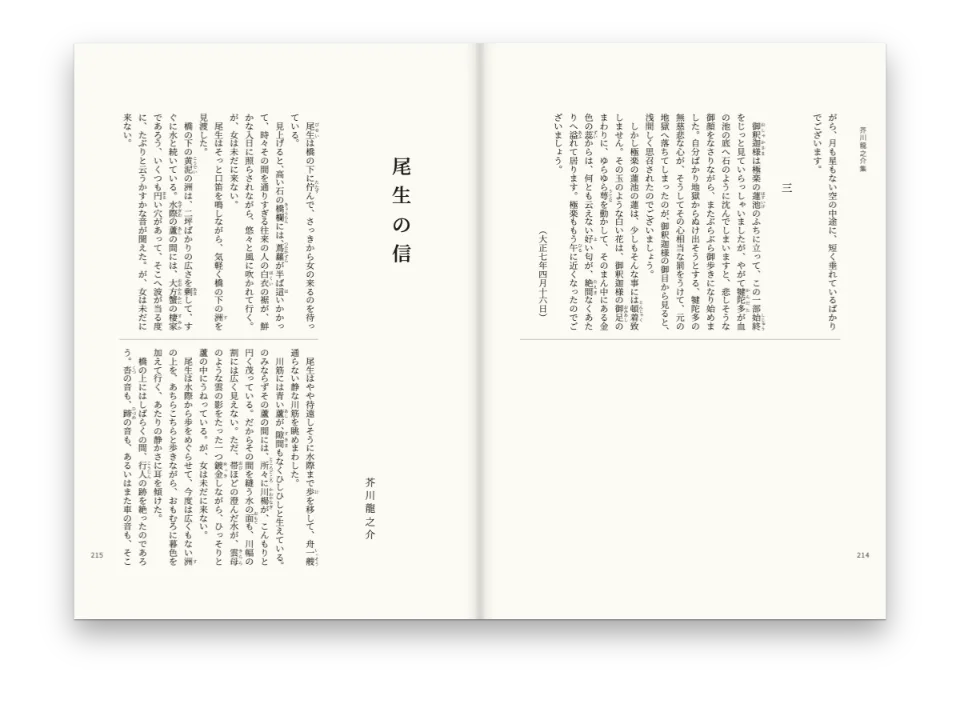
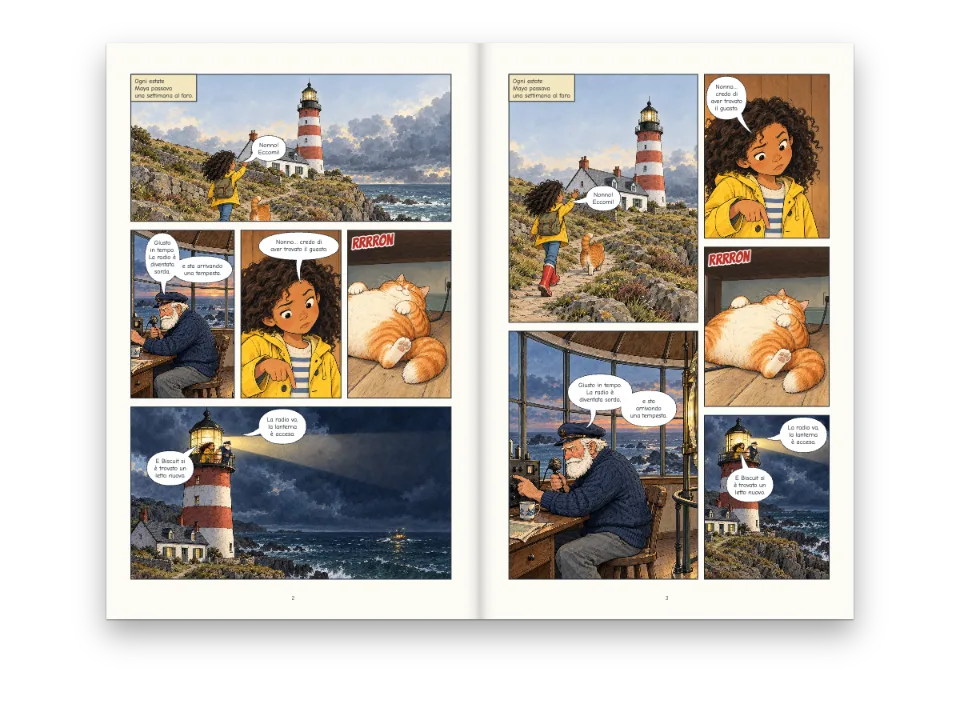
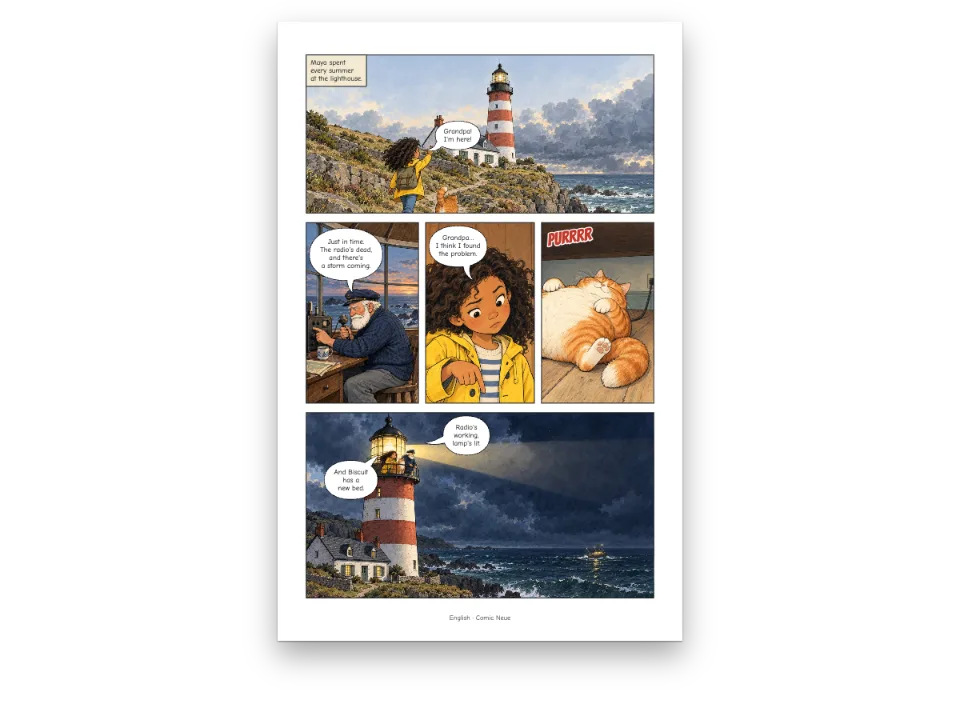
Una tavola di un combattimento in un fumetto giapponese, con spazi inclinati tra le vignette perché l’azione sembri pendere, e il grande suono giapponese del colpo lasciato al suo posto con una piccola traduzione accanto.
Che cosa comporrai
La tavola in cui si decide la finale di kendo, dallo stesso manga della ricetta da destra a sinistra, in due edizioni affiancate: l’originale giapponese e il suo lettering nella lingua di questa pagina (l’inglese nella pagina giapponese). Quattro file: la palestra, gli occhi di Hana attraverso la grata dell’elmo, lo scambio e le reazioni. La terza fila è tagliata da un intervallo che pende, così l’affondo dell’avversaria e il contrattacco di Hana sembrano lanciarsi l’uno contro l’altro; la quarta pende nell’altro senso e rallenta la tavola. Il colpo di Hana non ha alcuna cornice, e il suo effetto sonoro, ドン, è composto in un gotico giapponese nero che ogni edizione mantiene, con una piccola traduzione sotto nelle tavole tradotte.
Questa ricetta risponde a
- Come inclino gli spazi tra le vignette?
- Come scrivo le onomatopee sopra il disegno?
La risposta breve
// The page is split in content.<lang>.md: `* [40~55 | *]` runs the gutter of the third
// tier from 40 % at the top to 55 % at the bottom, so both panels lean into the strike,
// and `24 [58~64 | *]` tilts the last tier the other way. The panel that lands the blow
// is drawn with `border=none`: no frame, so its speed lines run straight to the gutter.
// ドン keeps its Japanese face in every edition (`font=` on the line);
// the translations add a small subtitle under it, the way licensed manga gloss a drawn
// sound effect instead of redrawing it.
const comics = (lang) => ({
  artDirection: 'rtl', // drawn for right-to-left reading: slants and order mirror with it
  mirrorArt: false,
  gutter: { horizontal: mm(4), vertical: mm(2.5) }, // a slanted gutter keeps its width
  panel: { borderWidth: pt(1.1), borderColor: col('ink'), background: col('paper') },
  lettering: {
    fontFamily: EDITIONS[lang].faces[0], color: col('ink'),
    fontSize: pt(['ja', 'zh'].includes(lang) ? 8.5 : 7.5),
    writingMode: lang === 'zh' ? 'vertical' : 'auto',
  },
  balloonStyles: balloons(),
});
Ingredienti
- Funzionalità
- Divisione in vignetteEffetti sonoriDirezione di lettura e ordine mangaFont cinesi, giapponesi e coreaniDisegni nelle vignette e ritagliBordi e spazi delle vignetteRifare il lettering in altre lingueParlanti e ancoraggiPagine a fumettiLettering dei fumettiStili delle nuvoletteTesto verticaleLibri rilegati a destraTavolozza di colori semanticaPagine su un canvasEsportazione in PDF
- Usa anche
- Divisione in righe del cineseColore della cartaFont incorporati nel PDFFigure e tabelle come risorseApici e pedici
- Tipo
- Zen Antique, Dela Gothic One, Comic Neue, Bangers, Noto Sans SC, ZCOOL KuaiLe, Playpen Sans Arabic, Lalezar (SIL OFL 1.1)
- Risorse
match-coach.jpgmatch-eyes.jpgmatch-final.jpgmatch-lunge.jpgmatch-stands.jpgmatch-strike.jpg- The kendo final in a packed gym, two fighters between three referees (Generated With Diffusion Models, originale)
- Hana's eyes through her helmet grille (Generated With Diffusion Models, originale)
- The opponent lunging with speed lines (Generated With Diffusion Models, originale)
- Hana's leaping strike to the helmet (Generated With Diffusion Models, originale)
- Sora cheering in the stands (Generated With Diffusion Models, originale)
- Coach Mori nodding while the referees raise their flags (Generated With Diffusion Models, originale)
Preparazione
#1 · Inclina l’intervallo nella suddivisione
Il codice è la risposta breve qui sopra. Una misura scritta 40~55 dà al bordo lontano di una cella due posizioni: il 40 % della fila in alto, il 55 % in basso. Le celle restano poligoni convessi, l’intervallo mantiene la sua larghezza misurata perpendicolarmente all’inclinazione e, con la lettura da destra a sinistra, l’inclinazione si rispecchia con l’ordine, così la prima cella resta quella di destra. La suddivisione della tavola è 24 / 18 / * [40~55 | *] / 24 [58~64 | *]: due file dritte per preparare il momento, una inclinata per il colpo e un’ultima inclinata nell’altro senso (suddivisione della tavola).
#2 · Grida nelle esplosioni e lascia uscire gli effetti
const balloons = () => [
  { id: 'speech', fill: col('paper'), stroke: col('ink'), strokeWidth: pt(0.6), roundness: 2 },
  { id: 'shout', fill: col('paper'), stroke: col('ink'), burstPoints: 18, burstDepth: 0.3 },
  { id: 'thought', fill: col('paper'), stroke: col('ink') },
  { id: 'inner', fill: col('tone'), stroke: col('tone'), strokeWidth: pt(0), italic: false },
  { id: 'caption', fill: col('paper'), stroke: col('ink'), strokeWidth: pt(0.5) },
  // white-edged on the art
  { id: 'sfx', color: col('ink'), haloColor: col('paper'), halo: pt(2.2) },
];
I kiai di entrambe le combattenti sono grida: un’esplosione a 18 punte con punte più profonde del valore predefinito. Gli effetti sonori non hanno alcun balloon; sono scritti sul disegno con un bordo bianco, 2,2 pt, così si leggono sopra le linee cinetiche. La vignetta del colpo è scritta ::panel{art=strike border=none}, e il suo ドン porta break, così può attraversare l’intervallo inclinato fino alla vignetta accanto, come un letterista lascia che un suono trabocchi dalla cornice (effetti sonori).
#3 · Tieni ドン in giapponese e sottotitolalo
const SFX = /^sfx(\{[^}\n]*\})?[ \t]*[::](.*)$/gm; // sound effects: the second face sets them
async function loadEdition(lang) {
  const text = TEXT[lang];
  const [face, sfx] = EDITIONS[lang].faces;
  const faces = { [face]: FONTS[face], [sfx]: FONTS[sfx] };
  const effects = [...text.matchAll(SFX)];
  for (const [, attrs = '', words] of effects) { // ドン keeps its face in every language
    const family = /font="([^"]+)"/.exec(attrs)?.[1];
    if (!family) continue;
    faces[family] = FONTS[family];
    await loadCjkFonts({ [family]: FONTS[family] }, words, { vertical: true });
  }
  if (['ja', 'zh'].includes(lang)) { // CJK: only the files that hold these characters
    const own = effects.filter(([, attrs = '']) => !attrs.includes('font=')).map((m) => m[2]);
    await loadCjkFonts({ [face]: FONTS[face] }, text.replace(SFX, ''), { vertical: true });
    await loadCjkFonts({ [sfx]: FONTS[sfx] }, own.join(''), { vertical: true });
  }
  if (lang === 'ar') await loadArabicFonts(faces, text);
  await loadComicFonts(faces, text); // the bold and italic the faces do not ship
}
Nei manga gli effetti sonori fanno parte del disegno, e le edizioni su licenza di solito li lasciano al loro posto e aggiungono accanto una piccola traduzione. Lo script fa lo stesso: ogni edizione ha la riga sfx{… font="Dela Gothic One" break}: ドン; le edizioni scritte in orizzontale vi aggiungono vertical, così ドン mantiene la colonna che ha nell’originale, e compongono sotto un secondo effetto più piccolo, SDENG! o WHAM. Poiché il carattere è nominato nella riga, ogni edizione carica Dela Gothic One con i soli caratteri di ドン, qualunque sia il suo carattere di lettering.
#4 · Adatta le zone sicure alle celle inclinate
const ART = { // fractions of the picture: the same in every language
  final: {
    alt: t({ en: 'The kendo final in a packed gym: two fighters cross swords among three referees.',
      es: 'La final en un pabellón lleno: dos rivales cruzan las espadas entre tres árbitros.',
      ca: 'La final en un pavelló ple: dos rivals creuen les espases entre tres àrbitres.',
      fr: 'La finale dans un gymnase comble : deux combattants croisent le sabre entre trois '
        + 'arbitres.',
      de: 'Das Kendo-Finale in einer vollen Halle: Zwei Kämpfer kreuzen zwischen drei '
        + 'Kampfrichtern die Schwerter.',
      it: 'La finale in una palestra gremita: due atleti incrociano le spade tra tre '
        + 'arbitri.',
      pt: 'A final num ginásio lotado: dois lutadores cruzam as espadas entre três árbitros.',
      zh: '座无虚席的体育馆里的决赛:两名选手在三名裁判之间交剑。',
      ar: 'النهائي في صالة ممتلئة: متباريان يتقاطع سيفاهما بين ثلاثة حكّام.',
      ja: '満員の体育館での決勝。3人の審判の間で2人が剣先を交える。' }),
  safeArea: { x: 0.22, y: 0.44, width: 0.56, height: 0.46 },
  anchors: [{ id: 'hana', x: 0.31, y: 0.51, head: { x: 0.31, y: 0.49 },
    face: { x: 0.28, y: 0.45, width: 0.07, height: 0.1 } },
  { id: 'rival', x: 0.68, y: 0.51, head: { x: 0.68, y: 0.49 },
    face: { x: 0.65, y: 0.46, width: 0.06, height: 0.09 } },
  { id: 'shinpan', x: 0.575, y: 0.585, head: { x: 0.575, y: 0.56 },
    face: { x: 0.56, y: 0.54, width: 0.03, height: 0.06 } }] },
  eyes: {
    alt: t({ en: "Hana's eyes through the bars of her helmet grille.",
      es: 'Los ojos de Hana tras las barras de la rejilla del casco.',
      ca: 'Els ulls de la Hana darrere les barres de la reixa del casc.',
      fr: 'Les yeux de Hana derrière les barreaux de la grille de son casque.',
      de: 'Hanas Augen hinter den Gitterstäben ihres Helms.',
      it: 'Gli occhi di Hana dietro le sbarre della grata dell’elmo.',
      pt: 'Os olhos de Hana atrás das barras da grade do capacete.',
      zh: '面罩铁栏后花的眼睛。',
      ar: 'عينا هانا خلف قضبان شبكة الخوذة.',
      ja: '面金の向こうの花の目。' }),
  safeArea: { x: 0.22, y: 0.26, width: 0.57, height: 0.38 },
  anchors: [{ id: 'hana', x: 0.5, y: 0.62, head: { x: 0.5, y: 0.4 },
    face: { x: 0.2, y: 0.3, width: 0.6, height: 0.3 } }] },
  lunge: {
    alt: t({ en: 'The opponent lunges at the viewer, speed lines all round.',
      es: 'El rival se lanza hacia el lector entre líneas cinéticas.',
      ca: 'El rival es llança cap al lector entre línies cinètiques.',
      fr: 'L’adversaire se jette vers le lecteur, entouré de lignes de vitesse.',
      de: 'Der Gegner stürzt auf den Betrachter zu, ringsum Bewegungslinien.',
      it: 'L’avversario si lancia verso chi guarda, tra linee cinetiche.',
      pt: 'O adversário avança contra o leitor entre linhas de velocidade.',
      zh: '对手在速度线中朝读者猛刺过来。',
      ar: 'الخصم يندفع نحو القارئ وسط خطوط السرعة.',
      ja: '集中線の中、こちらへ突いてくる相手。' }),
  safeArea: { x: 0.03, y: 0.01, width: 0.8, height: 0.61 },
  avoid: [{ x: 0.02, y: 0.42, width: 0.23, height: 0.18 }],
  anchors: [{ id: 'rival', x: 0.7, y: 0.2, head: { x: 0.7, y: 0.14 },
    face: { x: 0.63, y: 0.02, width: 0.15, height: 0.24 } }] },
  strike: {
    alt: t({ en: "Hana leaps and strikes the top of the opponent's helmet; the sword bends.",
      es: 'Hana salta y golpea la parte alta del casco del rival; la espada se dobla.',
      ca: 'La Hana salta i colpeja la part alta del casc del rival; l’espasa es doblega.',
      fr: 'Hana bondit et frappe le sommet du casque adverse ; le sabre plie.',
      de: 'Hana springt und trifft den Gegner oben auf den Helm; das Schwert biegt sich.',
      it: 'Hana salta e colpisce la sommità dell’elmo avversario; la spada si piega.',
      pt: 'Hana salta e acerta o alto do capacete do adversário; a espada se curva.',
      zh: '花跃起击中对手面罩顶部,竹剑弯了起来。',
      ar: 'هانا تقفز وتضرب أعلى خوذة الخصم؛ ينثني السيف.',
      ja: '跳び込んで相手の面を打つ花。竹刀がしなる。' }),
  safeArea: { x: 0.36, y: 0.06, width: 0.42, height: 0.77 },
  avoid: [{ x: 0.52, y: 0.48, width: 0.13, height: 0.16 }],
  anchors: [{ id: 'hana', x: 0.43, y: 0.25, head: { x: 0.43, y: 0.18 },
    face: { x: 0.38, y: 0.07, width: 0.1, height: 0.25 } }, { id: 'sfx', x: 0.75, y: 0.25 }] },
  stands: {
    alt: t({ en: 'Sora jumps up in the stands, fists raised, shouting.',
      es: 'Sora salta en la grada con los puños en alto, gritando.',
      ca: 'En Sora salta a la graderia amb els punys enlaire, cridant.',
      fr: 'Sora bondit dans les gradins, poings levés, en criant.',
      de: 'Sora springt auf der Tribüne auf, die Fäuste erhoben, und schreit.',
      it: 'Sora salta sugli spalti con i pugni alzati, gridando.',
      pt: 'Sora pula na arquibancada de punhos erguidos, gritando.',
      zh: '空在看台上跳起来,举着拳头大喊。',
      ar: 'سورا يقفز في المدرّجات رافعًا قبضتيه وهو يصيح.',
      ja: '観客席で拳を突き上げて叫ぶ空。' }),
  safeArea: { x: 0.08, y: 0.07, width: 0.69, height: 0.44 },
  avoid: [{ x: 0.08, y: 0.06, width: 0.12, height: 0.1 },
    { x: 0.64, y: 0.35, width: 0.1, height: 0.12 }],
  anchors: [{ id: 'sora', x: 0.51, y: 0.44, head: { x: 0.5, y: 0.37 },
    face: { x: 0.4, y: 0.3, width: 0.22, height: 0.2 } }] },
  coach: {
    alt: t({ en: 'Mori, arms crossed and eyes closed; behind him the referees raise their flags.',
      es: 'Mori, de brazos cruzados y ojos cerrados; detrás, los árbitros alzan las banderas.',
      ca: 'En Mori, de braços plegats i ulls tancats; darrere, els àrbitres alcen les banderes.',
      fr: 'Mori, bras croisés et yeux fermés ; derrière lui, les arbitres lèvent leurs '
        + 'drapeaux.',
      de: 'Mori, Arme verschränkt, Augen geschlossen; hinter ihm heben die Kampfrichter '
        + 'die Fahnen.',
      it: 'Mori, braccia conserte e occhi chiusi; dietro di lui gli arbitri alzano le '
        + 'bandiere.',
      pt: 'Mori, de braços cruzados e olhos fechados; atrás, os árbitros erguem as bandeiras.',
      zh: '森老师抱着双臂、闭着眼;身后的裁判举起了旗子。',
      ar: 'موري عاقد الذراعين مغمض العينين، وخلفه يرفع الحكّام راياتهم.',
      ja: '腕を組み目を閉じる森先生。後ろで審判が旗を上げる。' }),
  safeArea: { x: 0.16, y: 0.1, width: 0.76, height: 0.53 },
  avoid: [{ x: 0.55, y: 0.18, width: 0.4, height: 0.17 }, // the referees' flags
    { x: 0.22, y: 0.47, width: 0.25, height: 0.21 }], // Mori’s folded arms: his pose
  anchors: [{ id: 'mori', x: 0.29, y: 0.31, head: { x: 0.29, y: 0.2 },
    face: { x: 0.22, y: 0.1, width: 0.14, height: 0.24 } }] },
};
const panels = () => Promise.all([
  comicPanel('final', asset('match-final.jpg'), ART.final),
  comicPanel('eyes', asset('match-eyes.jpg'), ART.eyes),
  comicPanel('lunge', asset('match-lunge.jpg'), ART.lunge),
  comicPanel('strike', asset('match-strike.jpg'), ART.strike),
  comicPanel('coach', asset('match-coach.jpg'), ART.coach),
  comicPanel('stands', asset('match-stands.jpg'), ART.stands),
]);
Una cella inclinata è più larga a un’estremità che all’altra, e l’immagine deve coprirla tutta. Ogni zona sicura è tagliata su ciò che serve alla vignetta, gli occhi per il primo piano della grata e la parte superiore del corpo di Sora per l’esultanza, così sta dentro il ritaglio più largo della cella e il motore non deve mai aggiungere bande all’immagine.
#5 · Metti l’originale accanto a ogni edizione
const FACING = LANG === 'ja' ? 'en' : LANG; // Japanese readers see the English edition
const TEXT = { ja: original, [FACING]: LANG === 'ja' ? english : markdown };
await loadFonts(FONTS, Object.values(TEXT).join('\n'));
const resources = await panels();
const build = async (lang) => { // the same pictures and page; this language's lettering
  await loadEdition(lang);
  return withLoadedFonts(() => buildDocument({ markdown: TEXT[lang], resources,
    continuation: { pageIndexOffset: lang === 'ja' ? 1 : 2 } }, edition(lang)),
    { ...kitFonts(FONTS), text: TEXT[lang] });
};
const docs = [await build('ja'), await build(FACING)];
Ogni lingua del sito scrive il lettering della tavola nel proprio file, e l’originale giapponese le sta di fronte sull’altro lato della doppia pagina (la pagina giapponese sta di fronte all’edizione inglese). ドン resta in ogni edizione, ognuna porta il suo sottotitolo (SDENG!, WHAM, ZAS!, PÁ!, PAF !, WUMM, 咚, بوم!), e le inclinazioni non si spostano mai.
La ricetta completa
// ═══ Postext Cookbook · Nº 150 · An action page with slanted gutters ═════════════════ // https://postext.dev/en/cookbook/manga-action-slants // Code: MIT · Story: written for the recipe (CC BY 4.0) · Pictures: generated with diffusion models // Fonts: Zen Antique, Comic Neue and six more (SIL OFL 1.1) · Needs postext ≥ 1.26.0 // The last page of a kendo final: slanted panels, a borderless strike, ドン kept in every edition. import { buildDocument, withLoadedFonts, renderPageToCanvas, registerResourceImage, loadVerticalAlternates, } from 'https://esm.sh/postext'; import { renderToPdf, decompressWoff2 } from 'https://esm.sh/postext-pdf'; const LANG = 'it'; // @lang: this edition's language; the Japanese original faces it const RECIPE = 'manga-action-slants'; // ─── 1 · Design ───────────────────────────────────────────────────────────── // #region palette: black ink on a warm white, one screen-tone grey const palette = { ink: '#151413', // panel borders, balloon outlines, the lettering paper: '#fdfcf9', // the page and the balloons tone: '#e8e6e1', // the inner-voice box, a light screen tone muted: '#6f6b64', accent: '#a8322b', // the cover red (the Folio case in recipe.json) }; const col = (id) => ({ hex: palette[id], model: 'hex', paletteId: id }); const colorPalette = [ ...Object.entries(palette).map(([id, hex]) => ({ id, name: id, value: { hex, model: 'hex' } })), { id: 'main-color', name: 'ink (defaults)', value: { hex: palette.ink, model: 'hex' } }, ]; // #endregion // The engine's lettering and sound-effect faces per language (defaultComicFont and // defaultComicSfxFont), written out so FONTS and the PDF know them. const EDITIONS = { ja: { locale: 'ja', faces: ['Zen Antique', 'Dela Gothic One'] }, en: { locale: 'en-us', faces: ['Comic Neue', 'Bangers'] }, es: { locale: 'es', faces: ['Comic Neue', 'Bangers'] }, ca: { locale: 'ca', faces: ['Comic Neue', 'Bangers'] }, pt: { locale: 'pt-BR', faces: ['Comic Neue', 'Bangers'] }, fr: { locale: 'fr', faces: ['Comic Neue', 'Bangers'] }, de: { locale: 'de', faces: ['Comic Neue', 'Bangers'] }, it: { locale: 'it', faces: ['Comic Neue', 'Bangers'] }, zh: { locale: 'zh-Hans', faces: ['Noto Sans SC', 'ZCOOL KuaiLe'] }, ar: { locale: 'ar', faces: ['Playpen Sans Arabic', 'Lalezar'] }, }; // #region answer: the slant is in the split; the impact is in the panel and the effect // The page is split in content.<lang>.md: `* [40~55 | *]` runs the gutter of the third // tier from 40 % at the top to 55 % at the bottom, so both panels lean into the strike, // and `24 [58~64 | *]` tilts the last tier the other way. The panel that lands the blow // is drawn with `border=none`: no frame, so its speed lines run straight to the gutter. // ドン keeps its Japanese face in every edition (`font=` on the line); // the translations add a small subtitle under it, the way licensed manga gloss a drawn // sound effect instead of redrawing it. const comics = (lang) => ({ artDirection: 'rtl', // drawn for right-to-left reading: slants and order mirror with it mirrorArt: false, gutter: { horizontal: mm(4), vertical: mm(2.5) }, // a slanted gutter keeps its width panel: { borderWidth: pt(1.1), borderColor: col('ink'), background: col('paper') }, lettering: { fontFamily: EDITIONS[lang].faces[0], color: col('ink'), fontSize: pt(['ja', 'zh'].includes(lang) ? 8.5 : 7.5), writingMode: lang === 'zh' ? 'vertical' : 'auto', }, balloonStyles: balloons(), }); // #endregion // #region balloons: oval speech, a spiky shout, a grey box for the inner voice const balloons = () => [ { id: 'speech', fill: col('paper'), stroke: col('ink'), strokeWidth: pt(0.6), roundness: 2 }, { id: 'shout', fill: col('paper'), stroke: col('ink'), burstPoints: 18, burstDepth: 0.3 }, { id: 'thought', fill: col('paper'), stroke: col('ink') }, { id: 'inner', fill: col('tone'), stroke: col('tone'), strokeWidth: pt(0), italic: false }, { id: 'caption', fill: col('paper'), stroke: col('ink'), strokeWidth: pt(0.5) }, // white-edged on the art { id: 'sfx', color: col('ink'), haloColor: col('paper'), halo: pt(2.2) }, ]; // #endregion const config = () => ({ // Each edition's language, written out (gotcha: ja-locale-tag); the original is built // with 'ja' in every edition (edition('ja') below). locale: t({ ja: 'ja', en: 'en-us', es: 'es', ca: 'ca', zh: 'zh-Hans', ar: 'ar', pt: 'pt-BR', fr: 'fr', de: 'de', it: 'it' }), colorPalette, page: { sizePreset: 'custom', width: mm(128), height: mm(182), dpi: 150, // B6, a tankōbon binding: 'right', backgroundColor: col('paper'), // manga open from the right, in any language margins: { top: mm(13), bottom: mm(15), left: mm(11), right: mm(11), mirror: true }, }, bodyText: { fontFamily: 'Zen Antique', fontSize: pt(9), lineHeight: pt(15), color: col('ink'), boldColor: col('ink'), italicColor: col('ink'), referenceColor: col('ink'), }, headings: { fontFamily: 'Zen Antique', color: col('ink'), levels: [{ level: 1, breakBefore: { enabled: true, parity: 'any' } }] }, // the H1 break header: { elements: [] }, // comic pages are all panels: no running heads, no folios footer: { elements: [] }, comics: comics(LANG), }); // Another edition changes the language and the faces; the page and its slants stay. const edition = (lang) => ({ ...config(), locale: EDITIONS[lang].locale, comics: comics(lang) }); // ─── 2 · Content ──────────────────────────────────────────────────────────── const markdown = String.raw`---Esempio Markdown · 23 righe · content.it.md
title: "La finale" author: "Postext Cookbook" --- :::page{split="24 / 18 / * [40~55 | *] / 24 [58~64 | *]"} ::panel{art=final} caption: La finale. shinpan: Hajime! ::panel{art=eyes} hana{inner}: …Lo vedo. ::panel{art=lunge} sfx{rotate=-12}: TUMP! rival{shout}: MEEEN! ::panel{art=strike border=none} sfx{at="74% 30%" rotate=-8 size=2.6 font="Dela Gothic One" vertical break}: ドン sfx{at="64% 80%" rotate=-8 size=0.9}: SDENG! hana{shout}: MEN!! ::panel{art=coach} shinpan{tail=top}: Men! Punto! mori{thought}: …Mmh. Niente male. ::panel{art=stands} sora{shout}: Ce l’ha fatta!! :::`; // content.<lang>.md: this edition's lettering const original = String.raw`---Esempio Markdown · 22 righe · content.ja.md
title: "決勝" author: "Postext Cookbook" --- :::page{split="24 / 18 / * [40~55 | *] / 24 [58~64 | *]"} ::panel{art=final} caption: 決勝戦。 shinpan: 始め! ::panel{art=eyes} hana{inner}: ……見える ::panel{art=lunge} sfx{rotate=-12}: ダンッ rival{shout}: メェェン! ::panel{art=strike border=none} sfx{at="74% 30%" rotate=-8 size=2.6 font="Dela Gothic One" break}: ドン hana{shout}: メン!! ::panel{art=coach} shinpan{tail=top}: 面あり! mori{thought}: ……ふん。悪くない ::panel{art=stands} sora{shout break}: 決まったぁぁ!! :::`; // content.ja.md, the original, in every edition const english = String.raw`---Esempio Markdown · 23 righe · content.en.md
title: "The Final" author: "Postext Cookbook" --- :::page{split="24 / 18 / * [40~55 | *] / 24 [58~64 | *]"} ::panel{art=final} caption: The final. shinpan: Hajime! ::panel{art=eyes} hana{inner}: …I can see it. ::panel{art=lunge} sfx{rotate=-12}: STOMP rival{shout}: MEEEN! ::panel{art=strike border=none} sfx{at="74% 30%" rotate=-8 size=2.6 font="Dela Gothic One" vertical break}: ドン sfx{at="64% 80%" rotate=-8 size=0.9}: WHAM hana{shout}: MEN!! ::panel{art=coach} shinpan{tail=top}: Men! Point! mori{thought}: …Hmph. Not bad. ::panel{art=stands} sora{shout}: She did it!! :::`; // the Japanese edition faces the original with it // The same panels and speaker ids in every file; only the words change. // ─── 3 · Fonts ────────────────────────────────────────────────────────────── const FONTS = { 'Zen Antique': ['400'], 'Dela Gothic One': ['400'], 'Comic Neue': ['400', '700', '400i', '700i'], Bangers: ['400'], 'Noto Sans SC': ['400', '700'], 'ZCOOL KuaiLe': ['400'], 'Playpen Sans Arabic': ['400', '700'], Lalezar: ['400'], }; // #region art: six panels drawn for the recipe, with each speaker's mouth, head and face marked const ART = { // fractions of the picture: the same in every language final: { alt: t({ en: 'The kendo final in a packed gym: two fighters cross swords among three referees.', es: 'La final en un pabellón lleno: dos rivales cruzan las espadas entre tres árbitros.', ca: 'La final en un pavelló ple: dos rivals creuen les espases entre tres àrbitres.', fr: 'La finale dans un gymnase comble : deux combattants croisent le sabre entre trois ' + 'arbitres.', de: 'Das Kendo-Finale in einer vollen Halle: Zwei Kämpfer kreuzen zwischen drei ' + 'Kampfrichtern die Schwerter.', it: 'La finale in una palestra gremita: due atleti incrociano le spade tra tre ' + 'arbitri.', pt: 'A final num ginásio lotado: dois lutadores cruzam as espadas entre três árbitros.', zh: '座无虚席的体育馆里的决赛:两名选手在三名裁判之间交剑。', ar: 'النهائي في صالة ممتلئة: متباريان يتقاطع سيفاهما بين ثلاثة حكّام.', ja: '満員の体育館での決勝。3人の審判の間で2人が剣先を交える。' }), safeArea: { x: 0.22, y: 0.44, width: 0.56, height: 0.46 }, anchors: [{ id: 'hana', x: 0.31, y: 0.51, head: { x: 0.31, y: 0.49 }, face: { x: 0.28, y: 0.45, width: 0.07, height: 0.1 } }, { id: 'rival', x: 0.68, y: 0.51, head: { x: 0.68, y: 0.49 }, face: { x: 0.65, y: 0.46, width: 0.06, height: 0.09 } }, { id: 'shinpan', x: 0.575, y: 0.585, head: { x: 0.575, y: 0.56 }, face: { x: 0.56, y: 0.54, width: 0.03, height: 0.06 } }] }, eyes: { alt: t({ en: "Hana's eyes through the bars of her helmet grille.", es: 'Los ojos de Hana tras las barras de la rejilla del casco.', ca: 'Els ulls de la Hana darrere les barres de la reixa del casc.', fr: 'Les yeux de Hana derrière les barreaux de la grille de son casque.', de: 'Hanas Augen hinter den Gitterstäben ihres Helms.', it: 'Gli occhi di Hana dietro le sbarre della grata dell’elmo.', pt: 'Os olhos de Hana atrás das barras da grade do capacete.', zh: '面罩铁栏后花的眼睛。', ar: 'عينا هانا خلف قضبان شبكة الخوذة.', ja: '面金の向こうの花の目。' }), safeArea: { x: 0.22, y: 0.26, width: 0.57, height: 0.38 }, anchors: [{ id: 'hana', x: 0.5, y: 0.62, head: { x: 0.5, y: 0.4 }, face: { x: 0.2, y: 0.3, width: 0.6, height: 0.3 } }] }, lunge: { alt: t({ en: 'The opponent lunges at the viewer, speed lines all round.', es: 'El rival se lanza hacia el lector entre líneas cinéticas.', ca: 'El rival es llança cap al lector entre línies cinètiques.', fr: 'L’adversaire se jette vers le lecteur, entouré de lignes de vitesse.', de: 'Der Gegner stürzt auf den Betrachter zu, ringsum Bewegungslinien.', it: 'L’avversario si lancia verso chi guarda, tra linee cinetiche.', pt: 'O adversário avança contra o leitor entre linhas de velocidade.', zh: '对手在速度线中朝读者猛刺过来。', ar: 'الخصم يندفع نحو القارئ وسط خطوط السرعة.', ja: '集中線の中、こちらへ突いてくる相手。' }), safeArea: { x: 0.03, y: 0.01, width: 0.8, height: 0.61 }, avoid: [{ x: 0.02, y: 0.42, width: 0.23, height: 0.18 }], anchors: [{ id: 'rival', x: 0.7, y: 0.2, head: { x: 0.7, y: 0.14 }, face: { x: 0.63, y: 0.02, width: 0.15, height: 0.24 } }] }, strike: { alt: t({ en: "Hana leaps and strikes the top of the opponent's helmet; the sword bends.", es: 'Hana salta y golpea la parte alta del casco del rival; la espada se dobla.', ca: 'La Hana salta i colpeja la part alta del casc del rival; l’espasa es doblega.', fr: 'Hana bondit et frappe le sommet du casque adverse ; le sabre plie.', de: 'Hana springt und trifft den Gegner oben auf den Helm; das Schwert biegt sich.', it: 'Hana salta e colpisce la sommità dell’elmo avversario; la spada si piega.', pt: 'Hana salta e acerta o alto do capacete do adversário; a espada se curva.', zh: '花跃起击中对手面罩顶部,竹剑弯了起来。', ar: 'هانا تقفز وتضرب أعلى خوذة الخصم؛ ينثني السيف.', ja: '跳び込んで相手の面を打つ花。竹刀がしなる。' }), safeArea: { x: 0.36, y: 0.06, width: 0.42, height: 0.77 }, avoid: [{ x: 0.52, y: 0.48, width: 0.13, height: 0.16 }], anchors: [{ id: 'hana', x: 0.43, y: 0.25, head: { x: 0.43, y: 0.18 }, face: { x: 0.38, y: 0.07, width: 0.1, height: 0.25 } }, { id: 'sfx', x: 0.75, y: 0.25 }] }, stands: { alt: t({ en: 'Sora jumps up in the stands, fists raised, shouting.', es: 'Sora salta en la grada con los puños en alto, gritando.', ca: 'En Sora salta a la graderia amb els punys enlaire, cridant.', fr: 'Sora bondit dans les gradins, poings levés, en criant.', de: 'Sora springt auf der Tribüne auf, die Fäuste erhoben, und schreit.', it: 'Sora salta sugli spalti con i pugni alzati, gridando.', pt: 'Sora pula na arquibancada de punhos erguidos, gritando.', zh: '空在看台上跳起来,举着拳头大喊。', ar: 'سورا يقفز في المدرّجات رافعًا قبضتيه وهو يصيح.', ja: '観客席で拳を突き上げて叫ぶ空。' }), safeArea: { x: 0.08, y: 0.07, width: 0.69, height: 0.44 }, avoid: [{ x: 0.08, y: 0.06, width: 0.12, height: 0.1 }, { x: 0.64, y: 0.35, width: 0.1, height: 0.12 }], anchors: [{ id: 'sora', x: 0.51, y: 0.44, head: { x: 0.5, y: 0.37 }, face: { x: 0.4, y: 0.3, width: 0.22, height: 0.2 } }] }, coach: { alt: t({ en: 'Mori, arms crossed and eyes closed; behind him the referees raise their flags.', es: 'Mori, de brazos cruzados y ojos cerrados; detrás, los árbitros alzan las banderas.', ca: 'En Mori, de braços plegats i ulls tancats; darrere, els àrbitres alcen les banderes.', fr: 'Mori, bras croisés et yeux fermés ; derrière lui, les arbitres lèvent leurs ' + 'drapeaux.', de: 'Mori, Arme verschränkt, Augen geschlossen; hinter ihm heben die Kampfrichter ' + 'die Fahnen.', it: 'Mori, braccia conserte e occhi chiusi; dietro di lui gli arbitri alzano le ' + 'bandiere.', pt: 'Mori, de braços cruzados e olhos fechados; atrás, os árbitros erguem as bandeiras.', zh: '森老师抱着双臂、闭着眼;身后的裁判举起了旗子。', ar: 'موري عاقد الذراعين مغمض العينين، وخلفه يرفع الحكّام راياتهم.', ja: '腕を組み目を閉じる森先生。後ろで審判が旗を上げる。' }), safeArea: { x: 0.16, y: 0.1, width: 0.76, height: 0.53 }, avoid: [{ x: 0.55, y: 0.18, width: 0.4, height: 0.17 }, // the referees' flags { x: 0.22, y: 0.47, width: 0.25, height: 0.21 }], // Mori’s folded arms: his pose anchors: [{ id: 'mori', x: 0.29, y: 0.31, head: { x: 0.29, y: 0.2 }, face: { x: 0.22, y: 0.1, width: 0.14, height: 0.24 } }] }, }; const panels = () => Promise.all([ comicPanel('final', asset('match-final.jpg'), ART.final), comicPanel('eyes', asset('match-eyes.jpg'), ART.eyes), comicPanel('lunge', asset('match-lunge.jpg'), ART.lunge), comicPanel('strike', asset('match-strike.jpg'), ART.strike), comicPanel('coach', asset('match-coach.jpg'), ART.coach), comicPanel('stands', asset('match-stands.jpg'), ART.stands), ]); // #endregion // #region fonts: each edition loads its faces with the words they set const SFX = /^sfx(\{[^}\n]*\})?[ \t]*[::](.*)$/gm; // sound effects: the second face sets them async function loadEdition(lang) { const text = TEXT[lang]; const [face, sfx] = EDITIONS[lang].faces; const faces = { [face]: FONTS[face], [sfx]: FONTS[sfx] }; const effects = [...text.matchAll(SFX)]; for (const [, attrs = '', words] of effects) { // ドン keeps its face in every language const family = /font="([^"]+)"/.exec(attrs)?.[1]; if (!family) continue; faces[family] = FONTS[family]; await loadCjkFonts({ [family]: FONTS[family] }, words, { vertical: true }); } if (['ja', 'zh'].includes(lang)) { // CJK: only the files that hold these characters const own = effects.filter(([, attrs = '']) => !attrs.includes('font=')).map((m) => m[2]); await loadCjkFonts({ [face]: FONTS[face] }, text.replace(SFX, ''), { vertical: true }); await loadCjkFonts({ [sfx]: FONTS[sfx] }, own.join(''), { vertical: true }); } if (lang === 'ar') await loadArabicFonts(faces, text); await loadComicFonts(faces, text); // the bold and italic the faces do not ship } // #endregion // ─── 4 · Build & show ─────────────────────────────────────────────────────── // #region editions: the original on the right-hand page, this edition's lettering facing it const FACING = LANG === 'ja' ? 'en' : LANG; // Japanese readers see the English edition const TEXT = { ja: original, [FACING]: LANG === 'ja' ? english : markdown }; await loadFonts(FONTS, Object.values(TEXT).join('\n')); const resources = await panels(); const build = async (lang) => { // the same pictures and page; this language's lettering await loadEdition(lang); return withLoadedFonts(() => buildDocument({ markdown: TEXT[lang], resources, continuation: { pageIndexOffset: lang === 'ja' ? 1 : 2 } }, edition(lang)), { ...kitFonts(FONTS), text: TEXT[lang] }); }; const docs = [await build('ja'), await build(FACING)]; // #endregion const TITLE = t({ en: 'An action page with slanted gutters', es: 'Una página de acción con calles inclinadas', ca: 'Una pàgina d’acció amb carrers inclinats', zh: '斜向格间的动作页', ar: 'صفحة حركة بفواصل مائلة', fr: 'Une page d’action aux gouttières inclinées', de: 'Eine Actionseite mit schrägen Zwischenräumen', it: 'Una tavola d’azione con intervalli inclinati', pt: 'Uma página de ação com sarjetas inclinadas', ja: '斜めのコマ割りで組むアクションのページ' }); showBook(docs, { title: TITLE }); offerPdf(() => renderToPdf(docs, { fontProvider: comicPdfProvider, resourceBytes: imageBytes }), `${RECIPE}.pdf`);Kit · core, fonts, viewer, pdf, images, cjk, arabic, comics: uguale in ogni ricetta · 740 righe
// ─── Kit ── helpers shared by every Cookbook recipe · postext.dev/cookbook ───── // ─── Kit · core v1 ── the same in every recipe · postext.dev/cookbook function mm(value) { return { value, unit: 'mm' }; } function pt(value) { return { value, unit: 'pt' }; } function em(value) { return { value, unit: 'em' }; } /** The sample language's string: t({ en: 'Figure', es: 'Figura' }). */ function t(strings) { return strings[LANG] ?? Object.values(strings)[0]; } /** A file in this recipe's assets folder, served from the Postext repo by jsDelivr. */ function asset(file) { return `https://cdn.jsdelivr.net/gh/drnachio/postext@main/cookbook/${RECIPE}/assets/${file}`; } // ─── Kit · fonts v3 ── the same in every recipe · postext.dev/cookbook // Postext loads the faces a config asks for before layout (prepareFonts, // buildDocumentWithFonts) and asks the kit for the files: Fontsource's, the // files the PDF embeds too. /** The options of buildDocumentWithFonts / prepareFonts / withLoadedFonts: * the Fontsource resolver, and the faces of FONTS loaded with the ones the * config names. FONTS = { 'Family Name': ['400', '400i', '700'] }. */ function kitFonts(FONTS = {}) { const faces = Object.entries(FONTS).flatMap(([family, specs]) => specs.map((spec) => ({ family, weight: parseInt(spec, 10), style: spec.endsWith('i') ? 'italic' : 'normal' }))); return { resolve: fontsourceResolver, faces }; } /** A face's Fontsource files, in a fixed order: latin, then latin-ext and greek * when `text` needs them and the family ships them (kitSubsetsFor), each with * its unicode-range. Null for a weight or slant Fontsource does not ship. */ async function fontsourceResolver(family, weight, style, { text = '' } = {}) { const id = fontsourceId(family); const meta = await fontsourceMeta(family); if (meta && !(meta.weights.includes(weight) && meta.styles.includes(style))) return null; kitStatus('Loading fonts…'); const at = await fontsourceAt(id); return ['latin', ...kitSubsetsFor(text, meta)].map((subset) => ({ source: `${at}files/${id}-${subset}-${weight}-${style}.woff2`, unicodeRange: kitRanges()[subset], })); } /** The unicode-range of each Fontsource file the kit loads (a function: the * kit is inlined after the pen's code, which runs before a const would be set). */ function kitRanges() { return { latin: 'U+0000-00FF,U+0131,U+0152-0153,U+02BB-02BC,U+02C6,U+02DA,U+02DC,U+0304,U+0308,U+0329,' + 'U+2000-206F,U+20AC,U+2122,U+2191,U+2193,U+2212,U+2215,U+FEFF,U+FFFD', 'latin-ext': 'U+0100-02BA,U+02BD-02C5,U+02C7-02CC,U+02CE-02D7,U+02DD-02FF,U+0304,U+0308,U+0329,' + 'U+1D00-1DBF,U+1E00-1E9F,U+1EF2-1EFF,U+2020,U+20A0-20AB,U+20AD-20C0,U+2113,U+2C60-2C7F,U+A720-A7FF', greek: 'U+0370-03FF', }; } /** For the cjk, arabic and comics blocks, which add their own files: the * faces of `faces` = { 'Family Name': ['400', '400i', '700'] }. `text` is the sample: * č ł † α χ also load latin-ext and greek files (kitSubsetsFor). With * `optional`, a face Fontsource does not ship is skipped instead of failing. * The files are added once all have loaded, in the order asked (latin, then * latin-ext, then greek), whatever order they arrive in: the last one added * wins a character two files hold. Resolves to the number of faces added. */ async function loadFonts(faces, text = '', { optional = false } = {}) { kitStatus('Loading fonts…'); const ranges = kitRanges(); const jobs = []; for (const [family, specs] of Object.entries(faces)) { const id = fontsourceId(family); const todo = [...new Set(specs)].map((spec) => [parseInt(spec, 10), spec.endsWith('i') ? 'italic' : 'normal']) .filter(([weight, style]) => !hasFace(family, weight, style)); // before any await const at = fontsourceAt(id); const meta = optional || /[^\0-ÿ]/u.test(text) ? await fontsourceMeta(family) : null; const subsets = ['latin', ...kitSubsetsFor(text, meta)]; for (const [weight, style] of todo) { if (optional && !(meta?.weights.includes(weight) && meta.styles.includes(style))) continue; for (const subset of subsets) { const url = `${await at}files/${id}-${subset}-${weight}-${style}.woff2`; const face = new FontFace(family, `url(${url}) format('woff2')`, { weight: String(weight), style, unicodeRange: ranges[subset] }); jobs.push(face.load().catch(() => { if (subset === 'latin' && !optional) throw new Error(`Fontsource has no ${family} ${weight} ${style}`); })); } } } const ready = await Promise.all(jobs).catch((error) => { kitFail(error); throw error; }); return ready.filter((face) => face && document.fonts.add(face)).length; } /** A loaded FontFace covers this family, weight and style (fonts.check() would * also say yes for families nobody declared). */ function hasFace(family, weight, style) { for (const face of document.fonts) { if (face.status !== 'loaded' || face.style !== style) continue; if (face.family.replace(/^["']|["']$/g, '') !== family) continue; const [low, high = low] = face.weight.split(' ').map(Number); if (weight >= low && weight <= high) return true; } return false; } /** The files beyond latin `text` needs that `meta`'s family ships. */ function kitSubsetsFor(text, meta) { return [[/[Ā-˿ᴀ-ᶿḀ-ỿ†ℓⱠ-Ɀ꜠-ꟿ]/u, 'latin-ext'], [/[Ͱ-Ͽ]/u, 'greek']] .filter(([re, x]) => re.test(text) && meta?.subsets?.includes(x)).map(([, x]) => x); } /** Fontsource's id for a family: 'Source Serif 4' → 'source-serif-4'. */ function fontsourceId(family) { return family.toLowerCase().replace(/\s+/g, '-'); } /** A package's folder at the one version @5 names now (#766). */ function fontsourceAt(id, u = `https://cdn.jsdelivr.net/npm/@fontsource/${id}@`) { return (fontsourceAt.c ??= {})[id] ??= fetch(u + '5/package.json').then((r) => r.json()) .then((p) => p.version || 5, () => 5).then((v) => `${u}${v}/`); } /** The family's Fontsource metadata (weights, styles, subsets), or null. */ function fontsourceMeta(family) { fontsourceMeta.cache ??= new Map(); const id = fontsourceId(family); if (!fontsourceMeta.cache.has(id)) { fontsourceMeta.cache.set(id, fetch(`https://api.fontsource.org/v1/fonts/${id}`) .then((res) => (res.ok ? res.json() : null), () => null)); } return fontsourceMeta.cache.get(id); } // ─── Kit · viewer v2 ── the same in every recipe · postext.dev/cookbook /** The pages as spreads on a dark desk, page 1 alone, then verso | recto, * each painted when it scrolls near. Other options go to renderPageToCanvas. */ function showPages(docs, { title, width = 460, ...render } = {}) { const root = viewer(title); const pages = [docs].flat().flatMap((doc) => doc.pages.map((page) => ({ doc, page, n: (doc.pageIndexOffset ?? 0) + page.index }))); const spreads = []; let verso = null; for (const p of pages) { if (p.n % 2 === 1) { if (verso) spreads.push([verso, null]); verso = p; } else { spreads.push([verso, p]); verso = null; } } if (verso) spreads.push([verso, null]); const density = Math.min(window.devicePixelRatio || 1, 2); showPages.painter?.disconnect(); const painter = new IntersectionObserver((entries) => { for (const { isIntersecting, target } of entries) { if (!isIntersecting) continue; painter.unobserve(target); const { doc, page } = target.postext; renderPageToCanvas(page, doc, target, { ...render, scale: (width * density) / page.width }); } }, { rootMargin: '800px' }); showPages.painter = painter; root.replaceChildren(...spreads.map((pair) => { const spread = document.createElement('div'); spread.className = 'pt-spread'; for (const p of pair) { const figure = document.createElement('figure'); if (p) { const label = p.page.pageLabel || String(p.n + 1); const canvas = document.createElement('canvas'); canvas.postext = p; canvas.style.aspectRatio = `${p.page.width} / ${p.page.height}`; canvas.setAttribute('role', 'img'); canvas.setAttribute('aria-label', `Page ${label}`); const folio = document.createElement('figcaption'); folio.textContent = label; figure.append(canvas, folio); painter.observe(canvas); } else figure.className = 'pt-blank'; spread.append(figure); } return spread; })); kitStatus(`${pages.length} ${pages.length === 1 ? 'page' : 'pages'}`); document.documentElement.dataset.postext = 'ready'; return pages.length; } /** The desk, the bar and the error reporting, created once. */ function viewer(title) { if (!document.getElementById('pt-kit')) { document.head.insertAdjacentHTML('beforeend', `<style id="pt-kit"> :root { color-scheme: dark; } body { margin: 0; background: #0e1014; color: #b9bcc4; font: 13px/1.45 system-ui, sans-serif; } #pt-bar { position: sticky; top: 0; z-index: 1; display: flex; flex-wrap: wrap; align-items: center; gap: 6px 16px; padding: 10px 16px; background: rgb(14 16 20 / .92); backdrop-filter: blur(6px); border-bottom: 1px solid #23262d; } #pt-bar strong { color: #f4f1ea; font-weight: 600; } #pt-actions { display: flex; gap: 12px; margin-left: auto; } #pt-actions a, #pt-actions button { color: #d8a21a; font: inherit; background: none; border: 0; padding: 0; cursor: pointer; } #pages { display: grid; justify-items: center; gap: 48px; padding: 32px 16px 72px; } .pt-spread { display: flex; } .pt-spread figure { margin: 0; width: min(460px, 44vw); } .pt-spread canvas { display: block; width: 100%; background: #fff; box-shadow: 0 1px 2px rgb(0 0 0 / .5), 0 22px 44px -16px rgb(0 0 0 / .8); } .pt-spread figure:first-child canvas { box-shadow: inset -14px 0 14px -14px rgb(0 0 0 / .18), 0 1px 2px rgb(0 0 0 / .5), 0 22px 44px -16px rgb(0 0 0 / .8); } .pt-spread figcaption { margin-top: 10px; text-align: center; font: 600 10px/1 system-ui, sans-serif; letter-spacing: .18em; text-transform: uppercase; color: #6c7079; } .pt-blank { visibility: hidden; } @media (max-width: 760px) { .pt-spread { flex-direction: column; gap: 32px; } .pt-spread figure { width: min(460px, 92vw); } .pt-blank { display: none; } } </style>`); document.body.insertAdjacentHTML('afterbegin', '<header id="pt-bar"><strong id="pt-title"></strong><span id="pt-status" role="status"></span><span id="pt-actions"></span></header>'); document.getElementById('pt-title').textContent = document.title || 'Postext'; addEventListener('error', (event) => kitFail(event.error ?? event.message)); addEventListener('unhandledrejection', (event) => kitFail(event.reason)); } if (title) document.getElementById('pt-title').textContent = title; return document.getElementById('pages') ?? document.body.appendChild(Object.assign(document.createElement('main'), { id: 'pages' })); } function kitStatus(text) { viewer(); document.getElementById('pt-status').textContent = text; } function kitFail(error) { document.documentElement.dataset.postext = 'error'; kitStatus(`Error: ${error?.message ?? error}`); } // ─── Kit · pdf v3 ── the same in every recipe that exports a PDF /** The Fontsource files the screen used, as TrueType, with their range and * place: the nearest weight the family ships, upright with no italic; * latin, then what its letters need (kitSubsetsFor). */ async function fontsourceProvider(family, weight, style, request) { const id = fontsourceId(family); const meta = await fontsourceMeta(family); const weights = meta?.weights?.length ? meta.weights : [400, 700]; const w = weights.reduce((a, b) => (Math.abs(b - weight) < Math.abs(a - weight) ? b : a)); const s = style === 'italic' && meta && !meta.styles.includes('italic') ? 'normal' : style; const text = String.fromCodePoint(...(request?.codePoints ?? [])); const files = await Promise.all(['latin', ...kitSubsetsFor(text, meta)].map(async (subset, order) => { const res = await fetch(`${await fontsourceAt(id)}files/${id}-${subset}-${w}-${s}.woff2`); if (!res.ok) throw new Error(`Fontsource has no ${family} ${w} ${s} ${subset}`); return Object.assign(await decompressWoff2(new Uint8Array(await res.arrayBuffer())), { unicodeRange: kitRanges()[subset], order }); })); return files.length === 1 ? files[0] : files; } /** A "Build the PDF" button; then "Open the PDF" (a new tab: CodePen's frame * shows no PDFs) and a download link. */ function offerPdf(makePdf, filename) { viewer(); const button = Object.assign(document.createElement('button'), { type: 'button', textContent: 'Build the PDF' }); button.dataset.postextPdf = filename; button.addEventListener('click', async () => { button.disabled = true; button.textContent = 'Building the PDF…'; try { const bytes = await makePdf(); const url = URL.createObjectURL(new Blob([bytes], { type: 'application/pdf' })); const size = `${Math.max(1, Math.round(bytes.length / 1024))} KB`; button.replaceWith( Object.assign(document.createElement('a'), { href: url, target: '_blank', rel: 'noopener', textContent: 'Open the PDF ↗' }), Object.assign(document.createElement('a'), { href: url, download: filename, textContent: `Download ${filename} · ${size}` })); } catch (error) { button.disabled = false; button.textContent = 'Build the PDF'; kitFail(error); } }); document.getElementById('pt-actions').append(button); } // ─── Kit · images v3 ── recipes with pictures · postext.dev/cookbook /** Registers a photo or PNG for the canvas and keeps its bytes for the PDF. * fetch → ImageBitmap never taints the canvas (a plain cross-origin <img> would). */ async function loadImage(fileId, url) { const res = await fetch(url); if (!res.ok) throw new Error(`Image not found (${res.status}): ${url}`); const bytes = new Uint8Array(await res.arrayBuffer()); registerResourceImage(fileId, await createImageBitmap(new Blob([bytes]))); (loadImage.bytes ??= new Map()).set(fileId, bytes); } /** Registers SVG markup as a vector image, its fonts inside (inlineSvgFonts, ≥ 1.25). * `options` go to registerResourceImage: { singleInk: true } tints it on the canvas. */ async function loadSvg(fileId, svg, options) { if (typeof inlineSvgFonts === 'function') svg = await inlineSvgFonts(svg, svgFaces); const img = new Image(); img.src = `data:image/svg+xml;charset=utf-8,${encodeURIComponent(svg)}`; await img.decode(); registerResourceImage(fileId, img, options); (loadImage.bytes ??= new Map()).set(fileId, new TextEncoder().encode(svg)); } /** A face's Fontsource files: nearest weight; latin + what the SVG sets. */ async function svgFaces(family, weight, style, { codePoints = [] } = {}) { const [id, m] = [fontsourceId(family), await fontsourceMeta(family)]; const w = m?.weights.reduce((a, b) => (Math.abs(b - weight) < Math.abs(a - weight) ? b : a)) ?? weight; const s = m?.styles.includes(style) === false ? 'normal' : style; return Promise.all(['latin', ...kitSubsetsFor(String.fromCodePoint(...codePoints), m)].map(async (x) => new Uint8Array( await (await fetch(`${await fontsourceAt(id)}files/${id}-${x}-${w}-${s}.woff2`)).arrayBuffer()))); } /** renderToPdf({ resourceBytes: imageBytes }) */ function imageBytes(fileId) { return loadImage.bytes?.get(fileId); } /** renderToHtml({ resourceImageUrl: imageUrl }) */ function imageUrl(fileId) { const bytes = imageBytes(fileId); if (!bytes) return undefined; imageUrl.urls ??= new Map(); if (!imageUrl.urls.has(fileId)) { const type = /\.svg$/i.test(fileId) ? 'image/svg+xml' : /\.png$/i.test(fileId) ? 'image/png' : 'image/jpeg'; imageUrl.urls.set(fileId, URL.createObjectURL(new Blob([bytes], { type }))); } return imageUrl.urls.get(fileId); } // ─── Kit · cjk v2 ── Chinese, Japanese and Korean books · postext.dev/cookbook // Fontsource ships a CJK family as about a hundred files per weight, each // declared in its stylesheet with the unicode-range it covers. The screen // loads the files the sample touches; the PDF gets the same files for the // characters its pages set in each face, and embeds each as a subset. // A book bound on the right (vertical text) is shown with its spreads // mirrored: page 1 alone on the left of the spine, then [3 | 2]. /** The files of a Fontsource face, read from its stylesheet: { url, range, * ranges }, the last declared first (the order the browser tries them in). */ function cjkSlices(family, weight, style) { cjkSlices.cache ??= new Map(); const id = fontsourceId(family); const css = `${id}/${weight}${style === 'italic' ? '-italic' : ''}.css`; if (!cjkSlices.cache.has(css)) { let at; cjkSlices.cache.set(css, fontsourceAt(id).then((a) => fetch(at = a + css.slice(id.length + 1))) .then((res) => { if (!res.ok) throw new Error(`Fontsource has no ${family} ${weight} ${style} (${res.status})`); return res.text(); }) .then((text) => [...text.matchAll(/@font-face\s*{([^}]*)}/g)].map(([, rule]) => { const range = /unicode-range:\s*([^;]+);/.exec(rule)?.[1].trim() ?? 'U+0-10FFFF'; const ranges = range.split(',').map((part) => { const [lo, hi = lo] = part.trim().slice(2).split('-'); return [parseInt(lo, 16), parseInt(hi, 16)]; }); return { url: new URL(/url\(([^)]+?\.woff2)\)/.exec(rule)[1], at).href, range, ranges }; }).reverse())); } return cjkSlices.cache.get(css); } /** The file of `slices` the screen sets code point `cp` in, if any: the * last one loadCjkFonts adds whose range holds it. A numbered file that * repeats a letter of latin is added after latin, and wins it. */ function cjkSliceFor(slices, cp) { const holds = (slice) => slice.ranges.some(([lo, hi]) => cp >= lo && cp <= hi); return slices.reduce((last, slice) => (holds(slice) ? slice : last), undefined); } /** Whether Fontsource serves `family` as a Chinese, Japanese or Korean * family (its subsets name the script). Fails when the API does not * answer: a CJK face taken for a Latin one would paint in a system face. */ async function isCjkFamily(family) { const meta = await fontsourceMeta(family); if (!meta) throw new Error(`api.fontsource.org did not describe ${family}: reload to try again`); return !!meta.subsets?.some((subset) => /^(chinese|japanese|korean)/.test(subset)); } /** faces = { 'Noto Serif TC': ['400', '700'] }, as for loadFonts: the * whole FONTS object may be passed, its other families are left to * loadFonts. Adds one FontFace per file of each CJK face with its * unicodeRange, then loads the files `text` touches. `text` is what the * faces set: the sample for the text face; a book in several voices calls * it once per voice (loadCjkFonts({ 'LXGW WenKai TC': ['400'] }, quotes)), * so the heading and quotation faces fetch and check only their own * characters. Fails when a character of `text` is in no file of a face. * List every weight the pages use: a weight left to the engine's later round * gets the latin file only. With { vertical: true } it also loads each * family's vertical forms (brackets, quotes, pause marks) for the canvas, * which needs loadVerticalAlternates imported from postext. Resolves to * the number of files loaded. */ async function loadCjkFonts(faces, text, { vertical = false } = {}) { kitStatus('Loading fonts…'); let loaded = 0; try { if (vertical && typeof loadVerticalAlternates !== 'function') { throw new Error('loadCjkFonts(…, { vertical: true }) needs loadVerticalAlternates imported from postext'); } for (const [family, specs] of Object.entries(faces)) { if (!(await isCjkFamily(family))) continue; const twin = []; for (const spec of new Set(specs)) { const weight = parseInt(spec, 10); const style = spec.endsWith('i') ? 'italic' : 'normal'; const slices = await cjkSlices(family, weight, style); const missing = [...new Set(text)].filter((ch) => /\S/.test(ch) && !cjkSliceFor(slices, ch.codePointAt(0))); if (missing.length) { throw new Error(`${family} ${spec} has no file for ${missing.slice(0, 12).join(' ')}: ` + `give each face the text it sets (loadCjkFonts({ '${family}': ['${spec}'] }, text))`); } for (const slice of slices) { document.fonts.add(new FontFace(family, `url(${slice.url}) format('woff2')`, { weight: String(weight), style, unicodeRange: slice.range })); twin.push({ source: slice.url, weight: String(weight), style, unicodeRange: slice.range }); } const font = `${style === 'italic' ? 'italic ' : ''}${weight} 16px "${family}"`; loaded += (await document.fonts.load(font, text)).length; if (!document.fonts.check(font, text)) throw new Error(`${family} ${spec} did not load for the sample`); } // The same files under a twin name with the `vert` feature on: the // canvas paints the punctuation of vertical lines with it. if (vertical && twin.length) await loadVerticalAlternates(family, twin); } } catch (error) { kitFail(error); throw error; } return loaded; } /** The PDF font provider for recipes with CJK faces: a family whose * Fontsource subsets are Chinese, Japanese or Korean gets the files the * screen set its pages' characters in (`request.codePoints`), each marked * with its unicode-range and its place in the order loadCjkFonts added * them: postext-pdf sets a character two files hold in the one added * last, as the browser does. Any other family gets the latin file * fontsourceProvider fetches (the "pdf" block) and, when the face sets * letters only latin-ext has, that file too. */ async function cjkPdfProvider(family, weight, style, request) { if (!(await isCjkFamily(family))) return cjkLatinPdfFiles(family, weight, style, request); const meta = await fontsourceMeta(family); const weights = meta.weights?.length ? meta.weights : [400, 700]; const w = weights.reduce((a, b) => (Math.abs(b - weight) < Math.abs(a - weight) ? b : a)); const s = style === 'italic' && !meta.styles.includes('italic') ? 'normal' : style; const slices = await cjkSlices(family, w, s); const picked = new Set(); for (const cp of request?.codePoints ?? []) { const slice = cjkSliceFor(slices, cp); if (slice) picked.add(slice); } if (!picked.size) picked.add(slices[0]); return Promise.all(slices.map(async (slice, order) => { if (!picked.has(slice)) return null; const res = await fetch(slice.url); if (!res.ok) throw new Error(`Fontsource file ${slice.url} (${res.status})`); const bytes = await decompressWoff2(new Uint8Array(await res.arrayBuffer())); return Object.assign(bytes, { unicodeRange: slice.range, order }); })).then((files) => files.filter(Boolean)); } /** A Latin family set next to the CJK faces: its latin file, then its * latin-ext file when the face sets letters only latin-ext has (ō ū in * Hepburn rōmaji, ǎ in pinyin), the file loadFonts adds on screen for * them, each marked with its unicode-range and its place in that order: * the PDF sets a character in the file the browser took it from. A face * Fontsource ships without latin-ext, or whose file does not come, gets * latin alone, and the PDF names the letters it lacks. */ async function cjkLatinPdfFiles(family, weight, style, request) { const meta = await fontsourceMeta(family); const beyond = [...(request?.codePoints ?? [])].some(cjkLatinExtOnly); if (!beyond || !meta?.subsets?.includes('latin-ext')) return fontsourceProvider(family, weight, style); const weights = meta.weights?.length ? meta.weights : [400, 700]; const w = weights.reduce((a, b) => (Math.abs(b - weight) < Math.abs(a - weight) ? b : a)); const s = style === 'italic' && !meta.styles.includes('italic') ? 'normal' : style; const id = fontsourceId(family); const url = `${await fontsourceAt(id)}files/${id}-latin-ext-${w}-${s}.woff2`; const [latin, ext] = await Promise.all([fontsourceProvider(family, weight, style), fetch(url) .then(async (res) => (res.ok ? decompressWoff2(new Uint8Array(await res.arrayBuffer())) : null), () => null)]); const ranges = kitRanges(); return ext ? [Object.assign(latin, { unicodeRange: ranges.latin, order: 0 }), Object.assign(ext, { unicodeRange: ranges['latin-ext'], order: 1 })] : latin; } /** Whether code point `cp` is in Fontsource's latin-ext file and not in * its latin file: Latin Extended-A and -B, IPA, the spacing modifiers and * Latin Extended Additional (loadFonts's test for latin-ext), less the * few latin holds too (ı Œ œ ʻ ʼ ˆ ˚ ˜). */ function cjkLatinExtOnly(cp) { if (!((cp >= 0x100 && cp <= 0x2ff) || (cp >= 0x1e00 && cp <= 0x1eff))) return false; return ![0x131, 0x152, 0x153, 0x2bb, 0x2bc, 0x2c6, 0x2da, 0x2dc].includes(cp); } /** showPages for a book bound on either edge. A right-bound book (the * document says so: doc.binding is 'right' for page.binding 'right' and * for vertical text) lies on the desk as it opens: page 1 alone on the * left of the spine, then [3 | 2], the spine shade on each page's inner * edge. `binding` ('left' | 'right') overrides the document's. */ function showBook(docs, { binding, ...options } = {}) { const count = showPages(docs, options); const right = (binding ?? [docs].flat()[0]?.binding) === 'right'; if (!document.getElementById('pt-kit-cjk')) { // The pages keep direction ltr: a canvas draws text in the direction its // element inherits, and under rtl each run would end where the engine // starts it, its brackets mirrored. document.head.insertAdjacentHTML('beforeend', `<style id="pt-kit-cjk"> .pt-spread[dir="rtl"] canvas { direction: ltr; } .pt-spread[dir="rtl"] figure:first-child canvas { box-shadow: inset 14px 0 14px -14px rgb(0 0 0 / .18), 0 1px 2px rgb(0 0 0 / .5), 0 22px 44px -16px rgb(0 0 0 / .8); } </style>`); } // Each pair stays [verso, recto] in the page; right to left, the verso // sits on the right. Phones stack the pages in reading order either way. for (const spread of document.querySelectorAll('#pages > .pt-spread')) spread.dir = right ? 'rtl' : 'ltr'; document.getElementById('pages').dataset.binding = right ? 'right' : 'left'; return count; } // ─── Kit · arabic v2 ── Arabic-script faces · postext.dev/cookbook // Fontsource ships an Arabic family as one file per subset and weight: the // `arabic` file holds the letters, the harakat, the Arabic-Indic digits, the // Arabic punctuation and the presentation forms; `latin` and `latin-ext` // hold the rest. loadFonts loads the latin files; this block adds the arabic // file of every Arabic family, for the canvas and for the PDF, which shapes // the letters with HarfBuzz from the same bytes. /** The code points of Fontsource's `arabic` subset, as its stylesheets * declare them (the same unicode-range the browser picks the file by). A * function, not a const: the kit is inlined after the recipe's top-level * awaits, and a const read before its line throws, where a function * declaration is hoisted. */ function arabicRange() { return 'U+0600-06FF,U+0750-077F,U+0870-088E,U+0890-0891,U+0897-08E1,U+08E3-08FF,' + 'U+200C-200E,U+2010-2011,U+204F,U+2E41,U+FB50-FDFF,U+FE70-FE74,U+FE76-FEFC,U+102E0-102FB,' + 'U+10E60-10E7E,U+10EC2-10EC4,U+10EFC-10EFF,U+1EE00-1EEFF'; } /** Whether code point `cp` is in the arabic file. */ function inArabicRange(cp) { inArabicRange.ranges ??= arabicRange().split(',').map((part) => { const [lo, hi = lo] = part.slice(2).split('-'); return [parseInt(lo, 16), parseInt(hi, 16)]; }); return inArabicRange.ranges.some(([lo, hi]) => cp >= lo && cp <= hi); } /** Whether Fontsource serves `family` with an `arabic` subset. Fails when * the API does not answer: an Arabic face taken for a Latin one would set * its letters in a system face. */ async function isArabicFamily(family) { const meta = await fontsourceMeta(family); if (!meta) throw new Error(`api.fontsource.org did not describe ${family}: reload to try again`); return !!meta.subsets?.includes('arabic'); } /** The arabic file of a face. */ async function arabicFileUrl(family, weight, style) { const id = fontsourceId(family); return `${await fontsourceAt(id)}files/${id}-arabic-${weight}-${style}.woff2`; } /** faces = { Amiri: ['400', '700'] }, as for loadFonts, after it: the whole * FONTS object may be passed, its families without an arabic subset are * left alone. Adds the arabic file of every listed weight of each Arabic * family (the latin files come from loadFonts) and loads it. `text` is * the sample: fails when it holds an Arabic-script character the arabic * file does not cover. List every weight the pages set in Arabic: a weight * left to the engine's later round gets the latin file only, and its Arabic letters * fall back to a system face. Resolves to the number of files loaded. */ async function loadArabicFonts(faces, text = '') { kitStatus('Loading fonts…'); let loaded = 0; try { const outside = [...new Set(text)].filter((ch) => /\p{Script=Arabic}/u.test(ch) && !inArabicRange(ch.codePointAt(0))); if (outside.length) throw new Error(`Fontsource's arabic files have no ${outside.slice(0, 12).join(' ')}`); for (const [family, specs] of Object.entries(faces)) { if (!(await isArabicFamily(family))) continue; for (const spec of new Set(specs)) { const weight = parseInt(spec, 10); const style = spec.endsWith('i') ? 'italic' : 'normal'; const face = new FontFace(family, `url(${await arabicFileUrl(family, weight, style)}) format('woff2')`, { weight: String(weight), style, unicodeRange: arabicRange() }); document.fonts.add(await face.load().catch(() => { throw new Error(`Fontsource has no arabic file for ${family} ${weight} ${style}`); })); loaded++; } } } catch (error) { kitFail(error); throw error; } return loaded; } /** The PDF font provider for recipes with Arabic faces: a family with an * arabic subset gets its arabic file when its pages set Arabic letters * (`request.codePoints`), then its latin file, and its latin-ext file for * the letters beyond latin (transliteration: ā ḥ ʿ), each marked with its * unicode-range and its place in the order the screen added them (latin * and latin-ext by loadFonts, then arabic): the arabic file also has a * space and brackets, which the browser takes from latin, the file whose * range holds them, and postext-pdf follows it. Any other family goes to * fontsourceProvider (the "pdf" block). */ async function arabicPdfProvider(family, weight, style, request) { if (!(await isArabicFamily(family))) return fontsourceProvider(family, weight, style, request); const meta = await fontsourceMeta(family); const weights = meta.weights?.length ? meta.weights : [400, 700]; const w = weights.reduce((a, b) => (Math.abs(b - weight) < Math.abs(a - weight) ? b : a)); const s = style === 'italic' && !meta.styles.includes('italic') ? 'normal' : style; const wanted = [...(request?.codePoints ?? [])]; const id = fontsourceId(family); const subsets = !wanted.length || wanted.some(inArabicRange) ? ['arabic', 'latin'] : ['latin']; if (meta.subsets.includes('latin-ext') && wanted.some((cp) => /[Ā-˿Ḁ-ỿ]/u.test(String.fromCodePoint(cp)))) { subsets.push('latin-ext'); } const at = await fontsourceAt(id); return Promise.all(subsets.map(async (subset) => { const url = `${at}files/${id}-${subset}-${w}-${s}.woff2`; const res = await fetch(url); if (!res.ok) throw new Error(`Fontsource file ${url} (${res.status})`); const bytes = await decompressWoff2(new Uint8Array(await res.arrayBuffer())); return Object.assign(bytes, { unicodeRange: subset === 'arabic' ? arabicRange() : kitRanges()[subset], order: ['latin', 'latin-ext', 'greek', 'arabic'].indexOf(subset) }); })); } // ─── Kit · comics v2 ── comic pages · postext.dev/cookbook // The engine letters a comic in a face per language (defaultComicFont: // Comic Neue, Zen Antique for Japanese, Noto Sans SC, LXGW WenKai TC, // Playpen Sans Arabic; defaultComicSfxFont: Bangers, Dela Gothic One, // ZCOOL KuaiLe, Lalezar) and asks for the bold of a shout or a sound effect // and the italic of an inner voice. Most of these faces ship one weight and // no italic: this block declares the file Fontsource does ship for those // variants, so the canvas measures and paints the letters the PDF embeds // (the providers snap to the shipped file) and not a bold or a slant the // browser makes up. It also turns the art manifest into panel resources. /** faces = { 'Comic Neue': ['400', '700'], Bangers: ['400'] }, as for * loadFonts, after it (and after loadCjkFonts or loadArabicFonts for the * faces of those scripts); the whole FONTS object may be passed. List in * FONTS only what Fontsource ships (Bangers: ['400']): loadFonts fails on * the rest. For each family, the regular, bold, italic and bold italic it * lacks are declared with its nearest file (the regular for the bold, the * upright for the italic) and loaded for `text`. A CJK face needs the cjk * block; an Arabic face setting Arabic, the arabic block. Resolves to the * number of variants added. */ async function loadComicFonts(faces, text = '') { kitStatus('Loading fonts…'); let added = 0; try { for (const family of Object.keys(faces)) { const meta = await fontsourceMeta(family); if (!meta) throw new Error(`api.fontsource.org did not describe ${family}: reload to try again`); const weights = meta.weights?.length ? meta.weights : [400, 700]; const styles = meta.styles?.length ? meta.styles : ['normal']; for (const [weight, style] of [[400, 'normal'], [700, 'normal'], [400, 'italic'], [700, 'italic']]) { if ((weights.includes(weight) && styles.includes(style)) || hasFace(family, weight, style)) continue; const w = weights.reduce((a, b) => (Math.abs(b - weight) < Math.abs(a - weight) ? b : a)); const s = style === 'italic' && styles.includes('italic') ? 'italic' : 'normal'; for (const { url, range } of await comicFaceFiles(family, w, s, meta, text)) { document.fonts.add(new FontFace(family, `url(${url}) format('woff2')`, { weight: String(weight), style, unicodeRange: range })); } await document.fonts.load(`${style === 'italic' ? 'italic ' : ''}${weight} 16px "${family}"`, text || 'A'); added++; } } } catch (error) { kitFail(error); throw error; } return added; } /** The files of a shipped face ({ url, range }): a CJK face's slices (the * cjk block reads them from its stylesheet), else latin, the latin-ext * and greek files `text` needs, and the arabic file when `text` holds * Arabic. */ async function comicFaceFiles(family, weight, style, meta, text) { if (meta.subsets?.some((subset) => /^(chinese|japanese|korean)/.test(subset))) { if (typeof cjkSlices !== 'function') throw new Error(`${family} is a CJK face: list the cjk kit block`); return (await cjkSlices(family, weight, style)).map(({ url, range }) => ({ url, range })); } const id = fontsourceId(family); const at = await fontsourceAt(id); const file = (subset) => `${at}files/${id}-${subset}-${weight}-${style}.woff2`; const files = ['latin', ...kitSubsetsFor(text, meta)].map((subset) => ({ url: file(subset), range: comicRange(subset) })); if (meta.subsets?.includes('arabic') && /\p{Script=Arabic}/u.test(text)) { if (typeof arabicRange !== 'function') throw new Error(`${family} sets Arabic: list the arabic kit block`); files.unshift({ url: file('arabic'), range: arabicRange() }); } return files; } /** The unicode-range loadFonts gives a Fontsource file. A function, not a * const: the kit is inlined after the recipe's top-level awaits. */ function comicRange(subset) { return { latin: 'U+0000-00FF,U+0131,U+0152-0153,U+02BB-02BC,U+02C6,U+02DA,U+02DC,U+0304,U+0308,U+0329,' + 'U+2000-206F,U+20AC,U+2122,U+2191,U+2193,U+2212,U+2215,U+FEFF,U+FFFD', 'latin-ext': 'U+0100-02BA,U+02BD-02C5,U+02C7-02CC,U+02CE-02D7,U+02DD-02FF,U+0304,U+0308,U+0329,' + 'U+1D00-1DBF,U+1E00-1E9F,U+1EF2-1EFF,U+2020,U+20A0-20AB,U+20AD-20C0,U+2113,U+2C60-2C7F,U+A720-A7FF', greek: 'U+0370-03FF', }[subset]; } /** The PDF font provider of a comic in any script: a CJK face goes to * cjkPdfProvider, an Arabic face to arabicPdfProvider, any other to * fontsourceProvider (the "pdf" block). Each embeds the shipped weight * and style nearest to the one asked for, the file loadComicFonts * declared for the canvas. */ async function comicPdfProvider(family, weight, style, request) { const subsets = (await fontsourceMeta(family))?.subsets ?? []; if (subsets.some((subset) => /^(chinese|japanese|korean)/.test(subset))) { if (typeof cjkPdfProvider !== 'function') throw new Error(`${family} is a CJK face: list the cjk kit block`); return cjkPdfProvider(family, weight, style, request); } if (subsets.includes('arabic') && typeof arabicPdfProvider === 'function') { return arabicPdfProvider(family, weight, style, request); } return fontsourceProvider(family, weight, style, request); } /** A panel picture as a resource for art= (and pop=): loads `url` * (write asset('lh-arrive.jpg') in the call, so the lint checks the file) * and declares it with `meta`, its entry in the art manifest: * { width, height, alt, safeArea, anchors, avoid, faces }. The safe area * is what every crop keeps, the anchors the speakers' mouths, heads and * faces, the avoid zones what no balloon covers unless a panel has no * other room, and `faces` the faces of the people who do not speak, which * no balloon ever covers; all in fractions of the picture, the same in * every language. Without width and height, the picture's own size. Needs * the images block. Resolves to the resource. */ async function comicPanel(id, url, meta = {}) { const fileId = decodeURIComponent(url.split('/').pop()); await loadImage(fileId, url); let { width, height } = meta; if (!width || !height) { const bitmap = await createImageBitmap(new Blob([imageBytes(fileId)])); ({ width, height } = bitmap); bitmap.close(); } return { id, typeId: meta.typeId ?? 'figure', kind: 'bitmap', createdAt: 0, updatedAt: 0, bitmap: { fileId, format: /\.png$/i.test(fileId) ? 'png' : 'jpeg', width, height }, ...(meta.alt && { altText: meta.alt }), ...(meta.safeArea && { safeArea: meta.safeArea }), ...(meta.anchors?.length && { anchors: meta.anchors }), ...(meta.avoid?.length && { avoid: meta.avoid }), ...(meta.faces?.length && { faces: meta.faces }), }; } // ─── /Kit ───────────────────────────────────────────────────────────────────────
Lo script.js composto funziona così com’è: incollalo nello script modulo di qualsiasi pagina, oppure apri la ricetta su CodePen. Cartella della ricetta su GitHub ↗ (si apre in una nuova scheda)
Errori frequenti
Errore frequente
Assegna a un testo giapponese il tag 'ja', mai zh-Hans o LANG
Le edizioni di una ricetta sono en ed es, ma un esempio giapponese è giapponese in entrambe: `locale: LANG` gli darebbe il tag inglese o spagnolo, e un tag cinese lo comporrebbe con le regole cinesi (punteggiatura Kaiming, kana piccoli liberi di aprire una riga, 图 per 図, forme cinesi dei glifi nel PDF). Da postext 1.30 il tag è anche la lingua usata per lo shaping del testo (misura, disegno e incorporamento), quindi qualunque tag diverso da 'ja' dà forme dei glifi diverse da quelle giapponesi (quelle cinesi con un tag cinese) e altri a capo. Scrivi 'ja': sceglie la regione Giappone (divisione in righe e punteggiatura JLReq, segni d’enfasi a sesamo, spaziatura dei furigana, etichette 図 e 表) e disattiva la sillabazione. Il lint fa fallire un testo con kana sotto un tag zh o ko. Divisione in righe del giapponese (kinsoku) →
Errore frequente
I caratteri cinesi si caricano a fette, tramite il blocco cjk
Fontsource serve una famiglia cinese, giapponese o coreana come un centinaio di file per peso, ognuno dei quali copre un intervallo di caratteri. loadFonts scarica solo il file latin, così a schermo i caratteri Han vengono da un font di sistema e sono misurati male, e fontsourceProvider passa al PDF quel file latin, che li stampa come riquadri vuoti. Elenca il blocco cjk del kit, chiama loadCjkFonts(FONTS, markdown) dopo loadFonts (una volta per voce tipografica, con il testo che compone, quando il libro usa più caratteri CJK) e passa a renderToPdf fontProvider: cjkPdfProvider: entrambi prendono i file che contengono i caratteri del testo. Font cinesi, giapponesi e coreani →
- Un effetto sonoro lasciato in giapponese in un’edizione scritta in orizzontale si compone in orizzontale, come il resto dell’edizione, a meno che la sua riga non dica
vertical. - L’esultanza di Sora è più lunga della sua piccola vignetta in giapponese, spagnolo e catalano: lasciata al motore attraversava il bordo e la composizione avvisava
comicBalloonOverflow. Quelle edizioni la marcanobreak(sora{shout break}): esplode verso l’alto attraverso la cornice nell’intervallo e nella vignetta sopra di proposito, e non viene segnalato nulla. Un balloonbreaknon entra mai nel margine della pagina a meno che la sua vignetta non sia al vivo; un ancoraggio (at=) lo mette in qualunque altro punto.
Crediti
- Ricetta
- Ignacio Ferro
- Testo
- 決勝 (The Final), a one-page kendo manga written for this recipe, with its English, Spanish, Catalan, Chinese and Arabic letterings · Postext Cookbook · CC BY 4.0
- Immagini
- The kendo final in a packed gym, two fighters between three referees · Generated With Diffusion Models · originale
- Hana's eyes through her helmet grille · Generated With Diffusion Models · originale
- The opponent lunging with speed lines · Generated With Diffusion Models · originale
- Hana's leaping strike to the helmet · Generated With Diffusion Models · originale
- Sora cheering in the stands · Generated With Diffusion Models · originale
- Coach Mori nodding while the referees raise their flags · Generated With Diffusion Models · originale
- Font
- Zen Antique (SIL OFL 1.1) · Dela Gothic One (SIL OFL 1.1) · Comic Neue (SIL OFL 1.1) · Bangers (SIL OFL 1.1) · Noto Sans SC (SIL OFL 1.1) · ZCOOL KuaiLe (SIL OFL 1.1) · Playpen Sans Arabic (SIL OFL 1.1) · Lalezar (SIL OFL 1.1)
- Codice
- MIT, come Postext
Modifica questo testo ↗ (si apre in una nuova scheda)Cartella della ricetta su GitHub ↗ (si apre in una nuova scheda)