かんたんな説明
日本の古典の冒頭を文庫本の形にします。文字は上から下へ行を作り、右から左へ読み進め、むずかしい字の横には小さなかなを添えます。
できあがり
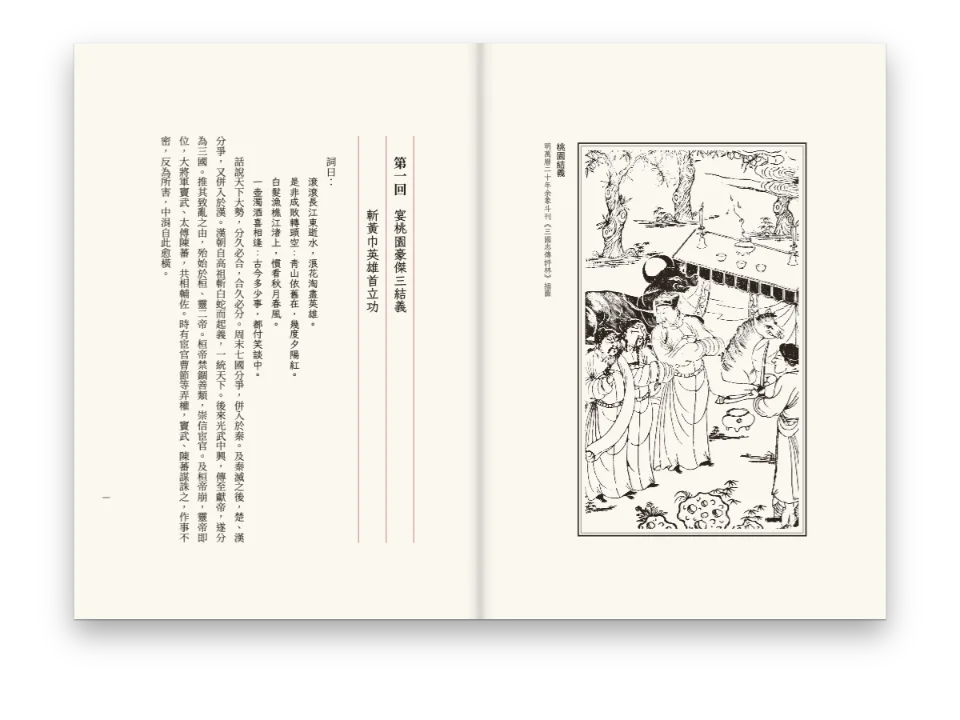
夏目漱石『夢十夜』の第一夜と第二夜を、日本の文庫本として組んだ9ページです。判型は105×148mmのA6、右綴じです。扉は背の左側に一枚だけ置き、2ページ目から本文が上から下へ行を作り、右から読み進めます。1行38字、15行、Shippori Mincho B1の9ptで、行送りは1.75emです。青空文庫が難読の漢字に付けている読みは、半分の大きさのかなでその横に立ちます。各夜の題はグリッドの3行を取り、左ページには小口側に本の題が縦に入り、その下に漢数字のノンブルが付きます。同じ構造のヨーロッパの文庫はNo. 104、中国語の縦組み小説はNo. 075です。
このレシピが答える質問
- 日本語の小説を、文庫本のように縦組み・右綴じで組むには?
- 漢字に、1字ごとまたは語全体に1つの読みでふりがなを付けるには?
- 青空文庫のテキストをPostextの本にするには?
- 日本語の見出しを本文3行分(3行取り)にして、本文をグリッドに乗せたままにするには?
手短な答え
// 'vertical-rl' sets each line top to bottom and the lines from right to left; with the
// binding left to 'auto' the book opens from the right, so page 1 is a left-hand page and
// the spreads read [3 | 2]. locale 'ja' gives the cjk settings Japan's values: they are
// written out below so you can see them, and leaving them out sets the same page.
const page = {
  sizePreset: 'custom', width: mm(105), height: mm(148), dpi: 200, // 文庫判 A6
  backgroundColor: col('paper'),
  // 天 above 地; left is the spine side (the right edge of a left-hand page). The grid
  // grows the margins of each pair alike, so the head stays deeper than the foot.
  margins: { top: mm(15), bottom: mm(11), left: mm(9), right: mm(12), mirror: true },
  pageNumbering: { format: 'japanese-informal' }, // folios 一, 二 … 十, 十一
};
const layout = { layoutType: 'single', writingMode: 'vertical-rl' };
const cjk = {
  grid: { enabled: true, charsPerLine: CHARS, linesPerPage: LINES },
  lineBreak: 'ja-very-strict', // 行頭禁則: no 、。」ー or small kana at the head of a line
  hangingPunctuation: 'allow', // ぶら下げ: a 、。 that would open a line hangs below the last
  paragraphStartBracket: 'half', // ③: a 「 that opens a paragraph fills the indent cell
  ruby: { align: 'jis', overhang: 'kana' }, // JIS 1:2:1, a reading may run onto kana only
};
材料
- 機能
- 縦組みふりがな:漢字に付ける仮名の読み行取りの見出し右綴じの本日本語の改行(禁則処理)日本語の約物のアキ文字グリッド漢数字と仮名の番号青空文庫の取り込み仮名、漢字、ローマ字中国語・日本語・韓国語のフォントルビ:ピンインと注音柱とノンブルページの役割ごとの柱見開きの余白見出しスタイル見出しの階層用紙の色セマンティックカラーパレットPDFの書き出し
- 種類
- Shippori Mincho B1, Noto Sans JP (SIL OFL 1.1)
- 素材
- なし:図はすべてコードで描画
作り方
#1 · ページを回し、字数で数え、jaのタグを付ける
コードは上の手短な答えにあります。layout.writingMode: 'vertical-rl'は、横組みのページを時計回りに90度回したものとして各ページを組みます。page.bindingを'auto'のままにすると、縦組みの本は右綴じになります。1ページ目は奇数ページのままですが背の左側に来て、mirror: trueがそののど側の余白を右に置きます(縦組み、綴じ)。文字グリッドは、版面を縦に9ptの文字38字(120.7mm)、横に15.75ptの行15行(83.3mm)にします。pageの余白は最小値で、グリッドは向かい合う余白を同じ量ずつ広げるため、天は地より4mm深いままです。余白に収まる以上の行数を求めると、グリッドは何も言わずに1行減らします(doc.configWarningsにcjkGridClampedが出ます)。15行が収まるのは、のど9mm、小口12mmだからです。
残りはlocale: 'ja'が日本の本の組み方に設定するので、ここに書いたcjkの4行は何も変えません。このタグが何を選ぶかを見せるために書いてあります。ja-very-strictはJIS X 4051の行頭禁則で、行頭に、。」やー、っのような小書きのかなを置きません。hangingPunctuation: 'allow'は、行頭に来てしまう、や。を前の行の最後の字の下にぶら下げます。文庫は行を詰める代わりにこうします。paragraphStartBracket: 'half'はJLReqの③の形式です。「で始まる段落は1字下げの後半にかぎ括弧を置くので、会話の最初の字が他の段落の最初の字と同じ位置にそろいます(東アジアの組版)。中国語の本はどちらの点でも違い、既定ではぶら下げをせず、括弧の有無にかかわらず段落を2字下げます。
#2 · 各夜の題にグリッドの3行を与える
// lineSpan sets the heading in a band of three body lines, its characters centred in it, so
// the text after it stands on the grid's lines. Aozora marks the titles 5字下げ (中見出し);
// indent counts body characters, whatever the heading's own size.
const night = {
  level: 1, fontFamily: MINCHO, fontWeight: 600, fontSize: pt(12.5),
  lineSpan: 3, indent: em(5), // JLReq §4.1.3
  breakBefore: { enabled: false }, // the nights run on (gotcha: headings-drop-h1-break)
};
日本語の見出しは本文の行を整数で占めます。これが行取りで、見出しのあとの行も前の行と同じグリッドに乗ります。lineSpan: 3は「第一夜」を15.75ptの行3つ分の帯に置き、字をその中央にそろえます。見出しの12.5ptはグリッドを動かしません。6ページでは「第二夜」がページの中ほどに来て、そのあとの本文も前の本文と同じ行に乗ります。indent: em(5)は本文の字数で読みます(五字下げ)。青空文庫のテキストが中見出しをこう示し、JLReqも見出しの字下げをこう数えます(レベルごとの上書き)。
#3 · 本文とルビを青空文庫から持ってくる
2つの夜は青空文庫の図書カード799から取り、postext-portスキルのaozora.pyで変換しています。変換スクリプトはファイルをCP932として読み、仰向《あおむき》と書かれた読みを、語全体に一続きのかなを振るグループルビ{仰向|あおむき}に変え、[#5字下げ]…[#「第一夜」は中見出し]を見出しに変えます。jaの文書では、ルビはJIS X 4051に従います。親文字より短いルビは1:2:1の比で親文字に沿って割り付け、長いルビは隣のかなには掛かっても漢字には掛かりません(圏点と傍線、ルビ、割注)。行送り1.75emで行間は6.75ptとなり、4.5ptのルビが入る余地ができます。
#4 · 柱を小口側に縦に、ノンブルを漢数字に
// anchor 'outer' is the fore-edge: the left margin of an odd page, the right of an even one
// in a book bound on the right. The 柱 starts two characters below the head of the text.
const foreEdge = (id, content, parity, edge, y, pages) => ({
  kind: 'text', id, content, parity, pages, writingMode: 'vertical-rl',
  fontFamily: GOTHIC, fontSize: pt(7), letterSpacing: pt(1), color: col('muted'),
  overflow: 'clip', placement: { anchor: { to: 'outer', edge }, offset: { y: em(y) } },
});
const header = { elements: [
  foreEdge('hashira', '{title}', 'odd', 'top', 2, 'body'), // never on the opening page
  foreEdge('folio', '{pageNumber}', 'all', 'bottom', -2, 'all'),
] };
const none = { elements: [] };
縦組みの文庫では、柱は小さく、外側の余白に置きます。anchor.to: 'outer'は要素をそこに置きます。右綴じの本では、奇数ページなら左の余白、偶数ページなら右の余白です。writingMode: 'vertical-rl'はそれを上から下へ組みます(縦組みのテキスト要素)。題「夢十夜」は左ページにだけ入り(parity: 'odd')、pages: 'body'にすれば章の始まるページからは外れます。pageNumbering.format: 'japanese-informal'はノンブルを二、三…九と刷ります(ノンブル)。
#5 · 扉を仕上がりの中央に置く
// A design on a vertical page is laid out in the flow frame: x runs down the page and y
// across it, leftwards from the right edge. Anchored to the page (the trim), the frame and
// the title stand on the page's axis, 52.5 mm in, whichever side the spine is on.
const at = (down, across) => ({ anchor: { to: 'page', edge: 'top-left' },
  offset: { x: mm(down), y: mm(across) } });
const AXIS = 105 / 2; // mm
const TITLE = 28 * PT; // mm: 夢十夜 in 28 pt, three characters and two 8 pt gaps down
const frame = { kind: 'box', id: 'frame', placement: { ...at(30, AXIS - 23),
  size: { width: mm(88), height: mm(46) } }, // 88 mm down, 46 mm across
  style: { borderColor: col('vermilion'), borderWidth: pt(0.75) } };
const titlePage = {
  id: 'title', numbered: false, toc: false, span: 'page', header: none, footer: { elements: [
    // The colophon across the foot, in the edition's language: each \n in the attribute
    // starts a line; the box hangs from the foot of the page, centred.
    // Noto Sans JP: Shippori Mincho B1 has no ō or ū for the rōmaji.
    { kind: 'text', id: 'colophon', content: '{attr.colophon}', fontFamily: GOTHIC,
      fontSize: pt(5.25), lineHeight: 1.45, color: col('muted'), overflow: 'wrap',
      align: 'center', placement: { anchor: { to: 'page', edge: 'bottom' },
        offset: { y: mm(-4) }, size: { width: mm(84) } } }] },
  breakBefore: { enabled: true, parity: 'any' },
  advancedDesign: { enabled: true, minHeight: lines(LINES), slot: { elements: [
    frame,
    { kind: 'text', id: 'book', content: '{titleText}', fontFamily: MINCHO, fontWeight: 800,
      fontSize: pt(28), lineHeight: 1, letterSpacing: pt(8), color: col('ink'),
      placement: at(44, AXIS - TITLE / 2) },
    { kind: 'text', id: 'author', content: '{author}', fontFamily: MINCHO, fontSize: pt(11),
      letterSpacing: pt(4), color: col('ink'), placement: at(92, AXIS + TITLE / 2 + 4) },
  ] } },
};
扉は独自のスタイルを持つレベル1の見出し# 夢十夜 {style="title" …}で、そのデザインがページを埋めます。要素は版面ではなくページそのものに固定します。左右対称にしたページの版面は中心から1.5mmずれているからです。xはページを下へ、yは右端から横へ進むので、AXISは背のどちら側でもページ幅の半分になります。フッターの奥付はNoto Sans JPで組みます。Shippori Mincho B1にはōもūもなく、PDFではSōsekiの字が空の箱になってしまいます。
#6 · ウェイトごとに、組む文字の分だけ読み込む
// Fontsource cuts a Japanese face into about 120 files; loadCjkFonts fetches the ones the
// text touches (gotcha: cjk-fonts-slices). vertical: true loads the face's vertical forms
// for the canvas: 、。「」ー and small kana such as っ stand differently down a line.
const title = markdown.match(/^title: "(.*)"$/m)[1];
const author = markdown.match(/^author: "(.*)"$/m)[1];
const heads = markdown.match(/^# [^{\n]*/gm).join('');
await loadFonts(FONTS, markdown); // the Latin files: the colophon, with ō and ū
await loadCjkFonts({ [MINCHO]: ['400'] }, markdown, { vertical: true });
await loadCjkFonts({ [MINCHO]: ['600', '800'] }, `${heads}${title}${author}`);
await loadCjkFonts({ [GOTHIC]: ['400'] }, `${title}一二三四五六七八九十`, { vertical: true });
Fontsourceは日本語書体の各ウェイトを、文字の範囲ごとに分けたおよそ120のファイルで配信します。loadCjkFontsは、渡されたテキストが触れるファイルだけを取ってきます。本文のウェイトには見本全体をvertical: true付きで渡します。これでCanvas用に書体の縦組み用字形も読み込まれます。、。「」とー、それに縦組みでは字面の右上に立つ小書きのかなです。renderToPdfはcjkPdfProviderを受け取り、同じファイルをサブセットとして埋め込みます。
レシピの全体
// ═══ Postext Cookbook · Nº 117 · A bunko novel set vertically, with furigana ════════ // https://postext.dev/en/cookbook/bunko-novel-furigana // Code: MIT · Text: 夏目漱石『夢十夜』, Aozora Bunko 799 (public domain) · Pictures: none // Fonts: Shippori Mincho B1, Noto Sans JP (SIL OFL 1.1) · Needs postext ≥ 1.16.1 import { buildDocument, renderPageToCanvas, clearMeasurementCache, loadVerticalAlternates, } from 'https://esm.sh/postext'; import { renderToPdf, decompressWoff2 } from 'https://esm.sh/postext-pdf'; const LANG = 'en'; // @lang: the language of the colophon; the novel is Japanese in both const RECIPE = 'bunko-novel-furigana'; // ─── 1 · Design ───────────────────────────────────────────────────────────── // #region palette: sumi ink on a cream bunko stock, one vermilion const palette = { ink: '#1f1b18', // the text: a warm sumi black vermilion: '#a8392b', // 朱: the frame of the title page muted: '#6b635b', // the hashira and the folios paper: '#fbf7ee', // bunko paper is cream, not white }; const col = (id) => ({ hex: palette[id], model: 'hex', paletteId: id }); const colorPalette = [ ...Object.entries(palette).map(([id, hex]) => ({ id, name: id, value: { hex, model: 'hex' } })), { id: 'main-color', name: 'defaults', value: { hex: palette.vermilion, model: 'hex' } }, ]; // #endregion const [MINCHO, GOTHIC] = ['Shippori Mincho B1', 'Noto Sans JP']; const [BODY, LEAD, CHARS, LINES] = [9, 15.75, 38, 15]; // pt, pt: 38字 × 15行 at 1.75 em const lines = (n) => pt(n * LEAD); // n lines across the page const PT = 25.4 / 72; // mm in a point // #region answer: a bunko page, 38 characters down 15 lines, bound on the right // 'vertical-rl' sets each line top to bottom and the lines from right to left; with the // binding left to 'auto' the book opens from the right, so page 1 is a left-hand page and // the spreads read [3 | 2]. locale 'ja' gives the cjk settings Japan's values: they are // written out below so you can see them, and leaving them out sets the same page. const page = { sizePreset: 'custom', width: mm(105), height: mm(148), dpi: 200, // 文庫判 A6 backgroundColor: col('paper'), // 天 above 地; left is the spine side (the right edge of a left-hand page). The grid // grows the margins of each pair alike, so the head stays deeper than the foot. margins: { top: mm(15), bottom: mm(11), left: mm(9), right: mm(12), mirror: true }, pageNumbering: { format: 'japanese-informal' }, // folios 一, 二 … 十, 十一 }; const layout = { layoutType: 'single', writingMode: 'vertical-rl' }; const cjk = { grid: { enabled: true, charsPerLine: CHARS, linesPerPage: LINES }, lineBreak: 'ja-very-strict', // 行頭禁則: no 、。」ー or small kana at the head of a line hangingPunctuation: 'allow', // ぶら下げ: a 、。 that would open a line hangs below the last paragraphStartBracket: 'half', // ③: a 「 that opens a paragraph fills the indent cell ruby: { align: 'jis', overhang: 'kana' }, // JIS 1:2:1, a reading may run onto kana only }; // #endregion // #region nights: each night's title takes three body lines (3行取り), five characters down // lineSpan sets the heading in a band of three body lines, its characters centred in it, so // the text after it stands on the grid's lines. Aozora marks the titles 5字下げ (中見出し); // indent counts body characters, whatever the heading's own size. const night = { level: 1, fontFamily: MINCHO, fontWeight: 600, fontSize: pt(12.5), lineSpan: 3, indent: em(5), // JLReq §4.1.3 breakBefore: { enabled: false }, // the nights run on (gotcha: headings-drop-h1-break) }; // #endregion // #region hashira: the title down the fore-edge of left-hand pages, kanji folios below // anchor 'outer' is the fore-edge: the left margin of an odd page, the right of an even one // in a book bound on the right. The 柱 starts two characters below the head of the text. const foreEdge = (id, content, parity, edge, y, pages) => ({ kind: 'text', id, content, parity, pages, writingMode: 'vertical-rl', fontFamily: GOTHIC, fontSize: pt(7), letterSpacing: pt(1), color: col('muted'), overflow: 'clip', placement: { anchor: { to: 'outer', edge }, offset: { y: em(y) } }, }); const header = { elements: [ foreEdge('hashira', '{title}', 'odd', 'top', 2, 'body'), // never on the opening page foreEdge('folio', '{pageNumber}', 'all', 'bottom', -2, 'all'), ] }; const none = { elements: [] }; // #endregion // #region title-page: the 扉, a vermilion frame round the title and the author // A design on a vertical page is laid out in the flow frame: x runs down the page and y // across it, leftwards from the right edge. Anchored to the page (the trim), the frame and // the title stand on the page's axis, 52.5 mm in, whichever side the spine is on. const at = (down, across) => ({ anchor: { to: 'page', edge: 'top-left' }, offset: { x: mm(down), y: mm(across) } }); const AXIS = 105 / 2; // mm const TITLE = 28 * PT; // mm: 夢十夜 in 28 pt, three characters and two 8 pt gaps down const frame = { kind: 'box', id: 'frame', placement: { ...at(30, AXIS - 23), size: { width: mm(88), height: mm(46) } }, // 88 mm down, 46 mm across style: { borderColor: col('vermilion'), borderWidth: pt(0.75) } }; const titlePage = { id: 'title', numbered: false, toc: false, span: 'page', header: none, footer: { elements: [ // The colophon across the foot, in the edition's language: each \n in the attribute // starts a line; the box hangs from the foot of the page, centred. // Noto Sans JP: Shippori Mincho B1 has no ō or ū for the rōmaji. { kind: 'text', id: 'colophon', content: '{attr.colophon}', fontFamily: GOTHIC, fontSize: pt(5.25), lineHeight: 1.45, color: col('muted'), overflow: 'wrap', align: 'center', placement: { anchor: { to: 'page', edge: 'bottom' }, offset: { y: mm(-4) }, size: { width: mm(84) } } }] }, breakBefore: { enabled: true, parity: 'any' }, advancedDesign: { enabled: true, minHeight: lines(LINES), slot: { elements: [ frame, { kind: 'text', id: 'book', content: '{titleText}', fontFamily: MINCHO, fontWeight: 800, fontSize: pt(28), lineHeight: 1, letterSpacing: pt(8), color: col('ink'), placement: at(44, AXIS - TITLE / 2) }, { kind: 'text', id: 'author', content: '{author}', fontFamily: MINCHO, fontSize: pt(11), letterSpacing: pt(4), color: col('ink'), placement: at(92, AXIS + TITLE / 2 + 4) }, ] } }, }; // #endregion const config = () => ({ // a factory: the engine caches resolved configs per object locale: 'ja', // written out, never LANG (gotcha: ja-locale-tag) colorPalette, page, layout, cjk, bodyText: { fontFamily: MINCHO, fontSize: pt(BODY), lineHeight: pt(LEAD), color: col('ink'), boldColor: col('ink'), italicColor: col('ink'), referenceColor: col('ink'), textAlign: 'justify', firstLineIndent: em(1), indentAfterHeading: true, // 一字下げ }, headings: { fontFamily: MINCHO, color: col('ink'), levels: [night] }, headingStyles: [titlePage], header, footer: none, }); // ─── 2 · Content ──────────────────────────────────────────────────────────── const markdown = String.raw`---Markdownの見本 · 77行 · content.en.md
title: "夢十夜" author: "夏目漱石" --- # 夢十夜 {style="title" colophon="Natsume Sōseki, 夢十夜 (Ten Nights of Dreams, 1908), nights one and two.\nText: Aozora Bunko 799, public domain.\nSet in Shippori Mincho B1 and Noto Sans JP (SIL OFL)."} # 第一夜 こんな夢を見た。 腕組をして枕元に{坐|すわ}っていると、{仰向|あおむき}に寝た女が、静かな声でもう死にますと云う。女は長い髪を枕に敷いて、{輪郭|りんかく}の{柔|やわ}らかな{瓜実|うりざね}{顔|がお}をその中に横たえている。真白な頬の底に温かい血の色がほどよく差して、{唇|くちびる}の色は無論赤い。とうてい死にそうには見えない。しかし女は静かな声で、もう死にますと{判然|はっきり}云った。自分も{確|たしか}にこれは死ぬなと思った。そこで、そうかね、もう死ぬのかね、と上から{覗|のぞ}き込むようにして聞いて見た。死にますとも、と云いながら、女はぱっちりと眼を{開|あ}けた。大きな{潤|うるおい}のある眼で、長い{睫|まつげ}に包まれた中は、ただ一面に真黒であった。その真黒な{眸|ひとみ}の奥に、自分の姿が{鮮|あざやか}に浮かんでいる。 自分は{透|す}き{徹|とお}るほど深く見えるこの黒眼の{色沢|つや}を眺めて、これでも死ぬのかと思った。それで、ねんごろに枕の{傍|そば}へ口を付けて、死ぬんじゃなかろうね、大丈夫だろうね、とまた聞き返した。すると女は黒い眼を眠そうに{睜|みはっ}たまま、やっぱり静かな声で、でも、死ぬんですもの、仕方がないわと云った。 じゃ、{私|わたし}の顔が見えるかいと{一心|いっしん}に聞くと、見えるかいって、そら、そこに、写ってるじゃありませんかと、にこりと笑って見せた。自分は黙って、顔を枕から離した。腕組をしながら、どうしても死ぬのかなと思った。 しばらくして、女がまたこう云った。 「死んだら、{埋|う}めて下さい。大きな真珠貝で穴を掘って。そうして天から落ちて来る星の{破片|かけ}を{墓標|はかじるし}に置いて下さい。そうして墓の傍に待っていて下さい。また{逢|あ}いに来ますから」 自分は、いつ逢いに来るかねと聞いた。 「日が出るでしょう。それから日が沈むでしょう。それからまた出るでしょう、そうしてまた沈むでしょう。――赤い日が東から西へ、東から西へと落ちて行くうちに、――あなた、待っていられますか」 自分は黙って{首肯|うなず}いた。女は静かな調子を一段張り上げて、 「百年待っていて下さい」と思い切った声で云った。 「百年、私の墓の{傍|そば}に坐って待っていて下さい。きっと逢いに来ますから」 自分はただ待っていると答えた。すると、黒い{眸|ひとみ}のなかに{鮮|あざやか}に見えた自分の姿が、ぼうっと{崩|くず}れて来た。静かな水が動いて写る影を乱したように、流れ出したと思ったら、女の眼がぱちりと閉じた。長い{睫|まつげ}の間から涙が頬へ垂れた。――もう死んでいた。 自分はそれから庭へ下りて、真珠貝で穴を掘った。真珠貝は大きな{滑|なめら}かな{縁|ふち}の{鋭|する}どい貝であった。土をすくうたびに、貝の裏に月の光が差してきらきらした。{湿|しめ}った土の{匂|におい}もした。穴はしばらくして掘れた。女をその中に入れた。そうして柔らかい土を、上からそっと掛けた。掛けるたびに真珠貝の裏に月の光が差した。 それから星の{破片|かけ}の落ちたのを拾って来て、かろく土の上へ乗せた。星の破片は丸かった。長い間大空を落ちている{間|ま}に、{角|かど}が取れて{滑|なめら}かになったんだろうと思った。{抱|だ}き{上|あ}げて土の上へ置くうちに、自分の胸と手が少し暖くなった。 自分は{苔|こけ}の上に坐った。これから百年の間こうして待っているんだなと考えながら、腕組をして、丸い{墓石|はかいし}を眺めていた。そのうちに、女の云った通り日が東から出た。大きな赤い日であった。それがまた女の云った通り、やがて西へ落ちた。赤いまんまでのっと落ちて行った。一つと自分は{勘定|かんじょう}した。 しばらくするとまた{唐紅|からくれない}の{天道|てんとう}がのそりと{上|のぼ}って来た。そうして黙って沈んでしまった。二つとまた勘定した。 自分はこう云う風に一つ二つと勘定して行くうちに、赤い日をいくつ見たか分らない。勘定しても、勘定しても、しつくせないほど赤い日が頭の上を通り越して行った。それでも百年がまだ来ない。しまいには、{苔|こけ}の{生|は}えた丸い石を眺めて、自分は女に{欺|だま}されたのではなかろうかと思い出した。 すると石の下から{斜|はす}に自分の方へ向いて青い{茎|くき}が伸びて来た。見る間に長くなってちょうど自分の胸のあたりまで来て留まった。と思うと、すらりと{揺|ゆら}ぐ{茎|くき}の{頂|いただき}に、心持首を{傾|かたぶ}けていた細長い一輪の{蕾|つぼみ}が、ふっくらと{弁|はなびら}を開いた。真白な{百合|ゆり}が鼻の先で骨に{徹|こた}えるほど匂った。そこへ{遥|はるか}の上から、ぽたりと{露|つゆ}が落ちたので、花は自分の重みでふらふらと動いた。自分は首を前へ出して冷たい露の{滴|したた}る、白い{花弁|はなびら}に{接吻|せっぷん}した。自分が百合から顔を離す{拍子|ひょうし}に思わず、遠い空を見たら、{暁|あかつき}の星がたった一つ{瞬|またた}いていた。 「百年はもう来ていたんだな」とこの時始めて気がついた。 # 第二夜 こんな夢を見た。 {和尚|おしょう}の室を{退|さ}がって、{廊下|ろうか}{伝|づた}いに自分の部屋へ帰ると{行灯|あんどう}がぼんやり{点|とも}っている。{片膝|かたひざ}を{座蒲団|ざぶとん}の上に突いて、灯心を{掻|か}き立てたとき、花のような{丁子|ちょうじ}がぱたりと朱塗の台に落ちた。同時に部屋がぱっと明かるくなった。 {襖|ふすま}の{画|え}は{蕪村|ぶそん}の筆である。黒い柳を濃く薄く、{遠近|おちこち}とかいて、{寒|さ}むそうな漁夫が{笠|かさ}を{傾|かたぶ}けて土手の上を通る。{床|とこ}には{海中文殊|かいちゅうもんじゅ}の{軸|じく}が{懸|かか}っている。{焚|た}き残した線香が暗い方でいまだに{臭|にお}っている。広い寺だから{森閑|しんかん}として、{人気|ひとけ}がない。黒い{天井|てんじょう}に差す{丸行灯|まるあんどう}の丸い影が、{仰向|あおむ}く{途端|とたん}に生きてるように見えた。 {立膝|たてひざ}をしたまま、左の手で{座蒲団|ざぶとん}を{捲|めく}って、右を差し込んで見ると、思った所に、ちゃんとあった。あれば安心だから、蒲団をもとのごとく{直|なお}して、その上にどっかり{坐|すわ}った。 お前は{侍|さむらい}である。侍なら悟れぬはずはなかろうと{和尚|おしょう}が云った。そういつまでも悟れぬところをもって見ると、御前は侍ではあるまいと言った。人間の{屑|くず}じゃと言った。ははあ怒ったなと云って笑った。{口惜|くや}しければ悟った証拠を持って来いと云ってぷいと{向|むこう}をむいた。{怪|け}しからん。 隣の広間の床に{据|す}えてある置時計が次の{刻|とき}を打つまでには、きっと悟って見せる。悟った上で、今夜また{入室|にゅうしつ}する。そうして和尚の首と悟りと{引替|ひきかえ}にしてやる。悟らなければ、和尚の命が取れない。どうしても悟らなければならない。自分は侍である。 もし悟れなければ{自刃|じじん}する。侍が{辱|はずか}しめられて、生きている訳には行かない。{綺麗|きれい}に死んでしまう。 こう考えた時、自分の手はまた思わず{布団|ふとん}の下へ{這入|はい}った。そうして{朱鞘|しゅざや}の短刀を{引|ひ}き{摺|ず}り出した。ぐっと{束|つか}を握って、赤い鞘を向へ払ったら、冷たい{刃|は}が一度に暗い部屋で光った。{凄|すご}いものが手元から、すうすうと逃げて行くように思われる。そうして、ことごとく{切先|きっさき}へ集まって、{殺気|さっき}を一点に{籠|こ}めている。自分はこの鋭い刃が、無念にも針の頭のように{縮|ちぢ}められて、{九寸|くすん}{五分|ごぶ}の先へ来てやむをえず{尖|とが}ってるのを見て、たちまちぐさりとやりたくなった。{身体|からだ}の血が右の手首の方へ流れて来て、握っている束がにちゃにちゃする。{唇|くちびる}が{顫|ふる}えた。 短刀を鞘へ収めて右脇へ引きつけておいて、それから{全伽|ぜんが}を組んだ。――{趙州|じょうしゅう}曰く{無|む}と。無とは何だ。{糞坊主|くそぼうず}めとはがみをした。 奥歯を強く{咬|か}み{締|し}めたので、鼻から熱い息が荒く出る。こめかみが釣って痛い。眼は普通の倍も大きく開けてやった。 {懸物|かけもの}が見える。行灯が見える。{畳|たたみ}が見える。和尚の{薬缶頭|やかんあたま}がありありと見える。{鰐口|わにぐち}を{開|あ}いて{嘲笑|あざわら}った声まで聞える。{怪|け}しからん坊主だ。どうしてもあの薬缶を首にしなくてはならん。悟ってやる。無だ、無だと舌の根で念じた。無だと云うのにやっぱり線香の{香|におい}がした。何だ線香のくせに。 自分はいきなり{拳骨|げんこつ}を固めて自分の頭をいやと云うほど{擲|なぐ}った。そうして奥歯をぎりぎりと{噛|か}んだ。{両腋|りょうわき}から汗が出る。背中が棒のようになった。{膝|ひざ}の{接目|つぎめ}が急に痛くなった。膝が折れたってどうあるものかと思った。けれども痛い。苦しい。{無|む}はなかなか出て来ない。出て来ると思うとすぐ痛くなる。腹が立つ。無念になる。非常に{口惜|くや}しくなる。涙がほろほろ出る。ひと{思|おもい}に身を{巨巌|おおいわ}の上にぶつけて、骨も肉もめちゃめちゃに{砕|くだ}いてしまいたくなる。 それでも我慢してじっと坐っていた。{堪|た}えがたいほど切ないものを胸に{盛|い}れて忍んでいた。その切ないものが{身体|からだ}中の筋肉を下から持上げて、毛穴から外へ吹き出よう吹き出ようと{焦|あせ}るけれども、どこも一面に{塞|ふさ}がって、まるで出口がないような残刻極まる状態であった。 そのうちに頭が変になった。{行灯|あんどう}も{蕪村|ぶそん}の{画|え}も、畳も、{違棚|ちがいだな}も有って無いような、無くって有るように見えた。と云って{無|む}はちっとも{現前|げんぜん}しない。ただ{好加減|いいかげん}に坐っていたようである。ところへ{忽然|こつぜん}隣座敷の時計がチーンと鳴り始めた。 はっと思った。右の手をすぐ短刀にかけた。時計が二つ目をチーンと打った。`; // content.<lang>.md: the same Japanese text in both // ─── 3 · Fonts ────────────────────────────────────────────────────────────── const FONTS = { 'Shippori Mincho B1': ['400', '600', '800'], // the text and furigana; 一; the title 'Noto Sans JP': ['400'], // the hashira, the folios and the colophon }; // ─── 4 · Build & show ─────────────────────────────────────────────────────── // #region voices: each face loads the files that hold the characters it sets // Fontsource cuts a Japanese face into about 120 files; loadCjkFonts fetches the ones the // text touches (gotcha: cjk-fonts-slices). vertical: true loads the face's vertical forms // for the canvas: 、。「」ー and small kana such as っ stand differently down a line. const title = markdown.match(/^title: "(.*)"$/m)[1]; const author = markdown.match(/^author: "(.*)"$/m)[1]; const heads = markdown.match(/^# [^{\n]*/gm).join(''); await loadFonts(FONTS, markdown); // the Latin files: the colophon, with ō and ū await loadCjkFonts({ [MINCHO]: ['400'] }, markdown, { vertical: true }); await loadCjkFonts({ [MINCHO]: ['600', '800'] }, `${heads}${title}${author}`); await loadCjkFonts({ [GOTHIC]: ['400'] }, `${title}一二三四五六七八九十`, { vertical: true }); // #endregion const doc = await buildWithFonts(() => buildDocument({ markdown }, config()), markdown); showBook(doc, { title: t({ en: 'A bunko novel set vertically, with furigana', es: 'Una novela en formato bunko, en vertical y con furigana' }) }); offerPdf(() => renderToPdf(doc, { fontProvider: cjkPdfProvider }), `${RECIPE}.pdf`);キット · core, fonts, viewer, pdf, cjk:全レシピ共通 · 453行
// ─── Kit ── helpers shared by every Cookbook recipe · postext.dev/cookbook ───── // ─── Kit · core v1 ── the same in every recipe · postext.dev/cookbook ───────── function mm(value) { return { value, unit: 'mm' }; } function pt(value) { return { value, unit: 'pt' }; } function em(value) { return { value, unit: 'em' }; } /** The sample language's string: t({ en: 'Figure', es: 'Figura' }). */ function t(strings) { return strings[LANG] ?? Object.values(strings)[0]; } /** A file in this recipe's assets folder, served from the Postext repo by jsDelivr. */ function asset(file) { return `https://cdn.jsdelivr.net/gh/drnachio/postext@main/cookbook/${RECIPE}/assets/${file}`; } // ─── Kit · fonts v1 ── the same in every recipe · postext.dev/cookbook ──────── // Postext measures text with the faces the browser has loaded, and caches the // widths, so every face must be ready before the first build. Faces come from // Fontsource: the same static files the PDF embeds, so screen and PDF agree. /** faces = { 'Family Name': ['400', '400i', '700'] }. `text` is the sample: * letters beyond Latin-1 (č, ł, ő…) also load the latin-ext files. With * `optional`, a face Fontsource does not ship is skipped instead of failing. * Resolves to the number of faces added. */ async function loadFonts(faces, text = '', { optional = false } = {}) { kitStatus('Loading fonts…'); const ranges = { latin: 'U+0000-00FF,U+0131,U+0152-0153,U+02BB-02BC,U+02C6,U+02DA,U+02DC,U+0304,U+0308,U+0329,' + 'U+2000-206F,U+20AC,U+2122,U+2191,U+2193,U+2212,U+2215,U+FEFF,U+FFFD', 'latin-ext': 'U+0100-02BA,U+02BD-02C5,U+02C7-02CC,U+02CE-02D7,U+02DD-02FF,U+0304,U+0308,U+0329,' + 'U+1D00-1DBF,U+1E00-1E9F,U+1EF2-1EFF,U+2020,U+20A0-20AB,U+20AD-20C0,U+2113,U+2C60-2C7F,U+A720-A7FF', }; const subsets = /[Ā-˿Ḁ-ỿ]/.test(text) ? ['latin', 'latin-ext'] : ['latin']; const jobs = []; let added = 0; for (const [family, specs] of Object.entries(faces)) { const id = fontsourceId(family); const meta = optional ? await fontsourceMeta(family) : null; for (const spec of new Set(specs)) { const weight = parseInt(spec, 10); const style = spec.endsWith('i') ? 'italic' : 'normal'; if (hasFace(family, weight, style)) continue; if (optional && !(meta?.weights.includes(weight) && meta.styles.includes(style))) continue; for (const subset of subsets) { const url = `https://cdn.jsdelivr.net/npm/@fontsource/${id}@5/files/${id}-${subset}-${weight}-${style}.woff2`; const face = new FontFace(family, `url(${url}) format('woff2')`, { weight: String(weight), style, unicodeRange: ranges[subset] }); jobs.push(face.load().then((ready) => { document.fonts.add(ready); added++; }, () => { if (subset === 'latin' && !optional) throw new Error(`Fontsource has no ${family} ${weight} ${style}`); })); } } } await Promise.all(jobs).catch((error) => { kitFail(error); throw error; }); return added; } /** Runs `build` (a buildDocument or buildBundle call) and checks the faces * the pages use. A regular face missing from FONTS is loaded with a warning; * bold and italic variants are loaded when the family ships them. Then the * measurement caches are cleared and the build runs again. */ async function buildWithFonts(build, text = '') { const tried = new Set(); for (let round = 0; round < 3; round++) { kitStatus('Laying out…'); await new Promise(requestAnimationFrame); // let the status paint first const result = await Promise.resolve().then(build).catch((error) => { kitFail(error); throw error; }); const wanted = { base: {}, variants: {} }; for (const { font, base } of [result].flat().flatMap(fontStringsOf)) { const { family, weight, style } = parseFont(font); const key = `${family}|${weight}|${style}`; if (tried.has(key) || hasFace(family, weight, style)) continue; tried.add(key); (wanted[base ? 'base' : 'variants'][family] ??= []).push(`${weight}${style === 'italic' ? 'i' : ''}`); } if (Object.keys(wanted.base).length) { console.warn(`[cookbook] FONTS does not list ${JSON.stringify(wanted.base)}: loading them.`); } const added = await loadFonts(wanted.base, text) + await loadFonts(wanted.variants, text, { optional: true }); if (added === 0) return result; clearMeasurementCache(); } throw new Error('The fonts did not settle after three builds.'); } /** Every font string of the layout. `base` marks a block's own face; its * bold, italic and bold-italic variants are listed whether or not used. */ function fontStringsOf(doc) { const found = new Map(); const walk = (node) => { if (!node || typeof node !== 'object') return; if (Array.isArray(node)) { node.forEach(walk); return; } for (const [key, value] of Object.entries(node)) { if (typeof value === 'string' && /fontString$/i.test(key)) { found.set(value, found.get(value) || key === 'fontString'); } else if (value && typeof value === 'object') walk(value); } }; walk(doc.pages); walk(doc.blocks); return [...found].map(([font, base]) => ({ font, base })); } /** '700 37.5px Open Sans' / 'italic 400 13px "Source Serif 4"' → { family, weight, style }. * A string with no weight ('95.8px Young Serif', from a design text) is 400. */ function parseFont(font) { const m = /^(?:(italic|oblique)\s+)?(?:small-caps\s+)?(?:(\d+|bold|normal)\s+)?[\d.]+px\s+(.+)$/.exec(font.trim()); if (!m) throw new Error(`Unexpected font string: ${font}`); const weight = m[2] === 'bold' ? 700 : !m[2] || m[2] === 'normal' ? 400 : Number(m[2]); return { family: m[3].replace(/^["']|["']$/g, ''), weight, style: m[1] ? 'italic' : 'normal' }; } /** True when a loaded FontFace covers exactly this family, weight and style * (document.fonts.check() is also true for families nobody declared). */ function hasFace(family, weight, style) { for (const face of document.fonts) { if (face.status !== 'loaded' || face.style !== style) continue; if (face.family.replace(/^["']|["']$/g, '') !== family) continue; const [low, high = low] = face.weight.split(' ').map(Number); if (weight >= low && weight <= high) return true; } return false; } /** Fontsource's id for a family: 'Source Serif 4' → 'source-serif-4'. */ function fontsourceId(family) { return family.toLowerCase().replace(/\s+/g, '-'); } /** The weights and styles a family ships ({ weights: [400, 700], styles: ['normal', 'italic'] }), or null. */ function fontsourceMeta(family) { fontsourceMeta.cache ??= new Map(); const id = fontsourceId(family); if (!fontsourceMeta.cache.has(id)) { fontsourceMeta.cache.set(id, fetch(`https://api.fontsource.org/v1/fonts/${id}`) .then((res) => (res.ok ? res.json() : null), () => null)); } return fontsourceMeta.cache.get(id); } // ─── Kit · viewer v1 ── the same in every recipe · postext.dev/cookbook ─────── /** Shows the pages as facing spreads on a dark desk: the first page is a * recto on its own, then verso | recto pairs, as in a bound book. Pages * are painted when they scroll near the screen. */ function showPages(docs, { title, width = 460 } = {}) { const root = viewer(title); const pages = [docs].flat().flatMap((doc) => doc.pages.map((page) => ({ doc, page, n: (doc.pageIndexOffset ?? 0) + page.index }))); const spreads = []; let verso = null; for (const p of pages) { if (p.n % 2 === 1) { if (verso) spreads.push([verso, null]); verso = p; } else { spreads.push([verso, p]); verso = null; } } if (verso) spreads.push([verso, null]); const density = Math.min(window.devicePixelRatio || 1, 2); showPages.painter?.disconnect(); const painter = new IntersectionObserver((entries) => { for (const { isIntersecting, target } of entries) { if (!isIntersecting) continue; painter.unobserve(target); const { doc, page } = target.postext; renderPageToCanvas(page, doc, target, { scale: (width * density) / page.width }); } }, { rootMargin: '800px' }); showPages.painter = painter; root.replaceChildren(...spreads.map((pair) => { const spread = document.createElement('div'); spread.className = 'pt-spread'; for (const p of pair) { const figure = document.createElement('figure'); if (p) { const label = p.page.pageLabel || String(p.n + 1); const canvas = document.createElement('canvas'); canvas.postext = p; canvas.style.aspectRatio = `${p.page.width} / ${p.page.height}`; canvas.setAttribute('role', 'img'); canvas.setAttribute('aria-label', `Page ${label}`); const folio = document.createElement('figcaption'); folio.textContent = label; figure.append(canvas, folio); painter.observe(canvas); } else figure.className = 'pt-blank'; spread.append(figure); } return spread; })); kitStatus(`${pages.length} ${pages.length === 1 ? 'page' : 'pages'}`); document.documentElement.dataset.postext = 'ready'; return pages.length; } /** The desk, the bar and the error reporting, created once. */ function viewer(title) { if (!document.getElementById('pt-kit')) { document.head.insertAdjacentHTML('beforeend', `<style id="pt-kit"> :root { color-scheme: dark; } body { margin: 0; background: #0e1014; color: #b9bcc4; font: 13px/1.45 system-ui, sans-serif; } #pt-bar { position: sticky; top: 0; z-index: 1; display: flex; flex-wrap: wrap; align-items: center; gap: 6px 16px; padding: 10px 16px; background: rgb(14 16 20 / .92); backdrop-filter: blur(6px); border-bottom: 1px solid #23262d; } #pt-bar strong { color: #f4f1ea; font-weight: 600; } #pt-actions { display: flex; gap: 12px; margin-left: auto; } #pt-actions a, #pt-actions button { color: #d8a21a; font: inherit; background: none; border: 0; padding: 0; cursor: pointer; } #pages { display: grid; justify-items: center; gap: 48px; padding: 32px 16px 72px; } .pt-spread { display: flex; } .pt-spread figure { margin: 0; width: min(460px, 44vw); } .pt-spread canvas { display: block; width: 100%; background: #fff; box-shadow: 0 1px 2px rgb(0 0 0 / .5), 0 22px 44px -16px rgb(0 0 0 / .8); } .pt-spread figure:first-child canvas { box-shadow: inset -14px 0 14px -14px rgb(0 0 0 / .18), 0 1px 2px rgb(0 0 0 / .5), 0 22px 44px -16px rgb(0 0 0 / .8); } .pt-spread figcaption { margin-top: 10px; text-align: center; font: 600 10px/1 system-ui, sans-serif; letter-spacing: .18em; text-transform: uppercase; color: #6c7079; } .pt-blank { visibility: hidden; } @media (max-width: 760px) { .pt-spread { flex-direction: column; gap: 32px; } .pt-spread figure { width: min(460px, 92vw); } .pt-blank { display: none; } } </style>`); document.body.insertAdjacentHTML('afterbegin', '<header id="pt-bar"><strong id="pt-title"></strong><span id="pt-status" role="status"></span><span id="pt-actions"></span></header>'); document.getElementById('pt-title').textContent = document.title || 'Postext'; addEventListener('error', (event) => kitFail(event.error ?? event.message)); addEventListener('unhandledrejection', (event) => kitFail(event.reason)); } if (title) document.getElementById('pt-title').textContent = title; return document.getElementById('pages') ?? document.body.appendChild(Object.assign(document.createElement('main'), { id: 'pages' })); } function kitStatus(text) { viewer(); document.getElementById('pt-status').textContent = text; } function kitFail(error) { document.documentElement.dataset.postext = 'error'; kitStatus(`Error: ${error?.message ?? error}`); } // ─── Kit · pdf v1 ── the same in every recipe that exports a PDF ────────────── /** postext-pdf embeds TrueType bytes. Fetch the Fontsource file the screen * used, snapping to a weight the family ships and falling back to upright * when it has no italic: the PDF asks for every face a block could use. */ async function fontsourceProvider(family, weight, style) { const id = fontsourceId(family); const meta = await fontsourceMeta(family); const weights = meta?.weights?.length ? meta.weights : [400, 700]; const w = weights.reduce((a, b) => (Math.abs(b - weight) < Math.abs(a - weight) ? b : a)); const s = style === 'italic' && meta && !meta.styles.includes('italic') ? 'normal' : style; const res = await fetch(`https://cdn.jsdelivr.net/npm/@fontsource/${id}@5/files/${id}-latin-${w}-${s}.woff2`); if (!res.ok) throw new Error(`Fontsource has no ${family} ${w} ${s} (${res.status})`); return decompressWoff2(new Uint8Array(await res.arrayBuffer())); } /** A "Build the PDF" button in the bar. Once built: "Open the PDF" (a new * tab, since CodePen's preview frame cannot show PDFs) and a download link. */ function offerPdf(makePdf, filename) { viewer(); const button = Object.assign(document.createElement('button'), { type: 'button', textContent: 'Build the PDF' }); button.dataset.postextPdf = filename; button.addEventListener('click', async () => { button.disabled = true; button.textContent = 'Building the PDF…'; try { const bytes = await makePdf(); const url = URL.createObjectURL(new Blob([bytes], { type: 'application/pdf' })); const size = `${Math.max(1, Math.round(bytes.length / 1024))} KB`; button.replaceWith( Object.assign(document.createElement('a'), { href: url, target: '_blank', rel: 'noopener', textContent: 'Open the PDF ↗' }), Object.assign(document.createElement('a'), { href: url, download: filename, textContent: `Download ${filename} · ${size}` })); } catch (error) { button.disabled = false; button.textContent = 'Build the PDF'; kitFail(error); } }); document.getElementById('pt-actions').append(button); } // ─── Kit · cjk v1 ── Chinese, Japanese and Korean books · postext.dev/cookbook ─ // Fontsource ships a CJK family as about a hundred files per weight, each // declared in its stylesheet with the unicode-range it covers. The screen // loads the files the sample touches; the PDF gets the same files for the // characters its pages set in each face, and embeds each as a subset. // A book bound on the right (vertical text) is shown with its spreads // mirrored: page 1 alone on the left of the spine, then [3 | 2]. /** The files of a Fontsource face, read from its stylesheet: { url, range, * ranges }, the last declared first (the order the browser tries them in). */ function cjkSlices(family, weight, style) { cjkSlices.cache ??= new Map(); const id = fontsourceId(family); const css = `https://cdn.jsdelivr.net/npm/@fontsource/${id}@5/${weight}${style === 'italic' ? '-italic' : ''}.css`; if (!cjkSlices.cache.has(css)) { cjkSlices.cache.set(css, fetch(css) .then((res) => { if (!res.ok) throw new Error(`Fontsource has no ${family} ${weight} ${style} (${res.status})`); return res.text(); }) .then((text) => [...text.matchAll(/@font-face\s*{([^}]*)}/g)].map(([, rule]) => { const range = /unicode-range:\s*([^;]+);/.exec(rule)?.[1].trim() ?? 'U+0-10FFFF'; const ranges = range.split(',').map((part) => { const [lo, hi = lo] = part.trim().slice(2).split('-'); return [parseInt(lo, 16), parseInt(hi, 16)]; }); return { url: new URL(/url\(([^)]+?\.woff2)\)/.exec(rule)[1], css).href, range, ranges }; }).reverse())); } return cjkSlices.cache.get(css); } /** The file of `slices` that holds code point `cp`, if any. */ function cjkSliceFor(slices, cp) { return slices.find((slice) => slice.ranges.some(([lo, hi]) => cp >= lo && cp <= hi)); } /** Whether Fontsource serves `family` as a Chinese, Japanese or Korean * family (its subsets name the script). Fails when the API does not * answer: a CJK face taken for a Latin one would paint in a system face. */ async function isCjkFamily(family) { const meta = await fontsourceMeta(family); if (!meta) throw new Error(`api.fontsource.org did not describe ${family}: reload to try again`); return !!meta.subsets?.some((subset) => /^(chinese|japanese|korean)/.test(subset)); } /** faces = { 'Noto Serif TC': ['400', '700'] }, as for loadFonts: the * whole FONTS object may be passed, its other families are left to * loadFonts. Adds one FontFace per file of each CJK face with its * unicodeRange, then loads the files `text` touches. `text` is what the * faces set: the sample for the text face; a book in several voices calls * it once per voice (loadCjkFonts({ 'LXGW WenKai TC': ['400'] }, quotes)), * so the heading and quotation faces fetch and check only their own * characters. Fails when a character of `text` is in no file of a face. * List every weight the pages use: a weight left to buildWithFonts gets * the latin file only. With { vertical: true } it also loads each * family's vertical forms (brackets, quotes, pause marks) for the canvas, * which needs loadVerticalAlternates imported from postext. Resolves to * the number of files loaded. */ async function loadCjkFonts(faces, text, { vertical = false } = {}) { kitStatus('Loading fonts…'); let loaded = 0; try { if (vertical && typeof loadVerticalAlternates !== 'function') { throw new Error('loadCjkFonts(…, { vertical: true }) needs loadVerticalAlternates imported from postext'); } for (const [family, specs] of Object.entries(faces)) { if (!(await isCjkFamily(family))) continue; const twin = []; for (const spec of new Set(specs)) { const weight = parseInt(spec, 10); const style = spec.endsWith('i') ? 'italic' : 'normal'; const slices = await cjkSlices(family, weight, style); const missing = [...new Set(text)].filter((ch) => /\S/.test(ch) && !cjkSliceFor(slices, ch.codePointAt(0))); if (missing.length) { throw new Error(`${family} ${spec} has no file for ${missing.slice(0, 12).join(' ')}: ` + `give each face the text it sets (loadCjkFonts({ '${family}': ['${spec}'] }, text))`); } for (const slice of slices) { document.fonts.add(new FontFace(family, `url(${slice.url}) format('woff2')`, { weight: String(weight), style, unicodeRange: slice.range })); twin.push({ source: slice.url, weight: String(weight), style, unicodeRange: slice.range }); } const font = `${style === 'italic' ? 'italic ' : ''}${weight} 16px "${family}"`; loaded += (await document.fonts.load(font, text)).length; if (!document.fonts.check(font, text)) throw new Error(`${family} ${spec} did not load for the sample`); } // The same files under a twin name with the `vert` feature on: the // canvas paints the punctuation of vertical lines with it. if (vertical && twin.length) await loadVerticalAlternates(family, twin); } } catch (error) { kitFail(error); throw error; } return loaded; } /** The PDF font provider for recipes with CJK faces: a family whose * Fontsource subsets are Chinese, Japanese or Korean gets the files that * hold the characters its pages set (`request.codePoints`); any other * family gets the latin file fontsourceProvider fetches (the "pdf" block) * and, when the face sets letters only latin-ext has, that file too. */ async function cjkPdfProvider(family, weight, style, request) { if (!(await isCjkFamily(family))) return cjkLatinPdfFiles(family, weight, style, request); const meta = await fontsourceMeta(family); const weights = meta.weights?.length ? meta.weights : [400, 700]; const w = weights.reduce((a, b) => (Math.abs(b - weight) < Math.abs(a - weight) ? b : a)); const s = style === 'italic' && !meta.styles.includes('italic') ? 'normal' : style; const slices = await cjkSlices(family, w, s); const picked = new Set(); for (const cp of request?.codePoints ?? []) { const slice = cjkSliceFor(slices, cp); if (slice) picked.add(slice); } if (!picked.size) picked.add(slices[0]); return Promise.all(slices.filter((slice) => picked.has(slice)).map(async (slice) => { const res = await fetch(slice.url); if (!res.ok) throw new Error(`Fontsource file ${slice.url} (${res.status})`); return decompressWoff2(new Uint8Array(await res.arrayBuffer())); })); } /** A Latin family set next to the CJK faces: its latin file, then its * latin-ext file when the face sets letters only latin-ext has (ō ū in * Hepburn rōmaji, ǎ in pinyin), the file loadFonts adds on screen for * them. Latin comes first: postext-pdf draws a character from the first * file that has it, as the browser takes a character both files hold from * latin. A face Fontsource ships without latin-ext, or whose file does * not come, gets latin alone, and the PDF names the letters it lacks. */ async function cjkLatinPdfFiles(family, weight, style, request) { const meta = await fontsourceMeta(family); const beyond = [...(request?.codePoints ?? [])].some(cjkLatinExtOnly); if (!beyond || !meta?.subsets?.includes('latin-ext')) return fontsourceProvider(family, weight, style); const weights = meta.weights?.length ? meta.weights : [400, 700]; const w = weights.reduce((a, b) => (Math.abs(b - weight) < Math.abs(a - weight) ? b : a)); const s = style === 'italic' && !meta.styles.includes('italic') ? 'normal' : style; const id = fontsourceId(family); const url = `https://cdn.jsdelivr.net/npm/@fontsource/${id}@5/files/${id}-latin-ext-${w}-${s}.woff2`; const [latin, ext] = await Promise.all([fontsourceProvider(family, weight, style), fetch(url) .then(async (res) => (res.ok ? decompressWoff2(new Uint8Array(await res.arrayBuffer())) : null), () => null)]); return ext ? [latin, ext] : latin; } /** Whether code point `cp` is in Fontsource's latin-ext file and not in * its latin file: Latin Extended-A and -B, IPA, the spacing modifiers and * Latin Extended Additional (loadFonts's test for latin-ext), less the * few latin holds too (ı Œ œ ʻ ʼ ˆ ˚ ˜). */ function cjkLatinExtOnly(cp) { if (!((cp >= 0x100 && cp <= 0x2ff) || (cp >= 0x1e00 && cp <= 0x1eff))) return false; return ![0x131, 0x152, 0x153, 0x2bb, 0x2bc, 0x2c6, 0x2da, 0x2dc].includes(cp); } /** showPages for a book bound on either edge. A right-bound book (the * document says so: doc.binding is 'right' for page.binding 'right' and * for vertical text) lies on the desk as it opens: page 1 alone on the * left of the spine, then [3 | 2], the spine shade on each page's inner * edge. `binding` ('left' | 'right') overrides the document's. */ function showBook(docs, { binding, ...options } = {}) { const count = showPages(docs, options); const right = (binding ?? [docs].flat()[0]?.binding) === 'right'; if (!document.getElementById('pt-kit-cjk')) { // The pages keep direction ltr: a canvas draws text in the direction its // element inherits, and under rtl each run would end where the engine // starts it, its brackets mirrored. document.head.insertAdjacentHTML('beforeend', `<style id="pt-kit-cjk"> .pt-spread[dir="rtl"] canvas { direction: ltr; } .pt-spread[dir="rtl"] figure:first-child canvas { box-shadow: inset 14px 0 14px -14px rgb(0 0 0 / .18), 0 1px 2px rgb(0 0 0 / .5), 0 22px 44px -16px rgb(0 0 0 / .8); } </style>`); } // Each pair stays [verso, recto] in the page; right to left, the verso // sits on the right. Phones stack the pages in reading order either way. for (const spread of document.querySelectorAll('#pages > .pt-spread')) spread.dir = right ? 'rtl' : 'ltr'; document.getElementById('pages').dataset.binding = right ? 'right' : 'left'; return count; } // ─── /Kit ───────────────────────────────────────────────────────────────────────
組み立てたscript.jsはそのまま動きます。任意のページのモジュールスクリプトに貼り付けるか、レシピをCodePenで開いてください。 GitHub上のレシピのフォルダー ↗ (新しいタブで開きます)
アレンジ
#原文が強調する語に印を付ける
漱石の第一夜と第二夜には傍点がありませんが、青空文庫の多くの作品にはあり、変換スクリプトはそれを:dots[…]{style=sesame}と書きます。jaの文書では*…*も行の横に同じゴマ点を付け、イタリックにはしません。
-こんな夢を見た。
+こんな*夢*を見た。#かぎ括弧を全角1字下げる
①の形式は1字下げを残し、そのあとにかぎ括弧を置きます。年少の読者向けの小説の多くがこうしています。
-  paragraphStartBracket: 'half', // ③: a 「 that opens a paragraph fills the indent cell
+ paragraphStartBracket: 'indent', // ①: the bracket after the one-character indent#ぶら下げの代わりに詰める
hangingPunctuation: 'none'にすると、行頭に来てしまう、や。は、括弧や読点を詰めて前の行に収めるか(追い込み)、行末の字を道連れに次の行へ送ります(追い出し)。行の下に約物がはみ出すことはありません。
-  hangingPunctuation: 'allow', // ぶら下げ: a 、。 that would open a line hangs below the last
+ hangingPunctuation: 'none',よくあるつまずき
つまずき
日本語のテキストのタグは'ja'。zh-HansやLANGにしない
レシピの版はenとesですが、日本語のサンプルはどちらの版でも日本語です。`locale: LANG`では英語やスペイン語とタグ付けされ、中国語のタグでは中国語の規則で組まれます(開明式の約物、小書きの仮名が行頭に来てもよい、図の代わりに图、PDFでは中国の字形)。'ja'と書いてください。日本の地域(JLReqの改行と約物、ゴマの圏点、ルビの間隔、図と表の表示名)が選ばれ、ハイフネーションが切られます。リントは、zhやkoのタグで仮名を含むテキストをエラーにします。 日本語の改行(禁則処理) →
つまずき
headingsオブジェクトを渡すとH1の改ページが消える
既定ではH1は奇数ページへ改ページします(always-odd)。ところがheadingsオブジェクトを渡すと中身にかかわらずこの既定がリセットされ、章は改ページせずに続けて組まれ、span: 'page'も効かなくなります。どの設定でもheadings.levels[0].breakBefore: { enabled: true, parity }を書き直してください。 奇数ページから始まる章 →
つまずき
中国語の書体はcjkブロックを通じてスライス単位で読み込む
Fontsourceは中国語、日本語、韓国語のファミリーを、ウェイトごとに約100個のファイルとして配信し、各ファイルが文字の範囲を受け持ちます。loadFontsが取得するのはlatinファイルだけなので、画面では漢字がシステムの書体で出て計測が狂い、fontsourceProviderはPDFにそのlatinファイルを渡すため、漢字が空の四角で印字されます。キットのcjkブロックを挙げ、loadFontsのあとにloadCjkFonts(FONTS, markdown)を呼び(本で複数のCJK書体を使うときは、それぞれの書体で組むテキストを渡して書体ごとに1回)、renderToPdfにfontProvider: cjkPdfProviderを渡してください。どちらもテキストの文字を含むファイルを取得します。 中国語・日本語・韓国語のフォント →
つまずき
右綴じの本の見開きはshowBookで表示する
右綴じの本(アラビア語、ヘブライ語、ペルシア語のテキスト、縦組みの中国語、またはpage.binding 'right')でも1ページは奇数ページですが、背の左側に来て、見開きは[3 | 2]と並びます。showPagesはどの本も左綴じとして並べます。bookブロックのshowBook(cjkブロックにも同じ関数があります)はdoc.bindingを読み、見開きを左右反転します。capture.heroでは、見開きは引き続き読む順の[偶数ページ, 奇数ページ]、つまり[2, 3]と指定します。 右綴じの本 →
つまずき
青空文庫のファイルはShift_JISではなくCP932として読む
青空文庫のテキストファイルはWindows-31J(CP932)です。ただのShift_JISとしてデコードすると、ダッシュ――はemダッシュ(U+2014)に、~は波ダッシュ〜になり、NECやIBMの文字のいくつかは失敗します。cp932として読み、そのあとで記法を変換してください。《》のルビ、[#…]の注記、※[#…]の外字はMarkdownではないので、残すとそのまま印字されます。スキルのaozora.pyは両方を行います。 青空文庫の取り込み →
つまずき
フロントマターの値はすべて引用符で囲む
YAMLはtitle: 1984を数値として、日付をDateオブジェクトとして読みます。文字列でない値はプレースホルダーに空で出力され、PDFにもタイトルが付きません。値はすべて引用符で囲んでください(title: "1984")。 文書のメタデータ →
つまずき
Fontsourceの範囲は、ファイルにない文字を含むことがある
Fontsourceは各ファイルにunicode-rangeを与え、loadCjkFontsはサンプルを範囲で覆うファイルを読み込みますが、範囲はファイルの実際の中身より多くを主張することがあります。Zen Old MinchoのU+3028–303Fの断片には〻も長い繰り返し記号〳〴〵もなく、この書体にはマクロン付きの母音ō ū āもありません。Shippori Mincho B1のlatin-extファイルにはわずかな文字しかなく、ō、ū、āはどれも含まれません。サンプルの実行中は何も失敗しません。画面ではこれらの文字がシステムの書体で出てその書体で計測され、PDFにはフォントの.notdefの四角が印字されます。それを報告するのは、あとで行うC25の検査だけです。珍しい記号やローマ字の語は、書体を選ぶ前にフォントで確認し(Fontsourceのファイルに対してfontToolsを使う)、それを持つ書体で組んでください。Shippori Mincho B1とNoto Serif JPには〻と〳〴〵があり、Noto Serif JPとNoto Sans JPにはマクロン付きの母音があります。 中国語・日本語・韓国語のフォント →
つまずき
縦組みのページには、回転した本文の座標系と用紙の座標系の2つがある
vertical-rlの文書は、本文を時計回りに90度回した横組みのページとして組み、見出しのデザイン(advancedDesign.slotの要素)もその回転した座標系に置きます。xはページを下へ、yは右端から左へページを横切って進み、要素の幅はページの下方向に測ります。ヘッダーとフッターの要素は用紙の座標系のままで、xは左端から右へ、yは上端から下へ進みます。そのため、ヘッダーに描いた枠と見出しのデザインに置いたタイトルとでは、オフセットを取る軸が異なります。縦組みの本扉では、要素を`page`に固定し、その端から測ってください。`container`に固定すると、フッターの要素は版面の中心から数mm(約5 mm)ずれます。 縦組み →
クレジット
- 本文
- 夏目漱石『坊っちゃん』 (Botchan, 1906), the opening of chapter one; Aozora Bunko card 752, from 「ちくま日本文学全集 夏目漱石」 (Chikuma Shobō, 1992), input 真先芳秋, proofreading 柳沢成雄, converted with aozora.py · Natsume Sōseki; Aozora Bunko volunteers · パブリックドメイン
- フォント
- Shippori Mincho B1 (SIL OFL 1.1) · Noto Sans JP (SIL OFL 1.1)