Em poucas palavras
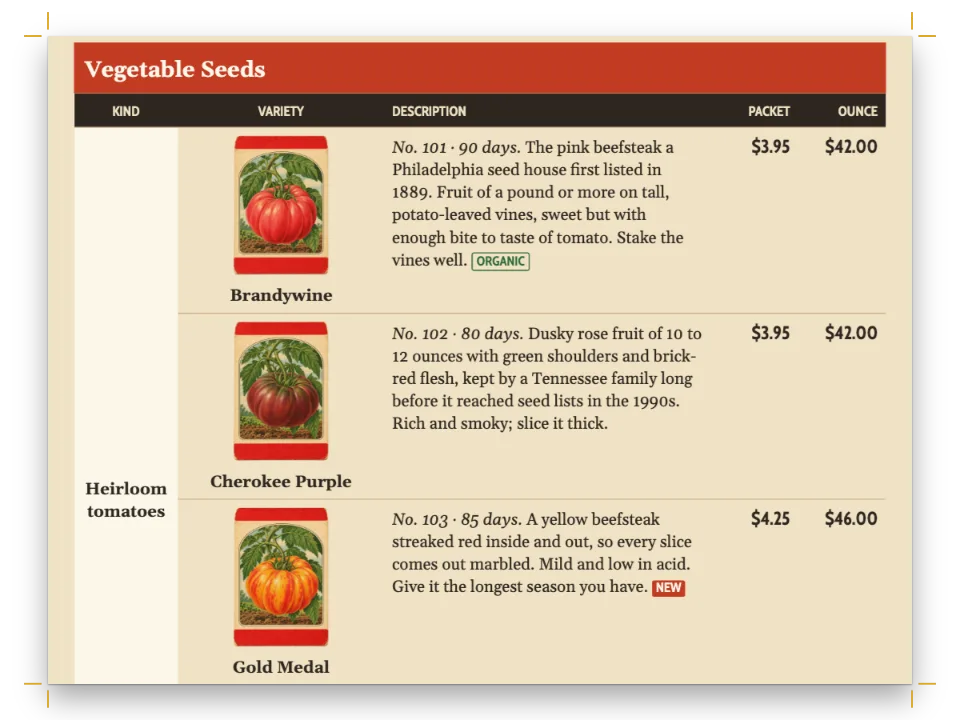
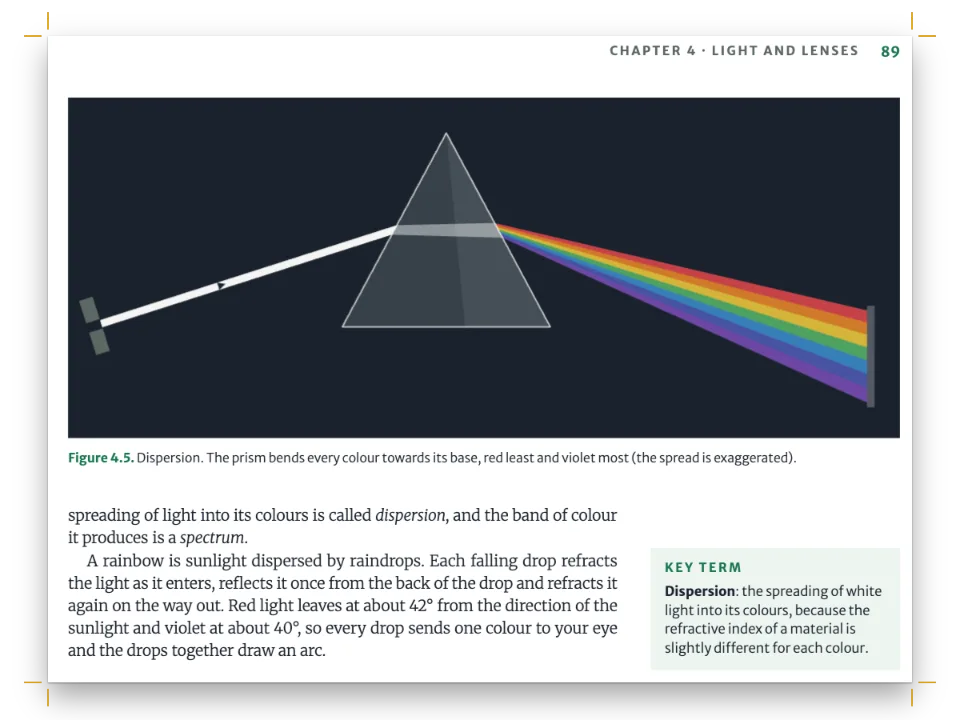
Um pequeno catálogo de exposição com três gravuras antigas do Dom Quixote. Cada texto fica numa página da esquerda, e a gravura ocupa inteira a página da direita, bem em frente.
O que você vai compor
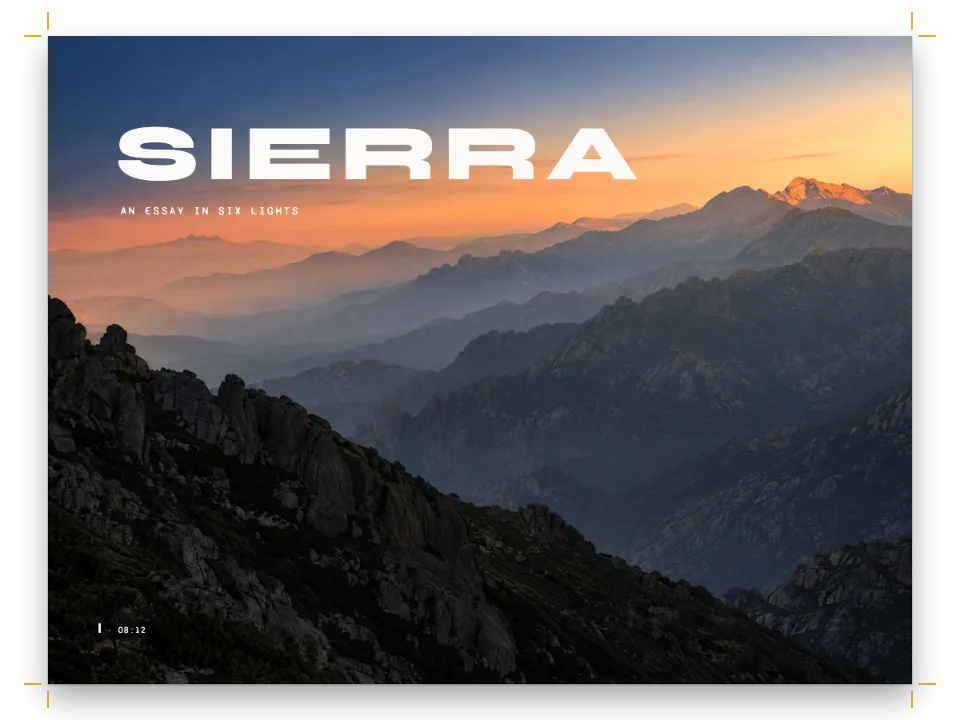
Um pequeno catálogo para uma exposição de gabinete com três xilogravuras do Dom Quixote de Gustave Doré (Paris, 1863), numa página de 230 × 280 mm. A capa compõe DORÉ em Libre Bodoni de 88 pt sobre preto quente, sob um detalhe emoldurado da prancha dos moinhos. Cada verbete abre uma página da esquerda com um número de catálogo em sépia ao lado de um título em itálico, a ficha técnica na coluna externa, um texto de abertura com capitular de três linhas e o comentário. A primeira frase do comentário cita a prancha, que abre a página da direita em frente, centrada e com 221 mm de altura, de modo que prancha, legenda e linha de crédito preenchem a mancha. A última página é uma lista de obras com uma miniatura na primeira célula de cada linha e a página em que cada prancha é impressa.
Esta receita responde a
- Como faço um catálogo de arte: a ficha na página esquerda e a prancha em frente, na direita?
- Como decido onde vai uma figura: no alto da página, sobre as duas colunas, exatamente aqui ou na margem?
- Como coloco imagens ou ícones dentro das células de uma tabela?
- Como acrescento a uma abertura uma linha de autor, uma linha fina ou um primeiro parágrafo com capitular?
A resposta curta
// Each entry breaks to a verso and cites its plate in the commentary's first sentence; a 'top'
// float never lands on its citing page (gotcha: top-float-next-page), so it opens the recto.
const entryLevel = () => ({
  level: 1, span: 'page', numberingTemplate: '{1}', // {number} in the opener: Cat. 1, 2, 3
  // Restated: any headings object drops the H1 break (gotcha: headings-drop-h1-break).
  breakBefore: { enabled: true, parity: 'even' },
  marginBottom: pt(LEAD), advancedDesign: entryOpener(),
});
const plateType = {
  id: 'plate', name: 'Cat.', shortLabel: 'Cat.', captionPrefix: 'Cat.', // 'Cat. 1. …'
  numberingTemplate: '{n}', resetOn: 'never', counterFormat: 'decimal',
  defaultPlacement: { position: 'top', span: 'page', align: 'center' },
};
// Under the plate (pt): a caption and a credit line at the body's leading ratio, and their gaps.
const CAPTION = { size: 8.5, gap: 6, note: 7.2, noteGap: 1.5 };
const UNDER = (CAPTION.size + CAPTION.note) * (LEAD / SIZE) + CAPTION.gap + CAPTION.noteGap;
const PLATE_H = (LINES * LEAD - UNDER) * PT; // 221.1 mm: the rest of the text block
// A float is not shrunk to fit the room left on its page (gap: float-shrink); fitFiguresToPage
// sets the smaller picture flush left. A width fraction narrows the float, and 'center' centres it.
const plate = ({ id, file, caption, altText }, [pxW, pxH]) => ({
  id, typeId: 'plate', kind: 'bitmap', caption, note: CREDIT, altText,
  // The print master's pixels, about 275 dpi at this size (gotcha: bitmap-print-size).
  bitmap: { fileId: file, format: 'jpeg', width: pxW, height: pxH },
  placement: { width: Math.min(1, ((pxW / pxH) * PLATE_H) / BLOCK_W) }, createdAt: 0, updatedAt: 0,
});
Ingredientes
- Funcionalidades
- Posicionamento de figurasCapítulos que abrem em página ímparCitações que posicionam as figurasTipos de recurso personalizadosLegendas numeradasEstilo de legendaLinhas de fonte e créditoFiguras e tabelas como recursosImagens nas células de tabelaAberturas desenhadasFaixa de capítulo em largura totalCapitulares nas aberturasTextos, fios e caixas nos designs de páginaImagens nos designs de páginaAtributos de títuloEstilos de títuloMargens espelhadasPáginas em um canvas
- Também usa
- Coluna e meiaTítulos numeradosFiguras exatamente aquiCor do papelEstilos de parágrafoCabeços por seçãoColuna de margem para flutuantesQuebras de linha nos títulosCapítulos sem número
- Tipografia
- Ibarra Real Nova, Libre Bodoni, Sofia Sans Condensed (SIL OFL 1.1)
- Materiais
library-835.jpgvigil-835.jpgwindmills-835.jpgwindmills-detail-540.jpg- Cat. 1, Don Quixote in His Library (Part I, ch. I), wood engraving by Héliodore Pisan after Gustave Doré, 1863; scan from Wikimedia Commons, reduced to 835 px wide (Gustave Doré · Héliodore Pisan, domínio público)
- Cat. 2, The Vigil of Arms (Part I, ch. III), wood engraving by Héliodore Pisan after Gustave Doré, 1863; scan from Wikimedia Commons, reduced to 835 px wide (Gustave Doré · Héliodore Pisan, domínio público)
- Cat. 3, The Adventure of the Windmills (Part I, ch. VIII), wood engraving by Héliodore Pisan after Gustave Doré, 1863; scan from Wikimedia Commons, reduced to 835 px wide (Gustave Doré · Héliodore Pisan, domínio público)
- The cover’s detail of Cat. 3: a 1,100-px square cut from the same scan and reduced to 540 px (Gustave Doré · Héliodore Pisan, domínio público)
Preparo
#1 · A prancha espera pela página em frente
O código é a resposta curta lá em cima. Cada verbete quebra para uma página par, e um flutuante top nunca cai na página que o cita, então a prancha citada na primeira frase do comentário pula o verso e abre o recto em frente. O Postext 1.4.1 não reduz um flutuante ao espaço que sobra na sua página, por isso plate() calcula a largura do flutuante a partir da proporção do escaneamento e da altura que resta na mancha depois da legenda e da linha de crédito. layout.fitFiguresToPage reduziria uma prancha alta demais para a página, mas a 1.4.1 encosta então a imagem menor à esquerda, num flutuante que continua ocupando toda a largura. Uma fração de largura estreita o próprio flutuante, e align: 'center' centra a prancha junto com a legenda.
#2 · O alto do verbete sai do seu título
const [KICKER, NUMERAL] = [8.5, { size: 80, y: 7 }]; // pt: labels; the numeral, y in mm
const TITLE = { size: 30, lineHeight: 1.08 }; // pt (gotcha: design-lineheight-multiple)
const HEAD_RULE = NUMERAL.y + NUMERAL.size * PT + 3; // mm: the hairline under the numeral
const LEAD_Y = HEAD_RULE + 5; // mm: the lead paragraph, with the tombstone beside it
const [LEADIN, TOMB] = [{ size: 13.5, lead: 19 }, { size: 8.5, lead: 12.5 }]; // pt
const LEAD_LINES = 5; // the longest lead: shorter ones keep the commentary on the same line
const BASE = 0.8; // 1.4.1 sets a design text's first baseline 0.8 down its line box
// em: cap heights, and Libre Bodoni's figures, which stop short of its capitals ('1': 0.716)
const [CAP_HEIGHT, FIGURE_HEIGHT] = [{ [TEXT]: 0.673, [DISPLAY]: 0.754 }, 0.716];
const inkTop = (size, lineHeight, height) => (BASE * lineHeight - height) * size; // pt to the ink
// The title's capitals level with the numeral's figures: 1.2 mm below the numeral's top.
const TITLE_Y = NUMERAL.y + (inkTop(NUMERAL.size, 1, FIGURE_HEIGHT)
  - inkTop(TITLE.size, TITLE.lineHeight, CAP_HEIGHT[DISPLAY])) * PT;
// The initial's top on the first line's capitals, its foot on the third baseline.
const dropSize = (lines) => pt(((lines - 1) * LEADIN.lead + CAP_HEIGHT[TEXT] * LEADIN.size)
  / CAP_HEIGHT[DISPLAY]);
// Entries open on versos, whose outer column is on the left: the side column is at x = 0.
const head = (label, numeral) => [
  text('label', label, LABEL, KICKER, 'sepia', at('container', 'top-left', 0, 0), caps(KICKER)),
  text('numeral', numeral, DISPLAY, NUMERAL.size, 'sepia',
    at('container', 'top-left', 0, NUMERAL.y, SIDE), { lineHeight: 1 }),
  text('title', '{titleText}', DISPLAY, TITLE.size, 'ink', at('container', 'top-left', MAIN_X,
    TITLE_Y, MAIN), { italic: true, lineHeight: TITLE.lineHeight }),
  { kind: 'rule', id: 'head-rule', direction: 'horizontal', thickness: pt(0.5), color: col('rule'),
    placement: at('container', 'top-left', 0, HEAD_RULE, 'fill') },
];
const entryOpener = () => ({ enabled: true, minHeight: mm(LEAD_Y + LEAD_LINES * LEADIN.lead * PT),
  slot: { elements: [...head('Cat.', '{number}'),
  text('chapter', '{attr.chapter}', LABEL, KICKER, 'sepia',
    at('container', 'top-left', MAIN_X, 0, MAIN), caps(KICKER)),
  // Baseline on the lead's; \n breaks only with a paragraphIndent (gotcha: design-text-newline).
  text('tombstone', '{attr.tombstone}', LABEL, TOMB.size, 'muted',
    at('container', 'top-left', 0, LEAD_Y + BASE * (LEADIN.lead - TOMB.lead) * PT, SIDE - 6),
    { lineHeight: TOMB.lead / TOMB.size, paragraphIndent: pt(0.01) }),
  // Drop caps exist only in design text, so the lead is an attribute (gotcha: design-text-ragged).
  text('lead', '{attr.lead}', TEXT, LEADIN.size, 'ink', at('container', 'top-left', MAIN_X,
    LEAD_Y, MAIN), { lineHeight: LEADIN.lead / LEADIN.size, dropCap: { lines: 3,
    fontFamily: DISPLAY, fontSize: dropSize(3), color: col('sepia'), gap: mm(1.6) } }),
] } });
Cada título # leva como atributos o capítulo, a ficha técnica e o texto de abertura, e o espaço de design da abertura os desenha. O número grande é o {number} do próprio título, vindo de numberingTemplate: '{1}'; com uma prancha por verbete, ele anda 1, 2, 3 junto com o contador Cat. das pranchas. Na 1.4.1 a capitular só existe no texto de design, e o texto de design não pode ser justificado, por isso o texto de abertura é um atributo composto em bandeira, a 13,5 pt, sobre o comentário justificado. dropSize(3) dimensiona a inicial para que o seu topo encontre as maiúsculas da primeira linha e o seu pé assente na terceira linha de base. minHeight reserva espaço para um texto de abertura de cinco linhas, de modo que em Cat. 3, cujo texto de abertura tem quatro, o comentário começa na mesma linha que nos outros verbetes. TITLE_Y põe o título 1,2 mm abaixo do número, o que alinha as suas maiúsculas com os algarismos: na Libre Bodoni os algarismos têm 0,716 em de altura e as maiúsculas, 0,754 em.
#3 · Declarar o original, desenhar uma cópia menor
// plate() sizes each plate from its master, the Commons scan at 2,400 px tall (MASTER_PX);
// the canvas draws the registered 835-px copy (the block's width on a 1,000-px page) in that box.
async function scan(file) {
  const res = await fetch(asset(file));
  if (!res.ok) throw new Error(`Scan not found (${res.status}): ${file}`);
  return createImageBitmap(await res.blob());
}
async function loadPlates() {
  const [detail, ...scans] = await Promise.all([DETAIL, ...PLATES.map((p) => p.file)].map(scan));
  const resources = [checklist(PLATES), picture('cover-detail', onPaper(detail),
    'Detail of Cat. 3: the knight and his horse caught on the sail.')];
  for (const [i, p] of PLATES.entries()) {
    registerResourceImage(p.file, onPaper(scans[i]));
    resources.push(plate(p, MASTER_PX[p.id]), // and a thumbnail: its own small file and size
      picture(`${p.id}-thumb`, onPaper(await resized(scans[i], THUMB_PX)), p.altText));
  }
  return resources;
}
O Postext dimensiona um bitmap pelos pixels que declara, na resolução do documento, e nunca o imprime mais largo do que esses pixels permitem. plate() declara o original de cada prancha, o escaneamento do Commons reduzido a 2.400 px de altura: 1.900 × 2.400 px em Cat. 1, que com page.dpi: 150 poderia chegar a 322 mm. Quem manda no tamanho é, portanto, a fração de largura, 221 mm de altura, e nessa altura 2.400 px dão uns 275 dpi. Com os 300 dpi padrão, a prancha pararia em 161 mm de largura. O canvas desenha nessa caixa a imagem que estiver registrada, então o pen busca as três cópias de 835 px em assets/, 0,97 MB contra 5,8 MB dos originais. Desenhadas a partir dos originais de 2.400 px, os céus se enchem de faixas de moiré e as imagens da captura crescem cerca de 0,3 MB, acima do limite de 1,4 MB das Receitas.
#4 · Uma capa a partir de um estilo de título
const DETAIL = 'windmills-detail-540.jpg'; // a square cut from Cat. 3, at its size on screen
const FRAME = { w: 124, y: 40, pad: 3.5 }; // mm: the picture, its top, the hairline's inset
const FRAME_X = (TRIM.w - FRAME.w) / 2;
const NAME = { size: 88, track: 8, y: 176 }; // pt, pt, mm
const centred = (id, content, family, size, color, y, more, x = 0) => text(id, content, family,
  size, color, at('page', 'top', x, y, 'fill'), { align: 'center', ...more });
const coverStyle = () => ({
  id: 'cover', numbered: false, header: { elements: [] }, footer: { elements: [] },
  advancedDesign: { enabled: true, slot: { elements: [ // painted in this order
    { kind: 'box', id: 'night', style: { backgroundColor: col('night') },
      placement: { ...at('bleed', 'top-left', 0, 0), size: { width: 'fill', height: 'fill' } } },
    { kind: 'box', id: 'frame', style: { borderColor: col('gilt'), borderWidth: pt(0.5) },
      placement: { ...at('page', 'top-left', FRAME_X - FRAME.pad, FRAME.y - FRAME.pad),
        size: { width: mm(FRAME.w + 2 * FRAME.pad), height: mm(FRAME.w + 2 * FRAME.pad) } } },
    { kind: 'image', id: 'detail', resourceId: 'cover-detail',
      placement: at('page', 'top-left', FRAME_X, FRAME.y, FRAME.w) },
    centred('kicker', '{attr.kicker}', LABEL, 8.5, 'gilt', 18, caps(8.5)),
    // 1.4.1 counts the tracking after the last letter as well, so the word moves right by half.
    centred('name', '{titleText}', DISPLAY, NAME.size, 'paper', NAME.y, { lineHeight: 1,
      textTransform: 'uppercase', letterSpacing: pt(NAME.track) }, (NAME.track / 2) * PT),
    centred('subtitle', '{attr.subtitle}', DISPLAY, 18, 'paper', NAME.y + NAME.size * PT + 4,
      { italic: true }),
    centred('foot', '{attr.foot}', LABEL, 8.5, 'gilt', 250, caps(8.5)),
  ] } },
});
A capa é o primeiro título, # Doré {style="cover" …}, desenhado por um estilo sem fólios. O seu elemento de imagem desenha windmills-detail-540.jpg, registrado como um recurso que nenhum parágrafo cita, e por isso não recebe número nem legenda. O arquivo é um quadrado de 1.100 px recortado do escaneamento dos moinhos e reduzido a 540 px, a largura que ocupa numa página de 1.000 px. O Postext 1.4.1 mede o texto de design contando também o tracking depois da última letra, o que deixaria o nome centrado 4 pt à esquerda do eixo da página; o nome se desloca para a direita metade dos seus 8 pt de tracking para ficar sobre ele.
#5 · Miniaturas nas células da lista de obras
const THUMB_PX = 300; // px wide: 25 mm at 300 dpi, about the width the cell prints it
// The entries' head, label and numeral from attributes; the level gives span, break and margin.
const checklistStyle = () => ({ id: 'checklist', numbered: false,
  advancedDesign: { enabled: true, slot: { elements: head('{attr.kicker}', '{attr.range}') } } });
const cell = (content, more) => ({ content, verticalAlign: 'middle', ...more });
const checklist = (plates) => ({
  id: 'checklist', typeId: 'list', kind: 'table', placement: { position: 'here' },
  altText: 'Checklist of the three works with thumbnails, titles, chapters and pages.',
  table: { model: { headerRowCount: 1, columnWidths: [26, 9, 70, 11], rows: [
    ['', 'Cat.', 'Work and chapter', 'Page'].map((label, i) =>
      cell(label, { isHeader: true, align: i === 3 ? 'right' : 'left' })),
    ...plates.map((p, i) => [
      { content: '', image: { resourceId: `${p.id}-thumb` } },
      cell(String(i + 1)), cell(`*${p.caption}*. ${p.illustrates}`),
      cell(String(platePage(i + 1)), { align: 'right' }),
    ]),
  ] } },
  createdAt: 0, updatedAt: 0,
});
// The cover is page 1 and entry n opens page 2n, so its plate prints on page 2n + 1.
const platePage = (n) => 2 * n + 1;
const listType = { id: 'list', name: 'List', shortLabel: 'List', captionPrefix: '', // no caption
  numberingTemplate: '{n}', resetOn: 'never', counterFormat: 'decimal' };
O image de uma célula ajusta um recurso bitmap à largura interna da célula, aqui 23 mm. Cada miniatura é uma cópia própria de 300 px, declarada nesse tamanho, em vez da prancha de 835 px reduzida na hora de desenhar. A tabela não tem texto de legenda e o seu tipo tem o prefixo de legenda vazio, então nenhuma legenda é desenhada. O estilo da lista define apenas numbered: false e o seu design, e herda do nível 1 a largura de página, a quebra para uma página par e a margem inferior.
#6 · Parar quando um verbete não cabe na sua página
const astray = doc.pages.find((pg) => pg.role !== 'opener' && !pg.floats?.length);
if (astray) { // text run past its verso, or the blank page that follows it
  const error = new Error(`Page ${astray.pageLabel} holds no plate: shorten the entry before it.`);
  kitFail(error); // the viewer's bar says why
  throw error;
}
Um verbete que passa do seu verso continua mandando a prancha para a página seguinte. O resto do comentário vai então depois da prancha, e uma página em branco devolve o verbete seguinte a um verso, de modo que cada prancha posterior sai duas páginas depois da página que a lista de obras indica. A verificação para a composição na primeira página que não é abertura e não tem prancha, e mostra o número dessa página na barra do visualizador.
A receita completa
// ═══ Postext Cookbook · Nº 034 · Catalogue entries facing their plates ══════════════ // https://postext.dev/en/cookbook/catalogue-facing-plates // Code: MIT · Text: original (CC BY 4.0), Ormsby 1885 (PD) · Plates: Doré and Pisan, 1863 (PD) // Fonts: Ibarra Real Nova, Libre Bodoni, Sofia Sans Condensed (SIL OFL 1.1) · Needs postext ≥ 1.4.1 import { buildDocument, renderPageToCanvas, clearMeasurementCache, registerResourceImage } from 'https://esm.sh/postext'; const LANG = 'en'; // @lang: the language of the sample document ('en') const RECIPE = 'catalogue-facing-plates'; // ─── 1 · Design ───────────────────────────────────────────────────────────── const palette = { ink: '#1b1918', paper: '#faf7f1', night: '#2a2724', // text; the page and plates; the cover sepia: '#8a6a45', gilt: '#c9ad86', // the accent on paper (4.6:1) and on the night (6.9:1) rule: '#cfc6b8', muted: '#6c665e', // hairlines; tombstones, credit lines, folios }; // A linked colour carries its hex too: postext 1.4.1 reads the hex, not the palette, in design // slots and referenceColor (gotcha: palette-skips-designs). const col = (id) => ({ hex: palette[id], model: 'hex', paletteId: id }); const colorPalette = [ ...Object.entries(palette).map(([id, hex]) => ({ id, name: id, value: { hex, model: 'hex' } })), // The engine's defaults link to 'main-color': point it at the accent, so nothing prints blue. { id: 'main-color', name: 'sepia (defaults)', value: { hex: palette.sepia, model: 'hex' } }, ]; const [TEXT, DISPLAY, LABEL] = ['Ibarra Real Nova', 'Libre Bodoni', 'Sofia Sans Condensed']; const PT = 25.4 / 72; // mm per point const [SIZE, LEAD, LINES] = [11.5, 16, 41]; // body pt, leading pt; 41 lines make the text block const TRIM = { w: 230, h: 280 }; // mm: a catalogue trim const [TOP, INNER, OUTER] = [24, 20, 18]; // margins, mm const BLOCK_W = TRIM.w - INNER - OUTER; // 192 mm: the text block, and the widest plate const BLOCK_H = LINES * LEAD * PT; // 231.4 mm const [SIDE_PC, GUTTER] = [34, 7]; // the outer column: 65.3 mm for numeral and tombstone; mm const SIDE = (BLOCK_W * SIDE_PC) / 100; const MAIN_X = SIDE + GUTTER; // mm from the block's outer edge to the text column const MAIN = BLOCK_W - MAIN_X; // 119.7 mm: the measure, about 71 characters // #region answer: a Plate type that floats to the head of the facing recto, sized to fill it // Each entry breaks to a verso and cites its plate in the commentary's first sentence; a 'top' // float never lands on its citing page (gotcha: top-float-next-page), so it opens the recto. const entryLevel = () => ({ level: 1, span: 'page', numberingTemplate: '{1}', // {number} in the opener: Cat. 1, 2, 3 // Restated: any headings object drops the H1 break (gotcha: headings-drop-h1-break). breakBefore: { enabled: true, parity: 'even' }, marginBottom: pt(LEAD), advancedDesign: entryOpener(), }); const plateType = { id: 'plate', name: 'Cat.', shortLabel: 'Cat.', captionPrefix: 'Cat.', // 'Cat. 1. …' numberingTemplate: '{n}', resetOn: 'never', counterFormat: 'decimal', defaultPlacement: { position: 'top', span: 'page', align: 'center' }, }; // Under the plate (pt): a caption and a credit line at the body's leading ratio, and their gaps. const CAPTION = { size: 8.5, gap: 6, note: 7.2, noteGap: 1.5 }; const UNDER = (CAPTION.size + CAPTION.note) * (LEAD / SIZE) + CAPTION.gap + CAPTION.noteGap; const PLATE_H = (LINES * LEAD - UNDER) * PT; // 221.1 mm: the rest of the text block // A float is not shrunk to fit the room left on its page (gap: float-shrink); fitFiguresToPage // sets the smaller picture flush left. A width fraction narrows the float, and 'center' centres it. const plate = ({ id, file, caption, altText }, [pxW, pxH]) => ({ id, typeId: 'plate', kind: 'bitmap', caption, note: CREDIT, altText, // The print master's pixels, about 275 dpi at this size (gotcha: bitmap-print-size). bitmap: { fileId: file, format: 'jpeg', width: pxW, height: pxH }, placement: { width: Math.min(1, ((pxW / pxH) * PLATE_H) / BLOCK_W) }, createdAt: 0, updatedAt: 0, }); // #endregion const MASTER_PX = { library: [1900, 2400], vigil: [1921, 2400], windmills: [1923, 2400] }; const CREDIT = 'Public domain; scan from Wikimedia Commons.'; // the artists are in the tombstone // A picture drawn only in a design slot or a table cell: registered, never cited or numbered. function picture(id, image, altText) { registerResourceImage(`${id}.jpg`, image); return { id, typeId: 'plate', kind: 'bitmap', altText, createdAt: 0, updatedAt: 0, bitmap: { fileId: `${id}.jpg`, format: 'jpeg', width: image.width, height: image.height } }; } // Design-slot shorthands; text wraps instead of ending in '…' (gotcha: overflow-ellipsis-default). const at = (to, edge, x, y, width) => ({ anchor: { to, edge }, offset: { x: mm(x), y: mm(y) }, ...(width !== undefined && { size: { width: width === 'fill' ? 'fill' : mm(width) } }) }); const text = (id, content, fontFamily, size, color, placement, more = {}) => ({ kind: 'text', id, content, fontFamily, fontSize: pt(size), color: col(color), align: 'left', overflow: 'wrap', placement, ...more }); const caps = (size) => ({ fontWeight: 600, textTransform: 'uppercase', letterSpacing: pt(size * 0.2) }); // #region opener: the entry's head, a numeral and tombstone beside the title and the lead const [KICKER, NUMERAL] = [8.5, { size: 80, y: 7 }]; // pt: labels; the numeral, y in mm const TITLE = { size: 30, lineHeight: 1.08 }; // pt (gotcha: design-lineheight-multiple) const HEAD_RULE = NUMERAL.y + NUMERAL.size * PT + 3; // mm: the hairline under the numeral const LEAD_Y = HEAD_RULE + 5; // mm: the lead paragraph, with the tombstone beside it const [LEADIN, TOMB] = [{ size: 13.5, lead: 19 }, { size: 8.5, lead: 12.5 }]; // pt const LEAD_LINES = 5; // the longest lead: shorter ones keep the commentary on the same line const BASE = 0.8; // 1.4.1 sets a design text's first baseline 0.8 down its line box // em: cap heights, and Libre Bodoni's figures, which stop short of its capitals ('1': 0.716) const [CAP_HEIGHT, FIGURE_HEIGHT] = [{ [TEXT]: 0.673, [DISPLAY]: 0.754 }, 0.716]; const inkTop = (size, lineHeight, height) => (BASE * lineHeight - height) * size; // pt to the ink // The title's capitals level with the numeral's figures: 1.2 mm below the numeral's top. const TITLE_Y = NUMERAL.y + (inkTop(NUMERAL.size, 1, FIGURE_HEIGHT) - inkTop(TITLE.size, TITLE.lineHeight, CAP_HEIGHT[DISPLAY])) * PT; // The initial's top on the first line's capitals, its foot on the third baseline. const dropSize = (lines) => pt(((lines - 1) * LEADIN.lead + CAP_HEIGHT[TEXT] * LEADIN.size) / CAP_HEIGHT[DISPLAY]); // Entries open on versos, whose outer column is on the left: the side column is at x = 0. const head = (label, numeral) => [ text('label', label, LABEL, KICKER, 'sepia', at('container', 'top-left', 0, 0), caps(KICKER)), text('numeral', numeral, DISPLAY, NUMERAL.size, 'sepia', at('container', 'top-left', 0, NUMERAL.y, SIDE), { lineHeight: 1 }), text('title', '{titleText}', DISPLAY, TITLE.size, 'ink', at('container', 'top-left', MAIN_X, TITLE_Y, MAIN), { italic: true, lineHeight: TITLE.lineHeight }), { kind: 'rule', id: 'head-rule', direction: 'horizontal', thickness: pt(0.5), color: col('rule'), placement: at('container', 'top-left', 0, HEAD_RULE, 'fill') }, ]; const entryOpener = () => ({ enabled: true, minHeight: mm(LEAD_Y + LEAD_LINES * LEADIN.lead * PT), slot: { elements: [...head('Cat.', '{number}'), text('chapter', '{attr.chapter}', LABEL, KICKER, 'sepia', at('container', 'top-left', MAIN_X, 0, MAIN), caps(KICKER)), // Baseline on the lead's; \n breaks only with a paragraphIndent (gotcha: design-text-newline). text('tombstone', '{attr.tombstone}', LABEL, TOMB.size, 'muted', at('container', 'top-left', 0, LEAD_Y + BASE * (LEADIN.lead - TOMB.lead) * PT, SIDE - 6), { lineHeight: TOMB.lead / TOMB.size, paragraphIndent: pt(0.01) }), // Drop caps exist only in design text, so the lead is an attribute (gotcha: design-text-ragged). text('lead', '{attr.lead}', TEXT, LEADIN.size, 'ink', at('container', 'top-left', MAIN_X, LEAD_Y, MAIN), { lineHeight: LEADIN.lead / LEADIN.size, dropCap: { lines: 3, fontFamily: DISPLAY, fontSize: dropSize(3), color: col('sepia'), gap: mm(1.6) } }), ] } }); // #endregion // #region cover: a heading style on warm black, a framed detail of Cat. 3 and the name const DETAIL = 'windmills-detail-540.jpg'; // a square cut from Cat. 3, at its size on screen const FRAME = { w: 124, y: 40, pad: 3.5 }; // mm: the picture, its top, the hairline's inset const FRAME_X = (TRIM.w - FRAME.w) / 2; const NAME = { size: 88, track: 8, y: 176 }; // pt, pt, mm const centred = (id, content, family, size, color, y, more, x = 0) => text(id, content, family, size, color, at('page', 'top', x, y, 'fill'), { align: 'center', ...more }); const coverStyle = () => ({ id: 'cover', numbered: false, header: { elements: [] }, footer: { elements: [] }, advancedDesign: { enabled: true, slot: { elements: [ // painted in this order { kind: 'box', id: 'night', style: { backgroundColor: col('night') }, placement: { ...at('bleed', 'top-left', 0, 0), size: { width: 'fill', height: 'fill' } } }, { kind: 'box', id: 'frame', style: { borderColor: col('gilt'), borderWidth: pt(0.5) }, placement: { ...at('page', 'top-left', FRAME_X - FRAME.pad, FRAME.y - FRAME.pad), size: { width: mm(FRAME.w + 2 * FRAME.pad), height: mm(FRAME.w + 2 * FRAME.pad) } } }, { kind: 'image', id: 'detail', resourceId: 'cover-detail', placement: at('page', 'top-left', FRAME_X, FRAME.y, FRAME.w) }, centred('kicker', '{attr.kicker}', LABEL, 8.5, 'gilt', 18, caps(8.5)), // 1.4.1 counts the tracking after the last letter as well, so the word moves right by half. centred('name', '{titleText}', DISPLAY, NAME.size, 'paper', NAME.y, { lineHeight: 1, textTransform: 'uppercase', letterSpacing: pt(NAME.track) }, (NAME.track / 2) * PT), centred('subtitle', '{attr.subtitle}', DISPLAY, 18, 'paper', NAME.y + NAME.size * PT + 4, { italic: true }), centred('foot', '{attr.foot}', LABEL, 8.5, 'gilt', 250, caps(8.5)), ] } }, }); // #endregion // #region checklist: a table of the works with a thumbnail in each first cell const THUMB_PX = 300; // px wide: 25 mm at 300 dpi, about the width the cell prints it // The entries' head, label and numeral from attributes; the level gives span, break and margin. const checklistStyle = () => ({ id: 'checklist', numbered: false, advancedDesign: { enabled: true, slot: { elements: head('{attr.kicker}', '{attr.range}') } } }); const cell = (content, more) => ({ content, verticalAlign: 'middle', ...more }); const checklist = (plates) => ({ id: 'checklist', typeId: 'list', kind: 'table', placement: { position: 'here' }, altText: 'Checklist of the three works with thumbnails, titles, chapters and pages.', table: { model: { headerRowCount: 1, columnWidths: [26, 9, 70, 11], rows: [ ['', 'Cat.', 'Work and chapter', 'Page'].map((label, i) => cell(label, { isHeader: true, align: i === 3 ? 'right' : 'left' })), ...plates.map((p, i) => [ { content: '', image: { resourceId: `${p.id}-thumb` } }, cell(String(i + 1)), cell(`*${p.caption}*. ${p.illustrates}`), cell(String(platePage(i + 1)), { align: 'right' }), ]), ] } }, createdAt: 0, updatedAt: 0, }); // The cover is page 1 and entry n opens page 2n, so its plate prints on page 2n + 1. const platePage = (n) => 2 * n + 1; const listType = { id: 'list', name: 'List', shortLabel: 'List', captionPrefix: '', // no caption numberingTemplate: '{n}', resetOn: 'never', counterFormat: 'decimal' }; // #endregion const foot = (id, content, parity, edge, x, more) => text(id, content, LABEL, 7.5, 'muted', at('page', edge, x, TRIM.h - 15), { ...caps(7.5), parity, ...more }); const footer = { elements: [ // folios at the outer foot; entries (versos) add the title foot('verso-folio', '{pageNumber}', 'even', 'top-left', OUTER, { color: col('ink') }), foot('verso-title', '{title}', 'even', 'top-left', OUTER + 9), foot('recto-folio', '{pageNumber}', 'odd', 'top-right', -OUTER, { color: col('ink'), align: 'right' }), ] }; const config = () => ({ // a factory: the engine caches resolved configs per object colorPalette, resourceTypes: [plateType, listType], // A bitmap is never set wider than its declared pixels at this dpi: at 150 dpi a 1,900-px // scan may reach 322 mm, so the width fraction decides (at 300 dpi it stops at 161 mm). page: { width: mm(TRIM.w), height: mm(TRIM.h), dpi: 150, backgroundColor: col('paper'), margins: { top: mm(TOP), bottom: mm(TRIM.h - TOP - BLOCK_H), left: mm(INNER), right: mm(OUTER), mirror: true } }, // Body text never enters the outer column: the openers draw in it and the plates span it. layout: { layoutType: 'oneAndHalf', sideColumnPercent: SIDE_PC, sideColumnRole: 'floats', sideColumnSide: 'outer', gutterWidth: mm(GUTTER) }, bodyText: { fontFamily: TEXT, fontSize: pt(SIZE), lineHeight: pt(LEAD), color: col('ink'), boldColor: col('ink'), italicColor: col('ink'), referenceColor: col('sepia'), referenceBold: false, // 'Cat. 1' in the accent, regular weight firstLineIndent: mm(4.5), indentAfterHeading: false, minWordSpacing: 0.8, maxWordSpacing: 1.5, maxRuntTracking: 0, // gotcha: runt-tracking-unpainted }, headings: { fontFamily: DISPLAY, fontWeight: 400, color: col('ink'), levels: [entryLevel()] }, headingStyles: [coverStyle(), checklistStyle()], captionStyle: { fontFamily: LABEL, fontSize: pt(CAPTION.size), gap: pt(CAPTION.gap), labelColor: col('sepia'), // the label is bold by default note: { fontSize: pt(CAPTION.note), gap: pt(CAPTION.noteGap), color: col('muted') } }, tableStyle: { rules: 'horizontal', borderColor: col('rule'), borderWidth: pt(0.5), cellPadding: mm(1.8), headerBackground: col('ink'), headerColor: col('paper'), headerFontFamily: LABEL, headerFontSize: pt(8), bodyFontFamily: TEXT, bodyFontSize: pt(9.5) }, paragraphStyles: [{ id: 'colophon', fontFamily: LABEL, fontSize: pt(7.5), lineHeight: pt(11), color: col('muted'), textAlign: 'left', firstLineIndent: pt(0), marginTop: pt(LEAD) }], header: { elements: [] }, footer, }); // ─── 2 · Content ──────────────────────────────────────────────────────────── const markdown = String.raw`---Amostra em Markdown · 43 linhas · content.en.md
title: "Doré: Three Plates for Don Quixote" author: "The Print Room" --- # Doré {style="cover" kicker="The Print Room · A cabinet exhibition" subtitle="Three plates for Don Quixote, 1863" foot="Wood engravings by Héliodore Pisan after Gustave Doré"} # Don Quixote \\ in His Library {chapter="Part I · Chapter I" tombstone="Wood engraving\nHéliodore Pisan after Gustave Doré\nParis: L. Hachette et Cie, 1863, vol. I" lead="Doré opens the book with its hero wide awake. Seated upright in a carved chair, the hidalgo holds up a sword in his right hand and a book in his left, while everything he has read comes loose from the page and fills the room around him."} The plate (:ref{id="library"}, opposite) sets out the sentence in which the hidalgo loses his wits. In John Ormsby’s translation his fancy grew full of ‘enchantments, quarrels, battles, challenges, wounds, wooings, loves, agonies, and all sorts of impossible nonsense’, and Doré draws the list almost item by item. Knights ride out from behind the chair, a dragon uncoils above a shield of arms, a knight no taller than a folio stands on a book beside a giant’s severed head, and a lady in chains kneels at the fore-edge of a volume lettered AMADIS. Cervantes says the hidalgo ‘sold many an acre of tillageland to buy books of chivalry to read’, and Doré scatters them about the room: open on the table under the window, fallen open at his feet, and one propped on its edge at the lower left, beside the giant’s head. Daylight comes in at the window on the left and falls on his face and on the open page. The figures crowding the rest of the room have come out of the books, down to the two knights no taller than a hand who joust on the backs of mice among the flagstones. Doré gives these phantoms the same firm outline as the man who imagines them. In wood engraving whatever the tool cuts away prints white, so Pisan had to turn each of Doré’s greys into a pattern of strokes: close parallel cuts for the heavy curtain, finer and more open ones for the light on the wall, broken curls for the smoke of figures behind the chair. Both men signed the block, Doré in script at the lower left and Pisan in capitals at the lower right. # The Vigil \\ of Arms {chapter="Part I · Chapter III" tombstone="Wood engraving\nHéliodore Pisan after Gustave Doré\nParis: L. Hachette et Cie, 1863, vol. I" lead="The innkeeper has no chapel, so Don Quixote keeps his vigil of arms in the yard. Doré makes the scene a nocturne: the armour stands on the well-head, and the bareheaded knight lifts his lance towards a full moon breaking through cloud."} The plate (:ref{id="vigil"}, opposite) follows the text closely. The innkeeper has told his guest that armour may be watched anywhere, so Don Quixote lays his on a trough beside the well and paces up and down in front of it. In Ormsby’s translation the night closes in ‘with a light from the moon so brilliant that it might vie with his that lent it’. Doré stands the armour upright on the well-head, helmet and breastplate and gauntlets, so that it reads as a second knight facing the thin man in his shirt who will wear it. On the right the inn is a dark mass with an outside stair, and a figure watches from its landing: in the novel the guests ‘flocked to see it from a distance’. Water lies in the ruts of the yard and catches the light, and the knight’s shadow runs across it towards the viewer. Cervantes plays the vigil as farce. Two carriers come in turn to water their mules, each goes to move the armour off the trough, and each is laid out with the lance; the landlord then hurries the dubbing through before anyone else is hurt. Doré leaves all of that out and keeps the hour before it, when the knight is alone with his arms and the moon. In this sky Pisan widens his level cuts as they near the moon, until the black left between them thins to hairlines around the halo. Short flicks pick out the edges of the clouds. A dark bar of cloud crosses the disc on the left, and a few faint strokes shade the moon’s face. # The Adventure \\ of the Windmills {chapter="Part I · Chapter VIII" tombstone="Wood engraving\nHéliodore Pisan after Gustave Doré\nParis: L. Hachette et Cie, 1863, vol. I" lead="Doré passes over the charge and draws the moment after it. The turning sail has caught the lance and lifted horse and rider clear of the plain, and Rocinante’s legs thrash at the empty air below them."} The plate (:ref{id="windmills"}, opposite) illustrates the sentence in which the charge ends. As the knight drove his lance into the sail, in Ormsby’s words, ‘the wind whirled it round with such force that it shivered the lance to pieces, sweeping with it horse and rider, who went rolling over on the plain’. Doré stops before the fall. The broken lance is still caught in the canvas, and the knight hangs tangled against the sail with his shield flung out beside him. The composition is built on one diagonal. The sail runs from the top left corner towards the centre, the horse hangs from it, and the line carries on down the slope to the thistles in the foreground. Against it Doré sets the level plain of La Mancha, where Cervantes counts ‘thirty or forty windmills’ and the plate lines up a row of them along the horizon, turning in the same wind. Sancho, hatless, throws up one arm and clutches his head with the other; his hat lies on the ground and his ass waits behind him. He had warned his master, in Ormsby’s version, that ‘what we see there are not giants but windmills, and what seem to be their arms are the sails that turned by the wind make the millstone go’. Pisan cuts the sky in long even lines and the patched canvas of the sail in torn, crossing strokes. The mills on the horizon are drawn with a few lines each. # Works in \\ the Exhibition {style="checklist" kicker="Checklist" range="1–3"} All three plates come from the first volume of *L’Ingénieux Hidalgo Don Quichotte de la Manche*, in the French translation by Louis Viardot, published in two folio volumes by L. Hachette et Cie, Paris, in 1863 with 377 compositions by Gustave Doré, 120 of them full-page. Héliodore Pisan engraved the three plates on wood, and both men signed them in the block. Quotations are from John Ormsby’s English translation of 1885. ::resource{id="checklist"} :::paragraphs{style="colophon"} Set in Ibarra Real Nova, Libre Bodoni and Sofia Sans Condensed (SIL Open Font License). Commentary written for this catalogue under a CC BY 4.0 licence. The plates are in the public domain and reproduced from scans on Wikimedia Commons; the cover shows a detail of Cat. 3. Ormsby’s translation is Project Gutenberg eBook #996. :::`; // content.<lang>.md, inlined by the Cookbook // id, scan file, caption, the chapter it illustrates and alt text: one block per plate. const plateTexts = String.raw`libraryAmostra em Markdown · 16 linhas · content.plates.en.md
library-835.jpg Don Quixote in His Library Part I, ch. I: ‘which treats of the character and pursuits of the famous gentleman Don Quixote of La Mancha’ Don Quixote sits upright in a carved chair, a book in his left hand and a sword raised in his right, surrounded by the figures of his reading: knights on horseback, a dragon, a giant’s severed head, a lady in chains and two tiny knights jousting on mice. vigil vigil-835.jpg The Vigil of Arms Part I, ch. III: ‘wherein is related the droll way in which Don Quixote had himself dubbed a knight’ A moonlit inn yard. Don Quixote, bareheaded and holding a lance and a buckler, looks up at the moon; his armour stands propped on the well-head facing him, and a figure watches from the inn’s outside stair. windmills windmills-835.jpg The Adventure of the Windmills Part I, ch. VIII: ‘the terrible and undreamt-of adventure of the windmills’ A windmill’s sail sweeps Don Quixote and Rocinante off the ground, the knight tangled against the canvas and his buckler flung out; a row of mills stands on the horizon and Sancho, hatless, throws up one arm and clutches his head beside his ass.`; const FIELDS = ['id', 'file', 'caption', 'illustrates', 'altText']; const PLATES = plateTexts.trim().split(/\n\s*\n/).map((block) => Object.fromEntries(block.split('\n').map((line, i) => [FIELDS[i], line.trim()]))); // #region art: the engravings printed on the page's paper // Multiplying by the paper colour turns the scan's white into the page's cream. function onPaper(source) { const canvas = new OffscreenCanvas(source.width, source.height); const ctx = canvas.getContext('2d'); ctx.drawImage(source, 0, 0); ctx.globalCompositeOperation = 'multiply'; ctx.fillStyle = palette.paper; ctx.fillRect(0, 0, source.width, source.height); return canvas.transferToImageBitmap(); } const resized = (scan, width) => createImageBitmap(scan, { resizeWidth: width, resizeQuality: 'high' }); // #endregion // #region scans: the plates, their thumbnails and the cover's detail, fetched from assets/ // plate() sizes each plate from its master, the Commons scan at 2,400 px tall (MASTER_PX); // the canvas draws the registered 835-px copy (the block's width on a 1,000-px page) in that box. async function scan(file) { const res = await fetch(asset(file)); if (!res.ok) throw new Error(`Scan not found (${res.status}): ${file}`); return createImageBitmap(await res.blob()); } async function loadPlates() { const [detail, ...scans] = await Promise.all([DETAIL, ...PLATES.map((p) => p.file)].map(scan)); const resources = [checklist(PLATES), picture('cover-detail', onPaper(detail), 'Detail of Cat. 3: the knight and his horse caught on the sail.')]; for (const [i, p] of PLATES.entries()) { registerResourceImage(p.file, onPaper(scans[i])); resources.push(plate(p, MASTER_PX[p.id]), // and a thumbnail: its own small file and size picture(`${p.id}-thumb`, onPaper(await resized(scans[i], THUMB_PX)), p.altText)); } return resources; } // #endregion // ─── 3 · Fonts ────────────────────────────────────────────────────────────── const FONTS = { // every face the pages use, loaded before the build (gotcha: fonts-first) 'Ibarra Real Nova': ['400', '400i'], // text, the lead, the checklist 'Libre Bodoni': ['400', '400i'], // numerals, titles, drop caps, the cover 'Sofia Sans Condensed': ['400', '600', '700'], // labels, tombstones, captions, folios }; // ─── 4 · Build & show ─────────────────────────────────────────────────────── const words = `${markdown}\n${plateTexts}\n${CREDIT}`; // their letters decide the font subsets const [, resources] = await Promise.all([loadFonts(FONTS, words), loadPlates()]); const doc = await buildWithFonts(() => buildDocument({ markdown, resources }, config()), words); // #region check: every page past an opener holds a plate, so each plate faces its entry const astray = doc.pages.find((pg) => pg.role !== 'opener' && !pg.floats?.length); if (astray) { // text run past its verso, or the blank page that follows it const error = new Error(`Page ${astray.pageLabel} holds no plate: shorten the entry before it.`); kitFail(error); // the viewer's bar says why throw error; } // #endregion showPages(doc, { title: t({ en: 'Catalogue entries facing their plates' }) });Kit · core, fonts, viewer: igual em todas as receitas · 236 linhas
// ─── Kit ── helpers shared by every Cookbook recipe · postext.dev/cookbook ───── // ─── Kit · core v1 ── the same in every recipe · postext.dev/cookbook function mm(value) { return { value, unit: 'mm' }; } function pt(value) { return { value, unit: 'pt' }; } function em(value) { return { value, unit: 'em' }; } /** The sample language's string: t({ en: 'Figure', es: 'Figura' }). */ function t(strings) { return strings[LANG] ?? Object.values(strings)[0]; } /** A file in this recipe's assets folder, served from the Postext repo by jsDelivr. */ function asset(file) { return `https://cdn.jsdelivr.net/gh/drnachio/postext@main/cookbook/${RECIPE}/assets/${file}`; } // ─── Kit · fonts v2 ── the same in every recipe · postext.dev/cookbook // Postext measures with the loaded faces and caches the widths: load every face // before the first build, from Fontsource, the files the PDF embeds too. /** faces = { 'Family Name': ['400', '400i', '700'] }. `text` is the sample: * č ł † α χ also load latin-ext and greek files (kitSubsetsFor). With * `optional`, a face Fontsource does not ship is skipped instead of failing. * Resolves to the number of faces added. */ async function loadFonts(faces, text = '', { optional = false } = {}) { kitStatus('Loading fonts…'); const ranges = { latin: 'U+0000-00FF,U+0131,U+0152-0153,U+02BB-02BC,U+02C6,U+02DA,U+02DC,U+0304,U+0308,U+0329,' + 'U+2000-206F,U+20AC,U+2122,U+2191,U+2193,U+2212,U+2215,U+FEFF,U+FFFD', 'latin-ext': 'U+0100-02BA,U+02BD-02C5,U+02C7-02CC,U+02CE-02D7,U+02DD-02FF,U+0304,U+0308,U+0329,' + 'U+1D00-1DBF,U+1E00-1E9F,U+1EF2-1EFF,U+2020,U+20A0-20AB,U+20AD-20C0,U+2113,U+2C60-2C7F,U+A720-A7FF', greek: 'U+0370-03FF', }; const jobs = []; let added = 0; for (const [family, specs] of Object.entries(faces)) { const id = fontsourceId(family); const todo = [...new Set(specs)].map((spec) => [parseInt(spec, 10), spec.endsWith('i') ? 'italic' : 'normal']) .filter(([weight, style]) => !hasFace(family, weight, style)); // before any await const meta = optional || /[^\0-ÿ]/u.test(text) ? await fontsourceMeta(family) : null; const subsets = ['latin', ...kitSubsetsFor(text, meta)]; for (const [weight, style] of todo) { if (optional && !(meta?.weights.includes(weight) && meta.styles.includes(style))) continue; for (const subset of subsets) { const url = `https://cdn.jsdelivr.net/npm/@fontsource/${id}@5/files/${id}-${subset}-${weight}-${style}.woff2`; const face = new FontFace(family, `url(${url}) format('woff2')`, { weight: String(weight), style, unicodeRange: ranges[subset] }); jobs.push(face.load().then((ready) => { document.fonts.add(ready); added++; }, () => { if (subset === 'latin' && !optional) throw new Error(`Fontsource has no ${family} ${weight} ${style}`); })); } } } await Promise.all(jobs).catch((error) => { kitFail(error); throw error; }); return added; } /** Runs `build` and loads any face the pages use that FONTS missed (a regular * one with a warning), then clears the measurement cache and builds again. */ async function buildWithFonts(build, text = '') { const tried = new Set(); for (let round = 0; round < 3; round++) { kitStatus('Laying out…'); await new Promise(requestAnimationFrame); // let the status paint first const result = await Promise.resolve().then(build).catch((error) => { kitFail(error); throw error; }); const wanted = { base: {}, variants: {} }; for (const { font, base } of [result].flat().flatMap(fontStringsOf)) { const { family, weight, style } = parseFont(font); const key = `${family}|${weight}|${style}`; if (tried.has(key) || hasFace(family, weight, style)) continue; tried.add(key); (wanted[base ? 'base' : 'variants'][family] ??= []).push(`${weight}${style === 'italic' ? 'i' : ''}`); } if (Object.keys(wanted.base).length) { console.warn(`[cookbook] FONTS does not list ${JSON.stringify(wanted.base)}: loading them.`); } const added = await loadFonts(wanted.base, text) + await loadFonts(wanted.variants, text, { optional: true }); if (added === 0) return result; clearMeasurementCache(); } throw new Error('The fonts did not settle after three builds.'); } /** Every font string of the layout; `base` marks a block's own face. */ function fontStringsOf(doc) { const found = new Map(); const walk = (node) => { if (!node || typeof node !== 'object') return; if (Array.isArray(node)) { node.forEach(walk); return; } for (const [key, value] of Object.entries(node)) { if (typeof value === 'string' && /fontString$/i.test(key)) { found.set(value, found.get(value) || key === 'fontString'); } else if (value && typeof value === 'object') walk(value); } }; walk(doc.pages); walk(doc.blocks); return [...found].map(([font, base]) => ({ font, base })); } /** '700 37.5px Open Sans' / 'italic 400 13px "Source Serif 4"' → { family, weight, style }. * A string with no weight ('95.8px Young Serif', from a design text) is 400. */ function parseFont(font) { const m = /^(?:(italic|oblique)\s+)?(?:small-caps\s+)?(?:(\d+|bold|normal)\s+)?[\d.]+px\s+(.+)$/.exec(font.trim()); if (!m) throw new Error(`Unexpected font string: ${font}`); const weight = m[2] === 'bold' ? 700 : !m[2] || m[2] === 'normal' ? 400 : Number(m[2]); return { family: m[3].replace(/^["']|["']$/g, ''), weight, style: m[1] ? 'italic' : 'normal' }; } /** A loaded FontFace covers this family, weight and style (fonts.check() would * also say yes for families nobody declared). */ function hasFace(family, weight, style) { for (const face of document.fonts) { if (face.status !== 'loaded' || face.style !== style) continue; if (face.family.replace(/^["']|["']$/g, '') !== family) continue; const [low, high = low] = face.weight.split(' ').map(Number); if (weight >= low && weight <= high) return true; } return false; } /** The files beyond latin `text` needs that `meta`'s family ships. */ function kitSubsetsFor(text, meta) { return [[/[Ā-˿ᴀ-ᶿḀ-ỿ†ℓⱠ-Ɀ꜠-ꟿ]/u, 'latin-ext'], [/[Ͱ-Ͽ]/u, 'greek']] .filter(([re, x]) => re.test(text) && meta?.subsets?.includes(x)).map(([, x]) => x); } /** Fontsource's id for a family: 'Source Serif 4' → 'source-serif-4'. */ function fontsourceId(family) { return family.toLowerCase().replace(/\s+/g, '-'); } /** The family's Fontsource metadata (weights, styles, subsets), or null. */ function fontsourceMeta(family) { fontsourceMeta.cache ??= new Map(); const id = fontsourceId(family); if (!fontsourceMeta.cache.has(id)) { fontsourceMeta.cache.set(id, fetch(`https://api.fontsource.org/v1/fonts/${id}`) .then((res) => (res.ok ? res.json() : null), () => null)); } return fontsourceMeta.cache.get(id); } // ─── Kit · viewer v1 ── the same in every recipe · postext.dev/cookbook /** The pages as spreads on a dark desk, page 1 alone, then verso | recto, * each painted when it scrolls near. */ function showPages(docs, { title, width = 460 } = {}) { const root = viewer(title); const pages = [docs].flat().flatMap((doc) => doc.pages.map((page) => ({ doc, page, n: (doc.pageIndexOffset ?? 0) + page.index }))); const spreads = []; let verso = null; for (const p of pages) { if (p.n % 2 === 1) { if (verso) spreads.push([verso, null]); verso = p; } else { spreads.push([verso, p]); verso = null; } } if (verso) spreads.push([verso, null]); const density = Math.min(window.devicePixelRatio || 1, 2); showPages.painter?.disconnect(); const painter = new IntersectionObserver((entries) => { for (const { isIntersecting, target } of entries) { if (!isIntersecting) continue; painter.unobserve(target); const { doc, page } = target.postext; renderPageToCanvas(page, doc, target, { scale: (width * density) / page.width }); } }, { rootMargin: '800px' }); showPages.painter = painter; root.replaceChildren(...spreads.map((pair) => { const spread = document.createElement('div'); spread.className = 'pt-spread'; for (const p of pair) { const figure = document.createElement('figure'); if (p) { const label = p.page.pageLabel || String(p.n + 1); const canvas = document.createElement('canvas'); canvas.postext = p; canvas.style.aspectRatio = `${p.page.width} / ${p.page.height}`; canvas.setAttribute('role', 'img'); canvas.setAttribute('aria-label', `Page ${label}`); const folio = document.createElement('figcaption'); folio.textContent = label; figure.append(canvas, folio); painter.observe(canvas); } else figure.className = 'pt-blank'; spread.append(figure); } return spread; })); kitStatus(`${pages.length} ${pages.length === 1 ? 'page' : 'pages'}`); document.documentElement.dataset.postext = 'ready'; return pages.length; } /** The desk, the bar and the error reporting, created once. */ function viewer(title) { if (!document.getElementById('pt-kit')) { document.head.insertAdjacentHTML('beforeend', `<style id="pt-kit"> :root { color-scheme: dark; } body { margin: 0; background: #0e1014; color: #b9bcc4; font: 13px/1.45 system-ui, sans-serif; } #pt-bar { position: sticky; top: 0; z-index: 1; display: flex; flex-wrap: wrap; align-items: center; gap: 6px 16px; padding: 10px 16px; background: rgb(14 16 20 / .92); backdrop-filter: blur(6px); border-bottom: 1px solid #23262d; } #pt-bar strong { color: #f4f1ea; font-weight: 600; } #pt-actions { display: flex; gap: 12px; margin-left: auto; } #pt-actions a, #pt-actions button { color: #d8a21a; font: inherit; background: none; border: 0; padding: 0; cursor: pointer; } #pages { display: grid; justify-items: center; gap: 48px; padding: 32px 16px 72px; } .pt-spread { display: flex; } .pt-spread figure { margin: 0; width: min(460px, 44vw); } .pt-spread canvas { display: block; width: 100%; background: #fff; box-shadow: 0 1px 2px rgb(0 0 0 / .5), 0 22px 44px -16px rgb(0 0 0 / .8); } .pt-spread figure:first-child canvas { box-shadow: inset -14px 0 14px -14px rgb(0 0 0 / .18), 0 1px 2px rgb(0 0 0 / .5), 0 22px 44px -16px rgb(0 0 0 / .8); } .pt-spread figcaption { margin-top: 10px; text-align: center; font: 600 10px/1 system-ui, sans-serif; letter-spacing: .18em; text-transform: uppercase; color: #6c7079; } .pt-blank { visibility: hidden; } @media (max-width: 760px) { .pt-spread { flex-direction: column; gap: 32px; } .pt-spread figure { width: min(460px, 92vw); } .pt-blank { display: none; } } </style>`); document.body.insertAdjacentHTML('afterbegin', '<header id="pt-bar"><strong id="pt-title"></strong><span id="pt-status" role="status"></span><span id="pt-actions"></span></header>'); document.getElementById('pt-title').textContent = document.title || 'Postext'; addEventListener('error', (event) => kitFail(event.error ?? event.message)); addEventListener('unhandledrejection', (event) => kitFail(event.reason)); } if (title) document.getElementById('pt-title').textContent = title; return document.getElementById('pages') ?? document.body.appendChild(Object.assign(document.createElement('main'), { id: 'pages' })); } function kitStatus(text) { viewer(); document.getElementById('pt-status').textContent = text; } function kitFail(error) { document.documentElement.dataset.postext = 'error'; kitStatus(`Error: ${error?.message ?? error}`); } // ─── /Kit ───────────────────────────────────────────────────────────────────────
O script.js montado funciona como está: cole-o como script de módulo em qualquer página ou abra a receita no CodePen. Pasta da receita no GitHub ↗ (abre em uma nova aba)
Variações
#Deixar respiro sob as pranchas
Uma altura fixa põe todas as pranchas com 190 mm, centradas, com uns 31 mm de mancha vazia sob a linha de crédito.
-const PLATE_H = (LINES * LEAD - UNDER) * PT; // 221.1 mm: the rest of the text block
+const PLATE_H = 190; // mm: the same height for every plate, with air below#Pôr figuras na coluna externa
Para figuras e glosas que se empilham numa coluna externa reservada a flutuantes, ao lado do parágrafo que as cita, veja o livro didático com coluna na margem.
Erros comuns
Erro comum
Um flutuante 'top' nunca cai na página que o cita
Um flutuante nunca fica acima da própria referência, então um flutuante 'top' na largura da página citado na página N abre a página N+1. Cite-o antes, ou use a posição 'auto' ou 'bottom', que podem ocupar o pé da página que o cita. Posicionamento de figuras →
Erro comum
Bitmaps são diagramados em px na resolução do documento: declare o tamanho de impressão
Um recurso bitmap é dimensionado pela largura e pela altura que declara, em pixels na resolução (dpi) do documento, não pelo arquivo. Declare os pixels do tamanho de impressão (cerca de 300 dpi na largura impressa) para que a figura saia no tamanho certo e nítida. Figuras e tabelas como recursos →
Erro comum
Texto de design nunca é justificado, então o texto ao lado da capitular fica em bandeira
No postext 1.4.1, um elemento de texto de design se alinha à esquerda, ao centro ou à direita e quebra palavra por palavra: não há alinhamento justificado, e hyphenate: true só divide uma palavra longa demais para uma linha inteira. As linhas de um texto inicial composto ao lado de uma dropCap terminam, portanto, em bandeira junto ao texto corrido justificado. Limite o texto inicial às linhas ao lado da capitular e ajuste-as à mão: com lines: 1 (uma capitular elevada) o texto inicial é uma linha só, que o gap da dropCap consegue deixar rente; o parágrafo continua no Markdown. Capitulares nas aberturas →
Erro comum
\n em um atributo só quebra linha com paragraphIndent > 0
Em um elemento de texto de design, um \n escrito no valor de um atributo só abre uma linha nova quando paragraphIndent é maior que zero ou há capitular; caso contrário, o texto fica em uma linha só. Dê a paragraphIndent um valor mínimo (0,01 pt) ou use um atributo por linha. Textos, fios e caixas nos designs de página →
Erro comum
O lineHeight de um texto de design é um múltiplo, nunca uma medida
Num slot de design, o lineHeight de um elemento de texto multiplica o tamanho da fonte (lineHeight: 1.05). No postext 1.4.1, uma medida como pt(15) não é rejeitada: a altura da abertura dá NaN, o espaço que ela reserva, minHeight incluído, se perde sem aviso e o texto passa por baixo do título. Textos, fios e caixas nos designs de página →
Verificação do Sandbox · bitmapTooSmall
Imagem de baixa resolução
Por quê. Um bitmap é desenhado mais de 1,5 vez mais largo que seus pixels, então vai sair borrado na impressão.
Correção. Forneça cerca de 300 dpi no tamanho impresso e declare a largura e a altura reais do bitmap. Docs →
Créditos
- Receita
- Ignacio Ferro
- Texto
- The catalogue entries, captions, tombstones and checklist · Postext Cookbook · CC BY 4.0
- Quotations from Don Quixote in John Ormsby’s English translation (1885) · Miguel de Cervantes · John Ormsby · domínio público
- Imagens
- Cat. 1, Don Quixote in His Library (Part I, ch. I), wood engraving by Héliodore Pisan after Gustave Doré, 1863; scan from Wikimedia Commons, reduced to 835 px wide · Gustave Doré · Héliodore Pisan · domínio público
- Cat. 2, The Vigil of Arms (Part I, ch. III), wood engraving by Héliodore Pisan after Gustave Doré, 1863; scan from Wikimedia Commons, reduced to 835 px wide · Gustave Doré · Héliodore Pisan · domínio público
- Cat. 3, The Adventure of the Windmills (Part I, ch. VIII), wood engraving by Héliodore Pisan after Gustave Doré, 1863; scan from Wikimedia Commons, reduced to 835 px wide · Gustave Doré · Héliodore Pisan · domínio público
- The cover’s detail of Cat. 3: a 1,100-px square cut from the same scan and reduced to 540 px · Gustave Doré · Héliodore Pisan · domínio público
- Fontes
- Ibarra Real Nova (SIL OFL 1.1) · Libre Bodoni (SIL OFL 1.1) · Sofia Sans Condensed (SIL OFL 1.1)
- Código
- MIT, como o Postext
Editar este texto ↗ (abre em uma nova aba)Pasta da receita no GitHub ↗ (abre em uma nova aba)