简单来说
一本小小的日文诗集:芭蕉的游记,俳句各占一行;还有啄木的短诗,每首三行,翻页时不会被拆开。
成品一览
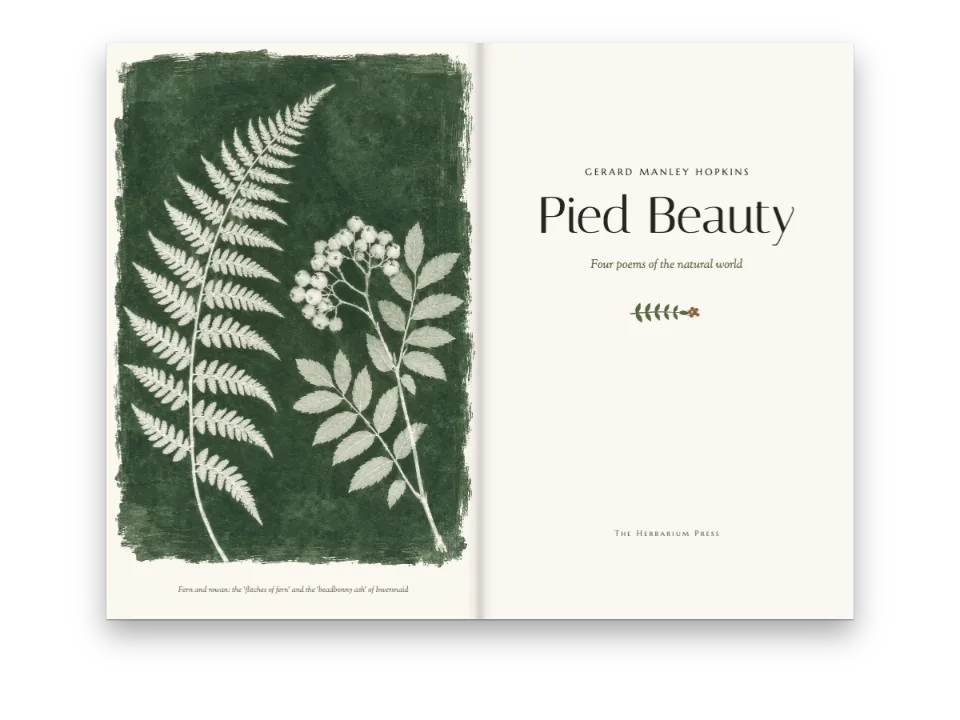
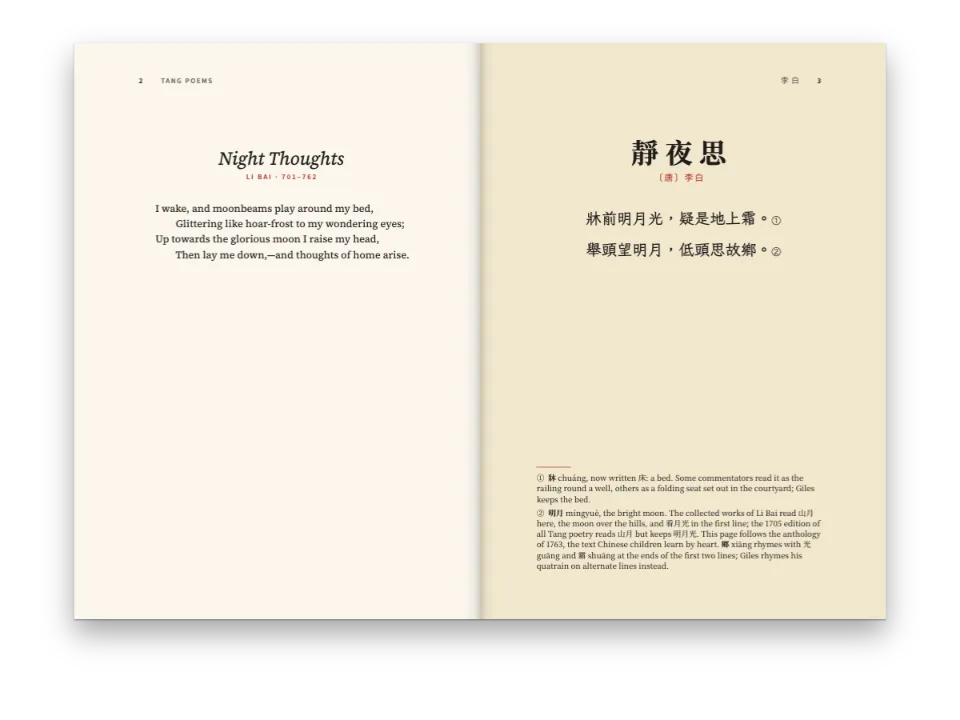
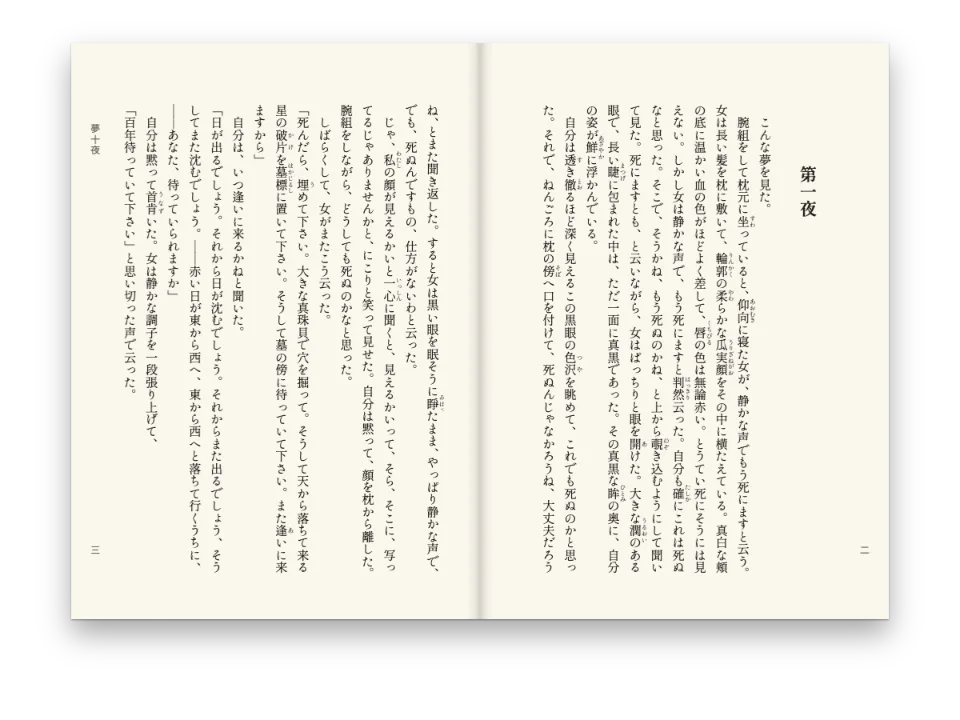
一本小诗集的八页,127 × 188 mm的四六判页面,右侧装订。第一部分是芭蕉《奥之细道》(おくのほそ道)中的七站,散文连同其中的俳句;第二部分是石川啄木《一握之砂》(一握の砂)中的十二首短歌,每首都按他写下时的三行排。散文从上到下排,每行36字,用10 pt的Shippori Mincho,行距宽松,为1.9 em。每首俳句单独占一行,低三字,每首短歌低两字,曾良的那首俳句在行的下部署名曾良。短歌从不跨页拆开,各组之间用一个柿色的*隔开。欧洲的诗集见Nº 015;竖排的中文唐诗见Nº 083。
这道食谱解答
- 怎样排诗歌:每句一行,诗节间留空,折行悬挂缩进,不断词?
- 哪些字体能排日文,并在屏幕和PDF中让汉字采用日文字形?
简短回答
// Each line of verse is a paragraph of its own, so a style sets where it starts. A haiku
// stands three characters down from the head of the line; Takuboku's tanka keep his three
// lines, two down; 曾良 signs his haiku raised five characters from the foot (地から五字上げ).
const paragraphStyles = [
  { id: 'haiku', indent: em(3), firstLineIndent: em(0), marginTop: pt(0), marginBottom: pt(0) },
  { id: 'tanka', indent: em(2), firstLineIndent: em(0), marginTop: pt(0), marginBottom: pt(0) },
  { id: 'by', textAlign: 'end', endIndent: em(5), firstLineIndent: em(0) },
  // The ornament between groups of poems, in the middle of its line.
  { id: 'ornament', textAlign: 'center', firstLineIndent: em(0), color: col('persimmon') },
];
//   :::paragraphs{style="haiku"}       :::paragraphs{style="by"}
//   夏草や兵どもが夢の跡                   曾良
//   :::                                :::
用料
做法
#1 · 一行诗是一个段落,样式决定它从哪里开始
代码见上文的简短回答。Postext没有硬换行,所以一首诗的每一行都是:::paragraphs围栏里的一个独立段落,由围栏的样式设定缩进:indent: em(3)让俳句从行头往下空三字(青空文库的文本低两字,低三字让诗周围更疏朗),firstLineIndent: em(0)让正文的一字缩进不再叠加上去。一首俳句大约17个字,放进任何一行36字的行里都不会折行。署名是一个单独的段落:textAlign: 'end'把它靠到行底(地付き,jitsuki),endIndent: em(5)再从那里往上提五字(地から五字上げ),与本文所据的版本一致(段落样式)。
#2 · 每首短歌排在同一页
// Postext has no hard line break and never keeps one paragraph with the next, so each tanka
// sits in a box with nothing drawn round it: a box moves on whole (keepTogether, its
// default), and a tanka is never cut at the foot of a page. One blank line follows each.
//   :::callout{type="tanka"}  :::paragraphs{style="tanka"} … three lines …  :::  :::
const calloutStyles = [{ id: 'tanka', backgroundEnabled: false, keepTogether: true,
  padding: { top: pt(0), right: pt(0), bottom: pt(0), left: pt(0) },
  marginTop: pt(0), marginBottom: pt(LEAD),
  body: { fontFamily: MINCHO, fontSize: pt(BODY), lineHeight: pt(LEAD), color: col('ink'),
    firstLineIndent: em(0) } }];
一首短歌的三行是三个段落,而排版引擎会让一个段落的各行不分开,却不会把一个段落和下一个段落保持在一起。框会让其内容不分开,所以每首短歌放进一个:::callout,它的样式什么都不画:没有背景,没有内边距,后面留一行的外边距,就是诗与诗之间的空行。第5页上,第三首短歌在部分标题和前两首之下放不下,于是整首移到第6页开头,而不是把第一行留在前一页(标注框样式)。
#3 · 把地名撑到同一宽度
// The place names over the prose take two lines (2行取り), four characters down, and a
// two-character name is spaced out to three (字取り: 平泉 → 平 泉), so they all end level.
const place = {
  level: 2, fontFamily: MINCHO, fontWeight: 700, fontSize: pt(11),
  lineSpan: 2, indent: em(4), jidori: 3,
};
芭蕉旅途中的各站是二级标题,高两个正文行(2行取り),所以后面的散文和俳句仍在网格上。jidori: 3把较短的地名撑开到它自己的三个字宽(字取り):平泉印成平 泉,中间空一整字,每个地名都与立石寺、最上川在同一高度结束。本来就是三个字的地名不做改动(按级别覆盖)。
#4 · 每一部分另起一页
// A design on a vertical page is laid out in the flow frame: x runs down the column from
// the head of the type area, y across the page leftwards from its right edge.
const at = (down, across) => ({ anchor: { to: 'container', edge: 'top-left' },
  offset: { x: pt(down), y: pt(across) } });
const TITLE = 18; // pt
const part = {
  level: 1, breakBefore: { enabled: true, parity: 'any' }, // gotcha: headings-drop-h1-break
  advancedDesign: { enabled: true, minHeight: lines(5), slot: { elements: [
    { kind: 'text', id: 'title', content: '{titleText}', fontFamily: MINCHO, fontWeight: 700,
      fontSize: pt(TITLE), lineHeight: 1, letterSpacing: pt(4), color: col('ink'),
      placement: at(3 * BODY, 1.5 * LEAD - TITLE / 2) },
    { kind: 'text', id: 'abridged', content: '(抄)', fontFamily: MINCHO, fontSize: pt(9),
      color: col('ink'), placement: { anchor: { to: '#title', edge: 'right-of' },
        offset: { x: pt(6), y: pt((TITLE - 9) / 2) } } },
    { kind: 'rule', id: 'rule', direction: 'horizontal', thickness: pt(0.6),
      color: col('persimmon'), placement: { ...at(3 * BODY, 2.5 * LEAD),
        size: { width: pt(4 * TITLE) } } },
    { kind: 'text', id: 'poet', content: '{attr.author}', fontFamily: MINCHO, fontSize: pt(11),
      letterSpacing: pt(3), color: col('ink'),
      placement: at(CHARS * BODY - 4 * 11 - 3 * 3 - 2 * BODY, 3.5 * LEAD - 11 / 2) },
  ] } },
};
每一部分是一个一级标题,它的设计排出标题,在标题之后用anchor.to: '#title'紧接着放一个小号的(抄),意思是“选录”,标题旁一条柿色短线,诗人的名字靠近行底。设计预留五行,正文在这五行之后、在同一套网格上开始。
#5 · 选一款有旧式符号的字体
const title = markdown.match(/^title: "(.*)"$/m)[1];
const heads = markdown.match(/^#+ [^{\n]*/gm).join('');
await loadFonts(FONTS, markdown); // the Latin files: the colophon
await loadCjkFonts({ [MINCHO]: ['400'] }, markdown, { vertical: true });
await loadCjkFonts({ [MINCHO]: ['700'] }, heads);
await loadCjkFonts({ [GOTHIC]: ['400'] },
  `${title}${heads}${markdown.match(/colophon="([^"]*)"/)[1]}一二三四五六七八九十`, { vertical: true });
芭蕉的散文用旧式叠字符〻写重复的字(日〻、人〻),更早的文本还用竖长的くの字点〳〵。Zen Old Mincho两个都没有:Canvas会从系统字体借用,PDF会画出空框。Shippori Mincho、Noto Serif JP和Shippori Mincho B1两个都有,所以诗歌用Shippori Mincho排(中文、日文和韩文字体)。青空文库的文本还保留了编者对旧假名用法的注记とら{え|(へ)}て,在芭蕉写的假名旁印出通行的写法。
完整食谱
// ═══ Postext Cookbook · Nº 119 · Haiku and tanka set vertically ═══════════════════ // https://postext.dev/en/cookbook/haiku-and-tanka // Code: MIT · Text: 芭蕉『おくのほそ道』, 啄木『一握の砂』, Aozora Bunko (PD) · Pictures: none // Fonts: Shippori Mincho, Noto Sans JP (SIL OFL 1.1) · Needs postext ≥ 1.16.1 import { buildDocument, renderPageToCanvas, clearMeasurementCache, loadVerticalAlternates, } from 'https://esm.sh/postext'; import { renderToPdf, decompressWoff2 } from 'https://esm.sh/postext-pdf'; const LANG = 'en'; // @lang: the language of the colophon; the poems are Japanese in both const RECIPE = 'haiku-and-tanka'; // ─── 1 · Design ───────────────────────────────────────────────────────────── // #region palette: ink, one persimmon, a soft poetry stock const palette = { ink: '#22201d', // the poems persimmon: '#b5512c', // 柿: the part titles' rule and the ornaments muted: '#6a645c', // the hashira, the folios, the colophon paper: '#fbf8f1', }; const col = (id) => ({ hex: palette[id], model: 'hex', paletteId: id }); const colorPalette = [ ...Object.entries(palette).map(([id, hex]) => ({ id, name: id, value: { hex, model: 'hex' } })), { id: 'main-color', name: 'defaults', value: { hex: palette.persimmon, model: 'hex' } }, ]; // #endregion // Shippori Mincho: it has the 〻 of 日〻 and 人〻, which Zen Old Mincho lacks. const [MINCHO, GOTHIC] = ['Shippori Mincho', 'Noto Sans JP']; const [BODY, LEAD, CHARS, LINES] = [10, 19, 36, 14]; // pt, pt: 36字 × 14行, a 1.9 em pitch const lines = (n) => pt(n * LEAD); // #region answer: a haiku on one line three characters down, a tanka in three, 地付き names // Each line of verse is a paragraph of its own, so a style sets where it starts. A haiku // stands three characters down from the head of the line; Takuboku's tanka keep his three // lines, two down; 曾良 signs his haiku raised five characters from the foot (地から五字上げ). const paragraphStyles = [ { id: 'haiku', indent: em(3), firstLineIndent: em(0), marginTop: pt(0), marginBottom: pt(0) }, { id: 'tanka', indent: em(2), firstLineIndent: em(0), marginTop: pt(0), marginBottom: pt(0) }, { id: 'by', textAlign: 'end', endIndent: em(5), firstLineIndent: em(0) }, // The ornament between groups of poems, in the middle of its line. { id: 'ornament', textAlign: 'center', firstLineIndent: em(0), color: col('persimmon') }, ]; // :::paragraphs{style="haiku"} :::paragraphs{style="by"} // 夏草や兵どもが夢の跡 曾良 // ::: ::: // #endregion // #region tanka: a box with nothing drawn round it keeps each tanka on one page // Postext has no hard line break and never keeps one paragraph with the next, so each tanka // sits in a box with nothing drawn round it: a box moves on whole (keepTogether, its // default), and a tanka is never cut at the foot of a page. One blank line follows each. // :::callout{type="tanka"} :::paragraphs{style="tanka"} … three lines … ::: ::: const calloutStyles = [{ id: 'tanka', backgroundEnabled: false, keepTogether: true, padding: { top: pt(0), right: pt(0), bottom: pt(0), left: pt(0) }, marginTop: pt(0), marginBottom: pt(LEAD), body: { fontFamily: MINCHO, fontSize: pt(BODY), lineHeight: pt(LEAD), color: col('ink'), firstLineIndent: em(0) } }]; // #endregion // #region places: the place names take two lines, spaced to three characters // The place names over the prose take two lines (2行取り), four characters down, and a // two-character name is spaced out to three (字取り: 平泉 → 平 泉), so they all end level. const place = { level: 2, fontFamily: MINCHO, fontWeight: 700, fontSize: pt(11), lineSpan: 2, indent: em(4), jidori: 3, }; // #endregion // #region part: each part opens a page with its title, (抄) and the poet at the foot // A design on a vertical page is laid out in the flow frame: x runs down the column from // the head of the type area, y across the page leftwards from its right edge. const at = (down, across) => ({ anchor: { to: 'container', edge: 'top-left' }, offset: { x: pt(down), y: pt(across) } }); const TITLE = 18; // pt const part = { level: 1, breakBefore: { enabled: true, parity: 'any' }, // gotcha: headings-drop-h1-break advancedDesign: { enabled: true, minHeight: lines(5), slot: { elements: [ { kind: 'text', id: 'title', content: '{titleText}', fontFamily: MINCHO, fontWeight: 700, fontSize: pt(TITLE), lineHeight: 1, letterSpacing: pt(4), color: col('ink'), placement: at(3 * BODY, 1.5 * LEAD - TITLE / 2) }, { kind: 'text', id: 'abridged', content: '(抄)', fontFamily: MINCHO, fontSize: pt(9), color: col('ink'), placement: { anchor: { to: '#title', edge: 'right-of' }, offset: { x: pt(6), y: pt((TITLE - 9) / 2) } } }, { kind: 'rule', id: 'rule', direction: 'horizontal', thickness: pt(0.6), color: col('persimmon'), placement: { ...at(3 * BODY, 2.5 * LEAD), size: { width: pt(4 * TITLE) } } }, { kind: 'text', id: 'poet', content: '{attr.author}', fontFamily: MINCHO, fontSize: pt(11), letterSpacing: pt(3), color: col('ink'), placement: at(CHARS * BODY - 4 * 11 - 3 * 3 - 2 * BODY, 3.5 * LEAD - 11 / 2) }, ] } }, }; // #endregion // #region furniture: the book's title down the fore-edge, the folio below it const foreEdge = (id, content, parity, edge, y, extra = {}) => ({ kind: 'text', id, content, parity, pages: 'body', writingMode: 'vertical-rl', fontFamily: GOTHIC, fontSize: pt(7), letterSpacing: pt(1), color: col('muted'), overflow: 'clip', placement: { anchor: { to: 'outer', edge }, offset: { y: em(y) } }, ...extra, }); const header = { elements: [ foreEdge('book', '{title}', 'even', 'top', 3), foreEdge('part', '{chapterTitle}', 'odd', 'top', 3), foreEdge('folio', '{pageNumber}', 'all', 'bottom', -3, { pages: 'all' }), ] }; const none = { elements: [] }; // The first part's opening page carries the colophon across the foot. const first = { id: 'first', footer: { elements: [{ kind: 'text', id: 'colophon', content: '{attr.colophon}', pages: 'opener', fontFamily: GOTHIC, fontSize: pt(5.5), lineHeight: 1.45, color: col('muted'), overflow: 'wrap', align: 'center', placement: { anchor: { to: 'page', edge: 'bottom' }, offset: { y: mm(-7) }, size: { width: mm(100) } } }] } }; // #endregion const config = () => ({ // a factory: the engine caches resolved configs per object locale: 'ja', // written out, never LANG (gotcha: ja-locale-tag) colorPalette, page: { sizePreset: 'custom', width: mm(127), height: mm(188), dpi: 150, // 四六判 backgroundColor: col('paper'), margins: { top: mm(32), bottom: mm(24), left: mm(15), right: mm(17), mirror: true }, pageNumbering: { format: 'japanese-informal' }, }, layout: { layoutType: 'single', writingMode: 'vertical-rl' }, cjk: { grid: { enabled: true, charsPerLine: CHARS, linesPerPage: LINES } }, bodyText: { fontFamily: MINCHO, fontSize: pt(BODY), lineHeight: pt(LEAD), color: col('ink'), boldColor: col('ink'), italicColor: col('ink'), referenceColor: col('ink'), textAlign: 'justify', firstLineIndent: em(1), indentAfterHeading: true, }, headings: { fontFamily: MINCHO, color: col('ink'), levels: [part, place] }, headingStyles: [first], paragraphStyles, calloutStyles, header, footer: none, }); // ─── 2 · Content ──────────────────────────────────────────────────────────── const markdown = String.raw`---Markdown样例 · 183行 · content.en.md
title: "芭蕉と啄木" subtitle: "俳句と短歌" --- # おくのほそ道 {style="first" author="松尾芭蕉" colophon="Matsuo Bashō, おくのほそ道 (The Narrow Road to the Deep North, 1702), selections, after Sugiura Shōichirō’s 1957 edition; Ishikawa Takuboku, 一握の砂 (A Handful of Sand, 1910), twelve tanka. Text: Aozora Bunko 61619 and 816, public domain. Set in Shippori Mincho and Noto Sans JP (SIL OFL)."} ## 冒頭 {月日|つきひ}は{百代|はくだい}の{過客|くわかく}にして、{行|ゆき}かふ{年|とし}も{又|また}{旅人|たびびと}{也|なり}。{舟|ふね}の{上|うへ}に生涯をうかべ馬の口とら{え|(へ)}て{老|おい}をむかふる{物|もの}は、{日〻|ひび}{旅|たび}にして{旅|たび}を{栖|すみか}とす。古人も多く旅に死せるあり。予もいづれの年よりか、{片雲|へんうん}の風にさそはれて、漂泊の思ひやまず海濱にさすらへ、{去年|こぞ}の秋{江上|かうじやう}の{破屋|はをく}に{蜘|くも}の古巣をはらひて、やゝ年も{暮|くれ}春{立|たて}る霞の空に白川の關こえんと、そゞろ{神|がみ}の物につきて心をくるはせ、{道祖神|だうそじん}のまねきにあひて{取|とる}もの手につかず、もゝ{引|ひき}の{破|やぶれ}をつゞり{笠|かさ}の{緒|を}{付|つけ}か{え|(へ)}て、三里に灸す{ゆ|(う)}るより松嶋の月{先|まづ}心にかゝりて、{住|すめ}る{方|かた}は人に讓り{杉風|さんぷう}が{別墅|べつしよ}に移るに、 :::paragraphs{style="haiku"} 草の戸も{住替|すみかは}る{代|よ}ぞひなの家 ::: {面八句|おもてはちく}を{庵|いほり}の柱に{懸置|かけおく}。 ## 旅立 :::paragraphs{style="haiku"} {行|ゆく}春や鳥{啼|なき}{魚|うを}の目は{泪|なみだ} ::: ## 平泉 三代の{榮耀|えいえう}{一睡|いつすゐ}の{中|うち}にして、{大門|だいもん}の跡は一里こなたに{有|あり}。{秀衡|ひでひら}が跡は田野に{成|なり}て、金鷄山のみ形を殘す。{先|まづ}{高舘|たかだち}にのぼれば、北上川南部より流るゝ{大河|たいが}也。衣川は和泉が{城|じやう}をめぐりて、高舘の下にて大河に{落入|おちいる}。{康衡|やすひら}等が旧跡は、衣が關を{隔|へだて}て南部口をさし堅め、{夷|えぞ}をふせぐとみえたり。{偖|さて}も義臣すぐつて{此城|このしろ}にこもり、功名一時の{叢|くさむら}となる。「國破れて山河あり、{城|じやう}春にして草青みたり」と笠{打敷|うちしき}て時のうつるまで泪を落し侍りぬ。 :::paragraphs{style="haiku"} {夏草|なつくさ}や{兵|つはもの}どもが夢の跡 {卯|う}の{花|はな}に{兼房|かねふさ}みゆる{白毛|しらが}かな ::: :::paragraphs{style="by"} 曾良 ::: ## 立石寺 山形領に{立石寺|りふしやくじ}と{云|いふ}山寺あり。{慈覺大師|じかくだいし}の開基にして、{殊|ことに}清閑の地也。一見すべきよし、人〻のすゝむるに{依|よつ}て、尾花澤よりとつて返し、{其|その}間七里ばかり也。日いまだ{暮|くれ}ず。{麓|ふもと}の坊に宿かり{置|おき}て、山上の堂にのぼる。岩に{巖|いはほ}を{重|かさね}て山とし、{松柏|しようはく}{年旧|としふり}、{土石|どせき}{老|おい}て苔{滑|なめらか}に、岩上の院〻{扉|とびら}を{閉|とぢ}て物の音きこえず。{岸|きし}をめぐり岩を{這|はひ}て{佛閣|ぶつかく}を拜し、{佳景|かけい}{寂莫|じやくまく}として心すみ{行|ゆく}のみおぼゆ。 :::paragraphs{style="haiku"} {閑|しづか}さや岩にしみ{入|いる}蝉の聲 ::: ## 最上川 :::paragraphs{style="haiku"} 五月雨をあつめて早し最上川 ::: ## 越後路 :::paragraphs{style="haiku"} 文月や六日も常の夜には似ず 荒海や佐渡によこたふ{天河|あまのがは} ::: ## 大垣 :::paragraphs{style="haiku"} 蛤のふたみにわかれ{行|ゆく}秋ぞ ::: # 一握の砂 {author="石川啄木"} :::callout{type="tanka"} :::paragraphs{style="tanka"} {東海|とうかい}の{小島|こじま}の{磯|いそ}の{白砂|しらすな}に われ{泣|な}きぬれて {蟹|かに}とたはむる ::: ::: :::callout{type="tanka"} :::paragraphs{style="tanka"} {頬|ほ}につたふ なみだのごはず {一握|いちあく}の砂を{示|しめ}しし人を忘れず ::: ::: :::callout{type="tanka"} :::paragraphs{style="tanka"} いのちなき砂のかなしさよ さらさらと {握|にぎ}れば指のあひだより落つ ::: ::: :::callout{type="tanka"} :::paragraphs{style="tanka"} たはむれに母を{背負|せお}ひて そのあまり{軽|かろ}きに泣きて 三歩あゆまず ::: ::: :::callout{type="tanka"} :::paragraphs{style="tanka"} はたらけど はたらけど{猶|なほ}わが{生活|くらし}楽にならざり ぢっと手を見る ::: ::: :::paragraphs{style="ornament"} * ::: :::callout{type="tanka"} :::paragraphs{style="tanka"} {不来方|こずかた}のお城の草に寝ころびて 空に吸はれし {十五|じふご}の心 ::: ::: :::callout{type="tanka"} :::paragraphs{style="tanka"} ふるさとの{訛|なまり}なつかし {停車場|ていしやば}の人ごみの中に そを{聴|き}きにゆく ::: ::: :::callout{type="tanka"} :::paragraphs{style="tanka"} 石をもて追はるるごとく ふるさとを{出|い}でしかなしみ 消ゆる時なし ::: ::: :::callout{type="tanka"} :::paragraphs{style="tanka"} やはらかに柳あをめる {北上|きたかみ}の{岸辺|きしべ}目に見ゆ 泣けとごとくに ::: ::: :::callout{type="tanka"} :::paragraphs{style="tanka"} ふるさとの山に向ひて 言ふことなし ふるさとの山はありがたきかな ::: ::: :::paragraphs{style="ornament"} * ::: :::callout{type="tanka"} :::paragraphs{style="tanka"} {函館|はこだて}の{青柳町|あをやぎちやう}こそかなしけれ 友の{恋歌|こひうた} 矢ぐるまの花 ::: :::`; // content.<lang>.md: the same Japanese text in both // ─── 3 · Fonts ────────────────────────────────────────────────────────────── const FONTS = { 'Shippori Mincho': ['400', '700'], // the poems and the prose; the titles 'Noto Sans JP': ['400'], // the hashira, the folios and the colophon }; // ─── 4 · Build & show ─────────────────────────────────────────────────────── // #region voices: each face loads the files that hold the characters it sets const title = markdown.match(/^title: "(.*)"$/m)[1]; const heads = markdown.match(/^#+ [^{\n]*/gm).join(''); await loadFonts(FONTS, markdown); // the Latin files: the colophon await loadCjkFonts({ [MINCHO]: ['400'] }, markdown, { vertical: true }); await loadCjkFonts({ [MINCHO]: ['700'] }, heads); await loadCjkFonts({ [GOTHIC]: ['400'] }, `${title}${heads}${markdown.match(/colophon="([^"]*)"/)[1]}一二三四五六七八九十`, { vertical: true }); // #endregion const doc = await buildWithFonts(() => buildDocument({ markdown }, config()), markdown); showBook(doc, { title: t({ en: 'Haiku and tanka set vertically', es: 'Haikus y tankas compuestos en vertical' }) }); offerPdf(() => renderToPdf(doc, { fontProvider: cjkPdfProvider }), `${RECIPE}.pdf`);工具包 · core, fonts, viewer, pdf, cjk:每道食谱都相同 · 453行
// ─── Kit ── helpers shared by every Cookbook recipe · postext.dev/cookbook ───── // ─── Kit · core v1 ── the same in every recipe · postext.dev/cookbook ───────── function mm(value) { return { value, unit: 'mm' }; } function pt(value) { return { value, unit: 'pt' }; } function em(value) { return { value, unit: 'em' }; } /** The sample language's string: t({ en: 'Figure', es: 'Figura' }). */ function t(strings) { return strings[LANG] ?? Object.values(strings)[0]; } /** A file in this recipe's assets folder, served from the Postext repo by jsDelivr. */ function asset(file) { return `https://cdn.jsdelivr.net/gh/drnachio/postext@main/cookbook/${RECIPE}/assets/${file}`; } // ─── Kit · fonts v1 ── the same in every recipe · postext.dev/cookbook ──────── // Postext measures text with the faces the browser has loaded, and caches the // widths, so every face must be ready before the first build. Faces come from // Fontsource: the same static files the PDF embeds, so screen and PDF agree. /** faces = { 'Family Name': ['400', '400i', '700'] }. `text` is the sample: * letters beyond Latin-1 (č, ł, ő…) also load the latin-ext files. With * `optional`, a face Fontsource does not ship is skipped instead of failing. * Resolves to the number of faces added. */ async function loadFonts(faces, text = '', { optional = false } = {}) { kitStatus('Loading fonts…'); const ranges = { latin: 'U+0000-00FF,U+0131,U+0152-0153,U+02BB-02BC,U+02C6,U+02DA,U+02DC,U+0304,U+0308,U+0329,' + 'U+2000-206F,U+20AC,U+2122,U+2191,U+2193,U+2212,U+2215,U+FEFF,U+FFFD', 'latin-ext': 'U+0100-02BA,U+02BD-02C5,U+02C7-02CC,U+02CE-02D7,U+02DD-02FF,U+0304,U+0308,U+0329,' + 'U+1D00-1DBF,U+1E00-1E9F,U+1EF2-1EFF,U+2020,U+20A0-20AB,U+20AD-20C0,U+2113,U+2C60-2C7F,U+A720-A7FF', }; const subsets = /[Ā-˿Ḁ-ỿ]/.test(text) ? ['latin', 'latin-ext'] : ['latin']; const jobs = []; let added = 0; for (const [family, specs] of Object.entries(faces)) { const id = fontsourceId(family); const meta = optional ? await fontsourceMeta(family) : null; for (const spec of new Set(specs)) { const weight = parseInt(spec, 10); const style = spec.endsWith('i') ? 'italic' : 'normal'; if (hasFace(family, weight, style)) continue; if (optional && !(meta?.weights.includes(weight) && meta.styles.includes(style))) continue; for (const subset of subsets) { const url = `https://cdn.jsdelivr.net/npm/@fontsource/${id}@5/files/${id}-${subset}-${weight}-${style}.woff2`; const face = new FontFace(family, `url(${url}) format('woff2')`, { weight: String(weight), style, unicodeRange: ranges[subset] }); jobs.push(face.load().then((ready) => { document.fonts.add(ready); added++; }, () => { if (subset === 'latin' && !optional) throw new Error(`Fontsource has no ${family} ${weight} ${style}`); })); } } } await Promise.all(jobs).catch((error) => { kitFail(error); throw error; }); return added; } /** Runs `build` (a buildDocument or buildBundle call) and checks the faces * the pages use. A regular face missing from FONTS is loaded with a warning; * bold and italic variants are loaded when the family ships them. Then the * measurement caches are cleared and the build runs again. */ async function buildWithFonts(build, text = '') { const tried = new Set(); for (let round = 0; round < 3; round++) { kitStatus('Laying out…'); await new Promise(requestAnimationFrame); // let the status paint first const result = await Promise.resolve().then(build).catch((error) => { kitFail(error); throw error; }); const wanted = { base: {}, variants: {} }; for (const { font, base } of [result].flat().flatMap(fontStringsOf)) { const { family, weight, style } = parseFont(font); const key = `${family}|${weight}|${style}`; if (tried.has(key) || hasFace(family, weight, style)) continue; tried.add(key); (wanted[base ? 'base' : 'variants'][family] ??= []).push(`${weight}${style === 'italic' ? 'i' : ''}`); } if (Object.keys(wanted.base).length) { console.warn(`[cookbook] FONTS does not list ${JSON.stringify(wanted.base)}: loading them.`); } const added = await loadFonts(wanted.base, text) + await loadFonts(wanted.variants, text, { optional: true }); if (added === 0) return result; clearMeasurementCache(); } throw new Error('The fonts did not settle after three builds.'); } /** Every font string of the layout. `base` marks a block's own face; its * bold, italic and bold-italic variants are listed whether or not used. */ function fontStringsOf(doc) { const found = new Map(); const walk = (node) => { if (!node || typeof node !== 'object') return; if (Array.isArray(node)) { node.forEach(walk); return; } for (const [key, value] of Object.entries(node)) { if (typeof value === 'string' && /fontString$/i.test(key)) { found.set(value, found.get(value) || key === 'fontString'); } else if (value && typeof value === 'object') walk(value); } }; walk(doc.pages); walk(doc.blocks); return [...found].map(([font, base]) => ({ font, base })); } /** '700 37.5px Open Sans' / 'italic 400 13px "Source Serif 4"' → { family, weight, style }. * A string with no weight ('95.8px Young Serif', from a design text) is 400. */ function parseFont(font) { const m = /^(?:(italic|oblique)\s+)?(?:small-caps\s+)?(?:(\d+|bold|normal)\s+)?[\d.]+px\s+(.+)$/.exec(font.trim()); if (!m) throw new Error(`Unexpected font string: ${font}`); const weight = m[2] === 'bold' ? 700 : !m[2] || m[2] === 'normal' ? 400 : Number(m[2]); return { family: m[3].replace(/^["']|["']$/g, ''), weight, style: m[1] ? 'italic' : 'normal' }; } /** True when a loaded FontFace covers exactly this family, weight and style * (document.fonts.check() is also true for families nobody declared). */ function hasFace(family, weight, style) { for (const face of document.fonts) { if (face.status !== 'loaded' || face.style !== style) continue; if (face.family.replace(/^["']|["']$/g, '') !== family) continue; const [low, high = low] = face.weight.split(' ').map(Number); if (weight >= low && weight <= high) return true; } return false; } /** Fontsource's id for a family: 'Source Serif 4' → 'source-serif-4'. */ function fontsourceId(family) { return family.toLowerCase().replace(/\s+/g, '-'); } /** The weights and styles a family ships ({ weights: [400, 700], styles: ['normal', 'italic'] }), or null. */ function fontsourceMeta(family) { fontsourceMeta.cache ??= new Map(); const id = fontsourceId(family); if (!fontsourceMeta.cache.has(id)) { fontsourceMeta.cache.set(id, fetch(`https://api.fontsource.org/v1/fonts/${id}`) .then((res) => (res.ok ? res.json() : null), () => null)); } return fontsourceMeta.cache.get(id); } // ─── Kit · viewer v1 ── the same in every recipe · postext.dev/cookbook ─────── /** Shows the pages as facing spreads on a dark desk: the first page is a * recto on its own, then verso | recto pairs, as in a bound book. Pages * are painted when they scroll near the screen. */ function showPages(docs, { title, width = 460 } = {}) { const root = viewer(title); const pages = [docs].flat().flatMap((doc) => doc.pages.map((page) => ({ doc, page, n: (doc.pageIndexOffset ?? 0) + page.index }))); const spreads = []; let verso = null; for (const p of pages) { if (p.n % 2 === 1) { if (verso) spreads.push([verso, null]); verso = p; } else { spreads.push([verso, p]); verso = null; } } if (verso) spreads.push([verso, null]); const density = Math.min(window.devicePixelRatio || 1, 2); showPages.painter?.disconnect(); const painter = new IntersectionObserver((entries) => { for (const { isIntersecting, target } of entries) { if (!isIntersecting) continue; painter.unobserve(target); const { doc, page } = target.postext; renderPageToCanvas(page, doc, target, { scale: (width * density) / page.width }); } }, { rootMargin: '800px' }); showPages.painter = painter; root.replaceChildren(...spreads.map((pair) => { const spread = document.createElement('div'); spread.className = 'pt-spread'; for (const p of pair) { const figure = document.createElement('figure'); if (p) { const label = p.page.pageLabel || String(p.n + 1); const canvas = document.createElement('canvas'); canvas.postext = p; canvas.style.aspectRatio = `${p.page.width} / ${p.page.height}`; canvas.setAttribute('role', 'img'); canvas.setAttribute('aria-label', `Page ${label}`); const folio = document.createElement('figcaption'); folio.textContent = label; figure.append(canvas, folio); painter.observe(canvas); } else figure.className = 'pt-blank'; spread.append(figure); } return spread; })); kitStatus(`${pages.length} ${pages.length === 1 ? 'page' : 'pages'}`); document.documentElement.dataset.postext = 'ready'; return pages.length; } /** The desk, the bar and the error reporting, created once. */ function viewer(title) { if (!document.getElementById('pt-kit')) { document.head.insertAdjacentHTML('beforeend', `<style id="pt-kit"> :root { color-scheme: dark; } body { margin: 0; background: #0e1014; color: #b9bcc4; font: 13px/1.45 system-ui, sans-serif; } #pt-bar { position: sticky; top: 0; z-index: 1; display: flex; flex-wrap: wrap; align-items: center; gap: 6px 16px; padding: 10px 16px; background: rgb(14 16 20 / .92); backdrop-filter: blur(6px); border-bottom: 1px solid #23262d; } #pt-bar strong { color: #f4f1ea; font-weight: 600; } #pt-actions { display: flex; gap: 12px; margin-left: auto; } #pt-actions a, #pt-actions button { color: #d8a21a; font: inherit; background: none; border: 0; padding: 0; cursor: pointer; } #pages { display: grid; justify-items: center; gap: 48px; padding: 32px 16px 72px; } .pt-spread { display: flex; } .pt-spread figure { margin: 0; width: min(460px, 44vw); } .pt-spread canvas { display: block; width: 100%; background: #fff; box-shadow: 0 1px 2px rgb(0 0 0 / .5), 0 22px 44px -16px rgb(0 0 0 / .8); } .pt-spread figure:first-child canvas { box-shadow: inset -14px 0 14px -14px rgb(0 0 0 / .18), 0 1px 2px rgb(0 0 0 / .5), 0 22px 44px -16px rgb(0 0 0 / .8); } .pt-spread figcaption { margin-top: 10px; text-align: center; font: 600 10px/1 system-ui, sans-serif; letter-spacing: .18em; text-transform: uppercase; color: #6c7079; } .pt-blank { visibility: hidden; } @media (max-width: 760px) { .pt-spread { flex-direction: column; gap: 32px; } .pt-spread figure { width: min(460px, 92vw); } .pt-blank { display: none; } } </style>`); document.body.insertAdjacentHTML('afterbegin', '<header id="pt-bar"><strong id="pt-title"></strong><span id="pt-status" role="status"></span><span id="pt-actions"></span></header>'); document.getElementById('pt-title').textContent = document.title || 'Postext'; addEventListener('error', (event) => kitFail(event.error ?? event.message)); addEventListener('unhandledrejection', (event) => kitFail(event.reason)); } if (title) document.getElementById('pt-title').textContent = title; return document.getElementById('pages') ?? document.body.appendChild(Object.assign(document.createElement('main'), { id: 'pages' })); } function kitStatus(text) { viewer(); document.getElementById('pt-status').textContent = text; } function kitFail(error) { document.documentElement.dataset.postext = 'error'; kitStatus(`Error: ${error?.message ?? error}`); } // ─── Kit · pdf v1 ── the same in every recipe that exports a PDF ────────────── /** postext-pdf embeds TrueType bytes. Fetch the Fontsource file the screen * used, snapping to a weight the family ships and falling back to upright * when it has no italic: the PDF asks for every face a block could use. */ async function fontsourceProvider(family, weight, style) { const id = fontsourceId(family); const meta = await fontsourceMeta(family); const weights = meta?.weights?.length ? meta.weights : [400, 700]; const w = weights.reduce((a, b) => (Math.abs(b - weight) < Math.abs(a - weight) ? b : a)); const s = style === 'italic' && meta && !meta.styles.includes('italic') ? 'normal' : style; const res = await fetch(`https://cdn.jsdelivr.net/npm/@fontsource/${id}@5/files/${id}-latin-${w}-${s}.woff2`); if (!res.ok) throw new Error(`Fontsource has no ${family} ${w} ${s} (${res.status})`); return decompressWoff2(new Uint8Array(await res.arrayBuffer())); } /** A "Build the PDF" button in the bar. Once built: "Open the PDF" (a new * tab, since CodePen's preview frame cannot show PDFs) and a download link. */ function offerPdf(makePdf, filename) { viewer(); const button = Object.assign(document.createElement('button'), { type: 'button', textContent: 'Build the PDF' }); button.dataset.postextPdf = filename; button.addEventListener('click', async () => { button.disabled = true; button.textContent = 'Building the PDF…'; try { const bytes = await makePdf(); const url = URL.createObjectURL(new Blob([bytes], { type: 'application/pdf' })); const size = `${Math.max(1, Math.round(bytes.length / 1024))} KB`; button.replaceWith( Object.assign(document.createElement('a'), { href: url, target: '_blank', rel: 'noopener', textContent: 'Open the PDF ↗' }), Object.assign(document.createElement('a'), { href: url, download: filename, textContent: `Download ${filename} · ${size}` })); } catch (error) { button.disabled = false; button.textContent = 'Build the PDF'; kitFail(error); } }); document.getElementById('pt-actions').append(button); } // ─── Kit · cjk v1 ── Chinese, Japanese and Korean books · postext.dev/cookbook ─ // Fontsource ships a CJK family as about a hundred files per weight, each // declared in its stylesheet with the unicode-range it covers. The screen // loads the files the sample touches; the PDF gets the same files for the // characters its pages set in each face, and embeds each as a subset. // A book bound on the right (vertical text) is shown with its spreads // mirrored: page 1 alone on the left of the spine, then [3 | 2]. /** The files of a Fontsource face, read from its stylesheet: { url, range, * ranges }, the last declared first (the order the browser tries them in). */ function cjkSlices(family, weight, style) { cjkSlices.cache ??= new Map(); const id = fontsourceId(family); const css = `https://cdn.jsdelivr.net/npm/@fontsource/${id}@5/${weight}${style === 'italic' ? '-italic' : ''}.css`; if (!cjkSlices.cache.has(css)) { cjkSlices.cache.set(css, fetch(css) .then((res) => { if (!res.ok) throw new Error(`Fontsource has no ${family} ${weight} ${style} (${res.status})`); return res.text(); }) .then((text) => [...text.matchAll(/@font-face\s*{([^}]*)}/g)].map(([, rule]) => { const range = /unicode-range:\s*([^;]+);/.exec(rule)?.[1].trim() ?? 'U+0-10FFFF'; const ranges = range.split(',').map((part) => { const [lo, hi = lo] = part.trim().slice(2).split('-'); return [parseInt(lo, 16), parseInt(hi, 16)]; }); return { url: new URL(/url\(([^)]+?\.woff2)\)/.exec(rule)[1], css).href, range, ranges }; }).reverse())); } return cjkSlices.cache.get(css); } /** The file of `slices` that holds code point `cp`, if any. */ function cjkSliceFor(slices, cp) { return slices.find((slice) => slice.ranges.some(([lo, hi]) => cp >= lo && cp <= hi)); } /** Whether Fontsource serves `family` as a Chinese, Japanese or Korean * family (its subsets name the script). Fails when the API does not * answer: a CJK face taken for a Latin one would paint in a system face. */ async function isCjkFamily(family) { const meta = await fontsourceMeta(family); if (!meta) throw new Error(`api.fontsource.org did not describe ${family}: reload to try again`); return !!meta.subsets?.some((subset) => /^(chinese|japanese|korean)/.test(subset)); } /** faces = { 'Noto Serif TC': ['400', '700'] }, as for loadFonts: the * whole FONTS object may be passed, its other families are left to * loadFonts. Adds one FontFace per file of each CJK face with its * unicodeRange, then loads the files `text` touches. `text` is what the * faces set: the sample for the text face; a book in several voices calls * it once per voice (loadCjkFonts({ 'LXGW WenKai TC': ['400'] }, quotes)), * so the heading and quotation faces fetch and check only their own * characters. Fails when a character of `text` is in no file of a face. * List every weight the pages use: a weight left to buildWithFonts gets * the latin file only. With { vertical: true } it also loads each * family's vertical forms (brackets, quotes, pause marks) for the canvas, * which needs loadVerticalAlternates imported from postext. Resolves to * the number of files loaded. */ async function loadCjkFonts(faces, text, { vertical = false } = {}) { kitStatus('Loading fonts…'); let loaded = 0; try { if (vertical && typeof loadVerticalAlternates !== 'function') { throw new Error('loadCjkFonts(…, { vertical: true }) needs loadVerticalAlternates imported from postext'); } for (const [family, specs] of Object.entries(faces)) { if (!(await isCjkFamily(family))) continue; const twin = []; for (const spec of new Set(specs)) { const weight = parseInt(spec, 10); const style = spec.endsWith('i') ? 'italic' : 'normal'; const slices = await cjkSlices(family, weight, style); const missing = [...new Set(text)].filter((ch) => /\S/.test(ch) && !cjkSliceFor(slices, ch.codePointAt(0))); if (missing.length) { throw new Error(`${family} ${spec} has no file for ${missing.slice(0, 12).join(' ')}: ` + `give each face the text it sets (loadCjkFonts({ '${family}': ['${spec}'] }, text))`); } for (const slice of slices) { document.fonts.add(new FontFace(family, `url(${slice.url}) format('woff2')`, { weight: String(weight), style, unicodeRange: slice.range })); twin.push({ source: slice.url, weight: String(weight), style, unicodeRange: slice.range }); } const font = `${style === 'italic' ? 'italic ' : ''}${weight} 16px "${family}"`; loaded += (await document.fonts.load(font, text)).length; if (!document.fonts.check(font, text)) throw new Error(`${family} ${spec} did not load for the sample`); } // The same files under a twin name with the `vert` feature on: the // canvas paints the punctuation of vertical lines with it. if (vertical && twin.length) await loadVerticalAlternates(family, twin); } } catch (error) { kitFail(error); throw error; } return loaded; } /** The PDF font provider for recipes with CJK faces: a family whose * Fontsource subsets are Chinese, Japanese or Korean gets the files that * hold the characters its pages set (`request.codePoints`); any other * family gets the latin file fontsourceProvider fetches (the "pdf" block) * and, when the face sets letters only latin-ext has, that file too. */ async function cjkPdfProvider(family, weight, style, request) { if (!(await isCjkFamily(family))) return cjkLatinPdfFiles(family, weight, style, request); const meta = await fontsourceMeta(family); const weights = meta.weights?.length ? meta.weights : [400, 700]; const w = weights.reduce((a, b) => (Math.abs(b - weight) < Math.abs(a - weight) ? b : a)); const s = style === 'italic' && !meta.styles.includes('italic') ? 'normal' : style; const slices = await cjkSlices(family, w, s); const picked = new Set(); for (const cp of request?.codePoints ?? []) { const slice = cjkSliceFor(slices, cp); if (slice) picked.add(slice); } if (!picked.size) picked.add(slices[0]); return Promise.all(slices.filter((slice) => picked.has(slice)).map(async (slice) => { const res = await fetch(slice.url); if (!res.ok) throw new Error(`Fontsource file ${slice.url} (${res.status})`); return decompressWoff2(new Uint8Array(await res.arrayBuffer())); })); } /** A Latin family set next to the CJK faces: its latin file, then its * latin-ext file when the face sets letters only latin-ext has (ō ū in * Hepburn rōmaji, ǎ in pinyin), the file loadFonts adds on screen for * them. Latin comes first: postext-pdf draws a character from the first * file that has it, as the browser takes a character both files hold from * latin. A face Fontsource ships without latin-ext, or whose file does * not come, gets latin alone, and the PDF names the letters it lacks. */ async function cjkLatinPdfFiles(family, weight, style, request) { const meta = await fontsourceMeta(family); const beyond = [...(request?.codePoints ?? [])].some(cjkLatinExtOnly); if (!beyond || !meta?.subsets?.includes('latin-ext')) return fontsourceProvider(family, weight, style); const weights = meta.weights?.length ? meta.weights : [400, 700]; const w = weights.reduce((a, b) => (Math.abs(b - weight) < Math.abs(a - weight) ? b : a)); const s = style === 'italic' && !meta.styles.includes('italic') ? 'normal' : style; const id = fontsourceId(family); const url = `https://cdn.jsdelivr.net/npm/@fontsource/${id}@5/files/${id}-latin-ext-${w}-${s}.woff2`; const [latin, ext] = await Promise.all([fontsourceProvider(family, weight, style), fetch(url) .then(async (res) => (res.ok ? decompressWoff2(new Uint8Array(await res.arrayBuffer())) : null), () => null)]); return ext ? [latin, ext] : latin; } /** Whether code point `cp` is in Fontsource's latin-ext file and not in * its latin file: Latin Extended-A and -B, IPA, the spacing modifiers and * Latin Extended Additional (loadFonts's test for latin-ext), less the * few latin holds too (ı Œ œ ʻ ʼ ˆ ˚ ˜). */ function cjkLatinExtOnly(cp) { if (!((cp >= 0x100 && cp <= 0x2ff) || (cp >= 0x1e00 && cp <= 0x1eff))) return false; return ![0x131, 0x152, 0x153, 0x2bb, 0x2bc, 0x2c6, 0x2da, 0x2dc].includes(cp); } /** showPages for a book bound on either edge. A right-bound book (the * document says so: doc.binding is 'right' for page.binding 'right' and * for vertical text) lies on the desk as it opens: page 1 alone on the * left of the spine, then [3 | 2], the spine shade on each page's inner * edge. `binding` ('left' | 'right') overrides the document's. */ function showBook(docs, { binding, ...options } = {}) { const count = showPages(docs, options); const right = (binding ?? [docs].flat()[0]?.binding) === 'right'; if (!document.getElementById('pt-kit-cjk')) { // The pages keep direction ltr: a canvas draws text in the direction its // element inherits, and under rtl each run would end where the engine // starts it, its brackets mirrored. document.head.insertAdjacentHTML('beforeend', `<style id="pt-kit-cjk"> .pt-spread[dir="rtl"] canvas { direction: ltr; } .pt-spread[dir="rtl"] figure:first-child canvas { box-shadow: inset 14px 0 14px -14px rgb(0 0 0 / .18), 0 1px 2px rgb(0 0 0 / .5), 0 22px 44px -16px rgb(0 0 0 / .8); } </style>`); } // Each pair stays [verso, recto] in the page; right to left, the verso // sits on the right. Phones stack the pages in reading order either way. for (const spread of document.querySelectorAll('#pages > .pt-spread')) spread.dir = right ? 'rtl' : 'ltr'; document.getElementById('pages').dataset.binding = right ? 'right' : 'left'; return count; } // ─── /Kit ───────────────────────────────────────────────────────────────────────
组合好的script.js可以直接运行:把它粘贴到任何页面的模块脚本中,或在CodePen上打开这道食谱。 GitHub上的食谱文件夹 ↗ (在新标签页中打开)
变化
#在俳句的三个短语之间空格
学校的选本有时在5、7、5三段之间加一个全角空格,方便初学这一诗体的读者;这个空格是正文里的一个字符。
-{夏草|なつくさ}や{兵|つはもの}どもが夢の跡
+{夏草|なつくさ}や {兵|つはもの}どもが 夢の跡#允许长的短歌拆开
框样式设keepTogether: false后,一首短歌可以从一页的底部开始,在下一页接着排,收录上千首诗的厚选本会这样做。
-const calloutStyles = [{ id: 'tanka', backgroundEnabled: false, keepTogether: true,
+const calloutStyles = [{ id: 'tanka', backgroundEnabled: false, keepTogether: false,常见问题
易错点
日文文本标记为'ja',不要用zh-Hans或LANG
食谱的版本是en和es,但日文示例在两个版本里都是日文:`locale: LANG`会把它标记为英文或西班牙文,中文标记则会按中文规则排它(开明式标点、小假名可以出现在行首、图代替図、PDF中用中文字形)。写'ja':它选用日本地区(JLReq断行和标点、芝麻着重号、振假名的分布、図和表标签),并关闭断词。lint会让带假名却标记为zh或ko的文本失败。 日文禁则处理 →
易错点
传入任何headings对象都会关掉H1换页
默认情况下,H1换页到右页(always-odd),但只要传入headings对象,这个默认值就会被重置,于是各章接排,span: 'page'也不起作用。在每份配置中重新写明headings.levels[0].breakBefore: { enabled: true, parity }。 从右页开始的章 →
易错点
中文字体通过cjk块分片加载
Fontsource把一个中文、日文或韩文字体家族按每个字重约一百个文件提供,每个文件覆盖一段字符范围。loadFonts只获取latin文件,所以屏幕上的汉字来自系统字体,测量不准;fontsourceProvider交给PDF的也是这个latin文件,汉字印出来是空框。列出kit中的cjk块,在loadFonts之后调用loadCjkFonts(FONTS, markdown)(书中用到几种CJK字体时,每种字体调用一次,并传入它所排的文字),并给renderToPdf传fontProvider: cjkPdfProvider:两者都会取用包含文中字符的那些文件。 中日韩字体 →
易错点
右装订的书用showBook显示跨页
在右装订的书中(阿拉伯文、希伯来文或波斯文,竖排中文,或page.binding 'right'),第1页仍是奇数页(recto),但它位于书脊左侧,跨页读作[3 | 2]。showPages把所有书都按左装订排列;book块中的showBook(cjk块中也有同一个函数)读取doc.binding,把跨页左右镜像。capture.hero仍按阅读顺序[偶数页, 奇数页]指定跨页:[2, 3]。 右翻书 →
易错点
frontmatter的每个值都加引号
YAML会把title: 1984读成数字,把日期读成Date对象;非字符串的值在占位符中打印为空,PDF也会没有标题。每个值都加引号:title: "1984"。 文档元数据 →
易错点
Fontsource的字符范围可能包含文件里没有的字
Fontsource给每个文件标出unicode-range,loadCjkFonts按示例文字加载范围覆盖它们的文件,但范围可能比文件实际收录的字多。Zen Old Mincho负责U+3028–303F的切片没有〻,也没有长重复符号〳〴〵,这款字体也没有带长音符号的ō、ū、ā;Shippori Mincho B1的latin-ext文件只有寥寥几个字符,ō、ū、ā都不在其中。pen运行时不会报错:屏幕上这些字符来自系统字体并按它测量,PDF印出该字体的.notdef方框,只有事后的C25检查才会报告。选定字体之前,先在字体里查一查生僻符号或罗马字词(用fontTools检查Fontsource的文件),再用收有这些字的字体来排:Shippori Mincho B1和Noto Serif JP有〻和〳〴〵,Noto Serif JP和Noto Sans JP有带长音符号的元音。 中日韩字体 →
致谢
- 文本
- 松尾芭蕉『おくのほそ道』 (The Narrow Road to the Deep North, 1702), seven sections, the editor’s notes left out; Aozora Bunko card 61619, from 「芭蕉 おくのほそ道」 (Iwanami, 1975) after 杉浦正一郎’s Iwanami Bunko edition (1957), input 砂場清隆, proofreading 木下聡, converted with aozora.py · Matsuo Bashō; Sugiura Shōichirō (editor, 1911–1957); Aozora Bunko volunteers · 公有领域
- 石川啄木『一握の砂』 (A Handful of Sand, 1910), twelve tanka; Aozora Bunko card 816, converted with aozora.py · Ishikawa Takuboku; Aozora Bunko volunteers · 公有领域
- 字体
- Shippori Mincho (SIL OFL 1.1) · Noto Sans JP (SIL OFL 1.1)