简单来说
在摩洛哥、阿尔及利亚和突尼斯,阿拉伯文图书用欧洲通行的1、2、3印数字,而不是١、٢、٣。只要设定文档的语言和国家,整本书就用这套数字。
成品一览
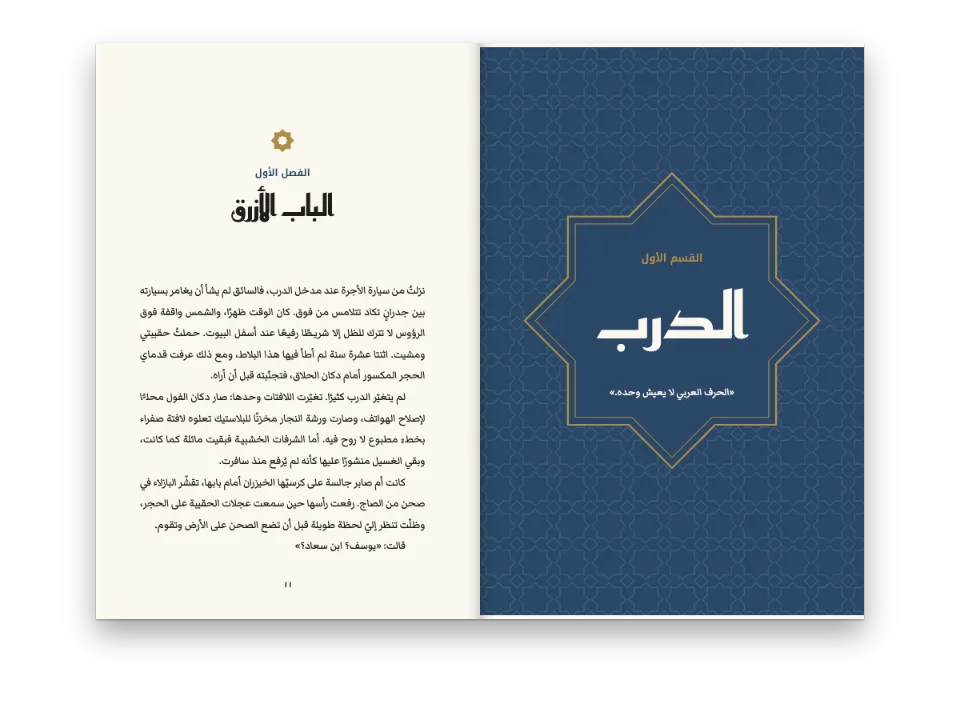
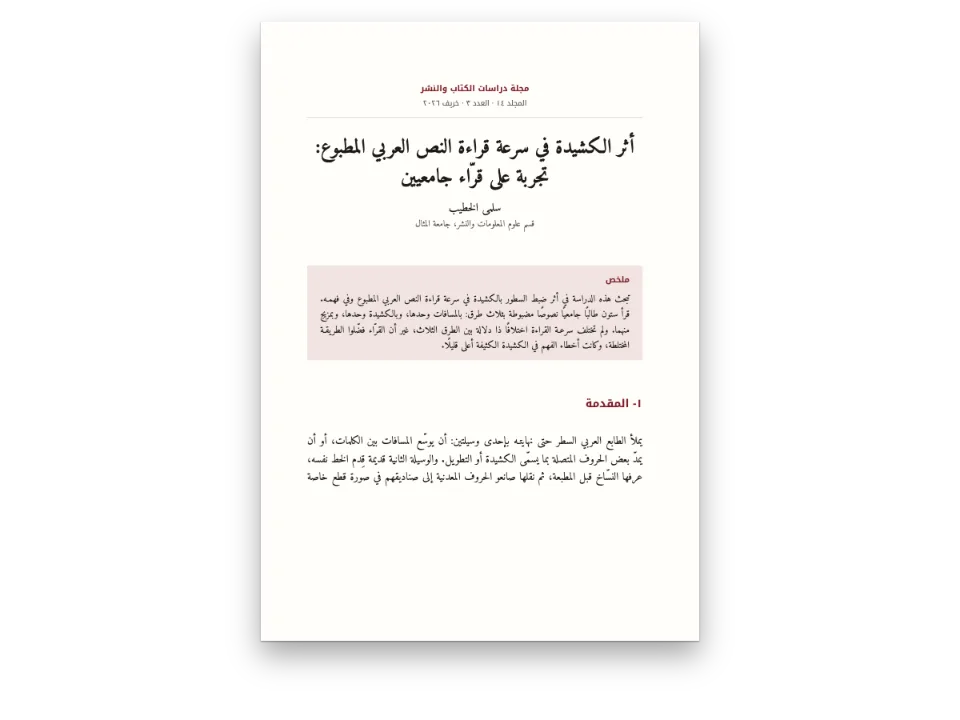
一本摩洛哥古城指南中写非斯城门的一章,按摩洛哥出版社的样子排:13.5 × 21 cm,Noto Naskh Arabic 12.5 pt,标题用Noto Kufi Arabic,颜色取非斯瓷砖的绿色。文字从右向左,书在右侧装订,和所有阿拉伯文书一样,但页面上的每个数字都写作1、2、3:页码41到44,الفصل 3,小节号3-1和3-2,城门列表1-到5-,脚注标记(1),还有插图编号شكل 3-1。这是从摩洛哥到突尼斯的马格里布用法,页面只用一项设置就做到了。右侧装订的阿拉伯文小说展示了用东部数字١٢的同类书。
这道食谱解答
- 马格里布版本的阿拉伯文书怎样印欧洲数字(1、2、3)?
简短回答
const config = () => ({ // a factory: the engine caches resolved configs per object
  // Written out, never LANG (gotcha: arabic-locale-tag). The Moroccan tag keeps the text right
  // to left and the binding on the right, and sets numerals: 'auto' to European digits: the
  // folios, the chapter and section numbers, the list, the notes and the figure number.
  locale: 'ar-MA',
  colorPalette,
  page: { width: mm(135), height: mm(210), dpi: 150, pageNumbering: { startAt: 41 },
    margins: { top: mm(22), bottom: mm(22), left: mm(19), right: mm(16), mirror: true } },
  layout: { layoutType: 'single' },
  bodyText: { fontFamily: TEXT, fontSize: pt(12.5), lineHeight: pt(20.5), color: col('ink'),
    boldColor: col('ink'), italicColor: col('ink'), referenceColor: col('ink'),
    textAlign: 'justify', firstLineIndent: em(1.5), indentAfterHeading: false },
  headings: { fontFamily: LABEL, fontWeight: 700, color: col('green'), levels: [
    // Restated: any headings object drops the H1 break (gotcha: headings-drop-h1-break).
    { level: 1, fontSize: pt(26), lineHeight: pt(41), numberingTemplate: 'الفصل {1}',
      numberSeparator: ': ', breakBefore: { enabled: true, parity: 'odd' },
      marginTop: pt(0), marginBottom: pt(10) },
    { level: 2, fontSize: pt(13), lineHeight: pt(20.5), numberingTemplate: '{1}-{2}',
      numberSeparator: '  ', marginTop: pt(20.5), marginBottom: pt(0) },
  ] },
  orderedLists, footnotes, captionStyle,
  paragraphStyles: [{ id: 'colophon', fontFamily: TEXT, fontSize: pt(8.5), lineHeight: pt(11),
    color: col('muted'), textAlign: 'left', firstLineIndent: pt(0), marginTop: pt(20.5) }],
  header: { elements: [] },
  footer: { elements: [{ kind: 'text', id: 'folio', content: '{pageNumber}', fontFamily: LABEL,
    fontSize: pt(9), color: col('muted'), align: 'center',
    placement: { anchor: { to: 'page', edge: 'bottom' }, offset: { y: mm(-12) } } }] },
});
用料
- 类型
- Noto Naskh Arabic, Noto Kufi Arabic(SIL OFL 1.1)
- 素材
- 无:所有图片都用代码绘制
做法
#1 · 国家决定数字
代码见上文的简短回答。numerals保持'auto',引擎从语言标记中读出数字系统:ar-MA、ar-DZ、ar-TN、ar-LY、ar-MR和ar-EH用欧洲数字,单独的ar和马什里克地区用١٢٣(数字系统与编号样式)。改变的只是引擎生成的数字:页码、标题计数、列表编号、脚注标记和插图编号。正文里的年份789和1913是作者按本版的数字写下的,引擎从不改写。标题上的{startAt=3}既认3也认٣,所以同一份Markdown可以用于两个版本。
#2 · 数字周围的符号
// «1-» and «(1)», as Arabic books write them; the number itself follows numerals.
const orderedLists = { color: col('green'), fontWeight: 700, marginTop: pt(0),
  marginBottom: pt(0), levels: [{ level: 1, numberFormat: 'arabic', separator: '-' }] };
const footnotes = { markerTemplate: '({n})', numbering: 'page', noteNumberPosition: 'inline',
  fontSize: pt(10), lineHeight: pt(15), separator: { width: 0.3, color: col('green') } };
// A colon after the label: a full stop after a number reads as a decimal point.
const captionStyle = { fontFamily: TEXT, fontSize: pt(10), color: col('ink'), labelBold: true,
  labelColor: col('green'), labelSeparator: ': ', note: { color: col('muted') } };
阿拉伯文图书的列表编号后面跟一个连字符,写作1-,脚注标记加圆括号,写作(1);两个模板都采用文档的数字系统,所以马什里克版用同样的设置印出١-和(١)(脚注)。图注标签以冒号结尾,写作شكل 3-1:,因为数字后的句点会被读成小数点。脚注在每一页都从(1)重新编号,这是多数阿拉伯文图书的做法。
#3 · 用代码画的瓷砖条
// The star is two squares turned 45°; between four stars a small square. Paths only.
const star = (cx, cy, r) => {
  const pts = [];
  for (let k = 0; k < 16; k++) {
    const a = (k * Math.PI) / 8;
    const d = k % 2 ? r * 0.7654 : r; // where the two squares' sides cross
    pts.push(`${(cx + d * Math.sin(a)).toFixed(2)} ${(cy - d * Math.cos(a)).toFixed(2)}`);
  }
  return `M${pts.join('L')}Z`;
};
function zellige(W, H, S) {
  let stars = '';
  let inner = '';
  let squares = '';
  for (let y = 0; y <= H + S; y += S) {
    for (let x = 0; x <= W + S; x += S) {
      stars += star(x, y, S * 0.47);
      inner += star(x, y, S * 0.2);
      squares += `M${x + S / 2} ${y + S / 2 - S * 0.17}l${S * 0.17} ${S * 0.17}`
        + `l${-S * 0.17} ${S * 0.17}l${-S * 0.17} ${-S * 0.17}Z`;
    }
  }
  return `<svg xmlns="http://www.w3.org/2000/svg" width="${W * 10}" height="${H * 10}" `
    + `viewBox="0 0 ${W} ${H}"><rect width="${W}" height="${H}" fill="${palette.green}"/>`
    + `<path d="${stars}" fill="${palette.cobalt}" stroke="${palette.paper}" stroke-width="0.5"/>`
    + `<path d="${inner}" fill="${palette.paper}"/>`
    + `<path d="${squares}" fill="${palette.ochre}" stroke="${palette.paper}" stroke-width="0.4"/>`
    + '</svg>';
}
插图是脚本里生成的SVG:用两个相错45°的正方形组成八角星,星与星之间是小方块,颜色取调色板里的绿、钴蓝和赭色。两个版本的图注都是阿拉伯文,按章编号{h1}-{n},这是阿拉伯文资源类型给插图编号的方式。
完整食谱
// ═══ Postext Cookbook · Nº 109 · A Maghreb edition of an Arabic text, with European digits ═══ // https://postext.dev/en/cookbook/maghreb-edition-european-digits // Code: MIT · Text: original Arabic prose (CC BY 4.0) · Pattern: drawn in code // Fonts: Noto Naskh Arabic, Noto Kufi Arabic (SIL OFL 1.1) · Needs postext ≥ 1.15.0 import { buildDocument, renderPageToCanvas, clearMeasurementCache, registerResourceImage, } from 'https://esm.sh/postext'; import { renderToPdf, decompressWoff2 } from 'https://esm.sh/postext-pdf'; const LANG = 'en'; // @lang: the language of the frame; the chapter is Arabic in both editions const RECIPE = 'maghreb-edition-european-digits'; // ─── 1 · Design ───────────────────────────────────────────────────────────── // The green and cobalt of Fes tilework, on a white book paper. const palette = { ink: '#1c1d1b', // text green: '#1d6650', // the accent: headings, the list numbers, the notes' rule cobalt: '#25488a', // the tile's second colour ochre: '#c99a3e', // the tile's third colour muted: '#62655f', // folios, captions' notes, the colophon paper: '#ffffff', }; const col = (id) => ({ hex: palette[id], model: 'hex', paletteId: id }); const colorPalette = Object.entries({ ...palette, 'main-color': palette.green }) .map(([id, hex]) => ({ id, name: id, value: { hex, model: 'hex' } })); const [TEXT, LABEL] = ['Noto Naskh Arabic', 'Noto Kufi Arabic']; // #region marks: list numbers, note markers and figure numbers in the same digits // «1-» and «(1)», as Arabic books write them; the number itself follows numerals. const orderedLists = { color: col('green'), fontWeight: 700, marginTop: pt(0), marginBottom: pt(0), levels: [{ level: 1, numberFormat: 'arabic', separator: '-' }] }; const footnotes = { markerTemplate: '({n})', numbering: 'page', noteNumberPosition: 'inline', fontSize: pt(10), lineHeight: pt(15), separator: { width: 0.3, color: col('green') } }; // A colon after the label: a full stop after a number reads as a decimal point. const captionStyle = { fontFamily: TEXT, fontSize: pt(10), color: col('ink'), labelBold: true, labelColor: col('green'), labelSeparator: ': ', note: { color: col('muted') } }; // #endregion // #region answer: ar-MA prints 1, 2, 3 in every number the engine writes const config = () => ({ // a factory: the engine caches resolved configs per object // Written out, never LANG (gotcha: arabic-locale-tag). The Moroccan tag keeps the text right // to left and the binding on the right, and sets numerals: 'auto' to European digits: the // folios, the chapter and section numbers, the list, the notes and the figure number. locale: 'ar-MA', colorPalette, page: { width: mm(135), height: mm(210), dpi: 150, pageNumbering: { startAt: 41 }, margins: { top: mm(22), bottom: mm(22), left: mm(19), right: mm(16), mirror: true } }, layout: { layoutType: 'single' }, bodyText: { fontFamily: TEXT, fontSize: pt(12.5), lineHeight: pt(20.5), color: col('ink'), boldColor: col('ink'), italicColor: col('ink'), referenceColor: col('ink'), textAlign: 'justify', firstLineIndent: em(1.5), indentAfterHeading: false }, headings: { fontFamily: LABEL, fontWeight: 700, color: col('green'), levels: [ // Restated: any headings object drops the H1 break (gotcha: headings-drop-h1-break). { level: 1, fontSize: pt(26), lineHeight: pt(41), numberingTemplate: 'الفصل {1}', numberSeparator: ': ', breakBefore: { enabled: true, parity: 'odd' }, marginTop: pt(0), marginBottom: pt(10) }, { level: 2, fontSize: pt(13), lineHeight: pt(20.5), numberingTemplate: '{1}-{2}', numberSeparator: ' ', marginTop: pt(20.5), marginBottom: pt(0) }, ] }, orderedLists, footnotes, captionStyle, paragraphStyles: [{ id: 'colophon', fontFamily: TEXT, fontSize: pt(8.5), lineHeight: pt(11), color: col('muted'), textAlign: 'left', firstLineIndent: pt(0), marginTop: pt(20.5) }], header: { elements: [] }, footer: { elements: [{ kind: 'text', id: 'folio', content: '{pageNumber}', fontFamily: LABEL, fontSize: pt(9), color: col('muted'), align: 'center', placement: { anchor: { to: 'page', edge: 'bottom' }, offset: { y: mm(-12) } } }] }, }); // #endregion // ─── 2 · Content ──────────────────────────────────────────────────────────── const markdown = String.raw`---Markdown样例 · 45行 · content.en.md
title: "مدن المغرب العتيقة" --- # أبواب فاس {startAt=3} ::resource{id="zellige"} لا يدخل المرء فاس العتيقة كما يدخل مدينة حديثة. فالمدينة التي أسّسها إدريس الأول على الضفة اليمنى لوادي فاس سنة 789، ثم بنى ابنه إدريس الثاني ضفتها الأخرى بعد عشرين عامًا، ظلّت قرونًا محاطة بسور لا تُعبر إلا أبوابه. ومن الباب يبدأ كل شيء: منه تدخل القوافل والبضائع، وعنده تُدفع المكوس، وإليه تُنسب الأحياء والأسواق والمقابر. وما زال الزائر يلمس هذا النظام إلى اليوم. فالسيارات تقف عند الأبواب، والطرق داخل السور ضيقة لا يمرّ فيها إلا الراجل والحمار والعربة الصغيرة التي يدفعها الحمّال وهو ينادي: «بالاك!» أي: انتبه. ولذلك يختار أهل فاس الباب الذي يدخلون منه بحسب وجهتهم، لا بحسب قربه، كما يختار المسافر الميناء الذي يرسو فيه. ## الأبواب الكبرى يصعب أن يُحصى عدد أبواب فاس إحصاءً واحدًا، لأن بعضها سُدّ وبعضها فُتح في القرن العشرين، ولأن المؤرخين لا يعدّون الأبواب الصغيرة بين الأحياء. لكن خمسة منها تكفي لرسم صورة المدينة: 1. **باب بوجلود**، المدخل الغربي الذي يعرفه كل زائر. بُني بشكله الحالي سنة 1913، وكُسي من الخارج بزليج أزرق هو لون فاس، ومن الداخل بزليج أخضر هو لون الإسلام. 2. **باب المحروق**، في الشمال الغربي، من العهد الموحدي. تقول الرواية إنه سُمّي بهذا الاسم لأن ثائرًا أُحرق عنده، ولا يثبت ذلك مصدر يُعتمد عليه. 3. **باب الكيسة**، في الشمال، قرب الطريق الصاعد إلى قبور المرينيين، ومنه يُشرف الماشي على المدينة كلها في المساء. 4. **باب الفتوح**، في الجنوب الشرقي، على عدوة الأندلس، وبجانبه مقبرة واسعة تحمل اسمه. 5. **باب الجديد**، في الجنوب، وهو كما يدلّ اسمه أحدث عهدًا من الأبواب الأربعة السابقة، فُتح ليصل المدينة العتيقة بالأحياء التي نشأت خارج سورها. وليس الترتيب هنا ترتيب أهمية، بل ترتيب الدورة التي يقوم بها الماشي حول السور إذا بدأ من الغرب وسار مع عقارب الساعة. وتستغرق هذه الدورة على القدمين نحو 4 ساعات، إذا لم يتوقف الماشي لشرب الشاي، وهو أمر نادر.[^tour] ## مدينة داخل السور تمتد فاس البالي داخل أسوارها على نحو 280 هكتارًا، وتضم أكثر من 9000 زقاق، بعضها لا يزيد عرضه على متر واحد. وفي قلبها جامع القرويين، الذي أسّسته فاطمة الفهرية سنة 859، وتحوّل مع الزمن إلى أحد أقدم مراكز التعليم في العالم. وحوله تتوزع الأسواق بحسب الحِرف: سوق العطارين، وسوق النجارين، والدباغة الكبرى التي تُصبغ فيها الجلود في أحواض حجرية كما كانت تُصبغ منذ قرون. وقد أدرجت منظمة اليونسكو المدينة العتيقة في قائمة التراث العالمي سنة 1981، فصار ترميم الأبواب والأسوار عملًا تتعاقب عليه الهيئات والمهندسون والحرفيون. وفي ورشات الترميم يتعلم الشباب صناعة الزليج من جديد: يُقطع الطين المشويّ قطعًا صغيرة بالمطرقة الحادة، قطعة قطعة، ثم تُصفّ القطع مقلوبة على الأرض حسب الرسم، ويُصبّ عليها الجص، فإذا جفّ قُلبت اللوحة فظهرت النجمة.[^zellige] ## الباب والكتاب يقول أهل فاس إن من عرف أبواب المدينة عرف المدينة. وقد يصدق هذا على الكتب أيضًا: فلكل كتاب أبوابه، والقارئ الذي يعرف من أين يدخل لا يضيع في أزقته. ولهذا قُسّم هذا الكتاب أبوابًا وفصولًا، ورُقّمت صفحاته بالأرقام التي يقرؤها أهل المغرب في كتبهم وصحفهم ولافتات شوارعهم: 1 و2 و3، لا ١ و٢ و٣. وليس في ذلك خروج عن العربية. فالأرقام التي يسمّيها الأوروبيون «عربية» وصلت إليهم من الأندلس والمغرب، وكانت تُكتب بهذا الشكل في مخطوطات المغرب قبل أن تصل إلى أوروبا، بينما بقيت الأرقام الهندية المشرقية في مصر والشام والعراق.[^digits] فالكتاب المغربي حين يطبع 41 و42 و43 في أسفل صفحاته لا يقلّد أحدًا، بل يعود إلى ما كان عليه. [^tour]: يُفضَّل أن تبدأ الدورة صباحًا، قبل أن تشتد الشمس على الجهة الجنوبية من السور. [^zellige]: تُسمّى القطعة الواحدة من الزليج «فرْمة»، ويحتاج المعلّم إلى عشرات الأشكال المختلفة لرسم نجمة واحدة. [^digits]: تُعرف الأرقام المغربية في كتب الحساب القديمة باسم «الأرقام الغبارية»، لأن الحُسّاب كانوا يرسمونها على لوح مغطى بالغبار. :::paragraphs{style="colophon" dir=ltr} A chapter written in Arabic for the Postext Cookbook, from an invented book on the old cities of Morocco. Set in Noto Naskh Arabic and Noto Kufi Arabic (SIL OFL) · Text: CC BY 4.0. :::`; // content.<lang>.md: the same Arabic text in both // #region art: a band of zellige, eight-pointed stars set in cobalt, green and ochre // The star is two squares turned 45°; between four stars a small square. Paths only. const star = (cx, cy, r) => { const pts = []; for (let k = 0; k < 16; k++) { const a = (k * Math.PI) / 8; const d = k % 2 ? r * 0.7654 : r; // where the two squares' sides cross pts.push(`${(cx + d * Math.sin(a)).toFixed(2)} ${(cy - d * Math.cos(a)).toFixed(2)}`); } return `M${pts.join('L')}Z`; }; function zellige(W, H, S) { let stars = ''; let inner = ''; let squares = ''; for (let y = 0; y <= H + S; y += S) { for (let x = 0; x <= W + S; x += S) { stars += star(x, y, S * 0.47); inner += star(x, y, S * 0.2); squares += `M${x + S / 2} ${y + S / 2 - S * 0.17}l${S * 0.17} ${S * 0.17}` + `l${-S * 0.17} ${S * 0.17}l${-S * 0.17} ${-S * 0.17}Z`; } } return `<svg xmlns="http://www.w3.org/2000/svg" width="${W * 10}" height="${H * 10}" ` + `viewBox="0 0 ${W} ${H}"><rect width="${W}" height="${H}" fill="${palette.green}"/>` + `<path d="${stars}" fill="${palette.cobalt}" stroke="${palette.paper}" stroke-width="0.5"/>` + `<path d="${inner}" fill="${palette.paper}"/>` + `<path d="${squares}" fill="${palette.ochre}" stroke="${palette.paper}" stroke-width="0.4"/>` + '</svg>'; } // #endregion const [BAND_W, BAND_H] = [100, 58]; // mm: the measure, and a band a little over half as deep const resources = [{ id: 'zellige', typeId: 'figure', kind: 'svg', createdAt: 0, updatedAt: 0, svg: { fileId: 'zellige.svg', width: BAND_W * 10, height: BAND_H * 10 }, caption: 'زليج من نجوم ثمانية الرؤوس، على طريقة الفسيفساء الفاسية', altText: t({ en: 'Eight-pointed cobalt stars outlined in white on a green ground, with small ' + 'ochre squares between them.', es: 'Estrellas cobalto de ocho puntas perfiladas en blanco ' + 'sobre fondo verde, con pequeños cuadrados ocre entre ellas.' }) }]; // ─── 3 · Fonts ────────────────────────────────────────────────────────────── const FONTS = { // every face the pages use, loaded before the build (gotcha: fonts-first) 'Noto Naskh Arabic': ['400', '700'], // TEXT: the chapter, notes, captions; bold emphasis 'Noto Kufi Arabic': ['400', '700'], // LABEL: headings, folios }; // ─── 4 · Build & show ─────────────────────────────────────────────────────── await loadFonts(FONTS, markdown); // Each Arabic face's letters live in a file of their own (gotcha: arabic-fonts-subset). await loadArabicFonts(FONTS, markdown + resources[0].caption); await loadSvg('zellige.svg', zellige(BAND_W, BAND_H, 13)); const doc = await buildWithFonts(() => buildDocument({ markdown, resources }, config()), markdown); showBook(doc, { title: t({ en: 'A Maghreb edition with European digits', es: 'Una edición magrebí con cifras europeas' }) }); offerPdf(() => renderToPdf(doc, { fontProvider: arabicPdfProvider, resourceBytes: imageBytes }), `${RECIPE}.pdf`);工具包 · core, fonts, viewer, pdf, images, arabic, book:每道食谱都相同 · 446行
// ─── Kit ── helpers shared by every Cookbook recipe · postext.dev/cookbook ───── // ─── Kit · core v1 ── the same in every recipe · postext.dev/cookbook ───────── function mm(value) { return { value, unit: 'mm' }; } function pt(value) { return { value, unit: 'pt' }; } function em(value) { return { value, unit: 'em' }; } /** The sample language's string: t({ en: 'Figure', es: 'Figura' }). */ function t(strings) { return strings[LANG] ?? Object.values(strings)[0]; } /** A file in this recipe's assets folder, served from the Postext repo by jsDelivr. */ function asset(file) { return `https://cdn.jsdelivr.net/gh/drnachio/postext@main/cookbook/${RECIPE}/assets/${file}`; } // ─── Kit · fonts v1 ── the same in every recipe · postext.dev/cookbook ──────── // Postext measures text with the faces the browser has loaded, and caches the // widths, so every face must be ready before the first build. Faces come from // Fontsource: the same static files the PDF embeds, so screen and PDF agree. /** faces = { 'Family Name': ['400', '400i', '700'] }. `text` is the sample: * letters beyond Latin-1 (č, ł, ő…) also load the latin-ext files. With * `optional`, a face Fontsource does not ship is skipped instead of failing. * Resolves to the number of faces added. */ async function loadFonts(faces, text = '', { optional = false } = {}) { kitStatus('Loading fonts…'); const ranges = { latin: 'U+0000-00FF,U+0131,U+0152-0153,U+02BB-02BC,U+02C6,U+02DA,U+02DC,U+0304,U+0308,U+0329,' + 'U+2000-206F,U+20AC,U+2122,U+2191,U+2193,U+2212,U+2215,U+FEFF,U+FFFD', 'latin-ext': 'U+0100-02BA,U+02BD-02C5,U+02C7-02CC,U+02CE-02D7,U+02DD-02FF,U+0304,U+0308,U+0329,' + 'U+1D00-1DBF,U+1E00-1E9F,U+1EF2-1EFF,U+2020,U+20A0-20AB,U+20AD-20C0,U+2113,U+2C60-2C7F,U+A720-A7FF', }; const subsets = /[Ā-˿Ḁ-ỿ]/.test(text) ? ['latin', 'latin-ext'] : ['latin']; const jobs = []; let added = 0; for (const [family, specs] of Object.entries(faces)) { const id = fontsourceId(family); const meta = optional ? await fontsourceMeta(family) : null; for (const spec of new Set(specs)) { const weight = parseInt(spec, 10); const style = spec.endsWith('i') ? 'italic' : 'normal'; if (hasFace(family, weight, style)) continue; if (optional && !(meta?.weights.includes(weight) && meta.styles.includes(style))) continue; for (const subset of subsets) { const url = `https://cdn.jsdelivr.net/npm/@fontsource/${id}@5/files/${id}-${subset}-${weight}-${style}.woff2`; const face = new FontFace(family, `url(${url}) format('woff2')`, { weight: String(weight), style, unicodeRange: ranges[subset] }); jobs.push(face.load().then((ready) => { document.fonts.add(ready); added++; }, () => { if (subset === 'latin' && !optional) throw new Error(`Fontsource has no ${family} ${weight} ${style}`); })); } } } await Promise.all(jobs).catch((error) => { kitFail(error); throw error; }); return added; } /** Runs `build` (a buildDocument or buildBundle call) and checks the faces * the pages use. A regular face missing from FONTS is loaded with a warning; * bold and italic variants are loaded when the family ships them. Then the * measurement caches are cleared and the build runs again. */ async function buildWithFonts(build, text = '') { const tried = new Set(); for (let round = 0; round < 3; round++) { kitStatus('Laying out…'); await new Promise(requestAnimationFrame); // let the status paint first const result = await Promise.resolve().then(build).catch((error) => { kitFail(error); throw error; }); const wanted = { base: {}, variants: {} }; for (const { font, base } of [result].flat().flatMap(fontStringsOf)) { const { family, weight, style } = parseFont(font); const key = `${family}|${weight}|${style}`; if (tried.has(key) || hasFace(family, weight, style)) continue; tried.add(key); (wanted[base ? 'base' : 'variants'][family] ??= []).push(`${weight}${style === 'italic' ? 'i' : ''}`); } if (Object.keys(wanted.base).length) { console.warn(`[cookbook] FONTS does not list ${JSON.stringify(wanted.base)}: loading them.`); } const added = await loadFonts(wanted.base, text) + await loadFonts(wanted.variants, text, { optional: true }); if (added === 0) return result; clearMeasurementCache(); } throw new Error('The fonts did not settle after three builds.'); } /** Every font string of the layout. `base` marks a block's own face; its * bold, italic and bold-italic variants are listed whether or not used. */ function fontStringsOf(doc) { const found = new Map(); const walk = (node) => { if (!node || typeof node !== 'object') return; if (Array.isArray(node)) { node.forEach(walk); return; } for (const [key, value] of Object.entries(node)) { if (typeof value === 'string' && /fontString$/i.test(key)) { found.set(value, found.get(value) || key === 'fontString'); } else if (value && typeof value === 'object') walk(value); } }; walk(doc.pages); walk(doc.blocks); return [...found].map(([font, base]) => ({ font, base })); } /** '700 37.5px Open Sans' / 'italic 400 13px "Source Serif 4"' → { family, weight, style }. * A string with no weight ('95.8px Young Serif', from a design text) is 400. */ function parseFont(font) { const m = /^(?:(italic|oblique)\s+)?(?:small-caps\s+)?(?:(\d+|bold|normal)\s+)?[\d.]+px\s+(.+)$/.exec(font.trim()); if (!m) throw new Error(`Unexpected font string: ${font}`); const weight = m[2] === 'bold' ? 700 : !m[2] || m[2] === 'normal' ? 400 : Number(m[2]); return { family: m[3].replace(/^["']|["']$/g, ''), weight, style: m[1] ? 'italic' : 'normal' }; } /** True when a loaded FontFace covers exactly this family, weight and style * (document.fonts.check() is also true for families nobody declared). */ function hasFace(family, weight, style) { for (const face of document.fonts) { if (face.status !== 'loaded' || face.style !== style) continue; if (face.family.replace(/^["']|["']$/g, '') !== family) continue; const [low, high = low] = face.weight.split(' ').map(Number); if (weight >= low && weight <= high) return true; } return false; } /** Fontsource's id for a family: 'Source Serif 4' → 'source-serif-4'. */ function fontsourceId(family) { return family.toLowerCase().replace(/\s+/g, '-'); } /** The weights and styles a family ships ({ weights: [400, 700], styles: ['normal', 'italic'] }), or null. */ function fontsourceMeta(family) { fontsourceMeta.cache ??= new Map(); const id = fontsourceId(family); if (!fontsourceMeta.cache.has(id)) { fontsourceMeta.cache.set(id, fetch(`https://api.fontsource.org/v1/fonts/${id}`) .then((res) => (res.ok ? res.json() : null), () => null)); } return fontsourceMeta.cache.get(id); } // ─── Kit · viewer v1 ── the same in every recipe · postext.dev/cookbook ─────── /** Shows the pages as facing spreads on a dark desk: the first page is a * recto on its own, then verso | recto pairs, as in a bound book. Pages * are painted when they scroll near the screen. */ function showPages(docs, { title, width = 460 } = {}) { const root = viewer(title); const pages = [docs].flat().flatMap((doc) => doc.pages.map((page) => ({ doc, page, n: (doc.pageIndexOffset ?? 0) + page.index }))); const spreads = []; let verso = null; for (const p of pages) { if (p.n % 2 === 1) { if (verso) spreads.push([verso, null]); verso = p; } else { spreads.push([verso, p]); verso = null; } } if (verso) spreads.push([verso, null]); const density = Math.min(window.devicePixelRatio || 1, 2); showPages.painter?.disconnect(); const painter = new IntersectionObserver((entries) => { for (const { isIntersecting, target } of entries) { if (!isIntersecting) continue; painter.unobserve(target); const { doc, page } = target.postext; renderPageToCanvas(page, doc, target, { scale: (width * density) / page.width }); } }, { rootMargin: '800px' }); showPages.painter = painter; root.replaceChildren(...spreads.map((pair) => { const spread = document.createElement('div'); spread.className = 'pt-spread'; for (const p of pair) { const figure = document.createElement('figure'); if (p) { const label = p.page.pageLabel || String(p.n + 1); const canvas = document.createElement('canvas'); canvas.postext = p; canvas.style.aspectRatio = `${p.page.width} / ${p.page.height}`; canvas.setAttribute('role', 'img'); canvas.setAttribute('aria-label', `Page ${label}`); const folio = document.createElement('figcaption'); folio.textContent = label; figure.append(canvas, folio); painter.observe(canvas); } else figure.className = 'pt-blank'; spread.append(figure); } return spread; })); kitStatus(`${pages.length} ${pages.length === 1 ? 'page' : 'pages'}`); document.documentElement.dataset.postext = 'ready'; return pages.length; } /** The desk, the bar and the error reporting, created once. */ function viewer(title) { if (!document.getElementById('pt-kit')) { document.head.insertAdjacentHTML('beforeend', `<style id="pt-kit"> :root { color-scheme: dark; } body { margin: 0; background: #0e1014; color: #b9bcc4; font: 13px/1.45 system-ui, sans-serif; } #pt-bar { position: sticky; top: 0; z-index: 1; display: flex; flex-wrap: wrap; align-items: center; gap: 6px 16px; padding: 10px 16px; background: rgb(14 16 20 / .92); backdrop-filter: blur(6px); border-bottom: 1px solid #23262d; } #pt-bar strong { color: #f4f1ea; font-weight: 600; } #pt-actions { display: flex; gap: 12px; margin-left: auto; } #pt-actions a, #pt-actions button { color: #d8a21a; font: inherit; background: none; border: 0; padding: 0; cursor: pointer; } #pages { display: grid; justify-items: center; gap: 48px; padding: 32px 16px 72px; } .pt-spread { display: flex; } .pt-spread figure { margin: 0; width: min(460px, 44vw); } .pt-spread canvas { display: block; width: 100%; background: #fff; box-shadow: 0 1px 2px rgb(0 0 0 / .5), 0 22px 44px -16px rgb(0 0 0 / .8); } .pt-spread figure:first-child canvas { box-shadow: inset -14px 0 14px -14px rgb(0 0 0 / .18), 0 1px 2px rgb(0 0 0 / .5), 0 22px 44px -16px rgb(0 0 0 / .8); } .pt-spread figcaption { margin-top: 10px; text-align: center; font: 600 10px/1 system-ui, sans-serif; letter-spacing: .18em; text-transform: uppercase; color: #6c7079; } .pt-blank { visibility: hidden; } @media (max-width: 760px) { .pt-spread { flex-direction: column; gap: 32px; } .pt-spread figure { width: min(460px, 92vw); } .pt-blank { display: none; } } </style>`); document.body.insertAdjacentHTML('afterbegin', '<header id="pt-bar"><strong id="pt-title"></strong><span id="pt-status" role="status"></span><span id="pt-actions"></span></header>'); document.getElementById('pt-title').textContent = document.title || 'Postext'; addEventListener('error', (event) => kitFail(event.error ?? event.message)); addEventListener('unhandledrejection', (event) => kitFail(event.reason)); } if (title) document.getElementById('pt-title').textContent = title; return document.getElementById('pages') ?? document.body.appendChild(Object.assign(document.createElement('main'), { id: 'pages' })); } function kitStatus(text) { viewer(); document.getElementById('pt-status').textContent = text; } function kitFail(error) { document.documentElement.dataset.postext = 'error'; kitStatus(`Error: ${error?.message ?? error}`); } // ─── Kit · pdf v1 ── the same in every recipe that exports a PDF ────────────── /** postext-pdf embeds TrueType bytes. Fetch the Fontsource file the screen * used, snapping to a weight the family ships and falling back to upright * when it has no italic: the PDF asks for every face a block could use. */ async function fontsourceProvider(family, weight, style) { const id = fontsourceId(family); const meta = await fontsourceMeta(family); const weights = meta?.weights?.length ? meta.weights : [400, 700]; const w = weights.reduce((a, b) => (Math.abs(b - weight) < Math.abs(a - weight) ? b : a)); const s = style === 'italic' && meta && !meta.styles.includes('italic') ? 'normal' : style; const res = await fetch(`https://cdn.jsdelivr.net/npm/@fontsource/${id}@5/files/${id}-latin-${w}-${s}.woff2`); if (!res.ok) throw new Error(`Fontsource has no ${family} ${w} ${s} (${res.status})`); return decompressWoff2(new Uint8Array(await res.arrayBuffer())); } /** A "Build the PDF" button in the bar. Once built: "Open the PDF" (a new * tab, since CodePen's preview frame cannot show PDFs) and a download link. */ function offerPdf(makePdf, filename) { viewer(); const button = Object.assign(document.createElement('button'), { type: 'button', textContent: 'Build the PDF' }); button.dataset.postextPdf = filename; button.addEventListener('click', async () => { button.disabled = true; button.textContent = 'Building the PDF…'; try { const bytes = await makePdf(); const url = URL.createObjectURL(new Blob([bytes], { type: 'application/pdf' })); const size = `${Math.max(1, Math.round(bytes.length / 1024))} KB`; button.replaceWith( Object.assign(document.createElement('a'), { href: url, target: '_blank', rel: 'noopener', textContent: 'Open the PDF ↗' }), Object.assign(document.createElement('a'), { href: url, download: filename, textContent: `Download ${filename} · ${size}` })); } catch (error) { button.disabled = false; button.textContent = 'Build the PDF'; kitFail(error); } }); document.getElementById('pt-actions').append(button); } // ─── Kit · images v1 ── recipes with pictures · postext.dev/cookbook ────────── /** Registers a photo or PNG for the canvas and keeps its bytes for the PDF. * fetch → ImageBitmap never taints the canvas (a plain cross-origin <img> would). */ async function loadImage(fileId, url) { const res = await fetch(url); if (!res.ok) throw new Error(`Image not found (${res.status}): ${url}`); const bytes = new Uint8Array(await res.arrayBuffer()); registerResourceImage(fileId, await createImageBitmap(new Blob([bytes]))); (loadImage.bytes ??= new Map()).set(fileId, bytes); } /** Registers SVG markup (drawn in code, or fetched) as a vector image. */ async function loadSvg(fileId, svg) { const img = new Image(); img.src = `data:image/svg+xml;charset=utf-8,${encodeURIComponent(svg)}`; await img.decode(); registerResourceImage(fileId, img); (loadImage.bytes ??= new Map()).set(fileId, new TextEncoder().encode(svg)); } /** renderToPdf({ resourceBytes: imageBytes }) */ function imageBytes(fileId) { return loadImage.bytes?.get(fileId); } /** renderToHtml({ resourceImageUrl: imageUrl }) */ function imageUrl(fileId) { const bytes = imageBytes(fileId); if (!bytes) return undefined; imageUrl.urls ??= new Map(); if (!imageUrl.urls.has(fileId)) { const type = /\.svg$/i.test(fileId) ? 'image/svg+xml' : /\.png$/i.test(fileId) ? 'image/png' : 'image/jpeg'; imageUrl.urls.set(fileId, URL.createObjectURL(new Blob([bytes], { type }))); } return imageUrl.urls.get(fileId); } // ─── Kit · arabic v1 ── Arabic-script faces · postext.dev/cookbook ─────────── // Fontsource ships an Arabic family as one file per subset and weight: the // `arabic` file holds the letters, the harakat, the Arabic-Indic digits, the // Arabic punctuation and the presentation forms; `latin` and `latin-ext` // hold the rest. loadFonts loads the latin files; this block adds the arabic // file of every Arabic family, for the canvas and for the PDF, which shapes // the letters with HarfBuzz from the same bytes. /** The code points of Fontsource's `arabic` subset, as its stylesheets * declare them (the same unicode-range the browser picks the file by). A * function, not a const: the kit is inlined after the recipe's top-level * awaits, and a const read before its line throws, where a function * declaration is hoisted. */ function arabicRange() { return 'U+0600-06FF,U+0750-077F,U+0870-088E,U+0890-0891,U+0897-08E1,U+08E3-08FF,' + 'U+200C-200E,U+2010-2011,U+204F,U+2E41,U+FB50-FDFF,U+FE70-FE74,U+FE76-FEFC,U+102E0-102FB,' + 'U+10E60-10E7E,U+10EC2-10EC4,U+10EFC-10EFF,U+1EE00-1EEFF'; } /** Whether code point `cp` is in the arabic file. */ function inArabicRange(cp) { inArabicRange.ranges ??= arabicRange().split(',').map((part) => { const [lo, hi = lo] = part.slice(2).split('-'); return [parseInt(lo, 16), parseInt(hi, 16)]; }); return inArabicRange.ranges.some(([lo, hi]) => cp >= lo && cp <= hi); } /** Whether Fontsource serves `family` with an `arabic` subset. Fails when * the API does not answer: an Arabic face taken for a Latin one would set * its letters in a system face. */ async function isArabicFamily(family) { const meta = await fontsourceMeta(family); if (!meta) throw new Error(`api.fontsource.org did not describe ${family}: reload to try again`); return !!meta.subsets?.includes('arabic'); } /** The arabic file of a face. */ function arabicFileUrl(family, weight, style) { const id = fontsourceId(family); return `https://cdn.jsdelivr.net/npm/@fontsource/${id}@5/files/${id}-arabic-${weight}-${style}.woff2`; } /** faces = { Amiri: ['400', '700'] }, as for loadFonts, after it: the whole * FONTS object may be passed, its families without an arabic subset are * left alone. Adds the arabic file of every listed weight of each Arabic * family (the latin files come from loadFonts) and loads it. `text` is * the sample: fails when it holds an Arabic-script character the arabic * file does not cover. List every weight the pages set in Arabic: a weight * left to buildWithFonts gets the latin file only, and its Arabic letters * fall back to a system face. Resolves to the number of files loaded. */ async function loadArabicFonts(faces, text = '') { kitStatus('Loading fonts…'); let loaded = 0; try { const outside = [...new Set(text)].filter((ch) => /\p{Script=Arabic}/u.test(ch) && !inArabicRange(ch.codePointAt(0))); if (outside.length) throw new Error(`Fontsource's arabic files have no ${outside.slice(0, 12).join(' ')}`); for (const [family, specs] of Object.entries(faces)) { if (!(await isArabicFamily(family))) continue; for (const spec of new Set(specs)) { const weight = parseInt(spec, 10); const style = spec.endsWith('i') ? 'italic' : 'normal'; const face = new FontFace(family, `url(${arabicFileUrl(family, weight, style)}) format('woff2')`, { weight: String(weight), style, unicodeRange: arabicRange() }); document.fonts.add(await face.load().catch(() => { throw new Error(`Fontsource has no arabic file for ${family} ${weight} ${style}`); })); loaded++; } } } catch (error) { kitFail(error); throw error; } return loaded; } /** The PDF font provider for recipes with Arabic faces: a family with an * arabic subset gets its arabic file when its pages set Arabic letters * (`request.codePoints`), then its latin file, and its latin-ext file for * the letters beyond latin (transliteration: ā ḥ ʿ). The arabic file comes * first: it also holds the space and the brackets, so a line of Arabic is * shaped as one run and not cut at every space. Any other family goes to * fontsourceProvider (the "pdf" block). */ async function arabicPdfProvider(family, weight, style, request) { if (!(await isArabicFamily(family))) return fontsourceProvider(family, weight, style); const meta = await fontsourceMeta(family); const weights = meta.weights?.length ? meta.weights : [400, 700]; const w = weights.reduce((a, b) => (Math.abs(b - weight) < Math.abs(a - weight) ? b : a)); const s = style === 'italic' && !meta.styles.includes('italic') ? 'normal' : style; const wanted = [...(request?.codePoints ?? [])]; const id = fontsourceId(family); const urls = []; if (!wanted.length || wanted.some(inArabicRange)) urls.push(arabicFileUrl(family, w, s)); urls.push(`https://cdn.jsdelivr.net/npm/@fontsource/${id}@5/files/${id}-latin-${w}-${s}.woff2`); if (meta.subsets.includes('latin-ext') && wanted.some((cp) => /[Ā-˿Ḁ-ỿ]/u.test(String.fromCodePoint(cp)))) { urls.push(`https://cdn.jsdelivr.net/npm/@fontsource/${id}@5/files/${id}-latin-ext-${w}-${s}.woff2`); } return Promise.all(urls.map(async (url) => { const res = await fetch(url); if (!res.ok) throw new Error(`Fontsource file ${url} (${res.status})`); return decompressWoff2(new Uint8Array(await res.arrayBuffer())); })); } // ─── Kit · book v1 ── books bound on either edge · postext.dev/cookbook ────── // A book bound on the right (Arabic, Hebrew or Persian text, vertical // Chinese, or page.binding 'right') opens from what a Latin reader calls // the back: page 1 lies alone on the left of the spine, then [3 | 2]. /** showPages for a book bound on either edge. A right-bound book (the * document says so: doc.binding is 'right' for page.binding 'right', for * text that runs right to left and for vertical text, when the binding is * left to 'auto') lies on the desk as it opens: page 1 alone on the left * of the spine, then [3 | 2], the spine shade on each page's inner edge. * `binding` ('left' | 'right') overrides the document's. */ function showBook(docs, { binding, ...options } = {}) { const count = showPages(docs, options); const right = (binding ?? [docs].flat()[0]?.binding) === 'right'; if (!document.getElementById('pt-kit-book')) { // The pages keep direction ltr, as in a left-bound book: a canvas takes // the direction its element inherits, and under the spread's rtl a run // painted for an ltr canvas would end where the engine starts it. document.head.insertAdjacentHTML('beforeend', `<style id="pt-kit-book"> .pt-spread[dir="rtl"] canvas { direction: ltr; } .pt-spread[dir="rtl"] figure:first-child canvas { box-shadow: inset 14px 0 14px -14px rgb(0 0 0 / .18), 0 1px 2px rgb(0 0 0 / .5), 0 22px 44px -16px rgb(0 0 0 / .8); } </style>`); } // Each pair stays [verso, recto] in the page; right to left, the verso // sits on the right. Phones stack the pages in reading order either way. for (const spread of document.querySelectorAll('#pages > .pt-spread')) spread.dir = right ? 'rtl' : 'ltr'; document.getElementById('pages').dataset.binding = right ? 'right' : 'left'; return count; } // ─── /Kit ───────────────────────────────────────────────────────────────────────
组合好的script.js可以直接运行:把它粘贴到任何页面的模块脚本中,或在CodePen上打开这道食谱。 GitHub上的食谱文件夹 ↗ (在新标签页中打开)
变化
常见问题
易错点
阿拉伯文书标记为'ar',不要用LANG
食谱的版本是en和es,但阿拉伯文示例在两个版本里都是阿拉伯文:`locale: LANG`会让它从左向右排、左装订、页码印成1 2 3,并把图标注为Figure或Figura。自己写出标记:'ar'(阿拉伯-印度数字,马什里克惯例),或带地区的'ar-EG'、'ar-SA';马格里布版本用欧洲数字,写'ar-MA'、'ar-DZ'或'ar-TN'。只引用阿拉伯文的拉丁文页面保留自己的locale。 从右向左的文字 →
易错点
阿拉伯文字体需要通过arabic块加载其arabic文件
Fontsource把Amiri、Noto Naskh Arabic或Scheherazade New按子集分成多个文件提供,阿拉伯字母在arabic文件里。loadFonts只获取latin(以及latin-ext),所以屏幕上的阿拉伯文来自系统字体,测量不准;fontsourceProvider交给PDF的也是这个latin文件,印出来是空框。列出kit中的arabic块,在loadFonts之后调用loadArabicFonts(FONTS, markdown),并在FONTS中列出页面用于阿拉伯文的每个字重,再给renderToPdf传fontProvider: arabicPdfProvider。 阿拉伯文字体 →
易错点
传入任何headings对象都会关掉H1换页
默认情况下,H1换页到右页(always-odd),但只要传入headings对象,这个默认值就会被重置,于是各章接排,span: 'page'也不起作用。在每份配置中重新写明headings.levels[0].breakBefore: { enabled: true, parity }。 从右页开始的章 →
易错点
排版前加载所有字体
排版用浏览器已加载的字体测量文字,并缓存宽度,所以首次构建之后才到的字体会造成断行错误,PDF也不再与屏幕一致。先加载所有字重和样式;有字体迟到时,重新构建前调用clearMeasurementCache()。 排版前加载字体 →
致谢
- 文本
- “The gates of Fes”, a chapter written in Arabic for the recipe, from an invented book on the old cities of Morocco · Postext Cookbook · 原创
- 字体
- Noto Naskh Arabic (SIL OFL 1.1) · Noto Kufi Arabic (SIL OFL 1.1)