简单来说
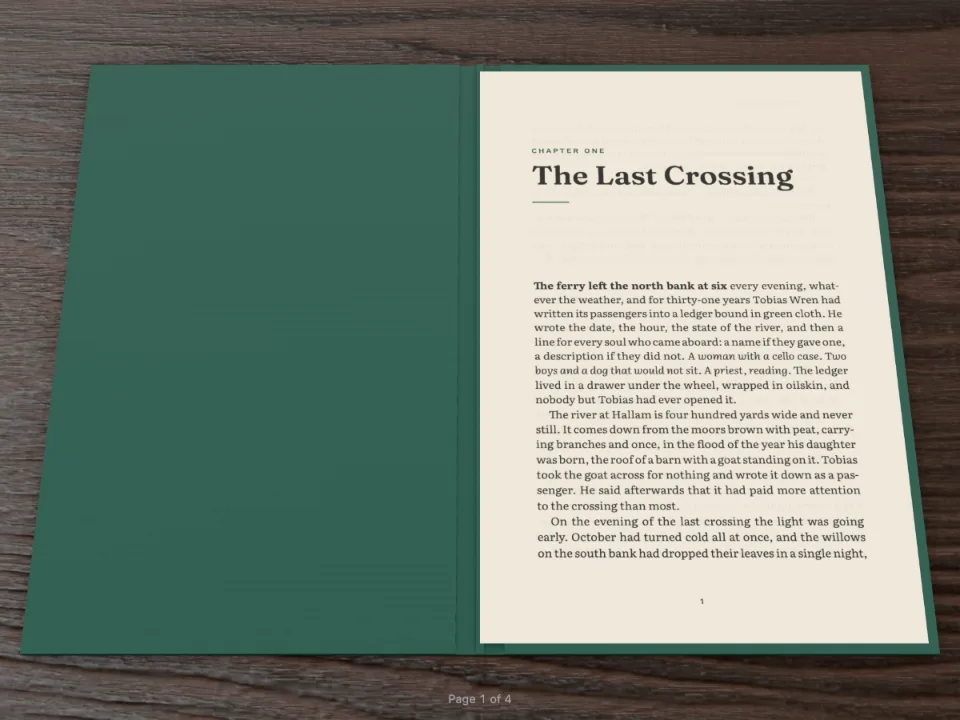
一本关于河口的折叠小刊物,封面是厚厚的彩色卡纸,里面是薄新闻纸。在3D查看器里它合着放在桌上,翻开时和真的一样。
成品一览
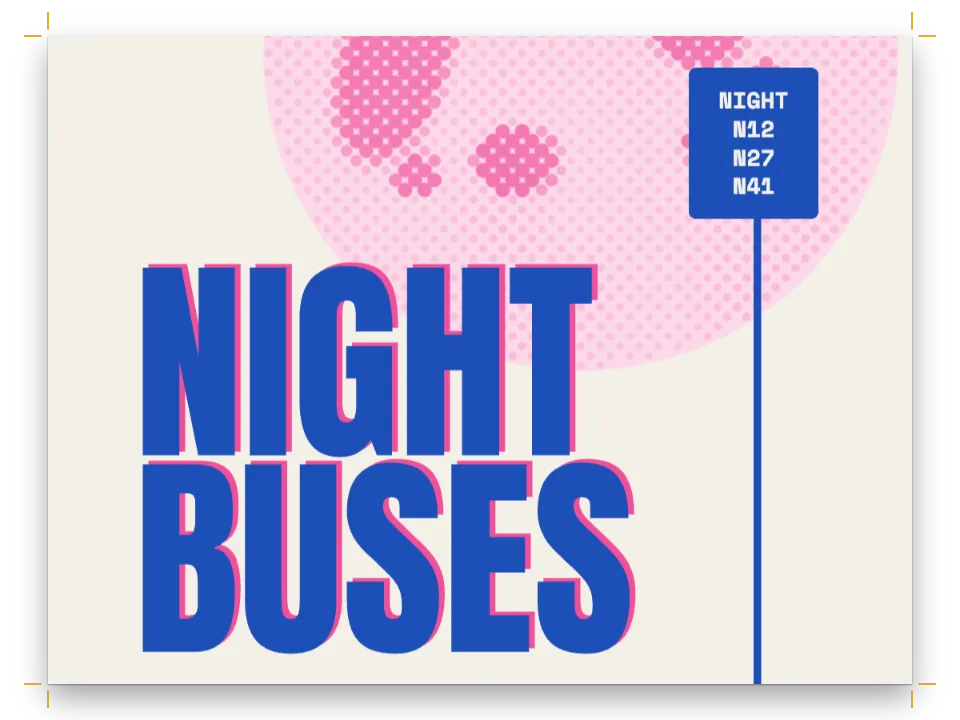
免费河口小志Low Tide第3期:八页,140 × 200毫米,两张纸对折后在折缝处钉住。外层纸(第1–2页和第7–8页)是浅橙色卡纸;内层纸(第3–6页)是便宜的新闻纸。封面只用一种孔版蓝色印在素卡纸上,没有自己的色块,所以在下面平铺的页面里它印在白纸上,而在Folio里,它带着卡纸的颜色合着放在桌上,直到你把它翻开。两种纸是Markdown里的两个块,装订是config.folio里的三项设置。
这道食谱解答
- 怎样让封面、插页或图版使用与全书不同的纸张?
- 付印前怎样预览书的装订、封面、纸张和光照效果?
简短回答
const stage = document.createElement('section');
stage.id = 'folio';
stage.ariaLabel = 'The zine in 3D';
stage.style.cssText = 'height: min(78vh, 720px); margin: 0 auto; max-width: 1280px';
document.getElementById('pages').before(stage);
// Covers from the pages need an even count: page 8 must fall on a verso to be the back.
if (doc.pages.length % 2) console.warn(`${doc.pages.length} pages: the back cover is missing`);
createFolioFromDocument(stage, doc, {
  appearance: { textureBaseUrl: 'https://postext.dev/folio/textures' },
  onChange: ({ pages }) => kitStatus(pages.map((i) => `p. ${i + 1} on `
    + (doc.pages[i].paper ? 'card' : 'newsprint')).join(' · ')),
});
用料
- 功能
- 为一组页面换用纸张纸张、装订、台面与光照(Folio)3D书本查看器(Folio)标题样式设计过的章首页标题属性页面设计中的文字、线条和框段落样式按页面角色显示书眉语义调色板对称页边距在Canvas上绘制页面
- 类型
- Newsreader, Bricolage Grotesque(SIL OFL 1.1)
- 素材
- The tide lines on the cover, drawn in code (Ignacio Ferro, CC BY 4.0)
做法
#1 · 用块圈出外层纸
// :::paper{type=cardStock grammage=250 shade=#f2c9b4}   pages 1–2: the front of the sheet
// # Low Tide {style="cover" …}   # In this issue {…}
// :::
// # The dunlin come back …   pages 3–6, outside any fence: folio.paper, the newsprint
// :::paper{type=cardStock grammage=250 shade=#f2c9b4}   pages 7–8: the back of the sheet
// # Join us {…}   # Low Tide {style="back" …}
// :::
const markdown = String.raw`---
title: "Low Tide"
subtitle: "A zine about the estuary"
author: "The Pill Estuary Group"
publishDate: "Issue 3 · Winter 2026"
---

:::paper{type=cardStock grammage=250 shade=#f2c9b4}

# Low Tide {style="cover" issue="Issue 3 · Winter 2026" strap="Mud, birds, boats and the people who watch them"}

# In this issue {style="feature" kicker="Welcome"}

Low Tide is made twice a year by the people who walk the river path at Pill. It is printed on the cheapest paper the printer has, folded by hand at the sailing club, and left in the pub, the post office and the bird hide. Take one. Leave it for somebody else when you have read it.

This winter we follow the dunlin that come back to the mud every October, talk to the last man in the village who still builds wooden boats, and print a tide table for the months when the light goes early. The cover is a heavier card than the pages inside it, so it survives a pocket and a little rain.

:::paragraphs{style="credits"}
**Edited by** Joan Avery and Sam Okonjo · **Drawings** Priya Lal · **Printed** in an edition of 400 copies, two sheets folded and stapled.
:::

:::

# The dunlin come back {style="feature" kicker="Birds"}

They arrive in the second week of October, a few dozen at first and then, within days, a thousand or more, feeding along the tideline in a moving grey band. Dunlin are small, about the size of a starling, with a long bill that droops at the tip. In winter they lose the black belly of their breeding plumage and turn the colour of the mud they feed on, which is why most people who walk the path never notice them until they lift.

When they lift, everybody notices. A flock of dunlin in the air turns as one bird: grey as it banks away from you, white as it turns back and shows its underside. On a clear afternoon at the top of the tide, when the mud is covered and the birds have nowhere left to feed, the flock rises off the saltmarsh and turns over the water for minutes at a time, flashing like a shoal of fish.

They come from the Arctic: from the tundra of northern Russia and Scandinavia, where they breed in the short summer and leave as soon as the young can fly. A dunlin ringed on the mud below the church in 2019 was caught again the following summer on the Taymyr Peninsula, five thousand kilometres away, and back on the same stretch of mud the October after.

Joan has counted them every Sunday morning for eleven winters. Her highest count was 4,200, in January 2021, after a week of frost on the moors drove birds down from the reservoirs. Her lowest was 380. She does not know why the numbers swing so much from year to year, and nor, she says, does anybody else.

## How to see them

Come two hours before high water and stand on the slipway by the sailing club. As the tide pushes in, the birds are driven up the mud towards you, closer and closer, until they give up and fly. Bring binoculars, and keep dogs on a lead below the hide: a bird that is flushed off the mud in winter spends energy it cannot afford.

# The last boatbuilder {style="feature" kicker="People"}

Dennis Harcombe built his first boat at fourteen, in his father's shed on Marine Parade, and his last one at seventy-eight. He reckons there were forty in between, give or take, most of them clinker-built dinghies of larch on oak, the kind every family on the river once kept at the bottom of the garden.

“The trick of it,” he says, “is that you never fight the wood. You look at a plank and you see which way it wants to bend, and you let it.” He still steams planks in a length of drainpipe over a camping stove, though these days only to repair other people's boats.

His shed is the last on the river where you can buy a pair of oars made to measure. He makes them from ash, shaves the looms by hand and charges what he charged in 1990, because, he says, the price was fair then and the oars have not got any better.

When he talks about the river he talks about the mud first: where it shifts, where the channel has moved since he was a boy, where a boat can sit out a tide and where it will be swallowed to the thwarts. He has watched the estuary change for seventy years and does not think it is finished.

# Tide table {style="feature" kicker="December to February"}

High water at Pill, in local time. Add about twenty minutes for the tide to reach the slipway at the sailing club. Spring tides, the biggest of the month, are marked in bold: on those days the mud below the hide is covered completely.

:::paragraphs{style="tides"}
**Sun 6 Dec** 07:42 and 20:05 · **Sat 12 Dec** 12:18 · **Sun 20 Dec** 06:55 and 19:20

**Sun 3 Jan** 06:31 and 18:54 · **Sat 9 Jan** 11:47 · **Sun 17 Jan** 06:10 and 18:36

**Sun 31 Jan** 05:58 and 18:22 · **Sat 6 Feb** 10:59 · **Sun 14 Feb** 05:37 and 18:01
:::

Times are for a still day. A strong westerly holds the water up and brings high tide a little early; a long dry spell on the moors does the opposite. If you are walking out on the mud, go on a falling tide and come back with an hour to spare.

:::paper{type=cardStock grammage=250 shade=#f2c9b4}

# Join us {style="back-matter" kicker="The group"}

We walk the river path on the first Sunday of every month, meeting at the sailing club at ten. Nobody needs to know anything about birds, boats or tides; most of us didn't when we started. Bring boots.

The next issue comes out in June. If you have something to say about the estuary, a drawing, a memory or a count of anything at all, leave it in the box behind the bar at the Duke of Cornwall, or write to us at the sailing club.

:::paragraphs{style="credits"}
Set in Newsreader and Bricolage Grotesque (SIL Open Font License) · Text: original, CC BY 4.0 · The Pill Estuary Group and the people in this issue are fictional.
:::

# Low Tide {style="back" strap="Free · take one, leave one"}

:::
`; // content.<lang>.md, inlined by the Cookbook
骑马钉小册子是一叠对折的纸,所以封面纸上有前两页和最后两页。一个块圈住第1–2页,另一个圈住第7–8页,中间的页面不在任何块里,用全书自己的纸。每个块都从新页开始、在新页结束,而这里封面和欢迎页本来就需要新页。
#2 · 新闻纸,骑马钉,封面取自页面
const folio = {
  tilt: 20,
  // The book's paper: every page outside a :::paper fence, the inner sheet here.
  paper: { type: 'newsprint', grammage: 52 },
  // cover: 'pages' turns page 1 as the front and page 8 (a verso) as the back; on a saddle
  // stitch the cover is a sheet like the others, only heavier (gotcha: folio-cover-pages-even).
  binding: { type: 'saddleStitch', cover: 'pages' },
  surface: { type: 'plain', color: col('ink') },
  lighting: { environment: 'overcast', intensity: 1.1 },
};
folio.paper是所有不在块里的页面所用的新闻纸。saddleStitch把纸围着订书钉对折,没有平的书脊;cover: 'pages'让第1页和第8页作为封面翻动。骑马钉的封面和其他纸一样翻,只是更挺;封面那张纸如果指明了自己的纸张(卡纸),就按那种纸来画。
#3 · 单色封面
// Eleven tide lines of a seeded length: blue rules across the foot of the cover.
let seed = 0x71de; // Mulberry32: the same lines on every run
const random = () => {
  seed = (seed + 0x6d2b79f5) | 0;
  let x = Math.imul(seed ^ (seed >>> 15), 1 | seed);
  x = (x + Math.imul(x ^ (x >>> 7), 61 | x)) ^ x;
  return ((x ^ (x >>> 14)) >>> 0) / 4294967296;
};
const tideLines = Array.from({ length: 11 }, (_, i) => ({ kind: 'rule', id: `tide-${i}`,
  direction: 'horizontal', thickness: pt(2.2 + i * 0.5), color: col('blue'),
  placement: { ...at('page', 'top-left', 10 + random() * 40, 128 + i * 5.2),
    size: { width: mm(50 + random() * 70) } } }));
const flush = { span: 'page', margins: { top: mm(0), bottom: mm(0), left: mm(0), right: mm(0) },
  footer: { elements: [] } }; // no folio on either cover (the style lasts one page)
const cover = { ...flush, id: 'cover', numbered: false, advancedDesign: { enabled: true,
  minHeight: mm(TRIM_H), slot: { elements: [
    text('issue', '{attr.issue}', caps(7.5), at('page', 'top-left', INNER, 16)),
    text('title', '{titleText}', { fontFamily: SANS, fontWeight: 800, fontSize: pt(70),
      lineHeight: 0.86, letterSpacing: pt(-2), color: col('blue') },
    { ...at('#issue', 'below', -1, 8), size: { width: mm(TRIM_W - INNER - OUTER) } }),
    text('strap', '{attr.strap}', { fontFamily: 'Newsreader', italic: true, fontSize: pt(13),
      lineHeight: 1.25, color: col('ink') },
    { ...at('#title', 'below', 1, 6), size: { width: mm(100) } }),
    ...tideLines,
  ] } } };
const back = { ...flush, id: 'back', numbered: false,
  breakBefore: { enabled: true, parity: 'even' }, advancedDesign: { enabled: true,
    minHeight: mm(TRIM_H), slot: { elements: [
      text('title', '{titleText}', { fontFamily: SANS, fontWeight: 800, fontSize: pt(26),
        letterSpacing: pt(-0.5), color: col('blue'), align: 'center' },
      { ...at('page', 'center', 0, -6), size: { width: mm(100) } }),
      text('strap', '{attr.strap}', { ...caps(7, col('ink')), align: 'center' },
        { ...at('#title', 'below', 0, 3), size: { width: mm(100) } }),
    ] } } };
封面是一个页边距为零、整页设计的标题样式:期号行、70 pt的Bricolage Grotesque标题、Newsreader斜体导语,以及十一条潮线,长度来自一个带种子的生成器,每次运行画出的都一样。页面底色不由任何元素绘制,而是卡纸本身的颜色。
#4 · 每篇文章同一个开头
const feature = (id) => ({ id, numbered: false, breakBefore: { enabled: true, parity: 'any' },
  marginBottom: pt(LEAD), advancedDesign: { enabled: true, minHeight: mm(30), slot: {
    elements: [
      text('kicker', '{attr.kicker}', caps(7.5), at('container', 'top-left', 0, 1)),
      text('title', '{titleText}', { fontFamily: SANS, fontWeight: 800, fontSize: pt(25),
        lineHeight: 0.98, letterSpacing: pt(-0.4), color: col('ink') },
      { ...at('#kicker', 'below', 0, 2.5), size: { width: 'fill' } }),
      { kind: 'rule', id: 'rule', direction: 'horizontal', thickness: pt(2.5), color: col('blue'),
        placement: { ...at('#title', 'below', 0, 4), size: { width: mm(14) } } },
    ] } } });
const headingStyles = [cover, back, feature('feature'), feature('back-matter')];
每篇专题都是feature样式的一级标题:另起一页,眉题取自它的属性,然后是标题和一条蓝色短线。五篇文章用同一个样式,小志内页就只有两种字体和一种强调色。
#5 · 以骑马钉打开
代码就是上面的简短回答。createFolioFromDocument从doc.config.folio读取装订和封面,从page.paper读取每张纸的纸张。页数为奇数时pen会给出警告,因为第8页只有落在左页上才能成为封底。
完整食谱
// ═══ Postext Cookbook · Nº 102 · A stapled zine with a card cover sheet ═══════════════ // https://postext.dev/en/cookbook/saddle-stitched-card-cover // Code: MIT · Text: original (CC BY 4.0) · Pictures: drawn in code // Fonts: Newsreader, Bricolage Grotesque (SIL OFL 1.1) · Needs postext ≥ 1.13.4 // // Eight pages, two sheets folded and stapled through the fold. The outer sheet (pages 1–2 and // 7–8) is salmon card, the inner sheet newsprint: two :::paper fences put the card on the // cover pages, and postext-folio draws the book saddle-stitched, closed until you turn the // cover. The flat pages below print on white: only the 3D book knows about paper. import { buildDocument, renderPageToCanvas, clearMeasurementCache } from 'https://esm.sh/postext'; import { createFolioFromDocument } from 'https://esm.sh/postext-folio'; const LANG = 'en'; // @lang: the language of the sample document ('en' | 'es') const RECIPE = 'saddle-stitched-card-cover'; // ─── 1 · Design ───────────────────────────────────────────────────────────── // #region palette: two inks of a risograph, and the greys of the newsprint text const palette = { ink: '#1f2124', // the text blue: '#0b6fb3', // the riso blue: titles, the tide lines, kickers muted: '#5d6066', // credits and folios rule: '#b9bcc0', }; const col = (id) => ({ hex: palette[id], model: 'hex', paletteId: id }); const colorPalette = [ ...Object.entries(palette).map(([id, hex]) => ({ id, name: id, value: { hex, model: 'hex' } })), { id: 'main-color', name: 'accent (defaults)', value: { hex: palette.blue, model: 'hex' } }, ]; // #endregion const [TRIM_W, TRIM_H, TOP, BOTTOM, INNER, OUTER] = [140, 200, 20, 22, 17, 15]; // mm const LEAD = 13.6; // pt const SANS = 'Bricolage Grotesque'; const at = (to, edge, x = 0, y = 0) => ({ anchor: { to, edge }, offset: { x: mm(x), y: mm(y) } }); const text = (id, content, look, placement) => ({ kind: 'text', id, content, overflow: 'wrap', align: 'left', placement, ...look }); const caps = (size, color = col('blue')) => ({ fontFamily: SANS, fontSize: pt(size), fontWeight: 700, letterSpacing: pt(size * 0.18), textTransform: 'uppercase', color }); // #region folio: newsprint inside, stapled through the fold, covers taken from the pages const folio = { tilt: 20, // The book's paper: every page outside a :::paper fence, the inner sheet here. paper: { type: 'newsprint', grammage: 52 }, // cover: 'pages' turns page 1 as the front and page 8 (a verso) as the back; on a saddle // stitch the cover is a sheet like the others, only heavier (gotcha: folio-cover-pages-even). binding: { type: 'saddleStitch', cover: 'pages' }, surface: { type: 'plain', color: col('ink') }, lighting: { environment: 'overcast', intensity: 1.1 }, }; // #endregion // #region covers: big type and tide lines on the page; the card colour comes from the paper // Eleven tide lines of a seeded length: blue rules across the foot of the cover. let seed = 0x71de; // Mulberry32: the same lines on every run const random = () => { seed = (seed + 0x6d2b79f5) | 0; let x = Math.imul(seed ^ (seed >>> 15), 1 | seed); x = (x + Math.imul(x ^ (x >>> 7), 61 | x)) ^ x; return ((x ^ (x >>> 14)) >>> 0) / 4294967296; }; const tideLines = Array.from({ length: 11 }, (_, i) => ({ kind: 'rule', id: `tide-${i}`, direction: 'horizontal', thickness: pt(2.2 + i * 0.5), color: col('blue'), placement: { ...at('page', 'top-left', 10 + random() * 40, 128 + i * 5.2), size: { width: mm(50 + random() * 70) } } })); const flush = { span: 'page', margins: { top: mm(0), bottom: mm(0), left: mm(0), right: mm(0) }, footer: { elements: [] } }; // no folio on either cover (the style lasts one page) const cover = { ...flush, id: 'cover', numbered: false, advancedDesign: { enabled: true, minHeight: mm(TRIM_H), slot: { elements: [ text('issue', '{attr.issue}', caps(7.5), at('page', 'top-left', INNER, 16)), text('title', '{titleText}', { fontFamily: SANS, fontWeight: 800, fontSize: pt(70), lineHeight: 0.86, letterSpacing: pt(-2), color: col('blue') }, { ...at('#issue', 'below', -1, 8), size: { width: mm(TRIM_W - INNER - OUTER) } }), text('strap', '{attr.strap}', { fontFamily: 'Newsreader', italic: true, fontSize: pt(13), lineHeight: 1.25, color: col('ink') }, { ...at('#title', 'below', 1, 6), size: { width: mm(100) } }), ...tideLines, ] } } }; const back = { ...flush, id: 'back', numbered: false, breakBefore: { enabled: true, parity: 'even' }, advancedDesign: { enabled: true, minHeight: mm(TRIM_H), slot: { elements: [ text('title', '{titleText}', { fontFamily: SANS, fontWeight: 800, fontSize: pt(26), letterSpacing: pt(-0.5), color: col('blue'), align: 'center' }, { ...at('page', 'center', 0, -6), size: { width: mm(100) } }), text('strap', '{attr.strap}', { ...caps(7, col('ink')), align: 'center' }, { ...at('#title', 'below', 0, 3), size: { width: mm(100) } }), ] } } }; // #endregion // #region features: every piece opens a page with a kicker and a title in the riso blue const feature = (id) => ({ id, numbered: false, breakBefore: { enabled: true, parity: 'any' }, marginBottom: pt(LEAD), advancedDesign: { enabled: true, minHeight: mm(30), slot: { elements: [ text('kicker', '{attr.kicker}', caps(7.5), at('container', 'top-left', 0, 1)), text('title', '{titleText}', { fontFamily: SANS, fontWeight: 800, fontSize: pt(25), lineHeight: 0.98, letterSpacing: pt(-0.4), color: col('ink') }, { ...at('#kicker', 'below', 0, 2.5), size: { width: 'fill' } }), { kind: 'rule', id: 'rule', direction: 'horizontal', thickness: pt(2.5), color: col('blue'), placement: { ...at('#title', 'below', 0, 4), size: { width: mm(14) } } }, ] } } }); const headingStyles = [cover, back, feature('feature'), feature('back-matter')]; // #endregion const config = () => ({ // a factory: the engine caches resolved configs per object locale: 'en-us', colorPalette, page: { sizePreset: 'custom', width: mm(TRIM_W), height: mm(TRIM_H), dpi: 150, margins: { top: mm(TOP), bottom: mm(BOTTOM), left: mm(INNER), right: mm(OUTER), mirror: true } }, layout: { layoutType: 'single' }, bodyText: { fontFamily: 'Newsreader', fontSize: pt(10), lineHeight: pt(LEAD), color: col('ink'), boldColor: col('ink'), italicColor: col('ink'), referenceColor: col('ink'), textAlign: 'justify', firstLineIndent: mm(4), indentAfterHeading: false, hyphenation: { enabled: true }, optimalLineBreaking: true, avoidWidows: true, avoidOrphans: true, avoidRunts: true }, headings: { fontFamily: SANS, color: col('ink'), fontWeight: 800, levels: [ // Restated: any headings object drops the H1 break (gotcha: headings-drop-h1-break). { level: 1, fontSize: pt(25), breakBefore: { enabled: true, parity: 'any' } }, { level: 2, fontSize: pt(10), lineHeight: pt(LEAD), fontWeight: 700, color: col('blue'), marginTop: pt(LEAD), marginBottom: pt(0) }, ] }, headingStyles, paragraphStyles: [ { id: 'credits', fontFamily: SANS, fontSize: pt(7.4), lineHeight: pt(10.4), color: col('muted'), boldColor: col('blue'), textAlign: 'left', firstLineIndent: pt(0), marginTop: pt(LEAD) }, { id: 'tides', fontFamily: SANS, fontSize: pt(8.6), lineHeight: pt(LEAD), boldColor: col('blue'), textAlign: 'left', firstLineIndent: pt(0) }, ], header: { elements: [] }, footer: { elements: [text('folio', '{pageNumber} {title} · {publishDate}', { ...caps(6.5, col('muted')), align: 'center' }, at('page', 'bottom', 0, -11))] }, folio, }); // ─── 2 · Content ──────────────────────────────────────────────────────────── // #region cover-sheet: the outer sheet's four pages in card, the inner sheet on newsprint // :::paper{type=cardStock grammage=250 shade=#f2c9b4} pages 1–2: the front of the sheet // # Low Tide {style="cover" …} # In this issue {…} // ::: // # The dunlin come back … pages 3–6, outside any fence: folio.paper, the newsprint // :::paper{type=cardStock grammage=250 shade=#f2c9b4} pages 7–8: the back of the sheet // # Join us {…} # Low Tide {style="back" …} // ::: const markdown = String.raw`---Markdown样例 · 75行 · content.en.md
title: "Low Tide" subtitle: "A zine about the estuary" author: "The Pill Estuary Group" publishDate: "Issue 3 · Winter 2026" --- :::paper{type=cardStock grammage=250 shade=#f2c9b4} # Low Tide {style="cover" issue="Issue 3 · Winter 2026" strap="Mud, birds, boats and the people who watch them"} # In this issue {style="feature" kicker="Welcome"} Low Tide is made twice a year by the people who walk the river path at Pill. It is printed on the cheapest paper the printer has, folded by hand at the sailing club, and left in the pub, the post office and the bird hide. Take one. Leave it for somebody else when you have read it. This winter we follow the dunlin that come back to the mud every October, talk to the last man in the village who still builds wooden boats, and print a tide table for the months when the light goes early. The cover is a heavier card than the pages inside it, so it survives a pocket and a little rain. :::paragraphs{style="credits"} **Edited by** Joan Avery and Sam Okonjo · **Drawings** Priya Lal · **Printed** in an edition of 400 copies, two sheets folded and stapled. ::: ::: # The dunlin come back {style="feature" kicker="Birds"} They arrive in the second week of October, a few dozen at first and then, within days, a thousand or more, feeding along the tideline in a moving grey band. Dunlin are small, about the size of a starling, with a long bill that droops at the tip. In winter they lose the black belly of their breeding plumage and turn the colour of the mud they feed on, which is why most people who walk the path never notice them until they lift. When they lift, everybody notices. A flock of dunlin in the air turns as one bird: grey as it banks away from you, white as it turns back and shows its underside. On a clear afternoon at the top of the tide, when the mud is covered and the birds have nowhere left to feed, the flock rises off the saltmarsh and turns over the water for minutes at a time, flashing like a shoal of fish. They come from the Arctic: from the tundra of northern Russia and Scandinavia, where they breed in the short summer and leave as soon as the young can fly. A dunlin ringed on the mud below the church in 2019 was caught again the following summer on the Taymyr Peninsula, five thousand kilometres away, and back on the same stretch of mud the October after. Joan has counted them every Sunday morning for eleven winters. Her highest count was 4,200, in January 2021, after a week of frost on the moors drove birds down from the reservoirs. Her lowest was 380. She does not know why the numbers swing so much from year to year, and nor, she says, does anybody else. ## How to see them Come two hours before high water and stand on the slipway by the sailing club. As the tide pushes in, the birds are driven up the mud towards you, closer and closer, until they give up and fly. Bring binoculars, and keep dogs on a lead below the hide: a bird that is flushed off the mud in winter spends energy it cannot afford. # The last boatbuilder {style="feature" kicker="People"} Dennis Harcombe built his first boat at fourteen, in his father's shed on Marine Parade, and his last one at seventy-eight. He reckons there were forty in between, give or take, most of them clinker-built dinghies of larch on oak, the kind every family on the river once kept at the bottom of the garden. “The trick of it,” he says, “is that you never fight the wood. You look at a plank and you see which way it wants to bend, and you let it.” He still steams planks in a length of drainpipe over a camping stove, though these days only to repair other people's boats. His shed is the last on the river where you can buy a pair of oars made to measure. He makes them from ash, shaves the looms by hand and charges what he charged in 1990, because, he says, the price was fair then and the oars have not got any better. When he talks about the river he talks about the mud first: where it shifts, where the channel has moved since he was a boy, where a boat can sit out a tide and where it will be swallowed to the thwarts. He has watched the estuary change for seventy years and does not think it is finished. # Tide table {style="feature" kicker="December to February"} High water at Pill, in local time. Add about twenty minutes for the tide to reach the slipway at the sailing club. Spring tides, the biggest of the month, are marked in bold: on those days the mud below the hide is covered completely. :::paragraphs{style="tides"} **Sun 6 Dec** 07:42 and 20:05 · **Sat 12 Dec** 12:18 · **Sun 20 Dec** 06:55 and 19:20 **Sun 3 Jan** 06:31 and 18:54 · **Sat 9 Jan** 11:47 · **Sun 17 Jan** 06:10 and 18:36 **Sun 31 Jan** 05:58 and 18:22 · **Sat 6 Feb** 10:59 · **Sun 14 Feb** 05:37 and 18:01 ::: Times are for a still day. A strong westerly holds the water up and brings high tide a little early; a long dry spell on the moors does the opposite. If you are walking out on the mud, go on a falling tide and come back with an hour to spare. :::paper{type=cardStock grammage=250 shade=#f2c9b4} # Join us {style="back-matter" kicker="The group"} We walk the river path on the first Sunday of every month, meeting at the sailing club at ten. Nobody needs to know anything about birds, boats or tides; most of us didn't when we started. Bring boots. The next issue comes out in June. If you have something to say about the estuary, a drawing, a memory or a count of anything at all, leave it in the box behind the bar at the Duke of Cornwall, or write to us at the sailing club. :::paragraphs{style="credits"} Set in Newsreader and Bricolage Grotesque (SIL Open Font License) · Text: original, CC BY 4.0 · The Pill Estuary Group and the people in this issue are fictional. ::: # Low Tide {style="back" strap="Free · take one, leave one"} :::`; // content.<lang>.md, inlined by the Cookbook // #endregion // ─── 3 · Fonts ────────────────────────────────────────────────────────────── const FONTS = { Newsreader: ['400', '400i', '700'], 'Bricolage Grotesque': ['400', '700', '800'], }; // ─── 4 · Build & show ─────────────────────────────────────────────────────── await loadFonts(FONTS, markdown); const doc = await buildWithFonts(() => buildDocument({ markdown }, config()), markdown); showPages(doc, { title: 'Low Tide · a stapled zine in Folio' }); // #region answer: the zine as a stapled booklet, closed on the desk until the cover turns const stage = document.createElement('section'); stage.id = 'folio'; stage.ariaLabel = 'The zine in 3D'; stage.style.cssText = 'height: min(78vh, 720px); margin: 0 auto; max-width: 1280px'; document.getElementById('pages').before(stage); // Covers from the pages need an even count: page 8 must fall on a verso to be the back. if (doc.pages.length % 2) console.warn(`${doc.pages.length} pages: the back cover is missing`); createFolioFromDocument(stage, doc, { appearance: { textureBaseUrl: 'https://postext.dev/folio/textures' }, onChange: ({ pages }) => kitStatus(pages.map((i) => `p. ${i + 1} on ` + (doc.pages[i].paper ? 'card' : 'newsprint')).join(' · ')), }); // #endregion工具包 · core, fonts, viewer:每道食谱都相同 · 235行
// ─── Kit ── helpers shared by every Cookbook recipe · postext.dev/cookbook ───── // ─── Kit · core v1 ── the same in every recipe · postext.dev/cookbook ───────── function mm(value) { return { value, unit: 'mm' }; } function pt(value) { return { value, unit: 'pt' }; } function em(value) { return { value, unit: 'em' }; } /** The sample language's string: t({ en: 'Figure', es: 'Figura' }). */ function t(strings) { return strings[LANG] ?? Object.values(strings)[0]; } /** A file in this recipe's assets folder, served from the Postext repo by jsDelivr. */ function asset(file) { return `https://cdn.jsdelivr.net/gh/drnachio/postext@main/cookbook/${RECIPE}/assets/${file}`; } // ─── Kit · fonts v1 ── the same in every recipe · postext.dev/cookbook ──────── // Postext measures text with the faces the browser has loaded, and caches the // widths, so every face must be ready before the first build. Faces come from // Fontsource: the same static files the PDF embeds, so screen and PDF agree. /** faces = { 'Family Name': ['400', '400i', '700'] }. `text` is the sample: * letters beyond Latin-1 (č, ł, ő…) also load the latin-ext files. With * `optional`, a face Fontsource does not ship is skipped instead of failing. * Resolves to the number of faces added. */ async function loadFonts(faces, text = '', { optional = false } = {}) { kitStatus('Loading fonts…'); const ranges = { latin: 'U+0000-00FF,U+0131,U+0152-0153,U+02BB-02BC,U+02C6,U+02DA,U+02DC,U+0304,U+0308,U+0329,' + 'U+2000-206F,U+20AC,U+2122,U+2191,U+2193,U+2212,U+2215,U+FEFF,U+FFFD', 'latin-ext': 'U+0100-02BA,U+02BD-02C5,U+02C7-02CC,U+02CE-02D7,U+02DD-02FF,U+0304,U+0308,U+0329,' + 'U+1D00-1DBF,U+1E00-1E9F,U+1EF2-1EFF,U+2020,U+20A0-20AB,U+20AD-20C0,U+2113,U+2C60-2C7F,U+A720-A7FF', }; const subsets = /[Ā-˿Ḁ-ỿ]/.test(text) ? ['latin', 'latin-ext'] : ['latin']; const jobs = []; let added = 0; for (const [family, specs] of Object.entries(faces)) { const id = fontsourceId(family); const meta = optional ? await fontsourceMeta(family) : null; for (const spec of new Set(specs)) { const weight = parseInt(spec, 10); const style = spec.endsWith('i') ? 'italic' : 'normal'; if (hasFace(family, weight, style)) continue; if (optional && !(meta?.weights.includes(weight) && meta.styles.includes(style))) continue; for (const subset of subsets) { const url = `https://cdn.jsdelivr.net/npm/@fontsource/${id}@5/files/${id}-${subset}-${weight}-${style}.woff2`; const face = new FontFace(family, `url(${url}) format('woff2')`, { weight: String(weight), style, unicodeRange: ranges[subset] }); jobs.push(face.load().then((ready) => { document.fonts.add(ready); added++; }, () => { if (subset === 'latin' && !optional) throw new Error(`Fontsource has no ${family} ${weight} ${style}`); })); } } } await Promise.all(jobs).catch((error) => { kitFail(error); throw error; }); return added; } /** Runs `build` (a buildDocument or buildBundle call) and checks the faces * the pages use. A regular face missing from FONTS is loaded with a warning; * bold and italic variants are loaded when the family ships them. Then the * measurement caches are cleared and the build runs again. */ async function buildWithFonts(build, text = '') { const tried = new Set(); for (let round = 0; round < 3; round++) { kitStatus('Laying out…'); await new Promise(requestAnimationFrame); // let the status paint first const result = await Promise.resolve().then(build).catch((error) => { kitFail(error); throw error; }); const wanted = { base: {}, variants: {} }; for (const { font, base } of [result].flat().flatMap(fontStringsOf)) { const { family, weight, style } = parseFont(font); const key = `${family}|${weight}|${style}`; if (tried.has(key) || hasFace(family, weight, style)) continue; tried.add(key); (wanted[base ? 'base' : 'variants'][family] ??= []).push(`${weight}${style === 'italic' ? 'i' : ''}`); } if (Object.keys(wanted.base).length) { console.warn(`[cookbook] FONTS does not list ${JSON.stringify(wanted.base)}: loading them.`); } const added = await loadFonts(wanted.base, text) + await loadFonts(wanted.variants, text, { optional: true }); if (added === 0) return result; clearMeasurementCache(); } throw new Error('The fonts did not settle after three builds.'); } /** Every font string of the layout. `base` marks a block's own face; its * bold, italic and bold-italic variants are listed whether or not used. */ function fontStringsOf(doc) { const found = new Map(); const walk = (node) => { if (!node || typeof node !== 'object') return; if (Array.isArray(node)) { node.forEach(walk); return; } for (const [key, value] of Object.entries(node)) { if (typeof value === 'string' && /fontString$/i.test(key)) { found.set(value, found.get(value) || key === 'fontString'); } else if (value && typeof value === 'object') walk(value); } }; walk(doc.pages); walk(doc.blocks); return [...found].map(([font, base]) => ({ font, base })); } /** '700 37.5px Open Sans' / 'italic 400 13px "Source Serif 4"' → { family, weight, style }. * A string with no weight ('95.8px Young Serif', from a design text) is 400. */ function parseFont(font) { const m = /^(?:(italic|oblique)\s+)?(?:small-caps\s+)?(?:(\d+|bold|normal)\s+)?[\d.]+px\s+(.+)$/.exec(font.trim()); if (!m) throw new Error(`Unexpected font string: ${font}`); const weight = m[2] === 'bold' ? 700 : !m[2] || m[2] === 'normal' ? 400 : Number(m[2]); return { family: m[3].replace(/^["']|["']$/g, ''), weight, style: m[1] ? 'italic' : 'normal' }; } /** True when a loaded FontFace covers exactly this family, weight and style * (document.fonts.check() is also true for families nobody declared). */ function hasFace(family, weight, style) { for (const face of document.fonts) { if (face.status !== 'loaded' || face.style !== style) continue; if (face.family.replace(/^["']|["']$/g, '') !== family) continue; const [low, high = low] = face.weight.split(' ').map(Number); if (weight >= low && weight <= high) return true; } return false; } /** Fontsource's id for a family: 'Source Serif 4' → 'source-serif-4'. */ function fontsourceId(family) { return family.toLowerCase().replace(/\s+/g, '-'); } /** The weights and styles a family ships ({ weights: [400, 700], styles: ['normal', 'italic'] }), or null. */ function fontsourceMeta(family) { fontsourceMeta.cache ??= new Map(); const id = fontsourceId(family); if (!fontsourceMeta.cache.has(id)) { fontsourceMeta.cache.set(id, fetch(`https://api.fontsource.org/v1/fonts/${id}`) .then((res) => (res.ok ? res.json() : null), () => null)); } return fontsourceMeta.cache.get(id); } // ─── Kit · viewer v1 ── the same in every recipe · postext.dev/cookbook ─────── /** Shows the pages as facing spreads on a dark desk: the first page is a * recto on its own, then verso | recto pairs, as in a bound book. Pages * are painted when they scroll near the screen. */ function showPages(docs, { title, width = 460 } = {}) { const root = viewer(title); const pages = [docs].flat().flatMap((doc) => doc.pages.map((page) => ({ doc, page, n: (doc.pageIndexOffset ?? 0) + page.index }))); const spreads = []; let verso = null; for (const p of pages) { if (p.n % 2 === 1) { if (verso) spreads.push([verso, null]); verso = p; } else { spreads.push([verso, p]); verso = null; } } if (verso) spreads.push([verso, null]); const density = Math.min(window.devicePixelRatio || 1, 2); showPages.painter?.disconnect(); const painter = new IntersectionObserver((entries) => { for (const { isIntersecting, target } of entries) { if (!isIntersecting) continue; painter.unobserve(target); const { doc, page } = target.postext; renderPageToCanvas(page, doc, target, { scale: (width * density) / page.width }); } }, { rootMargin: '800px' }); showPages.painter = painter; root.replaceChildren(...spreads.map((pair) => { const spread = document.createElement('div'); spread.className = 'pt-spread'; for (const p of pair) { const figure = document.createElement('figure'); if (p) { const label = p.page.pageLabel || String(p.n + 1); const canvas = document.createElement('canvas'); canvas.postext = p; canvas.style.aspectRatio = `${p.page.width} / ${p.page.height}`; canvas.setAttribute('role', 'img'); canvas.setAttribute('aria-label', `Page ${label}`); const folio = document.createElement('figcaption'); folio.textContent = label; figure.append(canvas, folio); painter.observe(canvas); } else figure.className = 'pt-blank'; spread.append(figure); } return spread; })); kitStatus(`${pages.length} ${pages.length === 1 ? 'page' : 'pages'}`); document.documentElement.dataset.postext = 'ready'; return pages.length; } /** The desk, the bar and the error reporting, created once. */ function viewer(title) { if (!document.getElementById('pt-kit')) { document.head.insertAdjacentHTML('beforeend', `<style id="pt-kit"> :root { color-scheme: dark; } body { margin: 0; background: #0e1014; color: #b9bcc4; font: 13px/1.45 system-ui, sans-serif; } #pt-bar { position: sticky; top: 0; z-index: 1; display: flex; flex-wrap: wrap; align-items: center; gap: 6px 16px; padding: 10px 16px; background: rgb(14 16 20 / .92); backdrop-filter: blur(6px); border-bottom: 1px solid #23262d; } #pt-bar strong { color: #f4f1ea; font-weight: 600; } #pt-actions { display: flex; gap: 12px; margin-left: auto; } #pt-actions a, #pt-actions button { color: #d8a21a; font: inherit; background: none; border: 0; padding: 0; cursor: pointer; } #pages { display: grid; justify-items: center; gap: 48px; padding: 32px 16px 72px; } .pt-spread { display: flex; } .pt-spread figure { margin: 0; width: min(460px, 44vw); } .pt-spread canvas { display: block; width: 100%; background: #fff; box-shadow: 0 1px 2px rgb(0 0 0 / .5), 0 22px 44px -16px rgb(0 0 0 / .8); } .pt-spread figure:first-child canvas { box-shadow: inset -14px 0 14px -14px rgb(0 0 0 / .18), 0 1px 2px rgb(0 0 0 / .5), 0 22px 44px -16px rgb(0 0 0 / .8); } .pt-spread figcaption { margin-top: 10px; text-align: center; font: 600 10px/1 system-ui, sans-serif; letter-spacing: .18em; text-transform: uppercase; color: #6c7079; } .pt-blank { visibility: hidden; } @media (max-width: 760px) { .pt-spread { flex-direction: column; gap: 32px; } .pt-spread figure { width: min(460px, 92vw); } .pt-blank { display: none; } } </style>`); document.body.insertAdjacentHTML('afterbegin', '<header id="pt-bar"><strong id="pt-title"></strong><span id="pt-status" role="status"></span><span id="pt-actions"></span></header>'); document.getElementById('pt-title').textContent = document.title || 'Postext'; addEventListener('error', (event) => kitFail(event.error ?? event.message)); addEventListener('unhandledrejection', (event) => kitFail(event.reason)); } if (title) document.getElementById('pt-title').textContent = title; return document.getElementById('pages') ?? document.body.appendChild(Object.assign(document.createElement('main'), { id: 'pages' })); } function kitStatus(text) { viewer(); document.getElementById('pt-status').textContent = text; } function kitFail(error) { document.documentElement.dataset.postext = 'error'; kitStatus(`Error: ${error?.message ?? error}`); } // ─── /Kit ───────────────────────────────────────────────────────────────────────
组合好的script.js可以直接运行:把它粘贴到任何页面的模块脚本中,或在CodePen上打开这道食谱。 GitHub上的食谱文件夹 ↗ (在新标签页中打开)
变化
常见问题
易错点
cover: 'pages'需要偶数页才有封底
binding.cover设为'pages'时,第一页作为封面翻动,最后一页只有落在左页时才作为封底。页数为奇数时书只有封面没有封底:把页数补成偶数,或保留书壳。 纸张、装订、台面与光照(Folio) →
易错点
换纸段从新页开始、在新页结束,一张纸取其右页的纸张
:::paper中的文字从新页开始,其后的文字也从新页开始。一张纸有两页而只有一种纸张,即其右页的纸张,所以从左页开始的换纸段,这一页会印在它所在那张纸的纸张上。需要从右页开始的地方,加一个分页。 为一组页面换用纸张 →
易错点
Folio查看器取其容器的尺寸
createFolioFromDocument把书本放进你给它的元素中,按钮和页码显示在元素的边距里。没有高度的元素(正常文档流中的空div)什么也显示不出:要用CSS给它设定高度。 3D书本查看器(Folio) →
易错点
排版前加载所有字体
排版用浏览器已加载的字体测量文字,并缓存宽度,所以首次构建之后才到的字体会造成断行错误,PDF也不再与屏幕一致。先加载所有字重和样式;有字体迟到时,重新构建前调用clearMeasurementCache()。 排版前加载字体 →
易错点
配置按对象身份缓存:每次新建一个对象
引擎按对象身份缓存解析后的配置,所以就地修改配置再构建,会复用旧的结果。每次构建都新建一个对象,这也是食谱的配置写成工厂函数config()的原因。 在Canvas上绘制页面 →
致谢
- 文本
- 原创文字, CC BY 4.0
- 图片
- The tide lines on the cover, drawn in code · Ignacio Ferro · CC BY 4.0
- 字体
- Newsreader (SIL OFL 1.1) · Bricolage Grotesque (SIL OFL 1.1)