باختصار
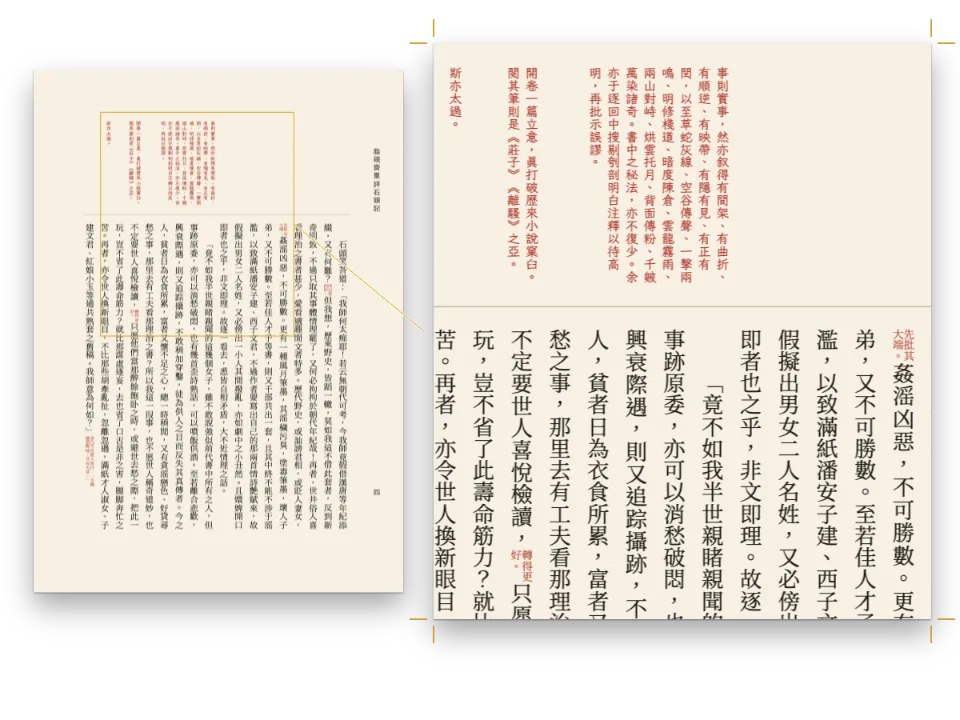
كتاب صيني كلاسيكي منضّد على هيئة الكتب القديمة المطبوعة بالألواح الخشبية. لكل صفحة إطار مزدوج وخطوط رفيعة بين الأعمدة، وتجري الحواشي بحرف صغير داخل الأسطر.
ما الذي ستنضده
ثلاث أوراق من شرح جو شي على المختارات (論語集註)، وهي مطلع الكتاب 學而، منضّدة كما طبعتها الألواح الخشبية، بعد صفحة عنوان. كل صفحة نصف ورقة، بمقاس 121 × 213 مم، وكل صفحتين متقابلتين ورقة كاملة تُقرأ من اليمين: في كل نصف تسعة أعمدة من 17 حرفًا بخط Noto Serif TC بحجم 20 نقطة، وإطار مزدوج، وخط رفيع بين كل عمودين، وعلى الطيّة الشريط الأوسط (版心) وفيه العنوان، وذيل سمكة أسود، والجزء (juan)، ورقم الورقة. وتُطوى حواشي جو شي في صفّين من حروف بحجم 10 نقاط داخل العمود، بعد الكلمات التي تشرحها. والهامش العلوي ضعف الهامش السفلي.
تجيب هذه الوصفة عن
- كيف أُخرج ورقة طباعة خشبية، بإطار مزدوج وخط بين الأعمدة والشريط الأوسط؟
- كيف أضبط منطقة النص بالحروف، بعدد محدد من الحروف في السطر وعدد محدد من الأسطر في الصفحة؟
- كيف أنضد كتابًا صينيًّا عموديًّا، مجلَّدًا من اليمين؟
الجواب المختصر
// A block printed both halves of a leaf (葉) at once, the centre strip between them. Each
// page here is a half-leaf. Page 1, the title, is a recto: in a book bound on the right it
// stands alone left of the spine, and every spread after it is one leaf, read from the
// right. The grid sets the block's 9 columns of 17 characters; the text has no
// punctuation, so every column ends on its 17th character.
const page = {
  sizePreset: 'custom', width: pt(W), height: pt(H), dpi: 150,
  backgroundColor: col('paper'),
  // left is the inner margin, the half of the centre strip on this side of the fold
  margins: { top: pt(TOP), bottom: pt(BOTTOM), left: pt(HALF), right: pt(OUTER), mirror: true },
};
const layout = { layoutType: 'single', writingMode: 'vertical-rl' }; // bound on the right
const cjk = { grid: { enabled: true, charsPerLine: CHARS, linesPerPage: LINES } };
// Postext numbers pages, not leaves. Each leaf opens with a hidden level-1 heading, which
// prints nothing and starts a right-hand page; the centre strip prints their count.
const leaf = {
  level: 1, hidden: true, numberingTemplate: '{1:一}', // 一, 二, 三
  breakBefore: { enabled: true, parity: 'even' }, // even pages lie on the right in this binding
};
المكونات
- الميزات
- النصوص والخطوط والمربعات في تصاميم الصفحةشبكة المحارفالنص العموديWarichu: تعليقات بسطرين داخل السطركتب مجلّدة من اليمينأنماط العناوينترويسات لكل قسمفصول بلا أرقامتثبيت عناصر التصميمالصور في تصاميم الصفحةالعناوين المرقّمةسمات العنوانالأرقام الصينيةالخطوط الصينية واليابانية والكوريةأنماط الفقراتهوامش متناظرةمقاس القطعلون الورقلوحة ألوان دلاليةالتصدير إلى PDF
- الخطوط
- Noto Serif TC, LXGW WenKai TC (SIL OFL 1.1)
- الأصول
- لا شيء: كل صورة مرسومة بالشيفرة
طريقة التحضير
#1 · نصف ورقة لكل صفحة، وورقة لكل صفحتين متقابلتين
الشيفرة هي الجواب المختصر أعلاه. كان اللوح يطبع ورقة كاملة (葉) دفعة واحدة، نصفاها على جانبي الشريط الأوسط؛ وكان الطابع يطوي الورقة على امتداد الشريط، والوجه المطبوع إلى الخارج، ويخيط الحواف المفتوحة، فيصير الشريط الحافة الأمامية للكتاب. وهذه الصفحات مبسوطة كما خرجت الورقة من اللوح. كل صفحة نصف ورقة. وفي الكتاب المجلّد من اليمين تقف الصفحة 1 وحدها إلى يسار الكعب، وكل صفحتين متقابلتين بعدها تجمعان صفحة زوجية على اليمين والصفحة الفردية التي تليها، فإذا كان العنوان على الصفحة 1 ضمّت كل صفحتين متقابلتين ورقة واحدة. وتحدد شبكة الحروف نظام الأعمدة في اللوح (行款)، تسعة أعمدة من 17 حرفًا، والهوامش التي تتركها دقيقة: الداخلي منها نصف الشريط.
يرقّم Postext الصفحات لا الأوراق. فكل ورقة تبدأ بعنوان من المستوى 1 مخفي: لا يطبع شيئًا ولا يأخذ مكانًا، لكن breakBefore الخاص به مع parity: 'even' يبدأ صفحة يمنى، ورقمه، 一 و二 و三 بفضل numberingTemplate: '{1:一}'، هو {chapterNumber} الذي يقرؤه الشريط.
#2 · اكسر النص حيث تنتهي كل ورقة
كان الناسخ الذي يكتب النص لنقّاش اللوح يطابقه على اللوح، ورقةً ورقة. ونص Markdown يفعل مثله: يوضع عنوان الورقة حيث ينتهي العمود التاسع من النصف الأيسر للورقة السابقة، ولو كان ذلك داخل جملة أو حاشية. والحاشية المقطوعة هناك تُغلق ثم تُفتح من جديد، ولأن كل عمود يطوي نصيبه من الحاشية في صفّين، تخرج الصفوف كما كانت:
子曰巧言令色鮮矣仁:warichu[巧好令善也好其言善其色致飾於]

# 學而

:warichu[外務以悦人則人欲肆而本心之德亡矣…]
ليس في اللوح علامات ترقيم، فلا تنقل أي قاعدة من قواعد كسر الأسطر حرفًا من مكانه، وينتهي كل عمود عند حرفه السابع عشر: تُعدّ فواصل الأوراق مرة واحدة وتبقى في مكانها. وحواشي جو شي مقاطع :warichu[…] بنصف الحجم الافتراضي، 34 حرفًا صغيرًا في الصف، وبين القراءة والشرح ○ كما في اللوح.
#3 · ارسم اللوح من أرقام الشبكة
// Header elements are placed on the sheet, pt from the page's top left corner. Both halves
// read right to left: a right-hand page (even) from the outer frame to the fold, a
// left-hand page (odd) from the fold to the outer frame.
const at = (x, y) => ({ anchor: { to: 'page', edge: 'top-left' }, offset: { x: pt(x), y: pt(y) } });
// A column of characters stands in the middle of its pitch, so the rules between columns
// fall on whole pitches. The k-th, counted from the right edge of the type area:
const line = (parity, k) =>
  (parity === 'even' ? HALF + LINES * PITCH : W - HALF) - k * PITCH;
const [Y0, Y1] = [TOP - GAP, TOP + CHARS * BODY + GAP]; // the inner frame's top and foot
// A rule is drawn from its x, a box's border inside the box: each is set so that the line
// is centred where it belongs.
const rule = (id, x, parity) => ({ kind: 'rule', id, parity, direction: 'vertical',
  thickness: pt(0.6), color: col('rule'),
  placement: { ...at(x - 0.3, Y0), size: { height: pt(Y1 - Y0) } } });
const frame = (id, [x0, x1], parity) => [[RULES, 1.8], [0, 0.6]].map(([out, t], i) => ({
  kind: 'box', id: `${id}-${i}`, parity, style: { borderColor: col('rule'), borderWidth: pt(t) },
  placement: { ...at(x0 - out - t / 2, Y0 - out - t / 2),
    size: { width: pt(x1 - x0 + 2 * out + t), height: pt(Y1 - Y0 + 2 * out + t) } } }));
// The middle of the strip, where its text stands: the fold, halfway between its two rules.
// Both pages draw the text whole, and each shows its half.
const mid = (parity) => (parity === 'even' ? 0 : W);
const strip = (id, content, parity, y) => ({ kind: 'text', id: `${id}-${parity}`, parity,
  content, writingMode: 'vertical-rl', fontFamily: SONG, fontSize: pt(11), color: col('ink'),
  align: 'left', overflow: 'clip',
  placement: { ...at(mid(parity) - HALF, TOP + y),
    size: { width: pt(2 * HALF), height: pt(CHARS * BODY - y) } } });
// The fish tail (魚尾): a black band with a notch, from one side of the strip to the other.
const FISH = `<svg xmlns="http://www.w3.org/2000/svg" viewBox="0 0 32 18">
  <path d="M0 0H32V13L16 6L0 13Z" fill="${palette.rule}"/></svg>`;
const resources = [{ id: 'fish', typeId: 'figure', kind: 'svg', createdAt: 0, updatedAt: 0,
  svg: { fileId: 'fish.svg', width: 32, height: 18 } }];
const fish = (parity) => ({ kind: 'image', id: `fish-${parity}`, parity, resourceId: 'fish',
  decorative: true, placement: { ...at(mid(parity) - HALF + 0.3, TOP + 3.4 * BODY),
    size: { width: pt(2 * HALF - 0.6), height: 'auto' } } });
const furniture = (parity) => [
  // The frame runs 40 pt past the fold, where the other half of the leaf takes it on.
  ...frame(`frame-${parity}`, parity === 'even' ? [-40, line(parity, 0)]
    : [line(parity, LINES), W + 40], parity),
  // Nine rules: eight between the columns (界行) and the side of the strip.
  ...Array.from({ length: LINES }, (_, i) =>
    rule(`rule-${i}-${parity}`, line(parity, parity === 'even' ? i + 1 : i), parity)),
  strip('book', '{title}', parity, 0.7 * BODY), // 書名, above the fish tail
  fish(parity),
  strip('juan', '卷一', parity, 5.2 * BODY), // 卷次, under it
  strip('leaf', '{chapterNumber}', parity, 11.5 * BODY), // 葉碼, the leaf's number
];
تُخرَج الترويسة على الورقة، فيوضع الإطار والخطوط والشريط بالنقاط من زاوية الصفحة بالأرقام نفسها التي تضبط الشبكة: عنصر خط كل 29 نقطة عبر منطقة الطباعة، وإطار على بعد 4.5 نقاط حول النص للخط الرفيع، وآخر أبعد بـ4.5 نقاط للخط الثقيل. يقف كل عمود من الحروف في منتصف خطوته، فتقع الخطوط في منتصف المسافة بين الأعمدة. ويُنضَّد نص الشريط نزولًا على الصفحة بـعناصر النص العمودي، وذيل السمكة عنصر صورة بصيغة SVG، وكلاهما موسَّط بين خطّي الشريط، على الطيّة: تُظهر كل صفحة 17 نقطة من الشريط. وترسم كل صفحة نص الشريط وذيل السمكة كاملين وتُظهر الجزء الذي في جانبها، فإذا وُضعت الصفحتان جنبًا إلى جنب التقى الجزآن. وللسبب نفسه تمتد الإطارات إلى ما بعد الطيّة.
#4 · أعطِ صفحة العنوان نمطًا خاصًّا بها
// A heading style of its own: hidden and unnumbered, so the leaves still count from 一, and
// its header replaces the leaves' furniture on its page. Its attributes hold the byline,
// this edition's note in red and the colophon, the one line that changes with the language.
const CELLS = [0, 2, LINES - 2, LINES]; // the byline, title and note, in pitches from the right
const cell = (i) => [CELLS[i], CELLS[i + 1]];
const column = (id, content, [k0, k1], style) => ({ kind: 'text', id, content,
  writingMode: 'vertical-rl', color: col('ink'), overflow: 'clip', verticalAlign: 'middle',
  placement: { ...at(line('odd', k1), TOP),
    size: { width: pt((k1 - k0) * PITCH), height: pt(CHARS * BODY) } }, ...style });
const titlePage = {
  id: 'title', numbered: false, hidden: true, breakBefore: { enabled: true, parity: 'any' },
  footer: { elements: [] },
  header: { elements: [
    ...frame('title-frame', [line('odd', LINES), line('odd', 0)]),
    rule('title-rule-1', line('odd', CELLS[1])), rule('title-rule-2', line('odd', CELLS[2])),
    column('byline', '{attr.byline}', cell(0), { fontFamily: SONG, fontSize: pt(14),
      align: 'left' }),
    column('book', '{title}', cell(1), { fontFamily: KAI, fontSize: pt(60),
      letterSpacing: pt(20), align: 'center' }),
    column('note', '{attr.note}', cell(2), { fontFamily: KAI, fontSize: pt(11),
      lineHeight: pt(0.6 * PITCH), color: col('vermilion'), align: 'right' }), // 3 in 2 pitches
    { kind: 'text', id: 'colophon', content: '{attr.colophon}', fontFamily: SONG,
      fontSize: pt(6.5), lineHeight: 1.4, color: col('muted'), align: 'left', overflow: 'wrap',
      placement: { ...at(line('odd', LINES) - RULES - 0.9, Y1 + RULES + 16),
        size: { width: pt(LINES * PITCH) } } },
  ] },
};
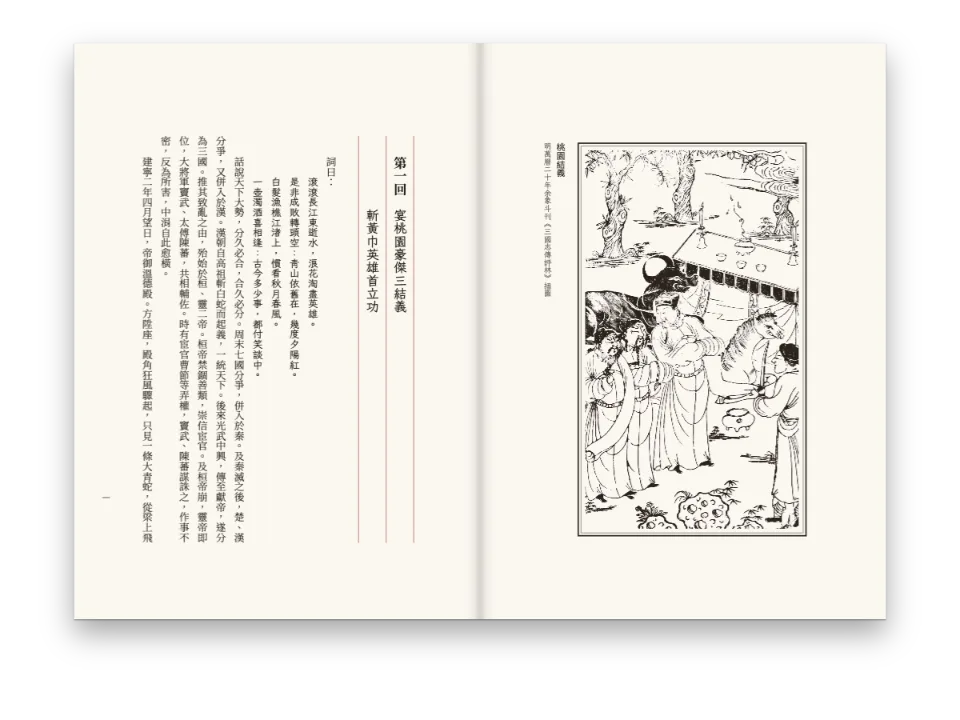
صفحة العنوان (內封) عنوان من المستوى 1 له نمط عنوان مخفي وغير مرقّم، فتبقى الأوراق معدودة من 一. يتحكم النمط في صفحات قسمه، ويحلّ header الخاص به محلّ ترويسة المستند هناك: فتأخذ صفحة العنوان إطارًا مغلقًا مقسومًا إلى ثلاثة أعمدة بدل عُدّة نصف الورقة. ويأتي اسم المؤلف، وملاحظة هذه الطبعة بخط Kai أحمر، وبيانات الطبع من سمات العنوان؛ وبيانات الطبع هي السطر الوحيد الذي يتغير بتغير لغة الطبعة. و\n في السمة تبدأ عمودًا جديدًا.
#5 · حمّل كل وجه بالحروف التي ينضّدها
// Song sets the leaves, the strip and its leaf numbers; Kai only the title page's title
// and note (gotcha: cjk-fonts-slices). No punctuation: no vertical forms to load.
const note = markdown.match(/note="([^"]*)"/)?.[1].replaceAll('\\n', '') ?? '';
await loadFonts(FONTS, markdown); // their Latin files: the colophon
await loadCjkFonts({ [SONG]: FONTS[SONG] }, `${markdown}論語集註卷一二三四五六七八九十`);
await loadCjkFonts({ [KAI]: FONTS[KAI] }, `論語集註${note}`);
يقدّم Fontsource كل خط صيني في نحو مئة ملف لكل وزن. ينضّد Song الأوراق والشريط وأرقام الأوراق، فيأخذ استدعاؤه النموذج وتلك الحروف؛ أما Kai فلا ينضّد إلا العنوان والملاحظة. وليس في اللوح علامات ترقيم، فلا يحتاج أي من الخطين إلى الأشكال العمودية التي يحمّلها loadCjkFonts(…, { vertical: true }).
#6 · حبر واحد على ورق دافئ
const palette = {
  ink: '#1f1b17', // the text, as the block printed it
  rule: '#1f1b17', // the frame, the column rules and the fish tail: the same block, same ink
  vermilion: '#a3301f', // 朱: this edition's note, on the title page; 5.9 : 1 on the paper
  muted: '#6d6358', // the colophon
  paper: '#f2ead8',
};
const col = (id) => ({ hex: palette[id], model: 'hex', paletteId: id });
const colorPalette = [
  ...Object.entries(palette).map(([id, hex]) => ({ id, name: id, value: { hex, model: 'hex' } })),
  { id: 'main-color', name: 'defaults', value: { hex: palette.ink, model: 'hex' } },
];
يُطبع النص وخطوط اللوح بأسود دافئ واحد، بتباين 14 : 1 مع الورق. ومع ذلك هما مدخلان في لوحة الألوان، ink وrule، فيمكن تغيير لون الخطوط دون النص. ويُحفظ الأحمر لما تضيفه هذه الطبعة.
الوصفة كاملة
// ═══ Postext Cookbook · Nº 085 · A woodblock leaf: double frame, rules and centre strip ═══
// https://postext.dev/en/cookbook/woodblock-leaf
// Code: MIT · Text: 論語集註 卷一, 四庫全書 copy, zh.wikisource (CC BY-SA 4.0) · Pictures: none
// Fonts: Noto Serif TC, LXGW WenKai TC (SIL OFL 1.1) · Needs postext ≥ 1.25.0
// A title page and three leaves of Zhu Xi's commentary on the Analects, set as a woodblock
// printed them: each spread is one leaf, its two halves either side of the centre strip
// (版心), the text in a double frame with a rule between every two columns, the commentary
// folded into two small rows inside the column.
import {
  buildDocument, withLoadedFonts, renderPageToCanvas, registerResourceImage,
} from 'https://esm.sh/postext';
import { renderToPdf, decompressWoff2 } from 'https://esm.sh/postext-pdf';

const LANG = 'en'; // @lang: the language of the colophon; the leaves are Chinese in both
const RECIPE = 'woodblock-leaf';

// ─── 1 · Design ─────────────────────────────────────────────────────────────
// #region palette: one ink on a warm paper, and a red for the editor's note
const palette = {
  ink: '#1f1b17', // the text, as the block printed it
  rule: '#1f1b17', // the frame, the column rules and the fish tail: the same block, same ink
  vermilion: '#a3301f', // 朱: this edition's note, on the title page; 5.9 : 1 on the paper
  muted: '#6d6358', // the colophon
  paper: '#f2ead8',
};
const col = (id) => ({ hex: palette[id], model: 'hex', paletteId: id });
const colorPalette = [
  ...Object.entries(palette).map(([id, hex]) => ({ id, name: id, value: { hex, model: 'hex' } })),
  { id: 'main-color', name: 'defaults', value: { hex: palette.ink, model: 'hex' } },
];
// #endregion
const [SONG, KAI] = ['Noto Serif TC', 'LXGW WenKai TC']; // 宋: the block's face; 楷: the title
// The leaf in points: 半葉九行,行十七字, a 20 pt character on a column pitch of 29 pt.
const [BODY, PITCH, CHARS, LINES] = [20, 29, 17, 9];
const HALF = 17; // half the centre strip, from the fold to the column rule beside it
const GAP = 4.5; // the text to the inner frame line, as a character to a column rule
const RULES = 4.5; // the thin inner frame line to the heavy outer one (文武線)
const [HEAD, FOOT, SIDE] = [164, 82, 60]; // paper outside the frame: 天頭 twice 地腳
const TOP = HEAD + RULES + GAP; // the page's margins
const BOTTOM = FOOT + RULES + GAP;
const OUTER = SIDE + RULES;
const W = HALF + LINES * PITCH + OUTER; // a half-leaf, 121 × 213 mm
const H = TOP + CHARS * BODY + BOTTOM;

// #region answer: a half-leaf to a page, so that every spread is one whole leaf
// A block printed both halves of a leaf (葉) at once, the centre strip between them. Each
// page here is a half-leaf. Page 1, the title, is a recto: in a book bound on the right it
// stands alone left of the spine, and every spread after it is one leaf, read from the
يعمل ملف script.js المجمّع كما هو: الصقه في سكربت الوحدة (module) لأي صفحة، أو افتح الوصفة على CodePen. مجلد الوصفة على GitHub ↗ (يفتح في تبويب جديد)
تنويعات
#خطّط الأعمدة بالأحمر
النسخ التي أُعدّت لـ四庫全書 كُتبت على ورق مخطّط بالأحمر (朱絲欄). غيّر لون الخطوط؛ ويتبعه ذيل السمكة.
-  rule: '#1f1b17', // the frame, the column rules and the fish tail: the same block, same ink
+ rule: '#b3412e', // 朱絲欄: red rules under black text#انقش لوحًا مختلفًا
جاءت الألواح بأعداد كثيرة، و半葉十行,行二十字 من أشيعها. والإطارات والشريط وخانات صفحة العنوان الثلاث وإزاحة اسم المؤلف كلها محسوبة من هذه الأرقام، فتتبعها؛ أما فواصل الأوراق في نص Markdown فيجب عدّها من جديد.
-const [BODY, PITCH, CHARS, LINES] = [20, 29, 17, 9];
+const [BODY, PITCH, CHARS, LINES] = [17, 24.5, 20, 10];#قارِنها بصفحة أوروبية على شبكة
تبني وصفة صفحة كتاب على شبكة خطوط الأساس منطقة طباعتها من عدد الأسطر، كما تبني هذه الورقة منطقتها من الأعمدة والحروف؛ وترسم الشهادة إطارها في ترويسة نمط عنوان، كما تفعل صفحة العنوان هنا.
أخطاء شائعة
خطأ شائع
اوسم المستند بـ zh-Hans أو zh-Hant، لا بـ LANG
نسختا الوصفة هما en وes، لكن المثال الصيني صيني في كلتيهما: `locale: LANG` سيسمه بالإنجليزية أو الإسبانية، فيقسّم كلماته اللاتينية بالواصلة، ويسمّي أشكاله Figure أو Figura، ويعطي PDF لغة خاطئة. ومنذ postext 1.30 صار الوسم أيضًا اللغة التي يُشكَّل بها النص (يُقاس ويُرسم ويُضمَّن بها)، فتحت وسم إنجليزي أو إسباني يصفّ الخط الصيني أرقامه وعلامات الترقيم التي يشترك فيها مع النص اللاتيني بأشكال أخرى، وتنكسر الأسطر في مواضع أخرى. اكتب الوسم بنفسك: 'zh-Hans' (أعراف البر الرئيسي: كسر الأسطر وفق GB، وترقيم Kaiming) أو 'zh-Hant' (تايوان: ترقيم بعرض كامل متمركز)؛ و'zh-HK' لهونغ كونغ. أما 'zh' المجرّد فيُقرأ صينية مبسطة على أعراف البر الرئيسي. أما المثال الياباني فيُوسم بـ 'ja' (gotcha ja-locale-tag). تقسيم الأسطر في النص الصيني →
خطأ شائع
الخطوط الصينية تُحمَّل شرائح، عبر الكتلة cjk
يقدّم Fontsource العائلة الصينية أو اليابانية أو الكورية في نحو مئة ملف لكل وزن، يغطي كل منها نطاقًا من الحروف. لا يجلب loadFonts إلا ملف latin، فتأتي حروف الهان على الشاشة من خط النظام وتُقاس خطأً، ويسلّم fontsourceProvider ملف latin ذاك إلى PDF، فيطبعها مربعات فارغة. اذكر كتلة الأدوات cjk، واستدعِ loadCjkFonts(FONTS, markdown) بعد loadFonts (مرة لكل صوت، مع النص الذي يضعه، حين يستخدم الكتاب عدة خطوط CJK)، وأعطِ renderToPdf القيمة fontProvider: cjkPdfProvider: كلاهما يأخذ الملفات التي تحتوي حروف النص. الخطوط الصينية واليابانية والكورية →
خطأ شائع
الكتاب المجلَّد على اليمين يعرض صفحاته المتقابلة بـ showBook
في الكتاب المجلَّد على اليمين (نص عربي أو عبري أو فارسي، أو صيني عمودي، أو page.binding 'right') تبقى الصفحة 1 هي الصفحة الفردية، لكنها تقع على يسار الكعب، وتُقرأ الأزواج [3 | 2]. يعرض showPages كل كتاب مجلَّدًا على اليسار؛ أما showBook من الكتلة book (وتحمل الكتلة cjk الدالة نفسها) فيقرأ doc.binding ويعكس الأزواج. ولا يزال capture.hero يسمّي الصفحتين المتقابلتين بترتيب القراءة، [verso, recto]: [2, 3]. كتب مجلّدة من اليمين →
خطأ شائع
النسخ التقليدية المنقولة تحمل حروفًا مبسطة شاردة
النصوص المنسوخة من Wikisource أو من طبعة ويب أخرى لكتاب تقليدي تحمل أحيانًا شكلًا مبسطًا (颙 بدل 顒 في 三國演義، الفصل 1)، وقد لا يملكه خط TC مثل Noto Serif TC. يوقف loadCjkFonts مثال CodePen ويذكر الحرف في رسالته؛ وفي الصفحة كان سيُطبع بخط بديل. أعِد الشكل التقليدي في المثال واذكر ذلك في الحقوق. الخطوط الصينية واليابانية والكورية →
- فواصل الأوراق تعيش في نص Markdown. غيّر النص أو الحجم أو نظام الأعمدة (行款)، فإن الورقة التي تطول تدفع العنوان التالي صفحةً إلى الأمام، فتكفّ الصفحات المتقابلة عن مطابقة الأوراق؛ والورقة التي تقصر تترك أعمدة فارغة قبل الطيّة. افحص العمود الأخير من كل صفحة يسرى.
- يكتب نسخ 四庫全書 الحرف 巳 مكان 已 و己 على السواء؛ وهذا النموذج يقرأ كلًّا منها من جملته. ومع ذلك تحتاج الصفحة إلى مقابلة بالصور الممسوحة، والأثر ظاهر: ملاحظة 張敬夫 تُقرأ 必開其政 حيث في المختارات التي يرددها 必聞其政، وحرفان يأتيان صورتين للرسم. والنموذج ينضّد 聞 و傳 و邦. قابل أي مقطع بطبعة ثانية قبل أن تنضّده.
- في النسخ نفسه أشكال لا رسم لها في Noto Serif TC (廹 徳 絶 逺 専 内). خمسة منها تقع داخل نطاق ملف من ملفات Fontsource، فيمرّرها
loadCjkFonts، ثم يرسمها Canvas من خط النظام، ويطبع postext-pdf مربعًا فارغًا ويحذّر. أما 廹 فلا يقع في نطاق أي ملف، فيتوقفloadCjkFontsبخطأ. والنموذج ينضّد 迫 德 絕 遠 專 內.
الحقوق
- الوصفة
- Ignacio Ferro
- النص
- 論語集註 (Collected Commentaries on the Analects), juan 1, the book 學而 from its opening to the end of its tenth section, in the copy made for the 四庫全書 (Siku quanshu, 1773–1782); Wikisource transcription, revision 523110. 巳 is read as 已 or 己 by its sentence; 開 in 張敬夫's 必開其政 is corrected to 聞, as in the words of the Analects he repeats and in Wikisource's other edition (論語集注卷一, revision 2598582); the two characters the transcription gives as glyph images are set as 傳 (以忠信為傳習之本) and 邦 (夫子至於是邦也); and six variant forms Noto Serif TC does not draw (廹 徳 絶 逺 専 内) are set in their standard forms · Zhu Xi (1130–1200); transcription by Wikisource editors · CC BY-SA 4.0
- The title page, the division into leaves and the note on this edition (據四庫全書本錄文…) · Ignacio Ferro · CC BY 4.0
- الخطوط
- Noto Serif TC (SIL OFL 1.1) · LXGW WenKai TC (SIL OFL 1.1)
- الشيفرة
- MIT، مثل Postext
حرّر هذا الشرح ↗ (يفتح في تبويب جديد)مجلد الوصفة على GitHub ↗ (يفتح في تبويب جديد)