En poques paraules
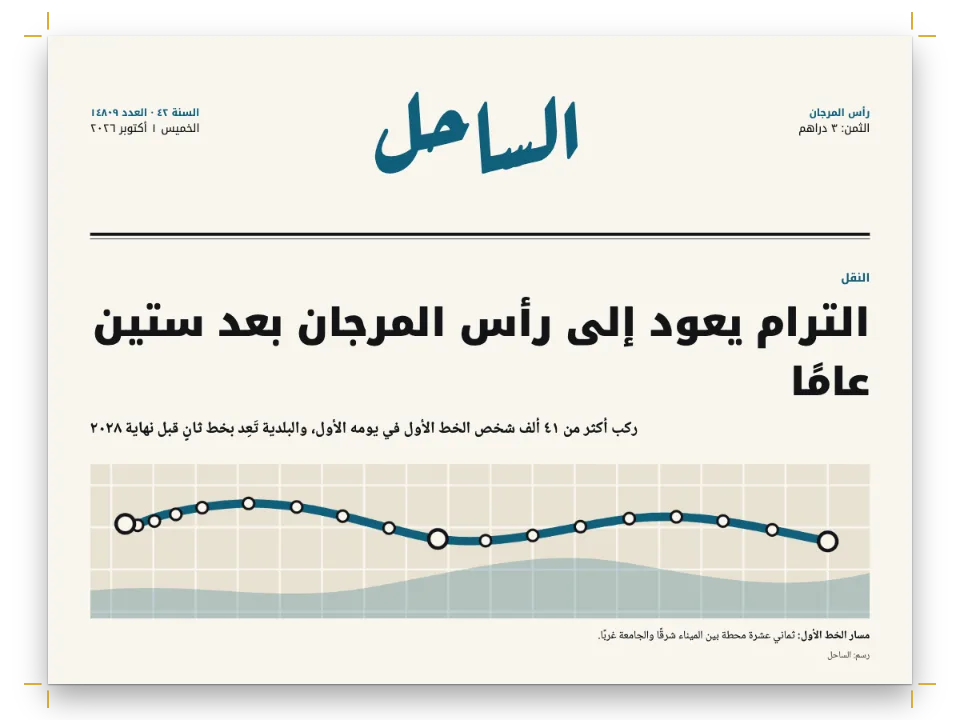
La memòria anual d'una fundació escrita en àrab, amb cada paràgraf seguit de la seva versió en castellà. La pàgina barreja les dues direccions sense que es desordenin les paraules, els números ni les taules.
Què compondràs
La memòria del 2025 d'una fundació de traducció imaginària, Dar al-Dad, en una pàgina de 210 × 280 mm amb IBM Plex Sans Arabic i IBM Plex Sans, les dues meitats d'una mateixa família. La memòria és àrab: va de dreta a esquerra i numera les pàgines ٢, ٣. Cada paràgraf àrab va seguit de la seva versió en castellà, més petita i en gris pissarra, composta d'esquerra a dreta i en bandera per la dreta; cada títol àrab porta un rètol en castellà a l'altre marge. Els noms llatins dins de les frases àrabs conserven el seu ordre, i les xifres de l'any apareixen dues vegades, en una taula àrab que es llegeix des de la dreta i en una altra que es llegeix des de l'esquerra. A l'edició anglesa, la segona llengua és l'anglès.
Aquesta recepta respon a
- Com barrejo paràgrafs, números i taules en àrab i en anglès en una mateixa pàgina?
La resposta curta
// The document is Arabic (locale 'ar'): right to left, Arabic-Indic digits. A block in the
// other language says so in the Markdown, and its style gives it its own voice:
//   :::paragraphs{style="second" dir=ltr}      a paragraph or several, set left to right
//   ### Director's note {style="second-head" dir=ltr}
// Inside an Arabic sentence, a Latin name is an isolate, :ltr[Penguin Classics]{lang=en}, so
// the words around it keep their order. 'start' and 'end' follow each block's own direction.
const second = { id: 'second', fontFamily: LATIN, fontSize: pt(9.5), lineHeight: pt(14),
  color: col('slate'), textAlign: 'start', firstLineIndent: pt(0) };
const bodyText = { fontFamily: ARABIC, fontSize: pt(11), lineHeight: pt(LEAD),
  color: col('ink'), boldColor: col('ink'), italicColor: col('ink'), referenceColor: col('ink'),
  textAlign: 'start', // ragged: the right edge for Arabic, the left for an English block
  firstLineIndent: pt(0), paragraphSpacing: true,
  // The Arabic is never slanted; italics stay for the titles in the Latin blocks.
  emphasis: 'italic' };
Ingredients
- Funcions
- Paràgrafs en l'altra direccióFragments en l'altra direccióText de dreta a esquerraFonts àrabsL'àrab com a llengua del documentXifres dels números generatsTaules a partir de dadesEstil de taulesEstils de taula amb nomEstil dels peusTipus de recurs propisObertures dissenyadesEstils de títolEstils de paràgrafPaleta de color semànticaExportació a PDF
- També fa servir
- Atributs de títolFigures just aquíFigura i Taula en la teva llenguaCapçaleres segons el tipus de pàginaFonts incrustades al PDFLlibres enquadernats per la dreta
- Tipografia
- IBM Plex Sans Arabic, IBM Plex Sans (SIL OFL 1.1)
- Recursos
- Cap: totes les imatges es dibuixen en codi
Elaboració
#1 · La segona llengua, en blocs marcats
El codi és a la resposta curta, més amunt. El document és àrab, així que tots els blocs van de dreta a esquerra mentre el Markdown no digui una altra cosa: {dir=ltr} en una tanca :::paragraphs o en un títol gira aquell bloc, i textAlign: 'start' porta cada bloc al costat pel qual comença, la dreta en àrab i l'esquerra en castellà (Direcció del document, del bloc i del text en línia). Un nom llatí dins d'una línia àrab, :ltr[Harbour Modern Classics], és un aïllament: l'algorisme bidireccional el tracta com una sola peça neutra, i les paraules àrabs i la coma que l'envolten no es mouen (Aïllaments). emphasis: 'italic' deixa Middlemarch en cursiva al text castellà; el motor no inclina mai una lletra àrab, sigui quin sigui l'ajust.
#2 · Una taula per a cada direcció
const cell = (content, extra = {}) => ({ content, ...extra });
const tableOf = (head, rows) => ({ headerRowCount: 1, columnWidths: [46, 18, 18, 18],
  rows: [head.map((h, i) => cell(h, { isHeader: true, align: i ? 'end' : 'start' })),
    ...rows.map((r) => r.map((c, i) => cell(c, { align: i ? 'end' : 'start' })))] });
const FIGURES = [ // programme, 2024, 2025, change: the Foundation's own counts
  ['كتب مترجمة إلى العربية', 'Books translated into Arabic', 28, 34],
  ['كتب مترجمة من العربية', 'Books translated from Arabic', 9, 14],
  ['منح للمترجمين', 'Translator grants', 41, 52],
  ['ورشات تدريب', 'Training workshops', 12, 18],
  ['مشاركون في الورشات', 'Workshop participants', 310, 466]];
const SPANISH = { 'Books translated into Arabic': 'Libros traducidos al árabe',
  'Books translated from Arabic': 'Libros traducidos del árabe',
  'Translator grants': 'Becas para traductores', 'Training workshops': 'Talleres de formación',
  'Workshop participants': 'Participantes en los talleres' };
const change = (a, b) => `${b > a ? '+' : ''}${Math.round((100 * (b - a)) / a)}%`;
const AR = (n) => String(n).replace(/\d/g, (d) => '٠١٢٣٤٥٦٧٨٩'[d]); // the author's ٠–٩
const tableAr = tableOf(['البرنامج', '٢٠٢٤', '٢٠٢٥', 'التغيّر'], FIGURES.map(([ar, , a, b]) =>
  [ar, AR(a), AR(b), AR(change(a, b)).replace('%', '٪')]));
const tableEn = tableOf(t({ en: ['Programme', '2024', '2025', 'Change'],
  es: ['Programa', '2024', '2025', 'Cambio'] }), FIGURES.map(([, en, a, b]) =>
  [t({ en, es: SPANISH[en] }), String(a), String(b), change(a, b)]));
// The English table has a heading of its own and no number: a generated number would print in
// the document's digits, ٢, inside the English block.
const resourceTypes = [...defaultResourceTypes('ar'), { id: 'data', name: 'Data',
  shortLabel: 'Data', captionPrefix: '', numberingTemplate: '', resetOn: 'never',
  counterFormat: 'decimal' }];
const resources = [
  { id: 'figures-ar', typeId: 'table', kind: 'table', createdAt: 0, updatedAt: 0,
    table: { model: tableAr }, placement: { position: 'here' },
    caption: 'أرقام البرامج في عامي ٢٠٢٤ و٢٠٢٥' },
  { id: 'figures-en', typeId: 'data', kind: 'table', createdAt: 0, updatedAt: 0,
    table: { model: tableEn, direction: 'ltr', styleId: 'second' },
    placement: { position: 'here' } },
];
La taula àrab va amb el document: la primera columna, el programa, queda a la dreta, i align: 'end' enganxa els números a la vora esquerra de les cel·les. La taula en castellà declara direction: 'ltr', així que la primera columna queda a l'esquerra i 'end' és la vora dreta (Què volen dir esquerra, dreta, inici i final). Les xifres àrabs estan teclejades en ٠–٩ i les castellanes en 0–9: les xifres del document només s'apliquen als números que escriu el motor, com el número de la taula al seu peu, جدول ١-١. Per això la segona taula té un tipus propi sense comptador: un número allà sortiria com ٢.
#3 · Dos títols en una franja
const band = { enabled: true, minHeight: mm(70), slot: { elements: [
  { kind: 'box', id: 'band', style: { backgroundColor: col('teal') },
    placement: { anchor: { to: 'bleed', edge: 'top-left' },
      size: { width: mm(216), height: mm(86) } } },
  // Design text takes the document's direction; an English title says 'ltr' and aligns left.
  { kind: 'text', id: 'org', content: '{attr.org}', fontFamily: ARABIC, fontSize: pt(13),
    fontWeight: 600, color: col('tint'), align: 'right',
    placement: { anchor: { to: 'page', edge: 'top-right' }, offset: { x: mm(-SIDE), y: mm(18) } } },
  { kind: 'text', id: 'title', content: '{titleText}', fontFamily: ARABIC, fontSize: pt(50),
    fontWeight: 700, lineHeight: 1.15, color: col('paper'), align: 'right',
    placement: { anchor: { to: 'page', edge: 'top-right' }, offset: { x: mm(-SIDE), y: mm(30) } } },
  { kind: 'text', id: 'title-2', content: '{attr.second}', direction: 'ltr', fontFamily: LATIN,
    fontSize: pt(20), fontWeight: 300, color: col('tint'), align: 'left',
    placement: { anchor: { to: 'page', edge: 'top-left' }, offset: { x: mm(SIDE), y: mm(66) } } },
] } };
La portada és el disseny del títol de primer nivell. El text de disseny pren la direcció del document, així que el nom i el títol àrabs no necessiten res; el títol en castellà declara direction: 'ltr' i s'ancora a la vora esquerra de la pàgina. La franja és una caixa ancorada al sang, de 86 mm, i el minHeight de l'obertura deixa la carta de la directora just a sota.
La recepta completa
// ═══ Postext Cookbook · Nº 106 · A bilingual Arabic–English report ═══════════════════ // https://postext.dev/en/cookbook/bilingual-arabic-english-report // Code: MIT · Text: original Arabic, English and Spanish prose (CC BY 4.0) · Pictures: none // Fonts: IBM Plex Sans Arabic, IBM Plex Sans (SIL OFL 1.1) · Needs postext ≥ 1.15.0 import { buildDocument, renderPageToCanvas, clearMeasurementCache, defaultResourceTypes, } from 'https://esm.sh/postext'; import { renderToPdf, decompressWoff2 } from 'https://esm.sh/postext-pdf'; const LANG = 'es'; // @lang: the second language of the report: English, or Spanish in 'es' const RECIPE = 'bilingual-arabic-english-report'; // ─── 1 · Design ───────────────────────────────────────────────────────────── // #region palette: a deep teal for the Arabic, a slate for the second language const palette = { ink: '#1b1f22', // the Arabic text teal: '#0e5a5c', // the accent: the cover band, headings, table heads slate: '#45535c', // the English (or Spanish) text: a voice of its own, a step lighter tint: '#e4eeec', // the second language's panels rule: '#b9c4c2', // hairlines paper: '#ffffff', }; const col = (id) => ({ hex: palette[id], model: 'hex', paletteId: id }); const colorPalette = Object.entries({ ...palette, 'main-color': palette.teal }) .map(([id, hex]) => ({ id, name: id, value: { hex, model: 'hex' } })); // #endregion const [ARABIC, LATIN] = ['IBM Plex Sans Arabic', 'IBM Plex Sans']; // one superfamily const LEAD = 18; // pt: the Arabic leading const SIDE = 20; // mm: the side margins // #region answer: one Arabic document, its English blocks marked {dir=ltr} // The document is Arabic (locale 'ar'): right to left, Arabic-Indic digits. A block in the // other language says so in the Markdown, and its style gives it its own voice: // :::paragraphs{style="second" dir=ltr} a paragraph or several, set left to right // ### Director's note {style="second-head" dir=ltr} // Inside an Arabic sentence, a Latin name is an isolate, :ltr[Penguin Classics]{lang=en}, so // the words around it keep their order. 'start' and 'end' follow each block's own direction. const second = { id: 'second', fontFamily: LATIN, fontSize: pt(9.5), lineHeight: pt(14), color: col('slate'), textAlign: 'start', firstLineIndent: pt(0) }; const bodyText = { fontFamily: ARABIC, fontSize: pt(11), lineHeight: pt(LEAD), color: col('ink'), boldColor: col('ink'), italicColor: col('ink'), referenceColor: col('ink'), textAlign: 'start', // ragged: the right edge for Arabic, the left for an English block firstLineIndent: pt(0), paragraphSpacing: true, // The Arabic is never slanted; italics stay for the titles in the Latin blocks. emphasis: 'italic' }; // #endregion // #region tables: the Arabic table runs with the page; the English one runs left to right const cell = (content, extra = {}) => ({ content, ...extra }); const tableOf = (head, rows) => ({ headerRowCount: 1, columnWidths: [46, 18, 18, 18], rows: [head.map((h, i) => cell(h, { isHeader: true, align: i ? 'end' : 'start' })), ...rows.map((r) => r.map((c, i) => cell(c, { align: i ? 'end' : 'start' })))] }); const FIGURES = [ // programme, 2024, 2025, change: the Foundation's own counts ['كتب مترجمة إلى العربية', 'Books translated into Arabic', 28, 34], ['كتب مترجمة من العربية', 'Books translated from Arabic', 9, 14], ['منح للمترجمين', 'Translator grants', 41, 52], ['ورشات تدريب', 'Training workshops', 12, 18], ['مشاركون في الورشات', 'Workshop participants', 310, 466]]; const SPANISH = { 'Books translated into Arabic': 'Libros traducidos al árabe', 'Books translated from Arabic': 'Libros traducidos del árabe', 'Translator grants': 'Becas para traductores', 'Training workshops': 'Talleres de formación', 'Workshop participants': 'Participantes en los talleres' }; const change = (a, b) => `${b > a ? '+' : ''}${Math.round((100 * (b - a)) / a)}%`; const AR = (n) => String(n).replace(/\d/g, (d) => '٠١٢٣٤٥٦٧٨٩'[d]); // the author's ٠–٩ const tableAr = tableOf(['البرنامج', '٢٠٢٤', '٢٠٢٥', 'التغيّر'], FIGURES.map(([ar, , a, b]) => [ar, AR(a), AR(b), AR(change(a, b)).replace('%', '٪')])); const tableEn = tableOf(t({ en: ['Programme', '2024', '2025', 'Change'], es: ['Programa', '2024', '2025', 'Cambio'] }), FIGURES.map(([, en, a, b]) => [t({ en, es: SPANISH[en] }), String(a), String(b), change(a, b)])); // The English table has a heading of its own and no number: a generated number would print in // the document's digits, ٢, inside the English block. const resourceTypes = [...defaultResourceTypes('ar'), { id: 'data', name: 'Data', shortLabel: 'Data', captionPrefix: '', numberingTemplate: '', resetOn: 'never', counterFormat: 'decimal' }]; const resources = [ { id: 'figures-ar', typeId: 'table', kind: 'table', createdAt: 0, updatedAt: 0, table: { model: tableAr }, placement: { position: 'here' }, caption: 'أرقام البرامج في عامي ٢٠٢٤ و٢٠٢٥' }, { id: 'figures-en', typeId: 'data', kind: 'table', createdAt: 0, updatedAt: 0, table: { model: tableEn, direction: 'ltr', styleId: 'second' }, placement: { position: 'here' } }, ]; // #endregion // #region cover: the report's two titles on a teal band, each in its own direction const band = { enabled: true, minHeight: mm(70), slot: { elements: [ { kind: 'box', id: 'band', style: { backgroundColor: col('teal') }, placement: { anchor: { to: 'bleed', edge: 'top-left' }, size: { width: mm(216), height: mm(86) } } }, // Design text takes the document's direction; an English title says 'ltr' and aligns left. { kind: 'text', id: 'org', content: '{attr.org}', fontFamily: ARABIC, fontSize: pt(13), fontWeight: 600, color: col('tint'), align: 'right', placement: { anchor: { to: 'page', edge: 'top-right' }, offset: { x: mm(-SIDE), y: mm(18) } } }, { kind: 'text', id: 'title', content: '{titleText}', fontFamily: ARABIC, fontSize: pt(50), fontWeight: 700, lineHeight: 1.15, color: col('paper'), align: 'right', placement: { anchor: { to: 'page', edge: 'top-right' }, offset: { x: mm(-SIDE), y: mm(30) } } }, { kind: 'text', id: 'title-2', content: '{attr.second}', direction: 'ltr', fontFamily: LATIN, fontSize: pt(20), fontWeight: 300, color: col('tint'), align: 'left', placement: { anchor: { to: 'page', edge: 'top-left' }, offset: { x: mm(SIDE), y: mm(66) } } }, ] } }; // #endregion const config = () => ({ // a factory: the engine caches resolved configs per object locale: 'ar', // written out, never LANG (gotcha: arabic-locale-tag) colorPalette, bodyText, resourceTypes, page: { width: mm(210), height: mm(280), dpi: 150, margins: { top: mm(22), bottom: mm(22), left: mm(SIDE), right: mm(SIDE), mirror: true } }, layout: { layoutType: 'single' }, headings: { fontFamily: ARABIC, fontWeight: 700, color: col('teal'), levels: [ // Restated: any headings object drops the H1 break (gotcha: headings-drop-h1-break). { level: 1, breakBefore: { enabled: true, parity: 'any' }, marginTop: pt(0), marginBottom: pt(0), advancedDesign: band }, { level: 2, fontSize: pt(17), lineHeight: pt(26), marginTop: pt(LEAD), marginBottom: pt(0) }, ] }, headingStyles: [{ id: 'second-head', fontFamily: LATIN, fontSize: pt(10), fontWeight: 600, lineHeight: pt(14), color: col('slate'), marginTop: pt(0), marginBottom: pt(4) }], paragraphStyles: [second, { id: 'colophon', fontFamily: LATIN, fontSize: pt(7.5), lineHeight: pt(10), color: col('slate'), textAlign: 'start', firstLineIndent: pt(0), marginTop: pt(LEAD) }], tableStyle: { rules: 'horizontal', borderColor: col('rule'), borderWidth: pt(0.5), headerBackground: col('teal'), headerColor: col('paper'), headerFontFamily: ARABIC, headerFontSize: pt(9.5), bodyFontFamily: ARABIC, bodyFontSize: pt(10), bodyColor: col('ink'), cellPadding: mm(1.6) }, tableStyles: [{ id: 'second', headerBackground: col('slate'), headerFontFamily: LATIN, bodyFontFamily: LATIN, bodyFontSize: pt(9), bodyColor: col('slate') }], captionStyle: { fontFamily: ARABIC, fontSize: pt(9.5), color: col('ink'), position: 'above', labelBold: true, labelColor: col('teal'), labelSeparator: ': ' }, header: { elements: [] }, footer: { elements: [{ kind: 'text', id: 'folio', content: '{pageNumber}', pages: 'body', fontFamily: ARABIC, fontSize: pt(9), fontWeight: 600, color: col('teal'), align: 'center', placement: { anchor: { to: 'page', edge: 'bottom' }, offset: { y: mm(-12) } } }] }, }); // ─── 2 · Content ──────────────────────────────────────────────────────────── const markdown = String.raw`---Mostra en Markdown · 60 línies · content.es.md
title: "التقرير السنوي ٢٠٢٥" --- # التقرير السنوي ٢٠٢٥ {org="مؤسسة دار الضاد للترجمة" second="Fundación Dar al-Dad de Traducción · Memoria anual 2025"} ## كلمة المديرة ### Carta de la directora {style="second-head" dir=ltr} كان عام ٢٠٢٥ أكثر أعوام المؤسسة نشاطًا منذ تأسيسها. فقد صدر في هذا العام ٣٤ كتابًا مترجمًا إلى العربية و١٤ كتابًا مترجمًا منها، ومنحنا ٥٢ منحة لمترجمين من تسعة بلدان، وأقمنا ١٨ ورشة تدريب حضرها ٤٦٦ مشاركًا ومشاركة. :::paragraphs{style="second" dir=ltr} 2025 fue el año de más actividad en la historia de la Fundación. Publicamos 34 libros traducidos al árabe y 14 traducidos del árabe, concedimos 52 becas a traductores de nueve países y organizamos 18 talleres de formación con 466 participantes. ::: وأكثر ما يسعدنا في هذه الأرقام أن الترجمة من العربية بدأت تلحق بالترجمة إليها. فقد كان الكتاب المترجم من العربية قبل خمس سنوات يقابله أكثر من ستة كتب مترجمة إليها، وصار اليوم يقابله كتابان ونصف. وقد صدرت روايتان من الكتب التي دعمناها في سلسلة :ltr[Harbour Modern Classics]{lang=en}، وهي المرة الأولى التي تدخل فيها روايات عربية معاصرة هذه السلسلة بدعم منا. :::paragraphs{style="second" dir=ltr} Lo que más nos alegra de estas cifras es que la traducción desde el árabe empieza a alcanzar a la traducción hacia el árabe. Hace cinco años, por cada libro que apoyábamos desde el árabe había más de seis hacia el árabe; hoy la proporción es de dos y medio a uno. Dos de las novelas que apoyamos han aparecido en Harbour Modern Classics. ::: ## أرقام العام ### El año en cifras {style="second-head" dir=ltr} يعرض الجدول التالي برامج المؤسسة الخمسة في العامين الأخيرين، والنسبة التي تغيّر بها كل برنامج. وتُحسب المنح في السنة التي صُرفت فيها، لا في السنة التي قُدّم فيها الطلب. ::resource{id="figures-ar"} :::paragraphs{style="second" dir=ltr} La tabla siguiente da las mismas cifras en español. Las becas se cuentan en el año en que se pagaron, no en el que se solicitaron. ::: ::resource{id="figures-en"} ## البرامج ### Programas {style="second-head" dir=ltr} **الترجمة إلى العربية.** نختار الكتب بالتشاور مع لجنة من الناشرين والمترجمين تجتمع مرتين في السنة. ومن أبرز ما صدر هذا العام ترجمة جديدة لرواية :ltr[Middlemarch]{lang=en} لجورج إليوت، ومختارات من مقالات :ltr[Michel de Montaigne]{lang=fr} في الصداقة والسفر والقراءة. :::paragraphs{style="second" dir=ltr} **Traducción al árabe.** Los títulos se eligen con un comité de editores y traductores que se reúne dos veces al año. La lista de este año incluye una nueva traducción de *Middlemarch*, de George Eliot, y una selección de ensayos de Montaigne sobre la amistad, los viajes y la lectura. ::: **الترجمة من العربية.** نموّل نصف تكاليف الترجمة للناشر الأجنبي الذي يشتري حقوق كتاب عربي، ونرافق المترجم بمحرر يقرأ ترجمته مع النص الأصلي. وصدرت هذا العام كتب مترجمة إلى الإنجليزية والإسبانية والتركية والإندونيسية. :::paragraphs{style="second" dir=ltr} **Traducción desde el árabe.** Pagamos la mitad del coste de la traducción a la editorial extranjera que compra los derechos de un libro árabe, y ponemos junto al traductor a un editor que coteja la traducción con el original. Los libros de este año han salido en inglés, español, turco e indonesio. ::: **التدريب.** تستمر الورشة الواحدة خمسة أيام، ويعمل فيها المشاركون على نص واحد بإشراف مترجمَين اثنين، أحدهما ينقل إلى العربية والآخر ينقل منها. وقد أضفنا هذا العام ورشة للترجمة الأدبية للأطفال، وأخرى لترجمة الشعر. :::paragraphs{style="second" dir=ltr} **Formación.** Cada taller dura cinco días, y sus participantes trabajan sobre un único texto con dos tutores, uno que traduce al árabe y otro que traduce del árabe. Este año hemos añadido un taller de literatura infantil y otro de poesía. ::: :::paragraphs{style="colophon" dir=ltr} Memoria de muestra escrita para el Recetario de Postext; la Fundación, sus cifras y sus personas son inventadas. Compuesta en IBM Plex Sans Arabic e IBM Plex Sans (SIL OFL) · Texto: CC BY 4.0. :::`; // content.<lang>.md: the Arabic, with English or Spanish // ─── 3 · Fonts ────────────────────────────────────────────────────────────── const FONTS = { // every face the pages use, loaded before the build (gotcha: fonts-first) 'IBM Plex Sans Arabic': ['400', '600', '700'], // ARABIC: text, headings, tables, folios 'IBM Plex Sans': ['300', '400', '400i', '600'], // LATIN: the second language, its table }; // ─── 4 · Build & show ─────────────────────────────────────────────────────── await loadFonts(FONTS, markdown); // Each Arabic face's letters live in a file of their own (gotcha: arabic-fonts-subset). await loadArabicFonts(FONTS, markdown + JSON.stringify(resources)); const doc = await buildWithFonts(() => buildDocument({ markdown, resources }, config()), markdown); showBook(doc, { title: t({ en: 'A bilingual Arabic–English report', es: 'Un informe bilingüe árabe-español' }) }); offerPdf(() => renderToPdf(doc, { fontProvider: arabicPdfProvider }), `${RECIPE}.pdf`);Kit · core, fonts, viewer, pdf, arabic, book: igual a totes les receptes · 411 línies
// ─── Kit ── helpers shared by every Cookbook recipe · postext.dev/cookbook ───── // ─── Kit · core v1 ── the same in every recipe · postext.dev/cookbook ───────── function mm(value) { return { value, unit: 'mm' }; } function pt(value) { return { value, unit: 'pt' }; } function em(value) { return { value, unit: 'em' }; } /** The sample language's string: t({ en: 'Figure', es: 'Figura' }). */ function t(strings) { return strings[LANG] ?? Object.values(strings)[0]; } /** A file in this recipe's assets folder, served from the Postext repo by jsDelivr. */ function asset(file) { return `https://cdn.jsdelivr.net/gh/drnachio/postext@main/cookbook/${RECIPE}/assets/${file}`; } // ─── Kit · fonts v1 ── the same in every recipe · postext.dev/cookbook ──────── // Postext measures text with the faces the browser has loaded, and caches the // widths, so every face must be ready before the first build. Faces come from // Fontsource: the same static files the PDF embeds, so screen and PDF agree. /** faces = { 'Family Name': ['400', '400i', '700'] }. `text` is the sample: * letters beyond Latin-1 (č, ł, ő…) also load the latin-ext files. With * `optional`, a face Fontsource does not ship is skipped instead of failing. * Resolves to the number of faces added. */ async function loadFonts(faces, text = '', { optional = false } = {}) { kitStatus('Loading fonts…'); const ranges = { latin: 'U+0000-00FF,U+0131,U+0152-0153,U+02BB-02BC,U+02C6,U+02DA,U+02DC,U+0304,U+0308,U+0329,' + 'U+2000-206F,U+20AC,U+2122,U+2191,U+2193,U+2212,U+2215,U+FEFF,U+FFFD', 'latin-ext': 'U+0100-02BA,U+02BD-02C5,U+02C7-02CC,U+02CE-02D7,U+02DD-02FF,U+0304,U+0308,U+0329,' + 'U+1D00-1DBF,U+1E00-1E9F,U+1EF2-1EFF,U+2020,U+20A0-20AB,U+20AD-20C0,U+2113,U+2C60-2C7F,U+A720-A7FF', }; const subsets = /[Ā-˿Ḁ-ỿ]/.test(text) ? ['latin', 'latin-ext'] : ['latin']; const jobs = []; let added = 0; for (const [family, specs] of Object.entries(faces)) { const id = fontsourceId(family); const meta = optional ? await fontsourceMeta(family) : null; for (const spec of new Set(specs)) { const weight = parseInt(spec, 10); const style = spec.endsWith('i') ? 'italic' : 'normal'; if (hasFace(family, weight, style)) continue; if (optional && !(meta?.weights.includes(weight) && meta.styles.includes(style))) continue; for (const subset of subsets) { const url = `https://cdn.jsdelivr.net/npm/@fontsource/${id}@5/files/${id}-${subset}-${weight}-${style}.woff2`; const face = new FontFace(family, `url(${url}) format('woff2')`, { weight: String(weight), style, unicodeRange: ranges[subset] }); jobs.push(face.load().then((ready) => { document.fonts.add(ready); added++; }, () => { if (subset === 'latin' && !optional) throw new Error(`Fontsource has no ${family} ${weight} ${style}`); })); } } } await Promise.all(jobs).catch((error) => { kitFail(error); throw error; }); return added; } /** Runs `build` (a buildDocument or buildBundle call) and checks the faces * the pages use. A regular face missing from FONTS is loaded with a warning; * bold and italic variants are loaded when the family ships them. Then the * measurement caches are cleared and the build runs again. */ async function buildWithFonts(build, text = '') { const tried = new Set(); for (let round = 0; round < 3; round++) { kitStatus('Laying out…'); await new Promise(requestAnimationFrame); // let the status paint first const result = await Promise.resolve().then(build).catch((error) => { kitFail(error); throw error; }); const wanted = { base: {}, variants: {} }; for (const { font, base } of [result].flat().flatMap(fontStringsOf)) { const { family, weight, style } = parseFont(font); const key = `${family}|${weight}|${style}`; if (tried.has(key) || hasFace(family, weight, style)) continue; tried.add(key); (wanted[base ? 'base' : 'variants'][family] ??= []).push(`${weight}${style === 'italic' ? 'i' : ''}`); } if (Object.keys(wanted.base).length) { console.warn(`[cookbook] FONTS does not list ${JSON.stringify(wanted.base)}: loading them.`); } const added = await loadFonts(wanted.base, text) + await loadFonts(wanted.variants, text, { optional: true }); if (added === 0) return result; clearMeasurementCache(); } throw new Error('The fonts did not settle after three builds.'); } /** Every font string of the layout. `base` marks a block's own face; its * bold, italic and bold-italic variants are listed whether or not used. */ function fontStringsOf(doc) { const found = new Map(); const walk = (node) => { if (!node || typeof node !== 'object') return; if (Array.isArray(node)) { node.forEach(walk); return; } for (const [key, value] of Object.entries(node)) { if (typeof value === 'string' && /fontString$/i.test(key)) { found.set(value, found.get(value) || key === 'fontString'); } else if (value && typeof value === 'object') walk(value); } }; walk(doc.pages); walk(doc.blocks); return [...found].map(([font, base]) => ({ font, base })); } /** '700 37.5px Open Sans' / 'italic 400 13px "Source Serif 4"' → { family, weight, style }. * A string with no weight ('95.8px Young Serif', from a design text) is 400. */ function parseFont(font) { const m = /^(?:(italic|oblique)\s+)?(?:small-caps\s+)?(?:(\d+|bold|normal)\s+)?[\d.]+px\s+(.+)$/.exec(font.trim()); if (!m) throw new Error(`Unexpected font string: ${font}`); const weight = m[2] === 'bold' ? 700 : !m[2] || m[2] === 'normal' ? 400 : Number(m[2]); return { family: m[3].replace(/^["']|["']$/g, ''), weight, style: m[1] ? 'italic' : 'normal' }; } /** True when a loaded FontFace covers exactly this family, weight and style * (document.fonts.check() is also true for families nobody declared). */ function hasFace(family, weight, style) { for (const face of document.fonts) { if (face.status !== 'loaded' || face.style !== style) continue; if (face.family.replace(/^["']|["']$/g, '') !== family) continue; const [low, high = low] = face.weight.split(' ').map(Number); if (weight >= low && weight <= high) return true; } return false; } /** Fontsource's id for a family: 'Source Serif 4' → 'source-serif-4'. */ function fontsourceId(family) { return family.toLowerCase().replace(/\s+/g, '-'); } /** The weights and styles a family ships ({ weights: [400, 700], styles: ['normal', 'italic'] }), or null. */ function fontsourceMeta(family) { fontsourceMeta.cache ??= new Map(); const id = fontsourceId(family); if (!fontsourceMeta.cache.has(id)) { fontsourceMeta.cache.set(id, fetch(`https://api.fontsource.org/v1/fonts/${id}`) .then((res) => (res.ok ? res.json() : null), () => null)); } return fontsourceMeta.cache.get(id); } // ─── Kit · viewer v1 ── the same in every recipe · postext.dev/cookbook ─────── /** Shows the pages as facing spreads on a dark desk: the first page is a * recto on its own, then verso | recto pairs, as in a bound book. Pages * are painted when they scroll near the screen. */ function showPages(docs, { title, width = 460 } = {}) { const root = viewer(title); const pages = [docs].flat().flatMap((doc) => doc.pages.map((page) => ({ doc, page, n: (doc.pageIndexOffset ?? 0) + page.index }))); const spreads = []; let verso = null; for (const p of pages) { if (p.n % 2 === 1) { if (verso) spreads.push([verso, null]); verso = p; } else { spreads.push([verso, p]); verso = null; } } if (verso) spreads.push([verso, null]); const density = Math.min(window.devicePixelRatio || 1, 2); showPages.painter?.disconnect(); const painter = new IntersectionObserver((entries) => { for (const { isIntersecting, target } of entries) { if (!isIntersecting) continue; painter.unobserve(target); const { doc, page } = target.postext; renderPageToCanvas(page, doc, target, { scale: (width * density) / page.width }); } }, { rootMargin: '800px' }); showPages.painter = painter; root.replaceChildren(...spreads.map((pair) => { const spread = document.createElement('div'); spread.className = 'pt-spread'; for (const p of pair) { const figure = document.createElement('figure'); if (p) { const label = p.page.pageLabel || String(p.n + 1); const canvas = document.createElement('canvas'); canvas.postext = p; canvas.style.aspectRatio = `${p.page.width} / ${p.page.height}`; canvas.setAttribute('role', 'img'); canvas.setAttribute('aria-label', `Page ${label}`); const folio = document.createElement('figcaption'); folio.textContent = label; figure.append(canvas, folio); painter.observe(canvas); } else figure.className = 'pt-blank'; spread.append(figure); } return spread; })); kitStatus(`${pages.length} ${pages.length === 1 ? 'page' : 'pages'}`); document.documentElement.dataset.postext = 'ready'; return pages.length; } /** The desk, the bar and the error reporting, created once. */ function viewer(title) { if (!document.getElementById('pt-kit')) { document.head.insertAdjacentHTML('beforeend', `<style id="pt-kit"> :root { color-scheme: dark; } body { margin: 0; background: #0e1014; color: #b9bcc4; font: 13px/1.45 system-ui, sans-serif; } #pt-bar { position: sticky; top: 0; z-index: 1; display: flex; flex-wrap: wrap; align-items: center; gap: 6px 16px; padding: 10px 16px; background: rgb(14 16 20 / .92); backdrop-filter: blur(6px); border-bottom: 1px solid #23262d; } #pt-bar strong { color: #f4f1ea; font-weight: 600; } #pt-actions { display: flex; gap: 12px; margin-left: auto; } #pt-actions a, #pt-actions button { color: #d8a21a; font: inherit; background: none; border: 0; padding: 0; cursor: pointer; } #pages { display: grid; justify-items: center; gap: 48px; padding: 32px 16px 72px; } .pt-spread { display: flex; } .pt-spread figure { margin: 0; width: min(460px, 44vw); } .pt-spread canvas { display: block; width: 100%; background: #fff; box-shadow: 0 1px 2px rgb(0 0 0 / .5), 0 22px 44px -16px rgb(0 0 0 / .8); } .pt-spread figure:first-child canvas { box-shadow: inset -14px 0 14px -14px rgb(0 0 0 / .18), 0 1px 2px rgb(0 0 0 / .5), 0 22px 44px -16px rgb(0 0 0 / .8); } .pt-spread figcaption { margin-top: 10px; text-align: center; font: 600 10px/1 system-ui, sans-serif; letter-spacing: .18em; text-transform: uppercase; color: #6c7079; } .pt-blank { visibility: hidden; } @media (max-width: 760px) { .pt-spread { flex-direction: column; gap: 32px; } .pt-spread figure { width: min(460px, 92vw); } .pt-blank { display: none; } } </style>`); document.body.insertAdjacentHTML('afterbegin', '<header id="pt-bar"><strong id="pt-title"></strong><span id="pt-status" role="status"></span><span id="pt-actions"></span></header>'); document.getElementById('pt-title').textContent = document.title || 'Postext'; addEventListener('error', (event) => kitFail(event.error ?? event.message)); addEventListener('unhandledrejection', (event) => kitFail(event.reason)); } if (title) document.getElementById('pt-title').textContent = title; return document.getElementById('pages') ?? document.body.appendChild(Object.assign(document.createElement('main'), { id: 'pages' })); } function kitStatus(text) { viewer(); document.getElementById('pt-status').textContent = text; } function kitFail(error) { document.documentElement.dataset.postext = 'error'; kitStatus(`Error: ${error?.message ?? error}`); } // ─── Kit · pdf v1 ── the same in every recipe that exports a PDF ────────────── /** postext-pdf embeds TrueType bytes. Fetch the Fontsource file the screen * used, snapping to a weight the family ships and falling back to upright * when it has no italic: the PDF asks for every face a block could use. */ async function fontsourceProvider(family, weight, style) { const id = fontsourceId(family); const meta = await fontsourceMeta(family); const weights = meta?.weights?.length ? meta.weights : [400, 700]; const w = weights.reduce((a, b) => (Math.abs(b - weight) < Math.abs(a - weight) ? b : a)); const s = style === 'italic' && meta && !meta.styles.includes('italic') ? 'normal' : style; const res = await fetch(`https://cdn.jsdelivr.net/npm/@fontsource/${id}@5/files/${id}-latin-${w}-${s}.woff2`); if (!res.ok) throw new Error(`Fontsource has no ${family} ${w} ${s} (${res.status})`); return decompressWoff2(new Uint8Array(await res.arrayBuffer())); } /** A "Build the PDF" button in the bar. Once built: "Open the PDF" (a new * tab, since CodePen's preview frame cannot show PDFs) and a download link. */ function offerPdf(makePdf, filename) { viewer(); const button = Object.assign(document.createElement('button'), { type: 'button', textContent: 'Build the PDF' }); button.dataset.postextPdf = filename; button.addEventListener('click', async () => { button.disabled = true; button.textContent = 'Building the PDF…'; try { const bytes = await makePdf(); const url = URL.createObjectURL(new Blob([bytes], { type: 'application/pdf' })); const size = `${Math.max(1, Math.round(bytes.length / 1024))} KB`; button.replaceWith( Object.assign(document.createElement('a'), { href: url, target: '_blank', rel: 'noopener', textContent: 'Open the PDF ↗' }), Object.assign(document.createElement('a'), { href: url, download: filename, textContent: `Download ${filename} · ${size}` })); } catch (error) { button.disabled = false; button.textContent = 'Build the PDF'; kitFail(error); } }); document.getElementById('pt-actions').append(button); } // ─── Kit · arabic v1 ── Arabic-script faces · postext.dev/cookbook ─────────── // Fontsource ships an Arabic family as one file per subset and weight: the // `arabic` file holds the letters, the harakat, the Arabic-Indic digits, the // Arabic punctuation and the presentation forms; `latin` and `latin-ext` // hold the rest. loadFonts loads the latin files; this block adds the arabic // file of every Arabic family, for the canvas and for the PDF, which shapes // the letters with HarfBuzz from the same bytes. /** The code points of Fontsource's `arabic` subset, as its stylesheets * declare them (the same unicode-range the browser picks the file by). A * function, not a const: the kit is inlined after the recipe's top-level * awaits, and a const read before its line throws, where a function * declaration is hoisted. */ function arabicRange() { return 'U+0600-06FF,U+0750-077F,U+0870-088E,U+0890-0891,U+0897-08E1,U+08E3-08FF,' + 'U+200C-200E,U+2010-2011,U+204F,U+2E41,U+FB50-FDFF,U+FE70-FE74,U+FE76-FEFC,U+102E0-102FB,' + 'U+10E60-10E7E,U+10EC2-10EC4,U+10EFC-10EFF,U+1EE00-1EEFF'; } /** Whether code point `cp` is in the arabic file. */ function inArabicRange(cp) { inArabicRange.ranges ??= arabicRange().split(',').map((part) => { const [lo, hi = lo] = part.slice(2).split('-'); return [parseInt(lo, 16), parseInt(hi, 16)]; }); return inArabicRange.ranges.some(([lo, hi]) => cp >= lo && cp <= hi); } /** Whether Fontsource serves `family` with an `arabic` subset. Fails when * the API does not answer: an Arabic face taken for a Latin one would set * its letters in a system face. */ async function isArabicFamily(family) { const meta = await fontsourceMeta(family); if (!meta) throw new Error(`api.fontsource.org did not describe ${family}: reload to try again`); return !!meta.subsets?.includes('arabic'); } /** The arabic file of a face. */ function arabicFileUrl(family, weight, style) { const id = fontsourceId(family); return `https://cdn.jsdelivr.net/npm/@fontsource/${id}@5/files/${id}-arabic-${weight}-${style}.woff2`; } /** faces = { Amiri: ['400', '700'] }, as for loadFonts, after it: the whole * FONTS object may be passed, its families without an arabic subset are * left alone. Adds the arabic file of every listed weight of each Arabic * family (the latin files come from loadFonts) and loads it. `text` is * the sample: fails when it holds an Arabic-script character the arabic * file does not cover. List every weight the pages set in Arabic: a weight * left to buildWithFonts gets the latin file only, and its Arabic letters * fall back to a system face. Resolves to the number of files loaded. */ async function loadArabicFonts(faces, text = '') { kitStatus('Loading fonts…'); let loaded = 0; try { const outside = [...new Set(text)].filter((ch) => /\p{Script=Arabic}/u.test(ch) && !inArabicRange(ch.codePointAt(0))); if (outside.length) throw new Error(`Fontsource's arabic files have no ${outside.slice(0, 12).join(' ')}`); for (const [family, specs] of Object.entries(faces)) { if (!(await isArabicFamily(family))) continue; for (const spec of new Set(specs)) { const weight = parseInt(spec, 10); const style = spec.endsWith('i') ? 'italic' : 'normal'; const face = new FontFace(family, `url(${arabicFileUrl(family, weight, style)}) format('woff2')`, { weight: String(weight), style, unicodeRange: arabicRange() }); document.fonts.add(await face.load().catch(() => { throw new Error(`Fontsource has no arabic file for ${family} ${weight} ${style}`); })); loaded++; } } } catch (error) { kitFail(error); throw error; } return loaded; } /** The PDF font provider for recipes with Arabic faces: a family with an * arabic subset gets its arabic file when its pages set Arabic letters * (`request.codePoints`), then its latin file, and its latin-ext file for * the letters beyond latin (transliteration: ā ḥ ʿ). The arabic file comes * first: it also holds the space and the brackets, so a line of Arabic is * shaped as one run and not cut at every space. Any other family goes to * fontsourceProvider (the "pdf" block). */ async function arabicPdfProvider(family, weight, style, request) { if (!(await isArabicFamily(family))) return fontsourceProvider(family, weight, style); const meta = await fontsourceMeta(family); const weights = meta.weights?.length ? meta.weights : [400, 700]; const w = weights.reduce((a, b) => (Math.abs(b - weight) < Math.abs(a - weight) ? b : a)); const s = style === 'italic' && !meta.styles.includes('italic') ? 'normal' : style; const wanted = [...(request?.codePoints ?? [])]; const id = fontsourceId(family); const urls = []; if (!wanted.length || wanted.some(inArabicRange)) urls.push(arabicFileUrl(family, w, s)); urls.push(`https://cdn.jsdelivr.net/npm/@fontsource/${id}@5/files/${id}-latin-${w}-${s}.woff2`); if (meta.subsets.includes('latin-ext') && wanted.some((cp) => /[Ā-˿Ḁ-ỿ]/u.test(String.fromCodePoint(cp)))) { urls.push(`https://cdn.jsdelivr.net/npm/@fontsource/${id}@5/files/${id}-latin-ext-${w}-${s}.woff2`); } return Promise.all(urls.map(async (url) => { const res = await fetch(url); if (!res.ok) throw new Error(`Fontsource file ${url} (${res.status})`); return decompressWoff2(new Uint8Array(await res.arrayBuffer())); })); } // ─── Kit · book v1 ── books bound on either edge · postext.dev/cookbook ────── // A book bound on the right (Arabic, Hebrew or Persian text, vertical // Chinese, or page.binding 'right') opens from what a Latin reader calls // the back: page 1 lies alone on the left of the spine, then [3 | 2]. /** showPages for a book bound on either edge. A right-bound book (the * document says so: doc.binding is 'right' for page.binding 'right', for * text that runs right to left and for vertical text, when the binding is * left to 'auto') lies on the desk as it opens: page 1 alone on the left * of the spine, then [3 | 2], the spine shade on each page's inner edge. * `binding` ('left' | 'right') overrides the document's. */ function showBook(docs, { binding, ...options } = {}) { const count = showPages(docs, options); const right = (binding ?? [docs].flat()[0]?.binding) === 'right'; if (!document.getElementById('pt-kit-book')) { // The pages keep direction ltr, as in a left-bound book: a canvas takes // the direction its element inherits, and under the spread's rtl a run // painted for an ltr canvas would end where the engine starts it. document.head.insertAdjacentHTML('beforeend', `<style id="pt-kit-book"> .pt-spread[dir="rtl"] canvas { direction: ltr; } .pt-spread[dir="rtl"] figure:first-child canvas { box-shadow: inset 14px 0 14px -14px rgb(0 0 0 / .18), 0 1px 2px rgb(0 0 0 / .5), 0 22px 44px -16px rgb(0 0 0 / .8); } </style>`); } // Each pair stays [verso, recto] in the page; right to left, the verso // sits on the right. Phones stack the pages in reading order either way. for (const spread of document.querySelectorAll('#pages > .pt-spread')) spread.dir = right ? 'rtl' : 'ltr'; document.getElementById('pages').dataset.binding = right ? 'right' : 'left'; return count; } // ─── /Kit ───────────────────────────────────────────────────────────────────────
L'script.js compost funciona tal com és: enganxa'l com a script de mòdul en qualsevol pàgina o obre la recepta a CodePen. Carpeta de la recepta a GitHub ↗ (s'obre en una pestanya nova)
Variants
#Posa primer l'altra llengua
Una memòria per a un patronat que no llegeix àrab intercanvia els papers: un document en castellà, els seus blocs sense marcar, i els àrabs marcats {dir=rtl}.
-  locale: 'ar', // written out, never LANG (gotcha: arabic-locale-tag)
+ locale: 'es', // Arabic blocks then carry {dir=rtl}Errors freqüents
Error freqüent
Etiqueta un llibre àrab 'ar', no amb LANG
Les edicions d'una recepta són en i es, però una mostra àrab és àrab en totes dues: `locale: LANG` la compondria d'esquerra a dreta, l'enquadernaria per l'esquerra, numeraria les seves pàgines 1 2 3 i anomenaria Figure o Figura les seves figures. Escriu tu l'etiqueta: 'ar' (xifres aràbigo-índiques, la convenció del Màixriq), una regió com 'ar-EG' o 'ar-SA', o 'ar-MA', 'ar-DZ' o 'ar-TN' per a una edició magribina amb xifres europees. Una pàgina llatina que només cita àrab conserva el seu propi locale. Text de dreta a esquerra →
Error freqüent
Les fonts àrabs necessiten el seu fitxer arabic, amb el bloc arabic
Fontsource serveix Amiri, Noto Naskh Arabic o Scheherazade New en un fitxer per subconjunt, i les lletres àrabs són al fitxer arabic. loadFonts només baixa latin (i latin-ext), de manera que a la pantalla l'àrab surt d'una font del sistema i es mesura malament, i fontsourceProvider lliura al PDF aquell fitxer latin, que imprimeix caixes buides. Afegeix el bloc arabic del kit, crida loadArabicFonts(FONTS, markdown) després de loadFonts, amb tots els pesos que les pàgines fan servir en àrab llistats a FONTS, i passa a renderToPdf fontProvider: arabicPdfProvider. Fonts àrabs →
Error freqüent
Qualsevol objecte headings desactiva el salt de pàgina de l'H1
Per defecte un H1 salta a una pàgina senar (always-odd), però qualsevol objecte headings anul·la aquest valor, de manera que els capítols van seguits i span: 'page' no fa res. Torna a declarar headings.levels[0].breakBefore: { enabled: true, parity } a cada configuració. Capítols que obren en pàgina senar →
Error freqüent
Carrega totes les fonts abans de compondre
La composició mesura el text amb les fonts que el navegador ha carregat i en desa les amplades, així que una font que arriba després de la primera composició deixa talls de línia erronis i un PDF que ja no coincideix amb la pantalla. Carrega abans tots els pesos i estils, i crida clearMeasurementCache() abans de recompondre si alguna arriba tard. Fonts abans de compondre →
- Un número que escriu el motor dins d'un bloc en castellà, un número de llista o l'etiqueta d'un peu, continua prenent les xifres del document (٢ en una memòria àrab). Dona a aquestes taules un tipus de recurs sense comptador, o escriu tu els números.
Crèdits
- Recepta
- Ignacio Ferro
- Text
- The annual report of an invented translation foundation, written in Arabic, English and Spanish for the recipe · Postext Cookbook · original
- Fonts
- IBM Plex Sans Arabic (SIL OFL 1.1) · IBM Plex Sans (SIL OFL 1.1)
- Codi
- MIT, com Postext
Editar aquest text ↗ (s'obre en una pestanya nova)Carpeta de la recepta a GitHub ↗ (s'obre en una pestanya nova)