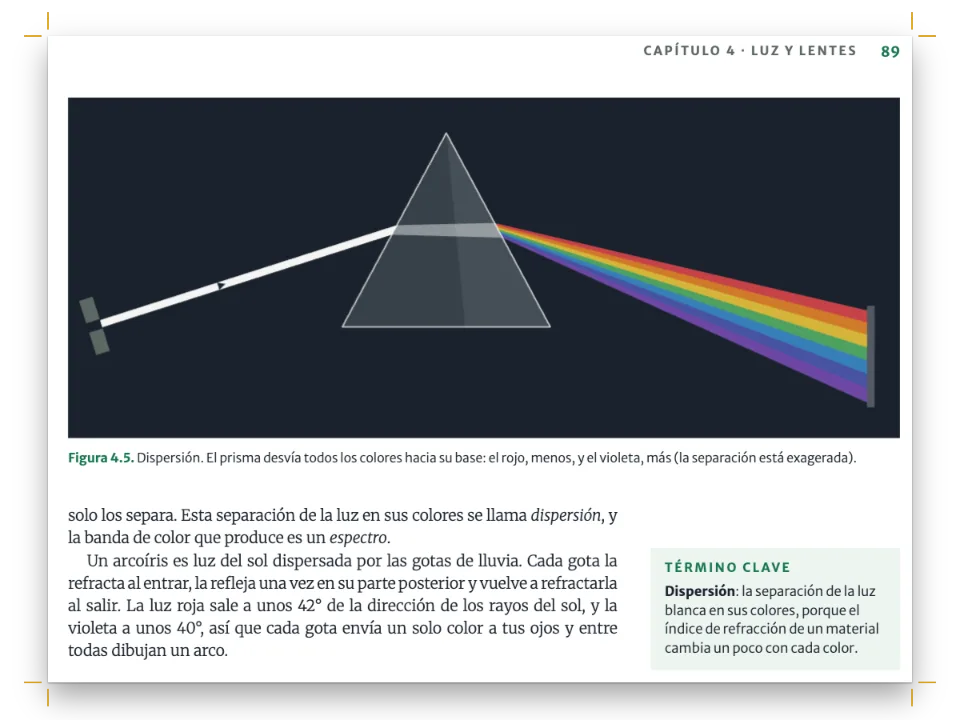
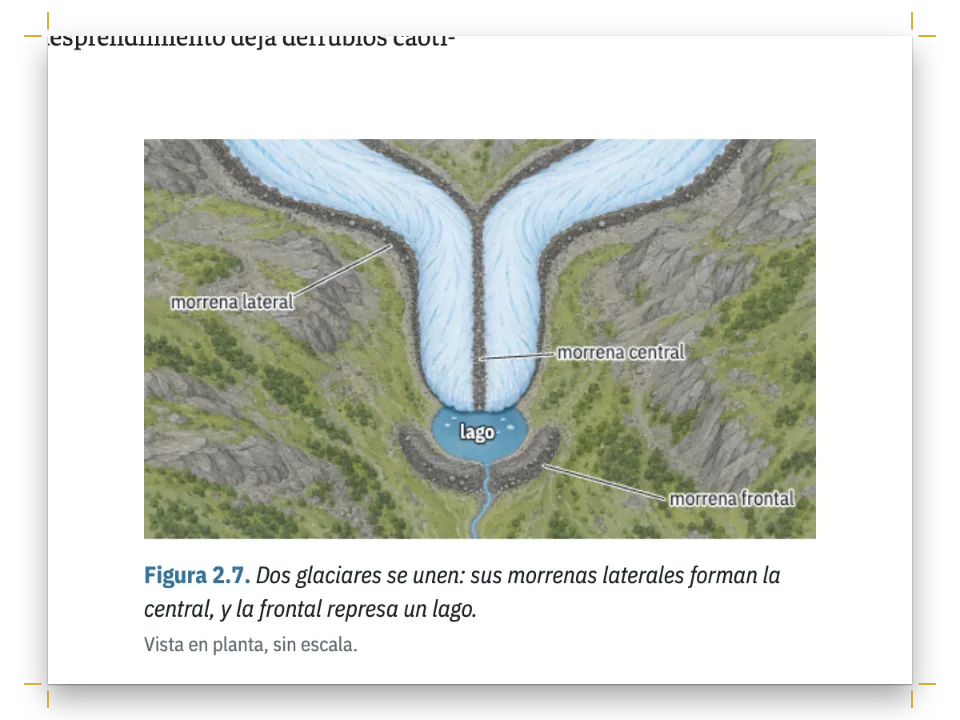
En poques paraules
Un butlletí de dues pàgines d'una associació d'horts. La notícia principal ocupa una columna ampla i continua a la pàgina 2, i les notícies breus van en una columna estreta al costat.
Què compondràs
El número de primavera de La Gaceta del Huerto, butlletí d'una associació d'horts inventada, imprès per les dues cares d'un full A4. Una franja color palla porta el nom en Titan One, en dues línies, una filera de planters al peu i una pestanya color tomàquet amb número i temporada. A sota, la pàgina es divideix en una columna de 113 mm i una altra de 57 mm. La notícia principal, sobre tres calaixos de compost, omple la columna ampla sota un plànol dibuixat amb codi i s'interromp amb una etiqueta «Sigue en la página 2». La columna estreta aplega cinc breus amb etiquetes en forma de píndola. La pàgina 2 reprèn la notícia sota un títol de continuació i centra un gràfic de temperatures. Més avall, un requadre a dues columnes posa el dibuix d'un bancal al costat del seu text. Vuit avisos omplen la columna estreta.
Aquesta recepta respon a
- Com compono en columna i mitja, amb una columna de text ampla i una de lateral estreta?
- Pot Postext compondre tres o més columnes de text, o fer que el text envolti una imatge?
- Com poso dues columnes dins d'un requadre (una de text al costat d'una altra amb una figura)?
- Com faig xips en línia: tecles, etiquetes, bancs de paraules per a exercicis?
La resposta curta
const layout = {
  layoutType: 'oneAndHalf', // the narrow column sits on the right and takes text (the
  // defaults of sideColumnSide and sideColumnRole; 'floats' would keep text out of it)
  sideColumnPercent: 32, // 57 mm of the 178 mm measure
  gutterWidth: mm(8), // the wide column keeps the other 113 mm
  columnRule: { enabled: true, color: col('rule') }, // a 0.5 pt hairline in the gutter
};
// The text runs down the wide column, then the narrow one, then the next page's wide
// column. A :::columnbreak sends the next block on to the following column, so the
// Markdown decides what each column holds:
//   ## Shared compost bays open by the top gate      ← the lead, in the wide column
//   … :chip[Continued on page 2]{style="jump"}
//   :::columnbreak                                    ← the briefs open the narrow column
//   ## In brief {style="rail"}
//   …
//   :::columnbreak                                    ← from the last column: next page
//   :chip[Continued from page 1]{style="jump"}        ← the lead goes on in the wide column
// Fit the copy so that each column ends on a whole paragraph: in 1.4.1 a paragraph that
// runs over into the other column keeps the measure it started with (gotcha:
// split-paragraph-measure).
Ingredients
- Funcions
- Columna i mitjaSalts de pàgina i de columnaChips en líniaColumnes dins d'un requadreEstils de títolCol·locació de figuresRequadresFigures just aquíFilet de columnaMetadades del documentObertures dissenyadesAtributs de títolCapçaleres i folisCapçaleres segons el tipus de pàginaEstils de paràgrafTipus de recurs propisLínies de font i crèditPaleta de color semànticaPàgines en un canvasFigures i taules com a recursos
- També fa servir
- Banda de capítol d'amplada completaColor del paper
- Tipografia
- Work Sans, Titan One, Courier Prime (SIL OFL 1.1)
- Recursos
- The site plan, the temperature chart, the square-metre bed and the row of seedlings under the nameplate, drawn in code in the page's palette (Ignacio Ferro, CC BY 4.0)
Elaboració
#1 · Deixa que el Markdown ompli cada columna
La configuració de la disposició és a la resposta curta, més amunt. En una disposició oneAndHalf la columna estreta porta text per defecte, i el text baixa per la columna ampla, continua per l'estreta i passa a la columna ampla de la pàgina següent (tipus de disposició). Un :::columnbreak acaba la columna on és (directives): després de l'etiqueta «Sigue en la página 2» obre la columna estreta per als breus, i després de l'últim breu, a l'última columna de la pàgina, obre la pàgina 2. En aquest número les dues columnes de la pàgina 1 estan ajustades per acabar a la mateixa línia de la retícula de base, a 275 mm de la vora superior, així que treure qualsevol dels dos salts deixa les pàgines igual. Els salts calen quan canvia el text. Treu el segon paràgraf de la notícia i, sense el primer salt, «En breve» queda a 247 mm, a la columna ampla, sota l'etiqueta, i el primer breu comença a l'ampla i acaba a l'estreta, on la seva segona meitat conserva la mesura de 113 mm amb què va començar i la columna de 57 mm la retalla.
#2 · Munta la capçalera amb el frontmatter
const BEARING = 0.6; // mm: Titan One's left side bearing at 60 pt (T 0.42, G 0.63, L/H 0.85)
const DRILL = { id: 'drill', typeId: 'drawing', kind: 'svg', createdAt: 0, updatedAt: 0,
  svg: { fileId: 'drill.svg', width: 2100, height: 80 } }; // drawn by the design, not the text
const masthead = { enabled: true,
  minHeight: pt(10 * LEAD), // ten grid lines: the text starts one line clear of the band
  slot: { elements: [
    // The band, 62 mm deep, covers the column rule, which 1.4.1 starts at the top of the text
    // area on this page, behind the masthead, however deep the masthead is.
    { kind: 'box', id: 'band', style: { backgroundColor: col('straw') },
      placement: { ...at('page', 'top-left'), size: { width: mm(210), height: mm(62) } } },
    { kind: 'image', id: 'drill', resourceId: 'drill', // seedlings along the band's foot
      placement: { ...at('page', 'top-left', 0, 54), size: { width: mm(210), height: mm(8) } } },
    { kind: 'text', id: 'society', content: '{subtitle}', ...caps(8, 'leaf'), align: 'left',
      placement: { ...at('page', 'top-left', SIDE, 12), size: { width: mm(150) } } },
    { kind: 'text', id: 'title', content: '{titleText}', fontFamily: DISPLAY, fontSize: pt(60),
      lineHeight: 0.9, // a multiple of the size (gotcha: design-lineheight-multiple)
      color: col('leaf'), align: 'left', overflow: 'wrap', // two lines in 178 mm
      placement: { ...at('page', 'top-left', SIDE - BEARING, 17), size: { width: mm(178) } } },
    // {attr.issue} comes from the H1 line, {publishDate} from the quoted frontmatter
    // (gotcha: quote-frontmatter): an unquoted date prints nothing here.
    { kind: 'text', id: 'tab', content: '{attr.issue} · {publishDate}', ...caps(9, 'paper'),
      align: 'right', box: { backgroundColor: col('tomato'),
        padding: { top: mm(1.8), right: mm(3.2), bottom: mm(1.6), left: mm(3.2) } },
      placement: at('page', 'top-right', -SIDE, 44) },
  ] } };
L'H1 porta un estil de títol el disseny del qual dibuixa la capçalera, i span: 'page' posa aquest disseny sobre les dues columnes. {titleText}, a 60 pt, es parteix en dues línies a la seva caixa de 178 mm. La pestanya uneix {attr.issue}, escrit a la línia de l'H1, i {publishDate}, del frontmatter, que ha de ser una cadena entre cometes (elements de text). Sense minHeight, la capçalera reservaria espai fins al peu de la franja, a 62 mm de la vora superior, i el text començaria a la línia següent de la retícula de base, a 62,5 mm, enganxat a la franja. Amb un minHeight de deu línies de la retícula, comença a 67 mm.
#3 · Etiqueta els breus amb xips
const chip = (id, look) => ({ id, fontFamily: LABEL, bold: true,
  fontSize: pt(7.7), // in points: em(0.82) is 7.7 pt in the text, 6.6 pt on the 8 pt jump lines
  borderWidth: pt(0), borderRadius: em(1), // a radius past half the height draws a pill
  paddingX: em(0.5), paddingY: em(0.14), ...look }); // em: of the chip's own size
const chipStyles = [
  chip('tag', { background: col('tomato'), color: col('paper') }), // the first is the default
  chip('free', { background: col('marigold'), color: col('ink') }),
  chip('when', { backgroundEnabled: false, borderWidth: pt(0.8), borderColor: col('leaf'),
    color: col('leaf') }),
  chip('jump', { background: col('straw'), color: col('ink') }),
];
Declarar chipStyles substitueix el xip blau pàl·lid de sèrie, i un xip sense style pren el primer (estils de xip). Un radi més gran que la meitat de l'alçada de la caixa dibuixa una píndola. Un xip no es parteix mai per dins, així que la línia només es talla a l'espai d'abans o de després d'un xip, i una data com «Sáb. 11 de abril» queda en una sola línia. Els estils de xip no poden posar el text en majúscules; per això les etiquetes s'escriuen així al Markdown. L'emplenament vertical es pinta fora de la línia, així que la retícula de base de 13,4 pt es manté.
#4 · Posa el text al costat del dibuix dins d'un requadre
// Text never runs round a picture in a column (text wrap is a gap), but a :::columns group
// inside a box sets blocks side by side; breaks="2" opens column two at the second block:
//   :::callout{type="bed" title="Sixteen squares by the gate"}
//   :::columns{count=2 breaks="2"}
//   The demonstration bed by the gate is 1.2 metres square …   ← block 1
//   ::resource{id="bed"}                                        ← block 2
//   :::
//   :::                                   (gotcha: callout-columns)
const bedBox = { id: 'bed', background: col('tint'), // one device: a tint, no stripe
  padding: { top: mm(3.5), right: mm(4), bottom: mm(4), left: mm(4) }, columnGap: mm(5),
  titleStyle: { ...caps(8.5, 'leaf'), gap: mm(2.4) },
  body: { fontSize: pt(8.8), lineHeight: pt(12.4), paragraphSpacing: false } };
Postext no contorneja el text al voltant d'una imatge: una figura ocupa una franja sencera de la seva columna. Dins d'un requadre, en canvi, un grup :::columns posa blocs l'un al costat de l'altre (:::columns). breaks="2" comença la segona columna, de 50 mm, al dibuix, així que el paràgraf queda sencer a la primera. En aquest número el paràgraf (61,2 mm) és més baix que el dibuix amb el seu peu (75,7 mm), i treure breaks="2" no canvia res. Serveix per a un paràgraf més llarg: sense aquest ajust, el grup s'equilibra, i amb un paràgraf de vint-i-una línies les dues últimes salten a dalt de tot de la segona columna, damunt del dibuix.
#5 · Centra un gràfic estret a la seva franja
const drawing = (id, w, h, placement = {}) => ({ id, typeId: 'drawing', kind: 'svg',
  svg: { fileId: `${id}.svg`, width: w * 10, height: h * 10 }, // mm × 10: fitted to the column
  placement: { position: 'here', ...placement }, // drawn where ::resource{id} stands
  caption: CAPTIONS[id][0], note: CAPTIONS[id][1], altText: CAPTIONS[id][2],
  createdAt: 0, updatedAt: 0 });
// width is a fraction of the column and align where the figure sits in it: the text above
// and below never moves into the white either side.
const HEAT = { width: 0.62, align: 'center' };
const resources = () => [drawing('plan', 114, 56.5), drawing('heat', 68, 40, HEAT),
  drawing('bed', 50, 50), DRILL];
// Newsletter drawings carry no "Figure 1": an empty prefix prints no label.
const resourceTypes = [{ id: 'drawing', name: 'Drawing', shortLabel: 'Drawing',
  captionPrefix: '', numberingTemplate: '', resetOn: 'never', counterFormat: 'decimal' }];
width: 0.62 dona al gràfic 70,1 mm dels 113 mm de la columna, i align: 'center' el centra amb 21,5 mm de paper a cada costat (col·locació). El text de damunt i de sota conserva la mesura sencera i no entra mai en aquest blanc. Els dibuixos són d'un tipus de recurs amb captionPrefix buit, així que cada peu comença amb les seves pròpies paraules en negreta, sense «Figura 1» al davant.
La recepta completa
// ═══ Postext Cookbook · Nº 042 · Community newsletter: lead story and briefs ═════ // https://postext.dev/en/cookbook/community-newsletter // Code: MIT · Text: original (CC BY 4.0) · Drawings: generated in code (CC BY 4.0) // Fonts: Work Sans, Titan One, Courier Prime (SIL OFL 1.1) · Needs postext ≥ 1.4.1 import { buildDocument, renderPageToCanvas, clearMeasurementCache, registerResourceImage, } from 'https://esm.sh/postext'; const LANG = 'es'; // @lang: the language of the sample document ('en' | 'es') const RECIPE = 'community-newsletter'; // ─── 1 · Design ───────────────────────────────────────────────────────────── // #region palette: garden colours, every one linked by id // ink: text · leaf: nameplate and headlines · tomato, the accent: tags, tab, column heads · // straw: the band · marigold: second tag · tint: the box · rule: hairlines · muted: notes const palette = { ink: '#1d211c', leaf: '#2f6b3a', tomato: '#c43f2a', straw: '#f2d492', marigold: '#e2b33c', tint: '#eef4e8', rule: '#cfd3c6', muted: '#5f6659', paper: '#fbfaf5' }; // The hex rides along: 1.4.1 designs read it, not the link (gotcha: palette-skips-designs). const col = (id) => ({ hex: palette[id], model: 'hex', paletteId: id }); const colorPalette = [ // defaults link to 'main-color': point it at the leaf, never blue ...Object.entries(palette).map(([id, hex]) => ({ id, name: id, value: { hex, model: 'hex' } })), { id: 'main-color', name: 'leaf (defaults)', value: { hex: palette.leaf, model: 'hex' } }, ]; // #endregion const [TEXT, DISPLAY, LABEL] = ['Work Sans', 'Titan One', 'Courier Prime']; const SIDE = 16; // mm: the side margins of one A4 sheet, printed on both sides const LEAD = 13.4; // body leading in pt: the baseline grid const caps = (size, colour) => ({ fontFamily: LABEL, fontSize: pt(size), fontWeight: 700, textTransform: 'uppercase', letterSpacing: pt(size * 0.12), color: col(colour) }); const at = (to, edge, x = 0, y = 0) => ({ anchor: { to, edge }, offset: { x: mm(x), y: mm(y) } }); // #region answer: a wide column for the lead, a narrow one for the briefs, one flow const layout = { layoutType: 'oneAndHalf', // the narrow column sits on the right and takes text (the // defaults of sideColumnSide and sideColumnRole; 'floats' would keep text out of it) sideColumnPercent: 32, // 57 mm of the 178 mm measure gutterWidth: mm(8), // the wide column keeps the other 113 mm columnRule: { enabled: true, color: col('rule') }, // a 0.5 pt hairline in the gutter }; // The text runs down the wide column, then the narrow one, then the next page's wide // column. A :::columnbreak sends the next block on to the following column, so the // Markdown decides what each column holds: // ## Shared compost bays open by the top gate ← the lead, in the wide column // … :chip[Continued on page 2]{style="jump"} // :::columnbreak ← the briefs open the narrow column // ## In brief {style="rail"} // … // :::columnbreak ← from the last column: next page // :chip[Continued from page 1]{style="jump"} ← the lead goes on in the wide column // Fit the copy so that each column ends on a whole paragraph: in 1.4.1 a paragraph that // runs over into the other column keeps the measure it started with (gotcha: // split-paragraph-measure). // #endregion // #region masthead: the H1 is the nameplate; the issue tab reads the frontmatter const BEARING = 0.6; // mm: Titan One's left side bearing at 60 pt (T 0.42, G 0.63, L/H 0.85) const DRILL = { id: 'drill', typeId: 'drawing', kind: 'svg', createdAt: 0, updatedAt: 0, svg: { fileId: 'drill.svg', width: 2100, height: 80 } }; // drawn by the design, not the text const masthead = { enabled: true, minHeight: pt(10 * LEAD), // ten grid lines: the text starts one line clear of the band slot: { elements: [ // The band, 62 mm deep, covers the column rule, which 1.4.1 starts at the top of the text // area on this page, behind the masthead, however deep the masthead is. { kind: 'box', id: 'band', style: { backgroundColor: col('straw') }, placement: { ...at('page', 'top-left'), size: { width: mm(210), height: mm(62) } } }, { kind: 'image', id: 'drill', resourceId: 'drill', // seedlings along the band's foot placement: { ...at('page', 'top-left', 0, 54), size: { width: mm(210), height: mm(8) } } }, { kind: 'text', id: 'society', content: '{subtitle}', ...caps(8, 'leaf'), align: 'left', placement: { ...at('page', 'top-left', SIDE, 12), size: { width: mm(150) } } }, { kind: 'text', id: 'title', content: '{titleText}', fontFamily: DISPLAY, fontSize: pt(60), lineHeight: 0.9, // a multiple of the size (gotcha: design-lineheight-multiple) color: col('leaf'), align: 'left', overflow: 'wrap', // two lines in 178 mm placement: { ...at('page', 'top-left', SIDE - BEARING, 17), size: { width: mm(178) } } }, // {attr.issue} comes from the H1 line, {publishDate} from the quoted frontmatter // (gotcha: quote-frontmatter): an unquoted date prints nothing here. { kind: 'text', id: 'tab', content: '{attr.issue} · {publishDate}', ...caps(9, 'paper'), align: 'right', box: { backgroundColor: col('tomato'), padding: { top: mm(1.8), right: mm(3.2), bottom: mm(1.6), left: mm(3.2) } }, placement: at('page', 'top-right', -SIDE, 44) }, ] } }; // #endregion // #region tags: four chip styles replace the built-in pale-blue chip const chip = (id, look) => ({ id, fontFamily: LABEL, bold: true, fontSize: pt(7.7), // in points: em(0.82) is 7.7 pt in the text, 6.6 pt on the 8 pt jump lines borderWidth: pt(0), borderRadius: em(1), // a radius past half the height draws a pill paddingX: em(0.5), paddingY: em(0.14), ...look }); // em: of the chip's own size const chipStyles = [ chip('tag', { background: col('tomato'), color: col('paper') }), // the first is the default chip('free', { background: col('marigold'), color: col('ink') }), chip('when', { backgroundEnabled: false, borderWidth: pt(0.8), borderColor: col('leaf'), color: col('leaf') }), chip('jump', { background: col('straw'), color: col('ink') }), ]; // #endregion // #region box: two columns inside a box set a paragraph beside its drawing // Text never runs round a picture in a column (text wrap is a gap), but a :::columns group // inside a box sets blocks side by side; breaks="2" opens column two at the second block: // :::callout{type="bed" title="Sixteen squares by the gate"} // :::columns{count=2 breaks="2"} // The demonstration bed by the gate is 1.2 metres square … ← block 1 // ::resource{id="bed"} ← block 2 // ::: // ::: (gotcha: callout-columns) const bedBox = { id: 'bed', background: col('tint'), // one device: a tint, no stripe padding: { top: mm(3.5), right: mm(4), bottom: mm(4), left: mm(4) }, columnGap: mm(5), titleStyle: { ...caps(8.5, 'leaf'), gap: mm(2.4) }, body: { fontSize: pt(8.8), lineHeight: pt(12.4), paragraphSpacing: false } }; // #endregion // #region band: a narrower figure still takes the whole band of its column const drawing = (id, w, h, placement = {}) => ({ id, typeId: 'drawing', kind: 'svg', svg: { fileId: `${id}.svg`, width: w * 10, height: h * 10 }, // mm × 10: fitted to the column placement: { position: 'here', ...placement }, // drawn where ::resource{id} stands caption: CAPTIONS[id][0], note: CAPTIONS[id][1], altText: CAPTIONS[id][2], createdAt: 0, updatedAt: 0 }); // width is a fraction of the column and align where the figure sits in it: the text above // and below never moves into the white either side. const HEAT = { width: 0.62, align: 'center' }; const resources = () => [drawing('plan', 114, 56.5), drawing('heat', 68, 40, HEAT), drawing('bed', 50, 50), DRILL]; // Newsletter drawings carry no "Figure 1": an empty prefix prints no label. const resourceTypes = [{ id: 'drawing', name: 'Drawing', shortLabel: 'Drawing', captionPrefix: '', numberingTemplate: '', resetOn: 'never', counterFormat: 'decimal' }]; // #endregion const head = (id, content, edge, x, y, look) => ({ kind: 'text', id, content, pages: 'body', align: edge.slice(4), placement: at('page', edge, x, y), ...look }); const folio = { elements: [ // page 2's head: title and date over a hairline, the folio right head('name', '{title} · {publishDate}', 'top-left', SIDE, 11, caps(7.5, 'leaf')), head('folio', '{pageNumber}', 'top-right', -SIDE, 9.6, { fontFamily: DISPLAY, fontSize: pt(12), color: col('tomato') }), { kind: 'rule', id: 'rule', thickness: pt(0.5), color: col('rule'), pages: 'body', placement: { ...at('page', 'top-left', SIDE, 15.5), size: { width: mm(210 - 2 * SIDE) } } }, ] }; const label = (size, look = {}) => ({ fontFamily: LABEL, fontSize: pt(size), ...look }); const config = () => ({ // a factory: the engine caches resolved configs per object colorPalette, resourceTypes, chipStyles, layout, calloutStyles: [bedBox], page: { width: mm(210), height: mm(297), dpi: 150, backgroundColor: col('paper'), margins: { top: mm(20), bottom: mm(18), left: mm(SIDE), right: mm(SIDE) } }, bodyText: { fontFamily: TEXT, fontSize: pt(9.4), lineHeight: pt(LEAD), color: col('ink'), referenceColor: col('leaf'), // for a :ref label: the palette reaches bold but not this // colour, which would stay the default blue (gotcha: palette-skips-designs) // Ragged: no hyphens, no runt check (gotchas: ragged-no-hyphenation, ragged-runts) textAlign: 'left', firstLineIndent: pt(0), paragraphSpacing: true }, headings: { fontFamily: DISPLAY, fontWeight: 400, color: col('leaf'), levels: [ // Restated (gotcha: headings-drop-h1-break); span: 'page' sets the masthead over both columns { level: 1, span: 'page', breakBefore: { enabled: true, parity: 'any' } }, { level: 2, fontSize: pt(24), lineHeight: pt(2 * LEAD), marginTop: pt(0), marginBottom: pt(LEAD / 2) }, { level: 3, fontFamily: TEXT, fontWeight: 700, fontSize: pt(10.2), lineHeight: pt(LEAD), color: col('ink'), marginTop: pt(LEAD), marginBottom: pt(0) }, // a brief's name { level: 4, ...caps(8.5, 'tomato'), lineHeight: pt(LEAD), marginTop: pt(LEAD), marginBottom: pt(0) }, // a notice's name ] }, headingStyles: [ // marginBottom 0: the level's 0.5 em is added under minHeight and would drop the text a line { id: 'masthead', marginBottom: pt(0), advancedDesign: masthead }, { id: 'rail', fontSize: pt(17), lineHeight: pt(2 * LEAD), color: col('tomato') }, { id: 'jump', fontSize: pt(19), lineHeight: pt(1.5 * LEAD), marginTop: pt(LEAD / 2) }, ], paragraphStyles: [ { id: 'standfirst', fontSize: pt(12), lineHeight: pt(16) }, { id: 'byline', ...label(8, { color: col('muted'), marginBottom: pt(LEAD / 2) }) }, { id: 'jump', ...label(8, { textAlign: 'right' }) }, // 'Continued on page 2' { id: 'from', ...label(8) }, // 'Continued from page 1' { id: 'colophon', ...label(7, { lineHeight: pt(9.4), color: col('muted'), marginTop: pt(LEAD) }) }, ], captionStyle: { fontFamily: TEXT, fontSize: pt(8), color: col('ink'), gap: mm(1.6), note: { fontFamily: LABEL, fontSize: pt(6.8), color: col('muted') } }, header: folio, footer: { elements: [] }, // the folio is at the head of page 2; page 1 has the masthead }); // ─── 2 · Content ──────────────────────────────────────────────────────────── const markdown = String.raw`---Mostra en Markdown · 116 línies · content.es.md
title: "La Gaceta del Huerto" subtitle: "Boletín de la Asociación Huertos del Soto" publishDate: "Primavera 2026" --- # La Gaceta del Huerto {style="masthead" issue="N.º 47"} :chip[NOTICIAS]{style="tag"} ## Abren los cajones de compost compartidos :::paragraphs{style="standfirst"} Sesenta parcelas llenan ya tres cajones en vez de un montón cada una. El primero llegó a 63 °C en cinco días; su compost vuelve en septiembre. ::: :::paragraphs{style="byline"} Maribel Otero, secretaria de la asociación ::: ::resource{id="plan"} El primer sábado de marzo, once socios montamos tres cajones con tablones de andamio recuperados junto a la puerta de arriba. Cada uno mide metro y medio de lado y un metro de alto, con tablas sueltas delante que se quitan para pasar el montón al cajón de al lado. Materiales Ruiz nos dio los tablones por lo que costó la furgoneta, y Ramón Ferrer trajo su taladro. Hasta ahora cada parcela tenía su propio montón, y la mayoría no llegaba a calentarse. Un montón necesita cerca de un metro cúbico de material mezclado para guardar el calor, y pocos llenamos tanto en una temporada. En un solo cajón, con el estiércol que la hípica deja en la puerta, los mismos restos se calientan en pocos días. :::paragraphs{style="jump"} :chip[Sigue en la página 2]{style="jump"} ::: :::columnbreak ## En breve {style="rail"} ### Limpieza de la acequia :chip[JORNADA]{style="tag"} :chip[Dom. 12 de abril]{style="when"} Hay que sacar el barro y las cañas de la acequia antes de que empiece el riego. Julián Soria, que la limpia desde 1998, enseña a los nuevos. Hay azadas y guantes; quedamos en la caseta a las nueve. ### Intercambio de semillas :chip[ACTIVIDAD]{style="tag"} :chip[Sáb. 11 de abril]{style="when"} Trae tus semillas sobrantes en sobres rotulados a la caseta, de diez a doce. Sirven las de variedades tradicionales; las de híbridos F1 no dan plantas iguales a la madre. Café y bizcocho, 1 €. ### Estiércol de caballo :chip[GRATIS]{style="free"} La Hípica El Recreo deja un remolque en la puerta de arriba cada dos martes. Llévate lo que necesite tu parcela, pero llena antes el cajón uno. ### Tarros y una carpa :chip[SE BUSCA]{style="tag"} Tarros limpios con tapa para el puesto de mermeladas y una carpa prestada: la feria de verano es el sábado 18 de julio. Deja los tarros en la caja que hay junto a la puerta. ### Vecinos nuevos :chip[BIENVENIDA]{style="free"} Cuatro parcelas cambiaron de manos este invierno. Bienvenidos los Benali a la 9, Lucía y Tomás a la 23a, el señor Herrero a la 31 y el 5.º B del colegio San Blas, que cultiva la mitad de la 40. :::columnbreak :::paragraphs{style="from"} :chip[Viene de la página 1]{style="jump"} ::: ## Qué va en los cajones {style="jump"} El cajón uno se llenó el 7 de marzo. El día 12 marcaba 63 °C en el centro, y se mantuvo a 55 °C o más seis días, lo bastante para matar casi todas las semillas de malas hierbas. Las lecturas se apuntan con tiza en la pizarra de la puerta. Llena un cajón cada vez, con verde y marrón en carretillas más o menos iguales: césped cortado, hierbas sin semilla, restos de cultivo y mondas con cartón roto, paja y estiércol. Trocea lo que sea más grueso que un pulgar. No eches raíces de coles con hernia, grama ni correhuela, ni comida cocinada, que atrae ratas. ::resource{id="heat"} Al voltearlo entra aire en el centro y la temperatura vuelve a subir: el cajón uno, volteado el 18 de marzo, pasaba de 60 °C dos días después. Cada semana, dos parcelas se encargan de la horca según el turno de la caseta. En septiembre cada parcela se llevará dos carretillas de compost, y el resto irá al bancal de la puerta. :::callout{type="bed" title="Dieciséis cuadros junto a la puerta"} :::columns{count=2 breaks="2"} El bancal de muestra de la puerta mide 1,2 metros de lado y tiene el mismo borde de tablones que los cajones. Este año lleva 15 centímetros de compost de la planta municipal; la próxima primavera llevará el nuestro. Unas cuerdas lo reparten en dieciséis cuadros de 30 centímetros, con una, cuatro, nueve o dieciséis plantas según el tamaño del cultivo. El 5.º B del colegio San Blas lo plantó el 20 de marzo y lleva su diario. ::resource{id="bed"} ::: ::: :::columnbreak ## Avisos {style="rail"} #### Cuotas La cuota de 2026 es de 52 € por parcela y de 28 € por media, antes del 30 de abril. Se paga a Rafael Muñoz, en la 18, o por transferencia (datos en la caseta). #### Riego El pilón tiene agua de abril a octubre. La manguera es solo para llenar regaderas; nunca la dejes corriendo en un bancal. #### Quemas Prohibidas de abril a septiembre, y siempre que el viento sople hacia las casas del camino. #### Casetas Una caseta de más de dos metros de alto necesita el visto bueno de la junta. Manda un croquis con las medidas antes de comprarla. #### Lista de espera Hay treinta y una personas apuntadas. Este año saldrán unas ocho parcelas, casi todas medias. #### Abejas Carmen revisa las dos colmenas de la parcela 52 los sábados de sol de abril. Con su bandera puesta, no salgas del camino. #### Perdida Una regadera verde de diez litros, con alcachofa de latón, que se quedó junto al pilón. Si la tienes, devuélvela a la parcela 7. #### Próximo número Deja tus textos para el número de verano en el buzón de la caseta antes del 15 de junio. :::paragraphs{style="colophon"} La Gaceta del Huerto la escriben y maquetan socios de la Asociación Huertos del Soto. Compuesta en Work Sans, Titan One y Courier Prime (SIL Open Font License) · Texto original, CC BY 4.0. :::`; // content.<lang>.md, inlined by the Cookbook // #region art: the site plan, the heap's temperature and the square-metre bed function mulberry32(seed) { // a seeded PRNG: the same plots on every run return () => { seed = (seed + 0x6d2b79f5) | 0; let r = Math.imul(seed ^ (seed >>> 15), 1 | seed); r = (r + Math.imul(r ^ (r >>> 7), 61 | r)) ^ r; return ((r ^ (r >>> 14)) >>> 0) / 4294967296; }; } const channel = (hex, i) => parseInt(hex.slice(i, i + 2), 16); const mix = (a, b, k) => `#${[1, 3, 5].map((i) => Math.round(channel(a, i) * (1 - k) + channel(b, i) * k).toString(16).padStart(2, '0')).join('')}`; // a towards b by k const f = (v) => +v.toFixed(2); const P = palette; const SOIL = mix(P.tomato, P.ink, 0.62); const EARTH = mix(SOIL, P.straw, 0.28); const GRASS = mix(P.tint, P.leaf, 0.3); const DEEP = mix(P.leaf, P.ink, 0.35); const svgOf = (w, h, body, style = '') => `<svg xmlns="http://www.w3.org/2000/svg" ` + `width="${w * 10}" height="${h * 10}" viewBox="0 0 ${w} ${h}">${style}${body}</svg>`; const dot = (x, y, r, fill) => `<circle cx="${f(x)}" cy="${f(y)}" r="${f(r)}" fill="${fill}"/>`; const rect = (x, y, w, h, fill, extra = '') => `<rect x="${f(x)}" y="${f(y)}" width="${f(w)}" ` + `height="${f(h)}" fill="${fill}"${extra}/>`; const line = (x1, y1, x2, y2, stroke, width) => `<path d="M${f(x1)} ${f(y1)}L${f(x2)} ${f(y2)}" ` + `stroke="${stroke}" stroke-width="${width}" stroke-linecap="round"/>`; // One plot seen from above: rows of crops across it, sometimes a shed or a greenhouse. function plot(x, y, w, h, rand, extra) { let out = rect(x, y, w, h, EARTH); const strips = 2 + Math.floor(rand() * 3); let top = y + 0.8; for (let s = 0; s < strips; s++) { const room = y + h - 0.8 - top; if (room < 2) break; let sh = s === strips - 1 ? room : Math.max(4, (h - 1.6) * (0.2 + rand() * 0.3)); if (room - sh < 4) sh = room; // no strip thinner than 4 mm const kind = Math.floor(rand() * 6); const [x0, x1] = [x + 0.9, x + w - 0.9]; if (kind === 0) { // rows of lettuce and onions for (let yy = top + 1; yy < top + sh - 0.6; yy += 1.7) { for (let xx = x0 + 0.6; xx < x1; xx += 1.5) out += dot(xx, yy, 0.55, P.leaf); } } else if (kind === 1) { // peas and beans up canes for (let yy = top + 1.2; yy < top + sh - 0.8; yy += 2.6) out += line(x0, yy, x1, yy, DEEP, 1); } else if (kind === 2) { // brassicas under netting out += rect(x0 - 0.3, top, x1 - x0 + 0.6, sh - 0.4, mix(P.tint, P.paper, 0.4)); for (let yy = top + 1.6; yy < top + sh - 1.2; yy += 3) { for (let xx = x0 + 1.4; xx < x1 - 0.8; xx += 3) { out += dot(xx, yy, 1.1, mix(P.leaf, P.rule, 0.45)); } } } else if (kind === 3) { // rhubarb and squashes for (let xx = x0 + 2; xx < x1 - 1; xx += 4 + rand() * 2) { const yy = top + sh / 2 + (rand() - 0.5) * (sh - 3); out += dot(xx, yy, 1.8, P.leaf) + dot(xx + 0.6, yy - 0.5, 0.45, P.marigold); } } else if (kind === 4) { // dug over and raked for (let yy = top + 0.7; yy < top + sh - 0.3; yy += 0.9) { out += line(x0, yy, x1, yy, SOIL, 0.25); } } else { // straw round the strawberries out += rect(x0 - 0.3, top, x1 - x0 + 0.6, sh - 0.4, P.straw); for (let xx = x0 + 1; xx < x1; xx += 2.2) { out += dot(xx, top + sh / 2 - 0.2, 0.8, P.leaf) + dot(xx + 0.4, top + sh / 2 + 0.3, 0.3, P.tomato); } } top += sh; } if (extra === 'shed') { // a shed with its felt roof in tomato, and a water butt const sx = rand() < 0.5 ? x + 0.6 : x + w - 5.1; out += rect(sx, y + 0.6, 4.5, 3.4, P.tomato) + line(sx, y + 2.3, sx + 4.5, y + 2.3, SOIL, 0.3) + dot(sx + (sx > x + 1 ? -1.3 : 5.8), y + 1.6, 0.9, P.ink); } else if (extra === 'glass') { // a greenhouse: glass over the whole end of the plot out += rect(x + 0.8, y + h - 7.2, w - 1.6, 6.4, mix(P.paper, P.tint, 0.6)) + [0.25, 0.5, 0.75].map((k) => line(x + 0.8 + k * (w - 1.6), y + h - 7.2, x + 0.8 + k * (w - 1.6), y + h - 0.8, P.rule, 0.3)).join(''); } return out; } function planSvg(face) { // 114 × 56.5 mm: the top of the Wren Lane site, north up const rand = mulberry32(1921); // the year the society took the lease const [W, H, PATH] = [114, 56.5, 26.5]; const label = (lx, ly, s, fill, anchor = 'start') => `<text x="${lx}" y="${ly}" ` + `font-size="2.3" fill="${fill}" text-anchor="${anchor}">${s}</text>`; let out = rect(0, 0, W, H, GRASS) + rect(0, PATH, W, 4.5, P.straw); // the main path, gravel out += label(W - 2, PATH + 3, t({ en: 'MAIN PATH', es: 'CAMINO' }), SOIL, 'end'); // The top gate at the end of the path, and the corner behind it. out += rect(0, PATH - 0.8, 1.2, 1.2, P.ink) + rect(0, PATH + 4.1, 1.2, 1.2, P.ink) + label(2.2, PATH + 3, t({ en: 'TOP GATE', es: 'PUERTA DE ARRIBA' }), SOIL); out += rect(2, 2.4, 11, 8, P.tomato) + rect(2, 6.4, 11, 4, mix(P.tomato, P.ink, 0.22)) // the hut + label(7.5, 7.2, t({ en: 'HUT', es: 'CASETA' }), P.paper, 'middle'); out += rect(15.5, 3.2, 11.5, 3.6, mix(P.rule, P.ink, 0.3)) // the trough + rect(16.1, 3.8, 10.3, 2.4, mix(P.tint, P.rule, 0.4)); for (let i = 0; i < 3; i++) { // the three bays in fresh boards: full, half full, empty const bx = 2 + i * 8.6; out += rect(bx, 13.5, 7.8, 7.8, P.marigold) + rect(bx + 0.8, 14.3, 6.2, 6.2, SOIL); for (let k = 0; k < 16 - i * 7; k++) { out += dot(bx + 1.5 + rand() * 4.8, 15 + rand() * 4.8, 0.5, i === 0 ? DEEP : EARTH); } out += label(bx + 3.9, 24.6, i + 1, P.ink, 'middle'); } out += dot(25.5, 10.5, 3.6, DEEP); // the old pear // Plots: four above the path, five below; one split in halves, grass paths between. const row = (x0, x1, y, h, n, extras) => { const w = (x1 - x0 - (n - 1) * 1.4) / n; for (let i = 0; i < n; i++) { const px = x0 + i * (w + 1.4); if (extras[i] === 'halves') { const half = (h - 1.4) / 2; out += plot(px, y, w, half, rand) + plot(px, y + half + 1.4, w, half, rand, 'shed'); } else out += plot(px, y, w, h, rand, extras[i]); } }; row(31, W - 2, 2, PATH - 3.5, 4, ['shed', 'halves', '', 'shed']); row(2, W - 2, PATH + 6.5, H - PATH - 8.5, 5, ['', 'shed', 'glass', '', 'shed']); return svgOf(W, H, out, face); } // An SVG drawn as an image cannot see the page's web fonts (gotcha: svg-no-webfonts), so the // chart carries its label face inline, as a data URL of the Fontsource file. async function inlineFace(family, weight) { const id = family.toLowerCase().replace(/\s+/g, '-'); const url = `https://cdn.jsdelivr.net/npm/@fontsource/${id}@5/files/${id}-latin-${weight}` + '-normal.woff2'; const bytes = new Uint8Array(await (await fetch(url)).arrayBuffer()); let bin = ''; for (const b of bytes) bin += String.fromCharCode(b); return `<style>@font-face{font-family:L;src:url(data:font/woff2;base64,${btoa(bin)}) ` + `format('woff2')}text{font-family:L;font-weight:700}</style>`; } const HEAT_LOG = [12, 24, 38, 49, 57, 63, 64, 62, 59, 55, 51, 47, 56, 61, 62, 60, 57, 54, 51, 48, 46, 44]; // °C at the heap's centre, 7 to 28 March; turned after the reading on the 18th function heatSvg(face) { // 68 × 40 mm; the plot runs 7–28 March and 0–70 °C const [W, H, X0, X1, Y0, Y1] = [68, 40, 9, 66, 3, 33]; const x = (day) => X0 + ((day - 7) / 21) * (X1 - X0); const y = (deg) => Y1 - (deg / 70) * (Y1 - Y0); const text = (tx, ty, s, fill, anchor = 'end', size = 2.5) => `<text x="${f(tx)}" y="${f(ty)}" ` + `font-size="${size}" fill="${fill}" text-anchor="${anchor}">${s}</text>`; let out = rect(X0, y(65), X1 - X0, y(55) - y(65), P.straw); // where weed seeds die for (const deg of [20, 40, 60]) { out += line(X0, y(deg), X1, y(deg), P.rule, 0.2) + text(X0 - 1.2, y(deg) + 0.9, deg, P.muted); } out += text(X0 - 1.2, y(70) + 0.9, '°C', P.muted); // the unit, over the scale for (const day of [7, 14, 21, 28]) { out += line(x(day), Y1, x(day), Y1 + 1, P.ink, 0.25) + text(x(day), Y1 + 3.8, day === 28 ? t({ en: '28 March', es: '28 marzo' }) : day, P.muted, day === 28 ? 'end' : 'middle'); } out += line(x(18.5), y(70), x(18.5), Y1, P.leaf, 0.35) + text(x(18.5) + 1, y(70) + 2.2, t({ en: 'turned', es: 'volteo' }), P.leaf, 'start'); const pts = HEAT_LOG.map((deg, i) => [x(7 + i), y(deg)]); out += `<path d="M${pts.map(([px, py]) => `${f(px)} ${f(py)}`).join('L')}" fill="none" ` + `stroke="${P.tomato}" stroke-width="0.55" stroke-linejoin="round"/>`; out += pts.map(([px, py]) => dot(px, py, 0.6, P.tomato)).join(''); out += line(X0, Y1, X1, Y1, P.ink, 0.3); return svgOf(W, H, out, face); } // The square-metre bed: sixteen squares of 30 cm, one to sixteen plants in each. const CROPS = { // plants per square, size and colour of each plant seen from above cabbage: [1, 4.2, mix(P.leaf, P.rule, 0.35)], lettuce: [4, 2.1, mix(P.leaf, P.straw, 0.35)], chard: [4, 1.9, mix(P.leaf, P.tomato, 0.3)], marigold: [4, 1.5, P.marigold], beetroot: [9, 1.1, mix(P.tomato, P.ink, 0.35)], beans: [9, 1.2, P.leaf], onion: [9, 0.8, mix(P.straw, P.paper, 0.3)], radish: [16, 0.6, P.tomato], carrot: [16, 0.55, mix(P.marigold, P.tomato, 0.35)], }; const BED = [['cabbage', 'lettuce', 'lettuce', 'marigold'], ['beetroot', 'radish', 'carrot', 'onion'], ['chard', 'beans', 'beetroot', 'radish'], ['marigold', 'onion', 'carrot', 'lettuce']]; function bedSvg() { // 50 × 50 mm: 1.2 m of bed inside its scaffold boards const [S, BOARD] = [50, 2.6]; const cell = (S - 2 * BOARD) / 4; let out = rect(0, 0, S, S, P.marigold) + rect(BOARD, BOARD, S - 2 * BOARD, S - 2 * BOARD, SOIL); BED.forEach((cropRow, r) => cropRow.forEach((crop, c) => { const [n, size, fill] = CROPS[crop]; const k = Math.sqrt(n); for (let i = 0; i < n; i++) { const cx = BOARD + c * cell + ((i % k) + 0.5) * (cell / k); const cy = BOARD + r * cell + (Math.floor(i / k) + 0.5) * (cell / k); out += dot(cx, cy, size, fill); if (crop === 'marigold') out += dot(cx, cy, size * 0.4, P.tomato); } })); for (let i = 1; i < 4; i++) { // the strings const at = BOARD + i * cell; out += line(at, BOARD, at, S - BOARD, P.paper, 0.25) + line(BOARD, at, S - BOARD, at, P.paper, 0.25); } return svgOf(S, S, out); } // A drill of seedlings along the foot of the masthead band, 210 × 8 mm: some show only their // seed leaves, the rest their first true leaves too. function leaf(x, y, len, wid, deg, fill) { // a leaf from its stalk end, deg from the vertical const a = (deg * Math.PI) / 180; const [dx, dy] = [Math.sin(a), -Math.cos(a)]; const [mx, my, px, py] = [x + (dx * len) / 2, y + (dy * len) / 2, -dy * wid, dx * wid]; return `<path d="M${f(x)} ${f(y)}Q${f(mx + px)} ${f(my + py)} ${f(x + dx * len)} ` + `${f(y + dy * len)}Q${f(mx - px)} ${f(my - py)} ${f(x)} ${f(y)}Z" fill="${fill}"/>`; } function drillSvg() { const rand = mulberry32(47); // the issue number const [W, H, RIDGE] = [210, 8, 1.3]; const SEED = mix(P.leaf, P.straw, 0.3); let out = rect(0, H - RIDGE, W, RIDGE, SOIL); for (let x = 2.6; x < W - 1; x += 4.6 + rand() * 1.2) { const ground = H - RIDGE; const grown = rand() < 0.62; const stem = grown ? 2.6 + rand() * 1.2 : 1.2 + rand() * 0.8; const lean = (rand() - 0.5) * 10; out += line(x, ground, x, ground - stem, P.leaf, 0.45); const top = ground - stem; if (grown) { out += leaf(x, ground - stem * 0.45, 1.6, 0.55, -68 + lean, SEED) + leaf(x, ground - stem * 0.45, 1.6, 0.55, 68 + lean, SEED) + leaf(x, top, 2.6 + rand() * 0.5, 1, -32 + lean, P.leaf) + leaf(x, top, 2.6 + rand() * 0.5, 1, 32 + lean, P.leaf); } else { out += leaf(x, top, 1.7, 0.6, -58 + lean, SEED) + leaf(x, top, 1.7, 0.6, 58 + lean, SEED); } } return svgOf(W, H, out); } // What the drawings say under them, in the sample's language: caption, credit note, alt text. const CAPTIONS = { plan: [t({ en: '**The top of the Wren Lane site, from the air.** The three new bays stand between ' + 'the hut and the top gate.', es: '**La parte alta del Soto, desde el aire.** Los tres cajones nuevos están entre la ' + 'caseta y la puerta de arriba.' }), t({ en: 'Drawing: The Gazette, from the society’s site plan', es: 'Dibujo: La Gaceta, a partir del plano de la asociación' }), t({ en: 'Plan of allotment plots seen from above, with three compost bays by the gate.', es: 'Plano de parcelas de huerto vistas desde arriba, con tres cajones de compost junto a la ' + 'puerta.' })], heat: [t({ en: '**Bay one in March.** Temperature at the centre of the heap, read at nine each ' + 'morning. In the shaded band, 55 to 65 °C, most weed seeds die.', es: '**El cajón uno en marzo.** Temperatura en el centro, a las nueve. En la franja, de ' + '55 a 65 °C, mueren casi todas las semillas de malas hierbas.' }), t({ en: 'Readings: the compost rota', es: 'Lecturas: el turno del compost' }), t({ en: 'Line chart: the heap rises from 12 °C to 64 °C in six days, cools to 47 °C, and ' + 'climbs back to 62 °C after it is turned on 18 March.', es: 'Gráfico de líneas: el montón sube de 12 °C a 64 °C en seis días, baja a 47 °C y vuelve ' + 'a 62 °C después del volteo del 18 de marzo.' })], bed: [t({ en: '**What goes where.** One cabbage to a square; four lettuces, chard or marigolds; ' + 'nine beetroot, beans or onions; sixteen radishes or carrots.', es: '**Cómo se planta el bancal.** Una col por cuadro; cuatro lechugas, acelgas o ' + 'caléndulas; nueve remolachas, judías o cebollas; dieciséis rábanos o zanahorias.' }), t({ en: 'Drawing: The Gazette', es: 'Dibujo: La Gaceta' }), t({ en: 'A square bed divided by strings into sixteen squares, each planted with one to ' + 'sixteen plants.', es: 'Un bancal cuadrado dividido con cuerdas en dieciséis cuadros, ' + 'cada uno con entre una y dieciséis plantas.' })], }; // #endregion // ─── 3 · Fonts ────────────────────────────────────────────────────────────── // Text, display and label faces, loaded before the build (gotcha: fonts-first). const FONTS = { 'Work Sans': ['400', '700'], 'Titan One': ['400'], 'Courier Prime': ['400', '700'] }; // ─── 4 · Build & show ─────────────────────────────────────────────────────── await loadFonts(FONTS, markdown); const face = await inlineFace(LABEL, 700); // the label face, for the drawings' own lettering await Promise.all([loadSvg('plan.svg', planSvg(face)), loadSvg('heat.svg', heatSvg(face)), loadSvg('bed.svg', bedSvg()), loadSvg('drill.svg', drillSvg())]); const doc = await buildWithFonts( () => buildDocument({ markdown, resources: resources() }, config()), markdown); showPages(doc, { title: t({ en: 'Community newsletter', es: 'Boletín vecinal' }) });Kit · core, fonts, viewer, images: igual a totes les receptes · 270 línies
// ─── Kit ── helpers shared by every Cookbook recipe · postext.dev/cookbook ───── // ─── Kit · core v1 ── the same in every recipe · postext.dev/cookbook ───────── function mm(value) { return { value, unit: 'mm' }; } function pt(value) { return { value, unit: 'pt' }; } function em(value) { return { value, unit: 'em' }; } /** The sample language's string: t({ en: 'Figure', es: 'Figura' }). */ function t(strings) { return strings[LANG] ?? Object.values(strings)[0]; } /** A file in this recipe's assets folder, served from the Postext repo by jsDelivr. */ function asset(file) { return `https://cdn.jsdelivr.net/gh/drnachio/postext@main/cookbook/${RECIPE}/assets/${file}`; } // ─── Kit · fonts v1 ── the same in every recipe · postext.dev/cookbook ──────── // Postext measures text with the faces the browser has loaded, and caches the // widths, so every face must be ready before the first build. Faces come from // Fontsource: the same static files the PDF embeds, so screen and PDF agree. /** faces = { 'Family Name': ['400', '400i', '700'] }. `text` is the sample: * letters beyond Latin-1 (č, ł, ő…) also load the latin-ext files. With * `optional`, a face Fontsource does not ship is skipped instead of failing. * Resolves to the number of faces added. */ async function loadFonts(faces, text = '', { optional = false } = {}) { kitStatus('Loading fonts…'); const ranges = { latin: 'U+0000-00FF,U+0131,U+0152-0153,U+02BB-02BC,U+02C6,U+02DA,U+02DC,U+0304,U+0308,U+0329,' + 'U+2000-206F,U+20AC,U+2122,U+2191,U+2193,U+2212,U+2215,U+FEFF,U+FFFD', 'latin-ext': 'U+0100-02BA,U+02BD-02C5,U+02C7-02CC,U+02CE-02D7,U+02DD-02FF,U+0304,U+0308,U+0329,' + 'U+1D00-1DBF,U+1E00-1E9F,U+1EF2-1EFF,U+2020,U+20A0-20AB,U+20AD-20C0,U+2113,U+2C60-2C7F,U+A720-A7FF', }; const subsets = /[Ā-˿Ḁ-ỿ]/.test(text) ? ['latin', 'latin-ext'] : ['latin']; const jobs = []; let added = 0; for (const [family, specs] of Object.entries(faces)) { const id = fontsourceId(family); const meta = optional ? await fontsourceMeta(family) : null; for (const spec of new Set(specs)) { const weight = parseInt(spec, 10); const style = spec.endsWith('i') ? 'italic' : 'normal'; if (hasFace(family, weight, style)) continue; if (optional && !(meta?.weights.includes(weight) && meta.styles.includes(style))) continue; for (const subset of subsets) { const url = `https://cdn.jsdelivr.net/npm/@fontsource/${id}@5/files/${id}-${subset}-${weight}-${style}.woff2`; const face = new FontFace(family, `url(${url}) format('woff2')`, { weight: String(weight), style, unicodeRange: ranges[subset] }); jobs.push(face.load().then((ready) => { document.fonts.add(ready); added++; }, () => { if (subset === 'latin' && !optional) throw new Error(`Fontsource has no ${family} ${weight} ${style}`); })); } } } await Promise.all(jobs).catch((error) => { kitFail(error); throw error; }); return added; } /** Runs `build` (a buildDocument or buildBundle call) and checks the faces * the pages use. A regular face missing from FONTS is loaded with a warning; * bold and italic variants are loaded when the family ships them. Then the * measurement caches are cleared and the build runs again. */ async function buildWithFonts(build, text = '') { const tried = new Set(); for (let round = 0; round < 3; round++) { kitStatus('Laying out…'); await new Promise(requestAnimationFrame); // let the status paint first const result = await Promise.resolve().then(build).catch((error) => { kitFail(error); throw error; }); const wanted = { base: {}, variants: {} }; for (const { font, base } of [result].flat().flatMap(fontStringsOf)) { const { family, weight, style } = parseFont(font); const key = `${family}|${weight}|${style}`; if (tried.has(key) || hasFace(family, weight, style)) continue; tried.add(key); (wanted[base ? 'base' : 'variants'][family] ??= []).push(`${weight}${style === 'italic' ? 'i' : ''}`); } if (Object.keys(wanted.base).length) { console.warn(`[cookbook] FONTS does not list ${JSON.stringify(wanted.base)}: loading them.`); } const added = await loadFonts(wanted.base, text) + await loadFonts(wanted.variants, text, { optional: true }); if (added === 0) return result; clearMeasurementCache(); } throw new Error('The fonts did not settle after three builds.'); } /** Every font string of the layout. `base` marks a block's own face; its * bold, italic and bold-italic variants are listed whether or not used. */ function fontStringsOf(doc) { const found = new Map(); const walk = (node) => { if (!node || typeof node !== 'object') return; if (Array.isArray(node)) { node.forEach(walk); return; } for (const [key, value] of Object.entries(node)) { if (typeof value === 'string' && /fontString$/i.test(key)) { found.set(value, found.get(value) || key === 'fontString'); } else if (value && typeof value === 'object') walk(value); } }; walk(doc.pages); walk(doc.blocks); return [...found].map(([font, base]) => ({ font, base })); } /** '700 37.5px Open Sans' / 'italic 400 13px "Source Serif 4"' → { family, weight, style }. * A string with no weight ('95.8px Young Serif', from a design text) is 400. */ function parseFont(font) { const m = /^(?:(italic|oblique)\s+)?(?:small-caps\s+)?(?:(\d+|bold|normal)\s+)?[\d.]+px\s+(.+)$/.exec(font.trim()); if (!m) throw new Error(`Unexpected font string: ${font}`); const weight = m[2] === 'bold' ? 700 : !m[2] || m[2] === 'normal' ? 400 : Number(m[2]); return { family: m[3].replace(/^["']|["']$/g, ''), weight, style: m[1] ? 'italic' : 'normal' }; } /** True when a loaded FontFace covers exactly this family, weight and style * (document.fonts.check() is also true for families nobody declared). */ function hasFace(family, weight, style) { for (const face of document.fonts) { if (face.status !== 'loaded' || face.style !== style) continue; if (face.family.replace(/^["']|["']$/g, '') !== family) continue; const [low, high = low] = face.weight.split(' ').map(Number); if (weight >= low && weight <= high) return true; } return false; } /** Fontsource's id for a family: 'Source Serif 4' → 'source-serif-4'. */ function fontsourceId(family) { return family.toLowerCase().replace(/\s+/g, '-'); } /** The weights and styles a family ships ({ weights: [400, 700], styles: ['normal', 'italic'] }), or null. */ function fontsourceMeta(family) { fontsourceMeta.cache ??= new Map(); const id = fontsourceId(family); if (!fontsourceMeta.cache.has(id)) { fontsourceMeta.cache.set(id, fetch(`https://api.fontsource.org/v1/fonts/${id}`) .then((res) => (res.ok ? res.json() : null), () => null)); } return fontsourceMeta.cache.get(id); } // ─── Kit · viewer v1 ── the same in every recipe · postext.dev/cookbook ─────── /** Shows the pages as facing spreads on a dark desk: the first page is a * recto on its own, then verso | recto pairs, as in a bound book. Pages * are painted when they scroll near the screen. */ function showPages(docs, { title, width = 460 } = {}) { const root = viewer(title); const pages = [docs].flat().flatMap((doc) => doc.pages.map((page) => ({ doc, page, n: (doc.pageIndexOffset ?? 0) + page.index }))); const spreads = []; let verso = null; for (const p of pages) { if (p.n % 2 === 1) { if (verso) spreads.push([verso, null]); verso = p; } else { spreads.push([verso, p]); verso = null; } } if (verso) spreads.push([verso, null]); const density = Math.min(window.devicePixelRatio || 1, 2); showPages.painter?.disconnect(); const painter = new IntersectionObserver((entries) => { for (const { isIntersecting, target } of entries) { if (!isIntersecting) continue; painter.unobserve(target); const { doc, page } = target.postext; renderPageToCanvas(page, doc, target, { scale: (width * density) / page.width }); } }, { rootMargin: '800px' }); showPages.painter = painter; root.replaceChildren(...spreads.map((pair) => { const spread = document.createElement('div'); spread.className = 'pt-spread'; for (const p of pair) { const figure = document.createElement('figure'); if (p) { const label = p.page.pageLabel || String(p.n + 1); const canvas = document.createElement('canvas'); canvas.postext = p; canvas.style.aspectRatio = `${p.page.width} / ${p.page.height}`; canvas.setAttribute('role', 'img'); canvas.setAttribute('aria-label', `Page ${label}`); const folio = document.createElement('figcaption'); folio.textContent = label; figure.append(canvas, folio); painter.observe(canvas); } else figure.className = 'pt-blank'; spread.append(figure); } return spread; })); kitStatus(`${pages.length} ${pages.length === 1 ? 'page' : 'pages'}`); document.documentElement.dataset.postext = 'ready'; return pages.length; } /** The desk, the bar and the error reporting, created once. */ function viewer(title) { if (!document.getElementById('pt-kit')) { document.head.insertAdjacentHTML('beforeend', `<style id="pt-kit"> :root { color-scheme: dark; } body { margin: 0; background: #0e1014; color: #b9bcc4; font: 13px/1.45 system-ui, sans-serif; } #pt-bar { position: sticky; top: 0; z-index: 1; display: flex; flex-wrap: wrap; align-items: center; gap: 6px 16px; padding: 10px 16px; background: rgb(14 16 20 / .92); backdrop-filter: blur(6px); border-bottom: 1px solid #23262d; } #pt-bar strong { color: #f4f1ea; font-weight: 600; } #pt-actions { display: flex; gap: 12px; margin-left: auto; } #pt-actions a, #pt-actions button { color: #d8a21a; font: inherit; background: none; border: 0; padding: 0; cursor: pointer; } #pages { display: grid; justify-items: center; gap: 48px; padding: 32px 16px 72px; } .pt-spread { display: flex; } .pt-spread figure { margin: 0; width: min(460px, 44vw); } .pt-spread canvas { display: block; width: 100%; background: #fff; box-shadow: 0 1px 2px rgb(0 0 0 / .5), 0 22px 44px -16px rgb(0 0 0 / .8); } .pt-spread figure:first-child canvas { box-shadow: inset -14px 0 14px -14px rgb(0 0 0 / .18), 0 1px 2px rgb(0 0 0 / .5), 0 22px 44px -16px rgb(0 0 0 / .8); } .pt-spread figcaption { margin-top: 10px; text-align: center; font: 600 10px/1 system-ui, sans-serif; letter-spacing: .18em; text-transform: uppercase; color: #6c7079; } .pt-blank { visibility: hidden; } @media (max-width: 760px) { .pt-spread { flex-direction: column; gap: 32px; } .pt-spread figure { width: min(460px, 92vw); } .pt-blank { display: none; } } </style>`); document.body.insertAdjacentHTML('afterbegin', '<header id="pt-bar"><strong id="pt-title"></strong><span id="pt-status" role="status"></span><span id="pt-actions"></span></header>'); document.getElementById('pt-title').textContent = document.title || 'Postext'; addEventListener('error', (event) => kitFail(event.error ?? event.message)); addEventListener('unhandledrejection', (event) => kitFail(event.reason)); } if (title) document.getElementById('pt-title').textContent = title; return document.getElementById('pages') ?? document.body.appendChild(Object.assign(document.createElement('main'), { id: 'pages' })); } function kitStatus(text) { viewer(); document.getElementById('pt-status').textContent = text; } function kitFail(error) { document.documentElement.dataset.postext = 'error'; kitStatus(`Error: ${error?.message ?? error}`); } // ─── Kit · images v1 ── recipes with pictures · postext.dev/cookbook ────────── /** Registers a photo or PNG for the canvas and keeps its bytes for the PDF. * fetch → ImageBitmap never taints the canvas (a plain cross-origin <img> would). */ async function loadImage(fileId, url) { const res = await fetch(url); if (!res.ok) throw new Error(`Image not found (${res.status}): ${url}`); const bytes = new Uint8Array(await res.arrayBuffer()); registerResourceImage(fileId, await createImageBitmap(new Blob([bytes]))); (loadImage.bytes ??= new Map()).set(fileId, bytes); } /** Registers SVG markup (drawn in code, or fetched) as a vector image. */ async function loadSvg(fileId, svg) { const img = new Image(); img.src = `data:image/svg+xml;charset=utf-8,${encodeURIComponent(svg)}`; await img.decode(); registerResourceImage(fileId, img); (loadImage.bytes ??= new Map()).set(fileId, new TextEncoder().encode(svg)); } /** renderToPdf({ resourceBytes: imageBytes }) */ function imageBytes(fileId) { return loadImage.bytes?.get(fileId); } /** renderToHtml({ resourceImageUrl: imageUrl }) */ function imageUrl(fileId) { const bytes = imageBytes(fileId); if (!bytes) return undefined; imageUrl.urls ??= new Map(); if (!imageUrl.urls.has(fileId)) { const type = /\.svg$/i.test(fileId) ? 'image/svg+xml' : /\.png$/i.test(fileId) ? 'image/png' : 'image/jpeg'; imageUrl.urls.set(fileId, URL.createObjectURL(new Blob([bytes], { type }))); } return imageUrl.urls.get(fileId); } // ─── /Kit ───────────────────────────────────────────────────────────────────────
L'script.js compost funciona tal com és: enganxa'l com a script de mòdul en qualsevol pàgina o obre la recepta a CodePen. Carpeta de la recepta a GitHub ↗ (s'obre en una pestanya nova)
Variants
#Posa els breus a l'esquerra
La columna ampla es continua llegint primer, així que el mateix Markdown posa la notícia a la dreta i els breus a l'esquerra.
   layoutType: 'oneAndHalf',
+ sideColumnSide: 'left',#Posa els breus a tota l'amplada de la pàgina
El cos té com a màxim dues columnes de text. La portada de diari reparteix quatre breus a tota l'amplada del peu de la pàgina en un requadre amb :::columns{count=4}.
Errors freqüents
Error freqüent
Un paràgraf conserva la mesura de la columna on comença
A postext 1.4.1 un paràgraf es talla en línies una sola vegada, amb l'amplada de la columna on comença. En una pàgina a columna i mitja amb text a les dues columnes, un paràgraf que passa de la columna ampla a l'estreta conserva les línies llargues, que es retallen a la vora de la columna estreta; un que passa de la columna estreta a l'ampla de la pàgina següent conserva les línies curtes. Acaba cada columna amb un paràgraf complet: ajusta el text i posa un :::columnbreak després de l'últim paràgraf, perquè el bloc següent obri la columna següent. Columna i mitja →
Error freqüent
:::columns només funciona dins d'un requadre i no es parteix
:::columns s'ignora fora d'un requadre, i un requadre que es parteix mai no talla dins d'un grup de columnes. L'atribut breaks compta blocs fills, i un requadre imbricat compta com un. Columnes dins d'un requadre →
Error freqüent
Posa entre cometes cada valor del frontmatter
YAML llegeix title: 1984 com un nombre i una data com un objecte Date, i els valors que no són cadenes s'imprimeixen buits als marcadors i deixen el PDF sense títol. Posa entre cometes cada valor: title: "1984". Metadades del document →
Error freqüent
En el text en bandera no hi ha partició de mots
La partició de mots només s'aplica al text justificat; el text en bandera talla entre paraules, així que una columna estreta en bandera queda molt desigual. Justifica el passatge o eixampla la mesura. Partició de mots i llengua del document →
Error freqüent
En el text en bandera no s'eviten les línies curtes
optimalLineBreaking, avoidRunts, runtPenalty i runtMinCharacters actuen sobre l'algorisme de Knuth–Plass, que postext 1.4.1 només aplica al text justificat. Un paràgraf en bandera es talla línia a línia i pot acabar en una sola paraula curta, diguin el que diguin aquestes opcions. Revisa les últimes línies del text en bandera i reescriu el paràgraf que acabi en una línia curta. Vídues, òrfenes i línies curtes →
Error freqüent
Un espai de no separació continua partint la línia
A postext 1.4.1 l'algorisme de tall tracta U+00A0 com un espai normal, de manera que 0,08 %, 2,006 s o secció 2 poden quedar en dues línies. Ajunta els dos elements (0,08%) o reescriu la frase. Escapaments i caràcters literals →
Error freqüent
Qualsevol objecte headings desactiva el salt de pàgina de l'H1
Per defecte un H1 salta a una pàgina senar (always-odd), però qualsevol objecte headings anul·la aquest valor, de manera que els capítols van seguits i span: 'page' no fa res. Torna a declarar headings.levels[0].breakBefore: { enabled: true, parity } a cada configuració. Capítols que obren en pàgina senar →
Error freqüent
Una paleta canviada no arriba als elements de disseny ni al color de les remissions
postext 1.4.1 aplica colorPalette als estils de text (cos, títols, llistes, peus, taules, requadres), però no als elements de capçaleres, peus de pàgina, obertures i portadelles, ni a bodyText.referenceColor: conserven l'hex escrit al costat del seu paletteId. Si canvies la paleta, per a una edició de pantalla fosca o per recolorejar, reescriu cada color enllaçat a partir de colorPalette abans de compondre. Paleta de color semàntica →
Error freqüent
El lineHeight d'un text de disseny és un múltiple, mai una mesura
En una ranura de disseny, el lineHeight d'un element de text multiplica el seu cos (lineHeight: 1.05). A postext 1.4.1 una mesura com pt(15) no dona error: l'alçada de l'obertura surt NaN, l'espai que reserva, minHeight inclòs, es perd sense avís i el text se superposa al títol. Textos, filets i caixes als dissenys de pàgina →
Error freqüent
El text dins d'un SVG <img> no pot fer servir fonts web
Un SVG es dibuixa com a imatge, i una imatge no té accés a les fonts web de la pàgina, de manera que els seus rètols surten amb una font del sistema. Converteix el text en traçats, incrusta un subconjunt @font-face a l'SVG o porta els rètols al peu. Figures i taules com a recursos →
Error freqüent
Carrega totes les fonts abans de compondre
La composició mesura el text amb les fonts que el navegador ha carregat i en desa les amplades, així que una font que arriba després de la primera composició deixa talls de línia erronis i un PDF que ja no coincideix amb la pantalla. Carrega abans tots els pesos i estils, i crida clearMeasurementCache() abans de recompondre si alguna arriba tard. Fonts abans de compondre →
- En aquesta disposició, el filet de columna de la pàgina 1 comença a dalt de la caixa de text, darrere de la capçalera, sigui quin sigui el nombre de línies que aquesta reservi. La franja color palla es pinta a sobre; una capçalera sense franja de color deixaria veure el filet travessant el nom.
Crèdits
- Recepta
- Ignacio Ferro
- Text
- Text original, CC BY 4.0
- Imatges
- The site plan, the temperature chart, the square-metre bed and the row of seedlings under the nameplate, drawn in code in the page's palette · Ignacio Ferro · CC BY 4.0
- Fonts
- Work Sans (SIL OFL 1.1) · Titan One (SIL OFL 1.1) · Courier Prime (SIL OFL 1.1)
- Codi
- MIT, com Postext
Editar aquest text ↗ (s'obre en una pestanya nova)Carpeta de la recepta a GitHub ↗ (s'obre en una pestanya nova)