En poques paraules
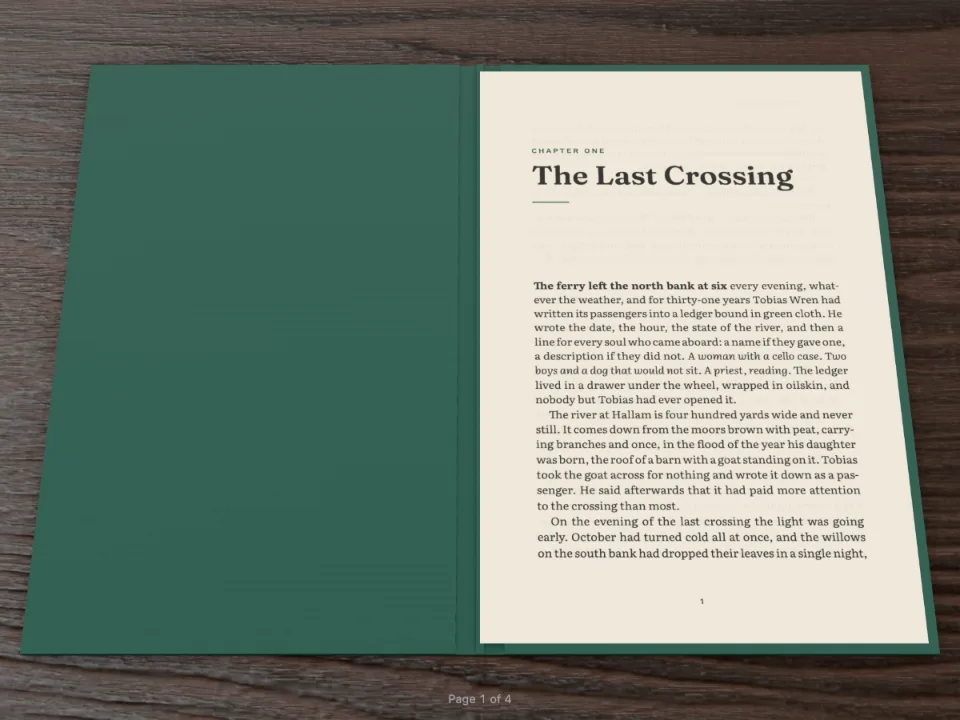
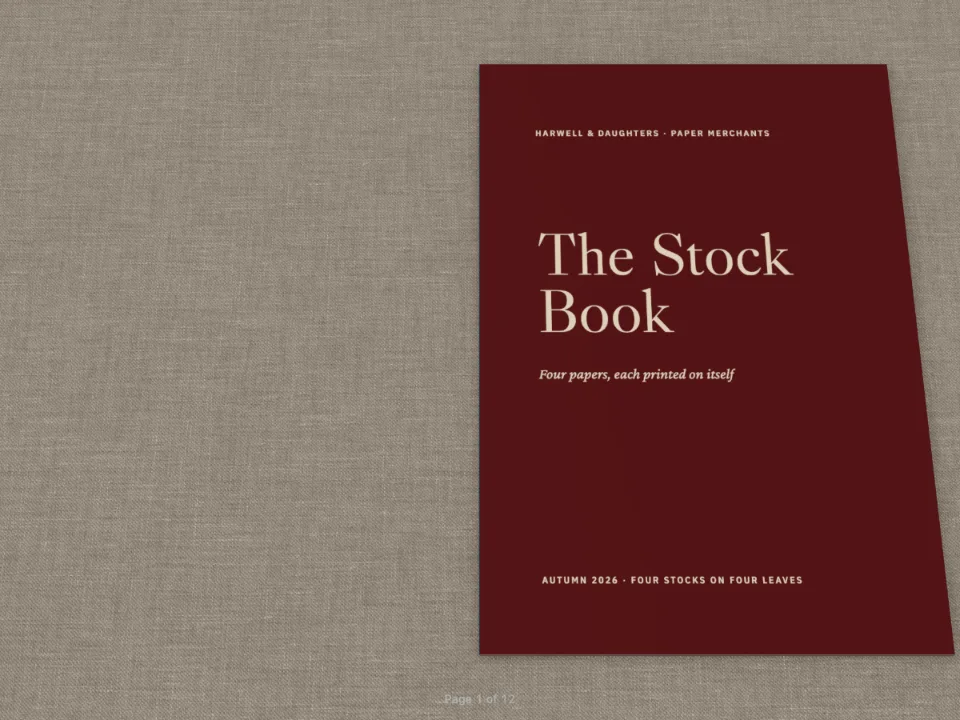
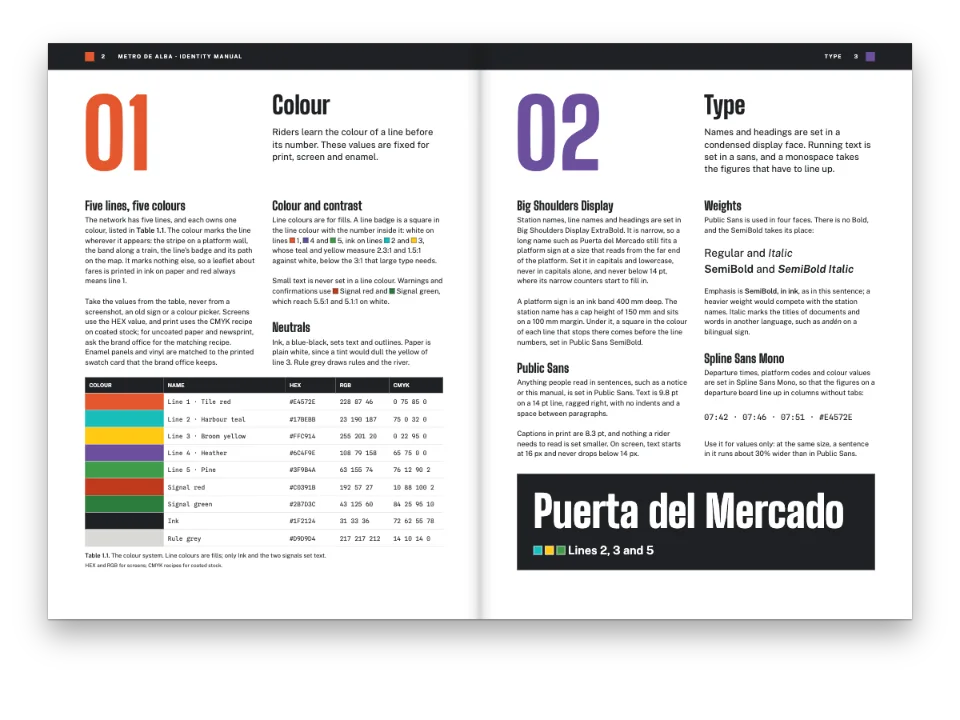
Un llibret de butxaca en 3D al costat d'un tauler de controls. Canvia el paper, l'enquadernació, la taula o la llum i el llibre canvia a l'instant, sense tornar-se a compondre.
Què compondràs
Six Knots, un llibre de butxaca de deu pàgines a 110 × 160 mm, obert a Folio al costat d'un tauler amb tots els paràmetres de config.folio. Tria un paper i els fulls canvien de color, de superfície i de rigidesa; passa de rústica a tapa dura i apareix una caixa al voltant del bloc; tria la caixa en lloc de les cobertes impreses, tela o pell, una taula, una llum, una inclinació. El llibre es compon una vegada. Cada canvi arriba al visor amb setAppearance, així que no es mou cap línia ni es torna a pintar cap pàgina, i sota el formulari apareixen els paràmetres com el codi que s'enganxa a config.folio.
Aquesta recepta respon a
- Com veig l'enquadernació, la coberta, el paper i la llum d'un llibre abans d'enviar-lo a impremta?
- Com mostro el meu document com un llibre en 3D les pàgines del qual el lector passa amb la mà?
La resposta curta
const book = createFolioFromDocument(document.getElementById('folio'), doc, {
  // The look starts from doc.config.folio; setAppearance replaces it on every change.
  appearance: { textureBaseUrl: 'https://postext.dev/folio/textures' },
  onChange: ({ pages }) => kitStatus(`${doc.pages.length} pages · open at `
    + pages.map((i) => i + 1).join('–')),
});
function update() {
  const folio = folioOf();
  // Only the appearance changes: the pages keep their paintings, nothing is laid out again.
  book.setAppearance({ folio });
  show('grammage-out', `${folio.paper.grammage} g/m²`);
  show('intensity-out', folio.lighting.intensity.toFixed(2));
  show('tilt-out', `${folio.tilt}°`);
  document.getElementById('folio-json').textContent = `folio: ${JSON.stringify(folio, null, 2)}`;
}
form.addEventListener('input', update);
// A stock sets its own weight: picking one moves the weight slider to the stock's.
const WEIGHTS = { uncoated: 90, bookWove: 80, coatedMatte: 115, coatedSilk: 115,
  coatedGloss: 115, bible: 40, newsprint: 48, cardStock: 250 };
form.elements['paper.type'].addEventListener('change', (event) => {
  form.elements['paper.grammage'].value = WEIGHTS[event.target.value];
  update();
});
document.getElementById('reset-view').addEventListener('click', () => book.resetView());
update();
Ingredients
- Funcions
- Paper, enquadernació, taula i llum (Folio)Visor de llibre en 3D (Folio)Estils de títolObertures dissenyadesAtributs de títolEstils de paràgrafCapçaleres segons el tipus de pàginaPaleta de color semànticaMarges simètricsPàgines en un canvas
- Tipografia
- Source Serif 4, Outfit (SIL OFL 1.1)
- Recursos
- Cap: totes les imatges es dibuixen en codi
Elaboració
#1 · Anomena els camps com la configuració
const form = document.getElementById('controls');
const hex = (value) => ({ hex: value, model: 'hex' });
function folioOf() { // 'paper.grammage' → { paper: { grammage } }, typed by the input
  const folio = {};
  for (const el of form.elements) {
    if (!el.name || el.type === 'button' || el.tagName === 'OUTPUT') continue;
    const value = el.type === 'checkbox' ? el.checked : el.type === 'range' ? Number(el.value)
      : el.type === 'color' ? hex(el.value) : el.value;
    const [group, key] = el.name.split('.');
    if (key) (folio[group] ??= {})[key] = value;
    else folio[group] = value;
  }
  return folio;
}
const show = (name, value) => { form.elements[name].value = value; };
Cada camp del formulari es diu com la seva ruta a config.folio (paper.grammage, binding.cover, lighting.environment), de manera que un sol bucle converteix el formulari en l'objecte que rep el visor: nombres dels lliscadors, booleans de les caselles i un color { hex, model } del selector. Aquest mateix objecte és el config.folio del document quan el pen el compon, així que el Sandbox obre el llibre tal com comença el formulari.
#2 · Cobertes que el visor passa com a tapes
const field = { kind: 'box', id: 'field', style: { backgroundColor: col('brick') },
  placement: { ...at('bleed', 'top-left'), size: { width: 'fill', height: mm(TRIM_H) } } };
const flush = { numbered: false, span: 'page', footer: { elements: [] },
  margins: { top: mm(0), bottom: mm(0), left: mm(0), right: mm(0) } };
const cover = (id, title, extra = {}) => ({ id, ...flush, ...extra, advancedDesign: {
  enabled: true, minHeight: mm(TRIM_H), slot: { elements: [field, ...title] } } });
const headingStyles = [
  cover('cover', [
    text('title', '{titleText}', { fontFamily: SANS, fontWeight: 700, fontSize: pt(40),
      lineHeight: 0.92, color: col('cream') },
    { ...at('page', 'top-left', INNER, 30), size: { width: mm(80) } }),
    text('strap', '{attr.strap}', { fontFamily: 'Source Serif 4', italic: true,
      fontSize: pt(11), lineHeight: 1.3, color: col('cream') },
    { ...at('#title', 'below', 0, 6), size: { width: mm(72) } }),
    text('author', '{author}', caps(7, col('cream')), at('page', 'bottom-left', INNER, -16)),
  ]),
  cover('back', [
    text('strap', '{attr.strap}', { fontFamily: 'Source Serif 4', italic: true,
      fontSize: pt(11), lineHeight: 1.3, color: col('cream'), align: 'center' },
    { ...at('page', 'center', 0, 0), size: { width: mm(76) } }),
  ], { breakBefore: { enabled: true, parity: 'even' } }), // the back: always a verso
];
Amb binding.cover: 'pages' la primera pàgina és la tapa davantera i l'última la del darrere, si cau en un verso. L'estil de la contracoberta salta a pàgina parella, així que el llibre acaba sempre en un verso i giren les dues tapes. Canvia el formulari a A case round the pages i aquestes dues pàgines giren com a fulls corrents dins d'una caixa de tela.
#3 · Canvia el llibre sense refer-lo
El codi és la resposta curta de més amunt. setAppearance({ folio }) substitueix la configuració del document i torna a dibuixar l'escena: gruix i rigidesa del paper, la caixa, els mapes de la taula i la llum. Les pàgines conserven la seva pintura, així que el canvi apareix al fotograma següent. Cada tipus de paper porta el seu gramatge, per això en triar-ne un es mou el lliscador del pes; resetView() torna la càmera al seu lloc després que el lector hagi girat el llibre arrossegant amb el botó dret.
La recepta completa
// ═══ Postext Cookbook · Nº 103 · A bench for the Folio viewer's settings ═══════════════ // https://postext.dev/en/cookbook/folio-settings-bench // Code: MIT · Text: original (CC BY 4.0) · Pictures: none // Fonts: Source Serif 4, Outfit (SIL OFL 1.1) · Needs postext ≥ 1.13.4 // // A pocket book of knots, laid out once and opened in postext-folio next to a form of every // folio setting: paper, binding, covers, desk, light and tilt. Each change goes to the viewer // with setAppearance, so the book is redrawn in place and no page is laid out or painted // again. The settings as code sit under the form, ready to paste into config.folio. import { buildDocument, renderPageToCanvas, clearMeasurementCache } from 'https://esm.sh/postext'; import { createFolioFromDocument } from 'https://esm.sh/postext-folio'; const LANG = 'en'; // @lang: the language of the sample document ('en' | 'es') const RECIPE = 'folio-settings-bench'; // ─── 1 · Design ───────────────────────────────────────────────────────────── // #region palette: brick red for the covers and the knot numbers, a warm ink for the text const palette = { ink: '#24211f', brick: '#9a3b2e', // the cover field, kickers and folios cream: '#f6efe2', // type on the covers muted: '#6f6860', }; const col = (id) => ({ hex: palette[id], model: 'hex', paletteId: id }); const colorPalette = [ ...Object.entries(palette).map(([id, hex]) => ({ id, name: id, value: { hex, model: 'hex' } })), { id: 'main-color', name: 'accent (defaults)', value: { hex: palette.brick, model: 'hex' } }, ]; // #endregion const [TRIM_W, TRIM_H, TOP, BOTTOM, INNER, OUTER] = [110, 160, 15, 17, 14, 12]; // mm: a pocket const LEAD = 12.4; // pt const SANS = 'Outfit'; const at = (to, edge, x = 0, y = 0) => ({ anchor: { to, edge }, offset: { x: mm(x), y: mm(y) } }); const text = (id, content, look, placement) => ({ kind: 'text', id, content, overflow: 'wrap', align: 'left', placement, ...look }); const caps = (size, color) => ({ fontFamily: SANS, fontSize: pt(size), fontWeight: 600, letterSpacing: pt(size * 0.16), textTransform: 'uppercase', color }); // #region covers: a full-page colour field on page 1 and on the last page const field = { kind: 'box', id: 'field', style: { backgroundColor: col('brick') }, placement: { ...at('bleed', 'top-left'), size: { width: 'fill', height: mm(TRIM_H) } } }; const flush = { numbered: false, span: 'page', footer: { elements: [] }, margins: { top: mm(0), bottom: mm(0), left: mm(0), right: mm(0) } }; const cover = (id, title, extra = {}) => ({ id, ...flush, ...extra, advancedDesign: { enabled: true, minHeight: mm(TRIM_H), slot: { elements: [field, ...title] } } }); const headingStyles = [ cover('cover', [ text('title', '{titleText}', { fontFamily: SANS, fontWeight: 700, fontSize: pt(40), lineHeight: 0.92, color: col('cream') }, { ...at('page', 'top-left', INNER, 30), size: { width: mm(80) } }), text('strap', '{attr.strap}', { fontFamily: 'Source Serif 4', italic: true, fontSize: pt(11), lineHeight: 1.3, color: col('cream') }, { ...at('#title', 'below', 0, 6), size: { width: mm(72) } }), text('author', '{author}', caps(7, col('cream')), at('page', 'bottom-left', INNER, -16)), ]), cover('back', [ text('strap', '{attr.strap}', { fontFamily: 'Source Serif 4', italic: true, fontSize: pt(11), lineHeight: 1.3, color: col('cream'), align: 'center' }, { ...at('page', 'center', 0, 0), size: { width: mm(76) } }), ], { breakBefore: { enabled: true, parity: 'even' } }), // the back: always a verso ]; // #endregion const opener = { enabled: true, minHeight: mm(22), slot: { elements: [ text('kicker', '{attr.kicker}', caps(6.8, col('brick')), at('container', 'top-left', 0, 1)), text('title', '{titleText}', { fontFamily: SANS, fontWeight: 600, fontSize: pt(19), lineHeight: 1, color: col('ink') }, { ...at('#kicker', 'below', 0, 2), size: { width: 'fill' } }), ] } }; // #region form: the form's fields (index.html) are named by their path in config.folio const form = document.getElementById('controls'); const hex = (value) => ({ hex: value, model: 'hex' }); function folioOf() { // 'paper.grammage' → { paper: { grammage } }, typed by the input const folio = {}; for (const el of form.elements) { if (!el.name || el.type === 'button' || el.tagName === 'OUTPUT') continue; const value = el.type === 'checkbox' ? el.checked : el.type === 'range' ? Number(el.value) : el.type === 'color' ? hex(el.value) : el.value; const [group, key] = el.name.split('.'); if (key) (folio[group] ??= {})[key] = value; else folio[group] = value; } return folio; } const show = (name, value) => { form.elements[name].value = value; }; // #endregion const config = () => ({ // a factory: the engine caches resolved configs per object locale: 'en-us', colorPalette, page: { sizePreset: 'custom', width: mm(TRIM_W), height: mm(TRIM_H), dpi: 150, margins: { top: mm(TOP), bottom: mm(BOTTOM), left: mm(INNER), right: mm(OUTER), mirror: true } }, layout: { layoutType: 'single' }, bodyText: { fontFamily: 'Source Serif 4', fontSize: pt(9.3), lineHeight: pt(LEAD), color: col('ink'), boldColor: col('ink'), italicColor: col('ink'), referenceColor: col('ink'), textAlign: 'justify', firstLineIndent: mm(3.5), indentAfterHeading: false, hyphenation: { enabled: true }, optimalLineBreaking: true, avoidWidows: true, avoidOrphans: true, avoidRunts: true }, headings: { fontFamily: SANS, color: col('ink'), fontWeight: 600, levels: [ // Restated: any headings object drops the H1 break (gotcha: headings-drop-h1-break). { level: 1, fontSize: pt(19), breakBefore: { enabled: true, parity: 'any' }, marginBottom: pt(LEAD / 2), advancedDesign: opener }, ] }, headingStyles, paragraphStyles: [{ id: 'colophon', fontFamily: SANS, fontSize: pt(6.5), lineHeight: pt(9), color: col('muted'), textAlign: 'left', firstLineIndent: pt(0), marginTop: pt(LEAD) }], header: { elements: [] }, folio: folioOf(), // the form's starting settings: the document's own look in the Sandbox footer: { elements: [text('folio', '{pageNumber}', { ...caps(6.5, col('brick')), align: 'center' }, at('page', 'bottom', 0, -9))] }, }); // ─── 2 · Content ──────────────────────────────────────────────────────────── const markdown = String.raw`---Mostra en Markdown · 64 línies · content.en.md
title: "Six Knots" subtitle: "A pocket book for the boat and the garden" author: "Ellen Marsh" --- # Six Knots {style="cover" strap="A pocket book for the boat and the garden"} # Before you tie {kicker="Introduction"} A knot is a way of making a rope hold onto something: another rope, a post, a ring, itself. There are thousands of them, and most of us need six. The six in this book will moor a boat, hang a hammock, tie down a load, join two lines and make a loop that will not slip, and every one of them can be untied again, which is half the point of a good knot. Learn them with a piece of soft rope about an arm's length long, and tie each one ten times before you move on. Then tie it with your eyes shut. A knot you have to think about will fail you on a cold, wet evening, when the boat is moving and the rope is stiff. Each knot has a standing part, the long end that takes the load, and a working end, the short end you tie with. When the instructions say *over* and *under*, they mean the working end passing over or under the standing part. # The reef knot {kicker="Knot 1 · Joining"} The reef knot joins two ends of the same rope around a bundle: a parcel, a sail rolled on its boom, a bandage. Left over right and under, then right over left and under. If the two ends lie on the same side of the knot, you have tied it correctly; if they lie on opposite sides, you have a granny knot, which jams or slips. Never use a reef knot to join two different ropes that will take a load. It is a binding knot, not a bend, and under strain it can capsize into two loops that slide apart. # The bowline {kicker="Knot 2 · Loops"} The bowline makes a loop at the end of a rope that will neither slip nor jam. Make a small loop in the standing part, with the working end on top. Bring the end up through the loop, round behind the standing part, and back down through the loop. The old way to remember it: the rabbit comes out of the hole, goes round the tree, and goes back down the hole. A bowline holds a mooring line on a post, a rope round a person's chest in a rescue, and the corner of a tarpaulin in a gale. However hard it has been pulled, you can break it open again by pushing the collar forward. # The clove hitch {kicker="Knot 3 · Hitches"} The clove hitch ties a rope to a post or a rail in a moment. Take two turns round the post, crossing the second over the first, and tuck the end under the second turn. It is quick to tie and quick to adjust, which makes it the knot for fenders on a boat and for the first turn of a lashing. It can work loose when the pull comes and goes, so on anything that matters add two half hitches round the standing part, or use a round turn instead. # The figure-eight {kicker="Knot 4 · Stoppers"} The figure-eight is a stopper: it sits at the end of a rope and stops it running out through a block, a cleat or a hole. Make a loop, pass the end round behind the standing part and down through the loop, and pull it snug. It looks like the number it is named after. Climbers tie it doubled, as a loop, and every sailor ties it in the ends of the sheets. Unlike a simple overhand knot, it can always be untied, even after a long day under strain. # The sheet bend {kicker="Knot 5 · Joining"} The sheet bend joins two ropes, even ropes of different thickness. Make a bight in the thicker rope. Pass the thinner end up through the bight, round behind both its parts, and under itself. For a wet or slippery line, take the end round twice: that is a double sheet bend, and it will not shake loose. It is the knot for lengthening a line that turned out too short, and for mending a net, where it is tied thousands of times. # The round turn {kicker="Knot 6 · Hitches"} A round turn and two half hitches will hold almost anything to a ring or a post, and it can be untied while the rope is under load. Take the working end twice round the post, then make two half hitches round the standing part, each one the same way. The round turn takes the strain, and the hitches only keep it in place. That is why it is the safest knot for tying a boat to a ring on the quay at the end of the day, and the last one in this book. # Looking after rope {kicker="Afterword"} Rope lasts for years if you treat it well. Rinse salt out of it in fresh water after a season on the boat, and dry it loosely coiled in the shade, never in a tight hank in the sun. Sunlight weakens synthetic fibre faster than any load. Seal the ends before they fray: whip them with waxed twine, or melt a synthetic end in a flame and roll it smooth between wet fingers. A rope that has been crushed, cut or burned along its length belongs in the garden, tying up beans, and no longer on the boat. Coil it the same way every time, and it will come off the coil without kinks when you need it in a hurry. :::paragraphs{style="colophon"} Set in Source Serif 4 and Outfit (SIL Open Font License) · Text: original, CC BY 4.0. ::: # Six Knots {style="back" strap="Tie them ten times each, then once more in the dark."}`; // content.<lang>.md, inlined by the Cookbook // ─── 3 · Fonts ────────────────────────────────────────────────────────────── const FONTS = { 'Source Serif 4': ['400', '400i', '700'], Outfit: ['400', '600', '700'] }; // ─── 4 · Build & show ─────────────────────────────────────────────────────── await loadFonts(FONTS, markdown); const doc = await buildWithFonts(() => buildDocument({ markdown }, config()), markdown); showPages(doc, { title: 'Six Knots · the Folio settings bench' }); // cover: 'pages' needs an even count (gotcha: folio-cover-pages-even); the back's break // gives it one. if (doc.pages.length % 2) console.warn(`${doc.pages.length} pages: the back cover is missing`); // #region answer: one viewer, restyled in place by setAppearance on every change const book = createFolioFromDocument(document.getElementById('folio'), doc, { // The look starts from doc.config.folio; setAppearance replaces it on every change. appearance: { textureBaseUrl: 'https://postext.dev/folio/textures' }, onChange: ({ pages }) => kitStatus(`${doc.pages.length} pages · open at ` + pages.map((i) => i + 1).join('–')), }); function update() { const folio = folioOf(); // Only the appearance changes: the pages keep their paintings, nothing is laid out again. book.setAppearance({ folio }); show('grammage-out', `${folio.paper.grammage} g/m²`); show('intensity-out', folio.lighting.intensity.toFixed(2)); show('tilt-out', `${folio.tilt}°`); document.getElementById('folio-json').textContent = `folio: ${JSON.stringify(folio, null, 2)}`; } form.addEventListener('input', update); // A stock sets its own weight: picking one moves the weight slider to the stock's. const WEIGHTS = { uncoated: 90, bookWove: 80, coatedMatte: 115, coatedSilk: 115, coatedGloss: 115, bible: 40, newsprint: 48, cardStock: 250 }; form.elements['paper.type'].addEventListener('change', (event) => { form.elements['paper.grammage'].value = WEIGHTS[event.target.value]; update(); }); document.getElementById('reset-view').addEventListener('click', () => book.resetView()); update(); // #endregionKit · core, fonts, viewer: igual a totes les receptes · 235 línies
// ─── Kit ── helpers shared by every Cookbook recipe · postext.dev/cookbook ───── // ─── Kit · core v1 ── the same in every recipe · postext.dev/cookbook ───────── function mm(value) { return { value, unit: 'mm' }; } function pt(value) { return { value, unit: 'pt' }; } function em(value) { return { value, unit: 'em' }; } /** The sample language's string: t({ en: 'Figure', es: 'Figura' }). */ function t(strings) { return strings[LANG] ?? Object.values(strings)[0]; } /** A file in this recipe's assets folder, served from the Postext repo by jsDelivr. */ function asset(file) { return `https://cdn.jsdelivr.net/gh/drnachio/postext@main/cookbook/${RECIPE}/assets/${file}`; } // ─── Kit · fonts v1 ── the same in every recipe · postext.dev/cookbook ──────── // Postext measures text with the faces the browser has loaded, and caches the // widths, so every face must be ready before the first build. Faces come from // Fontsource: the same static files the PDF embeds, so screen and PDF agree. /** faces = { 'Family Name': ['400', '400i', '700'] }. `text` is the sample: * letters beyond Latin-1 (č, ł, ő…) also load the latin-ext files. With * `optional`, a face Fontsource does not ship is skipped instead of failing. * Resolves to the number of faces added. */ async function loadFonts(faces, text = '', { optional = false } = {}) { kitStatus('Loading fonts…'); const ranges = { latin: 'U+0000-00FF,U+0131,U+0152-0153,U+02BB-02BC,U+02C6,U+02DA,U+02DC,U+0304,U+0308,U+0329,' + 'U+2000-206F,U+20AC,U+2122,U+2191,U+2193,U+2212,U+2215,U+FEFF,U+FFFD', 'latin-ext': 'U+0100-02BA,U+02BD-02C5,U+02C7-02CC,U+02CE-02D7,U+02DD-02FF,U+0304,U+0308,U+0329,' + 'U+1D00-1DBF,U+1E00-1E9F,U+1EF2-1EFF,U+2020,U+20A0-20AB,U+20AD-20C0,U+2113,U+2C60-2C7F,U+A720-A7FF', }; const subsets = /[Ā-˿Ḁ-ỿ]/.test(text) ? ['latin', 'latin-ext'] : ['latin']; const jobs = []; let added = 0; for (const [family, specs] of Object.entries(faces)) { const id = fontsourceId(family); const meta = optional ? await fontsourceMeta(family) : null; for (const spec of new Set(specs)) { const weight = parseInt(spec, 10); const style = spec.endsWith('i') ? 'italic' : 'normal'; if (hasFace(family, weight, style)) continue; if (optional && !(meta?.weights.includes(weight) && meta.styles.includes(style))) continue; for (const subset of subsets) { const url = `https://cdn.jsdelivr.net/npm/@fontsource/${id}@5/files/${id}-${subset}-${weight}-${style}.woff2`; const face = new FontFace(family, `url(${url}) format('woff2')`, { weight: String(weight), style, unicodeRange: ranges[subset] }); jobs.push(face.load().then((ready) => { document.fonts.add(ready); added++; }, () => { if (subset === 'latin' && !optional) throw new Error(`Fontsource has no ${family} ${weight} ${style}`); })); } } } await Promise.all(jobs).catch((error) => { kitFail(error); throw error; }); return added; } /** Runs `build` (a buildDocument or buildBundle call) and checks the faces * the pages use. A regular face missing from FONTS is loaded with a warning; * bold and italic variants are loaded when the family ships them. Then the * measurement caches are cleared and the build runs again. */ async function buildWithFonts(build, text = '') { const tried = new Set(); for (let round = 0; round < 3; round++) { kitStatus('Laying out…'); await new Promise(requestAnimationFrame); // let the status paint first const result = await Promise.resolve().then(build).catch((error) => { kitFail(error); throw error; }); const wanted = { base: {}, variants: {} }; for (const { font, base } of [result].flat().flatMap(fontStringsOf)) { const { family, weight, style } = parseFont(font); const key = `${family}|${weight}|${style}`; if (tried.has(key) || hasFace(family, weight, style)) continue; tried.add(key); (wanted[base ? 'base' : 'variants'][family] ??= []).push(`${weight}${style === 'italic' ? 'i' : ''}`); } if (Object.keys(wanted.base).length) { console.warn(`[cookbook] FONTS does not list ${JSON.stringify(wanted.base)}: loading them.`); } const added = await loadFonts(wanted.base, text) + await loadFonts(wanted.variants, text, { optional: true }); if (added === 0) return result; clearMeasurementCache(); } throw new Error('The fonts did not settle after three builds.'); } /** Every font string of the layout. `base` marks a block's own face; its * bold, italic and bold-italic variants are listed whether or not used. */ function fontStringsOf(doc) { const found = new Map(); const walk = (node) => { if (!node || typeof node !== 'object') return; if (Array.isArray(node)) { node.forEach(walk); return; } for (const [key, value] of Object.entries(node)) { if (typeof value === 'string' && /fontString$/i.test(key)) { found.set(value, found.get(value) || key === 'fontString'); } else if (value && typeof value === 'object') walk(value); } }; walk(doc.pages); walk(doc.blocks); return [...found].map(([font, base]) => ({ font, base })); } /** '700 37.5px Open Sans' / 'italic 400 13px "Source Serif 4"' → { family, weight, style }. * A string with no weight ('95.8px Young Serif', from a design text) is 400. */ function parseFont(font) { const m = /^(?:(italic|oblique)\s+)?(?:small-caps\s+)?(?:(\d+|bold|normal)\s+)?[\d.]+px\s+(.+)$/.exec(font.trim()); if (!m) throw new Error(`Unexpected font string: ${font}`); const weight = m[2] === 'bold' ? 700 : !m[2] || m[2] === 'normal' ? 400 : Number(m[2]); return { family: m[3].replace(/^["']|["']$/g, ''), weight, style: m[1] ? 'italic' : 'normal' }; } /** True when a loaded FontFace covers exactly this family, weight and style * (document.fonts.check() is also true for families nobody declared). */ function hasFace(family, weight, style) { for (const face of document.fonts) { if (face.status !== 'loaded' || face.style !== style) continue; if (face.family.replace(/^["']|["']$/g, '') !== family) continue; const [low, high = low] = face.weight.split(' ').map(Number); if (weight >= low && weight <= high) return true; } return false; } /** Fontsource's id for a family: 'Source Serif 4' → 'source-serif-4'. */ function fontsourceId(family) { return family.toLowerCase().replace(/\s+/g, '-'); } /** The weights and styles a family ships ({ weights: [400, 700], styles: ['normal', 'italic'] }), or null. */ function fontsourceMeta(family) { fontsourceMeta.cache ??= new Map(); const id = fontsourceId(family); if (!fontsourceMeta.cache.has(id)) { fontsourceMeta.cache.set(id, fetch(`https://api.fontsource.org/v1/fonts/${id}`) .then((res) => (res.ok ? res.json() : null), () => null)); } return fontsourceMeta.cache.get(id); } // ─── Kit · viewer v1 ── the same in every recipe · postext.dev/cookbook ─────── /** Shows the pages as facing spreads on a dark desk: the first page is a * recto on its own, then verso | recto pairs, as in a bound book. Pages * are painted when they scroll near the screen. */ function showPages(docs, { title, width = 460 } = {}) { const root = viewer(title); const pages = [docs].flat().flatMap((doc) => doc.pages.map((page) => ({ doc, page, n: (doc.pageIndexOffset ?? 0) + page.index }))); const spreads = []; let verso = null; for (const p of pages) { if (p.n % 2 === 1) { if (verso) spreads.push([verso, null]); verso = p; } else { spreads.push([verso, p]); verso = null; } } if (verso) spreads.push([verso, null]); const density = Math.min(window.devicePixelRatio || 1, 2); showPages.painter?.disconnect(); const painter = new IntersectionObserver((entries) => { for (const { isIntersecting, target } of entries) { if (!isIntersecting) continue; painter.unobserve(target); const { doc, page } = target.postext; renderPageToCanvas(page, doc, target, { scale: (width * density) / page.width }); } }, { rootMargin: '800px' }); showPages.painter = painter; root.replaceChildren(...spreads.map((pair) => { const spread = document.createElement('div'); spread.className = 'pt-spread'; for (const p of pair) { const figure = document.createElement('figure'); if (p) { const label = p.page.pageLabel || String(p.n + 1); const canvas = document.createElement('canvas'); canvas.postext = p; canvas.style.aspectRatio = `${p.page.width} / ${p.page.height}`; canvas.setAttribute('role', 'img'); canvas.setAttribute('aria-label', `Page ${label}`); const folio = document.createElement('figcaption'); folio.textContent = label; figure.append(canvas, folio); painter.observe(canvas); } else figure.className = 'pt-blank'; spread.append(figure); } return spread; })); kitStatus(`${pages.length} ${pages.length === 1 ? 'page' : 'pages'}`); document.documentElement.dataset.postext = 'ready'; return pages.length; } /** The desk, the bar and the error reporting, created once. */ function viewer(title) { if (!document.getElementById('pt-kit')) { document.head.insertAdjacentHTML('beforeend', `<style id="pt-kit"> :root { color-scheme: dark; } body { margin: 0; background: #0e1014; color: #b9bcc4; font: 13px/1.45 system-ui, sans-serif; } #pt-bar { position: sticky; top: 0; z-index: 1; display: flex; flex-wrap: wrap; align-items: center; gap: 6px 16px; padding: 10px 16px; background: rgb(14 16 20 / .92); backdrop-filter: blur(6px); border-bottom: 1px solid #23262d; } #pt-bar strong { color: #f4f1ea; font-weight: 600; } #pt-actions { display: flex; gap: 12px; margin-left: auto; } #pt-actions a, #pt-actions button { color: #d8a21a; font: inherit; background: none; border: 0; padding: 0; cursor: pointer; } #pages { display: grid; justify-items: center; gap: 48px; padding: 32px 16px 72px; } .pt-spread { display: flex; } .pt-spread figure { margin: 0; width: min(460px, 44vw); } .pt-spread canvas { display: block; width: 100%; background: #fff; box-shadow: 0 1px 2px rgb(0 0 0 / .5), 0 22px 44px -16px rgb(0 0 0 / .8); } .pt-spread figure:first-child canvas { box-shadow: inset -14px 0 14px -14px rgb(0 0 0 / .18), 0 1px 2px rgb(0 0 0 / .5), 0 22px 44px -16px rgb(0 0 0 / .8); } .pt-spread figcaption { margin-top: 10px; text-align: center; font: 600 10px/1 system-ui, sans-serif; letter-spacing: .18em; text-transform: uppercase; color: #6c7079; } .pt-blank { visibility: hidden; } @media (max-width: 760px) { .pt-spread { flex-direction: column; gap: 32px; } .pt-spread figure { width: min(460px, 92vw); } .pt-blank { display: none; } } </style>`); document.body.insertAdjacentHTML('afterbegin', '<header id="pt-bar"><strong id="pt-title"></strong><span id="pt-status" role="status"></span><span id="pt-actions"></span></header>'); document.getElementById('pt-title').textContent = document.title || 'Postext'; addEventListener('error', (event) => kitFail(event.error ?? event.message)); addEventListener('unhandledrejection', (event) => kitFail(event.reason)); } if (title) document.getElementById('pt-title').textContent = title; return document.getElementById('pages') ?? document.body.appendChild(Object.assign(document.createElement('main'), { id: 'pages' })); } function kitStatus(text) { viewer(); document.getElementById('pt-status').textContent = text; } function kitFail(error) { document.documentElement.dataset.postext = 'error'; kitStatus(`Error: ${error?.message ?? error}`); } // ─── /Kit ───────────────────────────────────────────────────────────────────────
<section id="bench">
  <div id="folio" role="region" aria-label="The book in 3D"></div>
  <form id="controls" aria-label="Folio settings">
    <fieldset>
      <legend>Paper</legend>
      <label>Stock <select name="paper.type">
        <option value="uncoated">Uncoated</option><option value="bookWove" selected>Book wove</option>
        <option value="coatedMatte">Coated matte</option><option value="coatedSilk">Coated silk</option>
        <option value="coatedGloss">Coated gloss</option><option value="bible">Bible</option>
        <option value="newsprint">Newsprint</option><option value="cardStock">Card</option>
      </select></label>
      <label>Weight <output name="grammage-out">80 g/m²</output>
        <input type="range" name="paper.grammage" min="30" max="300" step="5" value="80"></label>
      <label>Texture <select name="paper.texture">
        <option value="auto" selected>The stock’s</option><option value="smooth">Smooth</option>
        <option value="vellum">Vellum</option><option value="wove">Wove</option>
        <option value="laid">Laid</option><option value="linen">Linen</option>
        <option value="felt">Felt</option>
      </select></label>
      <label class="check"><input type="checkbox" name="paper.showThrough" checked> Show-through</label>
    </fieldset>
    <fieldset>
      <legend>Binding</legend>
      <label>Type <select name="binding.type">
        <option value="hardcover">Hardcover</option><option value="paperback" selected>Paperback</option>
        <option value="sewn">Sewn softcover</option><option value="layflat">Lay-flat</option>
        <option value="saddleStitch">Saddle stitch</option>
      </select></label>
      <label>Covers <select name="binding.cover">
        <option value="pages" selected>The first and last pages</option>
        <option value="case">A case round the pages</option>
      </select></label>
      <label>Material <select name="binding.coverMaterial">
        <option value="auto" selected>The binding’s</option><option value="cloth">Cloth</option>
        <option value="paper">Paper</option><option value="leather">Leather</option>
      </select></label>
      <label>Colour <input type="color" name="binding.coverColor" value="#9a3b2e"></label>
    </fieldset>
    <fieldset>
      <legend>Desk and light</legend>
      <label>Surface <select name="surface.type">
        <option value="oak" selected>Oak</option><option value="walnut">Walnut</option>
        <option value="linen">Linen</option><option value="felt">Felt</option>
        <option value="leather">Leather</option><option value="marble">Marble</option>
        <option value="plain">Plain</option><option value="none">None</option>
      </select></label>
      <label>Light <select name="lighting.environment">
        <option value="studio">Studio</option><option value="daylight" selected>Daylight</option>
        <option value="lamp">Lamp</option><option value="overcast">Overcast</option>
        <option value="night">Night</option>
      </select></label>
      <label>Intensity <output name="intensity-out">1.0</output>
        <input type="range" name="lighting.intensity" min="0.25" max="2" step="0.05" value="1"></label>
      <label class="check"><input type="checkbox" name="lighting.shadows" checked> Shadows</label>
      <label>Tilt <output name="tilt-out">22°</output>
        <input type="range" name="tilt" min="0" max="40" step="1" value="22"></label>
      <button type="button" id="reset-view">Reset view</button>
    </fieldset>
    <pre id="folio-json" aria-label="The folio settings as code"></pre>
  </form>
</section>
<main id="pages"></main>
/* The bench: the book on the left, the settings on the right, the flat pages below. */
#bench {
  display: grid; grid-template-columns: minmax(0, 1fr) 300px; gap: 16px;
  max-width: 1320px; margin: 0 auto; padding: 16px; box-sizing: border-box;
  color: #c9ccd3; font: 13px/1.4 system-ui, sans-serif;
}
#folio { height: min(80vh, 760px); min-height: 420px; }
#controls { display: grid; gap: 12px; align-content: start; }
#controls fieldset {
  display: grid; gap: 8px; margin: 0; padding: 10px 12px 12px;
  border: 1px solid #2a2e36; border-radius: 6px;
}
#controls legend {
  padding: 0 4px; color: #f0b35a; font-weight: 600; font-size: 11px;
  letter-spacing: .12em; text-transform: uppercase;
}
#controls label { display: grid; grid-template-columns: 1fr auto; gap: 4px 8px; align-items: center; }
#controls label > select, #controls label > input[type="range"] { grid-column: 1 / -1; }
#controls label.check { display: flex; gap: 8px; }
#controls select, #controls button {
  min-height: 32px; padding: 4px 8px; border: 1px solid #3a3f49; border-radius: 4px;
  background: #1a1d23; color: #eceef2; font: inherit;
}
#controls input[type="color"] {
  width: 44px; height: 32px; padding: 0; border: 1px solid #3a3f49; border-radius: 4px;
  background: none;
}
#controls input[type="range"] { accent-color: #f0b35a; }
#controls output { color: #8d9199; font-variant-numeric: tabular-nums; }
#controls button { cursor: pointer; }
#controls button:hover, #controls button:focus-visible { border-color: #f0b35a; }
#folio-json {
  margin: 0; padding: 10px 12px; max-height: 220px; overflow: auto; border-radius: 6px;
  background: #15171c; color: #aeb3bd; font: 11.5px/1.45 ui-monospace, Menlo, monospace;
}
@media (max-width: 860px) {
  #bench { grid-template-columns: minmax(0, 1fr); }
  #folio { height: 70vh; }
}
L'script.js compost funciona tal com és: enganxa'l com a script de mòdul en qualsevol pàgina o obre la recepta a CodePen. Carpeta de la recepta a GitHub ↗ (s'obre en una pestanya nova)
Variants
#Comença en tapa dura amb caixa de tela
Canvia els valors inicials del formulari a index.html; el document i el Sandbox els segueixen.
-        <option value="hardcover">Hardcover</option><option value="paperback" selected>Paperback</option>
+ <option value="hardcover" selected>Hardcover</option><option value="paperback">Paperback</option>#Un llibre amb el seu aspecte a la configuració
Un llibre sobre la taula escriu els mateixos paràmetres una vegada a config.folio, sense formulari, i el mostrari posa un paper diferent a cada full.
Errors freqüents
Error freqüent
El visor Folio pren la mida del seu contenidor
createFolioFromDocument encaixa el llibre a l'element que li dones, amb els botons i el comptador de pàgines als marges. Un element sense alçada (un div buit en el flux normal) no mostra res: dona-li una alçada en CSS. Visor de llibre en 3D (Folio) →
Error freqüent
cover: 'pages' necessita un nombre parell de pàgines per a la tapa posterior
Amb binding.cover a 'pages' la primera pàgina gira com a tapa anterior, i l'última com a tapa posterior només si cau en un verso. Amb un nombre senar de pàgines el llibre té tapa anterior i no posterior: completa'l fins a un nombre parell o deixa la caixa. Paper, enquadernació, taula i llum (Folio) →
Error freqüent
Carrega totes les fonts abans de compondre
La composició mesura el text amb les fonts que el navegador ha carregat i en desa les amplades, així que una font que arriba després de la primera composició deixa talls de línia erronis i un PDF que ja no coincideix amb la pantalla. Carrega abans tots els pesos i estils, i crida clearMeasurementCache() abans de recompondre si alguna arriba tard. Fonts abans de compondre →
Error freqüent
Una configuració es desa a la memòria cau per identitat: crea un objecte nou
El motor desa a la memòria cau les configuracions resoltes segons la identitat de l'objecte, de manera que modificar el mateix objecte i tornar a compondre reutilitza el resultat anterior. Crea un objecte nou a cada composició: per això la configuració d'una recepta és una funció, config(). Pàgines en un canvas →
Error freqüent
Qualsevol objecte headings desactiva el salt de pàgina de l'H1
Per defecte un H1 salta a una pàgina senar (always-odd), però qualsevol objecte headings anul·la aquest valor, de manera que els capítols van seguits i span: 'page' no fa res. Torna a declarar headings.levels[0].breakBefore: { enabled: true, parity } a cada configuració. Capítols que obren en pàgina senar →
Crèdits
- Recepta
- Ignacio Ferro
- Text
- Text original, CC BY 4.0
- Fonts
- Source Serif 4 (SIL OFL 1.1) · Outfit (SIL OFL 1.1)
- Codi
- MIT, com Postext
Editar aquest text ↗ (s'obre en una pestanya nova)Carpeta de la recepta a GitHub ↗ (s'obre en una pestanya nova)