En poques paraules
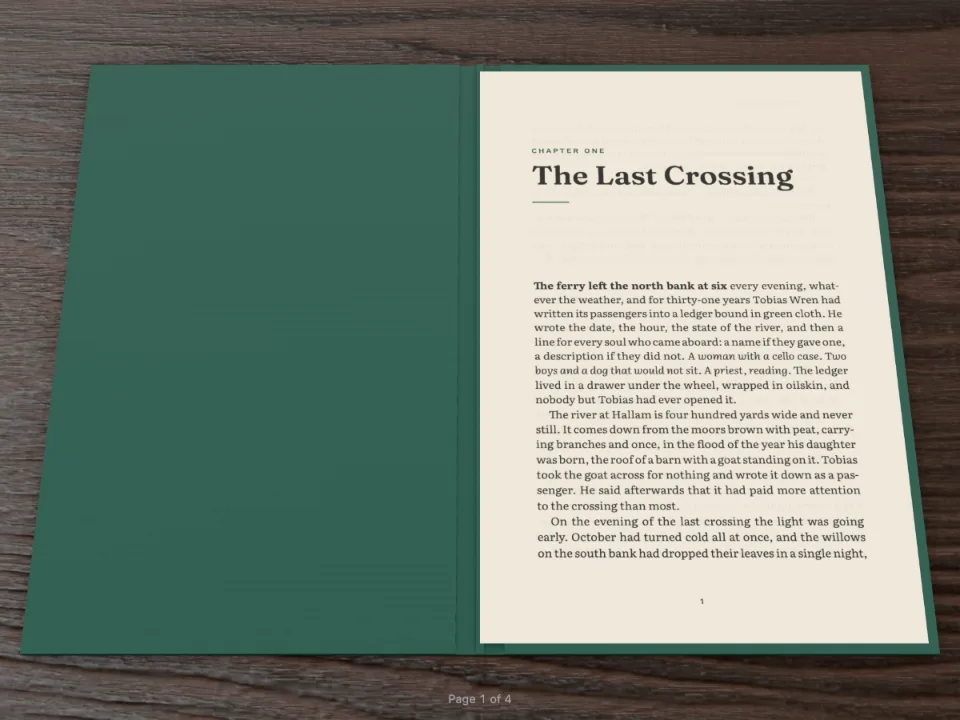
Una revista petita i doblegada sobre un riu, amb una coberta gruixuda de color i paper de diari fi a dins. Al visor 3D és tancada sobre la taula i s'obre com la de debò.
Què compondràs
El número 3 de Low Tide, un fanzín gratuït sobre un estuari: vuit pàgines de 140 × 200 mm, dos plecs doblegats i grapats pel llom. El plec exterior, pàgines 1–2 i 7–8, és una cartolina salmó; l'interior, pàgines 3–6, paper de diari barat. La coberta s'imprimeix en un sol blau de risografia sobre la cartolina nua, sense camp de color propi, de manera que a les pàgines planes de sota surt sobre blanc, i a Folio reposa tancada sobre la taula amb el color de la seva cartolina fins que la passes. Els dos papers són dos blocs del Markdown, i l'enquadernació, tres opcions de config.folio.
Aquesta recepta respon a
- Com imprimeixo una coberta, un encart o un plec de làmines en un paper diferent de la resta del llibre?
- Com veig l'enquadernació, la coberta, el paper i la llum d'un llibre abans d'enviar-lo a impremta?
La resposta curta
const stage = document.createElement('section');
stage.id = 'folio';
stage.ariaLabel = 'The zine in 3D';
stage.style.cssText = 'height: min(78vh, 720px); margin: 0 auto; max-width: 1280px';
document.getElementById('pages').before(stage);
// Covers from the pages need an even count: page 8 must fall on a verso to be the back.
if (doc.pages.length % 2) console.warn(`${doc.pages.length} pages: the back cover is missing`);
createFolioFromDocument(stage, doc, {
  appearance: { textureBaseUrl: 'https://postext.dev/folio/textures' },
  onChange: ({ pages }) => kitStatus(pages.map((i) => `p. ${i + 1} on `
    + (doc.pages[i].paper ? 'card' : 'newsprint')).join(' · ')),
});
Ingredients
- Funcions
- Un altre paper per a una tanda de pàginesPaper, enquadernació, taula i llum (Folio)Visor de llibre en 3D (Folio)Estils de títolObertures dissenyadesAtributs de títolTextos, filets i caixes als dissenys de pàginaEstils de paràgrafCapçaleres segons el tipus de pàginaPaleta de color semànticaMarges simètricsPàgines en un canvas
- Tipografia
- Newsreader, Bricolage Grotesque (SIL OFL 1.1)
- Recursos
- The tide lines on the cover, drawn in code (Ignacio Ferro, CC BY 4.0)
Elaboració
#1 · Tanca el plec exterior
// :::paper{type=cardStock grammage=250 shade=#f2c9b4}   pages 1–2: the front of the sheet
// # Low Tide {style="cover" …}   # In this issue {…}
// :::
// # The dunlin come back …   pages 3–6, outside any fence: folio.paper, the newsprint
// :::paper{type=cardStock grammage=250 shade=#f2c9b4}   pages 7–8: the back of the sheet
// # Join us {…}   # Low Tide {style="back" …}
// :::
const markdown = String.raw`---
title: "Low Tide"
subtitle: "A zine about the estuary"
author: "The Pill Estuary Group"
publishDate: "Issue 3 · Winter 2026"
---

:::paper{type=cardStock grammage=250 shade=#f2c9b4}

# Low Tide {style="cover" issue="Issue 3 · Winter 2026" strap="Mud, birds, boats and the people who watch them"}

# In this issue {style="feature" kicker="Welcome"}

Low Tide is made twice a year by the people who walk the river path at Pill. It is printed on the cheapest paper the printer has, folded by hand at the sailing club, and left in the pub, the post office and the bird hide. Take one. Leave it for somebody else when you have read it.

This winter we follow the dunlin that come back to the mud every October, talk to the last man in the village who still builds wooden boats, and print a tide table for the months when the light goes early. The cover is a heavier card than the pages inside it, so it survives a pocket and a little rain.

:::paragraphs{style="credits"}
**Edited by** Joan Avery and Sam Okonjo · **Drawings** Priya Lal · **Printed** in an edition of 400 copies, two sheets folded and stapled.
:::

:::

# The dunlin come back {style="feature" kicker="Birds"}

They arrive in the second week of October, a few dozen at first and then, within days, a thousand or more, feeding along the tideline in a moving grey band. Dunlin are small, about the size of a starling, with a long bill that droops at the tip. In winter they lose the black belly of their breeding plumage and turn the colour of the mud they feed on, which is why most people who walk the path never notice them until they lift.

When they lift, everybody notices. A flock of dunlin in the air turns as one bird: grey as it banks away from you, white as it turns back and shows its underside. On a clear afternoon at the top of the tide, when the mud is covered and the birds have nowhere left to feed, the flock rises off the saltmarsh and turns over the water for minutes at a time, flashing like a shoal of fish.

They come from the Arctic: from the tundra of northern Russia and Scandinavia, where they breed in the short summer and leave as soon as the young can fly. A dunlin ringed on the mud below the church in 2019 was caught again the following summer on the Taymyr Peninsula, five thousand kilometres away, and back on the same stretch of mud the October after.

Joan has counted them every Sunday morning for eleven winters. Her highest count was 4,200, in January 2021, after a week of frost on the moors drove birds down from the reservoirs. Her lowest was 380. She does not know why the numbers swing so much from year to year, and nor, she says, does anybody else.

## How to see them

Come two hours before high water and stand on the slipway by the sailing club. As the tide pushes in, the birds are driven up the mud towards you, closer and closer, until they give up and fly. Bring binoculars, and keep dogs on a lead below the hide: a bird that is flushed off the mud in winter spends energy it cannot afford.

# The last boatbuilder {style="feature" kicker="People"}

Dennis Harcombe built his first boat at fourteen, in his father's shed on Marine Parade, and his last one at seventy-eight. He reckons there were forty in between, give or take, most of them clinker-built dinghies of larch on oak, the kind every family on the river once kept at the bottom of the garden.

“The trick of it,” he says, “is that you never fight the wood. You look at a plank and you see which way it wants to bend, and you let it.” He still steams planks in a length of drainpipe over a camping stove, though these days only to repair other people's boats.

His shed is the last on the river where you can buy a pair of oars made to measure. He makes them from ash, shaves the looms by hand and charges what he charged in 1990, because, he says, the price was fair then and the oars have not got any better.

When he talks about the river he talks about the mud first: where it shifts, where the channel has moved since he was a boy, where a boat can sit out a tide and where it will be swallowed to the thwarts. He has watched the estuary change for seventy years and does not think it is finished.

# Tide table {style="feature" kicker="December to February"}

High water at Pill, in local time. Add about twenty minutes for the tide to reach the slipway at the sailing club. Spring tides, the biggest of the month, are marked in bold: on those days the mud below the hide is covered completely.

:::paragraphs{style="tides"}
**Sun 6 Dec** 07:42 and 20:05 · **Sat 12 Dec** 12:18 · **Sun 20 Dec** 06:55 and 19:20

**Sun 3 Jan** 06:31 and 18:54 · **Sat 9 Jan** 11:47 · **Sun 17 Jan** 06:10 and 18:36

**Sun 31 Jan** 05:58 and 18:22 · **Sat 6 Feb** 10:59 · **Sun 14 Feb** 05:37 and 18:01
:::

Times are for a still day. A strong westerly holds the water up and brings high tide a little early; a long dry spell on the moors does the opposite. If you are walking out on the mud, go on a falling tide and come back with an hour to spare.

:::paper{type=cardStock grammage=250 shade=#f2c9b4}

# Join us {style="back-matter" kicker="The group"}

We walk the river path on the first Sunday of every month, meeting at the sailing club at ten. Nobody needs to know anything about birds, boats or tides; most of us didn't when we started. Bring boots.

The next issue comes out in June. If you have something to say about the estuary, a drawing, a memory or a count of anything at all, leave it in the box behind the bar at the Duke of Cornwall, or write to us at the sailing club.

:::paragraphs{style="credits"}
Set in Newsreader and Bricolage Grotesque (SIL Open Font License) · Text: original, CC BY 4.0 · The Pill Estuary Group and the people in this issue are fictional.
:::

# Low Tide {style="back" strap="Free · take one, leave one"}

:::
`; // content.<lang>.md, inlined by the Cookbook
Un quadernet grapat és una pila de plecs doblegats, així que el plec de coberta porta les dues primeres pàgines i les dues últimes. Un bloc tanca les pàgines 1–2, un altre les 7–8, i les del mig queden fora de tots dos, en el paper del mateix llibre. Cada bloc comença i acaba en pàgina nova, que aquí és just la pàgina que necessiten la coberta i la benvinguda.
#2 · Paper de diari, grapat, tapes de les pàgines
const folio = {
  tilt: 20,
  // The book's paper: every page outside a :::paper fence, the inner sheet here.
  paper: { type: 'newsprint', grammage: 52 },
  // cover: 'pages' turns page 1 as the front and page 8 (a verso) as the back; on a saddle
  // stitch the cover is a sheet like the others, only heavier (gotcha: folio-cover-pages-even).
  binding: { type: 'saddleStitch', cover: 'pages' },
  surface: { type: 'plain', color: col('ink') },
  lighting: { environment: 'overcast', intensity: 1.1 },
};
folio.paper és el paper de diari de qualsevol pàgina fora d'un bloc. saddleStitch doblega els plecs al voltant de les grapes, sense llom pla, i cover: 'pages' fa girar les pàgines 1 i 8 com a cobertes. En un grapat la coberta gira com els altres plecs, només que més rígida, i un full de coberta que anomena el seu propi paper (la cartolina) es dibuixa amb aquest paper.
#3 · Una coberta a una tinta
// Eleven tide lines of a seeded length: blue rules across the foot of the cover.
let seed = 0x71de; // Mulberry32: the same lines on every run
const random = () => {
  seed = (seed + 0x6d2b79f5) | 0;
  let x = Math.imul(seed ^ (seed >>> 15), 1 | seed);
  x = (x + Math.imul(x ^ (x >>> 7), 61 | x)) ^ x;
  return ((x ^ (x >>> 14)) >>> 0) / 4294967296;
};
const tideLines = Array.from({ length: 11 }, (_, i) => ({ kind: 'rule', id: `tide-${i}`,
  direction: 'horizontal', thickness: pt(2.2 + i * 0.5), color: col('blue'),
  placement: { ...at('page', 'top-left', 10 + random() * 40, 128 + i * 5.2),
    size: { width: mm(50 + random() * 70) } } }));
const flush = { span: 'page', margins: { top: mm(0), bottom: mm(0), left: mm(0), right: mm(0) },
  footer: { elements: [] } }; // no folio on either cover (the style lasts one page)
const cover = { ...flush, id: 'cover', numbered: false, advancedDesign: { enabled: true,
  minHeight: mm(TRIM_H), slot: { elements: [
    text('issue', '{attr.issue}', caps(7.5), at('page', 'top-left', INNER, 16)),
    text('title', '{titleText}', { fontFamily: SANS, fontWeight: 800, fontSize: pt(70),
      lineHeight: 0.86, letterSpacing: pt(-2), color: col('blue') },
    { ...at('#issue', 'below', -1, 8), size: { width: mm(TRIM_W - INNER - OUTER) } }),
    text('strap', '{attr.strap}', { fontFamily: 'Newsreader', italic: true, fontSize: pt(13),
      lineHeight: 1.25, color: col('ink') },
    { ...at('#title', 'below', 1, 6), size: { width: mm(100) } }),
    ...tideLines,
  ] } } };
const back = { ...flush, id: 'back', numbered: false,
  breakBefore: { enabled: true, parity: 'even' }, advancedDesign: { enabled: true,
    minHeight: mm(TRIM_H), slot: { elements: [
      text('title', '{titleText}', { fontFamily: SANS, fontWeight: 800, fontSize: pt(26),
        letterSpacing: pt(-0.5), color: col('blue'), align: 'center' },
      { ...at('page', 'center', 0, -6), size: { width: mm(100) } }),
      text('strap', '{attr.strap}', { ...caps(7, col('ink')), align: 'center' },
        { ...at('#title', 'below', 0, 3), size: { width: mm(100) } }),
    ] } } };
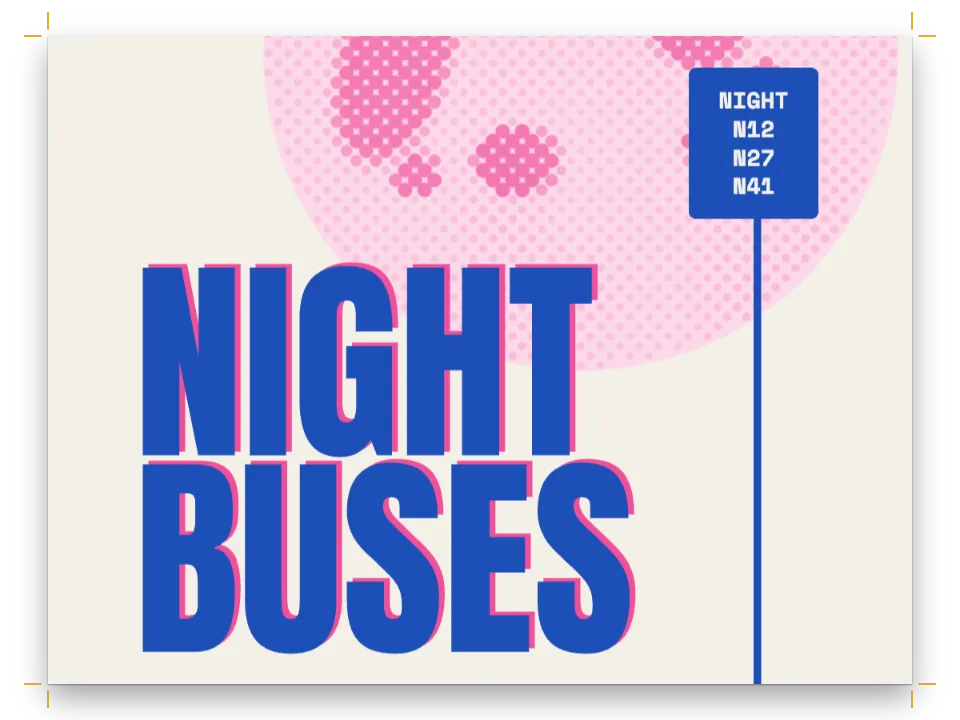
La coberta és un estil de títol amb marges zero i un disseny de pàgina sencera: la línia del número, el títol en Bricolage Grotesque a 70 pt, l'entradeta en Newsreader cursiva i onze línies de marea les llargades de les quals surten d'un generador amb llavor, de manera que cada execució dibuixa les mateixes. Res no pinta el fons de la pàgina: el posa la cartolina.
#4 · Una obertura per a cada peça
const feature = (id) => ({ id, numbered: false, breakBefore: { enabled: true, parity: 'any' },
  marginBottom: pt(LEAD), advancedDesign: { enabled: true, minHeight: mm(30), slot: {
    elements: [
      text('kicker', '{attr.kicker}', caps(7.5), at('container', 'top-left', 0, 1)),
      text('title', '{titleText}', { fontFamily: SANS, fontWeight: 800, fontSize: pt(25),
        lineHeight: 0.98, letterSpacing: pt(-0.4), color: col('ink') },
      { ...at('#kicker', 'below', 0, 2.5), size: { width: 'fill' } }),
      { kind: 'rule', id: 'rule', direction: 'horizontal', thickness: pt(2.5), color: col('blue'),
        placement: { ...at('#title', 'below', 0, 4), size: { width: mm(14) } } },
    ] } } });
const headingStyles = [cover, back, feature('feature'), feature('back-matter')];
Cada reportatge és un títol de primer nivell amb l'estil feature: pàgina nova, un avanttítol pres dels seus atributs, el títol i un filet blau curt. Passar les cinc peces per un sol estil deixa l'interior del fanzín en dues famílies i un accent.
#5 · Obre'l grapat
El codi és la resposta curta de més amunt. createFolioFromDocument llegeix l'enquadernació i les cobertes de doc.config.folio, i el paper de cada full de page.paper. El pen avisa quan el nombre de pàgines és senar, perquè la pàgina 8 només pot ser la contracoberta si cau en un verso.
La recepta completa
// ═══ Postext Cookbook · Nº 102 · A stapled zine with a card cover sheet ═══════════════ // https://postext.dev/en/cookbook/saddle-stitched-card-cover // Code: MIT · Text: original (CC BY 4.0) · Pictures: drawn in code // Fonts: Newsreader, Bricolage Grotesque (SIL OFL 1.1) · Needs postext ≥ 1.13.4 // // Eight pages, two sheets folded and stapled through the fold. The outer sheet (pages 1–2 and // 7–8) is salmon card, the inner sheet newsprint: two :::paper fences put the card on the // cover pages, and postext-folio draws the book saddle-stitched, closed until you turn the // cover. The flat pages below print on white: only the 3D book knows about paper. import { buildDocument, renderPageToCanvas, clearMeasurementCache } from 'https://esm.sh/postext'; import { createFolioFromDocument } from 'https://esm.sh/postext-folio'; const LANG = 'en'; // @lang: the language of the sample document ('en' | 'es') const RECIPE = 'saddle-stitched-card-cover'; // ─── 1 · Design ───────────────────────────────────────────────────────────── // #region palette: two inks of a risograph, and the greys of the newsprint text const palette = { ink: '#1f2124', // the text blue: '#0b6fb3', // the riso blue: titles, the tide lines, kickers muted: '#5d6066', // credits and folios rule: '#b9bcc0', }; const col = (id) => ({ hex: palette[id], model: 'hex', paletteId: id }); const colorPalette = [ ...Object.entries(palette).map(([id, hex]) => ({ id, name: id, value: { hex, model: 'hex' } })), { id: 'main-color', name: 'accent (defaults)', value: { hex: palette.blue, model: 'hex' } }, ]; // #endregion const [TRIM_W, TRIM_H, TOP, BOTTOM, INNER, OUTER] = [140, 200, 20, 22, 17, 15]; // mm const LEAD = 13.6; // pt const SANS = 'Bricolage Grotesque'; const at = (to, edge, x = 0, y = 0) => ({ anchor: { to, edge }, offset: { x: mm(x), y: mm(y) } }); const text = (id, content, look, placement) => ({ kind: 'text', id, content, overflow: 'wrap', align: 'left', placement, ...look }); const caps = (size, color = col('blue')) => ({ fontFamily: SANS, fontSize: pt(size), fontWeight: 700, letterSpacing: pt(size * 0.18), textTransform: 'uppercase', color }); // #region folio: newsprint inside, stapled through the fold, covers taken from the pages const folio = { tilt: 20, // The book's paper: every page outside a :::paper fence, the inner sheet here. paper: { type: 'newsprint', grammage: 52 }, // cover: 'pages' turns page 1 as the front and page 8 (a verso) as the back; on a saddle // stitch the cover is a sheet like the others, only heavier (gotcha: folio-cover-pages-even). binding: { type: 'saddleStitch', cover: 'pages' }, surface: { type: 'plain', color: col('ink') }, lighting: { environment: 'overcast', intensity: 1.1 }, }; // #endregion // #region covers: big type and tide lines on the page; the card colour comes from the paper // Eleven tide lines of a seeded length: blue rules across the foot of the cover. let seed = 0x71de; // Mulberry32: the same lines on every run const random = () => { seed = (seed + 0x6d2b79f5) | 0; let x = Math.imul(seed ^ (seed >>> 15), 1 | seed); x = (x + Math.imul(x ^ (x >>> 7), 61 | x)) ^ x; return ((x ^ (x >>> 14)) >>> 0) / 4294967296; }; const tideLines = Array.from({ length: 11 }, (_, i) => ({ kind: 'rule', id: `tide-${i}`, direction: 'horizontal', thickness: pt(2.2 + i * 0.5), color: col('blue'), placement: { ...at('page', 'top-left', 10 + random() * 40, 128 + i * 5.2), size: { width: mm(50 + random() * 70) } } })); const flush = { span: 'page', margins: { top: mm(0), bottom: mm(0), left: mm(0), right: mm(0) }, footer: { elements: [] } }; // no folio on either cover (the style lasts one page) const cover = { ...flush, id: 'cover', numbered: false, advancedDesign: { enabled: true, minHeight: mm(TRIM_H), slot: { elements: [ text('issue', '{attr.issue}', caps(7.5), at('page', 'top-left', INNER, 16)), text('title', '{titleText}', { fontFamily: SANS, fontWeight: 800, fontSize: pt(70), lineHeight: 0.86, letterSpacing: pt(-2), color: col('blue') }, { ...at('#issue', 'below', -1, 8), size: { width: mm(TRIM_W - INNER - OUTER) } }), text('strap', '{attr.strap}', { fontFamily: 'Newsreader', italic: true, fontSize: pt(13), lineHeight: 1.25, color: col('ink') }, { ...at('#title', 'below', 1, 6), size: { width: mm(100) } }), ...tideLines, ] } } }; const back = { ...flush, id: 'back', numbered: false, breakBefore: { enabled: true, parity: 'even' }, advancedDesign: { enabled: true, minHeight: mm(TRIM_H), slot: { elements: [ text('title', '{titleText}', { fontFamily: SANS, fontWeight: 800, fontSize: pt(26), letterSpacing: pt(-0.5), color: col('blue'), align: 'center' }, { ...at('page', 'center', 0, -6), size: { width: mm(100) } }), text('strap', '{attr.strap}', { ...caps(7, col('ink')), align: 'center' }, { ...at('#title', 'below', 0, 3), size: { width: mm(100) } }), ] } } }; // #endregion // #region features: every piece opens a page with a kicker and a title in the riso blue const feature = (id) => ({ id, numbered: false, breakBefore: { enabled: true, parity: 'any' }, marginBottom: pt(LEAD), advancedDesign: { enabled: true, minHeight: mm(30), slot: { elements: [ text('kicker', '{attr.kicker}', caps(7.5), at('container', 'top-left', 0, 1)), text('title', '{titleText}', { fontFamily: SANS, fontWeight: 800, fontSize: pt(25), lineHeight: 0.98, letterSpacing: pt(-0.4), color: col('ink') }, { ...at('#kicker', 'below', 0, 2.5), size: { width: 'fill' } }), { kind: 'rule', id: 'rule', direction: 'horizontal', thickness: pt(2.5), color: col('blue'), placement: { ...at('#title', 'below', 0, 4), size: { width: mm(14) } } }, ] } } }); const headingStyles = [cover, back, feature('feature'), feature('back-matter')]; // #endregion const config = () => ({ // a factory: the engine caches resolved configs per object locale: 'en-us', colorPalette, page: { sizePreset: 'custom', width: mm(TRIM_W), height: mm(TRIM_H), dpi: 150, margins: { top: mm(TOP), bottom: mm(BOTTOM), left: mm(INNER), right: mm(OUTER), mirror: true } }, layout: { layoutType: 'single' }, bodyText: { fontFamily: 'Newsreader', fontSize: pt(10), lineHeight: pt(LEAD), color: col('ink'), boldColor: col('ink'), italicColor: col('ink'), referenceColor: col('ink'), textAlign: 'justify', firstLineIndent: mm(4), indentAfterHeading: false, hyphenation: { enabled: true }, optimalLineBreaking: true, avoidWidows: true, avoidOrphans: true, avoidRunts: true }, headings: { fontFamily: SANS, color: col('ink'), fontWeight: 800, levels: [ // Restated: any headings object drops the H1 break (gotcha: headings-drop-h1-break). { level: 1, fontSize: pt(25), breakBefore: { enabled: true, parity: 'any' } }, { level: 2, fontSize: pt(10), lineHeight: pt(LEAD), fontWeight: 700, color: col('blue'), marginTop: pt(LEAD), marginBottom: pt(0) }, ] }, headingStyles, paragraphStyles: [ { id: 'credits', fontFamily: SANS, fontSize: pt(7.4), lineHeight: pt(10.4), color: col('muted'), boldColor: col('blue'), textAlign: 'left', firstLineIndent: pt(0), marginTop: pt(LEAD) }, { id: 'tides', fontFamily: SANS, fontSize: pt(8.6), lineHeight: pt(LEAD), boldColor: col('blue'), textAlign: 'left', firstLineIndent: pt(0) }, ], header: { elements: [] }, footer: { elements: [text('folio', '{pageNumber} {title} · {publishDate}', { ...caps(6.5, col('muted')), align: 'center' }, at('page', 'bottom', 0, -11))] }, folio, }); // ─── 2 · Content ──────────────────────────────────────────────────────────── // #region cover-sheet: the outer sheet's four pages in card, the inner sheet on newsprint // :::paper{type=cardStock grammage=250 shade=#f2c9b4} pages 1–2: the front of the sheet // # Low Tide {style="cover" …} # In this issue {…} // ::: // # The dunlin come back … pages 3–6, outside any fence: folio.paper, the newsprint // :::paper{type=cardStock grammage=250 shade=#f2c9b4} pages 7–8: the back of the sheet // # Join us {…} # Low Tide {style="back" …} // ::: const markdown = String.raw`---Mostra en Markdown · 75 línies · content.en.md
title: "Low Tide" subtitle: "A zine about the estuary" author: "The Pill Estuary Group" publishDate: "Issue 3 · Winter 2026" --- :::paper{type=cardStock grammage=250 shade=#f2c9b4} # Low Tide {style="cover" issue="Issue 3 · Winter 2026" strap="Mud, birds, boats and the people who watch them"} # In this issue {style="feature" kicker="Welcome"} Low Tide is made twice a year by the people who walk the river path at Pill. It is printed on the cheapest paper the printer has, folded by hand at the sailing club, and left in the pub, the post office and the bird hide. Take one. Leave it for somebody else when you have read it. This winter we follow the dunlin that come back to the mud every October, talk to the last man in the village who still builds wooden boats, and print a tide table for the months when the light goes early. The cover is a heavier card than the pages inside it, so it survives a pocket and a little rain. :::paragraphs{style="credits"} **Edited by** Joan Avery and Sam Okonjo · **Drawings** Priya Lal · **Printed** in an edition of 400 copies, two sheets folded and stapled. ::: ::: # The dunlin come back {style="feature" kicker="Birds"} They arrive in the second week of October, a few dozen at first and then, within days, a thousand or more, feeding along the tideline in a moving grey band. Dunlin are small, about the size of a starling, with a long bill that droops at the tip. In winter they lose the black belly of their breeding plumage and turn the colour of the mud they feed on, which is why most people who walk the path never notice them until they lift. When they lift, everybody notices. A flock of dunlin in the air turns as one bird: grey as it banks away from you, white as it turns back and shows its underside. On a clear afternoon at the top of the tide, when the mud is covered and the birds have nowhere left to feed, the flock rises off the saltmarsh and turns over the water for minutes at a time, flashing like a shoal of fish. They come from the Arctic: from the tundra of northern Russia and Scandinavia, where they breed in the short summer and leave as soon as the young can fly. A dunlin ringed on the mud below the church in 2019 was caught again the following summer on the Taymyr Peninsula, five thousand kilometres away, and back on the same stretch of mud the October after. Joan has counted them every Sunday morning for eleven winters. Her highest count was 4,200, in January 2021, after a week of frost on the moors drove birds down from the reservoirs. Her lowest was 380. She does not know why the numbers swing so much from year to year, and nor, she says, does anybody else. ## How to see them Come two hours before high water and stand on the slipway by the sailing club. As the tide pushes in, the birds are driven up the mud towards you, closer and closer, until they give up and fly. Bring binoculars, and keep dogs on a lead below the hide: a bird that is flushed off the mud in winter spends energy it cannot afford. # The last boatbuilder {style="feature" kicker="People"} Dennis Harcombe built his first boat at fourteen, in his father's shed on Marine Parade, and his last one at seventy-eight. He reckons there were forty in between, give or take, most of them clinker-built dinghies of larch on oak, the kind every family on the river once kept at the bottom of the garden. “The trick of it,” he says, “is that you never fight the wood. You look at a plank and you see which way it wants to bend, and you let it.” He still steams planks in a length of drainpipe over a camping stove, though these days only to repair other people's boats. His shed is the last on the river where you can buy a pair of oars made to measure. He makes them from ash, shaves the looms by hand and charges what he charged in 1990, because, he says, the price was fair then and the oars have not got any better. When he talks about the river he talks about the mud first: where it shifts, where the channel has moved since he was a boy, where a boat can sit out a tide and where it will be swallowed to the thwarts. He has watched the estuary change for seventy years and does not think it is finished. # Tide table {style="feature" kicker="December to February"} High water at Pill, in local time. Add about twenty minutes for the tide to reach the slipway at the sailing club. Spring tides, the biggest of the month, are marked in bold: on those days the mud below the hide is covered completely. :::paragraphs{style="tides"} **Sun 6 Dec** 07:42 and 20:05 · **Sat 12 Dec** 12:18 · **Sun 20 Dec** 06:55 and 19:20 **Sun 3 Jan** 06:31 and 18:54 · **Sat 9 Jan** 11:47 · **Sun 17 Jan** 06:10 and 18:36 **Sun 31 Jan** 05:58 and 18:22 · **Sat 6 Feb** 10:59 · **Sun 14 Feb** 05:37 and 18:01 ::: Times are for a still day. A strong westerly holds the water up and brings high tide a little early; a long dry spell on the moors does the opposite. If you are walking out on the mud, go on a falling tide and come back with an hour to spare. :::paper{type=cardStock grammage=250 shade=#f2c9b4} # Join us {style="back-matter" kicker="The group"} We walk the river path on the first Sunday of every month, meeting at the sailing club at ten. Nobody needs to know anything about birds, boats or tides; most of us didn't when we started. Bring boots. The next issue comes out in June. If you have something to say about the estuary, a drawing, a memory or a count of anything at all, leave it in the box behind the bar at the Duke of Cornwall, or write to us at the sailing club. :::paragraphs{style="credits"} Set in Newsreader and Bricolage Grotesque (SIL Open Font License) · Text: original, CC BY 4.0 · The Pill Estuary Group and the people in this issue are fictional. ::: # Low Tide {style="back" strap="Free · take one, leave one"} :::`; // content.<lang>.md, inlined by the Cookbook // #endregion // ─── 3 · Fonts ────────────────────────────────────────────────────────────── const FONTS = { Newsreader: ['400', '400i', '700'], 'Bricolage Grotesque': ['400', '700', '800'], }; // ─── 4 · Build & show ─────────────────────────────────────────────────────── await loadFonts(FONTS, markdown); const doc = await buildWithFonts(() => buildDocument({ markdown }, config()), markdown); showPages(doc, { title: 'Low Tide · a stapled zine in Folio' }); // #region answer: the zine as a stapled booklet, closed on the desk until the cover turns const stage = document.createElement('section'); stage.id = 'folio'; stage.ariaLabel = 'The zine in 3D'; stage.style.cssText = 'height: min(78vh, 720px); margin: 0 auto; max-width: 1280px'; document.getElementById('pages').before(stage); // Covers from the pages need an even count: page 8 must fall on a verso to be the back. if (doc.pages.length % 2) console.warn(`${doc.pages.length} pages: the back cover is missing`); createFolioFromDocument(stage, doc, { appearance: { textureBaseUrl: 'https://postext.dev/folio/textures' }, onChange: ({ pages }) => kitStatus(pages.map((i) => `p. ${i + 1} on ` + (doc.pages[i].paper ? 'card' : 'newsprint')).join(' · ')), }); // #endregionKit · core, fonts, viewer: igual a totes les receptes · 235 línies
// ─── Kit ── helpers shared by every Cookbook recipe · postext.dev/cookbook ───── // ─── Kit · core v1 ── the same in every recipe · postext.dev/cookbook ───────── function mm(value) { return { value, unit: 'mm' }; } function pt(value) { return { value, unit: 'pt' }; } function em(value) { return { value, unit: 'em' }; } /** The sample language's string: t({ en: 'Figure', es: 'Figura' }). */ function t(strings) { return strings[LANG] ?? Object.values(strings)[0]; } /** A file in this recipe's assets folder, served from the Postext repo by jsDelivr. */ function asset(file) { return `https://cdn.jsdelivr.net/gh/drnachio/postext@main/cookbook/${RECIPE}/assets/${file}`; } // ─── Kit · fonts v1 ── the same in every recipe · postext.dev/cookbook ──────── // Postext measures text with the faces the browser has loaded, and caches the // widths, so every face must be ready before the first build. Faces come from // Fontsource: the same static files the PDF embeds, so screen and PDF agree. /** faces = { 'Family Name': ['400', '400i', '700'] }. `text` is the sample: * letters beyond Latin-1 (č, ł, ő…) also load the latin-ext files. With * `optional`, a face Fontsource does not ship is skipped instead of failing. * Resolves to the number of faces added. */ async function loadFonts(faces, text = '', { optional = false } = {}) { kitStatus('Loading fonts…'); const ranges = { latin: 'U+0000-00FF,U+0131,U+0152-0153,U+02BB-02BC,U+02C6,U+02DA,U+02DC,U+0304,U+0308,U+0329,' + 'U+2000-206F,U+20AC,U+2122,U+2191,U+2193,U+2212,U+2215,U+FEFF,U+FFFD', 'latin-ext': 'U+0100-02BA,U+02BD-02C5,U+02C7-02CC,U+02CE-02D7,U+02DD-02FF,U+0304,U+0308,U+0329,' + 'U+1D00-1DBF,U+1E00-1E9F,U+1EF2-1EFF,U+2020,U+20A0-20AB,U+20AD-20C0,U+2113,U+2C60-2C7F,U+A720-A7FF', }; const subsets = /[Ā-˿Ḁ-ỿ]/.test(text) ? ['latin', 'latin-ext'] : ['latin']; const jobs = []; let added = 0; for (const [family, specs] of Object.entries(faces)) { const id = fontsourceId(family); const meta = optional ? await fontsourceMeta(family) : null; for (const spec of new Set(specs)) { const weight = parseInt(spec, 10); const style = spec.endsWith('i') ? 'italic' : 'normal'; if (hasFace(family, weight, style)) continue; if (optional && !(meta?.weights.includes(weight) && meta.styles.includes(style))) continue; for (const subset of subsets) { const url = `https://cdn.jsdelivr.net/npm/@fontsource/${id}@5/files/${id}-${subset}-${weight}-${style}.woff2`; const face = new FontFace(family, `url(${url}) format('woff2')`, { weight: String(weight), style, unicodeRange: ranges[subset] }); jobs.push(face.load().then((ready) => { document.fonts.add(ready); added++; }, () => { if (subset === 'latin' && !optional) throw new Error(`Fontsource has no ${family} ${weight} ${style}`); })); } } } await Promise.all(jobs).catch((error) => { kitFail(error); throw error; }); return added; } /** Runs `build` (a buildDocument or buildBundle call) and checks the faces * the pages use. A regular face missing from FONTS is loaded with a warning; * bold and italic variants are loaded when the family ships them. Then the * measurement caches are cleared and the build runs again. */ async function buildWithFonts(build, text = '') { const tried = new Set(); for (let round = 0; round < 3; round++) { kitStatus('Laying out…'); await new Promise(requestAnimationFrame); // let the status paint first const result = await Promise.resolve().then(build).catch((error) => { kitFail(error); throw error; }); const wanted = { base: {}, variants: {} }; for (const { font, base } of [result].flat().flatMap(fontStringsOf)) { const { family, weight, style } = parseFont(font); const key = `${family}|${weight}|${style}`; if (tried.has(key) || hasFace(family, weight, style)) continue; tried.add(key); (wanted[base ? 'base' : 'variants'][family] ??= []).push(`${weight}${style === 'italic' ? 'i' : ''}`); } if (Object.keys(wanted.base).length) { console.warn(`[cookbook] FONTS does not list ${JSON.stringify(wanted.base)}: loading them.`); } const added = await loadFonts(wanted.base, text) + await loadFonts(wanted.variants, text, { optional: true }); if (added === 0) return result; clearMeasurementCache(); } throw new Error('The fonts did not settle after three builds.'); } /** Every font string of the layout. `base` marks a block's own face; its * bold, italic and bold-italic variants are listed whether or not used. */ function fontStringsOf(doc) { const found = new Map(); const walk = (node) => { if (!node || typeof node !== 'object') return; if (Array.isArray(node)) { node.forEach(walk); return; } for (const [key, value] of Object.entries(node)) { if (typeof value === 'string' && /fontString$/i.test(key)) { found.set(value, found.get(value) || key === 'fontString'); } else if (value && typeof value === 'object') walk(value); } }; walk(doc.pages); walk(doc.blocks); return [...found].map(([font, base]) => ({ font, base })); } /** '700 37.5px Open Sans' / 'italic 400 13px "Source Serif 4"' → { family, weight, style }. * A string with no weight ('95.8px Young Serif', from a design text) is 400. */ function parseFont(font) { const m = /^(?:(italic|oblique)\s+)?(?:small-caps\s+)?(?:(\d+|bold|normal)\s+)?[\d.]+px\s+(.+)$/.exec(font.trim()); if (!m) throw new Error(`Unexpected font string: ${font}`); const weight = m[2] === 'bold' ? 700 : !m[2] || m[2] === 'normal' ? 400 : Number(m[2]); return { family: m[3].replace(/^["']|["']$/g, ''), weight, style: m[1] ? 'italic' : 'normal' }; } /** True when a loaded FontFace covers exactly this family, weight and style * (document.fonts.check() is also true for families nobody declared). */ function hasFace(family, weight, style) { for (const face of document.fonts) { if (face.status !== 'loaded' || face.style !== style) continue; if (face.family.replace(/^["']|["']$/g, '') !== family) continue; const [low, high = low] = face.weight.split(' ').map(Number); if (weight >= low && weight <= high) return true; } return false; } /** Fontsource's id for a family: 'Source Serif 4' → 'source-serif-4'. */ function fontsourceId(family) { return family.toLowerCase().replace(/\s+/g, '-'); } /** The weights and styles a family ships ({ weights: [400, 700], styles: ['normal', 'italic'] }), or null. */ function fontsourceMeta(family) { fontsourceMeta.cache ??= new Map(); const id = fontsourceId(family); if (!fontsourceMeta.cache.has(id)) { fontsourceMeta.cache.set(id, fetch(`https://api.fontsource.org/v1/fonts/${id}`) .then((res) => (res.ok ? res.json() : null), () => null)); } return fontsourceMeta.cache.get(id); } // ─── Kit · viewer v1 ── the same in every recipe · postext.dev/cookbook ─────── /** Shows the pages as facing spreads on a dark desk: the first page is a * recto on its own, then verso | recto pairs, as in a bound book. Pages * are painted when they scroll near the screen. */ function showPages(docs, { title, width = 460 } = {}) { const root = viewer(title); const pages = [docs].flat().flatMap((doc) => doc.pages.map((page) => ({ doc, page, n: (doc.pageIndexOffset ?? 0) + page.index }))); const spreads = []; let verso = null; for (const p of pages) { if (p.n % 2 === 1) { if (verso) spreads.push([verso, null]); verso = p; } else { spreads.push([verso, p]); verso = null; } } if (verso) spreads.push([verso, null]); const density = Math.min(window.devicePixelRatio || 1, 2); showPages.painter?.disconnect(); const painter = new IntersectionObserver((entries) => { for (const { isIntersecting, target } of entries) { if (!isIntersecting) continue; painter.unobserve(target); const { doc, page } = target.postext; renderPageToCanvas(page, doc, target, { scale: (width * density) / page.width }); } }, { rootMargin: '800px' }); showPages.painter = painter; root.replaceChildren(...spreads.map((pair) => { const spread = document.createElement('div'); spread.className = 'pt-spread'; for (const p of pair) { const figure = document.createElement('figure'); if (p) { const label = p.page.pageLabel || String(p.n + 1); const canvas = document.createElement('canvas'); canvas.postext = p; canvas.style.aspectRatio = `${p.page.width} / ${p.page.height}`; canvas.setAttribute('role', 'img'); canvas.setAttribute('aria-label', `Page ${label}`); const folio = document.createElement('figcaption'); folio.textContent = label; figure.append(canvas, folio); painter.observe(canvas); } else figure.className = 'pt-blank'; spread.append(figure); } return spread; })); kitStatus(`${pages.length} ${pages.length === 1 ? 'page' : 'pages'}`); document.documentElement.dataset.postext = 'ready'; return pages.length; } /** The desk, the bar and the error reporting, created once. */ function viewer(title) { if (!document.getElementById('pt-kit')) { document.head.insertAdjacentHTML('beforeend', `<style id="pt-kit"> :root { color-scheme: dark; } body { margin: 0; background: #0e1014; color: #b9bcc4; font: 13px/1.45 system-ui, sans-serif; } #pt-bar { position: sticky; top: 0; z-index: 1; display: flex; flex-wrap: wrap; align-items: center; gap: 6px 16px; padding: 10px 16px; background: rgb(14 16 20 / .92); backdrop-filter: blur(6px); border-bottom: 1px solid #23262d; } #pt-bar strong { color: #f4f1ea; font-weight: 600; } #pt-actions { display: flex; gap: 12px; margin-left: auto; } #pt-actions a, #pt-actions button { color: #d8a21a; font: inherit; background: none; border: 0; padding: 0; cursor: pointer; } #pages { display: grid; justify-items: center; gap: 48px; padding: 32px 16px 72px; } .pt-spread { display: flex; } .pt-spread figure { margin: 0; width: min(460px, 44vw); } .pt-spread canvas { display: block; width: 100%; background: #fff; box-shadow: 0 1px 2px rgb(0 0 0 / .5), 0 22px 44px -16px rgb(0 0 0 / .8); } .pt-spread figure:first-child canvas { box-shadow: inset -14px 0 14px -14px rgb(0 0 0 / .18), 0 1px 2px rgb(0 0 0 / .5), 0 22px 44px -16px rgb(0 0 0 / .8); } .pt-spread figcaption { margin-top: 10px; text-align: center; font: 600 10px/1 system-ui, sans-serif; letter-spacing: .18em; text-transform: uppercase; color: #6c7079; } .pt-blank { visibility: hidden; } @media (max-width: 760px) { .pt-spread { flex-direction: column; gap: 32px; } .pt-spread figure { width: min(460px, 92vw); } .pt-blank { display: none; } } </style>`); document.body.insertAdjacentHTML('afterbegin', '<header id="pt-bar"><strong id="pt-title"></strong><span id="pt-status" role="status"></span><span id="pt-actions"></span></header>'); document.getElementById('pt-title').textContent = document.title || 'Postext'; addEventListener('error', (event) => kitFail(event.error ?? event.message)); addEventListener('unhandledrejection', (event) => kitFail(event.reason)); } if (title) document.getElementById('pt-title').textContent = title; return document.getElementById('pages') ?? document.body.appendChild(Object.assign(document.createElement('main'), { id: 'pages' })); } function kitStatus(text) { viewer(); document.getElementById('pt-status').textContent = text; } function kitFail(error) { document.documentElement.dataset.postext = 'error'; kitStatus(`Error: ${error?.message ?? error}`); } // ─── /Kit ───────────────────────────────────────────────────────────────────────
L'script.js compost funciona tal com és: enganxa'l com a script de mòdul en qualsevol pàgina o obre la recepta a CodePen. Carpeta de la recepta a GitHub ↗ (s'obre en una pestanya nova)
Variants
#Una coberta més gruixuda i blanca
Canvia els dos blocs i el plec de coberta és una cartolina blanca de 300 g; les pàgines interiors continuen en paper de diari.
-:::paper{type=cardStock grammage=250 shade=#f2c9b4}
+:::paper{type=cardStock grammage=300 shade=#fbfaf6}#Un quadernet senzill
Treu els blocs i la coberta és un plec del mateix paper de diari, una mica més gruixut. El mostrari va en sentit contrari i dona a cada full el seu propi paper.
Errors freqüents
Error freqüent
cover: 'pages' necessita un nombre parell de pàgines per a la tapa posterior
Amb binding.cover a 'pages' la primera pàgina gira com a tapa anterior, i l'última com a tapa posterior només si cau en un verso. Amb un nombre senar de pàgines el llibre té tapa anterior i no posterior: completa'l fins a un nombre parell o deixa la caixa. Paper, enquadernació, taula i llum (Folio) →
Error freqüent
Una tanda de paper comença i acaba en pàgina nova, i el full pren el paper del seu recto
El text dins de :::paper comença en pàgina nova, i el que el segueix també. Un full té dues pàgines i un sol paper, el del seu recto, de manera que una tanda que comença en un verso imprimeix aquella pàgina en el paper del full que comparteix. Posa un salt de pàgina on una tanda hagi de començar en recto. Un altre paper per a una tanda de pàgines →
Error freqüent
El visor Folio pren la mida del seu contenidor
createFolioFromDocument encaixa el llibre a l'element que li dones, amb els botons i el comptador de pàgines als marges. Un element sense alçada (un div buit en el flux normal) no mostra res: dona-li una alçada en CSS. Visor de llibre en 3D (Folio) →
Error freqüent
Carrega totes les fonts abans de compondre
La composició mesura el text amb les fonts que el navegador ha carregat i en desa les amplades, així que una font que arriba després de la primera composició deixa talls de línia erronis i un PDF que ja no coincideix amb la pantalla. Carrega abans tots els pesos i estils, i crida clearMeasurementCache() abans de recompondre si alguna arriba tard. Fonts abans de compondre →
Error freqüent
Una configuració es desa a la memòria cau per identitat: crea un objecte nou
El motor desa a la memòria cau les configuracions resoltes segons la identitat de l'objecte, de manera que modificar el mateix objecte i tornar a compondre reutilitza el resultat anterior. Crea un objecte nou a cada composició: per això la configuració d'una recepta és una funció, config(). Pàgines en un canvas →
Crèdits
- Recepta
- Ignacio Ferro
- Text
- Text original, CC BY 4.0
- Imatges
- The tide lines on the cover, drawn in code · Ignacio Ferro · CC BY 4.0
- Fonts
- Newsreader (SIL OFL 1.1) · Bricolage Grotesque (SIL OFL 1.1)
- Codi
- MIT, com Postext
Editar aquest text ↗ (s'obre en una pestanya nova)Carpeta de la recepta a GitHub ↗ (s'obre en una pestanya nova)