In breve
Un breve stampato parlamentare. Mostra la vecchia formulazione di una legge con le parole tolte barrate e quelle nuove sottolineate, poi l’intera sezione modificata in un riquadro grigio.
Che cosa comporrai
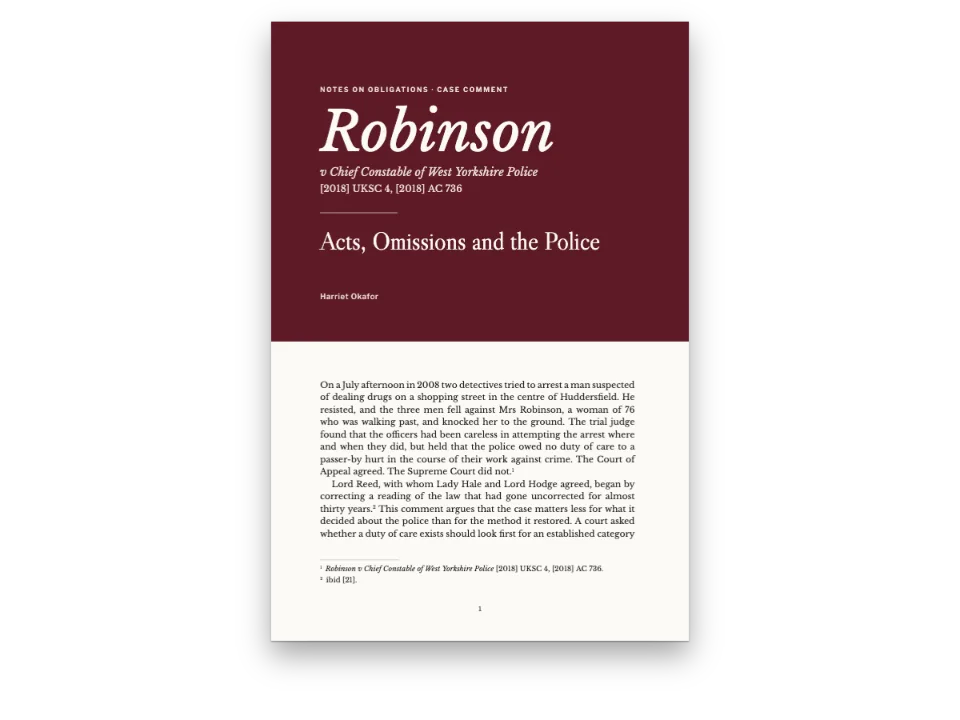
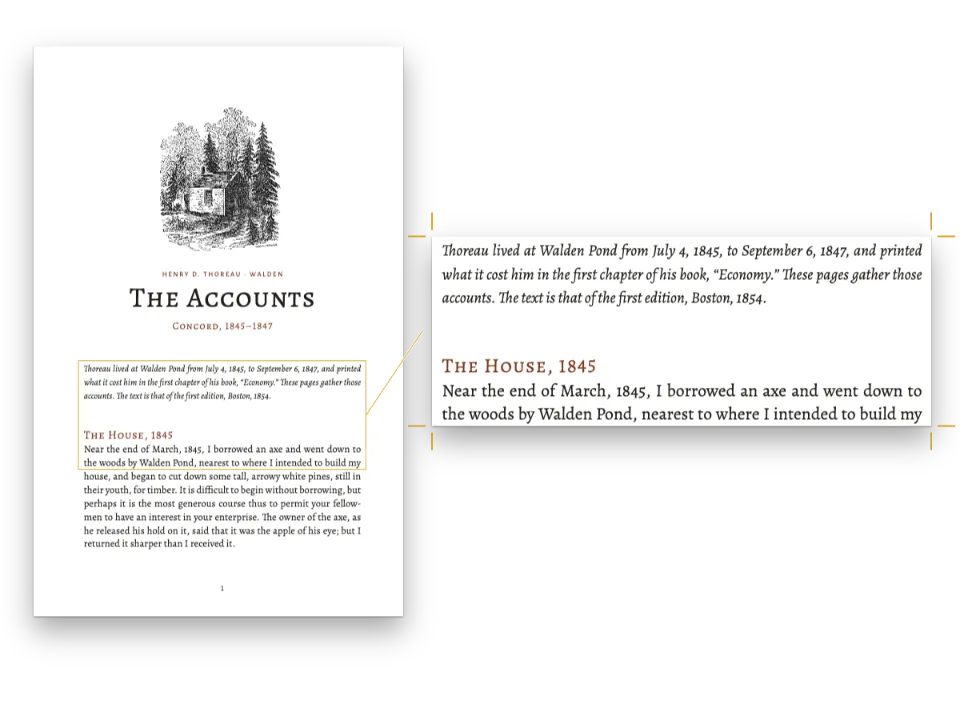
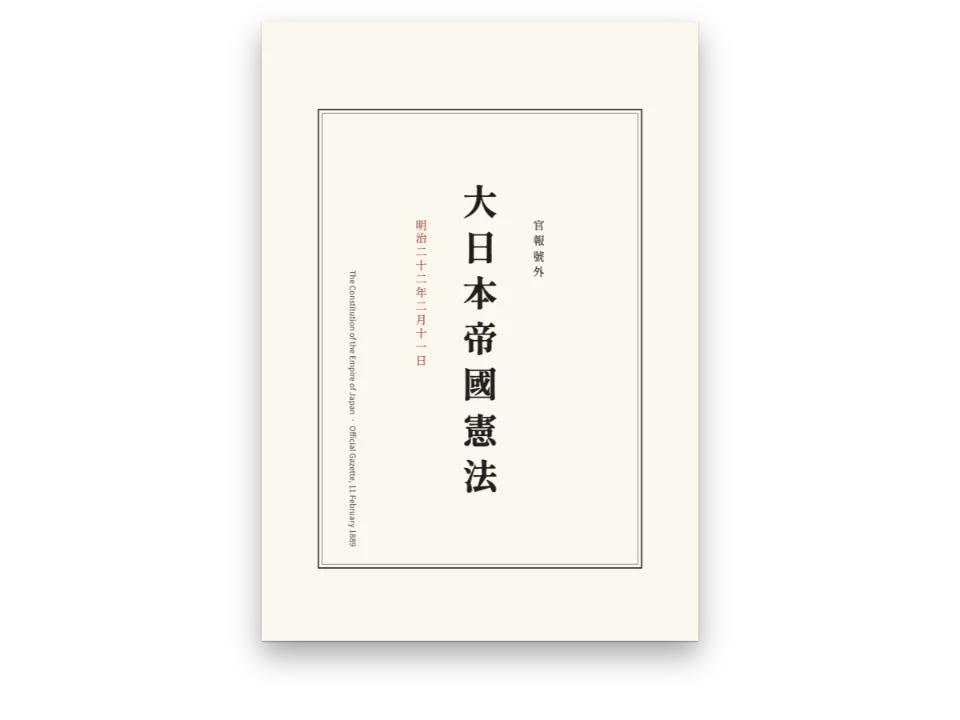
Uno stampato di commissione come quelli che accompagnano un progetto di legge: cinque pagine che mostrano che cosa la sezione 102 del Sonny Bono Copyright Term Extension Act del 1998 ha fatto al titolo 17 dello United States Code. La legge dice soltanto «sopprimere “fifty” e inserire “70”»; questo stampato compone la legge com’era, con ogni modifica segnata al suo posto, le soppressioni barrate e le aggiunte sottolineate, sotto la legenda che i redattori federali e statali stampano in testa a questi testi, e poi la sezione 302 modificata in un riquadro colorato, ogni lettera al margine e le sue righe a sporgere sotto il testo. L’edizione spagnola fa lo stesso con le tre riforme della Costituzione spagnola, pubblicate nel BOE nel 1992, nel 2011 e nel 2024.
Questa ricetta risponde a
- Come mostro una modifica con le parole soppresse barrate e quelle aggiunte sottolineate?
La risposta breve
// In the text, ~~fifty~~ strikes a deleted word and :underline[70] underlines the new one.
// Both lines are painted from the face's own metrics and take no room, so the struck and
// the inserted words justify and hyphenate like any others. The amended text then sits in
// a box whose paragraphs hang: '(a)', a tab, and every turnover line under the text.
const label = { fontFamily: SANS, fontSize: pt(7.5), fontWeight: 700, letterSpacing: pt(1.1),
  textTransform: 'uppercase', color: col('accent') };
const clauses = { fontFamily: SERIF, fontSize: pt(9.5), lineHeight: pt(13), color: col('ink'),
  boldColor: col('ink'), italicColor: col('ink'), textAlign: 'left', // a box's measure is short
  hangingIndent: HANG, // every line but the first starts 7 mm in (postext ≥ 1.71)
  tabStops: [{ position: HANG }] }; // and the tab after the marker takes the text there
const pad = (v, h) => ({ top: mm(v), right: mm(h), bottom: mm(v), left: mm(h) });
const calloutStyles = [
  // The coding legend: a red rule down its side, the label face.
  { id: 'legend', backgroundEnabled: false,
    stripe: { enabled: true, side: 'left', width: pt(2.5), color: col('accent') },
    padding: pad(1.5, 3.5), body: { fontFamily: SANS, fontSize: pt(9), lineHeight: pt(12.5),
      color: col('ink'), boldColor: col('accent'), firstLineIndent: pt(0), textAlign: 'left' } },
  // The bill's own words: a red rule on top, clauses hung, no tint.
  { id: 'bill', backgroundEnabled: false,
    stripe: { enabled: true, side: 'top', width: pt(2.5), color: col('accent') },
    padding: pad(2.5, 0), body: clauses, keepTogether: false, // it may run on to the next page
    // its title keeps its case: "(b)" stays "(b)"
    titleStyle: { ...label, textTransform: 'none', letterSpacing: pt(0.2), fontSize: pt(8.5),
      color: col('ink') } },
  // The text as amended: a tint, the clauses hung the same way.
  { id: 'amended', background: col('tint'), padding: pad(3.5, 4.5), titleStyle: label,
    body: clauses },
];
Ingredienti
- Funzionalità
- BarratoSottolineatoParagrafi a sporgere in un riquadroTabulazioni e riempitiviRiquadriRiquadri che si dividono o restano interiTavolozza di colori semanticaAperture progettateAttributi dei titoliTestatine e folioTestatine secondo il ruolo della paginaMargini speculariStili di paragrafoVedove, orfane e righe corteEsportazione in PDFFont incorporati nel PDF
- Tipo
- Source Serif 4, Source Sans 3 (SIL OFL 1.1)
- Risorse
- Nessuna: ogni immagine è disegnata nel codice
Preparazione
#1 · Segnare la modifica dove avviene
Il codice è nella risposta breve qui sopra. I segni stanno nel Markdown: ~~fifty~~ :underline[70] barra la parola vecchia e sottolinea la nuova (barrato, sottolineato). Nessuna delle due linee occupa spazio: una clausola barrata di sei righe si giustifica e si sillaba come il testo che la circonda, e a pagina 3 tutta la vecchia sottosezione 304(b) è barrata e la sua sostituta sottolineata in un solo paragrafo. Ogni linea segue le misure di barratura e sottolineatura del carattere stesso, nel colore delle parole, così il maiuscoletto di una rubrica ha una linea sua alla sua altezza.
#2 · Le clausole a sporgere nel riquadro
body.hangingIndent in uno stile di riquadro mette a sporgere tutti i paragrafi del riquadro (tipografia in un riquadro): la prima riga parte dal bordo interno e le successive 7 mm più in dentro. Un fermo di tabulazione agli stessi 7 mm porta il testo che segue «(a)» o «(c)» fino a quel bordo, qualunque sia la larghezza della lettera; nel Markdown si scrive quindi (a):tab In General.—…. Le clausole della legge e la sezione modificata condividono la tipografia e cambiano solo nella cornice: un filetto rosso sopra la legge, una tinta dietro il testo vigente. Il riquadro della legge può dividersi (keepTogether: false), così pagina 1 termina con le sue prime due clausole.
#3 · Una fascia per l’apertura
const at = (to, edge, x = 0, y = 0) => ({ anchor: { to, edge }, offset: { x: mm(x), y: mm(y) } });
const BAND = 66; // mm from the trim top to the foot of the band
const opener = { enabled: true, minHeight: mm(BAND - 22 + 6), marginBottom: pt(0), slot: {
  elements: [
    { kind: 'box', id: 'band', style: { backgroundColor: col('band') },
      placement: { ...at('bleed', 'top-left'), size: { width: 'fill', height: mm(BAND + 3) } } },
    { kind: 'text', id: 'kicker', content: '{attr.kicker}', ...label, color: col('pale'),
      placement: { ...at('container', 'top-left', 0, 6), size: { width: mm(112) } } },
    { kind: 'text', id: 'title', content: '{titleText}', fontFamily: SERIF, fontWeight: 700,
      fontSize: pt(30), lineHeight: 1.05, color: col('paper'), align: 'left',
      placement: { ...at('#kicker', 'below', 0, 3), size: { width: mm(112), height: 'auto' } } },
    { kind: 'text', id: 'dek', content: '{attr.dek}', fontFamily: SERIF, italic: true,
      fontSize: pt(10.5), lineHeight: 1.3, color: col('pale'), align: 'left',
      placement: { ...at('#title', 'below', 0, 3.5), size: { width: mm(104), height: 'auto' } } },
  ] } };
La fascia blu notte esce al vivo in alto e sui due lati, e l’occhiello e il sommario vengono da attributi della riga del titolo (attributi dei titoli). minHeight fissa dove comincia la legenda, pochi millimetri sotto la fascia.
#4 · Testatine secondo la parità
const head = (id, content, parity, edge, x, extra = {}) => ({
  kind: 'text', id, content, parity, pages: 'body', fontFamily: SANS, fontSize: pt(7.5),
  fontWeight: 600, letterSpacing: pt(1.1), textTransform: 'uppercase', color: col('muted'),
  placement: { anchor: { to: 'page', edge }, offset: { x: mm(x), y: mm(13) } }, ...extra });
const folio = { fontWeight: 700, color: col('ink') };
const header = { elements: [
  head('verso-folio', '{pageNumber}', 'even', 'top-left', OUTER, folio),
  head('verso-title', '{title}', 'even', 'top-left', OUTER + 8),
  head('recto-title', '{firstMark.h2}', 'odd', 'top-right', -(OUTER + 8)),
  head('recto-folio', '{pageNumber}', 'odd', 'top-right', -OUTER, folio),
] };
const footer = { elements: [head('drop-folio', '{pageNumber}', 'all', 'top', 0,
  { ...folio, pages: 'opener', placement: at('container', 'top', 0, 9) })] };
La pagina pari porta il titolo dello stampato e la dispari la parte in cui si apre, letta dal primo titolo di secondo livello della pagina. pages: 'body' le tiene fuori dall’apertura, che porta invece un folio al piede.
La ricetta completa
// ═══ Postext Cookbook · Nº 182 · An amendment shown struck through and underlined ═════
// https://postext.dev/en/cookbook/amendment-redline
// Code: MIT · Text: Pub. L. 105-298 and 17 U.S.C. (US Gov., PD); Constitución Española (BOE)
// Fonts: Source Serif 4, Source Sans 3 (SIL OFL 1.1) · Needs postext ≥ 1.73.0
// A comparative print: the law as it stood, each deletion ~~struck through~~ and each
// insertion :underline[underlined], then the amended text in a box whose clauses hang.
import { buildDocumentWithFonts, renderPageToCanvas } from 'https://esm.sh/postext';
import { renderToPdf, decompressWoff2 } from 'https://esm.sh/postext-pdf';

const LANG = 'en'; // @lang: the language of the sample document ('en' | 'es')
const RECIPE = 'amendment-redline';

// ─── 1 · Design ─────────────────────────────────────────────────────────────
// #region palette: a government-print navy, one red for rules and labels
const palette = {
  ink: '#1b1d22', // text: a cool near-black
  band: '#1f2b47', // the opener's band: navy
  accent: '#a1321f', // labels, stripes, the legend's rule
  tint: '#eef0f4', // the box of the amended text
  rule: '#c7ccd6', // hairlines
  muted: '#5d6370', // running heads, notes, colophon
  paper: '#ffffff',
  pale: '#c9d2e6', // the kicker and the standfirst on the band
};
const col = (id) => ({ hex: palette[id], model: 'hex', paletteId: id });
const colorPalette = [
  ...Object.entries(palette).map(([id, hex]) => ({ id, name: id, value: { hex, model: 'hex' } })),
  { id: 'main-color', name: 'accent (defaults)', value: { hex: palette.accent, model: 'hex' } },
];
// #endregion
const SERIF = 'Source Serif 4', SANS = 'Source Sans 3';
const TRIM = [152, 229], INNER = 20, OUTER = 17; // mm: a 6 × 9 in committee print
const LEAD = 14; // pt: the body leading
const HANG = mm(7); // how far the clauses of a box hang: the width of "(a)" and a space

// #region answer: the marks live in the Markdown; the boxes hang their clauses
// In the text, ~~fifty~~ strikes a deleted word and :underline[70] underlines the new one.
// Both lines are painted from the face's own metrics and take no room, so the struck and
// the inserted words justify and hyphenate like any others. The amended text then sits in
// a box whose paragraphs hang: '(a)', a tab, and every turnover line under the text.
const label = { fontFamily: SANS, fontSize: pt(7.5), fontWeight: 700, letterSpacing: pt(1.1),
  textTransform: 'uppercase', color: col('accent') };
const clauses = { fontFamily: SERIF, fontSize: pt(9.5), lineHeight: pt(13), color: col('ink'),
  boldColor: col('ink'), italicColor: col('ink'), textAlign: 'left', // a box's measure is short
  hangingIndent: HANG, // every line but the first starts 7 mm in (postext ≥ 1.71)
  tabStops: [{ position: HANG }] }; // and the tab after the marker takes the text there
const pad = (v, h) => ({ top: mm(v), right: mm(h), bottom: mm(v), left: mm(h) });
const calloutStyles = [
Lo script.js composto funziona così com’è: incollalo nello script modulo di qualsiasi pagina, oppure apri la ricetta su CodePen. Cartella della ricetta su GitHub ↗ (si apre in una nuova scheda)
Varianti
#Scrivi le aggiunte come ++testo++
Con plusUnderline attivo, ++70++ sottolinea come :underline[70], la grafia che Pandoc e markdown-it usano per il testo inserito.
     textAlign: 'justify', firstLineIndent: mm(4.5), indentAfterHeading: false,
+ plusUnderline: true, // ++testo++ sottolinea; C++ nel testo si scrive allora C\+\+#Tieni unite le clausole della legge
Senza keepTogether: false il riquadro passa intero a pagina 2 e pagina 1 termina con la riga che lo introduce.
-    padding: pad(2.5, 0), body: clauses, keepTogether: false, // it may run on to the next page
+ padding: pad(2.5, 0), body: clauses,Errori frequenti
- Un paragrafo che comincia con un numero e un punto (
2. Solamente…) viene letto come una voce di elenco, e una barra rovesciata davanti al punto viene stampata. L’edizione spagnola mette un congiuntore di parole (U+2060) fra la cifra e il punto nel testo corrente e, nel riquadro, scrive la tabulazione subito dopo il punto,1.:tab, che nessun segno di elenco riconosce. - Il colore da solo non sopravvivrebbe a una fotocopia, e spesso questi stampati circolano così; barrato e sottolineato si leggono in bianco e nero, ed è per questo che i redattori li hanno scelti.
Crediti
- Ricetta
- Ignacio Ferro
- Testo
- Section 102 of the Sonny Bono Copyright Term Extension Act (Pub. L. 105-298, 112 Stat. 2827, 1998) and sections 302–304 of title 17, United States Code, as in force in 1997 · United States Congress · pubblico dominio
- Articles 13.2, 49 and 135 of the Spanish Constitution in their 1978 wording and the reforms of 1992, 2011 and 2024 (official texts, not subject to copyright under art. 13 LPI) · Cortes Generales, Boletín Oficial del Estado · pubblico dominio
- The editor’s notes, the coding legends and the colophons · Ignacio Ferro · CC BY 4.0
- Font
- Source Serif 4 (SIL OFL 1.1) · Source Sans 3 (SIL OFL 1.1)
- Codice
- MIT, come Postext
Modifica questo testo ↗ (si apre in una nuova scheda)Cartella della ricetta su GitHub ↗ (si apre in una nuova scheda)