Em poucas palavras
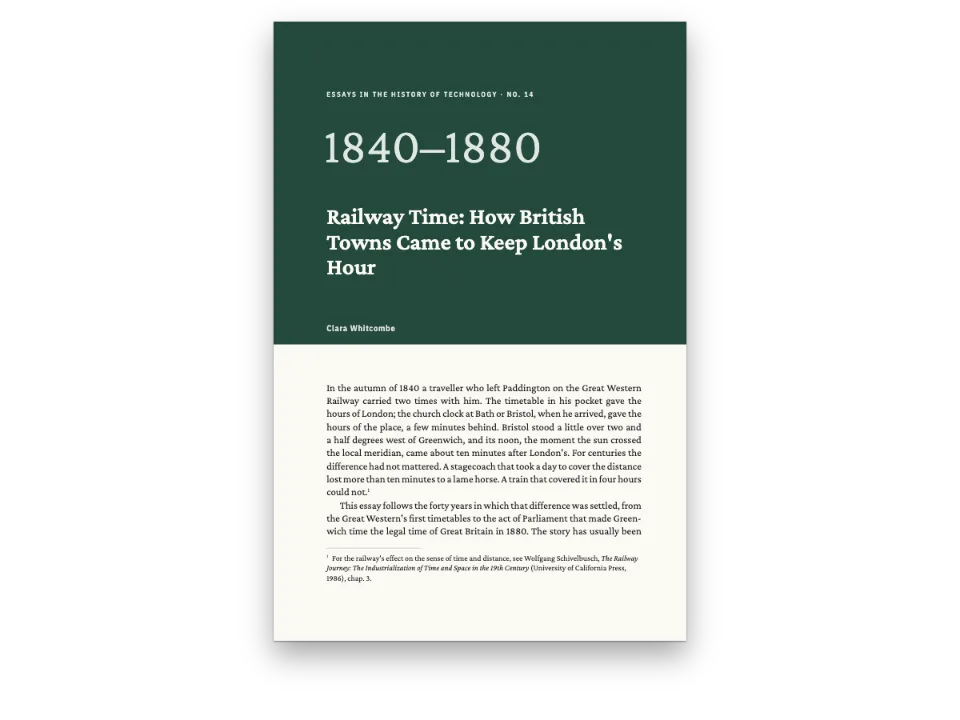
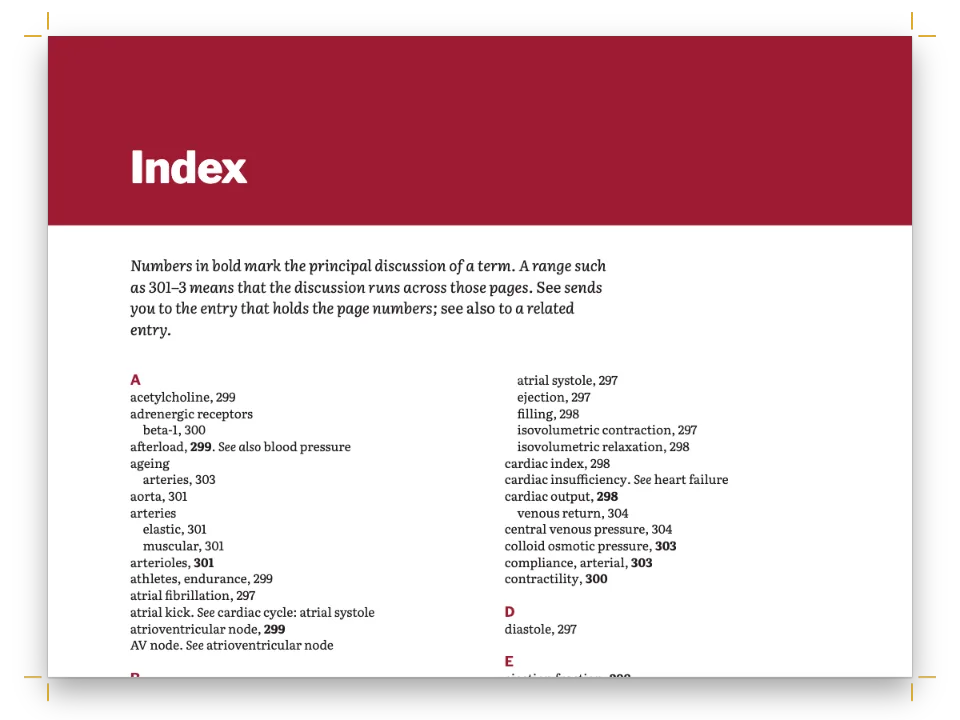
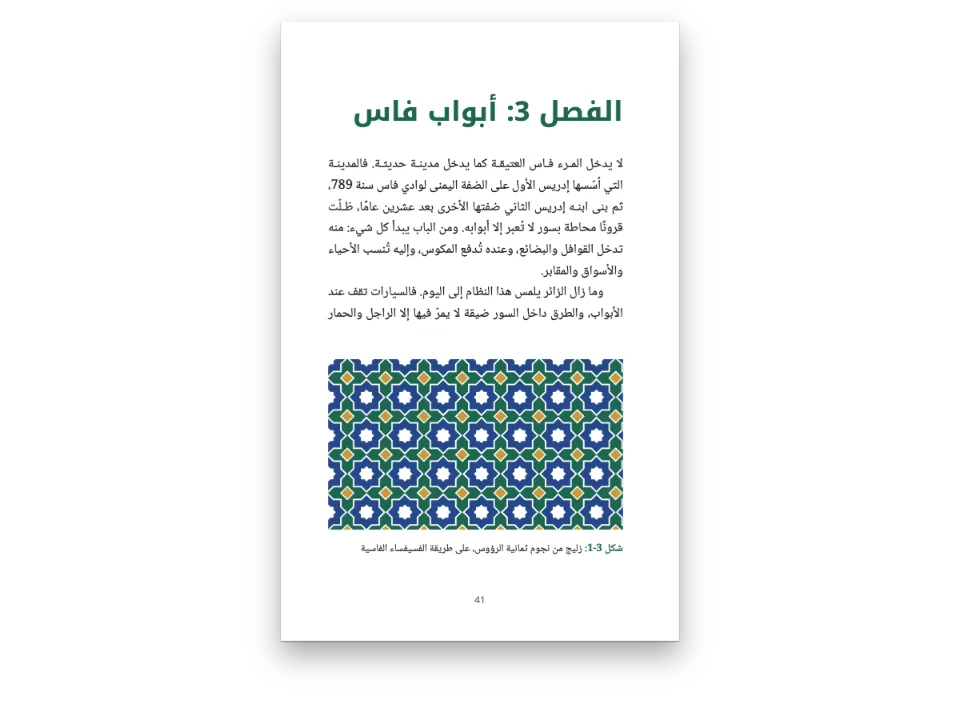
Cinco páginas de uma revista acadêmica árabe: o artigo, as notas de rodapé, a lista de referências e um índice. O índice põe الكشيدة sob ك, como fazem os índices árabes, e não sob o artigo ال.
O que você vai compor
Cinco páginas de uma edição de uma revista árabe imaginária, em 17 × 24 cm, a partir da página 87: um artigo sobre se a justificação com kashida deixa a leitura mais lenta, composto em Amiri de 12 pt com títulos de seção em Noto Kufi Arabic. As notas ficam no pé de cada página e são numeradas «(١)», «(٢)» a partir de um em cada página, como as revistas árabes as numeram; as citações, escritas como [@ayalon2016] no Markdown, também são notas, formatadas pelo estilo de notas Chicago com o idioma árabe do CSL. Segue uma lista de referências, primeiro as obras árabes, e um índice em duas colunas fecha o texto. O índice põe الكشيدة sob ك e الصحف اليومية sob ص: o artigo ال não conta. O ensaio de história com notas Chicago faz o mesmo em inglês.
Esta receita responde a
- Como ordeno um índice árabe ignorando o artigo ال?
- Como cito as fontes em um artigo em árabe, com notas de rodapé e bibliografia?
A resposta curta
// Citations are written [@ayalon2016, 45] in the text; a note style puts each one in a
// footnote, numbered with the author's own [^notes]. The CSL locale is Arabic: ص for a page.
registerCitationEngine(createCiteprocEngine({ styles: STYLES, locales: LOCALES }));
const citations = {
  style: 'chicago-notes-bibliography', notes: 'footnote', locale: 'ar',
  bibliography: { fontSize: em(0.9), lineHeight: pt(17), hangingIndent: em(2),
    entrySpacing: pt(2) },
};
const footnotes = {
  markerTemplate: '({n})', // «(١)», in the document's digits
  numbering: 'page', // from (١) again on every page, as Arabic journals number them
  noteNumberPosition: 'inline', // the note opens with (١) on the line, not raised
  fontSize: pt(10), lineHeight: pt(18), spaceBetween: pt(2), // 1.8 ×: tanwīn clears the line
  textAlign: 'start', // ragged from the right: a Latin title would open wide gaps
  separator: { width: 0.3, lineWidth: pt(0.5), color: col('red') }, // on the start side
};
// The index sorts by the word after the article: الكشيدة files under ك, not under ا.
// ignoreArticle is already true for an Arabic index; it is written out to be seen.
const index = {
  ignoreArticle: true,
  fontFamily: TEXT, fontSize: pt(10.5), lineHeight: pt(16), indent: em(1.2),
  main: { bold: true }, // the page that defines the term
  groups: { fontFamily: LABEL, fontSize: pt(10), fontWeight: 700, color: col('red') },
};
Ingredientes
- Funcionalidades
- Árabe como idioma do documentoÍndice remissivo ordenado sem o artigoCitações em notasNotas de rodapéCitações em um estilo de citaçãoBibliografia a partir das referênciasÍndice remissivoTexto da direita para a esquerdaFontes árabesAlgarismos dos números geradosTítulos numeradosEstilos de títuloAberturas desenhadasCabeços e fóliosBoxesExportação para PDF
- Também usa
- Parágrafos na outra direçãoEquilíbrio de colunasAtributos de títuloCor do papelCabeços por tipo de páginaEstilos de parágrafoFontes incorporadas ao PDFLivros encadernados pela direitaElementos pré-textuais em romanosGeometria por seçãoCapítulos sem número
- Tipografia
- Amiri, Noto Kufi Arabic (SIL OFL 1.1)
- Materiais
- Nenhum: todas as imagens são desenhadas em código
Preparo
#1 · Notas, citações e índice num só lugar
O código é a resposta curta logo acima. As configurações de notas de rodapé são as três que os livros árabes pedem: markerTemplate: '({n})' para os parênteses, numbering: 'page' para recomeçar em cada página e noteNumberPosition: 'inline' para a nota abrir com «(١)» na própria linha; os algarismos são os do documento, e o fio fica à direita (Notas de rodapé). As citações compartilham a numeração das notas. citations.locale: 'ar' dá os termos do CSL em árabe, como عدد para o número de uma edição. index.ignoreArticle ordena cada entrada pela palavra que vem depois de ال e unifica as formas da hamza, então أميري e الأعمدة vão ambas para ا (Sumário e índice); a opção já vem ligada num índice árabe e está escrita aqui para ficar à vista.
#2 · Um cabeçalho de artigo sem faixa
const centred = (y, extra = {}) => ({ anchor: { to: 'container', edge: 'top' },
  offset: { y: mm(y) }, size: { width: 'fill' }, ...extra });
const line = (id, content, family, size, colour, y, extra = {}) => ({ kind: 'text', id,
  content, fontFamily: family, fontSize: pt(size), color: col(colour), align: 'center',
  overflow: 'wrap', placement: centred(y), ...extra });
const masthead = { enabled: true, minHeight: mm(70), slot: { elements: [
  line('journal', JOURNAL, LABEL, 9, 'red', 0, { fontWeight: 700 }),
  line('issue', '{attr.issue}', LABEL, 8, 'muted', 6),
  { kind: 'rule', id: 'rule', thickness: pt(0.5), color: col('rule'),
    placement: centred(13) },
  line('title', '{titleText}', TEXT, 22, 'ink', 18, { fontWeight: 700, lineHeight: 1.45 }),
  line('author', '{attr.author}', TEXT, 13, 'ink', 45),
  line('affiliation', '{attr.affiliation}', TEXT, 10, 'muted', 52),
] } };
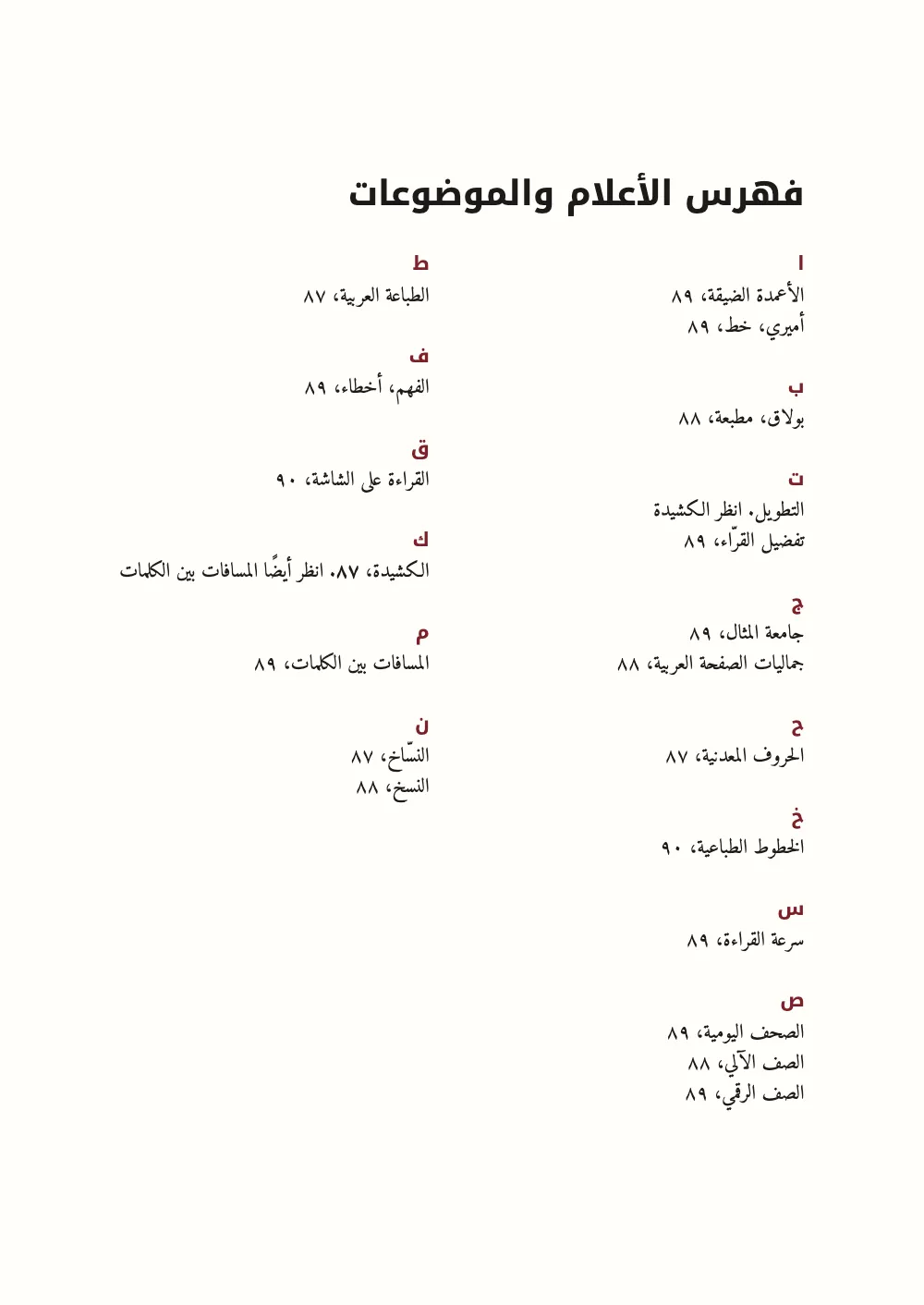
O título do artigo é o título de nível 1, desenhado por um design: o nome e o número da revista, um fio fino, o título em duas linhas centralizadas e a autora. A linha da edição está digitada em algarismos arábico-índicos, porque o atributo de um design é texto do autor e o motor não o reescreve. A numeração das páginas começa em 87 (page.pageNumbering.startAt), então os fólios mostram onde o artigo fica dentro da edição.
#3 · Cabeços a partir do canto externo
const head = (id, content, parity, edge, x) => ({ kind: 'text', id, content, parity,
  pages: 'body', fontFamily: LABEL, fontSize: pt(7.5), color: col('muted'), align: edge,
  placement: { anchor: { to: 'page', edge: `top-${edge}` }, offset: { x: mm(x), y: mm(13) } } });
const folio = (id, parity, edge, x) => ({ ...head(id, '{pageNumber}', parity, edge, x),
  fontWeight: 700, color: col('red') });
const header = { elements: [
  folio('r-folio', 'even', 'right', -SIDE.outer),
  head('r-head', JOURNAL, 'even', 'right', -(SIDE.outer + 9)),
  head('l-head', 'سلمى الخطيب: أثر الكشيدة في سرعة القراءة', 'odd', 'left', SIDE.outer + 9),
  folio('l-folio', 'odd', 'left', SIDE.outer),
] };
As páginas direitas levam o nome da revista e as esquerdas a autora e um título curto, cada uma com o fólio no canto externo. Os elementos do cabeçalho mantêm os seus lados físicos, então a página par, que nesta encadernação fica à direita, se ancora em top-right.
A receita completa
// ═══ Postext Cookbook · Nº 107 · An Arabic research article with notes, citations and an index ═══ // https://postext.dev/en/cookbook/arabic-research-article // Code: MIT · Text: original Arabic prose (CC BY 4.0) · Pictures: none // Fonts: Amiri, Noto Kufi Arabic (SIL OFL 1.1) · Needs postext ≥ 1.15.0 import { buildDocument, renderPageToCanvas, clearMeasurementCache, registerCitationEngine, } from 'https://esm.sh/postext'; import { renderToPdf, decompressWoff2 } from 'https://esm.sh/postext-pdf'; import { createCiteprocEngine, STYLES, LOCALES } from 'https://esm.sh/postext-citeproc'; const LANG = 'en'; // @lang: the language of the frame; the article is Arabic in both editions const RECIPE = 'arabic-research-article'; // ─── 1 · Design ───────────────────────────────────────────────────────────── // #region palette: a journal's dark red on a warm white const palette = { ink: '#1d1a19', // text red: '#7d2028', // the accent: the journal's name, section numbers, the notes' rule rose: '#f1e4e1', // the abstract's ground rule: '#c8bcb5', // hairlines muted: '#655d58', // running heads, the colophon paper: '#fffdfa', }; const col = (id) => ({ hex: palette[id], model: 'hex', paletteId: id }); const colorPalette = Object.entries({ ...palette, 'main-color': palette.red }) .map(([id, hex]) => ({ id, name: id, value: { hex, model: 'hex' } })); // #endregion const [TEXT, LABEL] = ['Amiri', 'Noto Kufi Arabic']; const [BODY, LEAD] = [12, 20]; // pt: Amiri, partly vocalised, at 1.67 × the size const TRIM = { width: 170, height: 240 }; // mm: 17 × 24 cm, the Arab journal const SIDE = { inner: 22, outer: 18 }; // mm const JOURNAL = 'مجلة دراسات الكتاب والنشر'; // #region answer: notes «(١)» per page, the citations among them, an index without ال // Citations are written [@ayalon2016, 45] in the text; a note style puts each one in a // footnote, numbered with the author's own [^notes]. The CSL locale is Arabic: ص for a page. registerCitationEngine(createCiteprocEngine({ styles: STYLES, locales: LOCALES })); const citations = { style: 'chicago-notes-bibliography', notes: 'footnote', locale: 'ar', bibliography: { fontSize: em(0.9), lineHeight: pt(17), hangingIndent: em(2), entrySpacing: pt(2) }, }; const footnotes = { markerTemplate: '({n})', // «(١)», in the document's digits numbering: 'page', // from (١) again on every page, as Arabic journals number them noteNumberPosition: 'inline', // the note opens with (١) on the line, not raised fontSize: pt(10), lineHeight: pt(18), spaceBetween: pt(2), // 1.8 ×: tanwīn clears the line textAlign: 'start', // ragged from the right: a Latin title would open wide gaps separator: { width: 0.3, lineWidth: pt(0.5), color: col('red') }, // on the start side }; // The index sorts by the word after the article: الكشيدة files under ك, not under ا. // ignoreArticle is already true for an Arabic index; it is written out to be seen. const index = { ignoreArticle: true, fontFamily: TEXT, fontSize: pt(10.5), lineHeight: pt(16), indent: em(1.2), main: { bold: true }, // the page that defines the term groups: { fontFamily: LABEL, fontSize: pt(10), fontWeight: 700, color: col('red') }, }; // #endregion // #region masthead: the journal's name, the article's title and its author, centred const centred = (y, extra = {}) => ({ anchor: { to: 'container', edge: 'top' }, offset: { y: mm(y) }, size: { width: 'fill' }, ...extra }); const line = (id, content, family, size, colour, y, extra = {}) => ({ kind: 'text', id, content, fontFamily: family, fontSize: pt(size), color: col(colour), align: 'center', overflow: 'wrap', placement: centred(y), ...extra }); const masthead = { enabled: true, minHeight: mm(70), slot: { elements: [ line('journal', JOURNAL, LABEL, 9, 'red', 0, { fontWeight: 700 }), line('issue', '{attr.issue}', LABEL, 8, 'muted', 6), { kind: 'rule', id: 'rule', thickness: pt(0.5), color: col('rule'), placement: centred(13) }, line('title', '{titleText}', TEXT, 22, 'ink', 18, { fontWeight: 700, lineHeight: 1.45 }), line('author', '{attr.author}', TEXT, 13, 'ink', 45), line('affiliation', '{attr.affiliation}', TEXT, 10, 'muted', 52), ] } }; // #endregion // #region heads: the journal on the right-hand page, the author and title on the left const head = (id, content, parity, edge, x) => ({ kind: 'text', id, content, parity, pages: 'body', fontFamily: LABEL, fontSize: pt(7.5), color: col('muted'), align: edge, placement: { anchor: { to: 'page', edge: `top-${edge}` }, offset: { x: mm(x), y: mm(13) } } }); const folio = (id, parity, edge, x) => ({ ...head(id, '{pageNumber}', parity, edge, x), fontWeight: 700, color: col('red') }); const header = { elements: [ folio('r-folio', 'even', 'right', -SIDE.outer), head('r-head', JOURNAL, 'even', 'right', -(SIDE.outer + 9)), head('l-head', 'سلمى الخطيب: أثر الكشيدة في سرعة القراءة', 'odd', 'left', SIDE.outer + 9), folio('l-folio', 'odd', 'left', SIDE.outer), ] }; // #endregion const config = () => ({ // a factory: the engine caches resolved configs per object locale: 'ar', // written out, never LANG (gotcha: arabic-locale-tag) colorPalette, citations, footnotes, index, page: { width: mm(TRIM.width), height: mm(TRIM.height), dpi: 150, backgroundColor: col('paper'), pageNumbering: { startAt: 87 }, margins: { top: mm(24), bottom: mm(22), left: mm(SIDE.inner), right: mm(SIDE.outer), mirror: true } }, layout: { layoutType: 'single' }, bodyText: { fontFamily: TEXT, fontSize: pt(BODY), lineHeight: pt(LEAD), color: col('ink'), boldColor: col('ink'), italicColor: col('ink'), referenceColor: col('ink'), textAlign: 'justify', firstLineIndent: em(1.5), indentAfterHeading: false, optimalLineBreaking: true, avoidWidows: true, avoidOrphans: true }, headings: { fontFamily: LABEL, fontWeight: 700, color: col('ink'), balancing: { enabled: false }, // no space added over the heads to fill a page levels: [ // Restated: any headings object drops the H1 break (gotcha: headings-drop-h1-break). { level: 1, breakBefore: { enabled: true, parity: 'any' }, marginTop: pt(0), marginBottom: pt(0), advancedDesign: masthead }, // ١- المقدمة: the section number in the document digits, a hyphen after it. { level: 2, fontSize: pt(12), lineHeight: pt(LEAD), numberingTemplate: '{2}-', numberSeparator: ' ', color: col('red'), marginTop: pt(LEAD), marginBottom: pt(4) }, ] }, headingStyles: [ { id: 'unnumbered', numbered: false }, // the abstract, the references, the index // The index: a title across the page and two columns, the first on the right. { id: 'index', numbered: false, span: 'page', breakBefore: { enabled: true, parity: 'any' }, advancedDesign: { enabled: false }, fontSize: pt(18), lineHeight: pt(30), marginBottom: pt(LEAD), layout: { layoutType: 'double', gutterWidth: mm(8) } }, ], calloutStyles: [{ id: 'abstract', background: col('rose'), padding: { top: mm(3.5), right: mm(5), bottom: mm(3.5), left: mm(5) }, marginTop: pt(0), marginBottom: pt(0), titleStyle: { fontFamily: LABEL, fontSize: pt(9), fontWeight: 700, color: col('red') }, body: { fontSize: pt(10.5), lineHeight: pt(17), firstLineIndent: pt(0) } }], paragraphStyles: [{ id: 'colophon', fontFamily: TEXT, fontSize: pt(9), lineHeight: pt(13), color: col('muted'), textAlign: 'left', firstLineIndent: pt(0), marginTop: pt(LEAD) }], header, footer: { elements: [] }, }); // ─── 2 · Content ──────────────────────────────────────────────────────────── const markdown = String.raw`---Amostra em Markdown · 93 linhas · content.en.md
title: "أثر الكشيدة في سرعة قراءة النص العربي المطبوع" --- # أثر الكشيدة في سرعة قراءة النص العربي المطبوع: تجربة على قرّاء جامعيين {issue="المجلد ١٤ · العدد ٣ · خريف ٢٠٢٦" author="سلمى الخطيب" affiliation="قسم علوم المعلومات والنشر، جامعة المثال"} :::callout{type="abstract" title="ملخص"} تبحث هذه الدراسة في أثر ضبط السطور بالكشيدة في سرعة قراءة النص العربي المطبوع وفي فهمه. قرأ ستون طالبًا جامعيًا نصوصًا مضبوطة بثلاث طرق: بالمسافات وحدها، وبالكشيدة وحدها، وبمزيج منهما. ولم تختلف سرعة القراءة اختلافًا ذا دلالة بين الطرق الثلاث، غير أن القرّاء فضّلوا الطريقة المختلطة، وكانت أخطاء الفهم في الكشيدة الكثيفة أعلى قليلًا. ::: ## المقدمة يملأ :index[الطابع]{term="الطباعة العربية"} العربي السطر حتى نهايته بإحدى وسيلتين: أن يوسّع المسافات بين الكلمات، أو أن يمدّ بعض الحروف المتصلة بما يسمّى :index[الكشيدة]{main}:index{term="الكشيدة" seealso="المسافات بين الكلمات"} أو :index[التطويل]{see="الكشيدة"}. والوسيلة الثانية قديمة قِدم الخط نفسه، عرفها :index[النسّاخ] قبل المطبعة، ثم نقلها صانعو :index[الحروف المعدنية] إلى صناديقهم في صورة قطع خاصة تُدسّ بين أجزاء الكلمة.[@nemeth2017] وحين انتقلت الطباعة العربية إلى الحاسوب، صار المدّ عملية آلية يقوم بها البرنامج، وصار السؤال عن مقداره ومواضعه سؤالًا تقنيًا قبل أن يكون جماليًا.[^raqim] [^raqim]: تُبنى قواعد المواضع الجائزة للمدّ في البرامج الحديثة على ما وصفه الخطاطون في خط :index[النسخ]، ولا سيما المنع بعد الكاف واللام، وقبل الحروف المستديرة في آخر الكلمة. ولا يكاد يُختلف في أن الكشيدة جزء من :index[جماليات الصفحة العربية]، لكن أثرها في القراءة لم يُدرس إلا قليلًا. فالدراسات القليلة المتاحة اعتمدت على تقدير القرّاء للنص، لا على قياس قراءتهم له،[@hashimi2019, ٧٧; @attar2021] والمعايير الدولية تكتفي بوصف المواضع التي يجوز فيها المدّ دون أن تحدد مقداره.[@alreq] ويحاول هذا البحث أن يقيس الأثر قياسًا مباشرًا. ## الكشيدة في الطباعة العربية حين أُنشئت :index[مطبعة بولاق]{term="بولاق، مطبعة"} في عشرينيات القرن التاسع عشر، سُبكت حروفها على نماذج من الخط الذي يكتبه النسّاخ، وصار الكتاب المطبوع بعد ذلك بعقود سلعة يقرؤها جمهور واسع.[@ayalon2016] وكان صفّاف الحروف يضبط السطر بقطع من المدّ يدسّها بين أجزاء الكلمة، إلى أن ظهرت آلات :index[الصف الآلي] في القرن العشرين فقلّصت عدد أشكال الحروف تقليصًا كبيرًا.[@nemeth2017] وقد عادت الكشيدة في :index[الصحف اليومية] بعد انتشار :index[الصف الرقمي]، لأنها تسمح بضبط :index[الأعمدة الضيقة] دون أن تتسع المسافات اتساعًا ظاهرًا. غير أن بعض المصممين يرون أن الإكثار منها يجعل الصفحة مضطربة، وأن العين تتعثر بالكلمات الممدودة كما تتعثر بالفجوات الواسعة.[@attar2021, ٥٢] ## منهج التجربة شارك في التجربة ستون طالبًا وطالبة من :index[جامعة المثال]، تتراوح أعمارهم بين ١٩ و٢٦ سنة، وكلهم يقرأ العربية لغةً أولى. وقرأ كل منهم تسعة نصوص قصيرة من المقالات الصحفية، طول كل منها نحو ٣٠٠ كلمة، على صفحات مطبوعة بخط :index[أميري]{term="أميري، خط"} بحجم ١٣ نقطة.[^font] [^font]: اختير خط أميري لأنه يرسم الكشيدة منحنية، كما في الطباعة البولاقية، فيكون الفرق بين الطرق الثلاث أوضح مما هو في الخطوط التي ترسمها خطًا مستقيمًا. وضُبطت النصوص بثلاث طرق: بالمسافات وحدها، وبالكشيدة وحدها مع مسافات ثابتة، وبمزيج يوسّع :index[المسافات بين الكلمات] بمقدار الربع أولًا ثم يمدّ الحروف. وقيس زمن القراءة بالثواني، ثم أجاب القارئ عن خمسة أسئلة في الفهم، وأخيرًا رتّب الطرق الثلاث بحسب تفضيله.:index{term="تفضيل القرّاء"} ## النتائج والمناقشة لم تختلف :index[سرعة القراءة] اختلافًا ذا دلالة بين الطرق الثلاث: كان المتوسط ٢١٤ كلمة في الدقيقة للمسافات، و٢٠٩ للكشيدة، و٢١٧ للطريقة المختلطة. أما :index[أخطاء الفهم]{term="الفهم، أخطاء"} فكانت أعلى قليلًا في الكشيدة وحدها، ولا سيما في السطور التي مُدّت فيها ثلاث كلمات أو أكثر. وفضّل ٣٨ مشاركًا الطريقة المختلطة، و١٤ المسافات وحدها، و٨ الكشيدة وحدها. وهذا يتفق مع ما يذهب إليه الطابعون من أن الكشيدة تحسن قليلًا ولا تحسن كثيرًا،[@hashimi2019, ٨١] ومع ما تقترحه الإرشادات الحديثة من توزيع الفراغ على المسافات والمدّ معًا.[@alreq] ولهذه النتائج حدود واضحة: فالنصوص قصيرة، والقرّاء من فئة عمرية واحدة، والخط واحد. ويحتاج الأمر إلى تجارب على :index[خطوط أخرى]{term="الخطوط الطباعية"}، وعلى :index[القراءة على الشاشة]، حيث يتغير عرض السطر بتغير الجهاز. ## المراجع {style="unnumbered"} :::bibliography{title=""} :::paragraphs{style="colophon" dir=ltr} A specimen article written in Arabic for the Postext Cookbook. The journal, its author, her experiment and the Arabic works by al-Hashimi and al-Attar are invented; the books by Ayalon and Nemeth and the W3C document are real. ::: # فهرس الأعلام والموضوعات {style="index"} :::index :::references{format=csl-yaml} - id: nemeth2017 type: book language: en author: [{family: Nemeth, given: Titus}] title: "Arabic type-making in the machine age: the influence of technology on the form of Arabic type, 1908–1993" publisher: Brill publisher-place: Leiden issued: 2017 - id: ayalon2016 type: book language: en author: [{family: Ayalon, given: Ami}] title: "The Arabic print revolution: cultural production and mass readership" publisher: Cambridge University Press publisher-place: Cambridge issued: 2016 - id: alreq type: webpage language: en author: [{literal: W3C}] title: "Arabic & Persian layout requirements" URL: https://www.w3.org/TR/alreq/ - id: hashimi2019 type: book language: ar author: [{literal: منى الهاشمي}] title: "الحرف العربي على الشاشة: دراسة في المقروئية" publisher: دار المثال publisher-place: بيروت issued: {literal: "٢٠١٩"} - id: attar2021 type: article-journal language: ar author: [{literal: كريم العطار}] title: "التطويل في الصحف اليومية العربية" container-title: مجلة دراسات الكتاب والنشر volume: "٩" issue: "٢" page: "٤٥-٦٨" issued: {literal: "٢٠٢١"} :::`; // content.<lang>.md: the same Arabic article in both // ─── 3 · Fonts ────────────────────────────────────────────────────────────── const FONTS = { // every face the pages use, loaded before the build (gotcha: fonts-first) Amiri: ['400', '700'], // TEXT: the article, notes, references, index; bold emphasis 'Noto Kufi Arabic': ['400', '700'], // LABEL: masthead, section heads, running heads }; // ─── 4 · Build & show ─────────────────────────────────────────────────────── await loadFonts(FONTS, markdown); // Each Arabic face's letters live in a file of their own (gotcha: arabic-fonts-subset). await loadArabicFonts(FONTS, markdown); const doc = await buildWithFonts(() => buildDocument({ markdown }, config()), markdown); showBook(doc, { title: t({ en: 'An Arabic research article', es: 'Un artículo académico árabe' }) }); offerPdf(() => renderToPdf(doc, { fontProvider: arabicPdfProvider }), `${RECIPE}.pdf`);Kit · core, fonts, viewer, pdf, arabic, book: igual em todas as receitas · 417 linhas
// ─── Kit ── helpers shared by every Cookbook recipe · postext.dev/cookbook ───── // ─── Kit · core v1 ── the same in every recipe · postext.dev/cookbook function mm(value) { return { value, unit: 'mm' }; } function pt(value) { return { value, unit: 'pt' }; } function em(value) { return { value, unit: 'em' }; } /** The sample language's string: t({ en: 'Figure', es: 'Figura' }). */ function t(strings) { return strings[LANG] ?? Object.values(strings)[0]; } /** A file in this recipe's assets folder, served from the Postext repo by jsDelivr. */ function asset(file) { return `https://cdn.jsdelivr.net/gh/drnachio/postext@main/cookbook/${RECIPE}/assets/${file}`; } // ─── Kit · fonts v2 ── the same in every recipe · postext.dev/cookbook // Postext measures with the loaded faces and caches the widths: load every face // before the first build, from Fontsource, the files the PDF embeds too. /** faces = { 'Family Name': ['400', '400i', '700'] }. `text` is the sample: * č ł † α χ also load latin-ext and greek files (kitSubsetsFor). With * `optional`, a face Fontsource does not ship is skipped instead of failing. * Resolves to the number of faces added. */ async function loadFonts(faces, text = '', { optional = false } = {}) { kitStatus('Loading fonts…'); const ranges = { latin: 'U+0000-00FF,U+0131,U+0152-0153,U+02BB-02BC,U+02C6,U+02DA,U+02DC,U+0304,U+0308,U+0329,' + 'U+2000-206F,U+20AC,U+2122,U+2191,U+2193,U+2212,U+2215,U+FEFF,U+FFFD', 'latin-ext': 'U+0100-02BA,U+02BD-02C5,U+02C7-02CC,U+02CE-02D7,U+02DD-02FF,U+0304,U+0308,U+0329,' + 'U+1D00-1DBF,U+1E00-1E9F,U+1EF2-1EFF,U+2020,U+20A0-20AB,U+20AD-20C0,U+2113,U+2C60-2C7F,U+A720-A7FF', greek: 'U+0370-03FF', }; const jobs = []; let added = 0; for (const [family, specs] of Object.entries(faces)) { const id = fontsourceId(family); const todo = [...new Set(specs)].map((spec) => [parseInt(spec, 10), spec.endsWith('i') ? 'italic' : 'normal']) .filter(([weight, style]) => !hasFace(family, weight, style)); // before any await const meta = optional || /[^\0-ÿ]/u.test(text) ? await fontsourceMeta(family) : null; const subsets = ['latin', ...kitSubsetsFor(text, meta)]; for (const [weight, style] of todo) { if (optional && !(meta?.weights.includes(weight) && meta.styles.includes(style))) continue; for (const subset of subsets) { const url = `https://cdn.jsdelivr.net/npm/@fontsource/${id}@5/files/${id}-${subset}-${weight}-${style}.woff2`; const face = new FontFace(family, `url(${url}) format('woff2')`, { weight: String(weight), style, unicodeRange: ranges[subset] }); jobs.push(face.load().then((ready) => { document.fonts.add(ready); added++; }, () => { if (subset === 'latin' && !optional) throw new Error(`Fontsource has no ${family} ${weight} ${style}`); })); } } } await Promise.all(jobs).catch((error) => { kitFail(error); throw error; }); return added; } /** Runs `build` and loads any face the pages use that FONTS missed (a regular * one with a warning), then clears the measurement cache and builds again. */ async function buildWithFonts(build, text = '') { const tried = new Set(); for (let round = 0; round < 3; round++) { kitStatus('Laying out…'); await new Promise(requestAnimationFrame); // let the status paint first const result = await Promise.resolve().then(build).catch((error) => { kitFail(error); throw error; }); const wanted = { base: {}, variants: {} }; for (const { font, base } of [result].flat().flatMap(fontStringsOf)) { const { family, weight, style } = parseFont(font); const key = `${family}|${weight}|${style}`; if (tried.has(key) || hasFace(family, weight, style)) continue; tried.add(key); (wanted[base ? 'base' : 'variants'][family] ??= []).push(`${weight}${style === 'italic' ? 'i' : ''}`); } if (Object.keys(wanted.base).length) { console.warn(`[cookbook] FONTS does not list ${JSON.stringify(wanted.base)}: loading them.`); } const added = await loadFonts(wanted.base, text) + await loadFonts(wanted.variants, text, { optional: true }); if (added === 0) return result; clearMeasurementCache(); } throw new Error('The fonts did not settle after three builds.'); } /** Every font string of the layout; `base` marks a block's own face. */ function fontStringsOf(doc) { const found = new Map(); const walk = (node) => { if (!node || typeof node !== 'object') return; if (Array.isArray(node)) { node.forEach(walk); return; } for (const [key, value] of Object.entries(node)) { if (typeof value === 'string' && /fontString$/i.test(key)) { found.set(value, found.get(value) || key === 'fontString'); } else if (value && typeof value === 'object') walk(value); } }; walk(doc.pages); walk(doc.blocks); return [...found].map(([font, base]) => ({ font, base })); } /** '700 37.5px Open Sans' / 'italic 400 13px "Source Serif 4"' → { family, weight, style }. * A string with no weight ('95.8px Young Serif', from a design text) is 400. */ function parseFont(font) { const m = /^(?:(italic|oblique)\s+)?(?:small-caps\s+)?(?:(\d+|bold|normal)\s+)?[\d.]+px\s+(.+)$/.exec(font.trim()); if (!m) throw new Error(`Unexpected font string: ${font}`); const weight = m[2] === 'bold' ? 700 : !m[2] || m[2] === 'normal' ? 400 : Number(m[2]); return { family: m[3].replace(/^["']|["']$/g, ''), weight, style: m[1] ? 'italic' : 'normal' }; } /** A loaded FontFace covers this family, weight and style (fonts.check() would * also say yes for families nobody declared). */ function hasFace(family, weight, style) { for (const face of document.fonts) { if (face.status !== 'loaded' || face.style !== style) continue; if (face.family.replace(/^["']|["']$/g, '') !== family) continue; const [low, high = low] = face.weight.split(' ').map(Number); if (weight >= low && weight <= high) return true; } return false; } /** The files beyond latin `text` needs that `meta`'s family ships. */ function kitSubsetsFor(text, meta) { return [[/[Ā-˿ᴀ-ᶿḀ-ỿ†ℓⱠ-Ɀ꜠-ꟿ]/u, 'latin-ext'], [/[Ͱ-Ͽ]/u, 'greek']] .filter(([re, x]) => re.test(text) && meta?.subsets?.includes(x)).map(([, x]) => x); } /** Fontsource's id for a family: 'Source Serif 4' → 'source-serif-4'. */ function fontsourceId(family) { return family.toLowerCase().replace(/\s+/g, '-'); } /** The family's Fontsource metadata (weights, styles, subsets), or null. */ function fontsourceMeta(family) { fontsourceMeta.cache ??= new Map(); const id = fontsourceId(family); if (!fontsourceMeta.cache.has(id)) { fontsourceMeta.cache.set(id, fetch(`https://api.fontsource.org/v1/fonts/${id}`) .then((res) => (res.ok ? res.json() : null), () => null)); } return fontsourceMeta.cache.get(id); } // ─── Kit · viewer v1 ── the same in every recipe · postext.dev/cookbook /** The pages as spreads on a dark desk, page 1 alone, then verso | recto, * each painted when it scrolls near. */ function showPages(docs, { title, width = 460 } = {}) { const root = viewer(title); const pages = [docs].flat().flatMap((doc) => doc.pages.map((page) => ({ doc, page, n: (doc.pageIndexOffset ?? 0) + page.index }))); const spreads = []; let verso = null; for (const p of pages) { if (p.n % 2 === 1) { if (verso) spreads.push([verso, null]); verso = p; } else { spreads.push([verso, p]); verso = null; } } if (verso) spreads.push([verso, null]); const density = Math.min(window.devicePixelRatio || 1, 2); showPages.painter?.disconnect(); const painter = new IntersectionObserver((entries) => { for (const { isIntersecting, target } of entries) { if (!isIntersecting) continue; painter.unobserve(target); const { doc, page } = target.postext; renderPageToCanvas(page, doc, target, { scale: (width * density) / page.width }); } }, { rootMargin: '800px' }); showPages.painter = painter; root.replaceChildren(...spreads.map((pair) => { const spread = document.createElement('div'); spread.className = 'pt-spread'; for (const p of pair) { const figure = document.createElement('figure'); if (p) { const label = p.page.pageLabel || String(p.n + 1); const canvas = document.createElement('canvas'); canvas.postext = p; canvas.style.aspectRatio = `${p.page.width} / ${p.page.height}`; canvas.setAttribute('role', 'img'); canvas.setAttribute('aria-label', `Page ${label}`); const folio = document.createElement('figcaption'); folio.textContent = label; figure.append(canvas, folio); painter.observe(canvas); } else figure.className = 'pt-blank'; spread.append(figure); } return spread; })); kitStatus(`${pages.length} ${pages.length === 1 ? 'page' : 'pages'}`); document.documentElement.dataset.postext = 'ready'; return pages.length; } /** The desk, the bar and the error reporting, created once. */ function viewer(title) { if (!document.getElementById('pt-kit')) { document.head.insertAdjacentHTML('beforeend', `<style id="pt-kit"> :root { color-scheme: dark; } body { margin: 0; background: #0e1014; color: #b9bcc4; font: 13px/1.45 system-ui, sans-serif; } #pt-bar { position: sticky; top: 0; z-index: 1; display: flex; flex-wrap: wrap; align-items: center; gap: 6px 16px; padding: 10px 16px; background: rgb(14 16 20 / .92); backdrop-filter: blur(6px); border-bottom: 1px solid #23262d; } #pt-bar strong { color: #f4f1ea; font-weight: 600; } #pt-actions { display: flex; gap: 12px; margin-left: auto; } #pt-actions a, #pt-actions button { color: #d8a21a; font: inherit; background: none; border: 0; padding: 0; cursor: pointer; } #pages { display: grid; justify-items: center; gap: 48px; padding: 32px 16px 72px; } .pt-spread { display: flex; } .pt-spread figure { margin: 0; width: min(460px, 44vw); } .pt-spread canvas { display: block; width: 100%; background: #fff; box-shadow: 0 1px 2px rgb(0 0 0 / .5), 0 22px 44px -16px rgb(0 0 0 / .8); } .pt-spread figure:first-child canvas { box-shadow: inset -14px 0 14px -14px rgb(0 0 0 / .18), 0 1px 2px rgb(0 0 0 / .5), 0 22px 44px -16px rgb(0 0 0 / .8); } .pt-spread figcaption { margin-top: 10px; text-align: center; font: 600 10px/1 system-ui, sans-serif; letter-spacing: .18em; text-transform: uppercase; color: #6c7079; } .pt-blank { visibility: hidden; } @media (max-width: 760px) { .pt-spread { flex-direction: column; gap: 32px; } .pt-spread figure { width: min(460px, 92vw); } .pt-blank { display: none; } } </style>`); document.body.insertAdjacentHTML('afterbegin', '<header id="pt-bar"><strong id="pt-title"></strong><span id="pt-status" role="status"></span><span id="pt-actions"></span></header>'); document.getElementById('pt-title').textContent = document.title || 'Postext'; addEventListener('error', (event) => kitFail(event.error ?? event.message)); addEventListener('unhandledrejection', (event) => kitFail(event.reason)); } if (title) document.getElementById('pt-title').textContent = title; return document.getElementById('pages') ?? document.body.appendChild(Object.assign(document.createElement('main'), { id: 'pages' })); } function kitStatus(text) { viewer(); document.getElementById('pt-status').textContent = text; } function kitFail(error) { document.documentElement.dataset.postext = 'error'; kitStatus(`Error: ${error?.message ?? error}`); } // ─── Kit · pdf v2 ── the same in every recipe that exports a PDF /** The Fontsource files the screen used, as TrueType: the nearest weight the * family ships, upright if it has no italic; latin, then what the face's * letters need (kitSubsetsFor). */ async function fontsourceProvider(family, weight, style, request) { const id = fontsourceId(family); const meta = await fontsourceMeta(family); const weights = meta?.weights?.length ? meta.weights : [400, 700]; const w = weights.reduce((a, b) => (Math.abs(b - weight) < Math.abs(a - weight) ? b : a)); const s = style === 'italic' && meta && !meta.styles.includes('italic') ? 'normal' : style; const text = String.fromCodePoint(...(request?.codePoints ?? [])); const more = kitSubsetsFor(text, meta); const files = await Promise.all(['latin', ...more].map(async (subset) => { const res = await fetch(`https://cdn.jsdelivr.net/npm/@fontsource/${id}@5/files/${id}-${subset}-${w}-${s}.woff2`); if (!res.ok) throw new Error(`Fontsource has no ${family} ${w} ${s} ${subset}`); return decompressWoff2(new Uint8Array(await res.arrayBuffer())); })); return files.length === 1 ? files[0] : files; } /** A "Build the PDF" button; then "Open the PDF" (a new tab: CodePen's frame * shows no PDFs) and a download link. */ function offerPdf(makePdf, filename) { viewer(); const button = Object.assign(document.createElement('button'), { type: 'button', textContent: 'Build the PDF' }); button.dataset.postextPdf = filename; button.addEventListener('click', async () => { button.disabled = true; button.textContent = 'Building the PDF…'; try { const bytes = await makePdf(); const url = URL.createObjectURL(new Blob([bytes], { type: 'application/pdf' })); const size = `${Math.max(1, Math.round(bytes.length / 1024))} KB`; button.replaceWith( Object.assign(document.createElement('a'), { href: url, target: '_blank', rel: 'noopener', textContent: 'Open the PDF ↗' }), Object.assign(document.createElement('a'), { href: url, download: filename, textContent: `Download ${filename} · ${size}` })); } catch (error) { button.disabled = false; button.textContent = 'Build the PDF'; kitFail(error); } }); document.getElementById('pt-actions').append(button); } // ─── Kit · arabic v1 ── Arabic-script faces · postext.dev/cookbook // Fontsource ships an Arabic family as one file per subset and weight: the // `arabic` file holds the letters, the harakat, the Arabic-Indic digits, the // Arabic punctuation and the presentation forms; `latin` and `latin-ext` // hold the rest. loadFonts loads the latin files; this block adds the arabic // file of every Arabic family, for the canvas and for the PDF, which shapes // the letters with HarfBuzz from the same bytes. /** The code points of Fontsource's `arabic` subset, as its stylesheets * declare them (the same unicode-range the browser picks the file by). A * function, not a const: the kit is inlined after the recipe's top-level * awaits, and a const read before its line throws, where a function * declaration is hoisted. */ function arabicRange() { return 'U+0600-06FF,U+0750-077F,U+0870-088E,U+0890-0891,U+0897-08E1,U+08E3-08FF,' + 'U+200C-200E,U+2010-2011,U+204F,U+2E41,U+FB50-FDFF,U+FE70-FE74,U+FE76-FEFC,U+102E0-102FB,' + 'U+10E60-10E7E,U+10EC2-10EC4,U+10EFC-10EFF,U+1EE00-1EEFF'; } /** Whether code point `cp` is in the arabic file. */ function inArabicRange(cp) { inArabicRange.ranges ??= arabicRange().split(',').map((part) => { const [lo, hi = lo] = part.slice(2).split('-'); return [parseInt(lo, 16), parseInt(hi, 16)]; }); return inArabicRange.ranges.some(([lo, hi]) => cp >= lo && cp <= hi); } /** Whether Fontsource serves `family` with an `arabic` subset. Fails when * the API does not answer: an Arabic face taken for a Latin one would set * its letters in a system face. */ async function isArabicFamily(family) { const meta = await fontsourceMeta(family); if (!meta) throw new Error(`api.fontsource.org did not describe ${family}: reload to try again`); return !!meta.subsets?.includes('arabic'); } /** The arabic file of a face. */ function arabicFileUrl(family, weight, style) { const id = fontsourceId(family); return `https://cdn.jsdelivr.net/npm/@fontsource/${id}@5/files/${id}-arabic-${weight}-${style}.woff2`; } /** faces = { Amiri: ['400', '700'] }, as for loadFonts, after it: the whole * FONTS object may be passed, its families without an arabic subset are * left alone. Adds the arabic file of every listed weight of each Arabic * family (the latin files come from loadFonts) and loads it. `text` is * the sample: fails when it holds an Arabic-script character the arabic * file does not cover. List every weight the pages set in Arabic: a weight * left to buildWithFonts gets the latin file only, and its Arabic letters * fall back to a system face. Resolves to the number of files loaded. */ async function loadArabicFonts(faces, text = '') { kitStatus('Loading fonts…'); let loaded = 0; try { const outside = [...new Set(text)].filter((ch) => /\p{Script=Arabic}/u.test(ch) && !inArabicRange(ch.codePointAt(0))); if (outside.length) throw new Error(`Fontsource's arabic files have no ${outside.slice(0, 12).join(' ')}`); for (const [family, specs] of Object.entries(faces)) { if (!(await isArabicFamily(family))) continue; for (const spec of new Set(specs)) { const weight = parseInt(spec, 10); const style = spec.endsWith('i') ? 'italic' : 'normal'; const face = new FontFace(family, `url(${arabicFileUrl(family, weight, style)}) format('woff2')`, { weight: String(weight), style, unicodeRange: arabicRange() }); document.fonts.add(await face.load().catch(() => { throw new Error(`Fontsource has no arabic file for ${family} ${weight} ${style}`); })); loaded++; } } } catch (error) { kitFail(error); throw error; } return loaded; } /** The PDF font provider for recipes with Arabic faces: a family with an * arabic subset gets its arabic file when its pages set Arabic letters * (`request.codePoints`), then its latin file, and its latin-ext file for * the letters beyond latin (transliteration: ā ḥ ʿ). The arabic file comes * first: it also holds the space and the brackets, so a line of Arabic is * shaped as one run and not cut at every space. Any other family goes to * fontsourceProvider (the "pdf" block). */ async function arabicPdfProvider(family, weight, style, request) { if (!(await isArabicFamily(family))) return fontsourceProvider(family, weight, style, request); const meta = await fontsourceMeta(family); const weights = meta.weights?.length ? meta.weights : [400, 700]; const w = weights.reduce((a, b) => (Math.abs(b - weight) < Math.abs(a - weight) ? b : a)); const s = style === 'italic' && !meta.styles.includes('italic') ? 'normal' : style; const wanted = [...(request?.codePoints ?? [])]; const id = fontsourceId(family); const urls = []; if (!wanted.length || wanted.some(inArabicRange)) urls.push(arabicFileUrl(family, w, s)); urls.push(`https://cdn.jsdelivr.net/npm/@fontsource/${id}@5/files/${id}-latin-${w}-${s}.woff2`); if (meta.subsets.includes('latin-ext') && wanted.some((cp) => /[Ā-˿Ḁ-ỿ]/u.test(String.fromCodePoint(cp)))) { urls.push(`https://cdn.jsdelivr.net/npm/@fontsource/${id}@5/files/${id}-latin-ext-${w}-${s}.woff2`); } return Promise.all(urls.map(async (url) => { const res = await fetch(url); if (!res.ok) throw new Error(`Fontsource file ${url} (${res.status})`); return decompressWoff2(new Uint8Array(await res.arrayBuffer())); })); } // ─── Kit · book v1 ── books bound on either edge · postext.dev/cookbook // A book bound on the right (Arabic, Hebrew or Persian text, vertical // Chinese, or page.binding 'right') opens from what a Latin reader calls // the back: page 1 lies alone on the left of the spine, then [3 | 2]. /** showPages for a book bound on either edge. A right-bound book (the * document says so: doc.binding is 'right' for page.binding 'right', for * text that runs right to left and for vertical text, when the binding is * left to 'auto') lies on the desk as it opens: page 1 alone on the left * of the spine, then [3 | 2], the spine shade on each page's inner edge. * `binding` ('left' | 'right') overrides the document's. */ function showBook(docs, { binding, ...options } = {}) { const count = showPages(docs, options); const right = (binding ?? [docs].flat()[0]?.binding) === 'right'; if (!document.getElementById('pt-kit-book')) { // The pages keep direction ltr, as in a left-bound book: a canvas takes // the direction its element inherits, and under the spread's rtl a run // painted for an ltr canvas would end where the engine starts it. document.head.insertAdjacentHTML('beforeend', `<style id="pt-kit-book"> .pt-spread[dir="rtl"] canvas { direction: ltr; } .pt-spread[dir="rtl"] figure:first-child canvas { box-shadow: inset 14px 0 14px -14px rgb(0 0 0 / .18), 0 1px 2px rgb(0 0 0 / .5), 0 22px 44px -16px rgb(0 0 0 / .8); } </style>`); } // Each pair stays [verso, recto] in the page; right to left, the verso // sits on the right. Phones stack the pages in reading order either way. for (const spread of document.querySelectorAll('#pages > .pt-spread')) spread.dir = right ? 'rtl' : 'ltr'; document.getElementById('pages').dataset.binding = right ? 'right' : 'left'; return count; } // ─── /Kit ───────────────────────────────────────────────────────────────────────
O script.js montado funciona como está: cole-o como script de módulo em qualquer página ou abra a receita no CodePen. Pasta da receita no GitHub ↗ (abre em uma nova aba)
Variações
#Numere as notas ao longo do artigo
Revistas árabes modernas costumam numerar as notas por artigo em vez de por página.
-  numbering: 'page', // from (١) again on every page, as Arabic journals number them
+ numbering: 'chapter',#Cite por autor e data
-  style: 'chicago-notes-bibliography', notes: 'footnote', locale: 'ar',
+ style: 'apa', locale: 'ar',Erros comuns
Erro comum
Marque um livro árabe como 'ar', não com LANG
As edições de uma receita são en e es, mas uma amostra árabe é árabe nas duas: `locale: LANG` a comporia da esquerda para a direita, a encadernaria pela esquerda, numeraria as suas páginas 1 2 3 e chamaria as suas figuras de Figure ou Figura. Escreva você mesmo a marcação: 'ar' (algarismos arábico-índicos, a convenção do Machrek), uma região como 'ar-EG' ou 'ar-SA', ou 'ar-MA', 'ar-DZ' ou 'ar-TN' para uma edição magrebina com algarismos europeus. Uma página latina que só cita árabe mantém o seu próprio locale. Texto da direita para a esquerda →
Erro comum
Fontes árabes precisam do seu arquivo arabic, pelo bloco arabic
O Fontsource serve Amiri, Noto Naskh Arabic ou Scheherazade New em um arquivo por subconjunto, e as letras árabes estão no arquivo arabic. loadFonts baixa só latin (e latin-ext), então na tela o árabe vem de uma fonte do sistema e é medido errado, e o fontsourceProvider entrega ao PDF esse arquivo latin, que imprime caixas vazias. Inclua o bloco arabic do kit, chame loadArabicFonts(FONTS, markdown) depois de loadFonts, com todos os pesos que as páginas usam em árabe listados em FONTS, e passe a renderToPdf fontProvider: arabicPdfProvider. Fontes árabes →
Erro comum
Qualquer objeto headings desativa a quebra de página do H1
Por padrão, um H1 salta para uma página ímpar (always-odd), mas passar qualquer objeto headings redefine esse padrão, então os capítulos ficam emendados e span: 'page' não faz nada. Declare de novo headings.levels[0].breakBefore: { enabled: true, parity } em toda configuração. Capítulos que abrem em página ímpar →
Erro comum
Um estilo de título herda a quebra de página do seu nível
Uma entrada de headingStyles recebe do seu nível de título todos os campos que não define, inclusive breakBefore. Um sumário ou um colofão com estilo sobre um H1 depois de um :::pagebreak herda a paridade 'odd' e cai depois de uma página em branco. Dê a esse estilo breakBefore: { enabled: false }. Estilos de título →
Erro comum
Carregue todas as fontes antes do layout
O motor de layout mede o texto com as fontes que o navegador carregou e guarda as larguras em cache, então uma fonte que chega depois da primeira composição deixa quebras de linha erradas e um PDF que não corresponde mais à tela. Carregue antes todos os pesos e estilos e chame clearMeasurementCache() antes de recompor quando alguma chegar atrasada. Fontes antes da diagramação →
- A pontuação que um estilo CSL escreve é a do estilo: as vírgulas, os pontos e vírgulas e as aspas entre as partes de uma nota são latinos, como em الهاشمي, الحرف العربي. Datas e números vêm dos dados, então as obras árabes levam
issued: {literal: "٢٠١٩"}e localizadores como[@hashimi2019, ٧٧]; as obras latinas mantêm 0–9. - Uma nota ou uma referência a uma obra latina corre na direção da página árabe: o ponto final fica na ponta esquerda da linha.
Créditos
- Receita
- Ignacio Ferro
- Texto
- A research article written in Arabic for the recipe; its journal, author, experiment and Arabic sources are invented · Postext Cookbook · original
- Fontes
- Amiri (SIL OFL 1.1) · Noto Kufi Arabic (SIL OFL 1.1)
- Código
- MIT, como o Postext
Editar este texto ↗ (abre em uma nova aba)Pasta da receita no GitHub ↗ (abre em uma nova aba)