En poques paraules
Un petit catàleg d'exposició amb tres gravats antics del Quixot. Cada fitxa va en una pàgina esquerra i la seva imatge ocupa sencera la pàgina dreta del davant.
Què compondràs
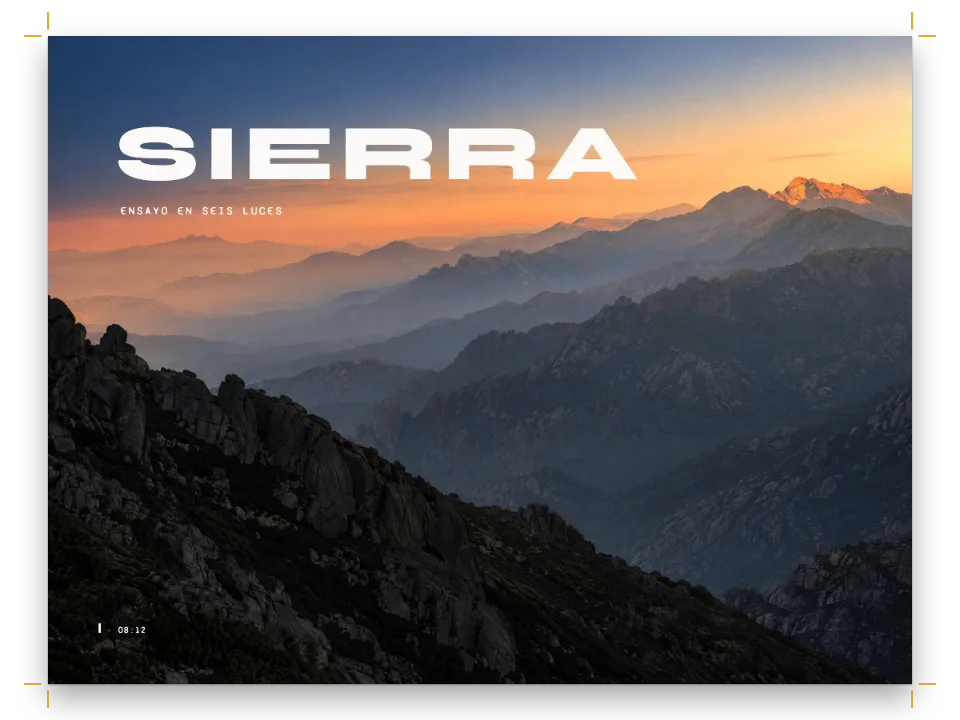
Un petit catàleg en anglès per a una exposició de gabinet: tres gravats en fusta del Quixot de Gustave Doré (París, 1863), en pàgina de 230 × 280 mm. La coberta compon DORÉ en Libre Bodoni de 88 pt sobre un negre càlid, sota un detall emmarcat de la làmina dels molins. Cada fitxa obre una pàgina parella amb un número de catàleg en sèpia al costat d'un títol en cursiva, la fitxa tècnica a la columna exterior, una entradeta amb caplletra de tres línies i el comentari. La primera frase del comentari cita la làmina, que obre la pàgina senar del davant, centrada i amb 221 mm d'alçada; làmina, peu i línia de crèdit omplen així la caixa de text. L'última pàgina és una llista d'obres amb una miniatura a la primera cel·la de cada fila i la pàgina on s'imprimeix cada làmina.
Aquesta recepta respon a
- Com faig un catàleg d'art: la fitxa a la pàgina esquerra i la làmina al davant, a la dreta?
- Com decideixo on va una figura: al capdamunt de la pàgina, a l'amplada de les dues columnes, just aquí o al marge?
- Com poso imatges o icones dins de les cel·les d'una taula?
- Com afegeixo a una obertura una línia d'autor, una entradeta o un primer paràgraf amb caplletra?
La resposta curta
// Each entry breaks to a verso and cites its plate in the commentary's first sentence; a 'top'
// float never lands on its citing page (gotcha: top-float-next-page), so it opens the recto.
const entryLevel = () => ({
  level: 1, span: 'page', numberingTemplate: '{1}', // {number} in the opener: Cat. 1, 2, 3
  // Restated: any headings object drops the H1 break (gotcha: headings-drop-h1-break).
  breakBefore: { enabled: true, parity: 'even' },
  marginBottom: pt(LEAD), advancedDesign: entryOpener(),
});
const plateType = {
  id: 'plate', name: 'Cat.', shortLabel: 'Cat.', captionPrefix: 'Cat.', // 'Cat. 1. …'
  numberingTemplate: '{n}', resetOn: 'never', counterFormat: 'decimal',
  defaultPlacement: { position: 'top', span: 'page', align: 'center' },
};
// Under the plate (pt): a caption and a credit line at the body's leading ratio, and their gaps.
const CAPTION = { size: 8.5, gap: 6, note: 7.2, noteGap: 1.5 };
const UNDER = (CAPTION.size + CAPTION.note) * (LEAD / SIZE) + CAPTION.gap + CAPTION.noteGap;
const PLATE_H = (LINES * LEAD - UNDER) * PT; // 221.1 mm: the rest of the text block
// A float is not shrunk to fit the room left on its page (gap: float-shrink); fitFiguresToPage
// sets the smaller picture flush left. A width fraction narrows the float, and 'center' centres it.
const plate = ({ id, file, caption, altText }, [pxW, pxH]) => ({
  id, typeId: 'plate', kind: 'bitmap', caption, note: CREDIT, altText,
  // The print master's pixels, about 275 dpi at this size (gotcha: bitmap-print-size).
  bitmap: { fileId: file, format: 'jpeg', width: pxW, height: pxH },
  placement: { width: Math.min(1, ((pxW / pxH) * PLATE_H) / BLOCK_W) }, createdAt: 0, updatedAt: 0,
});
Ingredients
- Funcions
- Col·locació de figuresCapítols que obren en pàgina senarCites que col·loquen les figuresTipus de recurs propisPeus numeratsEstil dels peusLínies de font i crèditFigures i taules com a recursosImatges a les cel·lesObertures dissenyadesBanda de capítol d'amplada completaCaplletres a les oberturesTextos, filets i caixes als dissenys de pàginaImatges als dissenys de pàginaAtributs de títolEstils de títolMarges simètricsPàgines en un canvas
- També fa servir
- Columna i mitjaTítols numeratsFigures just aquíColor del paperEstils de paràgrafCapçaleres per seccióColumna al marge per a flotantsSalts de línia als títolsCapítols sense número
- Tipografia
- Ibarra Real Nova, Libre Bodoni, Sofia Sans Condensed (SIL OFL 1.1)
- Recursos
library-835.jpgvigil-835.jpgwindmills-835.jpgwindmills-detail-540.jpg- Cat. 1, Don Quixote in His Library (Part I, ch. I), wood engraving by Héliodore Pisan after Gustave Doré, 1863; scan from Wikimedia Commons, reduced to 835 px wide (Gustave Doré · Héliodore Pisan, domini públic)
- Cat. 2, The Vigil of Arms (Part I, ch. III), wood engraving by Héliodore Pisan after Gustave Doré, 1863; scan from Wikimedia Commons, reduced to 835 px wide (Gustave Doré · Héliodore Pisan, domini públic)
- Cat. 3, The Adventure of the Windmills (Part I, ch. VIII), wood engraving by Héliodore Pisan after Gustave Doré, 1863; scan from Wikimedia Commons, reduced to 835 px wide (Gustave Doré · Héliodore Pisan, domini públic)
- The cover’s detail of Cat. 3: a 1,100-px square cut from the same scan and reduced to 540 px (Gustave Doré · Héliodore Pisan, domini públic)
Elaboració
#1 · La làmina espera la pàgina del davant
El codi és la resposta curta de dalt. Cada fitxa salta a pàgina parella, i un flotant top no cau mai a la pàgina que el cita, així que la làmina citada a la primera frase del comentari se salta la parella i obre la senar del davant. Postext 1.4.1 no redueix un flotant perquè càpiga a l'espai que li queda a la seva pàgina, de manera que plate() calcula l'amplada del flotant a partir de la proporció de l'escaneig i de l'alçada que deixa la caixa de text un cop descomptats el peu i la línia de crèdit. layout.fitFiguresToPage reduiria una làmina massa alta per a la pàgina, però llavors la 1.4.1 enganxa la imatge reduïda a l'esquerra d'un flotant que continua ocupant tota l'amplada. Una fracció d'amplada estreny el mateix flotant, i align: 'center' centra la làmina juntament amb el seu peu.
#2 · El capçal de la fitxa surt del seu títol
const [KICKER, NUMERAL] = [8.5, { size: 80, y: 7 }]; // pt: labels; the numeral, y in mm
const TITLE = { size: 30, lineHeight: 1.08 }; // pt (gotcha: design-lineheight-multiple)
const HEAD_RULE = NUMERAL.y + NUMERAL.size * PT + 3; // mm: the hairline under the numeral
const LEAD_Y = HEAD_RULE + 5; // mm: the lead paragraph, with the tombstone beside it
const [LEADIN, TOMB] = [{ size: 13.5, lead: 19 }, { size: 8.5, lead: 12.5 }]; // pt
const LEAD_LINES = 5; // the longest lead: shorter ones keep the commentary on the same line
const BASE = 0.8; // 1.4.1 sets a design text's first baseline 0.8 down its line box
// em: cap heights, and Libre Bodoni's figures, which stop short of its capitals ('1': 0.716)
const [CAP_HEIGHT, FIGURE_HEIGHT] = [{ [TEXT]: 0.673, [DISPLAY]: 0.754 }, 0.716];
const inkTop = (size, lineHeight, height) => (BASE * lineHeight - height) * size; // pt to the ink
// The title's capitals level with the numeral's figures: 1.2 mm below the numeral's top.
const TITLE_Y = NUMERAL.y + (inkTop(NUMERAL.size, 1, FIGURE_HEIGHT)
  - inkTop(TITLE.size, TITLE.lineHeight, CAP_HEIGHT[DISPLAY])) * PT;
// The initial's top on the first line's capitals, its foot on the third baseline.
const dropSize = (lines) => pt(((lines - 1) * LEADIN.lead + CAP_HEIGHT[TEXT] * LEADIN.size)
  / CAP_HEIGHT[DISPLAY]);
// Entries open on versos, whose outer column is on the left: the side column is at x = 0.
const head = (label, numeral) => [
  text('label', label, LABEL, KICKER, 'sepia', at('container', 'top-left', 0, 0), caps(KICKER)),
  text('numeral', numeral, DISPLAY, NUMERAL.size, 'sepia',
    at('container', 'top-left', 0, NUMERAL.y, SIDE), { lineHeight: 1 }),
  text('title', '{titleText}', DISPLAY, TITLE.size, 'ink', at('container', 'top-left', MAIN_X,
    TITLE_Y, MAIN), { italic: true, lineHeight: TITLE.lineHeight }),
  { kind: 'rule', id: 'head-rule', direction: 'horizontal', thickness: pt(0.5), color: col('rule'),
    placement: at('container', 'top-left', 0, HEAD_RULE, 'fill') },
];
const entryOpener = () => ({ enabled: true, minHeight: mm(LEAD_Y + LEAD_LINES * LEADIN.lead * PT),
  slot: { elements: [...head('Cat.', '{number}'),
  text('chapter', '{attr.chapter}', LABEL, KICKER, 'sepia',
    at('container', 'top-left', MAIN_X, 0, MAIN), caps(KICKER)),
  // Baseline on the lead's; \n breaks only with a paragraphIndent (gotcha: design-text-newline).
  text('tombstone', '{attr.tombstone}', LABEL, TOMB.size, 'muted',
    at('container', 'top-left', 0, LEAD_Y + BASE * (LEADIN.lead - TOMB.lead) * PT, SIDE - 6),
    { lineHeight: TOMB.lead / TOMB.size, paragraphIndent: pt(0.01) }),
  // Drop caps exist only in design text, so the lead is an attribute (gotcha: design-text-ragged).
  text('lead', '{attr.lead}', TEXT, LEADIN.size, 'ink', at('container', 'top-left', MAIN_X,
    LEAD_Y, MAIN), { lineHeight: LEADIN.lead / LEADIN.size, dropCap: { lines: 3,
    fontFamily: DISPLAY, fontSize: dropSize(3), color: col('sepia'), gap: mm(1.6) } }),
] } });
Cada títol # porta com a atributs el seu capítol, la seva fitxa tècnica i la seva entradeta, i l'obertura els col·loca. El número gran és el {number} del mateix títol, que dona numberingTemplate: '{1}'; com que cada fitxa té una sola làmina, coincideix amb el comptador Cat. de les làmines. A la 1.4.1 la caplletra només existeix al text de disseny, que no es pot justificar, així que l'entradeta és un atribut compost en bandera, a 13,5 pt, sobre el comentari justificat. dropSize(3) dona a la inicial el cos just perquè la seva part alta toqui les majúscules de la primera línia i el seu peu recolzi a la tercera línia de base. minHeight reserva lloc per a una entradeta de cinc línies, de manera que a Cat. 3, on l'entradeta n'ocupa quatre, el comentari comença a la mateixa línia que a les altres fitxes. TITLE_Y col·loca el títol 1,2 mm més avall que el número per alinear-ne les majúscules amb les xifres, que en Libre Bodoni mesuren 0,716 em davant dels 0,754 em de les majúscules.
#3 · Declara l'original i dibuixa'n una còpia més petita
// plate() sizes each plate from its master, the Commons scan at 2,400 px tall (MASTER_PX);
// the canvas draws the registered 835-px copy (the block's width on a 1,000-px page) in that box.
async function scan(file) {
  const res = await fetch(asset(file));
  if (!res.ok) throw new Error(`Scan not found (${res.status}): ${file}`);
  return createImageBitmap(await res.blob());
}
async function loadPlates() {
  const [detail, ...scans] = await Promise.all([DETAIL, ...PLATES.map((p) => p.file)].map(scan));
  const resources = [checklist(PLATES), picture('cover-detail', onPaper(detail),
    'Detail of Cat. 3: the knight and his horse caught on the sail.')];
  for (const [i, p] of PLATES.entries()) {
    registerResourceImage(p.file, onPaper(scans[i]));
    resources.push(plate(p, MASTER_PX[p.id]), // and a thumbnail: its own small file and size
      picture(`${p.id}-thumb`, onPaper(await resized(scans[i], THUMB_PX)), p.altText));
  }
  return resources;
}
Postext mesura un mapa de bits pels píxels que declara, a la resolució del document, i no l'imprimeix mai més ample del que aquests píxels permeten. plate() declara l'original de cada làmina, l'escaneig de Commons reduït a 2400 px d'alçada: 1900 × 2400 px a Cat. 1, que a page.dpi: 150 podria arribar a 322 mm. Per això mana la fracció d'amplada: la làmina fa 221 mm d'alçada, i a aquesta alçada 2400 px donen uns 275 ppp. Amb els 300 ppp per defecte, es quedaria en 161 mm d'amplada. El llenç dibuixa en aquesta caixa la imatge que estigui registrada, així que la recepta carrega d'assets/ tres còpies de 835 px, 0,97 MB davant dels 5,8 MB dels originals. Si dibuixés els originals de 2400 px, els cels s'omplirien de bandes de moaré i les imatges de la captura pesarien uns 0,3 MB més, per sobre del límit d'1,4 MB del Receptari.
#4 · Una coberta des d'un estil de títol
const DETAIL = 'windmills-detail-540.jpg'; // a square cut from Cat. 3, at its size on screen
const FRAME = { w: 124, y: 40, pad: 3.5 }; // mm: the picture, its top, the hairline's inset
const FRAME_X = (TRIM.w - FRAME.w) / 2;
const NAME = { size: 88, track: 8, y: 176 }; // pt, pt, mm
const centred = (id, content, family, size, color, y, more, x = 0) => text(id, content, family,
  size, color, at('page', 'top', x, y, 'fill'), { align: 'center', ...more });
const coverStyle = () => ({
  id: 'cover', numbered: false, header: { elements: [] }, footer: { elements: [] },
  advancedDesign: { enabled: true, slot: { elements: [ // painted in this order
    { kind: 'box', id: 'night', style: { backgroundColor: col('night') },
      placement: { ...at('bleed', 'top-left', 0, 0), size: { width: 'fill', height: 'fill' } } },
    { kind: 'box', id: 'frame', style: { borderColor: col('gilt'), borderWidth: pt(0.5) },
      placement: { ...at('page', 'top-left', FRAME_X - FRAME.pad, FRAME.y - FRAME.pad),
        size: { width: mm(FRAME.w + 2 * FRAME.pad), height: mm(FRAME.w + 2 * FRAME.pad) } } },
    { kind: 'image', id: 'detail', resourceId: 'cover-detail',
      placement: at('page', 'top-left', FRAME_X, FRAME.y, FRAME.w) },
    centred('kicker', '{attr.kicker}', LABEL, 8.5, 'gilt', 18, caps(8.5)),
    // 1.4.1 counts the tracking after the last letter as well, so the word moves right by half.
    centred('name', '{titleText}', DISPLAY, NAME.size, 'paper', NAME.y, { lineHeight: 1,
      textTransform: 'uppercase', letterSpacing: pt(NAME.track) }, (NAME.track / 2) * PT),
    centred('subtitle', '{attr.subtitle}', DISPLAY, 18, 'paper', NAME.y + NAME.size * PT + 4,
      { italic: true }),
    centred('foot', '{attr.foot}', LABEL, 8.5, 'gilt', 250, caps(8.5)),
  ] } },
});
La coberta és el primer títol, # Doré {style="cover" …}, dibuixat per un estil sense folis. El seu element d'imatge dibuixa windmills-detail-540.jpg, un recurs registrat que cap paràgraf no cita i que, per tant, ni es numera ni porta peu. És un quadrat de 1100 px retallat de l'escaneig dels molins i reduït a 540 px, l'amplada que ocupa en una pàgina de 1000 px. La 1.4.1 mesura el text de disseny amb l'espaiat de 8 pt també darrere de l'última lletra, de manera que el nom centrat quedaria 4 pt a l'esquerra de l'eix de la pàgina; per això es desplaça a la dreta la meitat d'aquest espaiat.
#5 · Miniatures a les cel·les de la llista d'obres
const THUMB_PX = 300; // px wide: 25 mm at 300 dpi, about the width the cell prints it
// The entries' head, label and numeral from attributes; the level gives span, break and margin.
const checklistStyle = () => ({ id: 'checklist', numbered: false,
  advancedDesign: { enabled: true, slot: { elements: head('{attr.kicker}', '{attr.range}') } } });
const cell = (content, more) => ({ content, verticalAlign: 'middle', ...more });
const checklist = (plates) => ({
  id: 'checklist', typeId: 'list', kind: 'table', placement: { position: 'here' },
  altText: 'Checklist of the three works with thumbnails, titles, chapters and pages.',
  table: { model: { headerRowCount: 1, columnWidths: [26, 9, 70, 11], rows: [
    ['', 'Cat.', 'Work and chapter', 'Page'].map((label, i) =>
      cell(label, { isHeader: true, align: i === 3 ? 'right' : 'left' })),
    ...plates.map((p, i) => [
      { content: '', image: { resourceId: `${p.id}-thumb` } },
      cell(String(i + 1)), cell(`*${p.caption}*. ${p.illustrates}`),
      cell(String(platePage(i + 1)), { align: 'right' }),
    ]),
  ] } },
  createdAt: 0, updatedAt: 0,
});
// The cover is page 1 and entry n opens page 2n, so its plate prints on page 2n + 1.
const platePage = (n) => 2 * n + 1;
const listType = { id: 'list', name: 'List', shortLabel: 'List', captionPrefix: '', // no caption
  numberingTemplate: '{n}', resetOn: 'never', counterFormat: 'decimal' };
La propietat image d'una cel·la ajusta un recurs de mapa de bits a l'amplada interior de la cel·la, aquí 23 mm. Cada miniatura és una còpia pròpia de 300 px, declarada amb aquesta mida, en lloc de la làmina de 835 px reduïda en dibuixar-la. La taula no té text de peu i el seu tipus deixa buit el prefix, així que no es dibuixa cap peu. L'estil de la llista només fixa numbered: false i el seu disseny; l'amplada de pàgina, el salt a pàgina parella i el marge inferior els pren del nivell 1.
#6 · Atura la maquetació si una fitxa no hi cap
const astray = doc.pages.find((pg) => pg.role !== 'opener' && !pg.floats?.length);
if (astray) { // text run past its verso, or the blank page that follows it
  const error = new Error(`Page ${astray.pageLabel} holds no plate: shorten the entry before it.`);
  kitFail(error); // the viewer's bar says why
  throw error;
}
Una fitxa que es passa de la seva pàgina parella continua enviant la làmina a la pàgina següent. La resta del comentari va darrere de la làmina, i una pàgina en blanc torna la fitxa següent a una parella, de manera que cada làmina posterior s'imprimeix dues pàgines després de la que indica la llista d'obres. La comprovació atura la maquetació a la primera pàgina sense làmina que no sigui una obertura i en mostra el número a la barra del visor.
La recepta completa
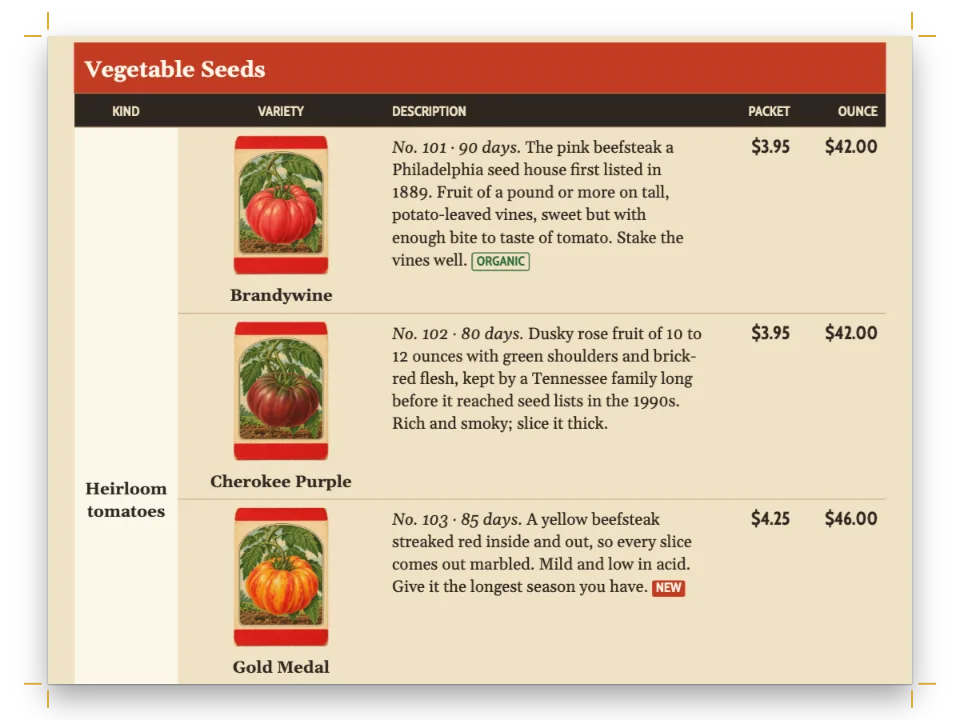
// ═══ Postext Cookbook · Nº 034 · Catalogue entries facing their plates ══════════════ // https://postext.dev/en/cookbook/catalogue-facing-plates // Code: MIT · Text: original (CC BY 4.0), Ormsby 1885 (PD) · Plates: Doré and Pisan, 1863 (PD) // Fonts: Ibarra Real Nova, Libre Bodoni, Sofia Sans Condensed (SIL OFL 1.1) · Needs postext ≥ 1.4.1 import { buildDocument, renderPageToCanvas, clearMeasurementCache, registerResourceImage } from 'https://esm.sh/postext'; const LANG = 'en'; // @lang: the language of the sample document ('en') const RECIPE = 'catalogue-facing-plates'; // ─── 1 · Design ───────────────────────────────────────────────────────────── const palette = { ink: '#1b1918', paper: '#faf7f1', night: '#2a2724', // text; the page and plates; the cover sepia: '#8a6a45', gilt: '#c9ad86', // the accent on paper (4.6:1) and on the night (6.9:1) rule: '#cfc6b8', muted: '#6c665e', // hairlines; tombstones, credit lines, folios }; // A linked colour carries its hex too: postext 1.4.1 reads the hex, not the palette, in design // slots and referenceColor (gotcha: palette-skips-designs). const col = (id) => ({ hex: palette[id], model: 'hex', paletteId: id }); const colorPalette = [ ...Object.entries(palette).map(([id, hex]) => ({ id, name: id, value: { hex, model: 'hex' } })), // The engine's defaults link to 'main-color': point it at the accent, so nothing prints blue. { id: 'main-color', name: 'sepia (defaults)', value: { hex: palette.sepia, model: 'hex' } }, ]; const [TEXT, DISPLAY, LABEL] = ['Ibarra Real Nova', 'Libre Bodoni', 'Sofia Sans Condensed']; const PT = 25.4 / 72; // mm per point const [SIZE, LEAD, LINES] = [11.5, 16, 41]; // body pt, leading pt; 41 lines make the text block const TRIM = { w: 230, h: 280 }; // mm: a catalogue trim const [TOP, INNER, OUTER] = [24, 20, 18]; // margins, mm const BLOCK_W = TRIM.w - INNER - OUTER; // 192 mm: the text block, and the widest plate const BLOCK_H = LINES * LEAD * PT; // 231.4 mm const [SIDE_PC, GUTTER] = [34, 7]; // the outer column: 65.3 mm for numeral and tombstone; mm const SIDE = (BLOCK_W * SIDE_PC) / 100; const MAIN_X = SIDE + GUTTER; // mm from the block's outer edge to the text column const MAIN = BLOCK_W - MAIN_X; // 119.7 mm: the measure, about 71 characters // #region answer: a Plate type that floats to the head of the facing recto, sized to fill it // Each entry breaks to a verso and cites its plate in the commentary's first sentence; a 'top' // float never lands on its citing page (gotcha: top-float-next-page), so it opens the recto. const entryLevel = () => ({ level: 1, span: 'page', numberingTemplate: '{1}', // {number} in the opener: Cat. 1, 2, 3 // Restated: any headings object drops the H1 break (gotcha: headings-drop-h1-break). breakBefore: { enabled: true, parity: 'even' }, marginBottom: pt(LEAD), advancedDesign: entryOpener(), }); const plateType = { id: 'plate', name: 'Cat.', shortLabel: 'Cat.', captionPrefix: 'Cat.', // 'Cat. 1. …' numberingTemplate: '{n}', resetOn: 'never', counterFormat: 'decimal', defaultPlacement: { position: 'top', span: 'page', align: 'center' }, }; // Under the plate (pt): a caption and a credit line at the body's leading ratio, and their gaps. const CAPTION = { size: 8.5, gap: 6, note: 7.2, noteGap: 1.5 }; const UNDER = (CAPTION.size + CAPTION.note) * (LEAD / SIZE) + CAPTION.gap + CAPTION.noteGap; const PLATE_H = (LINES * LEAD - UNDER) * PT; // 221.1 mm: the rest of the text block // A float is not shrunk to fit the room left on its page (gap: float-shrink); fitFiguresToPage // sets the smaller picture flush left. A width fraction narrows the float, and 'center' centres it. const plate = ({ id, file, caption, altText }, [pxW, pxH]) => ({ id, typeId: 'plate', kind: 'bitmap', caption, note: CREDIT, altText, // The print master's pixels, about 275 dpi at this size (gotcha: bitmap-print-size). bitmap: { fileId: file, format: 'jpeg', width: pxW, height: pxH }, placement: { width: Math.min(1, ((pxW / pxH) * PLATE_H) / BLOCK_W) }, createdAt: 0, updatedAt: 0, }); // #endregion const MASTER_PX = { library: [1900, 2400], vigil: [1921, 2400], windmills: [1923, 2400] }; const CREDIT = 'Public domain; scan from Wikimedia Commons.'; // the artists are in the tombstone // A picture drawn only in a design slot or a table cell: registered, never cited or numbered. function picture(id, image, altText) { registerResourceImage(`${id}.jpg`, image); return { id, typeId: 'plate', kind: 'bitmap', altText, createdAt: 0, updatedAt: 0, bitmap: { fileId: `${id}.jpg`, format: 'jpeg', width: image.width, height: image.height } }; } // Design-slot shorthands; text wraps instead of ending in '…' (gotcha: overflow-ellipsis-default). const at = (to, edge, x, y, width) => ({ anchor: { to, edge }, offset: { x: mm(x), y: mm(y) }, ...(width !== undefined && { size: { width: width === 'fill' ? 'fill' : mm(width) } }) }); const text = (id, content, fontFamily, size, color, placement, more = {}) => ({ kind: 'text', id, content, fontFamily, fontSize: pt(size), color: col(color), align: 'left', overflow: 'wrap', placement, ...more }); const caps = (size) => ({ fontWeight: 600, textTransform: 'uppercase', letterSpacing: pt(size * 0.2) }); // #region opener: the entry's head, a numeral and tombstone beside the title and the lead const [KICKER, NUMERAL] = [8.5, { size: 80, y: 7 }]; // pt: labels; the numeral, y in mm const TITLE = { size: 30, lineHeight: 1.08 }; // pt (gotcha: design-lineheight-multiple) const HEAD_RULE = NUMERAL.y + NUMERAL.size * PT + 3; // mm: the hairline under the numeral const LEAD_Y = HEAD_RULE + 5; // mm: the lead paragraph, with the tombstone beside it const [LEADIN, TOMB] = [{ size: 13.5, lead: 19 }, { size: 8.5, lead: 12.5 }]; // pt const LEAD_LINES = 5; // the longest lead: shorter ones keep the commentary on the same line const BASE = 0.8; // 1.4.1 sets a design text's first baseline 0.8 down its line box // em: cap heights, and Libre Bodoni's figures, which stop short of its capitals ('1': 0.716) const [CAP_HEIGHT, FIGURE_HEIGHT] = [{ [TEXT]: 0.673, [DISPLAY]: 0.754 }, 0.716]; const inkTop = (size, lineHeight, height) => (BASE * lineHeight - height) * size; // pt to the ink // The title's capitals level with the numeral's figures: 1.2 mm below the numeral's top. const TITLE_Y = NUMERAL.y + (inkTop(NUMERAL.size, 1, FIGURE_HEIGHT) - inkTop(TITLE.size, TITLE.lineHeight, CAP_HEIGHT[DISPLAY])) * PT; // The initial's top on the first line's capitals, its foot on the third baseline. const dropSize = (lines) => pt(((lines - 1) * LEADIN.lead + CAP_HEIGHT[TEXT] * LEADIN.size) / CAP_HEIGHT[DISPLAY]); // Entries open on versos, whose outer column is on the left: the side column is at x = 0. const head = (label, numeral) => [ text('label', label, LABEL, KICKER, 'sepia', at('container', 'top-left', 0, 0), caps(KICKER)), text('numeral', numeral, DISPLAY, NUMERAL.size, 'sepia', at('container', 'top-left', 0, NUMERAL.y, SIDE), { lineHeight: 1 }), text('title', '{titleText}', DISPLAY, TITLE.size, 'ink', at('container', 'top-left', MAIN_X, TITLE_Y, MAIN), { italic: true, lineHeight: TITLE.lineHeight }), { kind: 'rule', id: 'head-rule', direction: 'horizontal', thickness: pt(0.5), color: col('rule'), placement: at('container', 'top-left', 0, HEAD_RULE, 'fill') }, ]; const entryOpener = () => ({ enabled: true, minHeight: mm(LEAD_Y + LEAD_LINES * LEADIN.lead * PT), slot: { elements: [...head('Cat.', '{number}'), text('chapter', '{attr.chapter}', LABEL, KICKER, 'sepia', at('container', 'top-left', MAIN_X, 0, MAIN), caps(KICKER)), // Baseline on the lead's; \n breaks only with a paragraphIndent (gotcha: design-text-newline). text('tombstone', '{attr.tombstone}', LABEL, TOMB.size, 'muted', at('container', 'top-left', 0, LEAD_Y + BASE * (LEADIN.lead - TOMB.lead) * PT, SIDE - 6), { lineHeight: TOMB.lead / TOMB.size, paragraphIndent: pt(0.01) }), // Drop caps exist only in design text, so the lead is an attribute (gotcha: design-text-ragged). text('lead', '{attr.lead}', TEXT, LEADIN.size, 'ink', at('container', 'top-left', MAIN_X, LEAD_Y, MAIN), { lineHeight: LEADIN.lead / LEADIN.size, dropCap: { lines: 3, fontFamily: DISPLAY, fontSize: dropSize(3), color: col('sepia'), gap: mm(1.6) } }), ] } }); // #endregion // #region cover: a heading style on warm black, a framed detail of Cat. 3 and the name const DETAIL = 'windmills-detail-540.jpg'; // a square cut from Cat. 3, at its size on screen const FRAME = { w: 124, y: 40, pad: 3.5 }; // mm: the picture, its top, the hairline's inset const FRAME_X = (TRIM.w - FRAME.w) / 2; const NAME = { size: 88, track: 8, y: 176 }; // pt, pt, mm const centred = (id, content, family, size, color, y, more, x = 0) => text(id, content, family, size, color, at('page', 'top', x, y, 'fill'), { align: 'center', ...more }); const coverStyle = () => ({ id: 'cover', numbered: false, header: { elements: [] }, footer: { elements: [] }, advancedDesign: { enabled: true, slot: { elements: [ // painted in this order { kind: 'box', id: 'night', style: { backgroundColor: col('night') }, placement: { ...at('bleed', 'top-left', 0, 0), size: { width: 'fill', height: 'fill' } } }, { kind: 'box', id: 'frame', style: { borderColor: col('gilt'), borderWidth: pt(0.5) }, placement: { ...at('page', 'top-left', FRAME_X - FRAME.pad, FRAME.y - FRAME.pad), size: { width: mm(FRAME.w + 2 * FRAME.pad), height: mm(FRAME.w + 2 * FRAME.pad) } } }, { kind: 'image', id: 'detail', resourceId: 'cover-detail', placement: at('page', 'top-left', FRAME_X, FRAME.y, FRAME.w) }, centred('kicker', '{attr.kicker}', LABEL, 8.5, 'gilt', 18, caps(8.5)), // 1.4.1 counts the tracking after the last letter as well, so the word moves right by half. centred('name', '{titleText}', DISPLAY, NAME.size, 'paper', NAME.y, { lineHeight: 1, textTransform: 'uppercase', letterSpacing: pt(NAME.track) }, (NAME.track / 2) * PT), centred('subtitle', '{attr.subtitle}', DISPLAY, 18, 'paper', NAME.y + NAME.size * PT + 4, { italic: true }), centred('foot', '{attr.foot}', LABEL, 8.5, 'gilt', 250, caps(8.5)), ] } }, }); // #endregion // #region checklist: a table of the works with a thumbnail in each first cell const THUMB_PX = 300; // px wide: 25 mm at 300 dpi, about the width the cell prints it // The entries' head, label and numeral from attributes; the level gives span, break and margin. const checklistStyle = () => ({ id: 'checklist', numbered: false, advancedDesign: { enabled: true, slot: { elements: head('{attr.kicker}', '{attr.range}') } } }); const cell = (content, more) => ({ content, verticalAlign: 'middle', ...more }); const checklist = (plates) => ({ id: 'checklist', typeId: 'list', kind: 'table', placement: { position: 'here' }, altText: 'Checklist of the three works with thumbnails, titles, chapters and pages.', table: { model: { headerRowCount: 1, columnWidths: [26, 9, 70, 11], rows: [ ['', 'Cat.', 'Work and chapter', 'Page'].map((label, i) => cell(label, { isHeader: true, align: i === 3 ? 'right' : 'left' })), ...plates.map((p, i) => [ { content: '', image: { resourceId: `${p.id}-thumb` } }, cell(String(i + 1)), cell(`*${p.caption}*. ${p.illustrates}`), cell(String(platePage(i + 1)), { align: 'right' }), ]), ] } }, createdAt: 0, updatedAt: 0, }); // The cover is page 1 and entry n opens page 2n, so its plate prints on page 2n + 1. const platePage = (n) => 2 * n + 1; const listType = { id: 'list', name: 'List', shortLabel: 'List', captionPrefix: '', // no caption numberingTemplate: '{n}', resetOn: 'never', counterFormat: 'decimal' }; // #endregion const foot = (id, content, parity, edge, x, more) => text(id, content, LABEL, 7.5, 'muted', at('page', edge, x, TRIM.h - 15), { ...caps(7.5), parity, ...more }); const footer = { elements: [ // folios at the outer foot; entries (versos) add the title foot('verso-folio', '{pageNumber}', 'even', 'top-left', OUTER, { color: col('ink') }), foot('verso-title', '{title}', 'even', 'top-left', OUTER + 9), foot('recto-folio', '{pageNumber}', 'odd', 'top-right', -OUTER, { color: col('ink'), align: 'right' }), ] }; const config = () => ({ // a factory: the engine caches resolved configs per object colorPalette, resourceTypes: [plateType, listType], // A bitmap is never set wider than its declared pixels at this dpi: at 150 dpi a 1,900-px // scan may reach 322 mm, so the width fraction decides (at 300 dpi it stops at 161 mm). page: { width: mm(TRIM.w), height: mm(TRIM.h), dpi: 150, backgroundColor: col('paper'), margins: { top: mm(TOP), bottom: mm(TRIM.h - TOP - BLOCK_H), left: mm(INNER), right: mm(OUTER), mirror: true } }, // Body text never enters the outer column: the openers draw in it and the plates span it. layout: { layoutType: 'oneAndHalf', sideColumnPercent: SIDE_PC, sideColumnRole: 'floats', sideColumnSide: 'outer', gutterWidth: mm(GUTTER) }, bodyText: { fontFamily: TEXT, fontSize: pt(SIZE), lineHeight: pt(LEAD), color: col('ink'), boldColor: col('ink'), italicColor: col('ink'), referenceColor: col('sepia'), referenceBold: false, // 'Cat. 1' in the accent, regular weight firstLineIndent: mm(4.5), indentAfterHeading: false, minWordSpacing: 0.8, maxWordSpacing: 1.5, maxRuntTracking: 0, // gotcha: runt-tracking-unpainted }, headings: { fontFamily: DISPLAY, fontWeight: 400, color: col('ink'), levels: [entryLevel()] }, headingStyles: [coverStyle(), checklistStyle()], captionStyle: { fontFamily: LABEL, fontSize: pt(CAPTION.size), gap: pt(CAPTION.gap), labelColor: col('sepia'), // the label is bold by default note: { fontSize: pt(CAPTION.note), gap: pt(CAPTION.noteGap), color: col('muted') } }, tableStyle: { rules: 'horizontal', borderColor: col('rule'), borderWidth: pt(0.5), cellPadding: mm(1.8), headerBackground: col('ink'), headerColor: col('paper'), headerFontFamily: LABEL, headerFontSize: pt(8), bodyFontFamily: TEXT, bodyFontSize: pt(9.5) }, paragraphStyles: [{ id: 'colophon', fontFamily: LABEL, fontSize: pt(7.5), lineHeight: pt(11), color: col('muted'), textAlign: 'left', firstLineIndent: pt(0), marginTop: pt(LEAD) }], header: { elements: [] }, footer, }); // ─── 2 · Content ──────────────────────────────────────────────────────────── const markdown = String.raw`---Mostra en Markdown · 43 línies · content.en.md
title: "Doré: Three Plates for Don Quixote" author: "The Print Room" --- # Doré {style="cover" kicker="The Print Room · A cabinet exhibition" subtitle="Three plates for Don Quixote, 1863" foot="Wood engravings by Héliodore Pisan after Gustave Doré"} # Don Quixote \\ in His Library {chapter="Part I · Chapter I" tombstone="Wood engraving\nHéliodore Pisan after Gustave Doré\nParis: L. Hachette et Cie, 1863, vol. I" lead="Doré opens the book with its hero wide awake. Seated upright in a carved chair, the hidalgo holds up a sword in his right hand and a book in his left, while everything he has read comes loose from the page and fills the room around him."} The plate (:ref{id="library"}, opposite) sets out the sentence in which the hidalgo loses his wits. In John Ormsby’s translation his fancy grew full of ‘enchantments, quarrels, battles, challenges, wounds, wooings, loves, agonies, and all sorts of impossible nonsense’, and Doré draws the list almost item by item. Knights ride out from behind the chair, a dragon uncoils above a shield of arms, a knight no taller than a folio stands on a book beside a giant’s severed head, and a lady in chains kneels at the fore-edge of a volume lettered AMADIS. Cervantes says the hidalgo ‘sold many an acre of tillageland to buy books of chivalry to read’, and Doré scatters them about the room: open on the table under the window, fallen open at his feet, and one propped on its edge at the lower left, beside the giant’s head. Daylight comes in at the window on the left and falls on his face and on the open page. The figures crowding the rest of the room have come out of the books, down to the two knights no taller than a hand who joust on the backs of mice among the flagstones. Doré gives these phantoms the same firm outline as the man who imagines them. In wood engraving whatever the tool cuts away prints white, so Pisan had to turn each of Doré’s greys into a pattern of strokes: close parallel cuts for the heavy curtain, finer and more open ones for the light on the wall, broken curls for the smoke of figures behind the chair. Both men signed the block, Doré in script at the lower left and Pisan in capitals at the lower right. # The Vigil \\ of Arms {chapter="Part I · Chapter III" tombstone="Wood engraving\nHéliodore Pisan after Gustave Doré\nParis: L. Hachette et Cie, 1863, vol. I" lead="The innkeeper has no chapel, so Don Quixote keeps his vigil of arms in the yard. Doré makes the scene a nocturne: the armour stands on the well-head, and the bareheaded knight lifts his lance towards a full moon breaking through cloud."} The plate (:ref{id="vigil"}, opposite) follows the text closely. The innkeeper has told his guest that armour may be watched anywhere, so Don Quixote lays his on a trough beside the well and paces up and down in front of it. In Ormsby’s translation the night closes in ‘with a light from the moon so brilliant that it might vie with his that lent it’. Doré stands the armour upright on the well-head, helmet and breastplate and gauntlets, so that it reads as a second knight facing the thin man in his shirt who will wear it. On the right the inn is a dark mass with an outside stair, and a figure watches from its landing: in the novel the guests ‘flocked to see it from a distance’. Water lies in the ruts of the yard and catches the light, and the knight’s shadow runs across it towards the viewer. Cervantes plays the vigil as farce. Two carriers come in turn to water their mules, each goes to move the armour off the trough, and each is laid out with the lance; the landlord then hurries the dubbing through before anyone else is hurt. Doré leaves all of that out and keeps the hour before it, when the knight is alone with his arms and the moon. In this sky Pisan widens his level cuts as they near the moon, until the black left between them thins to hairlines around the halo. Short flicks pick out the edges of the clouds. A dark bar of cloud crosses the disc on the left, and a few faint strokes shade the moon’s face. # The Adventure \\ of the Windmills {chapter="Part I · Chapter VIII" tombstone="Wood engraving\nHéliodore Pisan after Gustave Doré\nParis: L. Hachette et Cie, 1863, vol. I" lead="Doré passes over the charge and draws the moment after it. The turning sail has caught the lance and lifted horse and rider clear of the plain, and Rocinante’s legs thrash at the empty air below them."} The plate (:ref{id="windmills"}, opposite) illustrates the sentence in which the charge ends. As the knight drove his lance into the sail, in Ormsby’s words, ‘the wind whirled it round with such force that it shivered the lance to pieces, sweeping with it horse and rider, who went rolling over on the plain’. Doré stops before the fall. The broken lance is still caught in the canvas, and the knight hangs tangled against the sail with his shield flung out beside him. The composition is built on one diagonal. The sail runs from the top left corner towards the centre, the horse hangs from it, and the line carries on down the slope to the thistles in the foreground. Against it Doré sets the level plain of La Mancha, where Cervantes counts ‘thirty or forty windmills’ and the plate lines up a row of them along the horizon, turning in the same wind. Sancho, hatless, throws up one arm and clutches his head with the other; his hat lies on the ground and his ass waits behind him. He had warned his master, in Ormsby’s version, that ‘what we see there are not giants but windmills, and what seem to be their arms are the sails that turned by the wind make the millstone go’. Pisan cuts the sky in long even lines and the patched canvas of the sail in torn, crossing strokes. The mills on the horizon are drawn with a few lines each. # Works in \\ the Exhibition {style="checklist" kicker="Checklist" range="1–3"} All three plates come from the first volume of *L’Ingénieux Hidalgo Don Quichotte de la Manche*, in the French translation by Louis Viardot, published in two folio volumes by L. Hachette et Cie, Paris, in 1863 with 377 compositions by Gustave Doré, 120 of them full-page. Héliodore Pisan engraved the three plates on wood, and both men signed them in the block. Quotations are from John Ormsby’s English translation of 1885. ::resource{id="checklist"} :::paragraphs{style="colophon"} Set in Ibarra Real Nova, Libre Bodoni and Sofia Sans Condensed (SIL Open Font License). Commentary written for this catalogue under a CC BY 4.0 licence. The plates are in the public domain and reproduced from scans on Wikimedia Commons; the cover shows a detail of Cat. 3. Ormsby’s translation is Project Gutenberg eBook #996. :::`; // content.<lang>.md, inlined by the Cookbook // id, scan file, caption, the chapter it illustrates and alt text: one block per plate. const plateTexts = String.raw`libraryMostra en Markdown · 16 línies · content.plates.en.md
library-835.jpg Don Quixote in His Library Part I, ch. I: ‘which treats of the character and pursuits of the famous gentleman Don Quixote of La Mancha’ Don Quixote sits upright in a carved chair, a book in his left hand and a sword raised in his right, surrounded by the figures of his reading: knights on horseback, a dragon, a giant’s severed head, a lady in chains and two tiny knights jousting on mice. vigil vigil-835.jpg The Vigil of Arms Part I, ch. III: ‘wherein is related the droll way in which Don Quixote had himself dubbed a knight’ A moonlit inn yard. Don Quixote, bareheaded and holding a lance and a buckler, looks up at the moon; his armour stands propped on the well-head facing him, and a figure watches from the inn’s outside stair. windmills windmills-835.jpg The Adventure of the Windmills Part I, ch. VIII: ‘the terrible and undreamt-of adventure of the windmills’ A windmill’s sail sweeps Don Quixote and Rocinante off the ground, the knight tangled against the canvas and his buckler flung out; a row of mills stands on the horizon and Sancho, hatless, throws up one arm and clutches his head beside his ass.`; const FIELDS = ['id', 'file', 'caption', 'illustrates', 'altText']; const PLATES = plateTexts.trim().split(/\n\s*\n/).map((block) => Object.fromEntries(block.split('\n').map((line, i) => [FIELDS[i], line.trim()]))); // #region art: the engravings printed on the page's paper // Multiplying by the paper colour turns the scan's white into the page's cream. function onPaper(source) { const canvas = new OffscreenCanvas(source.width, source.height); const ctx = canvas.getContext('2d'); ctx.drawImage(source, 0, 0); ctx.globalCompositeOperation = 'multiply'; ctx.fillStyle = palette.paper; ctx.fillRect(0, 0, source.width, source.height); return canvas.transferToImageBitmap(); } const resized = (scan, width) => createImageBitmap(scan, { resizeWidth: width, resizeQuality: 'high' }); // #endregion // #region scans: the plates, their thumbnails and the cover's detail, fetched from assets/ // plate() sizes each plate from its master, the Commons scan at 2,400 px tall (MASTER_PX); // the canvas draws the registered 835-px copy (the block's width on a 1,000-px page) in that box. async function scan(file) { const res = await fetch(asset(file)); if (!res.ok) throw new Error(`Scan not found (${res.status}): ${file}`); return createImageBitmap(await res.blob()); } async function loadPlates() { const [detail, ...scans] = await Promise.all([DETAIL, ...PLATES.map((p) => p.file)].map(scan)); const resources = [checklist(PLATES), picture('cover-detail', onPaper(detail), 'Detail of Cat. 3: the knight and his horse caught on the sail.')]; for (const [i, p] of PLATES.entries()) { registerResourceImage(p.file, onPaper(scans[i])); resources.push(plate(p, MASTER_PX[p.id]), // and a thumbnail: its own small file and size picture(`${p.id}-thumb`, onPaper(await resized(scans[i], THUMB_PX)), p.altText)); } return resources; } // #endregion // ─── 3 · Fonts ────────────────────────────────────────────────────────────── const FONTS = { // every face the pages use, loaded before the build (gotcha: fonts-first) 'Ibarra Real Nova': ['400', '400i'], // text, the lead, the checklist 'Libre Bodoni': ['400', '400i'], // numerals, titles, drop caps, the cover 'Sofia Sans Condensed': ['400', '600', '700'], // labels, tombstones, captions, folios }; // ─── 4 · Build & show ─────────────────────────────────────────────────────── const words = `${markdown}\n${plateTexts}\n${CREDIT}`; // their letters decide the font subsets const [, resources] = await Promise.all([loadFonts(FONTS, words), loadPlates()]); const doc = await buildWithFonts(() => buildDocument({ markdown, resources }, config()), words); // #region check: every page past an opener holds a plate, so each plate faces its entry const astray = doc.pages.find((pg) => pg.role !== 'opener' && !pg.floats?.length); if (astray) { // text run past its verso, or the blank page that follows it const error = new Error(`Page ${astray.pageLabel} holds no plate: shorten the entry before it.`); kitFail(error); // the viewer's bar says why throw error; } // #endregion showPages(doc, { title: t({ en: 'Catalogue entries facing their plates' }) });Kit · core, fonts, viewer: igual a totes les receptes · 235 línies
// ─── Kit ── helpers shared by every Cookbook recipe · postext.dev/cookbook ───── // ─── Kit · core v1 ── the same in every recipe · postext.dev/cookbook ───────── function mm(value) { return { value, unit: 'mm' }; } function pt(value) { return { value, unit: 'pt' }; } function em(value) { return { value, unit: 'em' }; } /** The sample language's string: t({ en: 'Figure', es: 'Figura' }). */ function t(strings) { return strings[LANG] ?? Object.values(strings)[0]; } /** A file in this recipe's assets folder, served from the Postext repo by jsDelivr. */ function asset(file) { return `https://cdn.jsdelivr.net/gh/drnachio/postext@main/cookbook/${RECIPE}/assets/${file}`; } // ─── Kit · fonts v1 ── the same in every recipe · postext.dev/cookbook ──────── // Postext measures text with the faces the browser has loaded, and caches the // widths, so every face must be ready before the first build. Faces come from // Fontsource: the same static files the PDF embeds, so screen and PDF agree. /** faces = { 'Family Name': ['400', '400i', '700'] }. `text` is the sample: * letters beyond Latin-1 (č, ł, ő…) also load the latin-ext files. With * `optional`, a face Fontsource does not ship is skipped instead of failing. * Resolves to the number of faces added. */ async function loadFonts(faces, text = '', { optional = false } = {}) { kitStatus('Loading fonts…'); const ranges = { latin: 'U+0000-00FF,U+0131,U+0152-0153,U+02BB-02BC,U+02C6,U+02DA,U+02DC,U+0304,U+0308,U+0329,' + 'U+2000-206F,U+20AC,U+2122,U+2191,U+2193,U+2212,U+2215,U+FEFF,U+FFFD', 'latin-ext': 'U+0100-02BA,U+02BD-02C5,U+02C7-02CC,U+02CE-02D7,U+02DD-02FF,U+0304,U+0308,U+0329,' + 'U+1D00-1DBF,U+1E00-1E9F,U+1EF2-1EFF,U+2020,U+20A0-20AB,U+20AD-20C0,U+2113,U+2C60-2C7F,U+A720-A7FF', }; const subsets = /[Ā-˿Ḁ-ỿ]/.test(text) ? ['latin', 'latin-ext'] : ['latin']; const jobs = []; let added = 0; for (const [family, specs] of Object.entries(faces)) { const id = fontsourceId(family); const meta = optional ? await fontsourceMeta(family) : null; for (const spec of new Set(specs)) { const weight = parseInt(spec, 10); const style = spec.endsWith('i') ? 'italic' : 'normal'; if (hasFace(family, weight, style)) continue; if (optional && !(meta?.weights.includes(weight) && meta.styles.includes(style))) continue; for (const subset of subsets) { const url = `https://cdn.jsdelivr.net/npm/@fontsource/${id}@5/files/${id}-${subset}-${weight}-${style}.woff2`; const face = new FontFace(family, `url(${url}) format('woff2')`, { weight: String(weight), style, unicodeRange: ranges[subset] }); jobs.push(face.load().then((ready) => { document.fonts.add(ready); added++; }, () => { if (subset === 'latin' && !optional) throw new Error(`Fontsource has no ${family} ${weight} ${style}`); })); } } } await Promise.all(jobs).catch((error) => { kitFail(error); throw error; }); return added; } /** Runs `build` (a buildDocument or buildBundle call) and checks the faces * the pages use. A regular face missing from FONTS is loaded with a warning; * bold and italic variants are loaded when the family ships them. Then the * measurement caches are cleared and the build runs again. */ async function buildWithFonts(build, text = '') { const tried = new Set(); for (let round = 0; round < 3; round++) { kitStatus('Laying out…'); await new Promise(requestAnimationFrame); // let the status paint first const result = await Promise.resolve().then(build).catch((error) => { kitFail(error); throw error; }); const wanted = { base: {}, variants: {} }; for (const { font, base } of [result].flat().flatMap(fontStringsOf)) { const { family, weight, style } = parseFont(font); const key = `${family}|${weight}|${style}`; if (tried.has(key) || hasFace(family, weight, style)) continue; tried.add(key); (wanted[base ? 'base' : 'variants'][family] ??= []).push(`${weight}${style === 'italic' ? 'i' : ''}`); } if (Object.keys(wanted.base).length) { console.warn(`[cookbook] FONTS does not list ${JSON.stringify(wanted.base)}: loading them.`); } const added = await loadFonts(wanted.base, text) + await loadFonts(wanted.variants, text, { optional: true }); if (added === 0) return result; clearMeasurementCache(); } throw new Error('The fonts did not settle after three builds.'); } /** Every font string of the layout. `base` marks a block's own face; its * bold, italic and bold-italic variants are listed whether or not used. */ function fontStringsOf(doc) { const found = new Map(); const walk = (node) => { if (!node || typeof node !== 'object') return; if (Array.isArray(node)) { node.forEach(walk); return; } for (const [key, value] of Object.entries(node)) { if (typeof value === 'string' && /fontString$/i.test(key)) { found.set(value, found.get(value) || key === 'fontString'); } else if (value && typeof value === 'object') walk(value); } }; walk(doc.pages); walk(doc.blocks); return [...found].map(([font, base]) => ({ font, base })); } /** '700 37.5px Open Sans' / 'italic 400 13px "Source Serif 4"' → { family, weight, style }. * A string with no weight ('95.8px Young Serif', from a design text) is 400. */ function parseFont(font) { const m = /^(?:(italic|oblique)\s+)?(?:small-caps\s+)?(?:(\d+|bold|normal)\s+)?[\d.]+px\s+(.+)$/.exec(font.trim()); if (!m) throw new Error(`Unexpected font string: ${font}`); const weight = m[2] === 'bold' ? 700 : !m[2] || m[2] === 'normal' ? 400 : Number(m[2]); return { family: m[3].replace(/^["']|["']$/g, ''), weight, style: m[1] ? 'italic' : 'normal' }; } /** True when a loaded FontFace covers exactly this family, weight and style * (document.fonts.check() is also true for families nobody declared). */ function hasFace(family, weight, style) { for (const face of document.fonts) { if (face.status !== 'loaded' || face.style !== style) continue; if (face.family.replace(/^["']|["']$/g, '') !== family) continue; const [low, high = low] = face.weight.split(' ').map(Number); if (weight >= low && weight <= high) return true; } return false; } /** Fontsource's id for a family: 'Source Serif 4' → 'source-serif-4'. */ function fontsourceId(family) { return family.toLowerCase().replace(/\s+/g, '-'); } /** The weights and styles a family ships ({ weights: [400, 700], styles: ['normal', 'italic'] }), or null. */ function fontsourceMeta(family) { fontsourceMeta.cache ??= new Map(); const id = fontsourceId(family); if (!fontsourceMeta.cache.has(id)) { fontsourceMeta.cache.set(id, fetch(`https://api.fontsource.org/v1/fonts/${id}`) .then((res) => (res.ok ? res.json() : null), () => null)); } return fontsourceMeta.cache.get(id); } // ─── Kit · viewer v1 ── the same in every recipe · postext.dev/cookbook ─────── /** Shows the pages as facing spreads on a dark desk: the first page is a * recto on its own, then verso | recto pairs, as in a bound book. Pages * are painted when they scroll near the screen. */ function showPages(docs, { title, width = 460 } = {}) { const root = viewer(title); const pages = [docs].flat().flatMap((doc) => doc.pages.map((page) => ({ doc, page, n: (doc.pageIndexOffset ?? 0) + page.index }))); const spreads = []; let verso = null; for (const p of pages) { if (p.n % 2 === 1) { if (verso) spreads.push([verso, null]); verso = p; } else { spreads.push([verso, p]); verso = null; } } if (verso) spreads.push([verso, null]); const density = Math.min(window.devicePixelRatio || 1, 2); showPages.painter?.disconnect(); const painter = new IntersectionObserver((entries) => { for (const { isIntersecting, target } of entries) { if (!isIntersecting) continue; painter.unobserve(target); const { doc, page } = target.postext; renderPageToCanvas(page, doc, target, { scale: (width * density) / page.width }); } }, { rootMargin: '800px' }); showPages.painter = painter; root.replaceChildren(...spreads.map((pair) => { const spread = document.createElement('div'); spread.className = 'pt-spread'; for (const p of pair) { const figure = document.createElement('figure'); if (p) { const label = p.page.pageLabel || String(p.n + 1); const canvas = document.createElement('canvas'); canvas.postext = p; canvas.style.aspectRatio = `${p.page.width} / ${p.page.height}`; canvas.setAttribute('role', 'img'); canvas.setAttribute('aria-label', `Page ${label}`); const folio = document.createElement('figcaption'); folio.textContent = label; figure.append(canvas, folio); painter.observe(canvas); } else figure.className = 'pt-blank'; spread.append(figure); } return spread; })); kitStatus(`${pages.length} ${pages.length === 1 ? 'page' : 'pages'}`); document.documentElement.dataset.postext = 'ready'; return pages.length; } /** The desk, the bar and the error reporting, created once. */ function viewer(title) { if (!document.getElementById('pt-kit')) { document.head.insertAdjacentHTML('beforeend', `<style id="pt-kit"> :root { color-scheme: dark; } body { margin: 0; background: #0e1014; color: #b9bcc4; font: 13px/1.45 system-ui, sans-serif; } #pt-bar { position: sticky; top: 0; z-index: 1; display: flex; flex-wrap: wrap; align-items: center; gap: 6px 16px; padding: 10px 16px; background: rgb(14 16 20 / .92); backdrop-filter: blur(6px); border-bottom: 1px solid #23262d; } #pt-bar strong { color: #f4f1ea; font-weight: 600; } #pt-actions { display: flex; gap: 12px; margin-left: auto; } #pt-actions a, #pt-actions button { color: #d8a21a; font: inherit; background: none; border: 0; padding: 0; cursor: pointer; } #pages { display: grid; justify-items: center; gap: 48px; padding: 32px 16px 72px; } .pt-spread { display: flex; } .pt-spread figure { margin: 0; width: min(460px, 44vw); } .pt-spread canvas { display: block; width: 100%; background: #fff; box-shadow: 0 1px 2px rgb(0 0 0 / .5), 0 22px 44px -16px rgb(0 0 0 / .8); } .pt-spread figure:first-child canvas { box-shadow: inset -14px 0 14px -14px rgb(0 0 0 / .18), 0 1px 2px rgb(0 0 0 / .5), 0 22px 44px -16px rgb(0 0 0 / .8); } .pt-spread figcaption { margin-top: 10px; text-align: center; font: 600 10px/1 system-ui, sans-serif; letter-spacing: .18em; text-transform: uppercase; color: #6c7079; } .pt-blank { visibility: hidden; } @media (max-width: 760px) { .pt-spread { flex-direction: column; gap: 32px; } .pt-spread figure { width: min(460px, 92vw); } .pt-blank { display: none; } } </style>`); document.body.insertAdjacentHTML('afterbegin', '<header id="pt-bar"><strong id="pt-title"></strong><span id="pt-status" role="status"></span><span id="pt-actions"></span></header>'); document.getElementById('pt-title').textContent = document.title || 'Postext'; addEventListener('error', (event) => kitFail(event.error ?? event.message)); addEventListener('unhandledrejection', (event) => kitFail(event.reason)); } if (title) document.getElementById('pt-title').textContent = title; return document.getElementById('pages') ?? document.body.appendChild(Object.assign(document.createElement('main'), { id: 'pages' })); } function kitStatus(text) { viewer(); document.getElementById('pt-status').textContent = text; } function kitFail(error) { document.documentElement.dataset.postext = 'error'; kitStatus(`Error: ${error?.message ?? error}`); } // ─── /Kit ───────────────────────────────────────────────────────────────────────
L'script.js compost funciona tal com és: enganxa'l com a script de mòdul en qualsevol pàgina o obre la recepta a CodePen. Carpeta de la recepta a GitHub ↗ (s'obre en una pestanya nova)
Variants
#Deixa aire sota les làmines
Amb una alçada fixa, totes les làmines fan 190 mm, centrades, amb uns 31 mm de caixa de text buida sota la línia de crèdit.
-const PLATE_H = (LINES * LEAD - UNDER) * PT; // 221.1 mm: the rest of the text block
+const PLATE_H = 190; // mm: the same height for every plate, with air below#Posa figures a la columna exterior
Per a figures i glosses que s'apilen en una columna exterior reservada a flotants, al costat del paràgraf que les cita, mira el llibre de text amb columna al marge.
Errors freqüents
Error freqüent
Un flotant 'top' no cau mai a la pàgina que el cita
Un flotant no va mai per sobre de la seva pròpia referència, així que un flotant 'top' a tota l'amplada citat a la pàgina N obre la pàgina N+1. Cita'l abans, o fes servir la posició 'auto' o 'bottom', que poden ocupar el peu de la pàgina que el cita. Col·locació de figures →
Error freqüent
Els mapes de bits es mesuren en píxels a la resolució del document: declara la mida d'impressió
Un recurs de mapa de bits pren la mida de l'amplada i l'alçada que declara, en píxels a la resolució del document, no del fitxer. Declara els píxels de la mida d'impressió (uns 300 ppp a l'amplada impresa) perquè la figura surti a la seva mida i nítida. Figures i taules com a recursos →
Error freqüent
El text de disseny no es justifica mai, així que l'entradeta d'una caplletra va en bandera
A postext 1.4.1, un element de text de disseny s'alinea a l'esquerra, al centre o a la dreta i talla paraula per paraula: no hi ha alineació justificada, i hyphenate: true només parteix una paraula que no cap en una línia sencera. Les línies d'una entradeta al costat d'una dropCap acaben, per tant, en bandera al costat del text justificat. Limita l'entradeta a les línies que acompanyen la caplletra i ajusta-les a mà: amb lines: 1 (una caplletra alçada) l'entradeta és una sola línia, que el gap de la dropCap pot deixar arran; el paràgraf continua al Markdown. Caplletres a les obertures →
Error freqüent
\n en un atribut només talla línies amb paragraphIndent > 0
En un element de text de disseny, un \n escrit al valor d'un atribut només obre una línia nova si paragraphIndent és més gran que zero o hi ha caplletra; si no, el text continua en una línia. Posa a paragraphIndent un valor mínim (0,01 pt) o fes servir un atribut per línia. Textos, filets i caixes als dissenys de pàgina →
Error freqüent
El lineHeight d'un text de disseny és un múltiple, mai una mesura
En una ranura de disseny, el lineHeight d'un element de text multiplica el seu cos (lineHeight: 1.05). A postext 1.4.1 una mesura com pt(15) no dona error: l'alçada de l'obertura surt NaN, l'espai que reserva, minHeight inclòs, es perd sense avís i el text se superposa al títol. Textos, filets i caixes als dissenys de pàgina →
Comprovació del Sandbox · bitmapTooSmall
Imatge de baixa resolució
Per què. Un mapa de bits es dibuixa més d'1,5 vegades més ample que els seus píxels, de manera que es veurà borrós en imprimir-lo.
Solució. Proporciona uns 300 ppp a la mida d'impressió i declara l'amplada i l'alçada reals del mapa de bits. Documentació →
Crèdits
- Recepta
- Ignacio Ferro
- Text
- The catalogue entries, captions, tombstones and checklist · Postext Cookbook · CC BY 4.0
- Quotations from Don Quixote in John Ormsby’s English translation (1885) · Miguel de Cervantes · John Ormsby · domini públic
- Imatges
- Cat. 1, Don Quixote in His Library (Part I, ch. I), wood engraving by Héliodore Pisan after Gustave Doré, 1863; scan from Wikimedia Commons, reduced to 835 px wide · Gustave Doré · Héliodore Pisan · domini públic
- Cat. 2, The Vigil of Arms (Part I, ch. III), wood engraving by Héliodore Pisan after Gustave Doré, 1863; scan from Wikimedia Commons, reduced to 835 px wide · Gustave Doré · Héliodore Pisan · domini públic
- Cat. 3, The Adventure of the Windmills (Part I, ch. VIII), wood engraving by Héliodore Pisan after Gustave Doré, 1863; scan from Wikimedia Commons, reduced to 835 px wide · Gustave Doré · Héliodore Pisan · domini públic
- The cover’s detail of Cat. 3: a 1,100-px square cut from the same scan and reduced to 540 px · Gustave Doré · Héliodore Pisan · domini públic
- Fonts
- Ibarra Real Nova (SIL OFL 1.1) · Libre Bodoni (SIL OFL 1.1) · Sofia Sans Condensed (SIL OFL 1.1)
- Codi
- MIT, com Postext
Editar aquest text ↗ (s'obre en una pestanya nova)Carpeta de la recepta a GitHub ↗ (s'obre en una pestanya nova)