Kurz gesagt
Zwei Erzählungen, wie japanische Gesammelte Werke sie drucken: Der Text läuft in zwei übereinanderliegenden Bändern hinunter, jede Erzählung beginnt links mit einem Titel über die ganze Höhe, die letzte Seite bleibt unausgeglichen.
Was Sie setzen
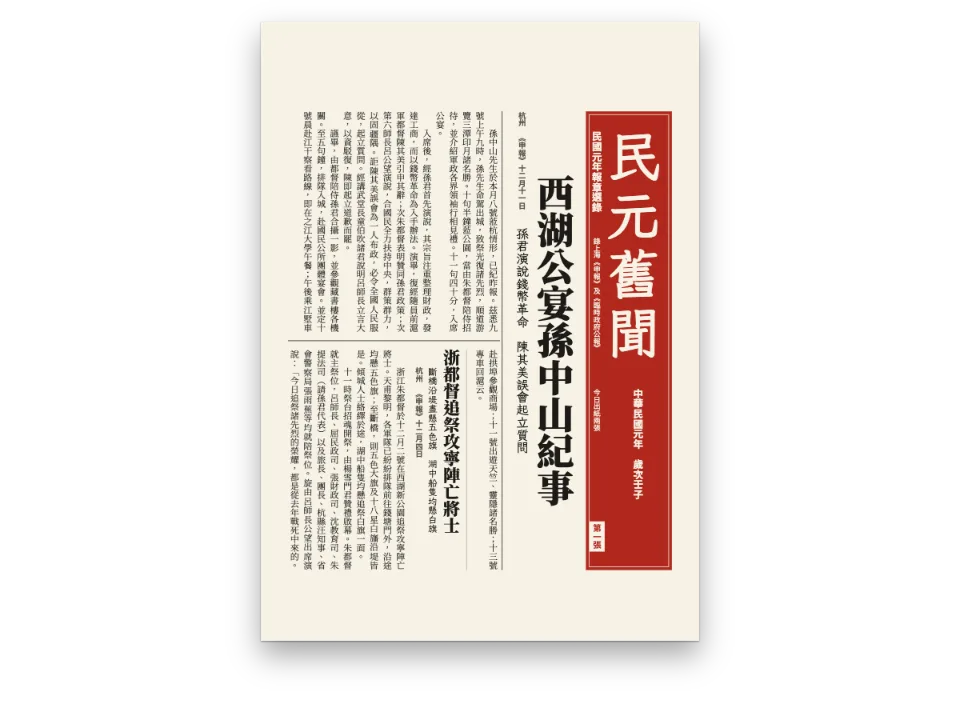
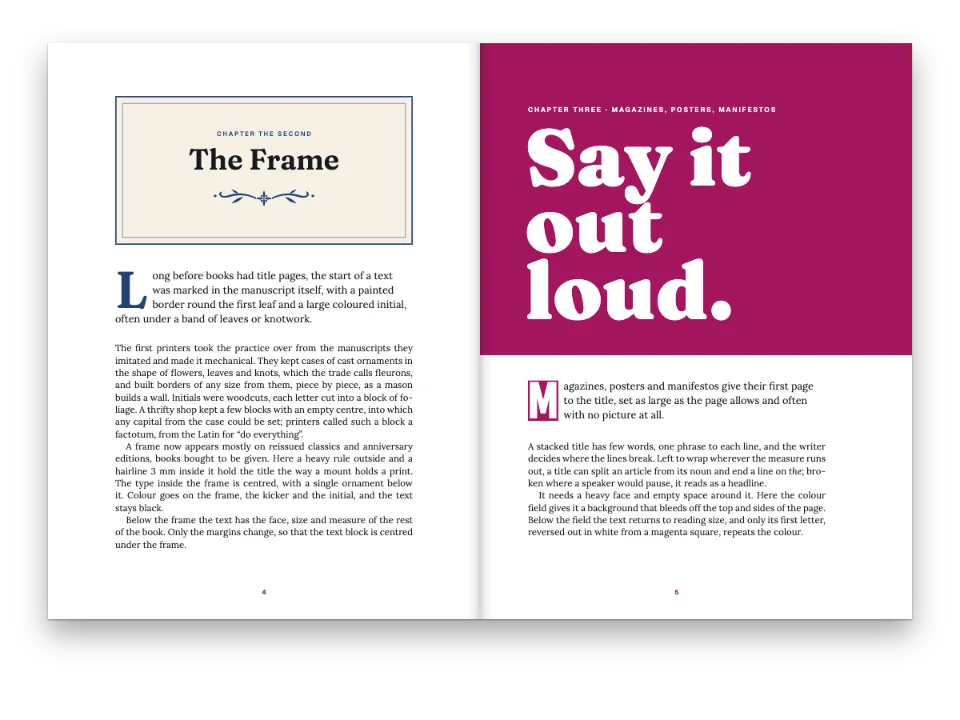
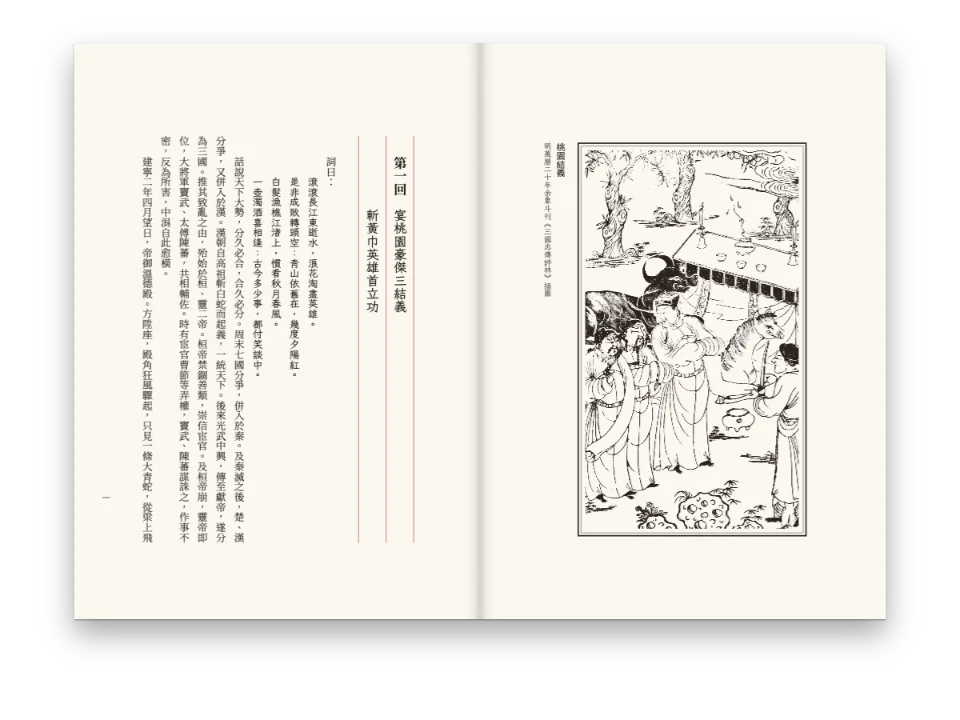
Sieben Seiten aus einem Band Gesammelter Werke (全集) auf einer rechts gebundenen A5-Seite: Akutagawa Ryūnosukes The Spider's Thread und Bisei's Faith, gesetzt in zwei Stufen (二段組) zu 25 Zeichen die Seite hinunter und 21 Zeilen quer, Noto Serif JP zu 9 pt mit einer Haarlinie zwischen den Stufen. Jede Erzählung beginnt auf einer ungeraden Seite, der linken, mit ihrem Titel zu 20 pt, der durch beide Stufen hinunterläuft, und dem Namen des Autors nahe dem Fuß; die Paginierung zählt ab Seite 211. Die Abschnitte 一 二 三 belegen drei Zeilen ihrer Stufe. Endet eine Erzählung, bleibt ihre letzte Seite so, wie der Text fällt, das japanische 成り行き (nariyuki): Auf Seite 214 endet die Erzählung in der oberen Stufe mit ihrem Datum, eine Zeile bevor die Stufe voll ist, und die untere Stufe bleibt leer. Die chinesische Zeitung in vertikalen Stufen ist Nº 084, und ein Kapiteltitel über zwei horizontale Spalten ist Nº 017.
Dieses Rezept beantwortet
- Wie setze ich einen Kapiteltitel über die ganze Seitenbreite, während der Text darunter zweispaltig läuft?
- Wie erzwinge ich einen Seiten- oder Spaltenumbruch und lasse jedes Kapitel auf einer rechten Seite beginnen?
- Wie lege ich den Satzspiegel in Zeichen fest, mit so vielen Zeichen pro Zeile und so vielen Zeilen pro Seite?
Die kurze Antwort
// On a vertical page two columns are two tiers (段), filled from the upper right: the
// gutter is the gap between them and the column rule a hairline across the page. The grid
// counts characters down one tier, so each tier is exactly 25 em long and the gutter 2 em.
const layout = {
  layoutType: 'double', writingMode: 'vertical-rl', // binding 'auto' becomes 'right'
  gutterWidth: pt(2 * BODY),
  columnRule: { enabled: true, color: col('rule'), lineWidth: pt(0.4) },
};
const cjk = { grid: { enabled: true, charsPerLine: CHARS, linesPerPage: LINES } };
// 成り行き (nariyuki): the text fills the upper tier across the whole page before the
// lower one, and a work's last page is not levelled: its lower tier ends where the text
// does. trailing: false is that choice (vertical tiers are not balanced by default either).
const balancing = { trailing: false };
// Each work opens on an odd page, the left-hand one in a book bound on the right, with a
// blank page before it when the last work ended on an odd page.
const work = { level: 1, span: 'page', breakBefore: { enabled: true, parity: 'odd' } };
// 一 二 三 take three lines of their tier (3行取り), eight characters down.
const section = { level: 2, fontSize: pt(11), fontWeight: 600, lineSpan: 3, indent: em(8) };
Zutaten
- Funktionen
- Eine oder zwei SpaltenSenkrechter TextSpaltenausgleichRechts gebundene BücherKapitel, die rechts beginnenÜberschriften über Textzeilen (Gyōdori)ZeichenrasterSpaltenlinieJapanischer Zeilenumbruch (Kinsoku)Abstände japanischer Satzzeichen (Yakumono)Furigana: Kana-Lesungen über KanjiImport aus Aozora BunkoChinesische, japanische und koreanische SchriftenKolumnentitel und SeitenzahlenKopfzeilen nach SeitenrolleÜberschriftenformateGestaltete AuftakteAbsatzformateSemantische FarbpalettePDF-Export
- Nutzt außerdem
- Chinesischer ZeilenumbruchÜberschriftenattributeKapitelband über die ganze BreitePapierfarbeIm PDF eingebettete SchriftenRömisch paginierte TiteleiRuby: Pinyin- und Zhuyin-LesungenKolumnentitel je AbschnittExpliziter vertikaler Abstand
- Schrift
- Noto Serif JP, Noto Sans JP (SIL OFL 1.1)
- Dateien
- Keine: Jedes Bild wird im Code gezeichnet
Zubereitung
#1 · Zwei um eine Vierteldrehung gedrehte Spalten sind zwei Stufen
Der Code steht oben in der kurzen Antwort. Auf einer Seite mit writingMode: 'vertical-rl' stapelt layoutType: 'double' die beiden Spalten: Die erste füllt die obere Stufe von rechts, dann die untere, und der Spaltenabstand ist das Band zwischen ihnen (Vertikale Schrift). Das Zeichenraster zählt Zeichen eine Stufe hinunter, sodass jede Stufe 25 Zeichen zu 9 pt fasst und der Spaltenabstand auf ganze zwei Zeichen gerundet wird; die 21 Zeilen zu 15,75 pt quer passen in 116,7 mm der 148 mm breiten Seite. Die Linie zwischen den Stufen läuft quer über die Seite, 0,4 pt in einem warmen Grau.
Der Spaltenausgleich von Postext würde beide Stufen auf der letzten Seite einer Erzählung auf derselben Zeile enden lassen, so wie chinesische Zeitungen und die meisten europäischen zweispaltigen Bücher ein Kapitel schließen. Ein japanisches Buch in Stufen lässt den Text fallen: Die obere Stufe läuft über die ganze Seite, bevor die untere beginnt. balancing.trailing: false ist diese Entscheidung, und vertikale Stufen werden überhaupt nicht ausgeglichen, es sei denn, enabled: true schaltet den Ausgleich ein (Spaltenausgleich).
#2 · Den Titel des Werks durch beide Stufen laufen lassen
// A page-span heading is laid out across the whole height of the page, both tiers and the
// gutter, in the flow frame: x runs down the page, y across it leftwards from the right
// edge of the type area. The design reserves seven lines (七行取り); the tiers start after it.
const at = (down, across) => ({ anchor: { to: 'container', edge: 'top-left' },
  offset: { x: pt(down), y: pt(across) } });
const TITLE = 20; // pt
const opener = { enabled: true, minHeight: lines(7), slot: { elements: [
  { kind: 'text', id: 'title', content: '{titleText}', fontFamily: MINCHO, fontWeight: 600,
    fontSize: pt(TITLE), lineHeight: 1, letterSpacing: pt(TITLE / 2), color: col('ink'),
    placement: at(5 * BODY, 2.5 * LEAD - TITLE / 2) },
  { kind: 'text', id: 'author', content: '{author}', fontFamily: MINCHO, fontSize: pt(10.5),
    letterSpacing: pt(3), color: col('ink'),
    placement: at(HEIGHT - 5 * 10.5 - 4 * 3 - 3 * BODY, 4.5 * LEAD - 10.5 / 2) },
] } };
Eine Überschriftenebene mit span: 'page' wird über die ganze Höhe der Seite gesetzt, über beide Stufen und den Spaltenabstand, am Kopf des Flusses, also rechts auf einer vertikalen Seite; die Stufen beginnen nach den sieben Zeilen, die ihre Gestaltung reserviert. Eine solche Überschrift eröffnet immer eine Seite, und breakBefore.parity: 'odd' macht daraus die linke: The Spider's Thread endet auf Seite 214, einer geraden Seite, also beginnt Bisei's Faith auf 215 ohne Vakatseite dazwischen (Seitenbreite und erweiterte Gestaltung). In der Gestaltung läuft x die Seite hinunter und y quer dazu vom rechten Rand des Satzspiegels; der Name des Autors wird vom Fuß der unteren Stufe aus platziert, drei Zeichen hoch.
#3 · Die Abschnitte in drei Zeilen ihrer Stufe nummerieren
Die zweite Ebene, lineSpan: 3 mit indent: em(8), setzt 一 二 三 acht Zeichen tief in eine Stufe, in einem Band von drei Zeilen, wie der Aozora-Text sie markiert (八字下げ, 中見出し), sodass der Text nach einer Abschnittsnummer auf den Zeilen der Stufe daneben bleibt (Überschreibungen je Ebene). Die Daten, die die Erzählungen schließen, (大正七年四月十六日), sind ein Zeichen vom Fuß ihrer Stufe abgesetzt (地から一字上げ), mit :::paragraphs{align=end endIndent=1}; der Aozora-Konverter schreibt sie als Format aozora-end1, das sie bündig an den Fuß setzt, und die Attribute des Direktivenblocks fügen den Abstand von einem Zeichen hinzu.
#4 · Band und Werk an den Außensteg stellen
// anchor 'outer' is the fore-edge: the left margin of an odd page and the right one of an
// even page in a book bound on the right. The volume's name on the right-hand page, the
// work on the left; the folios count on from the volume's page 211.
const foreEdge = (id, content, parity, edge, y, extra = {}) => ({
  kind: 'text', id, content, parity, pages: 'body', writingMode: 'vertical-rl',
  fontFamily: GOTHIC, fontSize: pt(7), letterSpacing: pt(1), color: col('muted'),
  overflow: 'clip', placement: { anchor: { to: 'outer', edge }, offset: { y: em(y) } },
  ...extra,
});
const header = { elements: [
  foreEdge('volume', '{title}', 'even', 'top', 2),
  foreEdge('work', '{chapterTitle}', 'odd', 'top', 2),
  // The folio in Arabic digits, set across the margin: down the fore-edge they would lie
  // on their side.
  foreEdge('folio', '{pageNumber}', 'all', 'bottom', -1, { pages: 'all', writingMode: undefined,
    letterSpacing: pt(0.5) }),
] };
const none = { elements: [] };
// The first work's opening page carries the colophon across the foot, in the edition's
// language (a style's footer serves every page of its section: gotcha style-header-whole-section).
const first = { id: 'first', footer: { elements: [{ kind: 'text', id: 'colophon', pages: 'opener',
  content: '{attr.colophon}', fontFamily: GOTHIC, fontSize: pt(5.5), lineHeight: 1.45,
  color: col('muted'), overflow: 'wrap', align: 'center',
  placement: { anchor: { to: 'page', edge: 'bottom' }, offset: { y: mm(-6) },
    size: { width: mm(118) } } }] } };
anchor.to: 'outer' setzt die Hashira in den Außensteg, den Namen des Bandes 芥川龍之介集 auf die rechten Seiten und den Titel des Werks auf die linken, und pages: 'body' hält beide von den Seiten fern, auf denen ein Werk beginnt (Vertikale Textelemente). Die Pagina steht quer über den Rand in arabischen Ziffern, wie viele Gesammelte Werke sie drucken: Am Außensteg hinunter lägen drei Ziffern auf der Seite. pageNumbering.startAt: 211 nummeriert die Seiten wie der Band. Das Überschriftenformat des ersten Werks trägt das Impressum mit pages: 'opener', denn die Fußzeile eines Formats dient jeder Seite seines Abschnitts.
Das ganze Rezept
// ═══ Postext Cookbook · Nº 118 · A Japanese story in two tiers, its title across both ═══ // https://postext.dev/en/cookbook/two-tier-tankobon // Code: MIT · Text: 芥川龍之介『蜘蛛の糸』『尾生の信』, Aozora Bunko 92, 24 (PD) · Pictures: none // Fonts: Noto Serif JP, Noto Sans JP (SIL OFL 1.1) · Needs postext ≥ 1.25.0 import { buildDocument, withLoadedFonts, renderPageToCanvas, loadVerticalAlternates, } from 'https://esm.sh/postext'; import { renderToPdf, decompressWoff2 } from 'https://esm.sh/postext-pdf'; const LANG = 'en'; // @lang: the language of the colophon; the stories are Japanese in both const RECIPE = 'two-tier-tankobon'; // ─── 1 · Design ───────────────────────────────────────────────────────────── // #region palette: ink, one deep indigo, a warm book paper const palette = { ink: '#1d1b19', // the text indigo: '#2f3d63', // 藍: the cloth of the case; the engine's defaults rule: '#8c857b', // the hairline between the two tiers muted: '#655e56', // the hashira and the folios paper: '#fcfaf4', }; const col = (id) => ({ hex: palette[id], model: 'hex', paletteId: id }); const colorPalette = [ ...Object.entries(palette).map(([id, hex]) => ({ id, name: id, value: { hex, model: 'hex' } })), { id: 'main-color', name: 'defaults', value: { hex: palette.indigo, model: 'hex' } }, ]; // #endregion const [MINCHO, GOTHIC] = ['Noto Serif JP', 'Noto Sans JP']; const [BODY, LEAD, CHARS, LINES] = [9, 15.75, 25, 21]; // pt, pt: 2 段 × 25字 × 21行 const HEIGHT = 2 * CHARS * BODY + 2 * BODY; // pt: two tiers and a gutter of two characters const lines = (n) => pt(n * LEAD); // n lines across the page // #region answer: two tiers of 25 characters, the last page of a work left as it falls // On a vertical page two columns are two tiers (段), filled from the upper right: the // gutter is the gap between them and the column rule a hairline across the page. The grid // counts characters down one tier, so each tier is exactly 25 em long and the gutter 2 em. const layout = { layoutType: 'double', writingMode: 'vertical-rl', // binding 'auto' becomes 'right' gutterWidth: pt(2 * BODY), columnRule: { enabled: true, color: col('rule'), lineWidth: pt(0.4) }, }; const cjk = { grid: { enabled: true, charsPerLine: CHARS, linesPerPage: LINES } }; // 成り行き (nariyuki): the text fills the upper tier across the whole page before the // lower one, and a work's last page is not levelled: its lower tier ends where the text // does. trailing: false is that choice (vertical tiers are not balanced by default either). const balancing = { trailing: false }; // Each work opens on an odd page, the left-hand one in a book bound on the right, with a // blank page before it when the last work ended on an odd page. const work = { level: 1, span: 'page', breakBefore: { enabled: true, parity: 'odd' } }; // 一 二 三 take three lines of their tier (3行取り), eight characters down. const section = { level: 2, fontSize: pt(11), fontWeight: 600, lineSpan: 3, indent: em(8) }; // #endregion // #region opener: the work's title down both tiers, seven lines across, the author below // A page-span heading is laid out across the whole height of the page, both tiers and the // gutter, in the flow frame: x runs down the page, y across it leftwards from the right // edge of the type area. The design reserves seven lines (七行取り); the tiers start after it. const at = (down, across) => ({ anchor: { to: 'container', edge: 'top-left' }, offset: { x: pt(down), y: pt(across) } }); const TITLE = 20; // pt const opener = { enabled: true, minHeight: lines(7), slot: { elements: [ { kind: 'text', id: 'title', content: '{titleText}', fontFamily: MINCHO, fontWeight: 600, fontSize: pt(TITLE), lineHeight: 1, letterSpacing: pt(TITLE / 2), color: col('ink'), placement: at(5 * BODY, 2.5 * LEAD - TITLE / 2) }, { kind: 'text', id: 'author', content: '{author}', fontFamily: MINCHO, fontSize: pt(10.5), letterSpacing: pt(3), color: col('ink'), placement: at(HEIGHT - 5 * 10.5 - 4 * 3 - 3 * BODY, 4.5 * LEAD - 10.5 / 2) }, ] } }; // #endregion // #region furniture: the hashira and the folio down the fore-edge // anchor 'outer' is the fore-edge: the left margin of an odd page and the right one of an // even page in a book bound on the right. The volume's name on the right-hand page, the // work on the left; the folios count on from the volume's page 211. const foreEdge = (id, content, parity, edge, y, extra = {}) => ({ kind: 'text', id, content, parity, pages: 'body', writingMode: 'vertical-rl', fontFamily: GOTHIC, fontSize: pt(7), letterSpacing: pt(1), color: col('muted'), overflow: 'clip', placement: { anchor: { to: 'outer', edge }, offset: { y: em(y) } }, ...extra, }); const header = { elements: [ foreEdge('volume', '{title}', 'even', 'top', 2), foreEdge('work', '{chapterTitle}', 'odd', 'top', 2), // The folio in Arabic digits, set across the margin: down the fore-edge they would lie // on their side. foreEdge('folio', '{pageNumber}', 'all', 'bottom', -1, { pages: 'all', writingMode: undefined, letterSpacing: pt(0.5) }), ] }; const none = { elements: [] }; // The first work's opening page carries the colophon across the foot, in the edition's // language (a style's footer serves every page of its section: gotcha style-header-whole-section). const first = { id: 'first', footer: { elements: [{ kind: 'text', id: 'colophon', pages: 'opener', content: '{attr.colophon}', fontFamily: GOTHIC, fontSize: pt(5.5), lineHeight: 1.45, color: col('muted'), overflow: 'wrap', align: 'center', placement: { anchor: { to: 'page', edge: 'bottom' }, offset: { y: mm(-6) }, size: { width: mm(118) } } }] } }; // #endregion const config = () => ({ locale: 'ja', // written out, never LANG (gotcha: ja-locale-tag) colorPalette, page: { sizePreset: 'custom', width: mm(148), height: mm(210), dpi: 150, // A5 backgroundColor: col('paper'), margins: { top: mm(24), bottom: mm(18), left: mm(14), right: mm(16), mirror: true }, pageNumbering: { startAt: 211 }, }, layout, cjk, bodyText: { fontFamily: MINCHO, fontSize: pt(BODY), lineHeight: pt(LEAD), color: col('ink'), boldColor: col('ink'), italicColor: col('ink'), referenceColor: col('ink'), textAlign: 'justify', firstLineIndent: em(1), indentAfterHeading: true, }, headings: { fontFamily: MINCHO, fontWeight: 600, color: col('ink'), balancing, levels: [{ ...work, advancedDesign: opener }, section] }, headingStyles: [first], header, footer: none, }); // ─── 2 · Content ──────────────────────────────────────────────────────────── const markdown = String.raw`---Markdown-Beispiel · 93 Zeilen · content.en.md
title: "芥川龍之介集" author: "芥川龍之介" --- # 蜘蛛の糸 {style="first" colophon="Akutagawa Ryūnosuke, 蜘蛛の糸 (The Spider’s Thread, 1918) and 尾生の信 (Bisei’s Faith, 1920). Text: Aozora Bunko 92 and 24, public domain. Set in Noto Serif JP and Noto Sans JP (SIL OFL)."} ## 一 ある日の事でございます。{御釈迦様|おしゃかさま}は極楽の{蓮池|はすいけ}のふちを、独りでぶらぶら御歩きになっていらっしゃいました。池の中に咲いている{蓮|はす}の花は、みんな玉のようにまっ白で、そのまん中にある{金色|きんいろ}の{蕊|ずい}からは、何とも云えない{好|よ}い{匂|におい}が、{絶間|たえま}なくあたりへ{溢|あふ}れて居ります。極楽は丁度朝なのでございましょう。 やがて御釈迦様はその池のふちに{御佇|おたたず}みになって、水の{面|おもて}を{蔽|おお}っている蓮の葉の間から、ふと下の{容子|ようす}を御覧になりました。この極楽の蓮池の下は、丁度{地獄|じごく}の底に当って居りますから、{水晶|すいしよう}のような水を透き徹して、{三途|さんず}の河や針の山の景色が、丁度{覗|のぞ}き{眼鏡|めがね}を見るように、はっきりと見えるのでございます。 するとその地獄の底に、{犍陀多|かんだた}と云う男が一人、ほかの罪人と一しょに{蠢|うごめ}いている姿が、御眼に止まりました。この犍陀多と云う男は、人を殺したり家に火をつけたり、いろいろ悪事を働いた大泥坊でございますが、それでもたった一つ、善い事を致した覚えがございます。と申しますのは、ある時この男が深い林の中を通りますと、小さな{蜘蛛|くも}が一匹、路ばたを{這|は}って行くのが見えました。そこで犍陀多は早速足を挙げて、踏み殺そうと致しましたが、「いや、いや、これも小さいながら、命のあるものに違いない。その命を{無暗|むやみ}にとると云う事は、いくら何でも可哀そうだ。」と、こう急に思い返して、とうとうその蜘蛛を殺さずに助けてやったからでございます。 御釈迦様は地獄の容子を御覧になりながら、この犍陀多には蜘蛛を助けた事があるのを御思い出しになりました。そうしてそれだけの善い事をした{報|むくい}には、出来るなら、この男を地獄から救い出してやろうと御考えになりました。幸い、側を見ますと、{翡翠|ひすい}のような色をした蓮の葉の上に、極楽の蜘蛛が一匹、美しい銀色の糸をかけて居ります。御釈迦様はその蜘蛛の糸をそっと御手に御取りになって、玉のような{白蓮|しらはす}の間から、遥か下にある地獄の底へ、まっすぐにそれを御{下|おろ}しなさいました。 ## 二 こちらは地獄の底の血の池で、ほかの罪人と一しょに、浮いたり沈んだりしていた{犍陀多|かんだた}でございます。何しろどちらを見ても、まっ暗で、たまにそのくら暗からぼんやり浮き上っているものがあると思いますと、それは恐しい針の山の針が光るのでございますから、その心細さと云ったらございません。その上あたりは墓の中のようにしんと静まり返って、たまに聞えるものと云っては、ただ罪人がつく{微|かすか}な{嘆息|たんそく}ばかりでございます。これはここへ落ちて来るほどの人間は、もうさまざまな地獄の{責苦|せめく}に疲れはてて、泣声を出す力さえなくなっているのでございましょう。ですからさすが大泥坊の犍陀多も、やはり血の池の血に{咽|むせ}びながら、まるで死にかかった{蛙|かわず}のように、ただもがいてばかり居りました。 ところがある時の事でございます。{何気|なにげ}なく犍陀多が頭を挙げて、血の池の空を眺めますと、そのひっそりとした暗の中を、遠い遠い天上から、銀色の{蜘蛛|くも}の糸が、まるで人目にかかるのを恐れるように、一すじ細く光りながら、するすると自分の上へ垂れて参るのではございませんか。犍陀多はこれを見ると、思わず手を{拍|う}って喜びました。この糸に{縋|すが}りついて、どこまでものぼって行けば、きっと地獄からぬけ出せるのに相違ございません。いや、うまく行くと、極楽へはいる事さえも出来ましょう。そうすれば、もう針の山へ追い上げられる事もなくなれば、血の池に沈められる事もある筈はございません。 こう思いましたから{犍陀多|かんだた}は、早速その蜘蛛の糸を両手でしっかりとつかみながら、一生懸命に上へ上へとたぐりのぼり始めました。元より大泥坊の事でございますから、こう云う事には昔から、慣れ切っているのでございます。 しかし地獄と極楽との間は、何万里となくございますから、いくら{焦|あせ}って見た所で、容易に上へは出られません。ややしばらくのぼる{中|うち}に、とうとう犍陀多もくたびれて、もう一たぐりも上の方へはのぼれなくなってしまいました。そこで仕方がございませんから、まず一休み休むつもりで、糸の中途にぶら下りながら、遥かに目の下を見下しました。 すると、一生懸命にのぼった甲斐があって、さっきまで自分がいた血の池は、今ではもう暗の底にいつの間にかかくれて居ります。それからあのぼんやり光っている恐しい針の山も、足の下になってしまいました。この分でのぼって行けば、地獄からぬけ出すのも、存外わけがないかも知れません。犍陀多は両手を蜘蛛の糸にからみながら、ここへ来てから何年にも出した事のない声で、「しめた。しめた。」と笑いました。ところがふと気がつきますと、蜘蛛の糸の下の方には、{数限|かずかぎり}もない罪人たちが、自分ののぼった後をつけて、まるで{蟻|あり}の行列のように、やはり上へ上へ一心によじのぼって来るではございませんか。犍陀多はこれを見ると、驚いたのと恐しいのとで、しばらくはただ、{莫迦|ばか}のように大きな口を{開|あ}いたまま、眼ばかり動かして居りました。自分一人でさえ{断|き}れそうな、この細い蜘蛛の糸が、どうしてあれだけの{人数|にんず}の重みに堪える事が出来ましょう。もし万一途中で{断|き}れたと致しましたら、折角ここへまでのぼって来たこの{肝腎|かんじん}な自分までも、元の地獄へ{逆落|さかおと}しに落ちてしまわなければなりません。そんな事があったら、大変でございます。が、そう云う中にも、罪人たちは何百となく何千となく、まっ暗な血の池の底から、うようよと{這|は}い上って、細く光っている蜘蛛の糸を、一列になりながら、せっせとのぼって参ります。今の中にどうかしなければ、糸はまん中から二つに断れて、落ちてしまうのに違いありません。 そこで犍陀多は大きな声を出して、「こら、罪人ども。この蜘蛛の糸は{己|おれ}のものだぞ。お前たちは一体誰に{尋|き}いて、のぼって来た。下りろ。下りろ。」と{喚|わめ}きました。 その途端でございます。今まで何ともなかった蜘蛛の糸が、急に犍陀多のぶら下っている所から、ぷつりと音を立てて{断|き}れました。ですから犍陀多もたまりません。あっと云う{間|ま}もなく風を切って、{独楽|こま}のようにくるくるまわりながら、見る見る中に暗の底へ、まっさかさまに落ちてしまいました。 後にはただ極楽の蜘蛛の糸が、きらきらと細く光りながら、月も星もない空の中途に、短く垂れているばかりでございます。 ## 三 {御釈迦様|おしゃかさま}は極楽の{蓮池|はすいけ}のふちに立って、この一部{始終|しじゅう}をじっと見ていらっしゃいましたが、やがて{犍陀多|かんだた}が血の池の底へ石のように沈んでしまいますと、悲しそうな御顔をなさりながら、またぶらぶら御歩きになり始めました。自分ばかり地獄からぬけ出そうとする、犍陀多の無慈悲な心が、そうしてその心相当な罰をうけて、元の地獄へ落ちてしまったのが、御釈迦様の御目から見ると、浅間しく思召されたのでございましょう。 しかし極楽の蓮池の蓮は、少しもそんな事には{頓着|とんじゃく}致しません。その玉のような白い花は、御釈迦様の{御足|おみあし}のまわりに、ゆらゆら{萼|うてな}を動かして、そのまん中にある金色の{蕊|ずい}からは、何とも云えない{好|よ}い匂が、{絶間|たえま}なくあたりへ{溢|あふ}れて居ります。極楽ももう{午|ひる}に近くなったのでございましょう。 :::paragraphs{align=end endIndent=1} (大正七年四月十六日) ::: # 尾生の信 {尾生|びせい}は橋の下に{佇|たたず}んで、さっきから女の来るのを待っている。 見上げると、高い石の{橋欄|きょうらん}には、{蔦蘿|つたかずら}が半ば{這|は}いかかって、時々その間を通りすぎる往来の人の{白衣|はくい}の裾が、鮮かな入日に照らされながら、悠々と風に吹かれて行く。が、女は未だに来ない。 尾生はそっと口笛を鳴しながら、気軽く橋の下の{洲|す}を見渡した。 橋の下の{黄泥|こうでい}の洲は、二坪ばかりの広さを{剰|あま}して、すぐに水と続いている。{水際|みずぎわ}の{蘆|あし}の間には、{大方|おおかた}{蟹|かに}の{棲家|すみか}であろう、いくつも{円|まる}い穴があって、そこへ波が当る度に、たぶりと云うかすかな音が聞えた。が、女は未だに来ない。 尾生はやや待遠しそうに水際まで{歩|ほ}を移して、舟{一艘|いっそう}通らない静な川筋を眺めまわした。 川筋には青い{蘆|あし}が、{隙間|すきま}もなくひしひしと生えている。のみならずその蘆の間には、{所々|ところどころ}に{川楊|かわやなぎ}が、こんもりと円く茂っている。だからその間を縫う水の{面|おもて}も、川幅の割には広く見えない。ただ、{帯|おび}ほどの澄んだ水が、{雲母|きらら}のような雲の影をたった一つ{鍍金|めっき}しながら、ひっそりと蘆の中にうねっている。が、女は未だに来ない。 尾生は水際から歩をめぐらせて、今度は広くもない{洲|す}の上を、あちらこちらと歩きながら、おもむろに暮色を加えて行く、あたりの静かさに耳を傾けた。 橋の上にはしばらくの間、{行人|こうじん}の跡を絶ったのであろう。{沓|くつ}の音も、{蹄|ひづめ}の音も、あるいはまた車の音も、そこからはもう聞えて来ない。風の音、蘆の音、水の音、――それからどこかでけたたましく、{蒼鷺|あおさぎ}の啼く声がした。と思って立止ると、いつか潮がさし出したと見えて、{黄泥|こうでい}を洗う水の色が、さっきよりは間近に光っている。が、女は未だに来ない。 尾生は険しく{眉|まゆ}をひそめながら、橋の下のうす暗い洲を、いよいよ足早に歩き始めた。その内に川の水は、一寸ずつ、一尺ずつ、次第に洲の上へ上って来る。同時にまた川から{立昇|たちのぼ}る{藻|も}の{匀|におい}や水の匀も、冷たく肌にまつわり出した。見上げると、もう橋の上には鮮かな入日の光が消えて、ただ、石の{橋欄|きょうらん}ばかりが、ほのかに青んだ{暮方|くれがた}の空を、黒々と正しく切り抜いている。が、女は未だに来ない。 尾生はとうとう立ちすくんだ。 川の水はもう沓を濡しながら、鋼鉄よりも冷やかな光を{湛|たた}えて、漫々と橋の下に広がっている。すると、{膝|ひざ}も、腹も、胸も、恐らくは{頃刻|けいこく}を出ない内に、この{酷薄|こくはく}な満潮の水に隠されてしまうのに相違あるまい。いや、そう云う内にも{水嵩|みずかさ}は{益|ますます}高くなって、今ではとうとう{両脛|りょうはぎ}さえも、川波の下に没してしまった。が、女は未だに来ない。 尾生は水の中に立ったまま、まだ{一縷|いちる}の望を便りに、何度も橋の空へ眼をやった。 腹を{浸|ひた}した水の上には、とうに{蒼茫|そうぼう}たる暮色が立ち{罩|こ}めて、{遠近|おちこち}に茂った蘆や柳も、寂しい葉ずれの音ばかりを、ぼんやりした{靄|もや}の中から送って来る。と、尾生の鼻を{掠|かす}めて、{鱸|すずき}らしい魚が一匹、ひらりと白い腹を{飜|ひるがえ}した。その魚の躍った空にも、{疎|まばら}ながらもう星の光が見えて、{蔦蘿|つたかずら}のからんだ{橋欄|きょうらん}の形さえ、いち早い宵暗の中に{紛|まぎ}れている。が、女は未だに来ない。…… :::space{lines=1} :::paragraphs{indent=6} ―――――――――――― ::: :::space{lines=1} 夜半、月の光が{一川|いっせん}の蘆と柳とに{溢|あふ}れた時、川の水と微風とは静に{囁|ささや}き交しながら、橋の下の尾生の死骸を、やさしく海の方へ運んで行った。が、尾生の魂は、寂しい天心の月の光に、思い{憧|こが}れたせいかも知れない。ひそかに死骸を抜け出すと、ほのかに明るんだ空の向うへ、まるで水の{匀|におい}や{藻|も}の匀が音もなく川から立ち昇るように、うらうらと高く昇ってしまった。…… それから幾千年かを隔てた{後|のち}、この魂は無数の{流転|るてん}を{閲|けみ}して、また生を{人間|じんかん}に託さなければならなくなった。それがこう云う私に宿っている魂なのである。だから私は現代に生れはしたが、何一つ意味のある仕事が出来ない。昼も夜も漫然と夢みがちな生活を送りながら、ただ、何か{来|きた}るべき不可思議なものばかりを待っている。ちょうどあの尾生が{薄暮|はくぼ}の橋の下で、永久に来ない恋人をいつまでも待ち暮したように。 :::paragraphs{align=end endIndent=1} (大正八年十二月) :::`; // content.<lang>.md: the same Japanese text in both // ─── 3 · Fonts ────────────────────────────────────────────────────────────── const FONTS = { 'Noto Serif JP': ['400', '600'], // the text; the titles and 一 二 三 'Noto Sans JP': ['400'], // the hashira, the folios and the colophon }; // ─── 4 · Build & show ─────────────────────────────────────────────────────── // #region voices: each face loads the files that hold the characters it sets const title = markdown.match(/^title: "(.*)"$/m)[1]; const author = markdown.match(/^author: "(.*)"$/m)[1]; const heads = markdown.match(/^#+ [^{\n]*/gm).join(''); await loadFonts(FONTS, markdown); // the Latin files: the colophon, with ū await loadCjkFonts({ [MINCHO]: ['400'] }, markdown, { vertical: true }); await loadCjkFonts({ [MINCHO]: ['600'] }, `${heads}`, { vertical: true }); const colophon = markdown.match(/colophon="([^"]*)"/)[1]; await loadCjkFonts({ [GOTHIC]: ['400'] }, `${title}${heads}${colophon}`, { vertical: true }); // #endregion const doc = await withLoadedFonts(() => buildDocument({ markdown }, config()), { ...kitFonts(FONTS), text: markdown }); showBook(doc, { title: t({ en: 'A Japanese story in two tiers, its title across both', es: 'Un cuento japonés en dos pisos, con el título sobre ambos' }) }); offerPdf(() => renderToPdf(doc, { fontProvider: cjkPdfProvider }), `${RECIPE}.pdf`);Kit · core, fonts, viewer, pdf, cjk: in jedem Rezept gleich · 458 Zeilen
// ─── Kit ── helpers shared by every Cookbook recipe · postext.dev/cookbook ───── // ─── Kit · core v1 ── the same in every recipe · postext.dev/cookbook function mm(value) { return { value, unit: 'mm' }; } function pt(value) { return { value, unit: 'pt' }; } function em(value) { return { value, unit: 'em' }; } /** The sample language's string: t({ en: 'Figure', es: 'Figura' }). */ function t(strings) { return strings[LANG] ?? Object.values(strings)[0]; } /** A file in this recipe's assets folder, served from the Postext repo by jsDelivr. */ function asset(file) { return `https://cdn.jsdelivr.net/gh/drnachio/postext@main/cookbook/${RECIPE}/assets/${file}`; } // ─── Kit · fonts v3 ── the same in every recipe · postext.dev/cookbook // Postext loads the faces a config asks for before layout (prepareFonts, // buildDocumentWithFonts) and asks the kit for the files: Fontsource's, the // files the PDF embeds too. /** The options of buildDocumentWithFonts / prepareFonts / withLoadedFonts: * the Fontsource resolver, and the faces of FONTS loaded with the ones the * config names. FONTS = { 'Family Name': ['400', '400i', '700'] }. */ function kitFonts(FONTS = {}) { const faces = Object.entries(FONTS).flatMap(([family, specs]) => specs.map((spec) => ({ family, weight: parseInt(spec, 10), style: spec.endsWith('i') ? 'italic' : 'normal' }))); return { resolve: fontsourceResolver, faces }; } /** A face's Fontsource files, in a fixed order: latin, then latin-ext and greek * when `text` needs them and the family ships them (kitSubsetsFor), each with * its unicode-range. Null for a weight or slant Fontsource does not ship. */ async function fontsourceResolver(family, weight, style, { text = '' } = {}) { const id = fontsourceId(family); const meta = await fontsourceMeta(family); if (meta && !(meta.weights.includes(weight) && meta.styles.includes(style))) return null; kitStatus('Loading fonts…'); const at = await fontsourceAt(id); return ['latin', ...kitSubsetsFor(text, meta)].map((subset) => ({ source: `${at}files/${id}-${subset}-${weight}-${style}.woff2`, unicodeRange: kitRanges()[subset], })); } /** The unicode-range of each Fontsource file the kit loads (a function: the * kit is inlined after the pen's code, which runs before a const would be set). */ function kitRanges() { return { latin: 'U+0000-00FF,U+0131,U+0152-0153,U+02BB-02BC,U+02C6,U+02DA,U+02DC,U+0304,U+0308,U+0329,' + 'U+2000-206F,U+20AC,U+2122,U+2191,U+2193,U+2212,U+2215,U+FEFF,U+FFFD', 'latin-ext': 'U+0100-02BA,U+02BD-02C5,U+02C7-02CC,U+02CE-02D7,U+02DD-02FF,U+0304,U+0308,U+0329,' + 'U+1D00-1DBF,U+1E00-1E9F,U+1EF2-1EFF,U+2020,U+20A0-20AB,U+20AD-20C0,U+2113,U+2C60-2C7F,U+A720-A7FF', greek: 'U+0370-03FF', }; } /** For the cjk, arabic and comics blocks, which add their own files: the * faces of `faces` = { 'Family Name': ['400', '400i', '700'] }. `text` is the sample: * č ł † α χ also load latin-ext and greek files (kitSubsetsFor). With * `optional`, a face Fontsource does not ship is skipped instead of failing. * The files are added once all have loaded, in the order asked (latin, then * latin-ext, then greek), whatever order they arrive in: the last one added * wins a character two files hold. Resolves to the number of faces added. */ async function loadFonts(faces, text = '', { optional = false } = {}) { kitStatus('Loading fonts…'); const ranges = kitRanges(); const jobs = []; for (const [family, specs] of Object.entries(faces)) { const id = fontsourceId(family); const todo = [...new Set(specs)].map((spec) => [parseInt(spec, 10), spec.endsWith('i') ? 'italic' : 'normal']) .filter(([weight, style]) => !hasFace(family, weight, style)); // before any await const at = fontsourceAt(id); const meta = optional || /[^\0-ÿ]/u.test(text) ? await fontsourceMeta(family) : null; const subsets = ['latin', ...kitSubsetsFor(text, meta)]; for (const [weight, style] of todo) { if (optional && !(meta?.weights.includes(weight) && meta.styles.includes(style))) continue; for (const subset of subsets) { const url = `${await at}files/${id}-${subset}-${weight}-${style}.woff2`; const face = new FontFace(family, `url(${url}) format('woff2')`, { weight: String(weight), style, unicodeRange: ranges[subset] }); jobs.push(face.load().catch(() => { if (subset === 'latin' && !optional) throw new Error(`Fontsource has no ${family} ${weight} ${style}`); })); } } } const ready = await Promise.all(jobs).catch((error) => { kitFail(error); throw error; }); return ready.filter((face) => face && document.fonts.add(face)).length; } /** A loaded FontFace covers this family, weight and style (fonts.check() would * also say yes for families nobody declared). */ function hasFace(family, weight, style) { for (const face of document.fonts) { if (face.status !== 'loaded' || face.style !== style) continue; if (face.family.replace(/^["']|["']$/g, '') !== family) continue; const [low, high = low] = face.weight.split(' ').map(Number); if (weight >= low && weight <= high) return true; } return false; } /** The files beyond latin `text` needs that `meta`'s family ships. */ function kitSubsetsFor(text, meta) { return [[/[Ā-˿ᴀ-ᶿḀ-ỿ†ℓⱠ-Ɀ꜠-ꟿ]/u, 'latin-ext'], [/[Ͱ-Ͽ]/u, 'greek']] .filter(([re, x]) => re.test(text) && meta?.subsets?.includes(x)).map(([, x]) => x); } /** Fontsource's id for a family: 'Source Serif 4' → 'source-serif-4'. */ function fontsourceId(family) { return family.toLowerCase().replace(/\s+/g, '-'); } /** A package's folder at the one version @5 names now (#766). */ function fontsourceAt(id, u = `https://cdn.jsdelivr.net/npm/@fontsource/${id}@`) { return (fontsourceAt.c ??= {})[id] ??= fetch(u + '5/package.json').then((r) => r.json()) .then((p) => p.version || 5, () => 5).then((v) => `${u}${v}/`); } /** The family's Fontsource metadata (weights, styles, subsets), or null. */ function fontsourceMeta(family) { fontsourceMeta.cache ??= new Map(); const id = fontsourceId(family); if (!fontsourceMeta.cache.has(id)) { fontsourceMeta.cache.set(id, fetch(`https://api.fontsource.org/v1/fonts/${id}`) .then((res) => (res.ok ? res.json() : null), () => null)); } return fontsourceMeta.cache.get(id); } // ─── Kit · viewer v2 ── the same in every recipe · postext.dev/cookbook /** The pages as spreads on a dark desk, page 1 alone, then verso | recto, * each painted when it scrolls near. Other options go to renderPageToCanvas. */ function showPages(docs, { title, width = 460, ...render } = {}) { const root = viewer(title); const pages = [docs].flat().flatMap((doc) => doc.pages.map((page) => ({ doc, page, n: (doc.pageIndexOffset ?? 0) + page.index }))); const spreads = []; let verso = null; for (const p of pages) { if (p.n % 2 === 1) { if (verso) spreads.push([verso, null]); verso = p; } else { spreads.push([verso, p]); verso = null; } } if (verso) spreads.push([verso, null]); const density = Math.min(window.devicePixelRatio || 1, 2); showPages.painter?.disconnect(); const painter = new IntersectionObserver((entries) => { for (const { isIntersecting, target } of entries) { if (!isIntersecting) continue; painter.unobserve(target); const { doc, page } = target.postext; renderPageToCanvas(page, doc, target, { ...render, scale: (width * density) / page.width }); } }, { rootMargin: '800px' }); showPages.painter = painter; root.replaceChildren(...spreads.map((pair) => { const spread = document.createElement('div'); spread.className = 'pt-spread'; for (const p of pair) { const figure = document.createElement('figure'); if (p) { const label = p.page.pageLabel || String(p.n + 1); const canvas = document.createElement('canvas'); canvas.postext = p; canvas.style.aspectRatio = `${p.page.width} / ${p.page.height}`; canvas.setAttribute('role', 'img'); canvas.setAttribute('aria-label', `Page ${label}`); const folio = document.createElement('figcaption'); folio.textContent = label; figure.append(canvas, folio); painter.observe(canvas); } else figure.className = 'pt-blank'; spread.append(figure); } return spread; })); kitStatus(`${pages.length} ${pages.length === 1 ? 'page' : 'pages'}`); document.documentElement.dataset.postext = 'ready'; return pages.length; } /** The desk, the bar and the error reporting, created once. */ function viewer(title) { if (!document.getElementById('pt-kit')) { document.head.insertAdjacentHTML('beforeend', `<style id="pt-kit"> :root { color-scheme: dark; } body { margin: 0; background: #0e1014; color: #b9bcc4; font: 13px/1.45 system-ui, sans-serif; } #pt-bar { position: sticky; top: 0; z-index: 1; display: flex; flex-wrap: wrap; align-items: center; gap: 6px 16px; padding: 10px 16px; background: rgb(14 16 20 / .92); backdrop-filter: blur(6px); border-bottom: 1px solid #23262d; } #pt-bar strong { color: #f4f1ea; font-weight: 600; } #pt-actions { display: flex; gap: 12px; margin-left: auto; } #pt-actions a, #pt-actions button { color: #d8a21a; font: inherit; background: none; border: 0; padding: 0; cursor: pointer; } #pages { display: grid; justify-items: center; gap: 48px; padding: 32px 16px 72px; } .pt-spread { display: flex; } .pt-spread figure { margin: 0; width: min(460px, 44vw); } .pt-spread canvas { display: block; width: 100%; background: #fff; box-shadow: 0 1px 2px rgb(0 0 0 / .5), 0 22px 44px -16px rgb(0 0 0 / .8); } .pt-spread figure:first-child canvas { box-shadow: inset -14px 0 14px -14px rgb(0 0 0 / .18), 0 1px 2px rgb(0 0 0 / .5), 0 22px 44px -16px rgb(0 0 0 / .8); } .pt-spread figcaption { margin-top: 10px; text-align: center; font: 600 10px/1 system-ui, sans-serif; letter-spacing: .18em; text-transform: uppercase; color: #6c7079; } .pt-blank { visibility: hidden; } @media (max-width: 760px) { .pt-spread { flex-direction: column; gap: 32px; } .pt-spread figure { width: min(460px, 92vw); } .pt-blank { display: none; } } </style>`); document.body.insertAdjacentHTML('afterbegin', '<header id="pt-bar"><strong id="pt-title"></strong><span id="pt-status" role="status"></span><span id="pt-actions"></span></header>'); document.getElementById('pt-title').textContent = document.title || 'Postext'; addEventListener('error', (event) => kitFail(event.error ?? event.message)); addEventListener('unhandledrejection', (event) => kitFail(event.reason)); } if (title) document.getElementById('pt-title').textContent = title; return document.getElementById('pages') ?? document.body.appendChild(Object.assign(document.createElement('main'), { id: 'pages' })); } function kitStatus(text) { viewer(); document.getElementById('pt-status').textContent = text; } function kitFail(error) { document.documentElement.dataset.postext = 'error'; kitStatus(`Error: ${error?.message ?? error}`); } // ─── Kit · pdf v3 ── the same in every recipe that exports a PDF /** The Fontsource files the screen used, as TrueType, with their range and * place: the nearest weight the family ships, upright with no italic; * latin, then what its letters need (kitSubsetsFor). */ async function fontsourceProvider(family, weight, style, request) { const id = fontsourceId(family); const meta = await fontsourceMeta(family); const weights = meta?.weights?.length ? meta.weights : [400, 700]; const w = weights.reduce((a, b) => (Math.abs(b - weight) < Math.abs(a - weight) ? b : a)); const s = style === 'italic' && meta && !meta.styles.includes('italic') ? 'normal' : style; const text = String.fromCodePoint(...(request?.codePoints ?? [])); const files = await Promise.all(['latin', ...kitSubsetsFor(text, meta)].map(async (subset, order) => { const res = await fetch(`${await fontsourceAt(id)}files/${id}-${subset}-${w}-${s}.woff2`); if (!res.ok) throw new Error(`Fontsource has no ${family} ${w} ${s} ${subset}`); return Object.assign(await decompressWoff2(new Uint8Array(await res.arrayBuffer())), { unicodeRange: kitRanges()[subset], order }); })); return files.length === 1 ? files[0] : files; } /** A "Build the PDF" button; then "Open the PDF" (a new tab: CodePen's frame * shows no PDFs) and a download link. */ function offerPdf(makePdf, filename) { viewer(); const button = Object.assign(document.createElement('button'), { type: 'button', textContent: 'Build the PDF' }); button.dataset.postextPdf = filename; button.addEventListener('click', async () => { button.disabled = true; button.textContent = 'Building the PDF…'; try { const bytes = await makePdf(); const url = URL.createObjectURL(new Blob([bytes], { type: 'application/pdf' })); const size = `${Math.max(1, Math.round(bytes.length / 1024))} KB`; button.replaceWith( Object.assign(document.createElement('a'), { href: url, target: '_blank', rel: 'noopener', textContent: 'Open the PDF ↗' }), Object.assign(document.createElement('a'), { href: url, download: filename, textContent: `Download ${filename} · ${size}` })); } catch (error) { button.disabled = false; button.textContent = 'Build the PDF'; kitFail(error); } }); document.getElementById('pt-actions').append(button); } // ─── Kit · cjk v2 ── Chinese, Japanese and Korean books · postext.dev/cookbook // Fontsource ships a CJK family as about a hundred files per weight, each // declared in its stylesheet with the unicode-range it covers. The screen // loads the files the sample touches; the PDF gets the same files for the // characters its pages set in each face, and embeds each as a subset. // A book bound on the right (vertical text) is shown with its spreads // mirrored: page 1 alone on the left of the spine, then [3 | 2]. /** The files of a Fontsource face, read from its stylesheet: { url, range, * ranges }, the last declared first (the order the browser tries them in). */ function cjkSlices(family, weight, style) { cjkSlices.cache ??= new Map(); const id = fontsourceId(family); const css = `${id}/${weight}${style === 'italic' ? '-italic' : ''}.css`; if (!cjkSlices.cache.has(css)) { let at; cjkSlices.cache.set(css, fontsourceAt(id).then((a) => fetch(at = a + css.slice(id.length + 1))) .then((res) => { if (!res.ok) throw new Error(`Fontsource has no ${family} ${weight} ${style} (${res.status})`); return res.text(); }) .then((text) => [...text.matchAll(/@font-face\s*{([^}]*)}/g)].map(([, rule]) => { const range = /unicode-range:\s*([^;]+);/.exec(rule)?.[1].trim() ?? 'U+0-10FFFF'; const ranges = range.split(',').map((part) => { const [lo, hi = lo] = part.trim().slice(2).split('-'); return [parseInt(lo, 16), parseInt(hi, 16)]; }); return { url: new URL(/url\(([^)]+?\.woff2)\)/.exec(rule)[1], at).href, range, ranges }; }).reverse())); } return cjkSlices.cache.get(css); } /** The file of `slices` the screen sets code point `cp` in, if any: the * last one loadCjkFonts adds whose range holds it. A numbered file that * repeats a letter of latin is added after latin, and wins it. */ function cjkSliceFor(slices, cp) { const holds = (slice) => slice.ranges.some(([lo, hi]) => cp >= lo && cp <= hi); return slices.reduce((last, slice) => (holds(slice) ? slice : last), undefined); } /** Whether Fontsource serves `family` as a Chinese, Japanese or Korean * family (its subsets name the script). Fails when the API does not * answer: a CJK face taken for a Latin one would paint in a system face. */ async function isCjkFamily(family) { const meta = await fontsourceMeta(family); if (!meta) throw new Error(`api.fontsource.org did not describe ${family}: reload to try again`); return !!meta.subsets?.some((subset) => /^(chinese|japanese|korean)/.test(subset)); } /** faces = { 'Noto Serif TC': ['400', '700'] }, as for loadFonts: the * whole FONTS object may be passed, its other families are left to * loadFonts. Adds one FontFace per file of each CJK face with its * unicodeRange, then loads the files `text` touches. `text` is what the * faces set: the sample for the text face; a book in several voices calls * it once per voice (loadCjkFonts({ 'LXGW WenKai TC': ['400'] }, quotes)), * so the heading and quotation faces fetch and check only their own * characters. Fails when a character of `text` is in no file of a face. * List every weight the pages use: a weight left to the engine's later round * gets the latin file only. With { vertical: true } it also loads each * family's vertical forms (brackets, quotes, pause marks) for the canvas, * which needs loadVerticalAlternates imported from postext. Resolves to * the number of files loaded. */ async function loadCjkFonts(faces, text, { vertical = false } = {}) { kitStatus('Loading fonts…'); let loaded = 0; try { if (vertical && typeof loadVerticalAlternates !== 'function') { throw new Error('loadCjkFonts(…, { vertical: true }) needs loadVerticalAlternates imported from postext'); } for (const [family, specs] of Object.entries(faces)) { if (!(await isCjkFamily(family))) continue; const twin = []; for (const spec of new Set(specs)) { const weight = parseInt(spec, 10); const style = spec.endsWith('i') ? 'italic' : 'normal'; const slices = await cjkSlices(family, weight, style); const missing = [...new Set(text)].filter((ch) => /\S/.test(ch) && !cjkSliceFor(slices, ch.codePointAt(0))); if (missing.length) { throw new Error(`${family} ${spec} has no file for ${missing.slice(0, 12).join(' ')}: ` + `give each face the text it sets (loadCjkFonts({ '${family}': ['${spec}'] }, text))`); } for (const slice of slices) { document.fonts.add(new FontFace(family, `url(${slice.url}) format('woff2')`, { weight: String(weight), style, unicodeRange: slice.range })); twin.push({ source: slice.url, weight: String(weight), style, unicodeRange: slice.range }); } const font = `${style === 'italic' ? 'italic ' : ''}${weight} 16px "${family}"`; loaded += (await document.fonts.load(font, text)).length; if (!document.fonts.check(font, text)) throw new Error(`${family} ${spec} did not load for the sample`); } // The same files under a twin name with the `vert` feature on: the // canvas paints the punctuation of vertical lines with it. if (vertical && twin.length) await loadVerticalAlternates(family, twin); } } catch (error) { kitFail(error); throw error; } return loaded; } /** The PDF font provider for recipes with CJK faces: a family whose * Fontsource subsets are Chinese, Japanese or Korean gets the files the * screen set its pages' characters in (`request.codePoints`), each marked * with its unicode-range and its place in the order loadCjkFonts added * them: postext-pdf sets a character two files hold in the one added * last, as the browser does. Any other family gets the latin file * fontsourceProvider fetches (the "pdf" block) and, when the face sets * letters only latin-ext has, that file too. */ async function cjkPdfProvider(family, weight, style, request) { if (!(await isCjkFamily(family))) return cjkLatinPdfFiles(family, weight, style, request); const meta = await fontsourceMeta(family); const weights = meta.weights?.length ? meta.weights : [400, 700]; const w = weights.reduce((a, b) => (Math.abs(b - weight) < Math.abs(a - weight) ? b : a)); const s = style === 'italic' && !meta.styles.includes('italic') ? 'normal' : style; const slices = await cjkSlices(family, w, s); const picked = new Set(); for (const cp of request?.codePoints ?? []) { const slice = cjkSliceFor(slices, cp); if (slice) picked.add(slice); } if (!picked.size) picked.add(slices[0]); return Promise.all(slices.map(async (slice, order) => { if (!picked.has(slice)) return null; const res = await fetch(slice.url); if (!res.ok) throw new Error(`Fontsource file ${slice.url} (${res.status})`); const bytes = await decompressWoff2(new Uint8Array(await res.arrayBuffer())); return Object.assign(bytes, { unicodeRange: slice.range, order }); })).then((files) => files.filter(Boolean)); } /** A Latin family set next to the CJK faces: its latin file, then its * latin-ext file when the face sets letters only latin-ext has (ō ū in * Hepburn rōmaji, ǎ in pinyin), the file loadFonts adds on screen for * them, each marked with its unicode-range and its place in that order: * the PDF sets a character in the file the browser took it from. A face * Fontsource ships without latin-ext, or whose file does not come, gets * latin alone, and the PDF names the letters it lacks. */ async function cjkLatinPdfFiles(family, weight, style, request) { const meta = await fontsourceMeta(family); const beyond = [...(request?.codePoints ?? [])].some(cjkLatinExtOnly); if (!beyond || !meta?.subsets?.includes('latin-ext')) return fontsourceProvider(family, weight, style); const weights = meta.weights?.length ? meta.weights : [400, 700]; const w = weights.reduce((a, b) => (Math.abs(b - weight) < Math.abs(a - weight) ? b : a)); const s = style === 'italic' && !meta.styles.includes('italic') ? 'normal' : style; const id = fontsourceId(family); const url = `${await fontsourceAt(id)}files/${id}-latin-ext-${w}-${s}.woff2`; const [latin, ext] = await Promise.all([fontsourceProvider(family, weight, style), fetch(url) .then(async (res) => (res.ok ? decompressWoff2(new Uint8Array(await res.arrayBuffer())) : null), () => null)]); const ranges = kitRanges(); return ext ? [Object.assign(latin, { unicodeRange: ranges.latin, order: 0 }), Object.assign(ext, { unicodeRange: ranges['latin-ext'], order: 1 })] : latin; } /** Whether code point `cp` is in Fontsource's latin-ext file and not in * its latin file: Latin Extended-A and -B, IPA, the spacing modifiers and * Latin Extended Additional (loadFonts's test for latin-ext), less the * few latin holds too (ı Œ œ ʻ ʼ ˆ ˚ ˜). */ function cjkLatinExtOnly(cp) { if (!((cp >= 0x100 && cp <= 0x2ff) || (cp >= 0x1e00 && cp <= 0x1eff))) return false; return ![0x131, 0x152, 0x153, 0x2bb, 0x2bc, 0x2c6, 0x2da, 0x2dc].includes(cp); } /** showPages for a book bound on either edge. A right-bound book (the * document says so: doc.binding is 'right' for page.binding 'right' and * for vertical text) lies on the desk as it opens: page 1 alone on the * left of the spine, then [3 | 2], the spine shade on each page's inner * edge. `binding` ('left' | 'right') overrides the document's. */ function showBook(docs, { binding, ...options } = {}) { const count = showPages(docs, options); const right = (binding ?? [docs].flat()[0]?.binding) === 'right'; if (!document.getElementById('pt-kit-cjk')) { // The pages keep direction ltr: a canvas draws text in the direction its // element inherits, and under rtl each run would end where the engine // starts it, its brackets mirrored. document.head.insertAdjacentHTML('beforeend', `<style id="pt-kit-cjk"> .pt-spread[dir="rtl"] canvas { direction: ltr; } .pt-spread[dir="rtl"] figure:first-child canvas { box-shadow: inset 14px 0 14px -14px rgb(0 0 0 / .18), 0 1px 2px rgb(0 0 0 / .5), 0 22px 44px -16px rgb(0 0 0 / .8); } </style>`); } // Each pair stays [verso, recto] in the page; right to left, the verso // sits on the right. Phones stack the pages in reading order either way. for (const spread of document.querySelectorAll('#pages > .pt-spread')) spread.dir = right ? 'rtl' : 'ltr'; document.getElementById('pages').dataset.binding = right ? 'right' : 'left'; return count; } // ─── /Kit ───────────────────────────────────────────────────────────────────────
Das zusammengesetzte script.js läuft unverändert: Fügen Sie es in das Modulskript einer beliebigen Seite ein, oder öffnen Sie das Rezept auf CodePen. Ordner des Rezepts auf GitHub ↗ (öffnet in neuem Tab)
Varianten
#Die letzte Seite ausgleichen
Schalten Sie den Ausgleich ein, und die letzte Seite jedes Werks wird auf gleiche Höhe geschnitten: Seite 214 endet mit 10 Zeilen in der oberen und 10 in der unteren Stufe, der Schluss, den ein chinesisches oder europäisches Buch in Spalten verwendet. Auf dem Zeichenraster fügt der Ausgleich nur ganze Zeilen hinzu, sodass jedes Zeichen seine Zelle behält.
-const balancing = { trailing: false };
+const balancing = { enabled: true }; // the closing band is cut level#Jedes Werk auf der nächsten Seite beginnen
parity: 'any' beginnt ein Werk auf der nächstfolgenden Seite, wie es Zeitschriften und Anthologien sehr kurzer Stücke tun.
-const work = { level: 1, span: 'page', breakBefore: { enabled: true, parity: 'odd' } };
+const work = { level: 1, span: 'page', breakBefore: { enabled: true, parity: 'any' } };#Die Erzählung in einer Stufe setzen
Romane und Bunko setzen ihren Text in einer Stufe, ohne Spaltenabstand; Nº 117 setzt ein Bunko auf diese Weise.
Häufige Fehler
Häufiger Fehler
Zeichnen Sie japanischen Text mit 'ja' aus, nie mit zh-Hans oder LANG
Die Ausgaben eines Rezepts sind en und es, ein japanisches Beispiel ist aber in beiden Japanisch: `locale: LANG` würde es als Englisch oder Spanisch auszeichnen, und eine chinesische Auszeichnung würde es nach chinesischen Regeln setzen (Kaiming-Interpunktion, kleine Kana dürfen eine Zeile beginnen, 图 statt 図, chinesische Glyphenformen im PDF). Seit postext 1.30 ist die Auszeichnung auch die Sprache, in der der Text geformt wird (gemessen, gezeichnet und eingebettet). Jede Auszeichnung außer 'ja' liefert daher andere Glyphenformen als die japanischen (unter einer chinesischen Auszeichnung die chinesischen) und andere Zeilenumbrüche. Schreiben Sie 'ja': Das wählt die Region Japan (JLReq-Zeilenumbruch und -Interpunktion, Sesam-Betonungszeichen, Furigana-Abstände, die Beschriftungen 図 und 表) und schaltet die Silbentrennung ab. Der Lint schlägt bei einem Text mit Kana unter einer zh- oder ko-Auszeichnung fehl. Japanischer Zeilenumbruch (Kinsoku) →
Häufiger Fehler
Eine Überschrift über die ganze Seitenbreite beginnt immer eine neue Seite
Eine Überschrift, deren Ebene oder Stil span: 'page' setzt, wird als Auftakt am Kopf einer Seite gesetzt, ob sie ein breakBefore hat oder nicht. Steht sie nach anderem Text oder nach einem anderen Auftakt auf derselben Seite, rückt sie auf die nächste Seite und lässt den Rest der aktuellen leer. Eine Schlagzeile über beide Spalten (oder beide Etagen einer vertikalen Seite) unter einem Zeitungskopf gehört in die eigene Gestaltung des Auftakts, neben den Zeitungskopf, oder in einen Kasten :::callout{span="page"} als Überschrift ohne span, so wie newspaper-front-page seine Schlagzeilen setzt. Gestaltete Auftakte →
Häufiger Fehler
Chinesische Schnitte werden in Teilstücken geladen, über den Block cjk
Fontsource liefert eine chinesische, japanische oder koreanische Familie als etwa hundert Dateien pro Schriftstärke aus, jede für einen Zeichenbereich. loadFonts holt nur die Datei latin, am Bildschirm stammen die Han-Zeichen also aus einer Systemschrift und werden falsch gemessen, und fontsourceProvider gibt dem PDF diese latin-Datei, die sie als leere Kästchen druckt. Führen Sie den Kit-Block cjk auf, rufen Sie loadCjkFonts(FONTS, markdown) nach loadFonts auf (einmal pro Stimme, mit dem Text, den sie setzt, wenn das Buch mehrere CJK-Schriften verwendet), und geben Sie renderToPdf fontProvider: cjkPdfProvider: Beide nehmen die Dateien, die die Zeichen des Textes enthalten. Chinesische, japanische und koreanische Schriften →
Häufiger Fehler
Ein rechts gebundenes Buch zeigt seine Doppelseiten mit showBook
In einem rechts gebundenen Buch (arabischer, hebräischer oder persischer Text, vertikales Chinesisch oder page.binding 'right') ist Seite 1 weiterhin die rechte Seite (recto), liegt aber links vom Rücken, und die Paare lesen sich [3 | 2]. showPages legt jedes Buch links gebunden aus; showBook aus dem Block book (der Block cjk enthält dieselbe Funktion) liest doc.binding und spiegelt die Paare. capture.hero benennt eine Doppelseite weiterhin in Lesereihenfolge, [verso, recto]: [2, 3]. Rechts gebundene Bücher →
Nachweise
- Rezept
- Ignacio Ferro
- Text
- 芥川龍之介「蜘蛛の糸」 (The Spider’s Thread, 1918); Aozora Bunko card 92, from 「芥川龍之介全集2」 (Chikuma Bunko, 1986), input 平山誠 and 野口英司, proofreading もりみつじゅんじ, converted with aozora.py · Akutagawa Ryūnosuke; Aozora Bunko volunteers · gemeinfrei
- 芥川龍之介「尾生の信」 (Bisei’s Faith, 1920); Aozora Bunko card 24, from 「芥川龍之介全集3」 (Chikuma Bunko, 1986), input j.utiyama, proofreading かとうかおり, converted with aozora.py; the rule before the coda shortened to fit a tier · Akutagawa Ryūnosuke; Aozora Bunko volunteers · gemeinfrei
- Schriften
- Noto Serif JP (SIL OFL 1.1) · Noto Sans JP (SIL OFL 1.1)
- Code
- MIT, wie Postext
Diesen Text bearbeiten ↗ (öffnet in neuem Tab)Ordner des Rezepts auf GitHub ↗ (öffnet in neuem Tab)