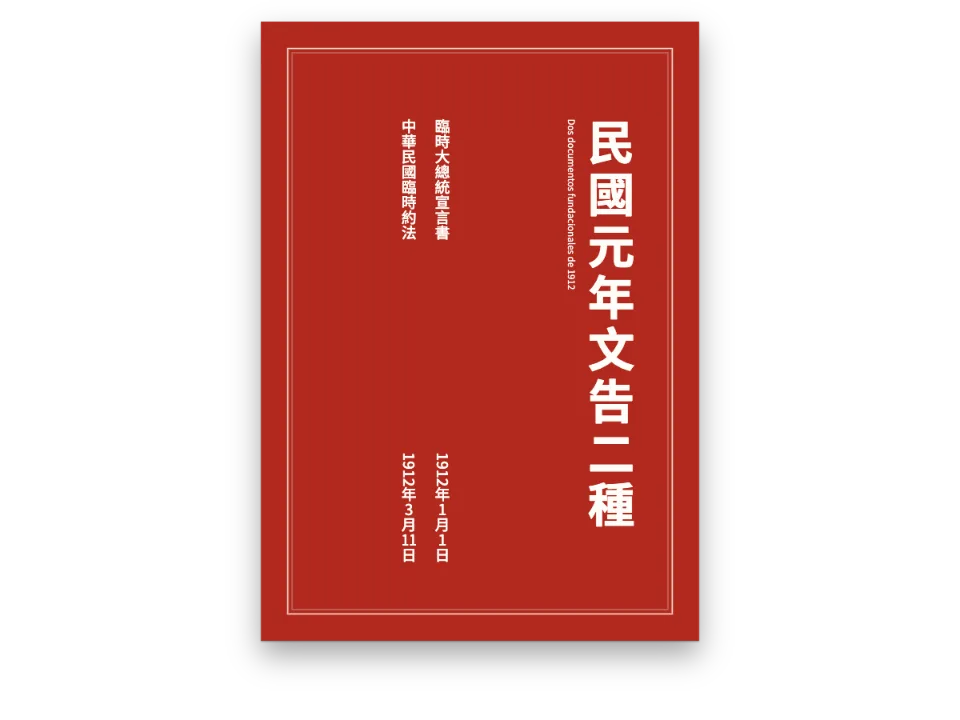
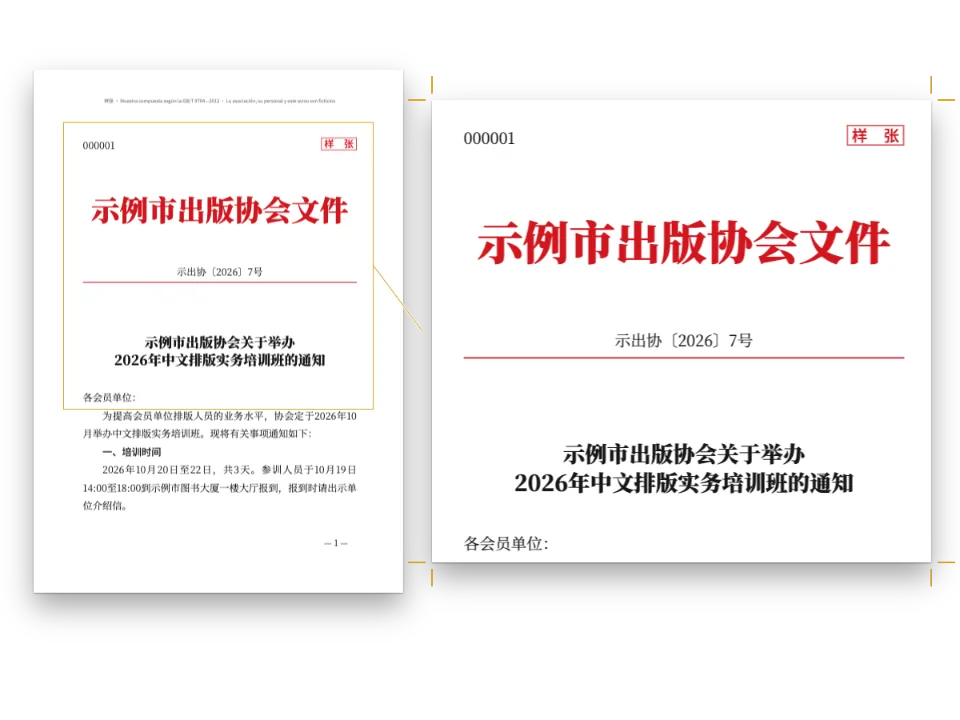
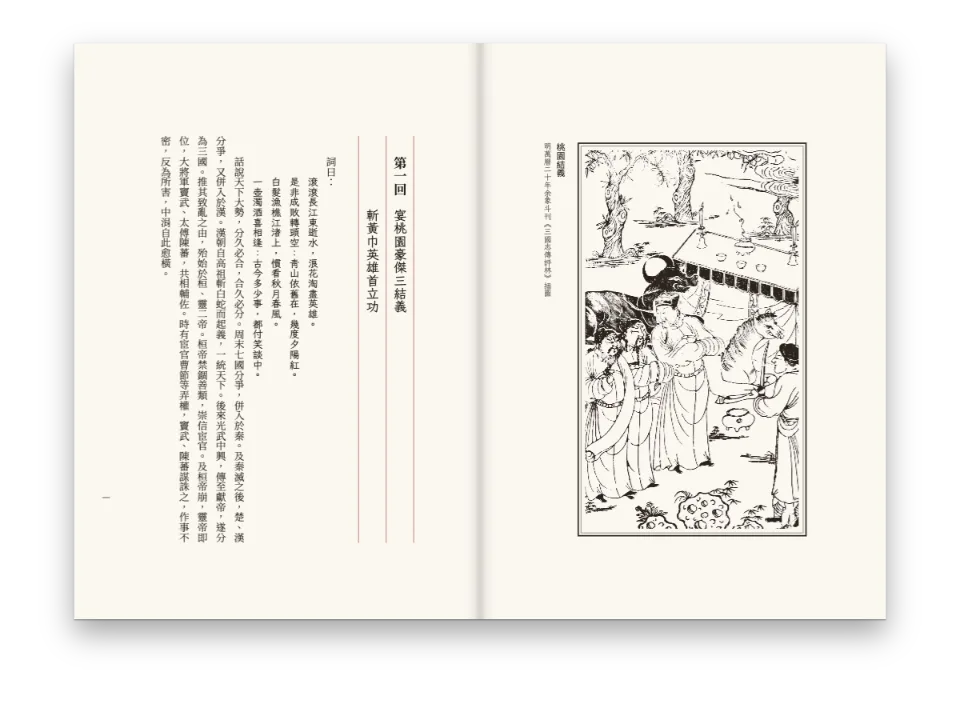
En pocas palabras
La constitución japonesa de 1889, escrita en kanji y katakana, en líneas de arriba abajo como la imprimió el boletín oficial, con los artículos numerados en kanji.
Lo que vas a componer
Una reimpresión de ocho páginas de la Constitución Meiji tal como la publicó el Boletín Oficial (官報) el 11 de febrero de 1889: el edicto imperial, los refrendos de los ministros y los dos primeros capítulos, treinta y dos artículos. El texto está en 漢字カタカナ交じり文 (kanji-katakana majiri-bun), la lengua escrita del derecho Meiji: los kanji llevan las palabras y los katakana las terminaciones, sin marcas de sonorización, sin kana pequeños y sin puntuación. Las páginas son A5, en vertical y encuadernadas por la derecha, con una retícula de 40 × 15 caracteres dentro de un filete grueso y otro fino. Los artículos se numeran con un contador de lista en kanji, de 第一條 a 第三十二條, y el sello y los refrendos quedan donde los puso el Boletín.
Esta receta responde a
- ¿Cómo compongo un texto Meiji en kanji y katakana, con sus formas antiguas, y numero sus artículos 第一條?
- ¿Cómo numero los capítulos 第一章 con numerales kanji, o los elementos de una lista あ い う e イ ロ ハ?
- ¿Qué fuentes componen el japonés, con los kanji en sus formas japonesas, en pantalla y en el PDF?
La respuesta corta
const layout = { layoutType: 'single', writingMode: 'vertical-rl' }; // bound on the right
const cjk = { grid: { enabled: true, charsPerLine: CHARS, linesPerPage: LINES } };
// Each article is an item of an ordered list: the counter is japanese-informal (十八, not
// 一十八), the prefix 第 and the separator 條 wrap it, and the turnover lines go back to
// the head of the line, as in the Gazette. Chapter two starts its list at 18.
const orderedLists = {
  numberFormat: 'japanese-informal', prefix: '第', separator: '條', gap: em(1),
  indent: em(0), hangingIndent: false, fontFamily: MINCHO, fontWeight: 800,
  color: col('ink'), marginTop: pt(0), marginBottom: pt(0), itemSpacing: pt(0),
};
// The chapters: 第{2:一}章 counts them in the same style, two characters down (字下げ).
const chapter = { level: 2, numberingTemplate: '第{2:一}章', numberSeparator: ' ',
  fontSize: pt(BODY), fontWeight: 800, indent: em(2), lineSpan: 2, // 二行取り
  breakBefore: { enabled: false } };
Ingredientes
- Funciones
- Kana, kanji y rōmajiNumerales japoneses y contadores en kanaTexto verticalLibros encuadernados por la derechaRetícula de caracteresFuentes chinas, japonesas y coreanasCorte de líneas japonés (kinsoku)Títulos que ocupan líneas del texto (gyōdori)Listas numeradasListas de viñetas y de comprobaciónAperturas diseñadasEstilos de títuloAtributos de títuloEstilos de párrafoTextos, filetes y cajas en los diseños de páginaCabeceras y foliosColor del papelPaleta de color semánticaExportación a PDFFuentes incrustadas en el PDF
- También usa
- Corte de líneas en chinoTítulos numeradosCabeceras según el tipo de páginaPreliminares en romanosCapítulos sin número
- Tipografía
- Shippori Mincho B1, Noto Sans JP (SIL OFL 1.1)
- Recursos
- Ninguno: todas las imágenes se dibujan en código
Elaboración
#1 · Deja que un contador de lista escriba 第十八條
El código está en la respuesta corta. Cada artículo es un elemento de una lista ordenada de Markdown, y orderedLists da a su número la forma del Boletín: numberFormat: 'japanese-informal' escribe 十八, no 一十八; prefix: '第' y separator: '條' lo rodean, y gap: em(1) deja el espacio de ancho completo del original. Con hangingIndent: false las líneas siguientes vuelven a la cabeza de la línea en vez de colgar bajo el texto, como en el Boletín. El capítulo segundo empieza su lista en 18., así que el contador sigue de un capítulo a otro, y los propios capítulos se numeran 第一章 y 第二章 con la plantilla de título 第{2:一}章, en el mismo estilo (listas ordenadas).
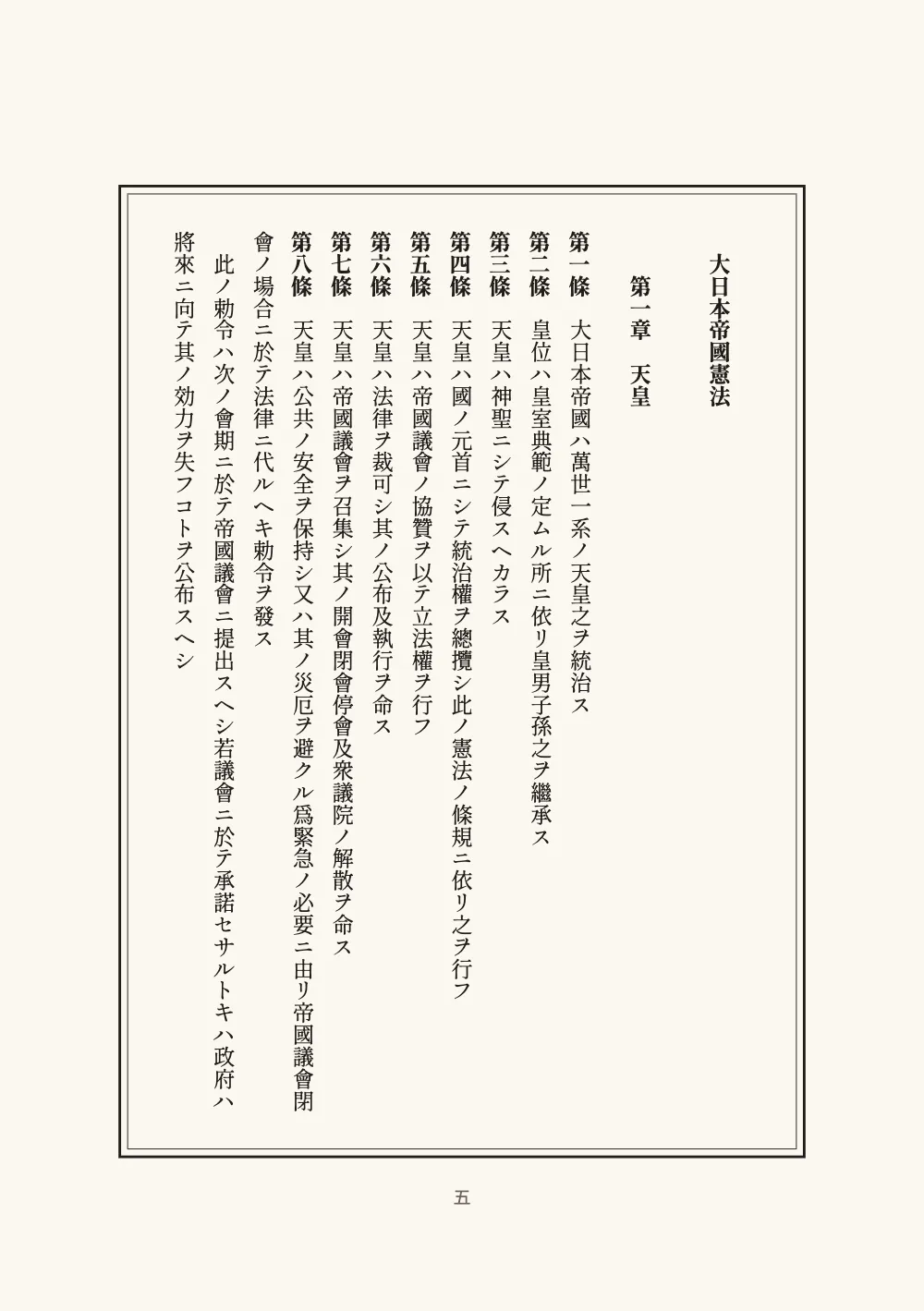
#2 · Deja los katakana como los escribió el Boletín
locale: 'ja' aplica las reglas japonesas, y ninguna reescribe el texto. 侵スヘカラス se queda sin sus marcas de sonorización (se lee okasu bekarazu), 行フ conserva su kana histórico y 奪ハルヽ su marca de repetición en katakana. Sin kana pequeños ni puntuación, la línea puede cortarse entre dos caracteres cualesquiera; el kinsoku sigue impidiendo que ヽ y 々 abran una línea. Las notas del editor, en japonés moderno con hiragana, quedan junto al edicto en la página 2, y así se comparan en una misma página las dos maneras de escribir el japonés.
#3 · Dibuja el marco en todas las páginas
// Header elements are placed on the sheet, not in the flow, so the frame is drawn in
// plain page millimetres: GAP outside the type area, then 1.4 mm to the thin rule.
const GAP = 6;
const rule = (id, out, thickness) => ({ kind: 'box', id, pages: 'all',
  style: { borderColor: col('ink'), borderWidth: pt(thickness) },
  placement: { anchor: { to: 'page', edge: 'top-left' },
    offset: { x: mm(SIDE - out), y: mm(HEAD - out) },
    size: { width: mm(AREA.across + 2 * out), height: mm(AREA.down + 2 * out) } } });
const header = { elements: [
  rule('outer', GAP + 1.4, 1.2), rule('inner', GAP, 0.4),
  // The folio in kanji, under the frame, in the middle of the page.
  { kind: 'text', id: 'folio', content: '{pageNumber}', pages: 'body', fontFamily: GOTHIC,
    fontSize: pt(8), color: col('muted'), align: 'center',
    placement: { anchor: { to: 'page', edge: 'top-left' },
      offset: { x: mm(0), y: mm(HEAD + AREA.down + GAP + 6) }, size: { width: mm(TRIM.w) } } },
] };
La ranura de la cabecera dibuja en milímetros de la hoja, no en el flujo vertical, así que el marco son dos cajas colocadas con los mismos números que colocan la caja de texto: HEAD desde arriba y SIDE desde cada borde. Los márgenes se calculan a partir de la retícula en vez de dejárselos a ella, y la caja de texto queda justo 6 mm dentro del filete fino. El folio, en kanji gracias a pageNumbering.format: 'japanese-informal', va bajo el marco.
#4 · Compón la portada sobre el eje
// In the flow frame of a vertical page x runs down the column, y leftward across it.
const at = (down, across) => ({ anchor: { to: 'container', edge: 'top-left' },
  offset: { x: mm(down), y: mm(across) } });
const MID = AREA.across / 2; // mm: the axis of the page, from the right of the type area
const cover = {
  id: 'cover', numbered: false, toc: false, span: 'page', runningChapter: false,
  breakBefore: { enabled: true, parity: 'any' },
  advancedDesign: { enabled: true, slot: { elements: [
    { kind: 'text', id: 'title', content: '{titleText}', fontFamily: MINCHO, fontWeight: 800,
      fontSize: pt(34), lineHeight: 1, letterSpacing: pt(10), color: col('ink'),
      placement: at((AREA.down - (7 * 34 + 6 * 10) * PT) / 2, MID - 34 * PT / 2) }, // centred
    { kind: 'text', id: 'date', content: '{attr.date}', fontFamily: MINCHO, fontSize: pt(11),
      lineHeight: 1, letterSpacing: pt(2), color: col('seal'), placement: at(30, MID + 18) },
    { kind: 'text', id: 'source', content: '{attr.source}', fontFamily: MINCHO,
      fontSize: pt(11), lineHeight: 1, letterSpacing: pt(4), color: col('ink'),
      placement: at(30, MID - 18 - 11 * PT) },
    // The edition's language, turned with the line, at the foot of the type area.
    { kind: 'text', id: 'latin', content: '{attr.latin}', fontFamily: GOTHIC, fontSize: pt(7.5),
      lineHeight: 1.5, color: col('muted'), overflow: 'wrap', align: 'right',
      placement: { ...at(0, AREA.across - 9), size: { width: mm(AREA.down), height: mm(9) } } },
  ] } },
};
En un flujo vertical x baja por la hoja e y avanza hacia la izquierda, así que la columna del título se coloca por su distancia al borde derecho de la caja de texto. La fecha, en el color de acento, y el nombre del Boletín flanquean el título a 18 mm del eje.
#5 · Carga cada fuente con el texto que compone
const notes = (markdown.match(/^- .*$/gm) ?? []).join('');
const gothicText = `${notes}凡例上諭一二三四五六七八九十${markdown.match(/latin="([^"]*)"/)[1]}`;
Shippori Mincho B1, un Mincho con las formas antiguas 國, 條 y 權, carga los archivos del texto y de los títulos; Noto Sans JP carga solo las notas del editor, los folios y la línea en español. Una fuente que recibe menos texto del que compone hace fallar la captura (C12).
La receta completa
// ═══ Postext Cookbook · Nº 128 · A Meiji proclamation in kanji and katakana ═════════ // https://postext.dev/en/cookbook/katakana-majiri-proclamation // Code: MIT · Text: Kanpō 1889, ja.wikisource (CC BY-SA 4.0); notes (CC BY 4.0) // Fonts: Shippori Mincho B1, Noto Sans JP (SIL OFL 1.1) · Needs postext ≥ 1.16.1 // The Meiji Constitution as the Official Gazette printed it: kanji and katakana, vertical. import { buildDocument, renderPageToCanvas, clearMeasurementCache, loadVerticalAlternates, } from 'https://esm.sh/postext'; import { renderToPdf, decompressWoff2 } from 'https://esm.sh/postext-pdf'; const LANG = 'es'; // @lang: the language of the frame; the text is Japanese in both editions const RECIPE = 'katakana-majiri-proclamation'; // ─── 1 · Design ───────────────────────────────────────────────────────────── // #region palette: gazette black, one vermilion for the seal, toned paper const palette = { ink: '#211d1a', // the text and the frame seal: '#a8321f', // 御名御璽 and the cover's date: the one accent (5.5:1 on the paper) muted: '#6b6259', // the editor's notes, the folio, the colophon paper: '#fbf8f0', }; const col = (id) => ({ hex: palette[id], model: 'hex', paletteId: id }); const colorPalette = [ ...Object.entries(palette).map(([id, hex]) => ({ id, name: id, value: { hex, model: 'hex' } })), { id: 'main-color', name: 'seal (defaults)', value: { hex: palette.seal, model: 'hex' } }, ]; // #endregion const MINCHO = 'Shippori Mincho B1'; // 明朝 with Meiji type in its bones, old forms 國 條 權 const GOTHIC = 'Noto Sans JP'; // the editor's voice: notes, folios, colophon const [BODY, LEAD] = [10, 18]; // pt: line pitch 1.8 em const [CHARS, LINES] = [40, 15]; // the type area: 40 characters down, 15 lines across const PT = 25.4 / 72; // mm in a point const TRIM = { w: 148, h: 210 }; // mm, A5 const AREA = { down: CHARS * BODY * PT, across: LINES * LEAD * PT }; // 141.1 × 95.3 mm const HEAD = 37; // mm from the top edge to the head of the type area: 天 deeper than 地 const SIDE = (TRIM.w - AREA.across) / 2; // the same margin on both sides of the frame // #region answer: kanji with katakana, vertical, and articles numbered 第一條 in kanji const layout = { layoutType: 'single', writingMode: 'vertical-rl' }; // bound on the right const cjk = { grid: { enabled: true, charsPerLine: CHARS, linesPerPage: LINES } }; // Each article is an item of an ordered list: the counter is japanese-informal (十八, not // 一十八), the prefix 第 and the separator 條 wrap it, and the turnover lines go back to // the head of the line, as in the Gazette. Chapter two starts its list at 18. const orderedLists = { numberFormat: 'japanese-informal', prefix: '第', separator: '條', gap: em(1), indent: em(0), hangingIndent: false, fontFamily: MINCHO, fontWeight: 800, color: col('ink'), marginTop: pt(0), marginBottom: pt(0), itemSpacing: pt(0), }; // The chapters: 第{2:一}章 counts them in the same style, two characters down (字下げ). const chapter = { level: 2, numberingTemplate: '第{2:一}章', numberSeparator: ' ', fontSize: pt(BODY), fontWeight: 800, indent: em(2), lineSpan: 2, // 二行取り breakBefore: { enabled: false } }; // #endregion // #region frame: a thick and a thin rule round the type area, on every page // Header elements are placed on the sheet, not in the flow, so the frame is drawn in // plain page millimetres: GAP outside the type area, then 1.4 mm to the thin rule. const GAP = 6; const rule = (id, out, thickness) => ({ kind: 'box', id, pages: 'all', style: { borderColor: col('ink'), borderWidth: pt(thickness) }, placement: { anchor: { to: 'page', edge: 'top-left' }, offset: { x: mm(SIDE - out), y: mm(HEAD - out) }, size: { width: mm(AREA.across + 2 * out), height: mm(AREA.down + 2 * out) } } }); const header = { elements: [ rule('outer', GAP + 1.4, 1.2), rule('inner', GAP, 0.4), // The folio in kanji, under the frame, in the middle of the page. { kind: 'text', id: 'folio', content: '{pageNumber}', pages: 'body', fontFamily: GOTHIC, fontSize: pt(8), color: col('muted'), align: 'center', placement: { anchor: { to: 'page', edge: 'top-left' }, offset: { x: mm(0), y: mm(HEAD + AREA.down + GAP + 6) }, size: { width: mm(TRIM.w) } } }, ] }; // #endregion // #region cover: the title down the middle, the date and the source to its left // In the flow frame of a vertical page x runs down the column, y leftward across it. const at = (down, across) => ({ anchor: { to: 'container', edge: 'top-left' }, offset: { x: mm(down), y: mm(across) } }); const MID = AREA.across / 2; // mm: the axis of the page, from the right of the type area const cover = { id: 'cover', numbered: false, toc: false, span: 'page', runningChapter: false, breakBefore: { enabled: true, parity: 'any' }, advancedDesign: { enabled: true, slot: { elements: [ { kind: 'text', id: 'title', content: '{titleText}', fontFamily: MINCHO, fontWeight: 800, fontSize: pt(34), lineHeight: 1, letterSpacing: pt(10), color: col('ink'), placement: at((AREA.down - (7 * 34 + 6 * 10) * PT) / 2, MID - 34 * PT / 2) }, // centred { kind: 'text', id: 'date', content: '{attr.date}', fontFamily: MINCHO, fontSize: pt(11), lineHeight: 1, letterSpacing: pt(2), color: col('seal'), placement: at(30, MID + 18) }, { kind: 'text', id: 'source', content: '{attr.source}', fontFamily: MINCHO, fontSize: pt(11), lineHeight: 1, letterSpacing: pt(4), color: col('ink'), placement: at(30, MID - 18 - 11 * PT) }, // The edition's language, turned with the line, at the foot of the type area. { kind: 'text', id: 'latin', content: '{attr.latin}', fontFamily: GOTHIC, fontSize: pt(7.5), lineHeight: 1.5, color: col('muted'), overflow: 'wrap', align: 'right', placement: { ...at(0, AREA.across - 9), size: { width: mm(AREA.down), height: mm(9) } } }, ] } }, }; // #endregion const config = () => ({ // a factory: the engine caches resolved configs per object locale: 'ja', // written out, never LANG (gotcha: ja-locale-tag) colorPalette, page: { sizePreset: 'custom', width: mm(TRIM.w), height: mm(TRIM.h), dpi: 150, backgroundColor: col('paper'), margins: { top: mm(HEAD), bottom: mm(TRIM.h - HEAD - AREA.down), left: mm(SIDE), right: mm(SIDE), mirror: true }, pageNumbering: { format: 'japanese-informal' }, // 一, 二, 三… }, layout, cjk, bodyText: { fontFamily: MINCHO, fontSize: pt(BODY), lineHeight: pt(LEAD), color: col('ink'), boldColor: col('ink'), italicColor: col('ink'), referenceColor: col('ink'), // A new clause of an article (項) starts one character down; the edict's paragraphs // start flush, as the Gazette sets them. textAlign: 'justify', firstLineIndent: em(1), indentAfterHeading: true, }, headings: { fontFamily: MINCHO, color: col('ink'), fontWeight: 800, levels: [ // Restated: any headings object drops the H1 break (gotcha: headings-drop-h1-break). { level: 1, breakBefore: { enabled: true, parity: 'any' } }, chapter, ], }, headingStyles: [ cover, // 凡例 and 上諭: in the editor's gothic, one line, not counted as chapters. { id: 'notes', numbered: false, fontFamily: GOTHIC, fontWeight: 700, fontSize: pt(9), color: col('muted'), lineSpan: 1, indent: em(1) }, { id: 'edict', numbered: false, fontFamily: GOTHIC, fontWeight: 700, fontSize: pt(9), color: col('muted'), lineSpan: 2, indent: em(1) }, { id: 'law', numbered: false, indent: em(1), lineSpan: 2 }, ], unorderedLists: { bulletChar: '一', gap: em(1), indent: em(1), fontFamily: GOTHIC, color: col('muted'), marginTop: pt(0), marginBottom: pt(0), itemSpacing: pt(0) }, orderedLists, paragraphStyles: [ { id: 'flush', firstLineIndent: em(0) }, // 御名 御璽, larger, three characters down: where the Emperor signed and sealed. { id: 'seal', fontSize: pt(15), lineHeight: pt(2 * LEAD), color: col('seal'), indent: em(2), marginTop: pt(LEAD) }, // The ministers' countersignatures end at the foot of the line (地付き). { id: 'countersign', textAlign: 'end', marginTop: pt(LEAD) }, { id: 'colophon', fontFamily: GOTHIC, fontSize: pt(7), lineHeight: pt(LEAD), color: col('muted'), textAlign: 'left', marginTop: pt(2 * LEAD) }, ], header, footer: { elements: [] }, }); // ─── 2 · Content ──────────────────────────────────────────────────────────── const markdown = String.raw`---Muestra en Markdown · 140 líneas · content.es.md
title: "大日本帝國憲法" author: "明治二十二年二月十一日發布" --- # 大日本帝國憲法 {style="cover" date="明治二十二年二月十一日" source="官報號外" latin="La Constitución del Imperio del Japón · Boletín Oficial, 11 de febrero de 1889"} ## 凡例 {style="notes"} - 本書には、明治二十二年二月十一日の官報號外に載った大日本帝國憲法のうち、上諭と第一章、第二章を収めた。 - 本文は官報のとおり漢字カタカナ交じり文で組み、旧字体と歴史的仮名遣いを改めていない。原文には濁点も句読点もない。「侵スヘカラス」は「おかすべからず」、「行フ」は「おこなう」と読む。 - 官報は送り仮名のカタカナを漢字より小さく組んでいるが、本書では本文と同じ大きさにそろえた。 - 大臣の副署は、官報では官職名を均等に割り付けているが、本書では行末をそろえるだけにとどめた。 ## 上諭 {style="edict"} :::paragraphs{style="flush"} 朕祖宗ノ遺烈ヲ承ケ萬世一系ノ帝位ヲ踐ミ朕カ親愛スル所ノ臣民ハ即チ朕カ祖宗ノ惠撫慈養シタマヒシ所ノ臣民ナルヲ念ヒ其ノ康福ヲ増進シ其ノ懿徳良能ヲ發達セシメムコトヲ願ヒ又其ノ翼贊ニ依リ與ニ倶ニ國家ノ進運ヲ扶持セムコトヲ望ミ乃チ明治十四年十月十二日ノ詔命ヲ履踐シ茲ニ大憲ヲ制定シ朕カ率由スル所ヲ示シ朕カ後嗣及臣民及臣民ノ子孫タル者ヲシテ永遠ニ循行スル所ヲ知ラシム 國家統治ノ大權ハ朕カ之ヲ祖宗ニ承ケテ之ヲ子孫ニ傳フル所ナリ朕及朕カ子孫ハ將來此ノ憲法ノ條章ニ循ヒ之ヲ行フコトヲ愆ラサルヘシ 朕ハ我カ臣民ノ權利及財産ノ安全ヲ貴重シ及之ヲ保護シ此ノ憲法及法律ノ範圍内ニ於テ其ノ享有ヲ完全ナラシムヘキコトヲ宣言ス 帝國議會ハ明治二十三年ヲ以テ之ヲ召集シ議會開會ノ時ヲ以テ此ノ憲法ヲシテ有効ナラシムルノ期トスヘシ 將來若此ノ憲法ノ或ル條章ヲ改定スルノ必要ナル時宜ヲ見ルニ至ラハ朕及朕カ繼統ノ子孫ハ發議ノ權ヲ執リ之ヲ議會ニ付シ議會ハ此ノ憲法ニ定メタル要件ニ依リ之ヲ議決スルノ外朕カ子孫及臣民ハ敢テ之カ紛更ヲ試ミルコトヲ得サルヘシ 朕カ在廷ノ大臣ハ朕カ爲ニ此ノ憲法ヲ施行スルノ責ニ任スヘク朕カ現在及將來ノ臣民ハ此ノ憲法ニ對シ永遠ニ從順ノ義務ヲ負フヘシ ::: :::paragraphs{style="seal"} 御名 御璽 ::: :::paragraphs{indent=6} 明治二十二年二月十一日 ::: :::paragraphs{style="countersign"} 内閣總理大臣 伯爵 黒田清隆 樞密院議長 伯爵 伊藤博文 外務大臣 伯爵 大隈重信 海軍大臣 伯爵 西郷從道 農商務大臣 伯爵 井上 馨 司法大臣 伯爵 山田顯義 大藏大臣兼内務大臣 伯爵 松方正義 陸軍大臣 伯爵 大山 巖 文部大臣 子爵 森 有禮 遞信大臣 子爵 榎本武揚 ::: ## 大日本帝國憲法 {style="law"} ## 天皇 1. 大日本帝國ハ萬世一系ノ天皇之ヲ統治ス 2. 皇位ハ皇室典範ノ定ムル所ニ依リ皇男子孫之ヲ繼承ス 3. 天皇ハ神聖ニシテ侵スヘカラス 4. 天皇ハ國ノ元首ニシテ統治權ヲ總攬シ此ノ憲法ノ條規ニ依リ之ヲ行フ 5. 天皇ハ帝國議會ノ協贊ヲ以テ立法權ヲ行フ 6. 天皇ハ法律ヲ裁可シ其ノ公布及執行ヲ命ス 7. 天皇ハ帝國議會ヲ召集シ其ノ開會閉會停會及衆議院ノ解散ヲ命ス 8. 天皇ハ公共ノ安全ヲ保持シ又ハ其ノ災厄ヲ避クル爲緊急ノ必要ニ由リ帝國議會閉會ノ場合ニ於テ法律ニ代ルヘキ勅令ヲ發ス 此ノ勅令ハ次ノ會期ニ於テ帝國議會ニ提出スヘシ若議會ニ於テ承諾セサルトキハ政府ハ將來ニ向テ其ノ効力ヲ失フコトヲ公布スヘシ 9. 天皇ハ法律ヲ執行スル爲ニ又ハ公共ノ安寧秩序ヲ保持シ及臣民ノ幸福ヲ増進スル爲ニ必要ナル命令ヲ發シ又ハ發セシム但シ命令ヲ以テ法律ヲ變更スルコトヲ得ス 10. 天皇ハ行政各部ノ官制及文武官ノ俸給ヲ定メ及文武官ヲ任免ス但シ此ノ憲法又ハ他ノ法律ニ特例ヲ掲ケタルモノハ各々其ノ條項ニ依ル 11. 天皇ハ陸海軍ヲ統帥ス 12. 天皇ハ陸海軍ノ編制及常備兵額ヲ定ム 13. 天皇ハ戰ヲ宣シ和ヲ講シ及諸般ノ條約ヲ締結ス 14. 天皇ハ戒嚴ヲ宣告ス 戒嚴ノ要件及効力ハ法律ヲ以テ之ヲ定ム 15. 天皇ハ爵位勳章及其ノ他ノ榮典ヲ授與ス 16. 天皇ハ大赦特赦減刑及復權ヲ命ス 17. 攝政ヲ置クハ皇室典範ノ定ムル所ニ依ル 攝政ハ天皇ノ名ニ於テ大權ヲ行フ ## 臣民權利義務 18. 日本臣民タルノ要件ハ法律ノ定ムル所ニ依ル 19. 日本臣民ハ法律命令ノ定ムル所ノ資格ニ應シ均ク文武官ニ任セラレ及其ノ他ノ公務ニ就クコトヲ得 20. 日本臣民ハ法律ノ定ムル所ニ從ヒ兵役ノ義務ヲ有ス 21. 日本臣民ハ法律ノ定ムル所ニ從ヒ納税ノ義務ヲ有ス 22. 日本臣民ハ法律ノ範圍内ニ於テ居住及移轉ノ自由ヲ有ス 23. 日本臣民ハ法律ニ依ルニ非スシテ逮捕監禁審問處罰ヲ受クルコトナシ 24. 日本臣民ハ法律ニ定メタル裁判官ノ裁判ヲ受クルノ權ヲ奪ハルヽコトナシ 25. 日本臣民ハ法律ニ定メタル場合ヲ除ク外其ノ許諾ナクシテ住所ニ侵入セラレ及搜索セラルヽコトナシ 26. 日本臣民ハ法律ニ定メタル場合ヲ除ク外信書ノ祕密ヲ侵サルヽコトナシ 27. 日本臣民ハ其ノ所有權ヲ侵サルヽコトナシ 公益ノ爲必要ナル處分ハ法律ノ定ムル所ニ依ル 28. 日本臣民ハ安寧秩序ヲ妨ケス及臣民タルノ義務ニ背カサル限ニ於テ信教ノ自由ヲ有ス 29. 日本臣民ハ法律ノ範圍内ニ於テ言論著作印行集會及結社ノ自由ヲ有ス 30. 日本臣民ハ相當ノ敬禮ヲ守リ別ニ定ムル所ノ規程ニ從ヒ請願ヲ爲スコトヲ得 31. 本章ニ掲ケタル條規ハ戰時又ハ國家事變ノ場合ニ於テ天皇大權ノ施行ヲ妨クルコトナシ 32. 本章ニ掲ケタル條規ハ陸海軍ノ法令又ハ紀律ニ牴觸セサルモノニ限リ軍人ニ準行ス :::paragraphs{style="colophon"} Compuesto en Shippori Mincho B1 y Noto Sans JP (SIL OFL) · Texto: número extraordinario del Boletín Oficial (官報) del 11 de febrero de 1889, según la transcripción de Wikisource en japonés (revisión 244180, CC BY-SA 4.0) · Notas del editor: CC BY 4.0 :::`; // content.<lang>.md: the same Japanese text in both // ─── 3 · Fonts ────────────────────────────────────────────────────────────── const FONTS = { 'Shippori Mincho B1': ['400', '800'], 'Noto Sans JP': ['400', '700'] }; // #region voices: each face loads the files of the characters it sets const notes = (markdown.match(/^- .*$/gm) ?? []).join(''); const gothicText = `${notes}凡例上諭一二三四五六七八九十${markdown.match(/latin="([^"]*)"/)[1]}`; // #endregion // ─── 4 · Build & show ─────────────────────────────────────────────────────── await loadFonts(FONTS, markdown); await loadCjkFonts({ [MINCHO]: FONTS[MINCHO] }, markdown.replace(/^- .*$/gm, ''), { vertical: true }); await loadCjkFonts({ [GOTHIC]: FONTS[GOTHIC] }, gothicText, { vertical: true }); const doc = await buildWithFonts(() => buildDocument({ markdown }, config()), markdown); showBook(doc, { title: t({ en: 'The Meiji Constitution, 1889', es: 'La Constitución Meiji, 1889' }) }); offerPdf(() => renderToPdf(doc, { fontProvider: cjkPdfProvider }), `${RECIPE}.pdf`);Kit · core, fonts, viewer, pdf, cjk: igual en todas las recetas · 453 líneas
// ─── Kit ── helpers shared by every Cookbook recipe · postext.dev/cookbook ───── // ─── Kit · core v1 ── the same in every recipe · postext.dev/cookbook ───────── function mm(value) { return { value, unit: 'mm' }; } function pt(value) { return { value, unit: 'pt' }; } function em(value) { return { value, unit: 'em' }; } /** The sample language's string: t({ en: 'Figure', es: 'Figura' }). */ function t(strings) { return strings[LANG] ?? Object.values(strings)[0]; } /** A file in this recipe's assets folder, served from the Postext repo by jsDelivr. */ function asset(file) { return `https://cdn.jsdelivr.net/gh/drnachio/postext@main/cookbook/${RECIPE}/assets/${file}`; } // ─── Kit · fonts v1 ── the same in every recipe · postext.dev/cookbook ──────── // Postext measures text with the faces the browser has loaded, and caches the // widths, so every face must be ready before the first build. Faces come from // Fontsource: the same static files the PDF embeds, so screen and PDF agree. /** faces = { 'Family Name': ['400', '400i', '700'] }. `text` is the sample: * letters beyond Latin-1 (č, ł, ő…) also load the latin-ext files. With * `optional`, a face Fontsource does not ship is skipped instead of failing. * Resolves to the number of faces added. */ async function loadFonts(faces, text = '', { optional = false } = {}) { kitStatus('Loading fonts…'); const ranges = { latin: 'U+0000-00FF,U+0131,U+0152-0153,U+02BB-02BC,U+02C6,U+02DA,U+02DC,U+0304,U+0308,U+0329,' + 'U+2000-206F,U+20AC,U+2122,U+2191,U+2193,U+2212,U+2215,U+FEFF,U+FFFD', 'latin-ext': 'U+0100-02BA,U+02BD-02C5,U+02C7-02CC,U+02CE-02D7,U+02DD-02FF,U+0304,U+0308,U+0329,' + 'U+1D00-1DBF,U+1E00-1E9F,U+1EF2-1EFF,U+2020,U+20A0-20AB,U+20AD-20C0,U+2113,U+2C60-2C7F,U+A720-A7FF', }; const subsets = /[Ā-˿Ḁ-ỿ]/.test(text) ? ['latin', 'latin-ext'] : ['latin']; const jobs = []; let added = 0; for (const [family, specs] of Object.entries(faces)) { const id = fontsourceId(family); const meta = optional ? await fontsourceMeta(family) : null; for (const spec of new Set(specs)) { const weight = parseInt(spec, 10); const style = spec.endsWith('i') ? 'italic' : 'normal'; if (hasFace(family, weight, style)) continue; if (optional && !(meta?.weights.includes(weight) && meta.styles.includes(style))) continue; for (const subset of subsets) { const url = `https://cdn.jsdelivr.net/npm/@fontsource/${id}@5/files/${id}-${subset}-${weight}-${style}.woff2`; const face = new FontFace(family, `url(${url}) format('woff2')`, { weight: String(weight), style, unicodeRange: ranges[subset] }); jobs.push(face.load().then((ready) => { document.fonts.add(ready); added++; }, () => { if (subset === 'latin' && !optional) throw new Error(`Fontsource has no ${family} ${weight} ${style}`); })); } } } await Promise.all(jobs).catch((error) => { kitFail(error); throw error; }); return added; } /** Runs `build` (a buildDocument or buildBundle call) and checks the faces * the pages use. A regular face missing from FONTS is loaded with a warning; * bold and italic variants are loaded when the family ships them. Then the * measurement caches are cleared and the build runs again. */ async function buildWithFonts(build, text = '') { const tried = new Set(); for (let round = 0; round < 3; round++) { kitStatus('Laying out…'); await new Promise(requestAnimationFrame); // let the status paint first const result = await Promise.resolve().then(build).catch((error) => { kitFail(error); throw error; }); const wanted = { base: {}, variants: {} }; for (const { font, base } of [result].flat().flatMap(fontStringsOf)) { const { family, weight, style } = parseFont(font); const key = `${family}|${weight}|${style}`; if (tried.has(key) || hasFace(family, weight, style)) continue; tried.add(key); (wanted[base ? 'base' : 'variants'][family] ??= []).push(`${weight}${style === 'italic' ? 'i' : ''}`); } if (Object.keys(wanted.base).length) { console.warn(`[cookbook] FONTS does not list ${JSON.stringify(wanted.base)}: loading them.`); } const added = await loadFonts(wanted.base, text) + await loadFonts(wanted.variants, text, { optional: true }); if (added === 0) return result; clearMeasurementCache(); } throw new Error('The fonts did not settle after three builds.'); } /** Every font string of the layout. `base` marks a block's own face; its * bold, italic and bold-italic variants are listed whether or not used. */ function fontStringsOf(doc) { const found = new Map(); const walk = (node) => { if (!node || typeof node !== 'object') return; if (Array.isArray(node)) { node.forEach(walk); return; } for (const [key, value] of Object.entries(node)) { if (typeof value === 'string' && /fontString$/i.test(key)) { found.set(value, found.get(value) || key === 'fontString'); } else if (value && typeof value === 'object') walk(value); } }; walk(doc.pages); walk(doc.blocks); return [...found].map(([font, base]) => ({ font, base })); } /** '700 37.5px Open Sans' / 'italic 400 13px "Source Serif 4"' → { family, weight, style }. * A string with no weight ('95.8px Young Serif', from a design text) is 400. */ function parseFont(font) { const m = /^(?:(italic|oblique)\s+)?(?:small-caps\s+)?(?:(\d+|bold|normal)\s+)?[\d.]+px\s+(.+)$/.exec(font.trim()); if (!m) throw new Error(`Unexpected font string: ${font}`); const weight = m[2] === 'bold' ? 700 : !m[2] || m[2] === 'normal' ? 400 : Number(m[2]); return { family: m[3].replace(/^["']|["']$/g, ''), weight, style: m[1] ? 'italic' : 'normal' }; } /** True when a loaded FontFace covers exactly this family, weight and style * (document.fonts.check() is also true for families nobody declared). */ function hasFace(family, weight, style) { for (const face of document.fonts) { if (face.status !== 'loaded' || face.style !== style) continue; if (face.family.replace(/^["']|["']$/g, '') !== family) continue; const [low, high = low] = face.weight.split(' ').map(Number); if (weight >= low && weight <= high) return true; } return false; } /** Fontsource's id for a family: 'Source Serif 4' → 'source-serif-4'. */ function fontsourceId(family) { return family.toLowerCase().replace(/\s+/g, '-'); } /** The weights and styles a family ships ({ weights: [400, 700], styles: ['normal', 'italic'] }), or null. */ function fontsourceMeta(family) { fontsourceMeta.cache ??= new Map(); const id = fontsourceId(family); if (!fontsourceMeta.cache.has(id)) { fontsourceMeta.cache.set(id, fetch(`https://api.fontsource.org/v1/fonts/${id}`) .then((res) => (res.ok ? res.json() : null), () => null)); } return fontsourceMeta.cache.get(id); } // ─── Kit · viewer v1 ── the same in every recipe · postext.dev/cookbook ─────── /** Shows the pages as facing spreads on a dark desk: the first page is a * recto on its own, then verso | recto pairs, as in a bound book. Pages * are painted when they scroll near the screen. */ function showPages(docs, { title, width = 460 } = {}) { const root = viewer(title); const pages = [docs].flat().flatMap((doc) => doc.pages.map((page) => ({ doc, page, n: (doc.pageIndexOffset ?? 0) + page.index }))); const spreads = []; let verso = null; for (const p of pages) { if (p.n % 2 === 1) { if (verso) spreads.push([verso, null]); verso = p; } else { spreads.push([verso, p]); verso = null; } } if (verso) spreads.push([verso, null]); const density = Math.min(window.devicePixelRatio || 1, 2); showPages.painter?.disconnect(); const painter = new IntersectionObserver((entries) => { for (const { isIntersecting, target } of entries) { if (!isIntersecting) continue; painter.unobserve(target); const { doc, page } = target.postext; renderPageToCanvas(page, doc, target, { scale: (width * density) / page.width }); } }, { rootMargin: '800px' }); showPages.painter = painter; root.replaceChildren(...spreads.map((pair) => { const spread = document.createElement('div'); spread.className = 'pt-spread'; for (const p of pair) { const figure = document.createElement('figure'); if (p) { const label = p.page.pageLabel || String(p.n + 1); const canvas = document.createElement('canvas'); canvas.postext = p; canvas.style.aspectRatio = `${p.page.width} / ${p.page.height}`; canvas.setAttribute('role', 'img'); canvas.setAttribute('aria-label', `Page ${label}`); const folio = document.createElement('figcaption'); folio.textContent = label; figure.append(canvas, folio); painter.observe(canvas); } else figure.className = 'pt-blank'; spread.append(figure); } return spread; })); kitStatus(`${pages.length} ${pages.length === 1 ? 'page' : 'pages'}`); document.documentElement.dataset.postext = 'ready'; return pages.length; } /** The desk, the bar and the error reporting, created once. */ function viewer(title) { if (!document.getElementById('pt-kit')) { document.head.insertAdjacentHTML('beforeend', `<style id="pt-kit"> :root { color-scheme: dark; } body { margin: 0; background: #0e1014; color: #b9bcc4; font: 13px/1.45 system-ui, sans-serif; } #pt-bar { position: sticky; top: 0; z-index: 1; display: flex; flex-wrap: wrap; align-items: center; gap: 6px 16px; padding: 10px 16px; background: rgb(14 16 20 / .92); backdrop-filter: blur(6px); border-bottom: 1px solid #23262d; } #pt-bar strong { color: #f4f1ea; font-weight: 600; } #pt-actions { display: flex; gap: 12px; margin-left: auto; } #pt-actions a, #pt-actions button { color: #d8a21a; font: inherit; background: none; border: 0; padding: 0; cursor: pointer; } #pages { display: grid; justify-items: center; gap: 48px; padding: 32px 16px 72px; } .pt-spread { display: flex; } .pt-spread figure { margin: 0; width: min(460px, 44vw); } .pt-spread canvas { display: block; width: 100%; background: #fff; box-shadow: 0 1px 2px rgb(0 0 0 / .5), 0 22px 44px -16px rgb(0 0 0 / .8); } .pt-spread figure:first-child canvas { box-shadow: inset -14px 0 14px -14px rgb(0 0 0 / .18), 0 1px 2px rgb(0 0 0 / .5), 0 22px 44px -16px rgb(0 0 0 / .8); } .pt-spread figcaption { margin-top: 10px; text-align: center; font: 600 10px/1 system-ui, sans-serif; letter-spacing: .18em; text-transform: uppercase; color: #6c7079; } .pt-blank { visibility: hidden; } @media (max-width: 760px) { .pt-spread { flex-direction: column; gap: 32px; } .pt-spread figure { width: min(460px, 92vw); } .pt-blank { display: none; } } </style>`); document.body.insertAdjacentHTML('afterbegin', '<header id="pt-bar"><strong id="pt-title"></strong><span id="pt-status" role="status"></span><span id="pt-actions"></span></header>'); document.getElementById('pt-title').textContent = document.title || 'Postext'; addEventListener('error', (event) => kitFail(event.error ?? event.message)); addEventListener('unhandledrejection', (event) => kitFail(event.reason)); } if (title) document.getElementById('pt-title').textContent = title; return document.getElementById('pages') ?? document.body.appendChild(Object.assign(document.createElement('main'), { id: 'pages' })); } function kitStatus(text) { viewer(); document.getElementById('pt-status').textContent = text; } function kitFail(error) { document.documentElement.dataset.postext = 'error'; kitStatus(`Error: ${error?.message ?? error}`); } // ─── Kit · pdf v1 ── the same in every recipe that exports a PDF ────────────── /** postext-pdf embeds TrueType bytes. Fetch the Fontsource file the screen * used, snapping to a weight the family ships and falling back to upright * when it has no italic: the PDF asks for every face a block could use. */ async function fontsourceProvider(family, weight, style) { const id = fontsourceId(family); const meta = await fontsourceMeta(family); const weights = meta?.weights?.length ? meta.weights : [400, 700]; const w = weights.reduce((a, b) => (Math.abs(b - weight) < Math.abs(a - weight) ? b : a)); const s = style === 'italic' && meta && !meta.styles.includes('italic') ? 'normal' : style; const res = await fetch(`https://cdn.jsdelivr.net/npm/@fontsource/${id}@5/files/${id}-latin-${w}-${s}.woff2`); if (!res.ok) throw new Error(`Fontsource has no ${family} ${w} ${s} (${res.status})`); return decompressWoff2(new Uint8Array(await res.arrayBuffer())); } /** A "Build the PDF" button in the bar. Once built: "Open the PDF" (a new * tab, since CodePen's preview frame cannot show PDFs) and a download link. */ function offerPdf(makePdf, filename) { viewer(); const button = Object.assign(document.createElement('button'), { type: 'button', textContent: 'Build the PDF' }); button.dataset.postextPdf = filename; button.addEventListener('click', async () => { button.disabled = true; button.textContent = 'Building the PDF…'; try { const bytes = await makePdf(); const url = URL.createObjectURL(new Blob([bytes], { type: 'application/pdf' })); const size = `${Math.max(1, Math.round(bytes.length / 1024))} KB`; button.replaceWith( Object.assign(document.createElement('a'), { href: url, target: '_blank', rel: 'noopener', textContent: 'Open the PDF ↗' }), Object.assign(document.createElement('a'), { href: url, download: filename, textContent: `Download ${filename} · ${size}` })); } catch (error) { button.disabled = false; button.textContent = 'Build the PDF'; kitFail(error); } }); document.getElementById('pt-actions').append(button); } // ─── Kit · cjk v1 ── Chinese, Japanese and Korean books · postext.dev/cookbook ─ // Fontsource ships a CJK family as about a hundred files per weight, each // declared in its stylesheet with the unicode-range it covers. The screen // loads the files the sample touches; the PDF gets the same files for the // characters its pages set in each face, and embeds each as a subset. // A book bound on the right (vertical text) is shown with its spreads // mirrored: page 1 alone on the left of the spine, then [3 | 2]. /** The files of a Fontsource face, read from its stylesheet: { url, range, * ranges }, the last declared first (the order the browser tries them in). */ function cjkSlices(family, weight, style) { cjkSlices.cache ??= new Map(); const id = fontsourceId(family); const css = `https://cdn.jsdelivr.net/npm/@fontsource/${id}@5/${weight}${style === 'italic' ? '-italic' : ''}.css`; if (!cjkSlices.cache.has(css)) { cjkSlices.cache.set(css, fetch(css) .then((res) => { if (!res.ok) throw new Error(`Fontsource has no ${family} ${weight} ${style} (${res.status})`); return res.text(); }) .then((text) => [...text.matchAll(/@font-face\s*{([^}]*)}/g)].map(([, rule]) => { const range = /unicode-range:\s*([^;]+);/.exec(rule)?.[1].trim() ?? 'U+0-10FFFF'; const ranges = range.split(',').map((part) => { const [lo, hi = lo] = part.trim().slice(2).split('-'); return [parseInt(lo, 16), parseInt(hi, 16)]; }); return { url: new URL(/url\(([^)]+?\.woff2)\)/.exec(rule)[1], css).href, range, ranges }; }).reverse())); } return cjkSlices.cache.get(css); } /** The file of `slices` that holds code point `cp`, if any. */ function cjkSliceFor(slices, cp) { return slices.find((slice) => slice.ranges.some(([lo, hi]) => cp >= lo && cp <= hi)); } /** Whether Fontsource serves `family` as a Chinese, Japanese or Korean * family (its subsets name the script). Fails when the API does not * answer: a CJK face taken for a Latin one would paint in a system face. */ async function isCjkFamily(family) { const meta = await fontsourceMeta(family); if (!meta) throw new Error(`api.fontsource.org did not describe ${family}: reload to try again`); return !!meta.subsets?.some((subset) => /^(chinese|japanese|korean)/.test(subset)); } /** faces = { 'Noto Serif TC': ['400', '700'] }, as for loadFonts: the * whole FONTS object may be passed, its other families are left to * loadFonts. Adds one FontFace per file of each CJK face with its * unicodeRange, then loads the files `text` touches. `text` is what the * faces set: the sample for the text face; a book in several voices calls * it once per voice (loadCjkFonts({ 'LXGW WenKai TC': ['400'] }, quotes)), * so the heading and quotation faces fetch and check only their own * characters. Fails when a character of `text` is in no file of a face. * List every weight the pages use: a weight left to buildWithFonts gets * the latin file only. With { vertical: true } it also loads each * family's vertical forms (brackets, quotes, pause marks) for the canvas, * which needs loadVerticalAlternates imported from postext. Resolves to * the number of files loaded. */ async function loadCjkFonts(faces, text, { vertical = false } = {}) { kitStatus('Loading fonts…'); let loaded = 0; try { if (vertical && typeof loadVerticalAlternates !== 'function') { throw new Error('loadCjkFonts(…, { vertical: true }) needs loadVerticalAlternates imported from postext'); } for (const [family, specs] of Object.entries(faces)) { if (!(await isCjkFamily(family))) continue; const twin = []; for (const spec of new Set(specs)) { const weight = parseInt(spec, 10); const style = spec.endsWith('i') ? 'italic' : 'normal'; const slices = await cjkSlices(family, weight, style); const missing = [...new Set(text)].filter((ch) => /\S/.test(ch) && !cjkSliceFor(slices, ch.codePointAt(0))); if (missing.length) { throw new Error(`${family} ${spec} has no file for ${missing.slice(0, 12).join(' ')}: ` + `give each face the text it sets (loadCjkFonts({ '${family}': ['${spec}'] }, text))`); } for (const slice of slices) { document.fonts.add(new FontFace(family, `url(${slice.url}) format('woff2')`, { weight: String(weight), style, unicodeRange: slice.range })); twin.push({ source: slice.url, weight: String(weight), style, unicodeRange: slice.range }); } const font = `${style === 'italic' ? 'italic ' : ''}${weight} 16px "${family}"`; loaded += (await document.fonts.load(font, text)).length; if (!document.fonts.check(font, text)) throw new Error(`${family} ${spec} did not load for the sample`); } // The same files under a twin name with the `vert` feature on: the // canvas paints the punctuation of vertical lines with it. if (vertical && twin.length) await loadVerticalAlternates(family, twin); } } catch (error) { kitFail(error); throw error; } return loaded; } /** The PDF font provider for recipes with CJK faces: a family whose * Fontsource subsets are Chinese, Japanese or Korean gets the files that * hold the characters its pages set (`request.codePoints`); any other * family gets the latin file fontsourceProvider fetches (the "pdf" block) * and, when the face sets letters only latin-ext has, that file too. */ async function cjkPdfProvider(family, weight, style, request) { if (!(await isCjkFamily(family))) return cjkLatinPdfFiles(family, weight, style, request); const meta = await fontsourceMeta(family); const weights = meta.weights?.length ? meta.weights : [400, 700]; const w = weights.reduce((a, b) => (Math.abs(b - weight) < Math.abs(a - weight) ? b : a)); const s = style === 'italic' && !meta.styles.includes('italic') ? 'normal' : style; const slices = await cjkSlices(family, w, s); const picked = new Set(); for (const cp of request?.codePoints ?? []) { const slice = cjkSliceFor(slices, cp); if (slice) picked.add(slice); } if (!picked.size) picked.add(slices[0]); return Promise.all(slices.filter((slice) => picked.has(slice)).map(async (slice) => { const res = await fetch(slice.url); if (!res.ok) throw new Error(`Fontsource file ${slice.url} (${res.status})`); return decompressWoff2(new Uint8Array(await res.arrayBuffer())); })); } /** A Latin family set next to the CJK faces: its latin file, then its * latin-ext file when the face sets letters only latin-ext has (ō ū in * Hepburn rōmaji, ǎ in pinyin), the file loadFonts adds on screen for * them. Latin comes first: postext-pdf draws a character from the first * file that has it, as the browser takes a character both files hold from * latin. A face Fontsource ships without latin-ext, or whose file does * not come, gets latin alone, and the PDF names the letters it lacks. */ async function cjkLatinPdfFiles(family, weight, style, request) { const meta = await fontsourceMeta(family); const beyond = [...(request?.codePoints ?? [])].some(cjkLatinExtOnly); if (!beyond || !meta?.subsets?.includes('latin-ext')) return fontsourceProvider(family, weight, style); const weights = meta.weights?.length ? meta.weights : [400, 700]; const w = weights.reduce((a, b) => (Math.abs(b - weight) < Math.abs(a - weight) ? b : a)); const s = style === 'italic' && !meta.styles.includes('italic') ? 'normal' : style; const id = fontsourceId(family); const url = `https://cdn.jsdelivr.net/npm/@fontsource/${id}@5/files/${id}-latin-ext-${w}-${s}.woff2`; const [latin, ext] = await Promise.all([fontsourceProvider(family, weight, style), fetch(url) .then(async (res) => (res.ok ? decompressWoff2(new Uint8Array(await res.arrayBuffer())) : null), () => null)]); return ext ? [latin, ext] : latin; } /** Whether code point `cp` is in Fontsource's latin-ext file and not in * its latin file: Latin Extended-A and -B, IPA, the spacing modifiers and * Latin Extended Additional (loadFonts's test for latin-ext), less the * few latin holds too (ı Œ œ ʻ ʼ ˆ ˚ ˜). */ function cjkLatinExtOnly(cp) { if (!((cp >= 0x100 && cp <= 0x2ff) || (cp >= 0x1e00 && cp <= 0x1eff))) return false; return ![0x131, 0x152, 0x153, 0x2bb, 0x2bc, 0x2c6, 0x2da, 0x2dc].includes(cp); } /** showPages for a book bound on either edge. A right-bound book (the * document says so: doc.binding is 'right' for page.binding 'right' and * for vertical text) lies on the desk as it opens: page 1 alone on the * left of the spine, then [3 | 2], the spine shade on each page's inner * edge. `binding` ('left' | 'right') overrides the document's. */ function showBook(docs, { binding, ...options } = {}) { const count = showPages(docs, options); const right = (binding ?? [docs].flat()[0]?.binding) === 'right'; if (!document.getElementById('pt-kit-cjk')) { // The pages keep direction ltr: a canvas draws text in the direction its // element inherits, and under rtl each run would end where the engine // starts it, its brackets mirrored. document.head.insertAdjacentHTML('beforeend', `<style id="pt-kit-cjk"> .pt-spread[dir="rtl"] canvas { direction: ltr; } .pt-spread[dir="rtl"] figure:first-child canvas { box-shadow: inset 14px 0 14px -14px rgb(0 0 0 / .18), 0 1px 2px rgb(0 0 0 / .5), 0 22px 44px -16px rgb(0 0 0 / .8); } </style>`); } // Each pair stays [verso, recto] in the page; right to left, the verso // sits on the right. Phones stack the pages in reading order either way. for (const spread of document.querySelectorAll('#pages > .pt-spread')) spread.dir = right ? 'rtl' : 'ltr'; document.getElementById('pages').dataset.binding = right ? 'right' : 'left'; return count; } // ─── /Kit ───────────────────────────────────────────────────────────────────────
El script.js compuesto funciona tal cual: pégalo como script de módulo en cualquier página o abre la receta en CodePen. Carpeta de la receta en GitHub ↗ (se abre en una nueva pestaña)
Variantes
#Cuelga las líneas siguientes bajo el texto
Los códigos de hoy alinean la segunda línea de un artículo con su primer carácter de texto, no con 第.
-  indent: em(0), hangingIndent: false, fontFamily: MINCHO, fontWeight: 800,
+ indent: em(0), hangingIndent: true, fontFamily: MINCHO, fontWeight: 800,#Numera los artículos en daiji
Algunos textos legales y contables escriben 壱, 弐, 参: el token 壱 o el estilo japanese-formal dan 第壱條, 第弐條.
-  numberFormat: 'japanese-informal', prefix: '第', separator: '條', gap: em(1),
+ numberFormat: 'japanese-formal', prefix: '第', separator: '條', gap: em(1),Errores frecuentes
Error frecuente
Etiqueta un texto japonés 'ja', nunca zh-Hans ni LANG
Las ediciones de una receta son en y es, pero una muestra japonesa es japonesa en las dos: `locale: LANG` la etiquetaría como inglés o español, y una etiqueta china la compondría con las reglas chinas (puntuación Kaiming, kana pequeño libre de empezar línea, 图 en lugar de 図, formas chinas de los caracteres en el PDF). Escribe 'ja': elige la región de Japón (corte y puntuación de la JLReq, puntos de sésamo, reparto de los furigana, etiquetas 図 y 表) y desactiva la separación silábica. El lint falla un texto con kana bajo una etiqueta zh o ko. Corte de líneas japonés (kinsoku) →
Error frecuente
Compón el japonés con una fuente japonesa
Noto Serif SC y TC tienen kana, pero dibujan los kanji con formas chinas (直, 骨 y 角 cambian) y el kana con un diseño chino. Compón el texto en Noto Serif JP o Shippori Mincho B1 y los títulos en Noto Sans JP, cargadas con loadCjkFonts. Los archivos japoneses de Fontsource no tienen hentaigana ni otros kana históricos (U+1B000–1B16F): loadCjkFonts falla con ellos y el PDF imprime cajas, así que escribe el kana moderno o lleva en los recursos de la receta una fuente que los tenga. Shippori Mincho tampoco tiene las vocales con macrón ō y ū: compón el rōmaji con una fuente latina. Kana, kanji y rōmaji →
Error frecuente
Las fuentes chinas se cargan por fragmentos, con el bloque cjk
Fontsource sirve una familia china, japonesa o coreana en un centenar de archivos por peso, cada uno con un intervalo de caracteres. loadFonts solo descarga el archivo latin, así que en pantalla los caracteres chinos salen de una fuente del sistema y se miden mal, y fontsourceProvider entrega al PDF ese archivo latin, que los imprime como cajas vacías. Añade el bloque cjk del kit, llama a loadCjkFonts(FONTS, markdown) después de loadFonts (una vez por voz, con el texto que compone, si el libro usa varias fuentes chinas) y pasa a renderToPdf fontProvider: cjkPdfProvider: ambos toman los archivos que contienen los caracteres del texto. Fuentes chinas, japonesas y coreanas →
Error frecuente
Cualquier objeto headings desactiva el salto de página del H1
Por defecto un H1 salta a una página impar (always-odd), pero cualquier objeto headings anula ese valor, así que los capítulos van seguidos y span: 'page' no hace nada. Vuelve a declarar headings.levels[0].breakBefore: { enabled: true, parity } en cada configuración. Capítulos que abren en página impar →
Error frecuente
Una configuración se cachea por identidad: crea un objeto nuevo
El motor guarda en caché las configuraciones resueltas según la identidad del objeto, así que modificar el mismo objeto y volver a componer reutiliza el resultado anterior. Crea un objeto nuevo en cada composición: por eso la configuración de una receta es una función, config(). Páginas en un canvas →
Error frecuente
Carga todas las fuentes antes de componer
La composición mide el texto con las fuentes que el navegador ha cargado y guarda los anchos, así que una fuente que llega después de la primera composición deja cortes de línea erróneos y un PDF que ya no coincide con la pantalla. Carga antes todos los pesos y estilos, y llama a clearMeasurementCache() antes de recomponer si alguna llega tarde. Fuentes antes de componer →
- El Boletín compone los katakana de las terminaciones más pequeños que los kanji y reparte los cargos de los ministros a un mismo ancho (字取り). Postext compone todos los caracteres al cuerpo del texto, y su espaciado uniforme,
jidori, solo vale para títulos, así que aquí los refrendos solo se alinean al pie de la línea. - El japonés y el chino no entienden igual este contador: en un documento
jael token一y{2:一}significanjapanese-informal(百一, 十八); en uno chino, el estilo chino (一百零一, 十八). El libro chino Fechas y siglas en pie en texto vertical escribe sus 第一條 a mano.
Créditos
- Receta
- Ignacio Ferro
- Texto
- La Constitución del Imperio del Japón, 11 de febrero de 1889: el preámbulo imperial (上諭) con sus refrendos y los capítulos 1 y 2, como los imprimió el número extraordinario del Kanpō (Boletín Oficial) de ese día · Government of Japan; transcription by Japanese Wikisource editors · CC BY-SA 4.0
- Las notas del editor (凡例), escritas en japonés para esta receta · Postext Cookbook · CC BY 4.0
- Fuentes
- Shippori Mincho B1 (SIL OFL 1.1) · Noto Sans JP (SIL OFL 1.1)
- Código
- MIT, como Postext
Editar este texto ↗ (se abre en una nueva pestaña)Carpeta de la receta en GitHub ↗ (se abre en una nueva pestaña)