かんたんな説明
中国の古典的な歴史書の見本ページです。人名などの固有名詞に赤い直線を、書名に波線を付ける方法を、縦組みと横組みの両方で示します。
できあがり
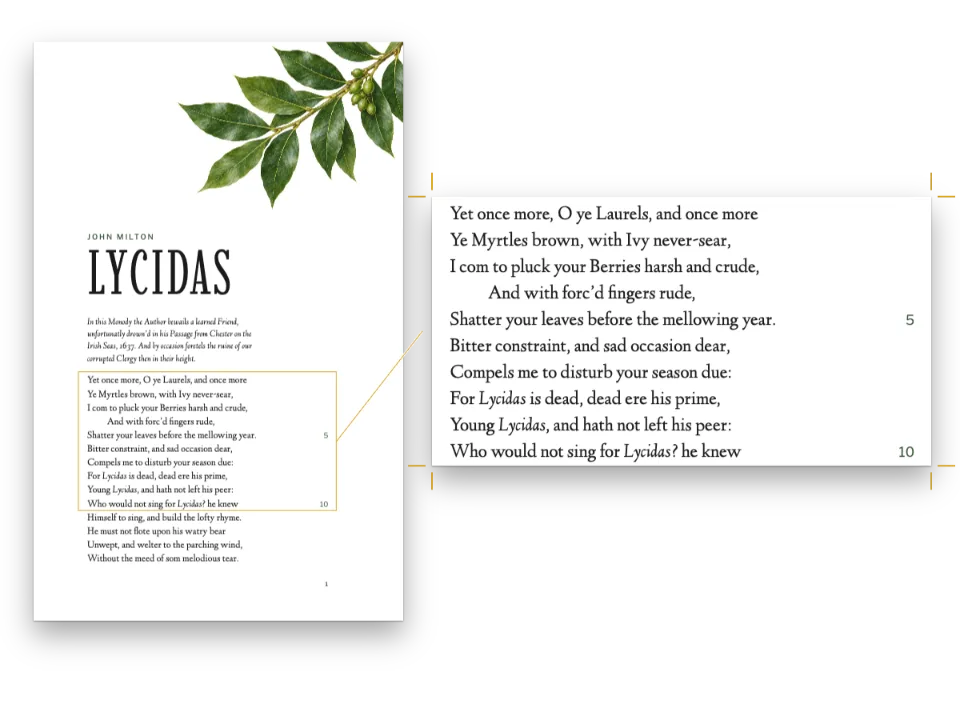
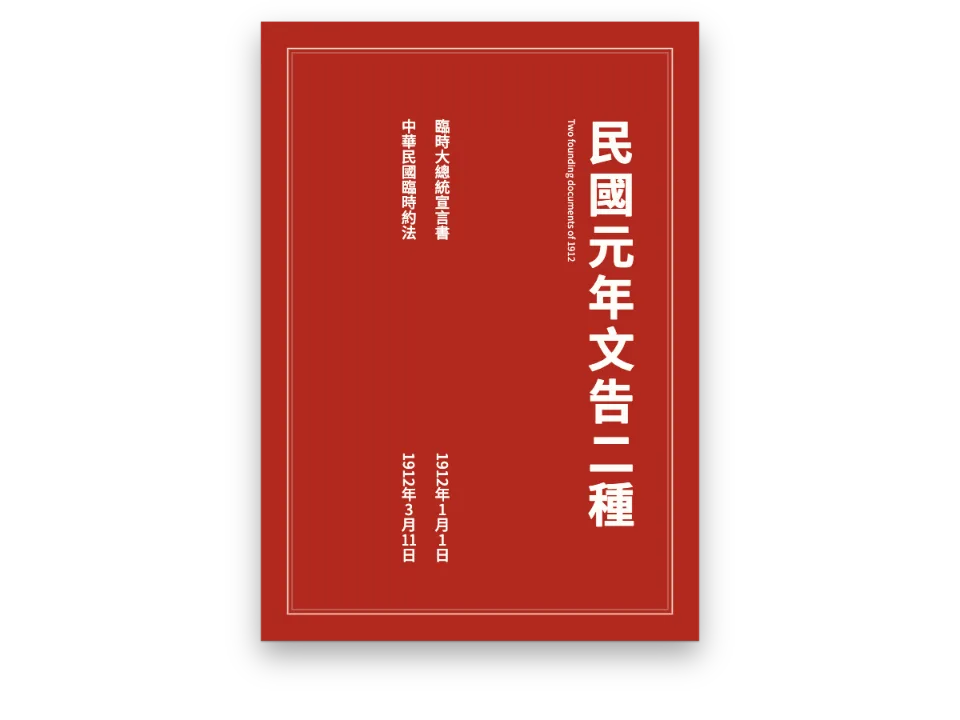
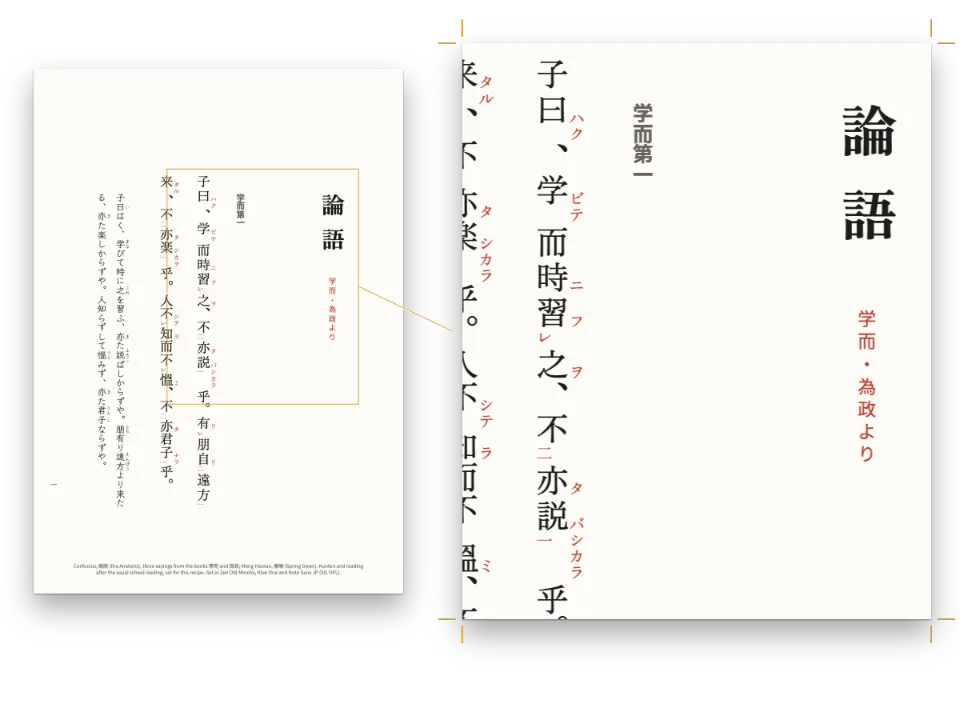
『史記』の読本のための見本ページ3枚を、中国の大32開の本の仕上がり寸法、140 × 203 mmで組みます。本文は「項羽本紀」の冒頭で、古典の校訂本の全式標点を施しています。人物、地名、国、王朝のすべてに直線を、書名と篇名のすべてに波線を付け、どちらも朱で刷ります。1ページ目は前書きと編者の凡例を楷書体で組みます。2ページ目と3ページ目は同じMarkdownを縦組みと横組みで2度組むので、見開きで印の位置の違いがわかります。縦組みでは名前の左、横組みでは名前の下です。本は右綴じで、藍色の帯がそれぞれのタイトルを載せます。No. 044、1645年版の本文による『Lycidas』では、名前をヨーロッパの流儀でイタリックにして区別しています。
このレシピが答える質問
- 中国語の固有名詞と書名に、直線と波線の傍線を付けるには?
- 中国語の強調がイタリックで印字されるのはなぜですか?代わりに何を使えばいいですか?
- 中国語の本を縦組み・右綴じで組むには?
手短な答え
// :name[項梁] draws the proper-name line, :book[史記] the book-title mark, :dots[…] dots.
const cjk = {
  bookTitleMark: 'wavy', // zh-Hant's default; mainland editions of the classics use it too
  annotationColor: col('mark'), // unset, the marks print in the colour of the text
  grid: { enabled: true, charsPerLine: CHARS, linesPerPage: LINES },
};
// The book runs down the page, bound on the right: the lines stand left of the names.
const layout = { layoutType: 'single', writingMode: 'vertical-rl' };
// # 項羽本紀 {style="across"} sets the same Markdown across the page, 28 characters to
// the line: the lines run under the names. Its margins set its grid; the book's grid
// counts down the page.
const MEASURE = 28 * SIZE * PT; // mm
const across = {
  id: 'across',
  layout: { layoutType: 'single', writingMode: 'horizontal-tb' },
  margins: { top: mm(SIDE), bottom: mm(H - SIDE - 25 * LEAD * PT), // 25 lines
    left: mm((W - MEASURE) / 2), right: mm((W - MEASURE) / 2) },
};
材料
- 機能
- 中国語の圏点、専名線、書名線縦組み右綴じの本中国語の約物の幅中国語の改行文字グリッド中国語・日本語・韓国語のフォントPDFに埋め込むフォントPDFの書き出し中国語の漢数字見出しスタイル節ごとのページ構成デザインした章扉段抜きの章見出し帯見出しの属性番号付きリスト字下げ、行そろえ、段落間隔段落スタイルセマンティックカラーパレット
- 種類
- Noto Serif TC, Noto Sans TC, LXGW WenKai TC (SIL OFL 1.1)
- 素材
- なし:図はすべてコードで描画
作り方
#1 · 印はマークアップが付け、位置は組み方向が決める
コードは前出の手短な答えにあります。:name[項梁]と:book[史記]は文字をテキストに残したまま、その横に印を付けます(中国語の記号、ルビ、割注)。そのため検索、コピーしたテキスト、PDFでは項梁と史記として読めます。印の側は組み方向だけで決まります。layout.writingMode: 'vertical-rl'は線を文字の左に置き、レイアウトが'horizontal-tb'の見出しスタイルacrossは線を下に置きます。bookTitleMark: 'wavy'はzh-Hantの文書の既定値ですが、明示しています。zh-Hansに切り替えたときに書名が《》で刷られないようにするためです。東漢班固や史記項羽本紀のように同じ種類の印が2つ接する場合は、接する側の端をそれぞれ8分の1 emずつ詰めるので、線は2つの名前として読めます。
#2 · 印の場所を確保した行送り
const [SONG, HEI, KAI] = ['Noto Serif TC', 'Noto Sans TC', 'LXGW WenKai TC']; // 宋, 黑, 楷
const PT = 25.4 / 72; // mm in a point
const [W, H] = [140, 203]; // mm: 大32開
const SIZE = 10.5; // pt: 五號
// A gap of 7.5 pt (0.71 em) between lines: a line of marks needs half an em of it, dots on
// one side and lines on the other five eighths. At 15 pt the build reports every marked
// paragraph (cjkMarksExceedLeading: gap 0.43 em).
const LEAD = 18; // pt
const [CHARS, LINES] = [42, 17]; // the vertical grid: characters down a line, lines across
const SIDE = (W - LINES * LEAD * PT) / 2; // mm: the side margins of a vertical page
印は行と行の間に置かれ、行送りを変えることはありません(圏点と傍線、ルビ、割注)。10.5 ptの文字を18 ptの行送りで組むと行間は0.71 emで、1ページ目の5つ目の凡例のように、ある行の名前の線と隣の行の点の両方が収まります。グリッドはページを字数で数えます。1行42字、17行です。版面がちょうどその大きさになるよう余白を動かし、天に25.7 mm、地に21.7 mmの余白を取ります(文字グリッド)。
#3 · ページとともに向きを変えるひとつの章扉
// The grid centres the text between the minimum margins; the band stops at its foot.
const FOOT = 20 + (H - 24 - 20 - CHARS * SIZE * PT) / 2; // mm, with minimums of 24 and 20
const BAND = SIDE + 3.5 * LEAD * PT; // mm from the trim, which is the right edge down the page
const onBand = { align: 'left', overflow: 'wrap' }; // design text centres and cuts by default
const next = (id, y) => ({ anchor: { to: `#${id}`, edge: 'below' }, offset: { y: mm(y) } });
const opener = {
  enabled: true,
  minHeight: pt(4 * LEAD), // the text starts on the fifth line, half a line clear of the band
  slot: { elements: [
    // Across the page the band's length runs past the trim; down it, it ends at the text's
    // foot, clear of the folio.
    { kind: 'box', id: 'band', style: { backgroundColor: col('band') },
      placement: { anchor: { to: 'bleed', edge: 'top-left' },
        size: { width: mm(H - FOOT), height: mm(BAND) } } },
    { kind: 'text', id: 'kicker', content: '{attr.kicker}', ...onBand, fontFamily: HEI,
      fontWeight: 700, fontSize: pt(8), letterSpacing: pt(1.6), color: col('tint'),
      placement: { anchor: { to: 'container', edge: 'top-left' }, offset: { y: mm(6 - SIDE) } } },
    { kind: 'text', id: 'title', content: '{titleText}', ...onBand, fontFamily: SONG,
      fontWeight: 700, fontSize: pt(46), lineHeight: 1, letterSpacing: pt(3),
      color: col('paper'), placement: next('kicker', 2) },
    { kind: 'text', id: 'byline', content: '{attr.byline}', ...onBand, fontFamily: KAI,
      fontSize: pt(10), color: col('tint'), placement: next('title', 2) },
  ] },
};
見出しのデザインはそのページの流れに沿ってレイアウトされるので、ひとそろいの要素で両方の組み方向に対応できます(縦組み)。裁ち落としの左上に固定した帯は、横組みのページでは天を横切り、縦組みのページでは読み始めの右端を縦に走ります。キッカー、タイトル、著者名も流れに沿って積み重なります。横組みでは上から下へ、縦組みでは右から左へ並びます。帯の長さは流れの方向に測ります。181.3 mmにすると、縦組みでは本文の地で止まってノンブルにかからず、横組みのページでは仕上がり線を越えて伸びます。
#4 · 右綴じの本のノンブル
const foot = (id, content, parity, edge, x, extra) => ({ kind: 'text', id, content, parity,
  fontFamily: HEI, fontSize: pt(7), color: col('muted'), ...extra,
  placement: { anchor: { to: 'page', edge }, offset: { x: mm(x), y: mm(-11) } } });
const folio = { fontFamily: SONG, fontSize: pt(9) };
// Bound on the right, a recto (odd) lies left of the spine: its outer edge is its left one.
const footer = { elements: [
  foot('folio-odd', '{pageNumber}', 'odd', 'bottom-left', SIDE, folio),
  foot('folio-even', '{pageNumber}', 'even', 'bottom-right', -SIDE, folio),
  foot('slug', '{attr.slug}', 'all', 'bottom', 0, { letterSpacing: pt(0.4) }),
] };
縦組みの本は右綴じになります(綴じ)。1ページ目は背の左にあり、奇数ページの小口は左側です。奇数ページのノンブルは左下、偶数ページのノンブルは右下で、欧文の本とは逆になります。pageNumbering.format: 'trad-chinese-informal'で、一、二、三と刷ります。その間に入るスラグの行は、各見出しの属性slug="…"から取ります。奥付とこのスラグが、英語版とスペイン語版で変わる部分のすべてです。
#5 · 2色目のインク
const palette = {
  ink: '#221e1b', // the text
  band: '#23394b', // the opener band and the small heads
  mark: '#b5412c', // the name, title and emphasis marks: the second ink
  tint: '#c7d2da', // kickers and bylines on the band
  muted: '#6f6a64', // folios, slug lines, the colophon
  paper: '#ffffff',
};
const col = (id) => ({ hex: palette[id], model: 'hex', paletteId: id });
const colorPalette = [
  ...Object.entries(palette).map(([id, hex]) => ({ id, name: id, value: { hex, model: 'hex' } })),
  { id: 'main-color', name: 'band (defaults)', value: { hex: palette.band, model: 'hex' } },
];
古典の校訂本では、印を本文と同じインクで刷ります。学生向けの読本なら、2色目で刷って文字の画と区別できます。annotationColorは印をパレットのmark、つまり朱で書き入れた注釈の朱色にリンクします。この項目をひとつ変えるだけで、本のすべての線と点の色が変わります。
レシピの全体
// ═══ Postext Cookbook · Nº 077 · Proper-name and book-title marks, across and down ═════ // https://postext.dev/en/cookbook/proper-name-marks // Code: MIT · Text: Sima Qian, Shiji 7 (PD) · Punctuation, headnote, conventions: CC BY 4.0 // Fonts: Noto Serif TC, Noto Sans TC, LXGW WenKai TC (SIL OFL 1.1) · Needs postext ≥ 1.9.0 // Specimen pages for a classical reader: the opening of the Basic Annals of Xiang Yu with // its proper-name lines and wavy title lines, set down the page and then across it. import { buildDocument, renderPageToCanvas, clearMeasurementCache, loadVerticalAlternates, } from 'https://esm.sh/postext'; import { renderToPdf, decompressWoff2 } from 'https://esm.sh/postext-pdf'; const LANG = 'en'; // @lang: the language of the slug lines and the colophon ('en' | 'es') const RECIPE = 'proper-name-marks'; // ─── 1 · Design ───────────────────────────────────────────────────────────── // #region palette: the indigo of a thread-bound cover, vermilion for the marks const palette = { ink: '#221e1b', // the text band: '#23394b', // the opener band and the small heads mark: '#b5412c', // the name, title and emphasis marks: the second ink tint: '#c7d2da', // kickers and bylines on the band muted: '#6f6a64', // folios, slug lines, the colophon paper: '#ffffff', }; const col = (id) => ({ hex: palette[id], model: 'hex', paletteId: id }); const colorPalette = [ ...Object.entries(palette).map(([id, hex]) => ({ id, name: id, value: { hex, model: 'hex' } })), { id: 'main-color', name: 'band (defaults)', value: { hex: palette.band, model: 'hex' } }, ]; // #endregion // #region type: 五號 on 18 pt, 42 characters by 17 lines down the page const [SONG, HEI, KAI] = ['Noto Serif TC', 'Noto Sans TC', 'LXGW WenKai TC']; // 宋, 黑, 楷 const PT = 25.4 / 72; // mm in a point const [W, H] = [140, 203]; // mm: 大32開 const SIZE = 10.5; // pt: 五號 // A gap of 7.5 pt (0.71 em) between lines: a line of marks needs half an em of it, dots on // one side and lines on the other five eighths. At 15 pt the build reports every marked // paragraph (cjkMarksExceedLeading: gap 0.43 em). const LEAD = 18; // pt const [CHARS, LINES] = [42, 17]; // the vertical grid: characters down a line, lines across const SIDE = (W - LINES * LEAD * PT) / 2; // mm: the side margins of a vertical page // #endregion // #region answer: marks by the markup, their side by the writing mode // :name[項梁] draws the proper-name line, :book[史記] the book-title mark, :dots[…] dots. const cjk = { bookTitleMark: 'wavy', // zh-Hant's default; mainland editions of the classics use it too annotationColor: col('mark'), // unset, the marks print in the colour of the text grid: { enabled: true, charsPerLine: CHARS, linesPerPage: LINES }, }; // The book runs down the page, bound on the right: the lines stand left of the names. const layout = { layoutType: 'single', writingMode: 'vertical-rl' }; // # 項羽本紀 {style="across"} sets the same Markdown across the page, 28 characters to // the line: the lines run under the names. Its margins set its grid; the book's grid // counts down the page. const MEASURE = 28 * SIZE * PT; // mm const across = { id: 'across', layout: { layoutType: 'single', writingMode: 'horizontal-tb' }, margins: { top: mm(SIDE), bottom: mm(H - SIDE - 25 * LEAD * PT), // 25 lines left: mm((W - MEASURE) / 2), right: mm((W - MEASURE) / 2) }, }; // #endregion // #region opener: one design both ways: a band over the text across, right of it down // The grid centres the text between the minimum margins; the band stops at its foot. const FOOT = 20 + (H - 24 - 20 - CHARS * SIZE * PT) / 2; // mm, with minimums of 24 and 20 const BAND = SIDE + 3.5 * LEAD * PT; // mm from the trim, which is the right edge down the page const onBand = { align: 'left', overflow: 'wrap' }; // design text centres and cuts by default const next = (id, y) => ({ anchor: { to: `#${id}`, edge: 'below' }, offset: { y: mm(y) } }); const opener = { enabled: true, minHeight: pt(4 * LEAD), // the text starts on the fifth line, half a line clear of the band slot: { elements: [ // Across the page the band's length runs past the trim; down it, it ends at the text's // foot, clear of the folio. { kind: 'box', id: 'band', style: { backgroundColor: col('band') }, placement: { anchor: { to: 'bleed', edge: 'top-left' }, size: { width: mm(H - FOOT), height: mm(BAND) } } }, { kind: 'text', id: 'kicker', content: '{attr.kicker}', ...onBand, fontFamily: HEI, fontWeight: 700, fontSize: pt(8), letterSpacing: pt(1.6), color: col('tint'), placement: { anchor: { to: 'container', edge: 'top-left' }, offset: { y: mm(6 - SIDE) } } }, { kind: 'text', id: 'title', content: '{titleText}', ...onBand, fontFamily: SONG, fontWeight: 700, fontSize: pt(46), lineHeight: 1, letterSpacing: pt(3), color: col('paper'), placement: next('kicker', 2) }, { kind: 'text', id: 'byline', content: '{attr.byline}', ...onBand, fontFamily: KAI, fontSize: pt(10), color: col('tint'), placement: next('title', 2) }, ] }, }; // #endregion // #region folios: Chinese numerals at the outer foot, the slug line in the middle const foot = (id, content, parity, edge, x, extra) => ({ kind: 'text', id, content, parity, fontFamily: HEI, fontSize: pt(7), color: col('muted'), ...extra, placement: { anchor: { to: 'page', edge }, offset: { x: mm(x), y: mm(-11) } } }); const folio = { fontFamily: SONG, fontSize: pt(9) }; // Bound on the right, a recto (odd) lies left of the spine: its outer edge is its left one. const footer = { elements: [ foot('folio-odd', '{pageNumber}', 'odd', 'bottom-left', SIDE, folio), foot('folio-even', '{pageNumber}', 'even', 'bottom-right', -SIDE, folio), foot('slug', '{attr.slug}', 'all', 'bottom', 0, { letterSpacing: pt(0.4) }), ] }; // #endregion // The front page sets the headnote and the conventions in the Kai face. A section's // bodyStyle sets its list numbers bold unless its orderedLists say otherwise. const front = { id: 'front', bodyStyle: { fontFamily: KAI, orderedLists: { fontWeight: 400 } } }; const config = () => ({ // a factory: the engine caches resolved configs per object locale: 'zh-Hant', // Taiwan: full-width centred punctuation (gotcha: cjk-locale-tag) colorPalette, page: { sizePreset: 'custom', width: mm(W), height: mm(H), dpi: 150, // Minimums: the grid centres its 42 × 17 characters, 天頭 25.7 mm over 地腳 21.7 mm. margins: { top: mm(24), bottom: mm(20), left: mm(SIDE), right: mm(SIDE), mirror: true }, pageNumbering: { format: 'trad-chinese-informal' }, // 一, 二, 三 }, layout, cjk, bodyText: { fontFamily: SONG, fontSize: pt(SIZE), lineHeight: pt(LEAD), color: col('ink'), boldColor: col('ink'), italicColor: col('ink'), referenceColor: col('ink'), textAlign: 'justify', firstLineIndent: em(2), indentAfterHeading: true, }, headings: { fontFamily: HEI, fontWeight: 700, color: col('band'), levels: [ // Restated: any headings object drops the H1 break (gotcha: headings-drop-h1-break). { level: 1, span: 'page', breakBefore: { enabled: true, parity: 'any' }, advancedDesign: opener, marginBottom: pt(0) }, // No space above: 題解 sits on the fifth line, where the other pages' text starts; // a :::space line sets 凡例 apart from the headnote. { level: 2, fontSize: pt(SIZE), lineHeight: pt(LEAD), letterSpacing: pt(2), marginTop: pt(0), marginBottom: pt(0) }, ], }, headingStyles: [front, across], // No gap after 一、: the text starts two ems in, on the grid, like a paragraph's. orderedLists: { numberFormat: 'trad-chinese-informal', separator: '、', fontFamily: KAI, fontWeight: 400, color: col('ink'), gap: em(0), marginTop: pt(0), marginBottom: pt(0) }, paragraphStyles: [ { id: 'colophon', fontFamily: HEI, fontSize: pt(7), lineHeight: pt(10), color: col('muted'), textAlign: 'left', firstLineIndent: pt(0), marginTop: pt(LEAD) }, ], header: { elements: [] }, // every page opens a section: the band is its head footer, }); // ─── 2 · Content ──────────────────────────────────────────────────────────── // The Chinese is the same in both editions; the slug lines and the colophon change. const markdown = String.raw`---Markdownの見本 · 43行 · content.en.md
title: "史記選讀" author: "司馬遷" --- # 史記選讀 {style="front" kicker="版式樣張" byline="題解 凡例" slug="Specimen sheet: the headnote and the conventions"} ## 題解 :book[項羽本紀]是:book[史記]第七卷,記述:name[秦]末:name[項羽]起兵、分封諸侯,以至兵敗:name[垓下]、自刎:name[烏江]的始末。:name[司馬遷]將這位未曾稱帝的人物列入「本紀」,與帝王並列。本樣張節錄篇首,寫:name[項羽]的出身與少年志氣。:name[東漢]:name[班固]:book[漢書]:book[陳勝項籍傳]敘述同一段事,文字大多沿用:book[史記]。 :::space ## 凡例 1. 正文依維基文庫所收:book[史記]卷七錄文;標點、分段與題解為本樣張所加。 2. 人名、地名、國名、朝代名旁加專名號,直排標於字左,橫排標於字下。 3. 書名、篇名旁加浪線書名號,位置與專名號相同,如:book[史記]:book[項羽本紀]。 4. 兩個專名緊相連接時各自畫線,相接處各縮八分之一字,如:name[楚]:name[漢]、:name[東漢]:name[班固]。 5. 需要強調的字旁加著重號,直排在字右,橫排在字下,如:dots[萬人敵]。 # 項羽本紀 {kicker="樣張一 直排" byline="〔漢〕司馬遷" slug="Specimen 1, down the page: the lines stand left of the names"} :name[項籍]者,:name[下相]人也,字:name[羽]。初起時,年二十四。其季父:name[項梁]。:name[梁]父即:name[楚]將:name[項燕],為:name[秦]將:name[王翦]所戮者也。:name[項氏]世世為:name[楚]將,封於:name[項],故姓:name[項氏]。 :name[項籍]少時,學書不成,去學劍,又不成。:name[項梁]怒之。:name[籍]曰:「書,足以記名姓而已;劍,一人敵,不足學。學萬人敵。」於是:name[項梁]乃教:name[籍]兵法。:name[籍]大喜,略知其意,又不肯竟學。 :name[項梁]嘗有:name[櫟陽]逮,乃請:name[蘄]獄掾:name[曹咎]書抵:name[櫟陽]獄掾:name[司馬欣],以故事得已。:name[項梁]殺人,與:name[籍]避仇於:name[吳中],:name[吳中]賢士大夫皆出:name[項梁]下。每:name[吳中]有大繇役及喪,:name[項梁]常為主辦,陰以兵法部勒賓客及子弟,以是知其能。 :name[秦始皇帝]游:name[會稽],渡:name[浙江],:name[梁]與:name[籍]俱觀。:name[籍]曰:「彼可取而代也!」:name[梁]掩其口曰:「毋妄言,族矣。」:name[梁]以此奇:name[籍]。:name[籍]長八尺餘,力能扛鼎,才氣過人,雖:name[吳中]子弟,皆已憚:name[籍]矣。 # 項羽本紀 {style="across" kicker="樣張二 橫排" byline="〔漢〕司馬遷" slug="Specimen 2, across the page: the lines run under the names"} :name[項籍]者,:name[下相]人也,字:name[羽]。初起時,年二十四。其季父:name[項梁]。:name[梁]父即:name[楚]將:name[項燕],為:name[秦]將:name[王翦]所戮者也。:name[項氏]世世為:name[楚]將,封於:name[項],故姓:name[項氏]。 :name[項籍]少時,學書不成,去學劍,又不成。:name[項梁]怒之。:name[籍]曰:「書,足以記名姓而已;劍,一人敵,不足學。學萬人敵。」於是:name[項梁]乃教:name[籍]兵法。:name[籍]大喜,略知其意,又不肯竟學。 :name[項梁]嘗有:name[櫟陽]逮,乃請:name[蘄]獄掾:name[曹咎]書抵:name[櫟陽]獄掾:name[司馬欣],以故事得已。:name[項梁]殺人,與:name[籍]避仇於:name[吳中],:name[吳中]賢士大夫皆出:name[項梁]下。每:name[吳中]有大繇役及喪,:name[項梁]常為主辦,陰以兵法部勒賓客及子弟,以是知其能。 :name[秦始皇帝]游:name[會稽],渡:name[浙江],:name[梁]與:name[籍]俱觀。:name[籍]曰:「彼可取而代也!」:name[梁]掩其口曰:「毋妄言,族矣。」:name[梁]以此奇:name[籍]。:name[籍]長八尺餘,力能扛鼎,才氣過人,雖:name[吳中]子弟,皆已憚:name[籍]矣。 :::paragraphs{style="colophon"} Set in Noto Serif TC, Noto Sans TC and LXGW WenKai TC (SIL Open Font License). Text: Sima Qian, Shiji, chapter 7, from zh.wikisource (public domain). Punctuation, paragraphs, headnote and conventions written for this specimen (CC BY 4.0). :::`; // content.<lang>.md, inlined by the Cookbook // ─── 3 · Fonts ────────────────────────────────────────────────────────────── // A Chinese face comes in slices: each voice loads the files of the text it sets // (gotcha: cjk-fonts-slices). Kai sets the front page and the bylines, Hei the small heads. const FONTS = { 'Noto Serif TC': ['400', '700'], 'Noto Sans TC': ['400', '700'], 'LXGW WenKai TC': ['400'], }; const heads = markdown.match(/^#.*$/gm).join('\n'); // titles, kickers, bylines, slug lines const preface = markdown.slice(0, markdown.indexOf('\n# ', markdown.indexOf('# ') + 2)); const colophon = markdown.slice(markdown.lastIndexOf(':::paragraphs')); const NUMERALS = '一二三四五六七八九十、'; // folios and list numbers, which the text may lack // ─── 4 · Build & show ─────────────────────────────────────────────────────── await loadFonts(FONTS, markdown); await loadCjkFonts({ [SONG]: ['400'] }, markdown + NUMERALS, { vertical: true }); // The bold sets the two titles, which have no punctuation, so it loads no vertical forms. // A browser that ignores the forms' feature settings would otherwise take a twin of the // bold files for vertical forms and set the text's brackets upright in the regular. await loadCjkFonts({ [SONG]: ['700'] }, heads); await loadCjkFonts({ [HEI]: ['400', '700'] }, heads + colophon, { vertical: true }); await loadCjkFonts({ [KAI]: ['400'] }, preface + heads + NUMERALS, { vertical: true }); const doc = await buildWithFonts(() => buildDocument({ markdown }, config()), markdown); showBook(doc, { title: t({ en: 'Name and title marks, down and across', es: 'Marcas de nombre y de título, en vertical y en horizontal' }) }); offerPdf(() => renderToPdf(doc, { fontProvider: cjkPdfProvider }), `${RECIPE}.pdf`);キット · core, fonts, viewer, pdf, cjk:全レシピ共通 · 453行
// ─── Kit ── helpers shared by every Cookbook recipe · postext.dev/cookbook ───── // ─── Kit · core v1 ── the same in every recipe · postext.dev/cookbook ───────── function mm(value) { return { value, unit: 'mm' }; } function pt(value) { return { value, unit: 'pt' }; } function em(value) { return { value, unit: 'em' }; } /** The sample language's string: t({ en: 'Figure', es: 'Figura' }). */ function t(strings) { return strings[LANG] ?? Object.values(strings)[0]; } /** A file in this recipe's assets folder, served from the Postext repo by jsDelivr. */ function asset(file) { return `https://cdn.jsdelivr.net/gh/drnachio/postext@main/cookbook/${RECIPE}/assets/${file}`; } // ─── Kit · fonts v1 ── the same in every recipe · postext.dev/cookbook ──────── // Postext measures text with the faces the browser has loaded, and caches the // widths, so every face must be ready before the first build. Faces come from // Fontsource: the same static files the PDF embeds, so screen and PDF agree. /** faces = { 'Family Name': ['400', '400i', '700'] }. `text` is the sample: * letters beyond Latin-1 (č, ł, ő…) also load the latin-ext files. With * `optional`, a face Fontsource does not ship is skipped instead of failing. * Resolves to the number of faces added. */ async function loadFonts(faces, text = '', { optional = false } = {}) { kitStatus('Loading fonts…'); const ranges = { latin: 'U+0000-00FF,U+0131,U+0152-0153,U+02BB-02BC,U+02C6,U+02DA,U+02DC,U+0304,U+0308,U+0329,' + 'U+2000-206F,U+20AC,U+2122,U+2191,U+2193,U+2212,U+2215,U+FEFF,U+FFFD', 'latin-ext': 'U+0100-02BA,U+02BD-02C5,U+02C7-02CC,U+02CE-02D7,U+02DD-02FF,U+0304,U+0308,U+0329,' + 'U+1D00-1DBF,U+1E00-1E9F,U+1EF2-1EFF,U+2020,U+20A0-20AB,U+20AD-20C0,U+2113,U+2C60-2C7F,U+A720-A7FF', }; const subsets = /[Ā-˿Ḁ-ỿ]/.test(text) ? ['latin', 'latin-ext'] : ['latin']; const jobs = []; let added = 0; for (const [family, specs] of Object.entries(faces)) { const id = fontsourceId(family); const meta = optional ? await fontsourceMeta(family) : null; for (const spec of new Set(specs)) { const weight = parseInt(spec, 10); const style = spec.endsWith('i') ? 'italic' : 'normal'; if (hasFace(family, weight, style)) continue; if (optional && !(meta?.weights.includes(weight) && meta.styles.includes(style))) continue; for (const subset of subsets) { const url = `https://cdn.jsdelivr.net/npm/@fontsource/${id}@5/files/${id}-${subset}-${weight}-${style}.woff2`; const face = new FontFace(family, `url(${url}) format('woff2')`, { weight: String(weight), style, unicodeRange: ranges[subset] }); jobs.push(face.load().then((ready) => { document.fonts.add(ready); added++; }, () => { if (subset === 'latin' && !optional) throw new Error(`Fontsource has no ${family} ${weight} ${style}`); })); } } } await Promise.all(jobs).catch((error) => { kitFail(error); throw error; }); return added; } /** Runs `build` (a buildDocument or buildBundle call) and checks the faces * the pages use. A regular face missing from FONTS is loaded with a warning; * bold and italic variants are loaded when the family ships them. Then the * measurement caches are cleared and the build runs again. */ async function buildWithFonts(build, text = '') { const tried = new Set(); for (let round = 0; round < 3; round++) { kitStatus('Laying out…'); await new Promise(requestAnimationFrame); // let the status paint first const result = await Promise.resolve().then(build).catch((error) => { kitFail(error); throw error; }); const wanted = { base: {}, variants: {} }; for (const { font, base } of [result].flat().flatMap(fontStringsOf)) { const { family, weight, style } = parseFont(font); const key = `${family}|${weight}|${style}`; if (tried.has(key) || hasFace(family, weight, style)) continue; tried.add(key); (wanted[base ? 'base' : 'variants'][family] ??= []).push(`${weight}${style === 'italic' ? 'i' : ''}`); } if (Object.keys(wanted.base).length) { console.warn(`[cookbook] FONTS does not list ${JSON.stringify(wanted.base)}: loading them.`); } const added = await loadFonts(wanted.base, text) + await loadFonts(wanted.variants, text, { optional: true }); if (added === 0) return result; clearMeasurementCache(); } throw new Error('The fonts did not settle after three builds.'); } /** Every font string of the layout. `base` marks a block's own face; its * bold, italic and bold-italic variants are listed whether or not used. */ function fontStringsOf(doc) { const found = new Map(); const walk = (node) => { if (!node || typeof node !== 'object') return; if (Array.isArray(node)) { node.forEach(walk); return; } for (const [key, value] of Object.entries(node)) { if (typeof value === 'string' && /fontString$/i.test(key)) { found.set(value, found.get(value) || key === 'fontString'); } else if (value && typeof value === 'object') walk(value); } }; walk(doc.pages); walk(doc.blocks); return [...found].map(([font, base]) => ({ font, base })); } /** '700 37.5px Open Sans' / 'italic 400 13px "Source Serif 4"' → { family, weight, style }. * A string with no weight ('95.8px Young Serif', from a design text) is 400. */ function parseFont(font) { const m = /^(?:(italic|oblique)\s+)?(?:small-caps\s+)?(?:(\d+|bold|normal)\s+)?[\d.]+px\s+(.+)$/.exec(font.trim()); if (!m) throw new Error(`Unexpected font string: ${font}`); const weight = m[2] === 'bold' ? 700 : !m[2] || m[2] === 'normal' ? 400 : Number(m[2]); return { family: m[3].replace(/^["']|["']$/g, ''), weight, style: m[1] ? 'italic' : 'normal' }; } /** True when a loaded FontFace covers exactly this family, weight and style * (document.fonts.check() is also true for families nobody declared). */ function hasFace(family, weight, style) { for (const face of document.fonts) { if (face.status !== 'loaded' || face.style !== style) continue; if (face.family.replace(/^["']|["']$/g, '') !== family) continue; const [low, high = low] = face.weight.split(' ').map(Number); if (weight >= low && weight <= high) return true; } return false; } /** Fontsource's id for a family: 'Source Serif 4' → 'source-serif-4'. */ function fontsourceId(family) { return family.toLowerCase().replace(/\s+/g, '-'); } /** The weights and styles a family ships ({ weights: [400, 700], styles: ['normal', 'italic'] }), or null. */ function fontsourceMeta(family) { fontsourceMeta.cache ??= new Map(); const id = fontsourceId(family); if (!fontsourceMeta.cache.has(id)) { fontsourceMeta.cache.set(id, fetch(`https://api.fontsource.org/v1/fonts/${id}`) .then((res) => (res.ok ? res.json() : null), () => null)); } return fontsourceMeta.cache.get(id); } // ─── Kit · viewer v1 ── the same in every recipe · postext.dev/cookbook ─────── /** Shows the pages as facing spreads on a dark desk: the first page is a * recto on its own, then verso | recto pairs, as in a bound book. Pages * are painted when they scroll near the screen. */ function showPages(docs, { title, width = 460 } = {}) { const root = viewer(title); const pages = [docs].flat().flatMap((doc) => doc.pages.map((page) => ({ doc, page, n: (doc.pageIndexOffset ?? 0) + page.index }))); const spreads = []; let verso = null; for (const p of pages) { if (p.n % 2 === 1) { if (verso) spreads.push([verso, null]); verso = p; } else { spreads.push([verso, p]); verso = null; } } if (verso) spreads.push([verso, null]); const density = Math.min(window.devicePixelRatio || 1, 2); showPages.painter?.disconnect(); const painter = new IntersectionObserver((entries) => { for (const { isIntersecting, target } of entries) { if (!isIntersecting) continue; painter.unobserve(target); const { doc, page } = target.postext; renderPageToCanvas(page, doc, target, { scale: (width * density) / page.width }); } }, { rootMargin: '800px' }); showPages.painter = painter; root.replaceChildren(...spreads.map((pair) => { const spread = document.createElement('div'); spread.className = 'pt-spread'; for (const p of pair) { const figure = document.createElement('figure'); if (p) { const label = p.page.pageLabel || String(p.n + 1); const canvas = document.createElement('canvas'); canvas.postext = p; canvas.style.aspectRatio = `${p.page.width} / ${p.page.height}`; canvas.setAttribute('role', 'img'); canvas.setAttribute('aria-label', `Page ${label}`); const folio = document.createElement('figcaption'); folio.textContent = label; figure.append(canvas, folio); painter.observe(canvas); } else figure.className = 'pt-blank'; spread.append(figure); } return spread; })); kitStatus(`${pages.length} ${pages.length === 1 ? 'page' : 'pages'}`); document.documentElement.dataset.postext = 'ready'; return pages.length; } /** The desk, the bar and the error reporting, created once. */ function viewer(title) { if (!document.getElementById('pt-kit')) { document.head.insertAdjacentHTML('beforeend', `<style id="pt-kit"> :root { color-scheme: dark; } body { margin: 0; background: #0e1014; color: #b9bcc4; font: 13px/1.45 system-ui, sans-serif; } #pt-bar { position: sticky; top: 0; z-index: 1; display: flex; flex-wrap: wrap; align-items: center; gap: 6px 16px; padding: 10px 16px; background: rgb(14 16 20 / .92); backdrop-filter: blur(6px); border-bottom: 1px solid #23262d; } #pt-bar strong { color: #f4f1ea; font-weight: 600; } #pt-actions { display: flex; gap: 12px; margin-left: auto; } #pt-actions a, #pt-actions button { color: #d8a21a; font: inherit; background: none; border: 0; padding: 0; cursor: pointer; } #pages { display: grid; justify-items: center; gap: 48px; padding: 32px 16px 72px; } .pt-spread { display: flex; } .pt-spread figure { margin: 0; width: min(460px, 44vw); } .pt-spread canvas { display: block; width: 100%; background: #fff; box-shadow: 0 1px 2px rgb(0 0 0 / .5), 0 22px 44px -16px rgb(0 0 0 / .8); } .pt-spread figure:first-child canvas { box-shadow: inset -14px 0 14px -14px rgb(0 0 0 / .18), 0 1px 2px rgb(0 0 0 / .5), 0 22px 44px -16px rgb(0 0 0 / .8); } .pt-spread figcaption { margin-top: 10px; text-align: center; font: 600 10px/1 system-ui, sans-serif; letter-spacing: .18em; text-transform: uppercase; color: #6c7079; } .pt-blank { visibility: hidden; } @media (max-width: 760px) { .pt-spread { flex-direction: column; gap: 32px; } .pt-spread figure { width: min(460px, 92vw); } .pt-blank { display: none; } } </style>`); document.body.insertAdjacentHTML('afterbegin', '<header id="pt-bar"><strong id="pt-title"></strong><span id="pt-status" role="status"></span><span id="pt-actions"></span></header>'); document.getElementById('pt-title').textContent = document.title || 'Postext'; addEventListener('error', (event) => kitFail(event.error ?? event.message)); addEventListener('unhandledrejection', (event) => kitFail(event.reason)); } if (title) document.getElementById('pt-title').textContent = title; return document.getElementById('pages') ?? document.body.appendChild(Object.assign(document.createElement('main'), { id: 'pages' })); } function kitStatus(text) { viewer(); document.getElementById('pt-status').textContent = text; } function kitFail(error) { document.documentElement.dataset.postext = 'error'; kitStatus(`Error: ${error?.message ?? error}`); } // ─── Kit · pdf v1 ── the same in every recipe that exports a PDF ────────────── /** postext-pdf embeds TrueType bytes. Fetch the Fontsource file the screen * used, snapping to a weight the family ships and falling back to upright * when it has no italic: the PDF asks for every face a block could use. */ async function fontsourceProvider(family, weight, style) { const id = fontsourceId(family); const meta = await fontsourceMeta(family); const weights = meta?.weights?.length ? meta.weights : [400, 700]; const w = weights.reduce((a, b) => (Math.abs(b - weight) < Math.abs(a - weight) ? b : a)); const s = style === 'italic' && meta && !meta.styles.includes('italic') ? 'normal' : style; const res = await fetch(`https://cdn.jsdelivr.net/npm/@fontsource/${id}@5/files/${id}-latin-${w}-${s}.woff2`); if (!res.ok) throw new Error(`Fontsource has no ${family} ${w} ${s} (${res.status})`); return decompressWoff2(new Uint8Array(await res.arrayBuffer())); } /** A "Build the PDF" button in the bar. Once built: "Open the PDF" (a new * tab, since CodePen's preview frame cannot show PDFs) and a download link. */ function offerPdf(makePdf, filename) { viewer(); const button = Object.assign(document.createElement('button'), { type: 'button', textContent: 'Build the PDF' }); button.dataset.postextPdf = filename; button.addEventListener('click', async () => { button.disabled = true; button.textContent = 'Building the PDF…'; try { const bytes = await makePdf(); const url = URL.createObjectURL(new Blob([bytes], { type: 'application/pdf' })); const size = `${Math.max(1, Math.round(bytes.length / 1024))} KB`; button.replaceWith( Object.assign(document.createElement('a'), { href: url, target: '_blank', rel: 'noopener', textContent: 'Open the PDF ↗' }), Object.assign(document.createElement('a'), { href: url, download: filename, textContent: `Download ${filename} · ${size}` })); } catch (error) { button.disabled = false; button.textContent = 'Build the PDF'; kitFail(error); } }); document.getElementById('pt-actions').append(button); } // ─── Kit · cjk v1 ── Chinese, Japanese and Korean books · postext.dev/cookbook ─ // Fontsource ships a CJK family as about a hundred files per weight, each // declared in its stylesheet with the unicode-range it covers. The screen // loads the files the sample touches; the PDF gets the same files for the // characters its pages set in each face, and embeds each as a subset. // A book bound on the right (vertical text) is shown with its spreads // mirrored: page 1 alone on the left of the spine, then [3 | 2]. /** The files of a Fontsource face, read from its stylesheet: { url, range, * ranges }, the last declared first (the order the browser tries them in). */ function cjkSlices(family, weight, style) { cjkSlices.cache ??= new Map(); const id = fontsourceId(family); const css = `https://cdn.jsdelivr.net/npm/@fontsource/${id}@5/${weight}${style === 'italic' ? '-italic' : ''}.css`; if (!cjkSlices.cache.has(css)) { cjkSlices.cache.set(css, fetch(css) .then((res) => { if (!res.ok) throw new Error(`Fontsource has no ${family} ${weight} ${style} (${res.status})`); return res.text(); }) .then((text) => [...text.matchAll(/@font-face\s*{([^}]*)}/g)].map(([, rule]) => { const range = /unicode-range:\s*([^;]+);/.exec(rule)?.[1].trim() ?? 'U+0-10FFFF'; const ranges = range.split(',').map((part) => { const [lo, hi = lo] = part.trim().slice(2).split('-'); return [parseInt(lo, 16), parseInt(hi, 16)]; }); return { url: new URL(/url\(([^)]+?\.woff2)\)/.exec(rule)[1], css).href, range, ranges }; }).reverse())); } return cjkSlices.cache.get(css); } /** The file of `slices` that holds code point `cp`, if any. */ function cjkSliceFor(slices, cp) { return slices.find((slice) => slice.ranges.some(([lo, hi]) => cp >= lo && cp <= hi)); } /** Whether Fontsource serves `family` as a Chinese, Japanese or Korean * family (its subsets name the script). Fails when the API does not * answer: a CJK face taken for a Latin one would paint in a system face. */ async function isCjkFamily(family) { const meta = await fontsourceMeta(family); if (!meta) throw new Error(`api.fontsource.org did not describe ${family}: reload to try again`); return !!meta.subsets?.some((subset) => /^(chinese|japanese|korean)/.test(subset)); } /** faces = { 'Noto Serif TC': ['400', '700'] }, as for loadFonts: the * whole FONTS object may be passed, its other families are left to * loadFonts. Adds one FontFace per file of each CJK face with its * unicodeRange, then loads the files `text` touches. `text` is what the * faces set: the sample for the text face; a book in several voices calls * it once per voice (loadCjkFonts({ 'LXGW WenKai TC': ['400'] }, quotes)), * so the heading and quotation faces fetch and check only their own * characters. Fails when a character of `text` is in no file of a face. * List every weight the pages use: a weight left to buildWithFonts gets * the latin file only. With { vertical: true } it also loads each * family's vertical forms (brackets, quotes, pause marks) for the canvas, * which needs loadVerticalAlternates imported from postext. Resolves to * the number of files loaded. */ async function loadCjkFonts(faces, text, { vertical = false } = {}) { kitStatus('Loading fonts…'); let loaded = 0; try { if (vertical && typeof loadVerticalAlternates !== 'function') { throw new Error('loadCjkFonts(…, { vertical: true }) needs loadVerticalAlternates imported from postext'); } for (const [family, specs] of Object.entries(faces)) { if (!(await isCjkFamily(family))) continue; const twin = []; for (const spec of new Set(specs)) { const weight = parseInt(spec, 10); const style = spec.endsWith('i') ? 'italic' : 'normal'; const slices = await cjkSlices(family, weight, style); const missing = [...new Set(text)].filter((ch) => /\S/.test(ch) && !cjkSliceFor(slices, ch.codePointAt(0))); if (missing.length) { throw new Error(`${family} ${spec} has no file for ${missing.slice(0, 12).join(' ')}: ` + `give each face the text it sets (loadCjkFonts({ '${family}': ['${spec}'] }, text))`); } for (const slice of slices) { document.fonts.add(new FontFace(family, `url(${slice.url}) format('woff2')`, { weight: String(weight), style, unicodeRange: slice.range })); twin.push({ source: slice.url, weight: String(weight), style, unicodeRange: slice.range }); } const font = `${style === 'italic' ? 'italic ' : ''}${weight} 16px "${family}"`; loaded += (await document.fonts.load(font, text)).length; if (!document.fonts.check(font, text)) throw new Error(`${family} ${spec} did not load for the sample`); } // The same files under a twin name with the `vert` feature on: the // canvas paints the punctuation of vertical lines with it. if (vertical && twin.length) await loadVerticalAlternates(family, twin); } } catch (error) { kitFail(error); throw error; } return loaded; } /** The PDF font provider for recipes with CJK faces: a family whose * Fontsource subsets are Chinese, Japanese or Korean gets the files that * hold the characters its pages set (`request.codePoints`); any other * family gets the latin file fontsourceProvider fetches (the "pdf" block) * and, when the face sets letters only latin-ext has, that file too. */ async function cjkPdfProvider(family, weight, style, request) { if (!(await isCjkFamily(family))) return cjkLatinPdfFiles(family, weight, style, request); const meta = await fontsourceMeta(family); const weights = meta.weights?.length ? meta.weights : [400, 700]; const w = weights.reduce((a, b) => (Math.abs(b - weight) < Math.abs(a - weight) ? b : a)); const s = style === 'italic' && !meta.styles.includes('italic') ? 'normal' : style; const slices = await cjkSlices(family, w, s); const picked = new Set(); for (const cp of request?.codePoints ?? []) { const slice = cjkSliceFor(slices, cp); if (slice) picked.add(slice); } if (!picked.size) picked.add(slices[0]); return Promise.all(slices.filter((slice) => picked.has(slice)).map(async (slice) => { const res = await fetch(slice.url); if (!res.ok) throw new Error(`Fontsource file ${slice.url} (${res.status})`); return decompressWoff2(new Uint8Array(await res.arrayBuffer())); })); } /** A Latin family set next to the CJK faces: its latin file, then its * latin-ext file when the face sets letters only latin-ext has (ō ū in * Hepburn rōmaji, ǎ in pinyin), the file loadFonts adds on screen for * them. Latin comes first: postext-pdf draws a character from the first * file that has it, as the browser takes a character both files hold from * latin. A face Fontsource ships without latin-ext, or whose file does * not come, gets latin alone, and the PDF names the letters it lacks. */ async function cjkLatinPdfFiles(family, weight, style, request) { const meta = await fontsourceMeta(family); const beyond = [...(request?.codePoints ?? [])].some(cjkLatinExtOnly); if (!beyond || !meta?.subsets?.includes('latin-ext')) return fontsourceProvider(family, weight, style); const weights = meta.weights?.length ? meta.weights : [400, 700]; const w = weights.reduce((a, b) => (Math.abs(b - weight) < Math.abs(a - weight) ? b : a)); const s = style === 'italic' && !meta.styles.includes('italic') ? 'normal' : style; const id = fontsourceId(family); const url = `https://cdn.jsdelivr.net/npm/@fontsource/${id}@5/files/${id}-latin-ext-${w}-${s}.woff2`; const [latin, ext] = await Promise.all([fontsourceProvider(family, weight, style), fetch(url) .then(async (res) => (res.ok ? decompressWoff2(new Uint8Array(await res.arrayBuffer())) : null), () => null)]); return ext ? [latin, ext] : latin; } /** Whether code point `cp` is in Fontsource's latin-ext file and not in * its latin file: Latin Extended-A and -B, IPA, the spacing modifiers and * Latin Extended Additional (loadFonts's test for latin-ext), less the * few latin holds too (ı Œ œ ʻ ʼ ˆ ˚ ˜). */ function cjkLatinExtOnly(cp) { if (!((cp >= 0x100 && cp <= 0x2ff) || (cp >= 0x1e00 && cp <= 0x1eff))) return false; return ![0x131, 0x152, 0x153, 0x2bb, 0x2bc, 0x2c6, 0x2da, 0x2dc].includes(cp); } /** showPages for a book bound on either edge. A right-bound book (the * document says so: doc.binding is 'right' for page.binding 'right' and * for vertical text) lies on the desk as it opens: page 1 alone on the * left of the spine, then [3 | 2], the spine shade on each page's inner * edge. `binding` ('left' | 'right') overrides the document's. */ function showBook(docs, { binding, ...options } = {}) { const count = showPages(docs, options); const right = (binding ?? [docs].flat()[0]?.binding) === 'right'; if (!document.getElementById('pt-kit-cjk')) { // The pages keep direction ltr: a canvas draws text in the direction its // element inherits, and under rtl each run would end where the engine // starts it, its brackets mirrored. document.head.insertAdjacentHTML('beforeend', `<style id="pt-kit-cjk"> .pt-spread[dir="rtl"] canvas { direction: ltr; } .pt-spread[dir="rtl"] figure:first-child canvas { box-shadow: inset 14px 0 14px -14px rgb(0 0 0 / .18), 0 1px 2px rgb(0 0 0 / .5), 0 22px 44px -16px rgb(0 0 0 / .8); } </style>`); } // Each pair stays [verso, recto] in the page; right to left, the verso // sits on the right. Phones stack the pages in reading order either way. for (const spread of document.querySelectorAll('#pages > .pt-spread')) spread.dir = right ? 'rtl' : 'ltr'; document.getElementById('pages').dataset.binding = right ? 'right' : 'left'; return count; } // ─── /Kit ───────────────────────────────────────────────────────────────────────
組み立てたscript.jsはそのまま動きます。任意のページのモジュールスクリプトに貼り付けるか、レシピをCodePenで開いてください。 GitHub上のレシピのフォルダー ↗ (新しいタブで開きます)
アレンジ
#書名を《》で刷る
古典以外の中国大陸の本では、書名を括弧でくくります。Markdownはそのままで、括弧は本文の約物として刷られます。
-  bookTitleMark: 'wavy', // zh-Hant's default; mainland editions of the classics use it too
+ bookTitleMark: 'brackets', // 《史記》《項羽本紀》#印を本文のインクで刷る
annotationColorを指定しなければ、各印はそれが付くブロックの色になります。
- annotationColor: col('mark'), // unset, the marks print in the colour of the textよくあるつまずき
つまずき
文書のタグはLANGではなくzh-Hansかzh-Hantにする
レシピの版はenとesですが、中国語のサンプルはどちらの版でも中国語です。`locale: LANG`では英語やスペイン語とタグ付けされ、ラテン文字の語がハイフネーションされ、図にFigureやFiguraの表示名が付き、PDFの言語も誤ります。タグは自分で書いてください。'zh-Hans'(中国本土の慣習:GBの改行規則、開明式の約物)または'zh-Hant'(台湾:全角で中央に置く約物)、香港なら'zh-HK'です。単なる'zh'は簡体字、本土として読まれます。日本語のサンプルには'ja'を使います(つまずき「ja-locale-tag」)。 中国語の改行 →
つまずき
中国語の書体はcjkブロックを通じてスライス単位で読み込む
Fontsourceは中国語、日本語、韓国語のファミリーを、ウェイトごとに約100個のファイルとして配信し、各ファイルが文字の範囲を受け持ちます。loadFontsが取得するのはlatinファイルだけなので、画面では漢字がシステムの書体で出て計測が狂い、fontsourceProviderはPDFにそのlatinファイルを渡すため、漢字が空の四角で印字されます。キットのcjkブロックを挙げ、loadFontsのあとにloadCjkFonts(FONTS, markdown)を呼び(本で複数のCJK書体を使うときは、それぞれの書体で組むテキストを渡して書体ごとに1回)、renderToPdfにfontProvider: cjkPdfProviderを渡してください。どちらもテキストの文字を含むファイルを取得します。 中国語・日本語・韓国語のフォント →
つまずき
右綴じの本の見開きはshowBookで表示する
右綴じの本(アラビア語、ヘブライ語、ペルシア語のテキスト、縦組みの中国語、またはpage.binding 'right')でも1ページは奇数ページですが、背の左側に来て、見開きは[3 | 2]と並びます。showPagesはどの本も左綴じとして並べます。bookブロックのshowBook(cjkブロックにも同じ関数があります)はdoc.bindingを読み、見開きを左右反転します。capture.heroでは、見開きは引き続き読む順の[偶数ページ, 奇数ページ]、つまり[2, 3]と指定します。 右綴じの本 →
つまずき
中国語にはイタリックがない
CJKのファミリーにはイタリックがなく、中国語の組版では強調を傾きではなく、文字の横の圏点で示します。中国語とタグ付けした文書では、*…*は中に含む漢字に圏点を付け、ラテン文字の語にはイタリックを使います(cjk.emphasis: 'dots'、中国語の既定)。:dots[…]はどこでも圏点を付けます。cjk.emphasis: 'italic'の場合や、enやesとタグ付けした文書では、*…*によってCanvasが立体のグリフを傾けます。中国語の組版では使わない擬似斜体です(PDFでは立体にフォールバックします)。中国語のタグを保つか、段落スタイルやチップスタイルで強調を太字や楷書体(LXGW WenKai)にしてください。 中国語・日本語・韓国語のフォント →
つまずき
headingsオブジェクトを渡すとH1の改ページが消える
既定ではH1は奇数ページへ改ページします(always-odd)。ところがheadingsオブジェクトを渡すと中身にかかわらずこの既定がリセットされ、章は改ページせずに続けて組まれ、span: 'page'も効かなくなります。どの設定でもheadings.levels[0].breakBefore: { enabled: true, parity }を書き直してください。 奇数ページから始まる章 →
レイアウト警告 · cjkMarksExceedLeading
圏点・傍線が次の行に接触
原因. 圏点、または専名線・書名線のある段落の行間が0.5em未満です(両側に印がある場合は5/8em未満)。印は行間に置かれ、行間の高さは印のために変わらないため、次の行に接してしまいます。
対処. 行送りの大きい段落スタイルをその段落に与えるか、`bodyText.lineHeight`を大きくしてください。 ドキュメント →
- デザインで描く見出しはタイトルをデザインを通して刷り、デザイン要素のテキストは印を落とします。
# :book[項羽本紀]と書いても、帯には波線が出ません。柱、キャプション、表のセルも、テキストを印なしで刷ります。 - Postextは
cjkMarksExceedLeadingで止まりません。ビルドはdoc.contentWarningsにこれを挙げ、Sandboxの「検査」パネルにも表示されますが、ページはそのまま刷られ、印が次の行に食い込みます。行送りを変えたらこの一覧を確かめてください。15 ptにすると、これらのページの印の付いた段落がすべて一覧に入ります。
クレジット
- 本文
- The opening of the Basic Annals of Xiang Yu (項羽本紀), Records of the Grand Historian (史記), chapter 7; characters from the zh.wikisource transcription · Sima Qian (司馬遷) · パブリックドメイン
- The punctuation, the paragraphs and the marks of the passage, the headnote (題解), the conventions (凡例), the slug lines and the colophon · Ignacio Ferro · CC BY 4.0
- フォント
- Noto Serif TC (SIL OFL 1.1) · Noto Sans TC (SIL OFL 1.1) · LXGW WenKai TC (SIL OFL 1.1)